
Plenty of decentralized exchanges launch on an existing blockchain and get on with life. TxFlow apparently looked at that arrangement and decided it would rather bring its own. In this TxFlow review, I examine how the platform pairs a purpose-built Layer 1 with a fully on-chain central limit order book for spot and perpetual trading.
TxFlow uses USDC as collateral for perpetual positions and supports cross and isolated margin, volume-based fees, and a points program. Underneath the trading layer, the network is built around deterministic settlement, parallel execution, and TIP Liquidity Standards, which are designed to support shared liquidity across the ecosystem.
TxFlow’s setup is ambitious, no doubt, though the platform still has a long development path ahead. With that in mind, let’s look at what’s available!
Verdict at a Glance
TxFlow is a high-speed on-chain DEX built around shared liquidity, self-custody, advanced order controls, and retroactive points. It’s more appealing to experienced traders, though cautious users may want to start small while the platform proves itself over time.
Pros
- Verifiable on-chain order execution
- High-speed native blockchain
- Shared liquidity across apps
- User-controlled spot & perp trading
- Flexible order & margin controls
Cons
- Relatively new platform
Table of Contents
- 1. TxFlow Review: Quick Overview
- 2. What's TxFlow?
- 3. Who's TxFlow For?
- 4. Advantages
- 5. Limitations
- 6. Security
- 7. Trading Tools & Markets
- 8. Protocol Vault & User Vaults
- 9. Points, Airdrop, & Referral Rewards
- 10. Fees & Limits
- 11. Customer Support
- 12. User Experience
- 13. How to Use TxFlow
- 13.1. Connecting to TxFlow
- 13.2. Depositing Funds
- 13.3. Placing a Trade
- 13.4. Withdrawing Funds
- 14. Comparison to Other Platforms
- 14.1. TxFlow VS Hyperliquid
- 14.2. TxFlow VS Aster
- 15. Conclusions: Is TxFlow Right for You?
TxFlow Review: Quick Overview
TxFlow sits somewhere between a blockchain network and the exchange built to prove that the network can earn its keep. Before I disappear down the rabbit hole of architecture, trading mechanics, and everything else in this TxFlow review, here’s a quick snapshot of it:
Type | Layer 1 blockchain & DEX |
|---|---|
Is TxFlow Safe? | Yes |
Best for | Experienced on-chain traders |
Established in | 28 March 2026 |
Founders | Matt Hu, Harrison Rea, & Jack Wang |
Main Focus | On-chain financial execution |
Core Products | Perpetual futures, spot trading, tokenized stock futures, protocol, and user vaults |
Order-Book Model | Fully on-chain CLOB |
Verification (KYC) | Not required |
Supported Deposit Networks | Arbitrum, Base, Ethereum, Polygon PoS, Solana |
Fees | Perps: 0.0150% maker & 0.0450% taker Spot: 0.0400% maker & 0.0700% taker |
Security | Self-custody, on-chain execution, bug bounty program |
Customer Support | Discord-based support agents & ticket system |
Table: A quick overview of TxFlow
The main thing that sets TxFlow apart from a conventional DEX is how much of the infrastructure it wants under one roof.
Instead of building only the trading interface and relying on an external chain for the rest, TxFlow runs its exchange on TxFlow L1 while connecting the CLOB, settlement layer, liquidity standards, and Channels into one integrated financial system.

That gives TxFlow a wider scope than a typical exchange built on someone else’s infrastructure. It’s developing both the marketplace and the underlying machinery, though the early-mainnet stage means several features are still under development.
📚 Check Out: Best Decentralized Exchange
What's TxFlow?
TxFlow is a finance-focused Layer 1 blockchain with a decentralized exchange built directly into its ecosystem. Founded on March 28, 2026, by Matt Hu, Harrison Rea, and Jack Wang, the project is designed to be community-owned and governed rather than controlled by a company.

The DEX, where spot and perpetual trading happens, is just the first major application running on top of it. In TxFlow terminology, that application is a Channel, and the architecture is designed to support more of it over time. So the DEX is the lobby, not the entire building.
Here’s the easiest way to map it out:
- TxFlow L1 is the foundation everything else sits on.
- A shared liquidity layer runs on top of that foundation.
- Channels are individual apps, like perps, spot trading, or prediction markets, that plug into that shared liquidity.
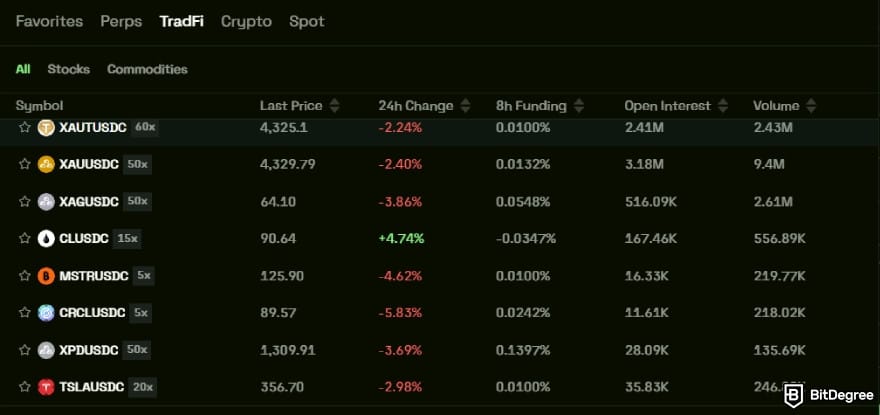
At the time of writing, perpetuals dominate TxFlow’s trading lineup. The DEX lists 150+ perp pairs compared with dozens of spot pairs, with additional exposure stretching into TradFi markets such as precious metals, oil, and US stocks.
The platform primarily relies on USDC as its collateral asset.
You can deposit various crypto tokens from supported networks such as Base, Solana, Polygon PoS, Ethereum, and Arbitrum One. After that, you can trade with cross or isolated margin and withdraw the funds back to your own wallet when you’re done.
📚 Check Out: Best USDC Wallet

Did you know?
All Crypto Exchanges may look similar to you but they're NOT all the same!
Who's TxFlow For?
TxFlow is mainly built for traders who already know their way around wallets, order books, margin, and the risks attached to perpetual contracts. It supports both spot and perpetual markets, but the overall toolkit leans much more toward active trading than simple token swaps.
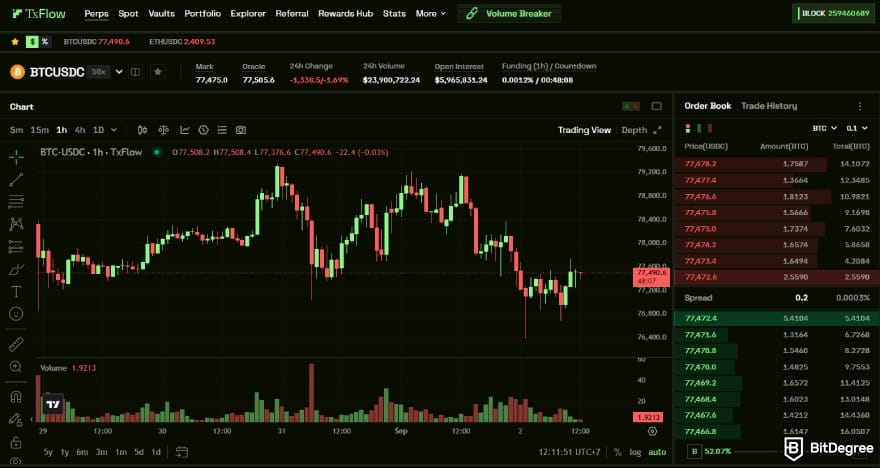
The TxFlow perp DEX also appeals to users who prefer having more of the trading process handled on-chain. The trade-off is that fewer things are abstracted away for you. You’re responsible for picking the right network, monitoring margin, accounting for funding payments, and knowing what liquidation can do to a bad position.
Taking everything above into account, these are the users I think TxFlow is most likely to suit:
- Perpetual traders. Cross and isolated margin provide separate approaches to controlling leveraged exposure.
- Active traders. The 14-day VIP structure rewards higher combined spot and perpetual volume with lower trading fees.
- Early ecosystem participants. The points program and staged mainnet rollout may appeal to users willing to explore a developing platform.
TxFlow is harder for me to recommend to complete beginners. If self-custody, decentralized apps, and perpetuals are all new concepts, the platform can quickly become more complicated than necessary for simply buying Bitcoin. There are also broader risks that come with using DEXs,[1] which may be less suitable for inexperienced traders.
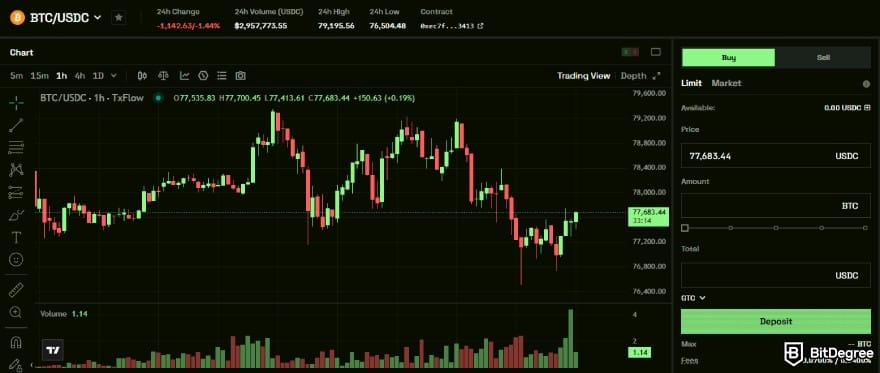
For users who enjoy poking around new trading infrastructure, though, TxFlow becomes much more interesting. It gives you a chance to learn how an on-chain order book and perp DEX operate in practice, provided you’re willing to do some homework first.
📚 Check Out: A Guide to CEX and DEX Services
Advantages
After spending time using the platform for this TxFlow review, a few advantages stood out pretty quickly. One of its strongest cards is the way the platform pairs on-chain trading with infrastructure designed for financial applications.
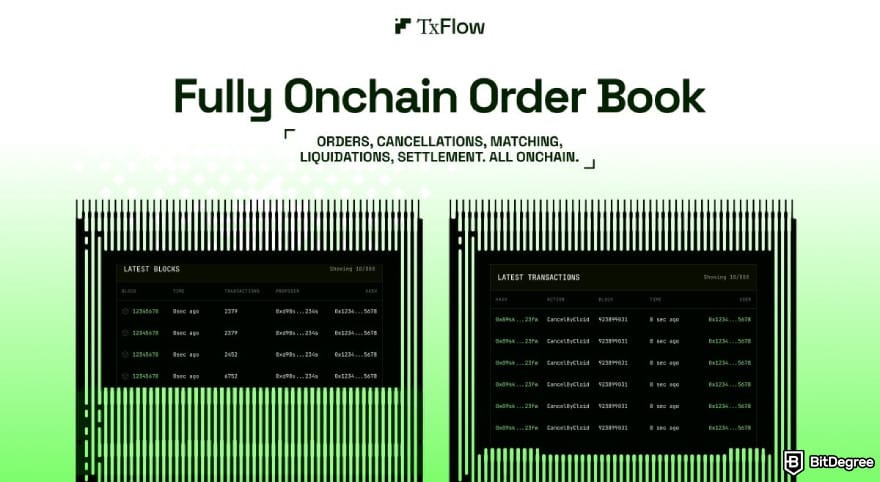
Some perks are already available, while TIP expansion and pre-TGE incentives still depend on how the ecosystem grows. The main advantages include:
- Fully on-chain CLOB
- High-performance financial Layer 1
- TIP-based shared liquidity
- Self-custodial spot and perp trading
- Advanced order controls
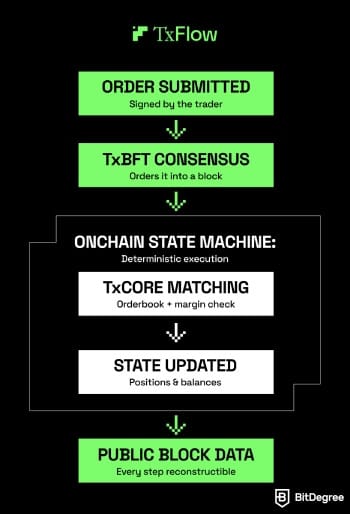
TxFlow’s fully on-chain CLOB keeps orders, cancellations, matches, liquidations, and settlement directly on TxFlow L1. In other words, the core trading flow stays on-chain where it can be verified, rather than disappearing behind an off-chain matching engine.
The native Layer 1 uses DAG-based parallel execution and a multi-threaded transaction pipeline. This architecture is reported to process up to 250,000 transactions per second with one-block finality, which helps trades settle through the network at high speed.
TIP Liquidity Standards are designed to let applications called Channels share liquidity, settlement, and market data without using bridges. If adoption grows as planned, new financial apps could plug into an existing liquidity layer seamlessly instead of starting from scratch and hoping traders magically show up.
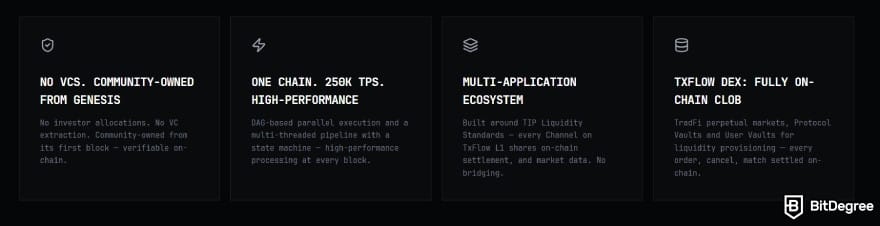
TxFlow also provides self-custodial access to its spot and perpetual markets through the TxFlow perp DEX. You can connect an EVM wallet or use email-based access while retaining control over the wallet holding your funds.
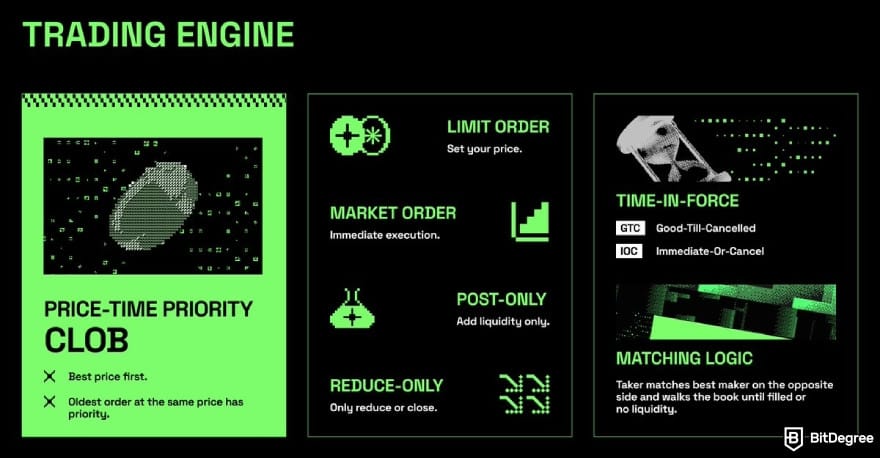
Finally, the platform supports market, limit, post-only, and reduce-only orders, alongside GTC and IOC controls. For active traders, that means more flexibility over how orders are submitted, maintained, and canceled.
Limitations
For all its technical strengths and future potential, TxFlow still has a limitation that’s hard for me to look past:
- Relatively short operating history
TxFlow dates back only to March 2026, making it a newcomer even in an industry where new platforms appear constantly. Of course, I’m not saying that makes it unreliable. There simply isn’t much evidence yet for evaluating its uptime, execution consistency, or resilience during prolonged spikes in trading.
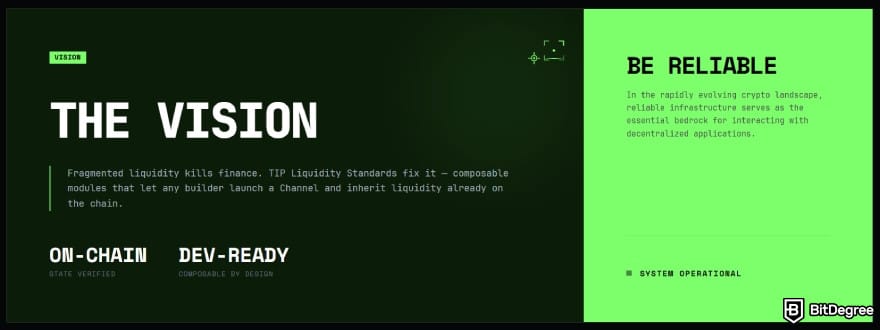
I’d also point out that TxFlow’s early-mainnet stage means the wider ecosystem is still developing. Some features are already live, while others are still being rolled out. So, my TxFlow review reflects the platform as it exists during an active growth phase, and my view, naturally, could change considerably as the ecosystem matures.
For early adopters, though, I think its early-stage status may be part of the appeal. The retroactive TxFlow points program creates an incentive to participate, with the possibility that early activity could matter later if a TxFlow airdrop or similar reward ever happens.

Since that’s not confirmed, more cautious traders may still prefer to wait and see how the platform develops.
📚 Check Out: Best Crypto Airdrops
Security
I have to admit that security was one of the trickier parts to judge while putting together my TxFlow review. There are visible on-chain controls and risk-management measures for leveraged trading, which is a good start, but there’s still only so much confidence you can take from a relatively young platform.
If you’re asking whether is TxFlow legit and safe, what I found so far supports the view that it’s a functioning self-custodial platform. That said, the limited audit coverage and short operating history mean I’d still treat it with the same caution as any newer DeFi platform.
Some of the platform's key security measures include:
- Self-custodial wallet access
- Fully on-chain trading and settlement
- Oracle and mark-price safeguards
- Market-order slippage protection
- Liquidation and solvency controls
- Bug bounty rewards of up to 150,000 USDC
TxFlow processes orders, cancellations, matching, liquidations, and settlement directly on its Layer 1, so the main trading workflow remains verifiable on-chain. For risk management, it combines a weighted-median oracle with a separate mark price used for margin calculations and liquidations.
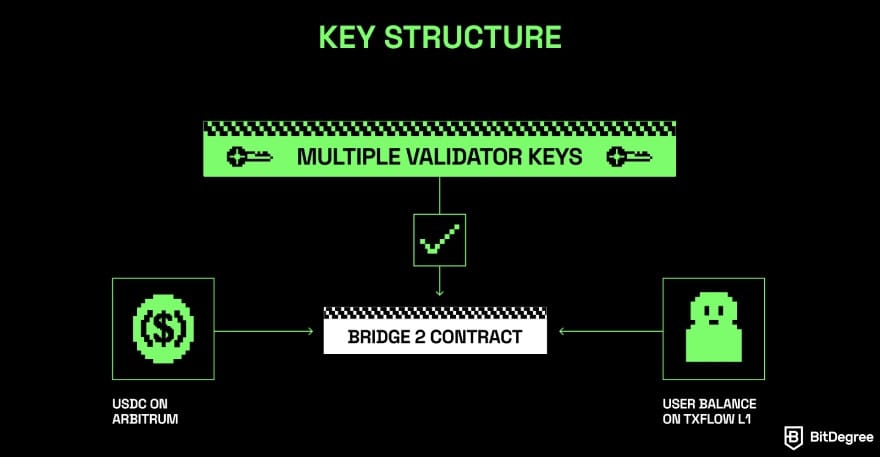
There’s also an important wallet compatibility limitation to keep in mind. TxFlow recommends standard EOA wallets like MetaMask and specifically advises against using Account Abstraction wallets for deposits. Using the wrong wallet type can block trading and withdrawals, with the worst-case outcome being funds stuck in the contract.[2]
TxFlow has also brought in external security expertise to review parts of its infrastructure. One example is its work with OpenZeppelin, a widely recognized cybersecurity company and open-source security framework, which independently audited the bridge contract. The review found no critical or high-severity issues.
Taken together, TxFlow’s safeguards are encouraging, but I wouldn’t treat them as a guarantee of safety. The platform simply hasn’t been live long enough to prove how consistently its liquidity, uptime, oracle system, and overall performance will hold up when markets get chaotic.
Trading Tools & Markets
As you’ve probably gathered from all the technical detail, TxFlow is mainly built for advanced traders who want more control over execution and market structure. The TxFlow perp DEX uses a fully on-chain CLOB, giving you an order-book trading setup that’s closer to a CEX.
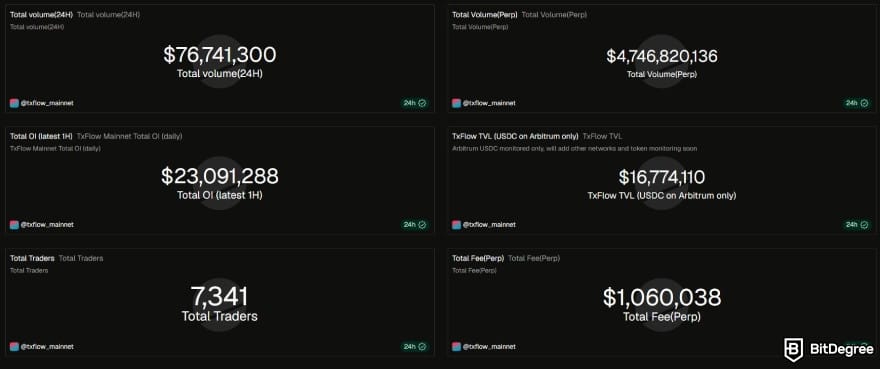
At the time of writing, the market selection includes:
- 150+ perpetual pairs
- 20+ spot pairs
- Over 7,000 outcome pairs
- Crypto & TradFi-linked markets
- Exposure to metals, oil, and US stocks
Perpetuals are very much the headline product. The spot market is more limited, although the selection is growing and becoming less sparse over time.
USDC serves as the collateral asset for perpetual positions, while leverage limits vary by market, position size, and margin tier.
TradFi-linked contracts let you speculate on stock or commodity price movements without owning the underlying asset. That also means no dividends, voting rights, or other shareholder perks. Stock futures may switch to reduce-only mode outside regular market hours, including weekends and relevant public holidays.
On the trading side, TxFlow gives users several tools for placing orders, managing positions, and moving in and out of the order book:
- Market & limit orders
- Post-only & reduce-only orders
- GTC & IOC time-in-force controls
- Cross & isolated margin
- Take-profit & stop-loss triggers
- Fixed market-order slippage protection
Market orders prioritize immediate execution, while limit orders let you set the highest price you’re willing to pay or the lowest price you’ll accept when selling. A fixed 5% slippage limit helps stop market orders from executing too far from the oracle price.
Post-only orders make sure your order adds liquidity as a maker, while reduce-only orders stop an exit order from accidentally increasing or flipping your position. GTC orders stay active until they’re cancelled or expire, whereas IOC orders fill whatever is immediately available and cancel the rest.
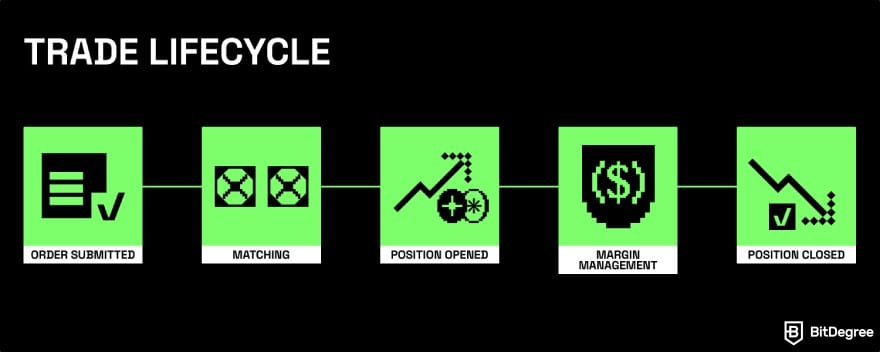
You can also choose between cross and isolated margin.
Cross margin lets multiple positions draw from the same collateral pool, which can make your capital work more efficiently but also means one bad position can start affecting the rest of the account. Isolated margin keeps the collateral for each position separate, making it easier to control how much is exposed.
📚 Read More: What is Margin Trading?
Protocol Vault & User Vaults
Vaults give users another way to earn by supplying liquidity or backing community-managed strategies. They’re separated from standard margin balances, which means idle USDC in your account won’t generate yield by default. If you want in, you’ll need to deposit into the Protocol Vault or an available User Vault manually.
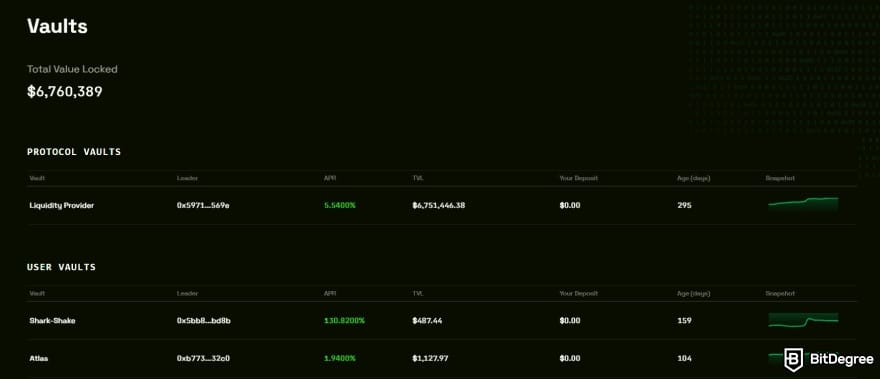
The TxFlow Protocol Vault is the platform’s community-owned liquidity pool. Its main characteristics include:
Operator | TxFlow protocol |
|---|---|
Strategy | Market making & backstop liquidations |
Revenue | Trading fees and liquidation rewards |
Leader profit share | 0% |
Deposit lockup | Four days from the latest deposit |
Table: TxFlow Protocol Vault overview
The Protocol Vault helps supply liquidity and absorb positions that can’t be completely closed through the standard process. Revenue from those activities is then returned to the community-owned pool.
That said, the vault still carries risk. Its results depend on market activity, execution quality, and how well it handles liquidated positions, so there’s no guarantee the numbers will always look pretty.
User Vaults follow a more flexible, strategy-based model.
Operator | Individual traders or teams |
|---|---|
Deposit asset | USDC |
Strategy | Directional trading, arbitrage, & other approaches |
Leader profit share | 10% of generated profits |
Risk level | Varies according to the chosen strategy |
Table: TxFlow User Vault overview
With a User Vault, your result depends on the strategy chosen and managed by the vault creator. The leader receives 10% of any profits, with the remaining gains shared among depositors.
This gives experienced traders a way to make their strategies available to other users, but it also means there’s no single risk profile for every vault. A directional strategy may behave differently from an arbitrage-based one, especially when markets turn volatile.
Points, Airdrop, & Referral Rewards
TxFlow gives early users two ways to chase extra rewards: pre-TGE points and referrals. The referral program already comes with documented terms, while any link between TxFlow points and a future token distribution is still unconfirmed (at the time of writing).
TxFlow Points
TxFlow is currently in the pre-TGE stage, with its points system stated to count eligible activity retroactively. Here’s what I can confirm so far:
- Program stage: Pre-TGE
- Eligibility timing: Applies retroactively
- Scoring mechanics: TBA
- Point-to-token conversion: TBA
- Point value: TBA
If you’re already using the platform, some eligible activity may count toward TxFlow points once the system goes live. That said, the available information doesn’t clarify which actions qualify, how the points will be calculated, or whether all early users will receive them. Best to stay updated and keep expectations in check.
Is There a TxFlow Airdrop?
A TxFlow airdrop looks increasingly likely to be part of the project’s future token rollout. It has publicly committed to a “100% fair launch”, with team tokens locked for at least 2 years and no early exits for strategic partners. The project has also referred to its current stage as pre-token and pre-points.
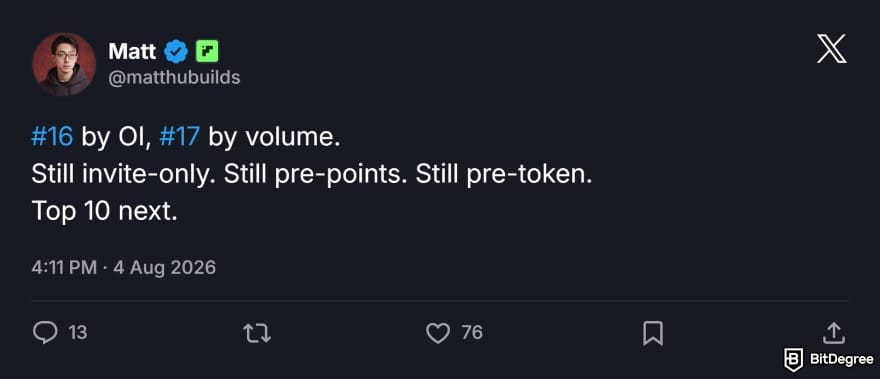
Those signals point toward some kind of community distribution, but there’s still plenty we don’t know. TxFlow hasn’t confirmed the allocation size, eligibility rules, point conversion formula, or when any distribution could happen.
For now, I’d stay cautiously optimistic about the TxFlow airdrop and keep checking the project’s official channels (Discord, X, & website) for the actual terms.
Referral Rewards
What I know for sure, though, is that the referral program is already confirmed. To create a referral code, you need to reach $100,000 in cumulative trading volume. The main referral terms include:
Referrer reward | 10% of the invitee’s net trading fees |
|---|---|
Invitee discount | 5% off fees for the first $25 million in volume |
Reward limit | The invitee’s first $1 billion in volume |
Payout schedule | Credited daily to the referrer’s Perp account |
Code limit | One permanent referral code per account |
Table: TxFlow referral program overview
TxFlow calculates referral commissions based on the net fees your invitee pays after discounts and fee credits. If a trade’s fee is fully covered by fee credits, that transaction won’t generate a referral commission. Self-referral is also not permitted.
Fees & Limits
TxFlow's costs break down into three buckets: deposits, withdrawals, and trading. Here's what each one actually costs, along with the limits attached to them:
Fees | Limits | |
|---|---|---|
Deposit | Free through supported networks | No universal minimum disclosed |
Withdrawal | 0.1 to 0.5 USDC, depending on the network | N/A |
Spot Trading | 0.040% to 0% for maker 0.070% to 0.025% for taker | Market-specific order limits |
Perpetual Trading | 0.015% to 0% for maker 0.045% to 0.024% for taker | Market-specific position, order, and leverage limits |
Table: TxFlow fees and limits
Trading fees on TxFlow follow a maker-taker model, with separate fee rates for spot and perpetual markets. The fee is calculated from the notional value of the filled order and charged at execution. In plain English, opening a position costs a fee, and closing it costs another one.
TxFlow’s fee structure also includes volume-based tiers. These are based on your combined spot and perpetual trading volume from the previous 14 days.
14-D Volume | Perp maker | Perp taker | Spot maker | Spot taker | |
|---|---|---|---|---|---|
VIP 0 | Under $5M | 0.015% | 0.045% | 0.040% | 0.070% |
VIP 1 | $5M+ | 0.012% | 0.040% | 0.030% | 0.060% |
VIP 2 | $25M+ | 0.008% | 0.035% | 0.020% | 0.050% |
VIP 3 | $100M+ | 0.004% | 0.030% | 0.010% | 0.040% |
VIP 4 | $500M+ | 0.000% | 0.028% | 0.000% | 0.035% |
VIP 5 | $1B+ | 0.000% | 0.026% | 0.000% | 0.030% |
VIP 6 | $2B+ | 0.000% | 0.024% | 0.000% | 0.025% |
Table: TxFlow trading fees
At the base tier, perpetual trades are charged at 0.015% for makers and 0.045% for takers. Spot trading starts a bit higher, at 0.040% for makers and 0.070% for takers. Maker fees fall to zero from VIP 4, but getting there requires at least $500 million in 14-day trading volume.

TxFlow sets position and order limits on a market-by-market basis. Before an order is accepted, the platform checks whether the resulting position would remain within that market’s maximum allowed size.
- Increasing a position: Must remain within the market’s position limit
- Reducing or closing: Always allowed because it lowers exposure
- Reversing a position: The resulting position must stay within the limit
- Market orders: Subject to a fixed 5% slippage tolerance
- Leverage: Maximum availability decreases as position size increases
For example, BTC has a minimum order size of 0.001 BTC, a maximum market order size of 50 BTC, and a maximum limit order size of 100 BTC.
Customer Support
TxFlow’s customer support is more community-based than conventional. Instead of a standard live-chat button or help desk, users are mainly directed to the platform’s X, Telegram, and Discord channels.

Keep to TxFlow’s official links and treat unexpected messages with caution. The platform won’t contact you first asking for your private key, seed phrase, or transaction signature.
User Experience
After spending time with TxFlow, my first impression was that it tries to make on-chain trading familiar to anyone already used to order-book platforms. It isn’t completely plug-and-play, though.
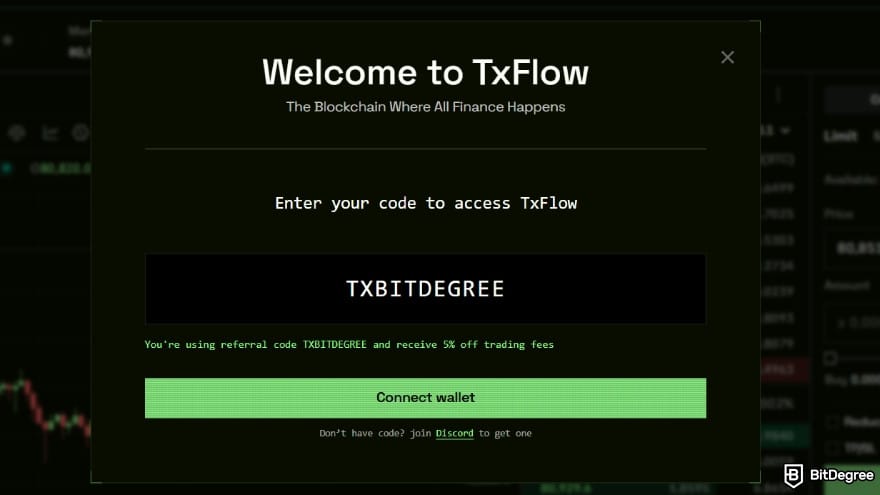
First, I needed to get an access code. I used the BitDegree referral link, since it gives you access to the platform, applies the code automatically, and includes a 5% trading fee discount. Neat!
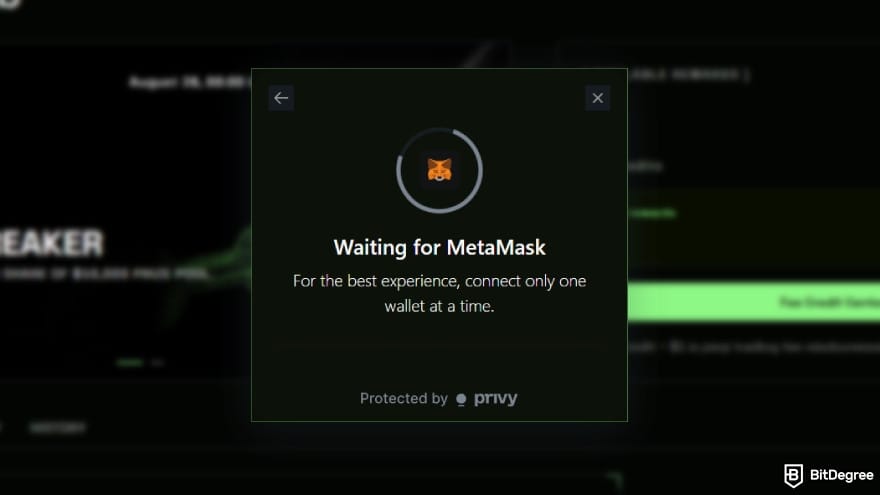
Once I got in, having two login methods was a nice touch. Email was the easier option, with a six-digit verification code and an account-linked wallet handling the setup.
The wallet route was also simple enough, though it still required approving the connection and signing a gasless transaction before trading.
A few aspects of TxFlow caught my attention:
- Familiar order-book trading experience;
- Market, limit, and advanced order options;
- Cross and isolated margin settings;
- Deposit and withdrawal history in one place;
- Desktop and mobile access.
I got along with the trading side much better once I treated TxFlow as a proper perpetual exchange rather than a simple buy-and-sell app.
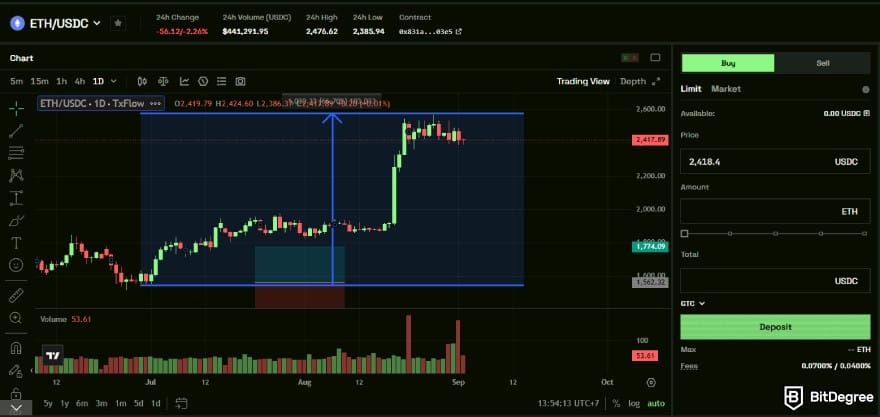
Market and limit orders were straightforward, while post-only, reduce-only, GTC, and IOC controls gave me plenty of room to fine-tune execution. For newcomers, though, the interface and terminology may take some getting used to.
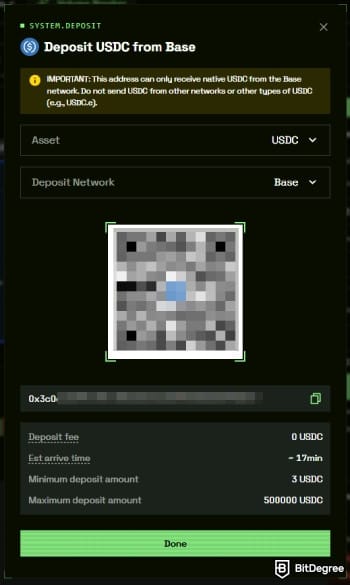
Funding the account was the part that required the most attention for me. I had to double-check the USDC network and wallet type before sending anything. TxFlow’s warning about account abstraction wallets is also one I wouldn’t ignore, since using one may block trading and withdrawals.
All in all, I found that TxFlow does a good job of making an on-chain perpetual DEX easier to use. The interface cuts down some of the usual DeFi hassle, while the wallet, network, margin, and liquidation requirements still require a decent amount of prior knowledge.
How to Use TxFlow
If you’re coming from a CEX or a simple crypto-buying app, TxFlow’s onboarding may look unfamiliar at first. If that has you second-guessing where to start, follow the steps below as I show you how I connected, deposited, traded, and withdrew funds.
Connecting to TxFlow
Before you can start, TxFlow requires an Access Code. You can enter the [TXBITDEGREE] code manually or use this link to apply it automatically and receive 5% off trading fees. Then, follow these steps:
![TxFlow review: click on [Connect Wallet].](https://assets.bitdegree.org/images/txflow-review-connect-wallet.jpg "TxFlow review: click on [Connect Wallet].")
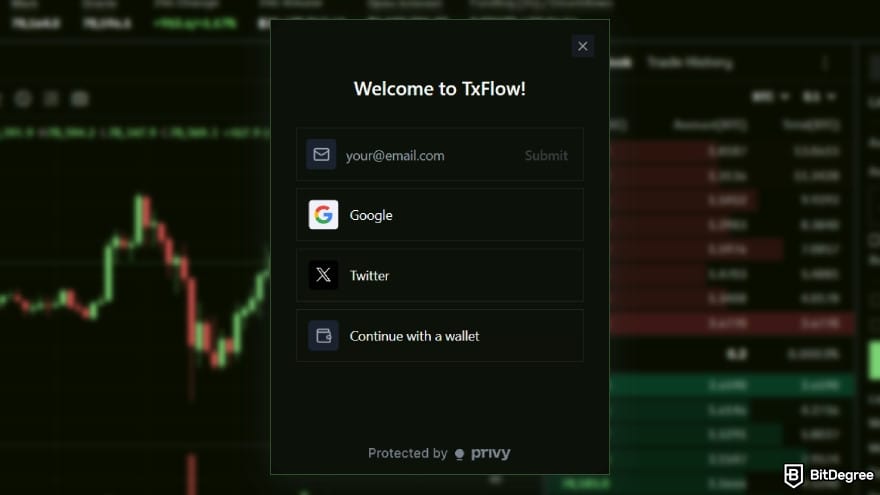
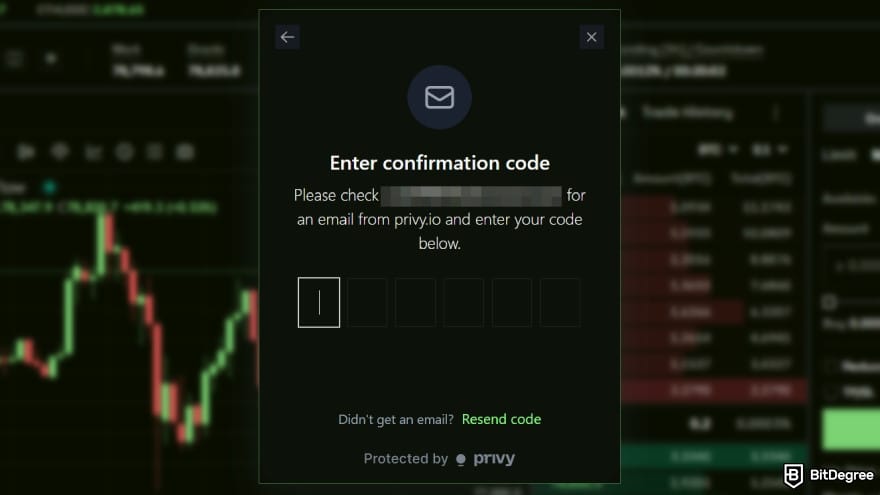
If you choose a wallet, select one of the supported options and approve the connection request.
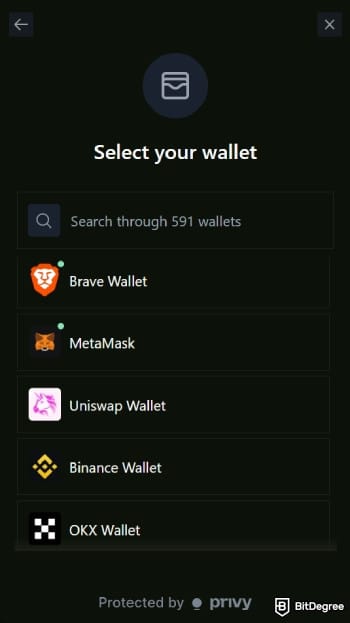
You’ll want to connect a standard Externally Owned Account (EOA) wallet. Using an Account Abstraction wallet may block trading or withdrawals, and in the worst case, your deposited funds could become inaccessible.
Depositing Funds
Email and wallet users follow slightly different flows, but the end goal doesn’t change. You simply need to get USDC to your TxFlow address:
![TxFlow review: click on the [Deposit] button.](https://assets.bitdegree.org/images/txflow-review-deposit.jpg "TxFlow review: click on the [Deposit] button.")
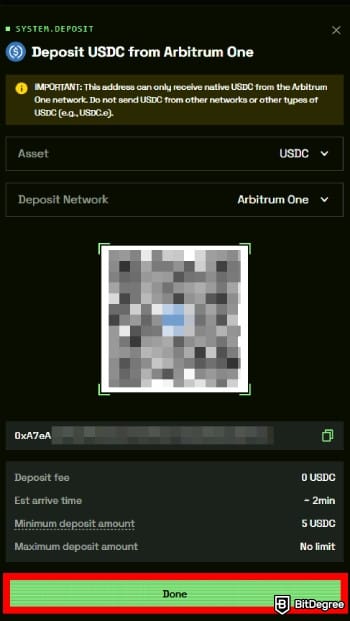
Once everything matches, copy the address or scan the QR code from your wallet. Make sure you don’t send USDC from another network or a different version like USDC.e, since the funds may not be credited properly.
You can view the deposit details by going to [Portfolio] > [Deposits].
Placing a Trade
Once your USDC balance appears, you can trade either spot markets or perpetual contracts. For this example, though, let’s use that collateral to open a perpetual position. The TxFlow perp DEX lets you speculate on whether an asset’s price will rise or fall without actually owning the underlying asset.
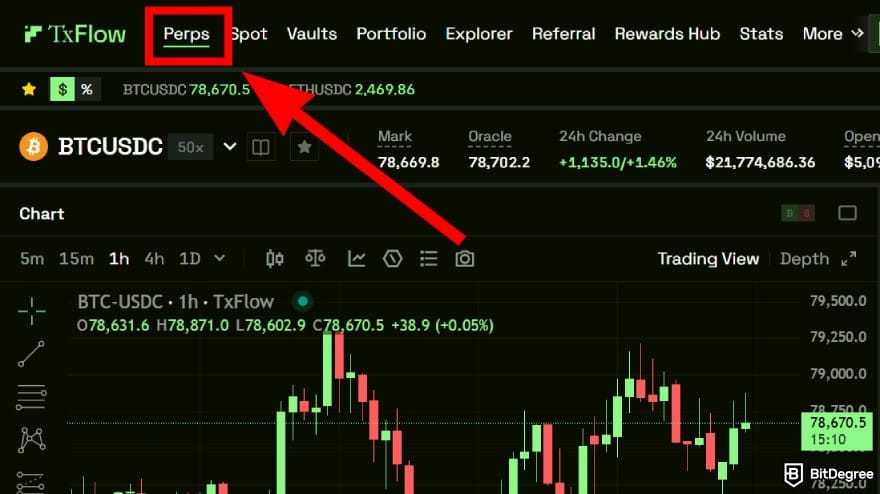
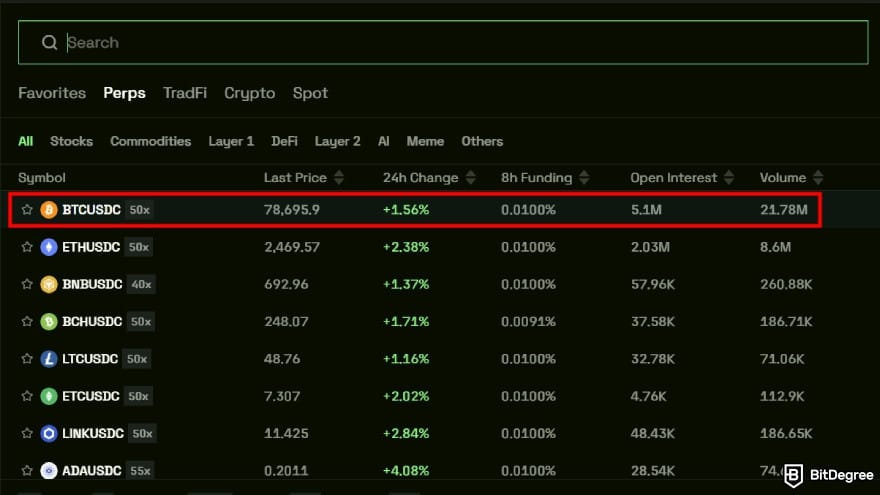
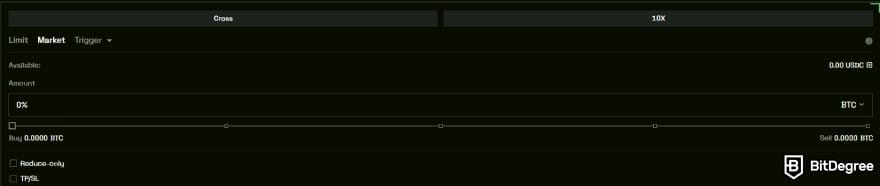
Once your position is open, you can manage it with take-profit and stop-loss triggers or close it through a reduce-only order
Keep in mind that trading fees are charged on every filled order, including the order used to close your position.
Withdrawing Funds
Once you’re ready to move your funds off TxFlow, here’s what to do:
![TxFlow review: select [Withdraw].](https://assets.bitdegree.org/images/txflow-review-withdrawal.jpg "TxFlow review: select [Withdraw].")
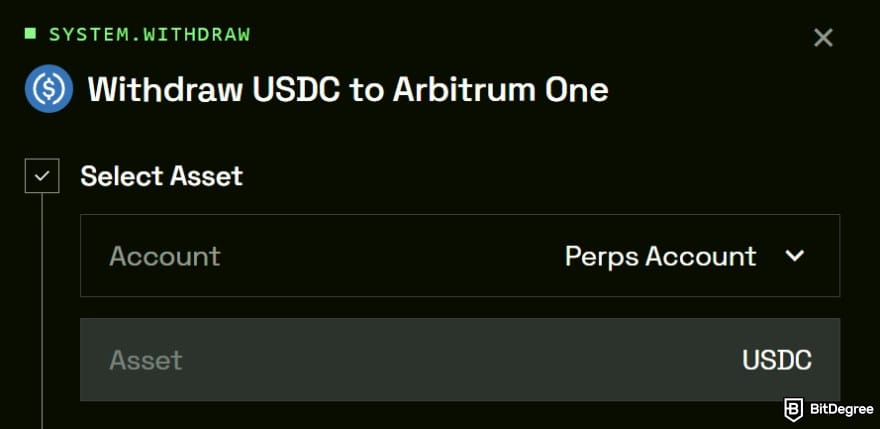
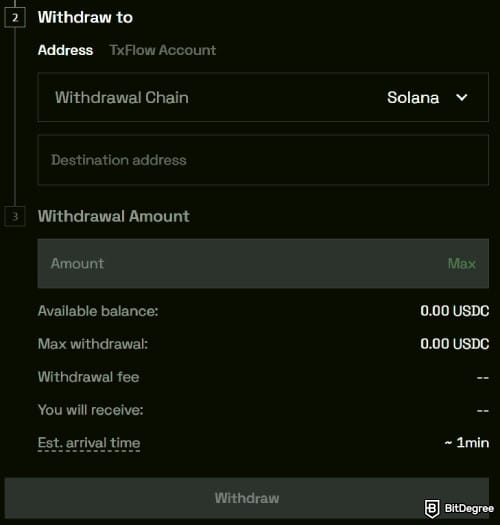
Take a moment to check the chain and wallet address again before you confirm.
Your funds should arrive within minutes, though timing can depend on network conditions.
Comparison to Other Platforms
For a fairer TxFlow review, it helps to place the platform next to other high-performance DEXs instead of judging it in isolation. With that in mind, here’s how it compares with Hyperliquid and Aster.
TxFlow VS Hyperliquid
Hyperliquid is probably TxFlow’s closest architectural relative. Both run on purpose-built Layer 1 networks with fully on-chain order books, and their entry-level fee schedules are fairly similar.
Mainnet Launch | Architecture | Max. Leverage | Base Perp Fees | Base Spot Fees | |
|---|---|---|---|---|---|
TxFlow | 2026 | Purpose-built financial Layer 1 | 50x | 0.015% maker / 0.045% taker | 0.040% maker / 0.070% taker |
Hyperliquid | 2023 | Native L1 with HyperCore & HyperEVM | 50x | 0.015% maker / 0.045% taker | 0.040% maker / 0.070% taker |
Table: TxFlow vs Hyperliquid
I’d say the bigger difference appears once trading volume enters the picture. TxFlow reaches its lowest fee tier at around $2 billion in 14-day volume, compared with roughly $7 billion on Hyperliquid, meaning TxFlow requires substantially less activity to unlock the same fee discount.
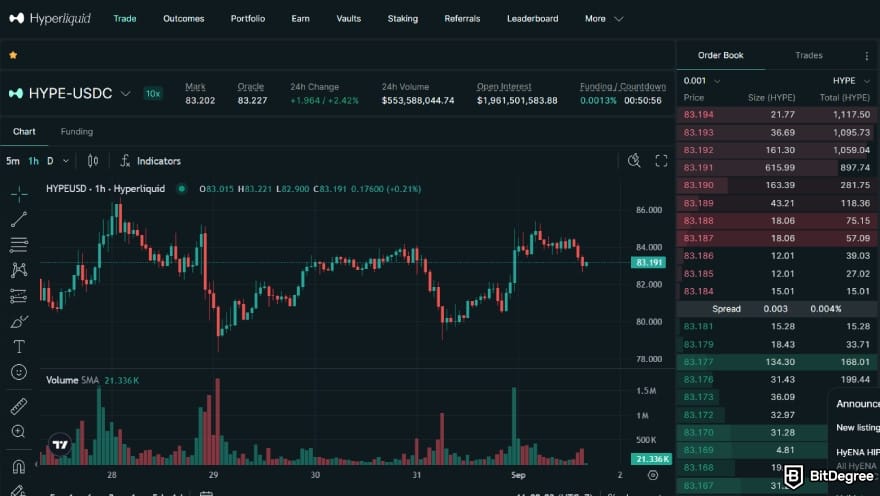
Hyperliquid still has the advantage in operating history and ecosystem development. For TxFlow vs Hyperliquid, TxFlow may appeal more if you’re specifically interested in its pre-TGE stage and the future potential of TIP Liquidity, while Hyperliquid remains the more established choice if maturity is your priority.
TxFlow VS Aster
Aster follows a different approach, pairing multichain trading with a more privacy-focused setup. It supports BNB Chain, Ethereum, Solana, and Arbitrum, alongside ZK-encrypted activity, hidden orders, yield-bearing margin, and a wide range of markets.
Mainnet Launch | Architecture | Max. Leverage | Base Perp Fees | Base Spot Fees | |
|---|---|---|---|---|---|
TxFlow | 2026 | Purpose-built financial Layer 1 | 50x | 0.015% maker / 0.045% taker | 0.040% maker / 0.070% taker |
Aster | 2026 | Native L1 (Aster Chain) with multi-chain access | 1001x | 0.000% maker / 0.040% taker | 0.005% maker / 0.040% taker |
Table: TxFlow vs Aster
The platform supports spot and perpetual trading and gives users two distinct interfaces. Simple Mode focuses on one-click execution, low friction, MEV resistance, and leverage of up to 1001x for crypto. Pro Mode, on the other hand, brings in the full order book and advanced trading tools for more experienced users.
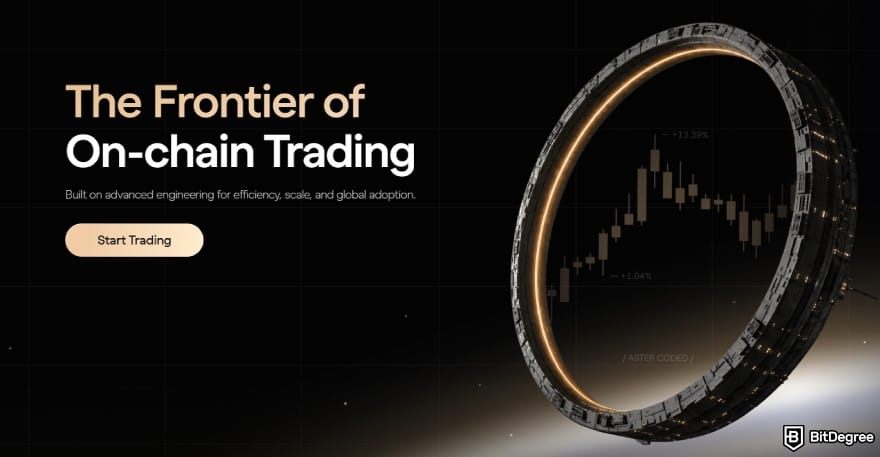
At the time of writing, Aster also has something TxFlow doesn’t: a live token. ASTER launched in 2025 and has had slightly more time to establish a market track record. That said, that extra history doesn’t make the token immune to sharp price swings.

- Accepts fiat currencies
- Simple to use
- Supports only trusted cryptocurrencies
- A leading cryptocurrency exchange platform
- Best for all type investors
- Accepts fiat currencies

- Industry-leading security
- Accepts fiat currencies
- Advanced trading tools
- Industry-leading security
- Strong regulatory reputation
- Advanced trading tools

- Wide range of tradable assets
- Robust copy trading feature
- Flawless security record
Conclusions: Is TxFlow Right for You?
Wrapping up this TxFlow review, I think the platform makes the strongest case when you look beyond its spot and perpetual markets. The fully on-chain CLOB, finance-focused Layer 1, self-custodial access, and advanced trading controls should give experienced users a fairly complete setup already.
The more ambitious parts of TxFlow are still a work in progress. Its mainnet history is limited, the broader ecosystem is still developing, and the points system shouldn’t be treated as confirmation of a future TxFlow airdrop or guaranteed token value.
If the combination of advanced on-chain trading and an early-stage ecosystem sounds appealing to you, it’s best to explore TxFlow yourself and decide from there!
The content published on this website is not aimed to give any kind of financial, investment, trading, or any other form of advice. BitDegree.org does not endorse or suggest you to buy, sell or hold any kind of cryptocurrency. Before making financial investment decisions, do consult your financial advisor.
Scientific References
1. Campbell R. H., Hasbrouck J., Saleh F.: ‘The Evolution of Decentralized Exchange Risks Benefits and Oversight’;
2. Alnuman R., Sajid T., Almobaideen W., Hasan Q.: ‘Ensemble Multi-Label Machine Learning Solidity Smart Contract Vulnerability Detection Model’.
About Article's Experts & Analysts


- + Verifiable on-chain order execution
- + High-speed native blockchain
- + Shared liquidity across apps
- + User-controlled spot & perp trading
- + Flexible order & margin controls
- - Relatively new platform
See BETTER-RATED Exchanges
A high-speed on-chain DEX tailor-made for active perpetual and spot traders.
Disclosure: To keep our site running & free of charge, we may sometimes receive a small commission if a reader decides to purchase services via some links on site, at no extra cost.