Key Takeaways
- PayPal isn’t available in Pakistan, mainly due to regulatory compliance and local banking infrastructure issues;
- Trying to use PayPal in Pakistan can bring more harm than good. Accounts get limited, payments fail, and people waste time instead of getting paid;
- Look for alternatives like Ogvio that let you both receive and send money to and from local PKR bank accounts.
If you’ve ever landed an international client and immediately got hit with, “Can you send me your PayPal?”, you’ve probably stopped and asked yourself: Is PayPal available in Pakistan? PayPal feels like the default payment app for freelancers and online businesses worldwide. However, if you’re based in Pakistan, things get complicated fast.
Despite Pakistan being one of the biggest freelancing hubs globally, PayPal still doesn’t officially operate here. Then, people often assume there’s a workaround when they ask, “Does PayPal work in Pakistan?”, but any forced setup is usually useless, leading to limits or bans.
In this article, I’ll walk you through what PayPal’s status in Pakistan really looks like, why it’s still unavailable, and what you can use instead to receive and send international payments (spoiler alert: Ogvio is a great alternative).

Did you know?
Subscribe - We publish new crypto explainer videos every week!
How Can You Earn Money With Axie Infinity? (AXS Animated Explainer)


Table of Contents
- 1. Is PayPal Available in Pakistan?
- 1.1. Factors Behind PayPal’s Unavailability
- 1.2. What Happens If You Try to Use PayPal in Pakistan?
- 2. PayPal Alternatives in Pakistan
- 2.1. Ogvio
- 2.2. Xoom
- 2.3. Remitly
- 2.4. Payoneer
- 3. How Pakistanis Can Use Ogvio (Step-by-Step Guide)
- 3.1. Create Your Ogvio Account
- 3.2. Receive Money via Ogvio @Tag
- 3.3. Receive Money To a Pakistani Bank Account
- 3.4. Receive Crypto Using Ogvio
- 3.5. Send Money Internationally Via Ogvio @Tag
- 4. Conclusions
Is PayPal Available in Pakistan?
Is PayPal available in Pakistan? At the time of writing, the answer is no – PayPal is still not officially available in Pakistan. That means the residents can’t open a PayPal account using a Pakistani address, phone number, or bank account, nor can they link a PayPal-Pakistani bank account.
Latest Changelly Coupon Found:Here’s what PayPal’s unavailability actually looks like in practice:
- No account creation with a Pakistani address or phone number (the registration process simply won’t complete).
- No linking of Pakistani bank accounts or cards for sending or receiving money directly.
- No direct reception of funds from clients or marketplaces into a PayPal wallet in Pakistan.
These barriers have been around for a whole decade, even though Pakistan is already counted as one of the world’s top five freelancing markets, with over 2.3 million active freelancers in the export and creative industries. Because of the demand, “Is PayPal in Pakistan?” is still a common question with the same frustrating answer: No.
The full-on lack of PayPal in Pakistan doesn’t hit just one crew because it influences a whole ecosystem of digital workers and businesses.
Freelancers are by far the biggest group stuck in the middle here. Platforms like Upwork and Fiverr are huge funnels for Pakistan’s talent, but when clients ask for PayPal payments, creators often hit a dead end.
Without PayPal, many freelancers rely on less-flexible or expensive payout options, which eat into their earnings. In fact, experts say Pakistanis are losing millions every year because of limited international payment options.
A real-world example many freelancers may recognize: imagine a graphic designer who lands a project from a client in the US, but the client only pays via PayPal. With no official support in Pakistan, the designer either has to decline the job, find a second person abroad to funnel the payment through, or accept slower, costlier alternatives. None of those feels great, to be honest.
Similarly, remote workers can feel powerless. Some firms still prefer sending tips or salary via PayPal because it’s global, reliable, and familiar. Without it, they may end up agreeing to slower or costlier methods to get paid.
Another sector that may have big dreams is small e-commerce brands in Pakistan, from handmade accessories to niche fashion that are relevant to global fans. However, getting those dreams to actually turn into paying customers worldwide isn’t that simple.

Studies show that secure, trusted payment systems like PayPal, Apple Pay, or Google Pay straight-up increase buyer confidence.[1] The main reason is that shoppers feel way safer when they know there’s real fraud protection and a familiar checkout process.
But because PayPal isn’t available in Pakistan, a lot of local shops can’t show those trust signals. That leaves some buyers hesitating or abandoning their carts, especially when they’re unsure about safety or dispute protection.
📚 Check Out: PayPal Alternatives in Pakistan and Elsewhere
Factors Behind PayPal’s Unavailability
Why is PayPal not available in Pakistan? The reasons are a mix of regulatory complexity, money laundering and compliance perceptions (FATF), banking infrastructure limits, and business economics.
These show that this isn’t due to a single “ban” or whim, but various factors make Pakistan a tough fit for PayPal’s global business model.
First, to operate in Pakistan, electronic money institutions (EMIs) like PayPal must comply with detailed licensing rules[2] set by the State Bank of Pakistan (SBP). These include:
1
A high startup capital requirement (around PKR 200 million) to qualify as an EMI.
2
A three-stage approval process (in-principle, pilot operations, full operations) that takes significant time and money.
3
Ongoing compliance obligations for customer due diligence, reporting, and liability for suspicious transfers.
These rules are meant to keep the financial system safe and reduce fraud. However, they also place high costs and extra operational work on companies. For PayPal, these added costs may not fit well with how the company normally makes money.
In addition, Pakistan scores relatively low on the regulatory quality index, which measures how supportive government policies are for private businesses. Compared to many other Asian countries, this makes Pakistan a less attractive market.
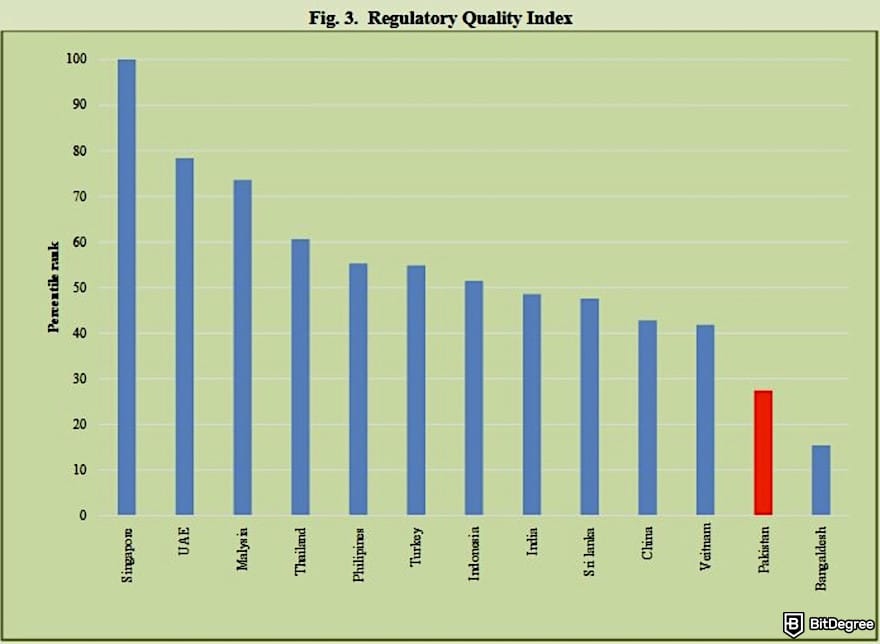
For a company like PayPal, which carefully considers both legal complexity and profit potential before entering a new country, this weakens the overall business case.
Another perceived barrier that is often mentioned in the media relates to Pakistan’s past placement on the Financial Action Task Force (FATF) grey list due to money laundering and compliance concerns.
PayPal, like all global payment platforms, is highly sensitive to AML (anti-money-laundering) and counter-terror financing regulations. It may not be the real top reason PayPal is hesitant because the platform operates in many countries with higher AML risk than Pakistan. However, it can still play a role in PayPal’s risk assessment.
Third, PayPal’s model depends on tight integration with local banks, debit/credit cards, and trusted online payment infrastructure. In Pakistan, everyday card usage and digital point-of-sale systems are still far less common than in countries where PayPal works well.
There’s no single, well-established system that easily connects local digital wallets to international payment networks. Moreover, many Pakistanis are still unbanked and prefer using cash, which makes it harder to plug global payment platforms into the local financial system.
Will PayPal work in Pakistan if the financial system improves? Maybe, but both government and PayPal would need to invest heavily in building or adjusting their infrastructure just to run basic services. This approach would be a costly effort that may not make sense when compared to the expected transaction volume and revenue.
Lastly, PayPal looks for a sustainable business model, which means there needs to be enough transaction volume to cover operating costs, a strong base of users who regularly use credit or debit cards, and a stable, predictable regulatory environment.
While Pakistan clearly shows strong demand, especially from freelancers and online sellers, it doesn’t meet all of these conditions yet.
PayPal runs on pretty thin margins per transaction, so stacking that with high compliance costs and lower digital payment usage just doesn’t match financially. Compared to other countries where digital payments are already mainstream, the risk-to-reward ratio in Pakistan simply isn’t giving “worth it” status right now.
What Happens If You Try to Use PayPal in Pakistan?
So, you're well aware by now that the answer to the question "Is PayPal available in Pakistan today?" is no. If you try to bypass the rules, you’ll hit a wall pretty fast. Here’s what usually happens:
1
You can’t sign up normally. PayPal doesn’t support Pakistan as a country option, so account creation using a Pakistani address, phone number, or ID simply won’t work.
2
Accounts get flagged during verification. Even if someone signs up using foreign details, PayPal’s systems often detect location and identity mismatches. This can trigger account limitations, or you can get suspended permanently.
3
Using middlemen is risky. Some people rely on friends or third parties abroad to receive PayPal payments. This method adds extra fees, delays, serious trust issues, and, more importantly, offers no protection if something goes wrong.

4
Pakistani banks and cards can’t be linked. Is PayPal available in Pakistan if I input other people’s addresses? Well, although your friend abroad can get the money, local bank accounts and cards aren’t supported. Therefore, withdrawing funds would be very difficult or impossible.
5
Disputes offer little protection. If PayPal detects a terms-of-service violation, appeals are rarely successful, especially when unsupported countries are involved.
Overall, forcing a PayPal-Pakistani bank connection to work often leads to blocked sign-ups, frozen balances, and unnecessary stress. That’s why most freelancers and online businesses eventually switch to payment platforms that officially support Pakistan instead of risking their income.
📚 Read More: How to Send Money From UAE to Pakistan Legally
Looking for more in-depth information on related topics? We have gathered similar articles for you to spare your time. Take a look!


PayPal Alternatives in Pakistan
If the answer to “Is PayPal available in Pakistan?” is a big no, how can Pakistanis get money from abroad? Don't worry; you can absolutely receive money in Pakistan without PayPal. It just takes a different route.
While PayPal gets a lot of hype globally, it’s far from the only way to move money across borders, and many freelancers, remote workers, and online businesses in Pakistan are already using other platforms that work in the country.
Ogvio
Sending money with Ogvio is a more flexible alternative compared to PayPal and some other platforms because you can both send and receive money from almost anywhere in the world (over 160 countries supported).
 | |
|---|---|
| |
| Per-transaction | |
| | |
| A global money transfer service with an additional volatile currency rate pegging to USD or EUR. | |
| Visit site Read review |
Table: Ogvio features
It supports different payment methods:
- Ogvio-to-Ogvio transfers. Sending money to another Ogvio user using their @Tag or payment link is always instant and free.
- Bank transfers. People can send funds directly to Pakistani bank accounts, including to major banks where Raast is supported
- Crypto transfers. For users familiar with crypto, Ogvio supports sending and receiving USDC on the Base network.
All these options mean you’re not limited to just one way of sending and receiving money. FYI, your balance is automatically pegged to a stable currency (USD or EUR) when you deposit or receive funds, which helps protect your money from local currency volatility and inflation.
If you're an Ogvio user in Pakistan, though, note that there are some limitations. You can't top up your balance with a card payment or a bank transfer. However, you can fully access crypto transfers, get funds from other Ogvio users, send money via @Tag, and withdraw funds to bank accounts in Pakistan.
📚 Read More: Ogvio Review
Xoom
If you're wondering, "Why is PayPal not available in Pakistan?", and thinking that a PayPal-owned remittance service, Xoom, can be a workaround, here’s the reality check.
Xoom is not the same as having a PayPal account. It doesn’t allow Pakistanis to open PayPal accounts, receive PayPal payments, or use PayPal for freelancing, e-commerce, or subscriptions. Instead, this platform lets someone outside Pakistan send money to a Pakistani bank account or for cash pickup at partner locations.
 | |
|---|---|
| |
| Per-transaction | |
| | |
| An online international money transfer service, owned by PayPal. | |
| Visit site |
Table: Xoom features
Transfers can arrive the same day or within minutes if sent before cutoff times (e.g., by 4:30 pm PKT on weekdays). So if your client or friend overseas wants to send money to you, they can use Xoom – even if PayPal doesn’t work directly in Pakistan. Here’s a list of what Xoom can’t do as your reminder of its limitations:
- You can’t open a standalone Xoom account in Pakistan because it only facilitates money sent into Pakistan via bank deposit or cash pickup.
- It’s not a PayPal replacement for receiving regular freelance or business payments. Xoom is designed primarily for remittances, not commercial gigs or marketplace payouts.
- You can’t receive regular PayPal-to-PayPal business transfers via Xoom.
In short, Xoom is a limited, one-way tool. It’s helpful for remittances or occasional overseas payments, but not a true PayPal alternative for ongoing business income.
Did you know?
Subscribe - We publish new crypto explainer videos every week!
What is Curve Finance in Crypto? (Animated Explanation)

Remitly
When people google, “Is PayPal in Pakistan?”, they’re usually looking for a way to receive international payments. Since PayPal isn’t supported, many turn to remittance-focused alternatives like Remitly instead.
While Remitly doesn’t publish exact user numbers for Pakistan, it reports serving over a million customers worldwide and consistently highlights Pakistan as a key remittance market, especially from the UK. The platform supports multiple Pakistani banks and mobile wallets, including UBL and Easypaisa, which signals strong real-world usage for sending money into the country.
With Remitly, someone abroad can send money to a Pakistani bank account from the US, UK, Canada, EU, and more. It also offers cash pickup locations, which are useful if the recipient doesn’t have a bank account or needs funds faster.
 | |
|---|---|
| |
| Per-transaction | |
| | |
| A beginner-friendly cross-border remittance solution. | |
| Visit site Read review |
Table: Remitly features
Remitly is helpful, but it’s important to be clear about what it can’t do. First, it’s not built for freelance marketplace payouts like Upwork or Fiverr, and it doesn’t support direct client billing, online checkout buttons, or invoicing. You also can’t hold a balance inside Remitly the way you can with PayPal.
Another key limitation is who can start the transfer. The sender must be based in a country where Remitly operates and have an active Remitly account. As a result, you can’t initiate or send money using Remitly from within Pakistan yourself because you can only receive funds when someone abroad sends them to you.
Payoneer
It's time to stop asking how to make PayPal account in Pakistan when you want to withdraw from Fiverr. Use Payoneer instead. It's one of the most widely used payment platforms in Pakistan. Payoneer is trusted by freelancers, agencies, and online businesses across the country, allowing you to get paid in USD, EUR, GBP, and more.
You can then withdraw those funds directly to local Pakistani bank accounts like HBL or Meezan Bank, usually in PKR. In some cases, Payoneer can also be linked to JazzCash, making it easier to access funds through a mobile wallet.
 | |
|---|---|
| |
| Per-transaction | |
| | |
| A freelancer-friendly platform offering local receiving accounts in multiple currencies. | |
| Visit site |
Table: Payoneer features
That said, Payoneer isn’t free. When you move money from Payoneer to a local Pakistani bank account, Payoneer charges up to 2% of the transferred amount. For example, if you receive $200 USD, around $4 may be deducted when you withdraw it to your PKR bank account.
Payoneer also charges fees depending on how your client pays you:
- 3% fee if a client pays you using a credit card through Payoneer
- 1% fee if a client pays via bank transfer through Payoneer
If you’re working through platforms like Fiverr or Upwork, keep in mind that those marketplaces apply their own fees first, before the money even reaches Payoneer.
One cost that often goes unnoticed is the currency conversion fee. When Payoneer converts USD, EUR, or GBP into PKR, it applies a markup on the exchange rate. This fee isn’t shown as a separate charge, but it’s built into the rate you receive.
Payoneer doesn’t publicly disclose the exact percentage, but the markup is generally between 0.5% and 3.5%. While that may not feel like much on small payments, it can add up quickly as your income grows.
A simple way to spot this cost is to compare Payoneer’s exchange rate with the mid-market rate on Google. The difference is essentially the conversion fee you’re paying.
📚 Read More: Best Way to Send Money to Pakistan
How Pakistanis Can Use Ogvio (Step-by-Step Guide)
By now, let's stop overthinking, "Is PayPal banned in Pakistan?", because the reality is that the platform just hasn’t entered the market. Move on and use Ogvio instead. Sending the Pakistani rupee to Pakistan with this platform is one of the easiest ways for Pakistanis to receive money from abroad without dealing with PayPal restrictions or messy workarounds.
I'll break down how Pakistanis (and the sender) can use Ogvio step by step, from setting up an account and receiving payments to sending money out to other countries.
Create Your Ogvio Account
Follow this tutorial to get started with Ogvio:
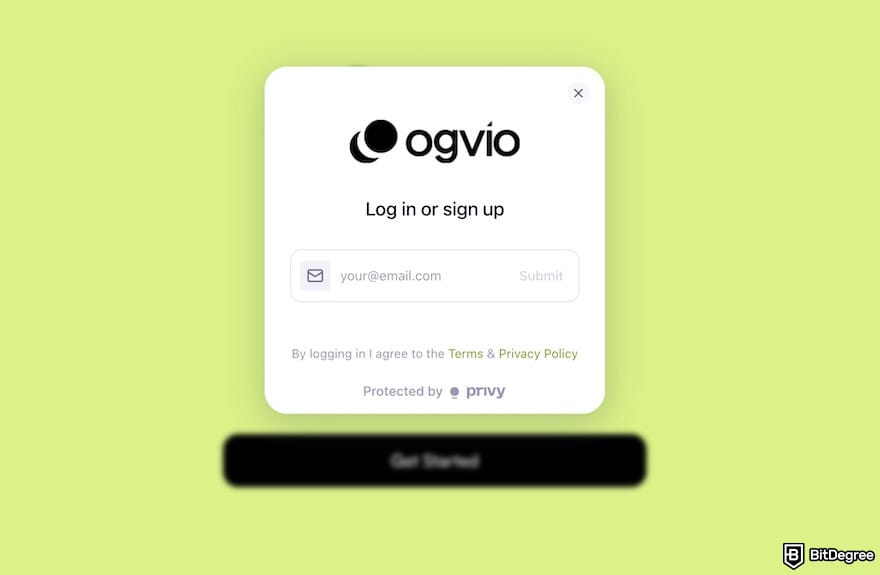
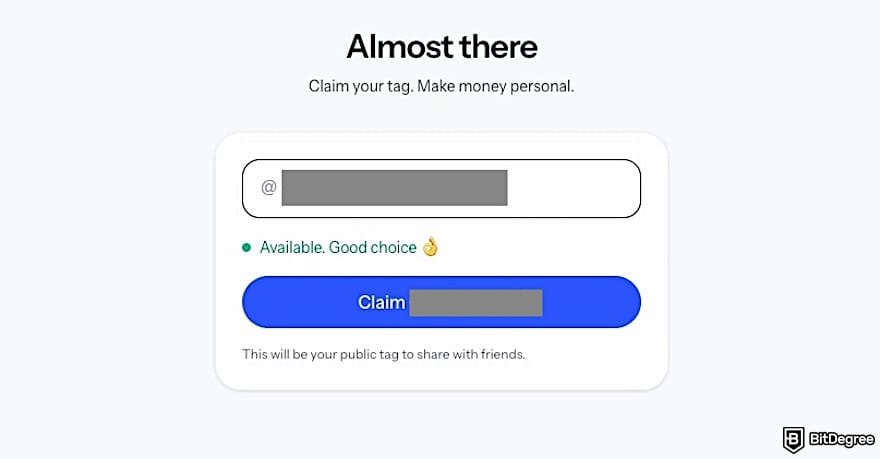
After claiming your @Tag, you’re fully set up to start sending and receiving money through Ogvio. You can easily get paid by clients, employers, or collaborators abroad.
Receive Money via Ogvio @Tag
If the person paying you already uses Ogvio, this is the fastest and easiest option.
![Is PayPal available in Pakistan: an arrow pointing at [Add Money] button on the Ogvio dashboard.](https://assets.bitdegree.org/images/is-paypal-available-in-pakistan-ogvio-dashboard-add-money.jpg "Is PayPal available in Pakistan: an arrow pointing at [Add Money] button on the Ogvio dashboard.")
![Is PayPal available in Pakistan: the [Receive From Ogvio User] menu on Ogvio highlighted among the other top-up options.](https://assets.bitdegree.org/images/is-paypal-available-in-pakistan-ogvio-top-up-methods-ogvio-user.jpg "Is PayPal available in Pakistan: the [Receive From Ogvio User] menu on Ogvio highlighted among the other top-up options.")
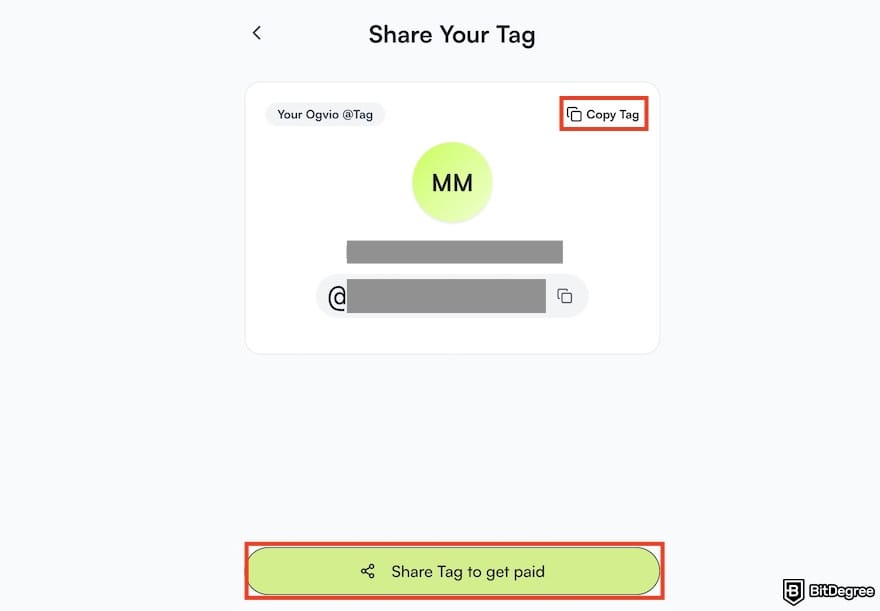
Once the sender uses your @Tag, the money arrives instantly in your Ogvio balance. There’s no need to send bank details, no waiting, no awkward back-and-forth.
You can then hold your funds on Ogvio, send it to others, or withdraw PKR to a Pakistani bank account (your own or someone else's).
If you’re a freelancer or remote worker and want a more polished way to get paid, Ogvio also lets you send a payment request link:
![Is PayPal available in Pakistan: the [Request Money] button on Ogvio outlined.](https://assets.bitdegree.org/images/is-paypal-available-in-pakistan-ogvio-request-money.jpg "Is PayPal available in Pakistan: the [Request Money] button on Ogvio outlined.")
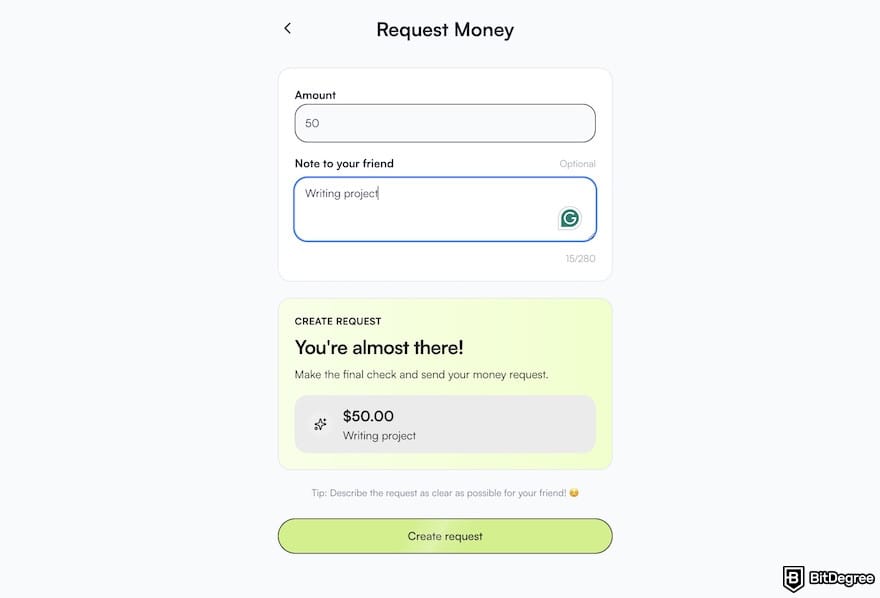
Ogvio will generate a secure payment link that you can send directly to your employer, client, or business partner. This option feels more formal than sharing a @Tag and works well for invoicing, salary payments, or recurring client work.
Receive Money To a Pakistani Bank Account
Ogvio lets users send money straight into Pakistani bank accounts, covering both well-known traditional banks and popular digital banking options. These include The Bank of Khyber, Bank Alfalah, and Habib Bank Limited. Whichever platform you end up receiving through, the money still has to land in a local account at the end of the chain, so if you haven’t settled on one yet, our best bank in Pakistan comparison weighs up the main candidates before you commit.
If the sender’s balance is in currencies like GBP, AUD, or CAD, Ogvio handles the conversion behind the scenes. The funds are automatically settled in a stable currency such as USD or EUR, and when PKR is selected as the payout option, the recipient receives Pakistani rupees directly without needing to do anything extra.
To send money to a Pakistani bank from abroad, the sender can simply deposit some funds and follow these steps:
![Is PayPal available in Pakistan: the [Send Money] button on the Ogvio dashboard outliend.](https://assets.bitdegree.org/images/is-paypal-available-in-pakistan-ogvio-send-money-outlined.jpg "Is PayPal available in Pakistan: the [Send Money] button on the Ogvio dashboard outliend.")
![Is PayPal available in Pakistan: the [Bank Transfer] option on Ogvio outlined.](https://assets.bitdegree.org/images/is-paypal-available-in-pakistan-send-bank-transfer-ogvio.jpg "Is PayPal available in Pakistan: the [Bank Transfer] option on Ogvio outlined.")
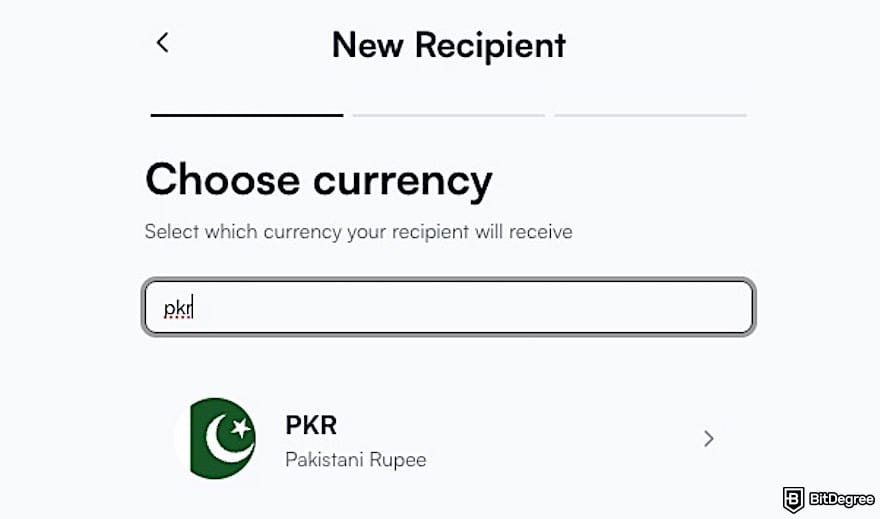
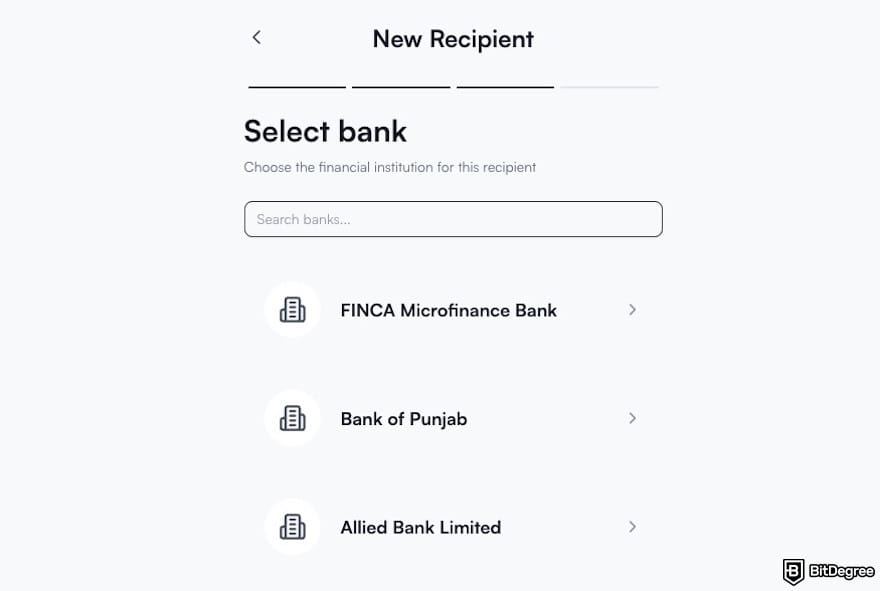
This setup means someone abroad can send money directly to a Pakistani bank account without the recipient needing to log in or manually withdraw funds. Ogvio provides updates when the money is on the way, and in my experience, transfers often arrive even faster than the estimated time.
If you're a Pakistani user who wants to take money out of Ogvio, you have to follow the same steps to withdraw your Ogvio balance to your bank account.
Receive Crypto Using Ogvio
If you prefer getting paid in crypto, Ogvio also supports crypto deposits, which can be a fast and flexible option, especially if the sender already uses wallets or crypto exchanges. To find your Ogvio wallet address, follow these steps:
![Is PayPal available in Pakistan: the [Crypto Transfer] option on Ogvio outlined.](https://assets.bitdegree.org/images/is-paypal-available-in-pakistan-ogvio-top-up-methods-crypto-transfer.jpg "Is PayPal available in Pakistan: the [Crypto Transfer] option on Ogvio outlined.")
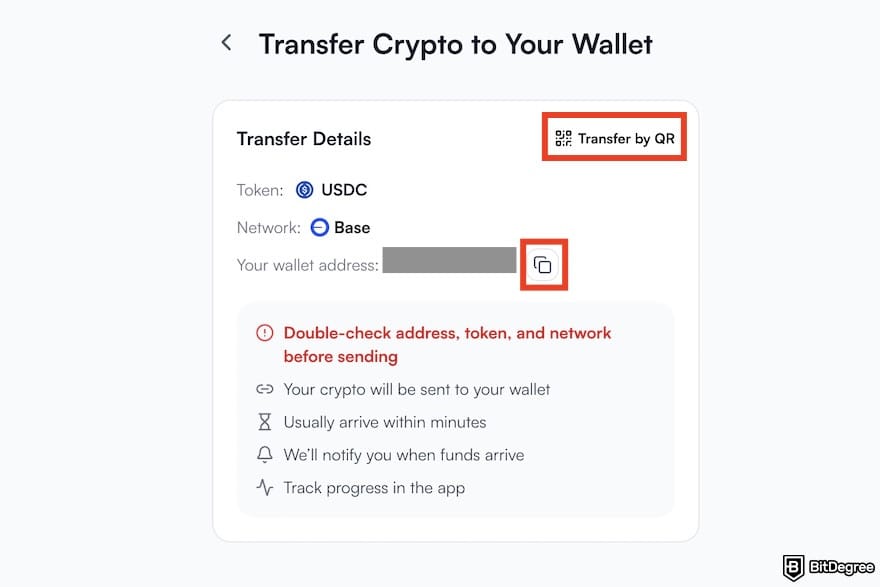
It’s important to note that Ogvio currently only supports USDC on Base transactions. That means the sender must transfer USDC (not BTC, ETH, or other tokens) to avoid failed or lost transactions.
Once the USDC is received, the balance shows up in your Ogvio account and can then be used like any other funds (e.g., sending money internationally, holding it in a stable currency, or using the money on a USDC-based app).
For users who are already crypto-native, this can be one of the quickest ways to fund an Ogvio account without relying on traditional banking rails. Besides, Ogvio also allows crypto transfers to external wallets.
Send Money Internationally Via Ogvio @Tag
Once you’ve received money in your Ogvio account, you’re not locked into withdrawing it right away. You can also send that balance to another country instantly and for free, which is super useful if you need to support family abroad or pay an overseas vendor or collaborator.
The only requirement is that the recipient must also have an Ogvio account, since this transfer happens entirely within the Ogvio network.
Here’s how to do it:
![Is PayPal available in Pakistan: the [Ogvio user] menu on Ogvio outlined.](https://assets.bitdegree.org/images/is-paypal-available-in-pakistan-ogvio-transfer-methods-ogvio-user.jpg "Is PayPal available in Pakistan: the [Ogvio user] menu on Ogvio outlined.")
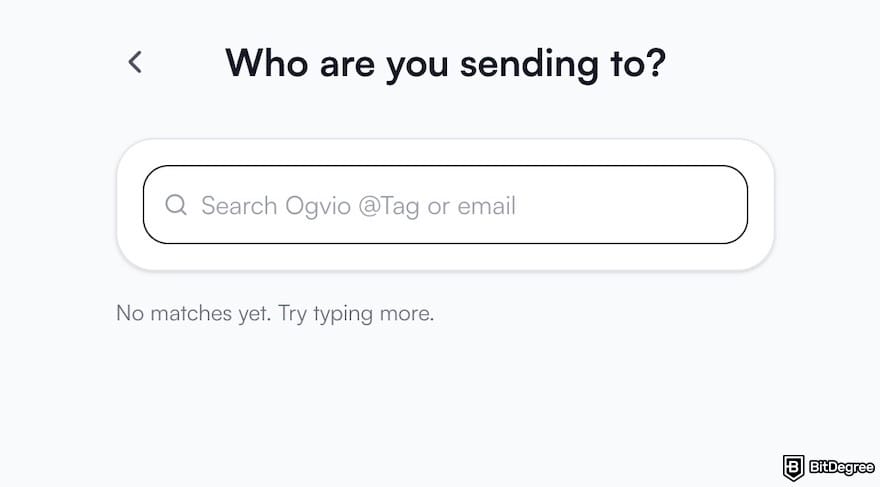
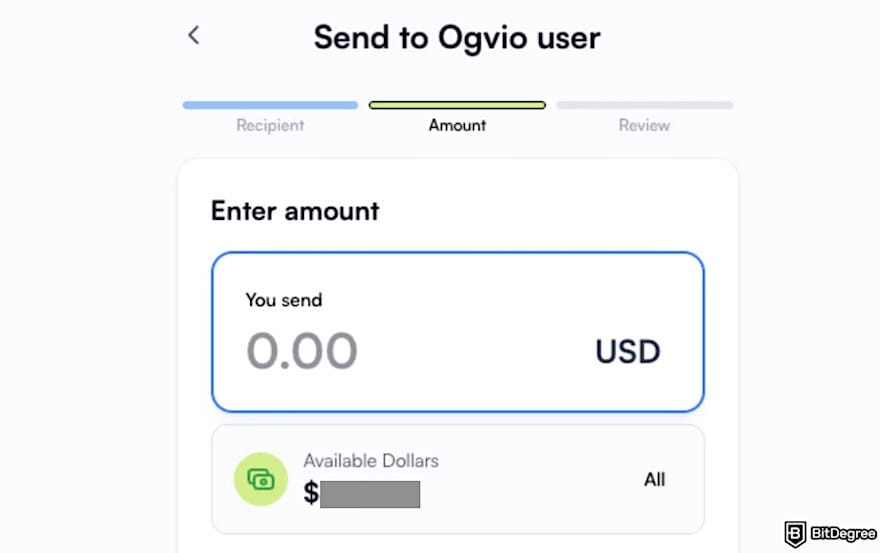
That’s it. The money moves instantly from your balance to theirs, with no transfer fees and no waiting time. For cross-border payments that need to happen ASAP, this is one of the simplest and most affordable options available.
📚 Read More: How to Send Money Online
Browse our collection of the most thorough Crypto Exchange related articles, guides & tutorials. Always be in the know & make informed decisions!



Conclusions
So, is PayPal available in Pakistan? No, it's not, and that hasn’t changed for years. You still can’t open a PayPal account with a Pakistani address, link a local bank, or receive funds directly. Most “workarounds” you see online usually end the same way: frozen accounts, stuck balances, or money you can’t withdraw.
But don't worry; not having PayPal doesn't mean you're left out of international payments. There are many platforms that work fine in the country.
One of them is Ogvio, and honestly, it’s one of the most flexible options for Pakistanis. You can receive money, hold balances, and send funds without having to bypass the rules.
Scientific References
1. Florea N., Croitoru G., Diaconeasa A.: 'The Impact of Integrity-Related Factors on Consumer Shopping Intention–An Interactive Marketing Approach Based on Digital Integrity Model';
2. Jalil A.: '“PayPal is not Coming Soon”. Why?'.
Send Money Worldwide
Check out the best ways to send money to other countries quickly, safely, and with minimal fees.
















About Article's Experts & Analysts