Key Takeaways
- Holding your funds in naira leaves your savings vulnerable to inflation;
- One of the most accessible ways to hedge against it is by shifting your funds into a more stable currency like USD;
- Ogvio keeps the process of tying your money to USD easy, secure, and affordable.

Nigeria’s currency devaluation isn’t something to shrug off. With inflation figures pushing into levels many reports describe as “worrying”, keeping most of your wealth in naira might not be the wisest decision.
Yeah, inflation’s got hands. But thankfully, there are practical strategies you can tap into to protect your savings. And no, you don’t need a PhD in finance to figure it out, especially with platforms like Ogvio making inflation-proofing your money simpler than ever.
So let’s get straight to it and look at what you can do right now to protect your hard-earned naira before it slowly loses value.

Did you know?
Subscribe - We publish new crypto explainer videos every week!
What is Aurora in Crypto? NEAR Protocol Token Explained (ANIMATED)

Table of Contents
- 1. Protecting Your Wealth From Currency Devaluation in Nigeria
- 2. Ogvio: Simplifying USD-Pegged Savings
- 3. How to Peg Your Money to USD With Ogvio
- 3.1. Setting Up an Account
- 3.2. Adding Funds
- 3.3. Starting Simple Earn
- 4. What’s Driving Nigeria Currency Devaluation
- 5. Additional Tips to Protect Your Wealth
- 6. Conclusions
Protecting Your Wealth From Currency Devaluation in Nigeria
The hard truth to swallow is that Nigeria’s economy hasn’t been kind to anyone over the past decade. Money supply tension, shaky exchange rates, stress in the private sector, and relentless inflation have weighed heavily on national growth.[1]
When things get rough, I often hear the same advice: “Let’s play it safe and put more aside for the future!”
And I totally get it. Taking a defensive stance and trying to live a bit more frugally does make sense in such situations. But here’s the uncomfortable part: if you’re saving your hard-earned money in naira, it might end up costing you more than it protects you.
At the heart of it is rising inflation and NGN devaluation, quietly shrinking what your money can buy.
I like to picture it as storing water in a container with a small crack; it won’t drain overnight, but it will eventually run dry. And as much as we might want to intervene, stopping currency devaluation isn’t a problem that an average person can solve.
You’re probably sitting there like: “Wait, are you saying the ₦10,000 I hid under my bed can’t even get me a bus ticket and there’s nothing I can do about it?"
Don’t panic just yet. You’re not entirely powerless here. There are some currency hedging strategies you can use to fight NGN inflation. But if we’re weighing effectiveness, ease of access, and simplicity, pegging your savings to a USD is probably the most practical route.
In this context, “pegging” means converting your naira savings into a US dollar-denominated value to lower the risk of currency fluctuations. For instance, if you hold $1,000 in USD-pegged assets, that balance doesn’t change even if the naira weakens.
Why the US dollar, though?
Well, it’s the primary global reserve currency, making up over half of worldwide foreign exchange reserves and playing a central role in trade and cross-border payments. And historically, it tends to stay resilient[2] even when the markets get shaky.

No doubt, the main purpose is to guard your wealth from the naira’s decline. But once you adopt a USD-pegged strategy, you can also unlock additional benefits:
- Adds stability to your financial planning. Saving in USD means the amount required for dollar-based costs remains steady, so you don’t have to keep revising your target whenever the naira slips.
- Protects you from rising import prices. With many goods in Nigeria linked to the dollar, holding USD can help cushion the effect of sharp price jumps triggered by currency depreciation.
- Simplifies international payments. Since the US dollar is accepted almost everywhere, keeping your wealth in USD can make global payments much smoother.

- Ensures your money stays liquid and easy to access. Compared to property or long-term commitments, USD holdings can be accessed or converted faster during emergencies.
- Easy to understand and put into practice. Unlike investing in stocks, real estate, or other complex financial products, this approach is relatively approachable for people without a finance background.
So yeah, at this point, you likely see why I think a USD-pegged strategy is one of the most practical ways to fight NGN inflation. Still, one obvious question hangs in the air: “How do I actually do it, and where do I start?”
Well, I’ve got the right platform in mind for that.
Ogvio: Simplifying USD-Pegged Savings
If this is your very first experience converting naira to dollars, you’re probably imagining a full-blown ordeal. Walking into a bank with a bag of cash, standing in long queues, filling out an endless stack of documents, waiting some more, and finally, getting your dollars.
And that’s before you even get to the part: Where do I even keep it? Back under the mattress again, hoping no one finds it? It’s slow, inefficient, and outdated for a solution that’s supposed to make your already-demanding life easier.
What you need is something modern, clean, accessible, and secure. And that’s what Ogvio is designed for.
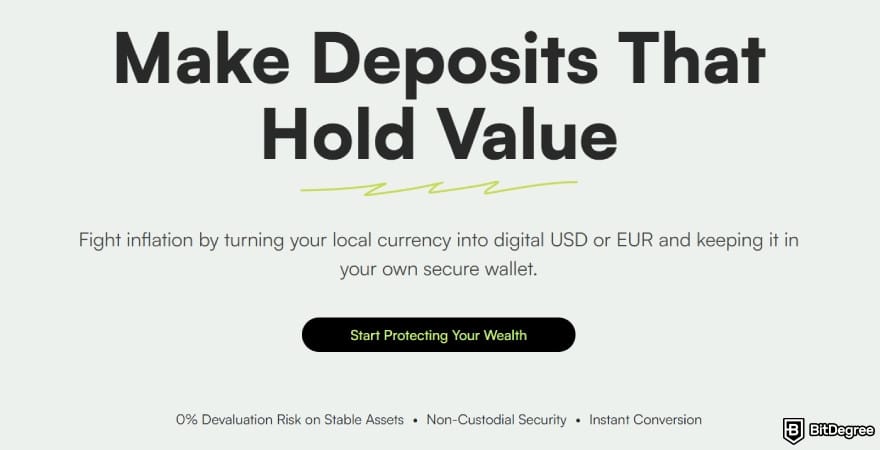
At its core, Ogvio operates as a next-gen global money transfer platform, enabling fast payments to 160+ countries without surprise fees. In addition to handling transfers, it functions as a digital bank that allows you to securely tie your balance to a USD-pegged value instantly.
Fight inflation by turning your local currency into digital USD and keeping it in your own secure wallet.
If you’re picturing that nightmare scenario of converting cash at a local bank or money changer like earlier, Ogvio turns the experience upside down.
All you have to do is create an account, set up your personal tag, and deposit your funds using one of the available methods. That’s it! Your naira is automatically tied to USD, allowing you to maintain stronger currency stability.
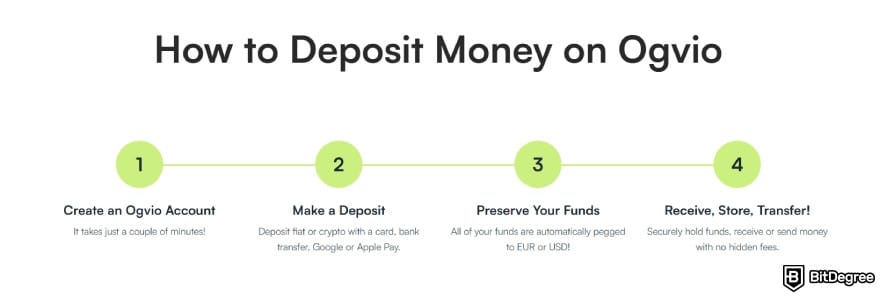
Even better, you can get started without completing ID verification right at the gate. This way, you can immediately secure your wealth without having to wait for compliance reviews to finish.
That said, Ogvio’s verification process is fairly quick. You can complete it at your convenience to access the platform’s full features, including bank-based transfers.
Should you need naira for local expenses, the process is also simple. The platform’s built-in functions make it simple to convert your USD-pegged assets back to NGN on demand and move the money directly to your bank or card.
If you have friends or family members living abroad, Ogvio simplifies cross-border transfers to and from Nigeria with fast processing and transparent pricing. Thanks to the @Tag feature, you can send money instantly and affordably to nearly anyone worldwide.
📚 Check Out: Best Way to Send Money to Nigeria
Security-wise, there’s no need for late-night worries. Ogvio stores your assets in non-custodial storage, meaning only you have access to them, with no third party or central authority involved. It helps minimize fears connected to bank failures or sudden account restrictions.[3]
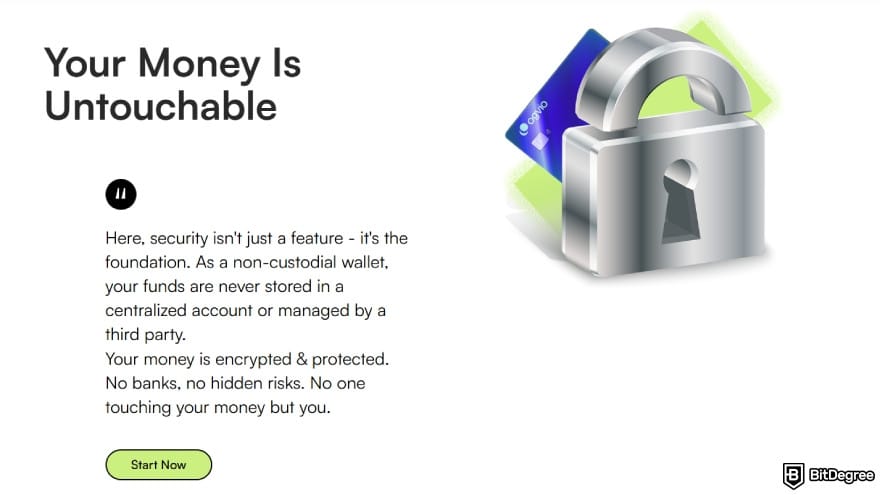
On top of that, your account is secured with AES-256 encryption, and an optional biometric login ensures no one else can access it. You can also enable a transaction PIN, which adds another layer of protection to every transfer.
With the stability of the US Dollar backing it, you’re getting the best of both worlds: enhanced digital protection and better economic stability.
Looking for more in-depth information on related topics? We have gathered similar articles for you to spare your time. Take a look!

How to Peg Your Money to USD With Ogvio
Now that you’ve seen what Ogvio can do to help you hedge against inflation, let’s put it to the test in real use. As I've mentioned earlier, you don’t have to complete full identity verification to use its dollar conversion feature.
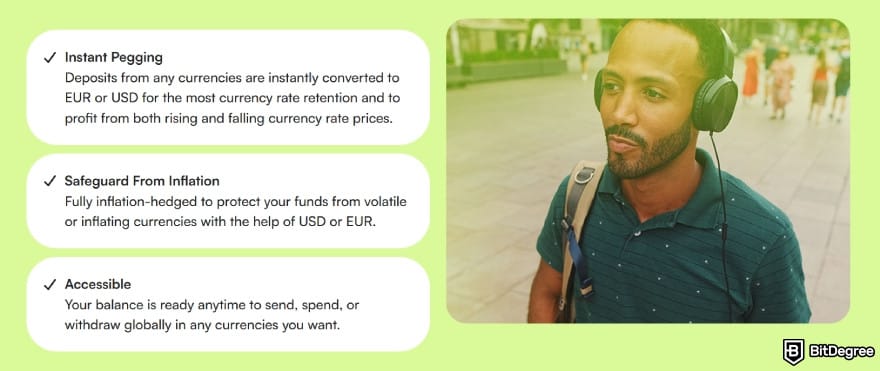
But of course, you still need to create an account and add some funds first.
Setting Up an Account
Creating your Ogvio account is easy. All you need is an email address, an internet connection, and a computer. And since it’s browser-based, you can also sign up from your smartphone without downloading anything.
Here’s how to do it:
![Currency devaluation in Nigeria: select [Get Started].](https://assets.bitdegree.org/images/currency-devaluation-in-nigeria-started.jpg "Currency devaluation in Nigeria: select [Get Started].")
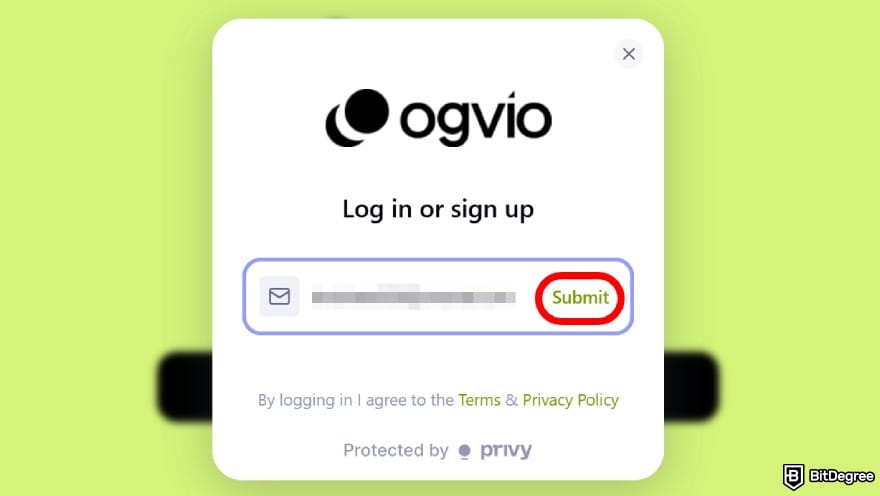
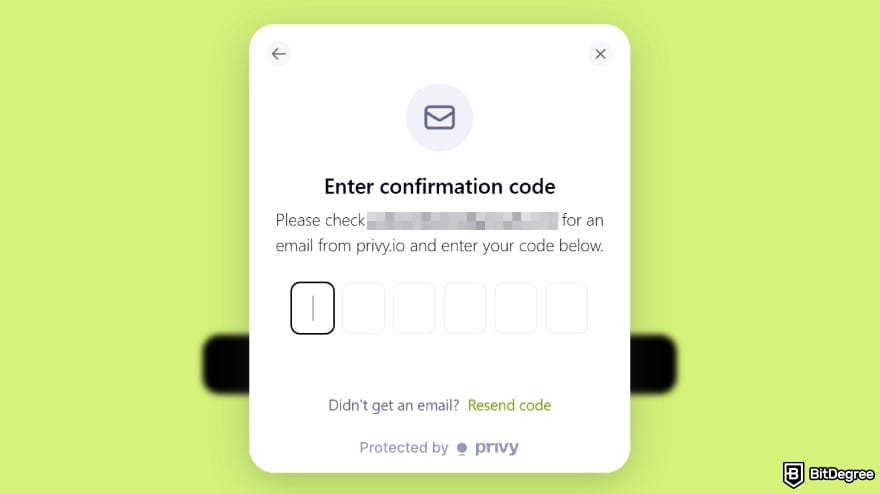
If you can’t find it, take a quick look in your spam or junk folder.
Once you’ve got it, copy the code and paste it into the box to complete your email confirmation.
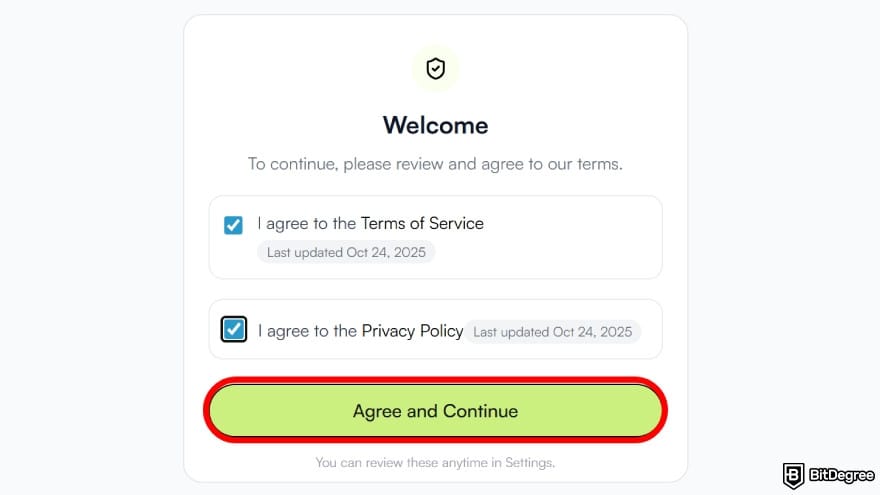
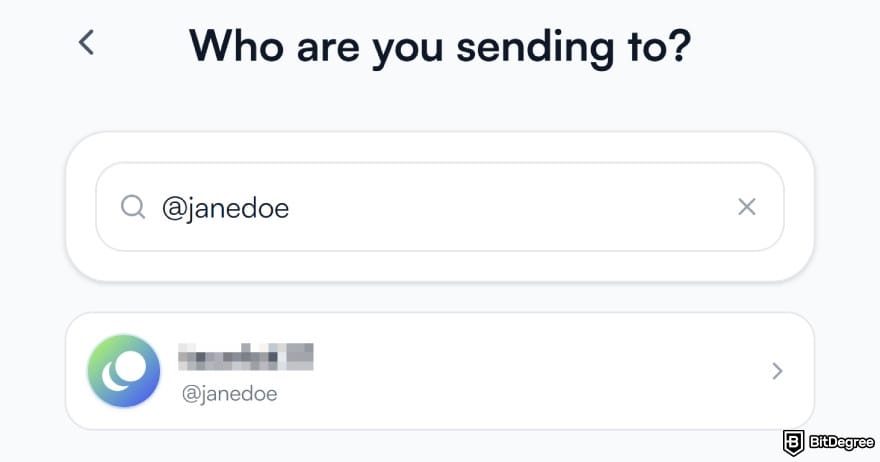
Once your account is ready, you’ll land on the main dashboard. You could deposit funds right away, but I’d suggest heading into your profile and setting up a transaction PIN first for extra protection.
Adding Funds
After setting up your Ogvio account, you can kick off your fight against NGN inflation by simply making a deposit. You’ll find multiple ways of doing that, including:
- Bank Transfer. In most cases, this is the route I’d suggest. You can expect competitive rates and quick processing since it relies on local payment networks.
- Card Transfer. This method usually comes with slightly higher fees, though it’s a good choice if you’re after speed and convenience when adding funds.

- Crypto Transfer. You can fund your account by sending supported crypto from an external wallet or exchange. The setup’s designed to be straightforward, even if you’re new to digital assets.
- Receive From an Ogvio User. If someone you know is already on Ogvio, they can use your @Tag to send you money instantly, without paying any platform fees.
- Request Money. You can request money from another user, with the funds credited to your balance immediately after they approve.
Now, I should mention that bank-related transfers on Ogvio require you to pass identity verification. This is part of complying with local regulations and applies to cases like depositing money into the platform from Nigerian banks such as First Bank, UBA, GTB, or Access.
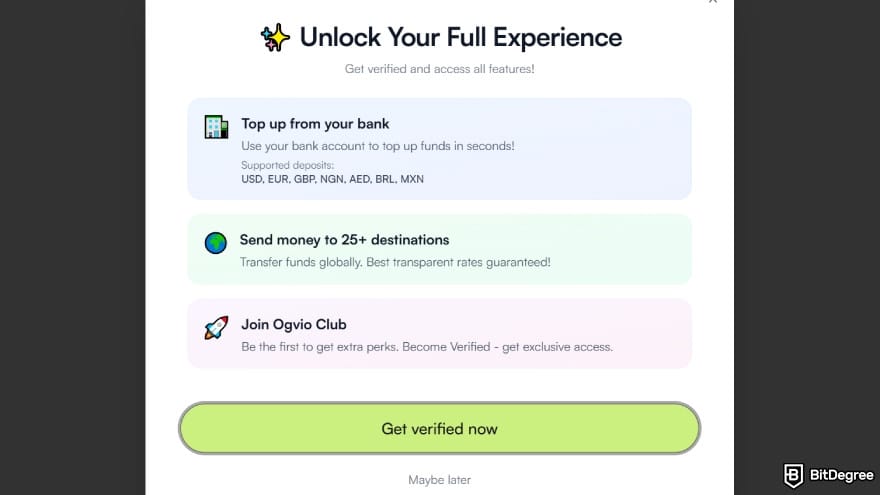
Again, you don’t have to complete it from the get-go. Still, the process is quick and straightforward. I’d say it’s worth the few minutes if you plan to top up your account via bank transfer.
Simply go to your profile, click on verification, and follow the on-screen prompts to complete the process.
If your goal is to stay ahead of Nigeria’s currency devaluation and peg your funds to USD as soon as possible, a card top-up is the route I’d recommend. Here’s how you can do it:
![Currency devaluation in Nigeria: select [+ Add Money].](https://assets.bitdegree.org/images/currency-devaluation-in-nigeria-add-money.jpg "Currency devaluation in Nigeria: select [+ Add Money].")
![Currency devaluation in Nigeria: choose [Card Transfer] from the list.](https://assets.bitdegree.org/images/currency-devaluation-in-nigeria-ogvio-card-transfer.jpg "Currency devaluation in Nigeria: choose [Card Transfer] from the list.")
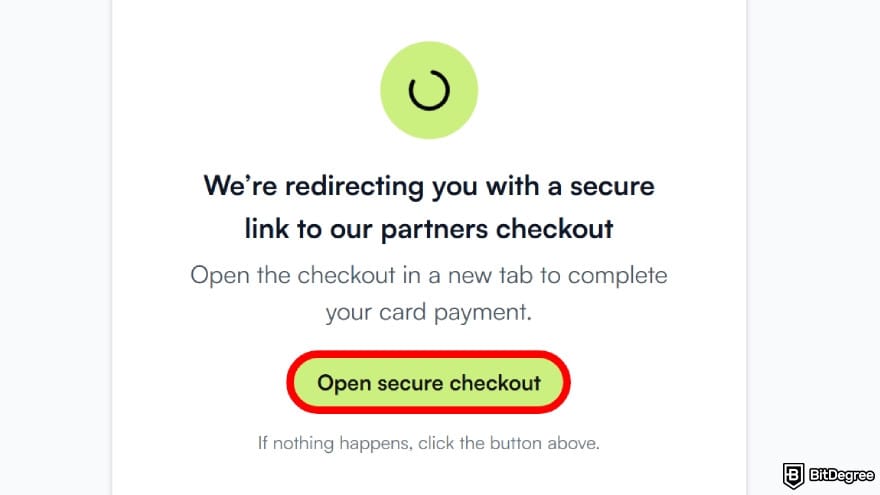
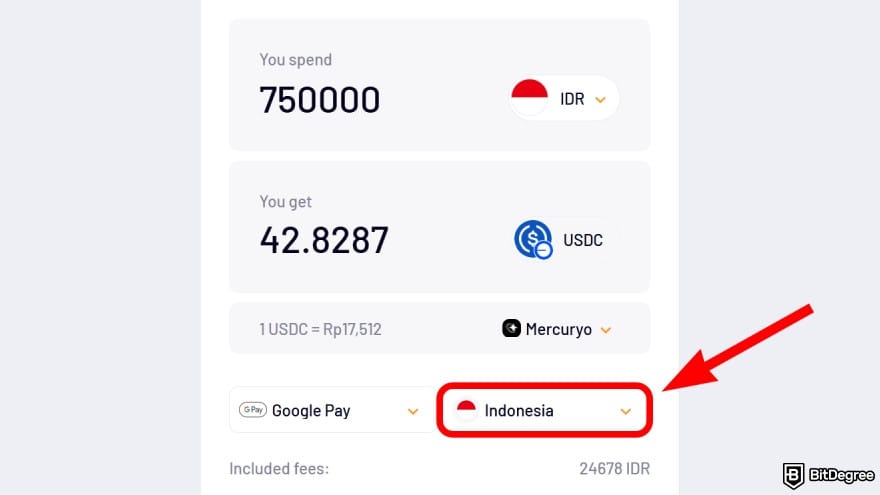
Once it pops up, use the search bar at the top or scroll through the options, then select [Nigeria].
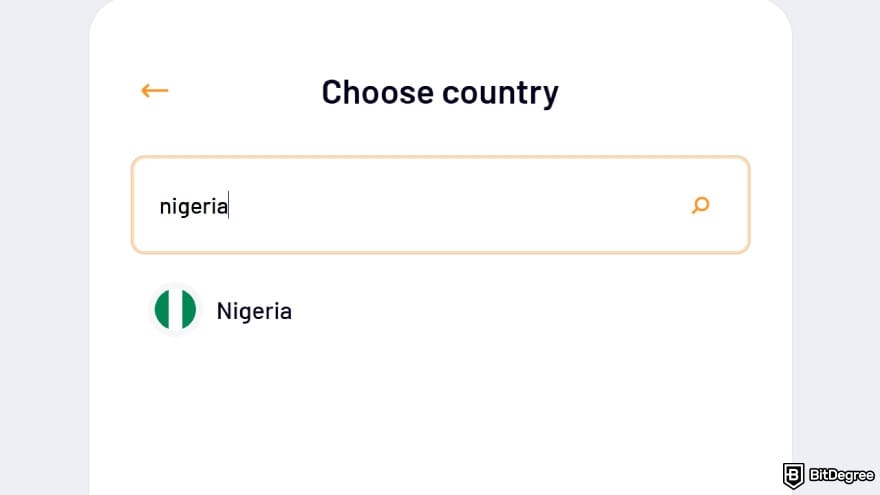
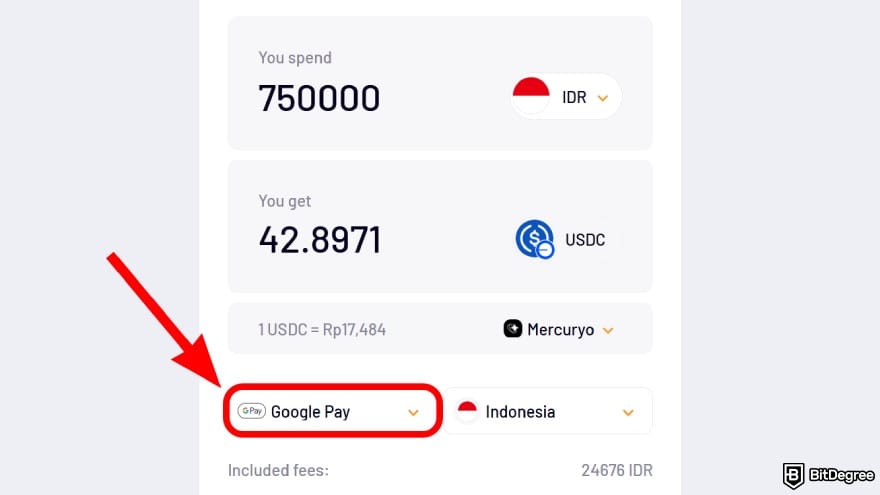
Once the options appear, pick the one you want to use and continue.
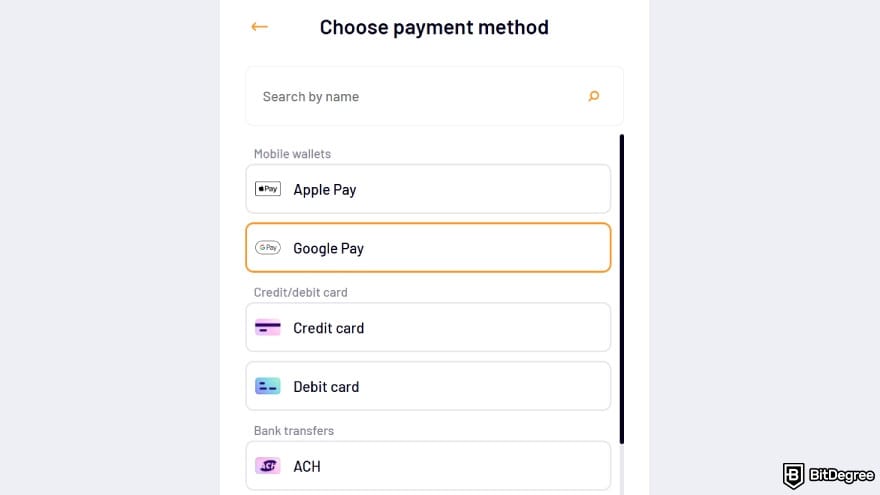
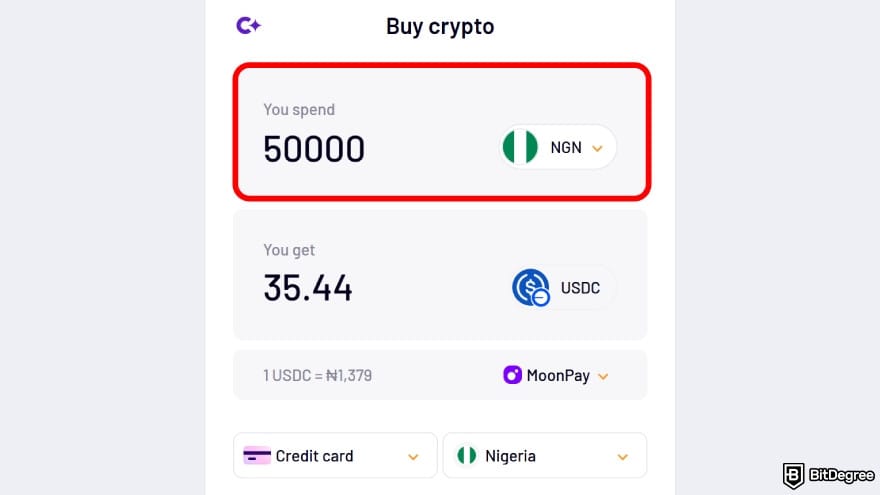
Take a moment to review the details (including the rate and fees). Once you’re done, click [Continue].
And that’s basically it! Your money is tied to USD and protected from NGN devaluation.
At this point, you don’t really need to do anything else since your main objective of protecting your wealth is already accomplished. But if you’d rather not leave your dollars idle, Ogvio has a feature for that too.
Starting Simple Earn
If you’re serious about protecting your wealth from currency devaluation, I’d also encourage you to check out Ogvio’s Simple Earn. As the name implies, it’s designed to help your balance grow gradually without exposing you to unnecessary risks.
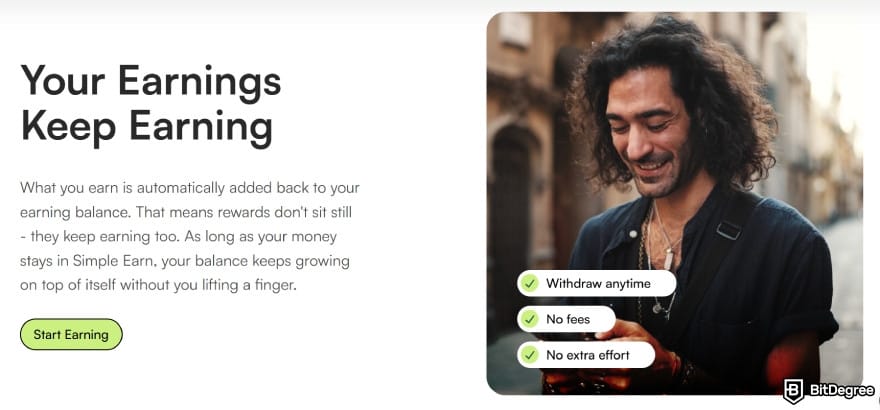
Just move any portion of your savings into the earning balance, and it begins working immediately. There’s no need to monitor charts or track the markets constantly. After activation, your funds generate income on their own.
You can earn up to 3.50%, but the actual amount you receive may vary depending on market conditions.
You might be a bit curious and raise the question: "So where does that additional income really come from?"
When you put money into the earning balance, it goes into something called an Aave USDC vault. You can picture it as an online lending system where your funds are combined with those of others and made available for borrowing.

But here’s the key thing: anyone who borrows has to put up more value than they’re borrowing. That extra layer acts as protection if the market moves unexpectedly, helping reduce your overall risk.
Now that you understand how it works, here’s a quick guide to show how easy it is to get started:
![Currency devaluation in Nigeria: choose the [Earn] option.](https://assets.bitdegree.org/images/currency-devaluation-in-nigeria-ogvio-simple-earn.jpg "Currency devaluation in Nigeria: choose the [Earn] option.")
![Currency devaluation in Nigeria: click on [Start earning].](https://assets.bitdegree.org/images/currency-devaluation-in-nigeria-ogvio-earn.jpg "Currency devaluation in Nigeria: click on [Start earning].")
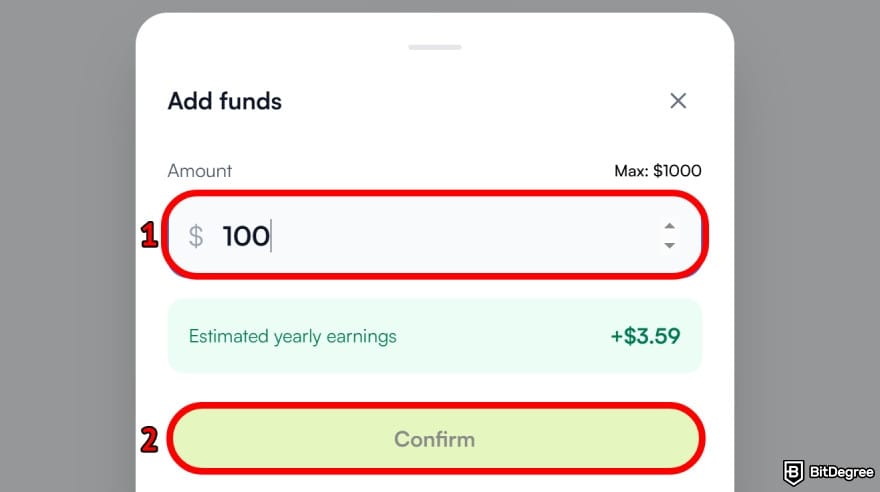
Now sit back, relax, and watch your balance grow. And if you ever decide otherwise, you can withdraw your money anytime with no penalties.
Also, you won’t have to handle reinvestment manually. Your rewards are automatically added back to your earning balance, and over time, they begin generating returns as well. That’s the compounding effect, quietly building your wealth in the background.
What’s Driving Nigeria Currency Devaluation
You’re probably wondering how things got to this point. That same ₦1,000 that used to load your pockets with candy as a kid now barely covers a bus ride to the next town.
As frustrating as it feels, this didn’t happen overnight. Nigeria’s currency devaluation history reflects years of economic strain piling up. Inflation, FX shortages, trade gaps, and policy shifts all compounded until you finally feel the pressure.
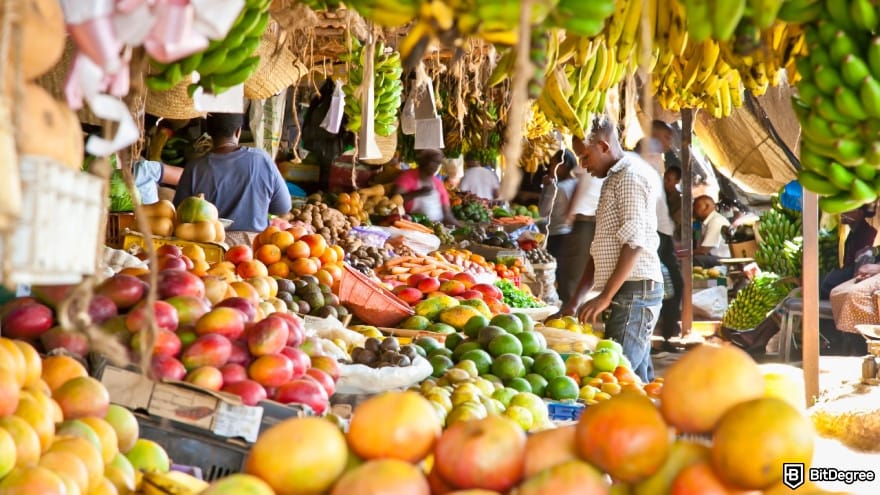
The strain deepened after COVID-19 shook global production and trade, and the war in Ukraine only made things even worse. For a country like Nigeria that depends on imports, those global shocks rapidly turned into rising domestic costs.
Here’s a breakdown of how inflation has changed year by year:
Year | Average Inflation Rate |
|---|---|
2021 | 16.95% |
2022 | 18.85% |
2023 | 24.66% |
2024 | 33.17% |
2025 | 23.33% |
Table: Nigeria’s annual inflation rate (2021–2025)
The government wasn’t just sitting back doing nothing, though. In 2023, it rolled out significant reforms to stabilize the macroeconomic system, most notably by removing entrenched fuel subsidies and restructuring the exchange rate system.
It was a massive adjustment with visible, immediate effects. With fuel prices affected, transportation costs surged, and everyday living became even more expensive for many Nigerians.

Even so, the government sees these reforms as essential for long-term recovery. By 2025, inflation seems to have leveled off and steadied compared to earlier surges.
The Central Bank of Nigeria is also projecting over 4% economic growth for 2026 and expects inflation to ease to about 12.94%, pointing to a steadier FX market and improved oil output.
At least on paper, the pace of price increases has slowed and there’s reason for optimism.
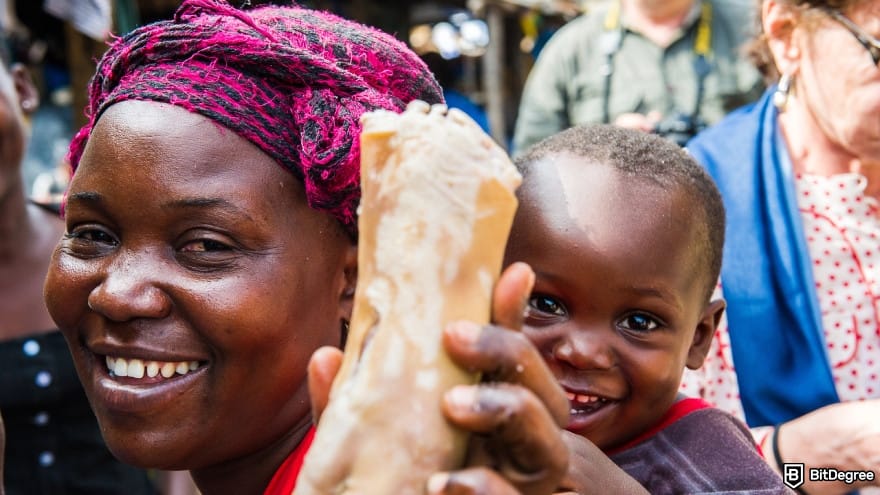
Of course, not everyone is convinced. When everyday costs are still squeezing budgets, it’s easy to question what these reforms will mean down the line.
But here’s the thing, you don’t have to sit around waiting for better headlines on the news. You can take action against inflation on your own terms now. And one way to do that is by pegging your naira to USD via Ogvio.
Additional Tips to Protect Your Wealth
You’ve recognized that currency devaluation in Nigeria is a serious issue, and you didn’t just sit back and hope for the best. You acted and used the right tool. That already puts you in a stronger position.

Unfortunately, protecting your wealth isn’t a “set it and forget it” kind of plan. Even with Ogvio making the USD-peg method easier, it’s important to be proactive. So here are a few practical tips that savvy Nigerians like you should keep in mind:
- Separate spending from savings. You don’t have to completely remove naira from your finances. Use it for everyday spending and lifestyle expenses, but don’t count on it as your primary long-term savings base.
- Convert your money gradually. Instead of moving your entire balance into USD in one go, break it into smaller amounts and spread the conversions across weeks or months. That way, you soften the risk of sudden exchange rate swings.
- Plan your cash-out route. Don’t leave the conversion back to naira as an afterthought. While Ogvio simplifies the process, you should know your bank destination and have a backup ready in case of slowdowns.
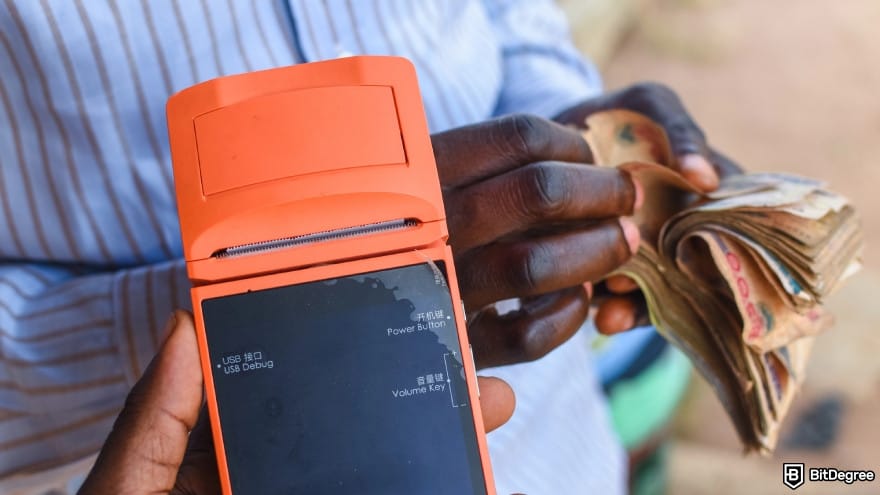
- Don’t rely on one paycheck. I’d also recommend diversifying your income sources. With many digital platforms offering remote roles and gigs, it’s now relatively easy to make money online in Nigeria, even with limited technical skills.
- Focus on preservation, not speculation. Remember that your main purpose in pegging your wealth to USD is to protect it against inflation. Don’t be tempted to treat it like short-term gains or speculative trading.
If you’re working with a significant amount of capital, I’d also encourage you to involve a financial professional. Not only can they help you determine the right portion to convert into USD, but they can also guide you through any tax considerations or compliance requirements that come with it.
Browse our collection of the most thorough Crypto Exchange related articles, guides & tutorials. Always be in the know & make informed decisions!

Conclusions
And with that, you’ve taken active steps to protect your wealth from naira inflation, just like any savvy Nigerian would. Yes, there’s little we can do individually to stop currency devaluation altogether. But by choosing to be proactive, you’ve already done more than most to strengthen your financial future.
There are, of course, other options out there (gold, equities, and real estate), each of which comes with its own advantages. That said, a USD-pegged strategy is arguably one of the most accessible and easiest approaches, especially nowadays when the process can be managed digitally.
Even more so when you’re using a platform like Ogvio. It’s transparent, flexible, and secure, and the Simple Earn allows you to earn a steady yield that supports your asset value.
Scientific References
1. Ayorinde B. F.: ‘Impact of Monetary Policy on Economic Development in Nigeria’;
2. Bertaut C., von Beschwitz B., Curcuru S.: ‘The International Role of the U.S. Dollar – 2025 Edition’;
3. Bowler R., Goodell G., Revans J., Bizama G., Speed C.: ‘A Non-Custodial Wallet for CBDC: Design Challenges and Opportunities’.
Send Money Worldwide
Check out the best ways to send money to other countries quickly, safely, and with minimal fees.




















About Article's Experts & Analysts