Key Takeaways
- Bybit P2P NGN still works in Nigeria, but it operates in a gray area and could change anytime;
- Your crypto must be in the Funding Account before you can withdraw or use P2P;
- Non-P2P options like Ogvio reduce risk, delays, and reliance on buyer interactions.
The Nigerian government believes exchanges are part of the reasons the naira stays unstable – that’s why big names like Binance and KuCoin have completely paused NGN services. Don’t worry; it’s still possible to figure out how to withdraw money from Bybit in Nigeria.
A lot of people rely on Bybit P2P because it feels faster and more direct. But let’s be real; there’s no guarantee this function will stick around forever with regulatory uncertainties. It could easily follow the same path as other exchanges that suddenly shut down naira support.
So, it makes sense to know another way out on how to withdraw NGN from Bybit. For example, using a more structured platform like Ogvio gives you a safer backup – I’ll show you how to use it in this step-by-step guide.

Did you know?
Subscribe - We publish new crypto explainer videos every week!
5 Best Crypto Portfolio Diversification Strategies (Animated Explanation)


Table of Contents
- 1. How to Withdraw Money from Bybit in Nigeria Using Ogvio
- 1.1. Create an Ogvio Account
- 1.2. Convert Your Crypto to USDC (If Needed)
- 1.3. Enable Google Authenticator (If You Haven’t Yet)
- 1.4. Withdraw Crypto From the Exchange to Ogvio
- 1.5. Send the Money to Your Nigerian Bank Account Using Ogvio
- 2. How to Cash Out Crypto From Bybit to Naira Using P2P
- 2.1. Transfer Your Crypto to the Funding Account
- 2.2. Turn Your Crypto into NGN via P2P
- 3. How Bybit P2P Works in Nigeria
- 4. Is Bybit P2P Legal in Nigeria?
- 5. Bybit P2P Fees and Limits
- 6. Common Problems With Bybit P2P and How to Avoid Them
- 7. How to Withdraw Assets via Bybit’s Internal Transfer
- 8. Conclusions
How to Withdraw Money from Bybit in Nigeria Using Ogvio
Learning how to withdraw money from Bybit in Nigeria using Ogvio may involve an extra step, but the upside is simple: you don’t have to deal with P2P negotiations, buyer messages, or payment disputes. Instead, you’re moving funds directly from Bybit to Ogvio, then cashing out to Nigeria.
Latest Changelly Coupon Found:Create an Ogvio Account
If you don’t already have an Ogvio account, set one up first. This is essential because Bybit requires a destination wallet address when you initiate a withdrawal, and that address is generated inside your Ogvio account. Getting started is simple:
![How to withdraw money from Bybit in Nigeria: the [Get Started] button on Ogvio's homepage.](https://assets.bitdegree.org/images/how-to-withdraw-money-from-bybit-in-nigeria-ogvio-homepage-get-started.jpg "How to withdraw money from Bybit in Nigeria: the [Get Started] button on Ogvio's homepage.")
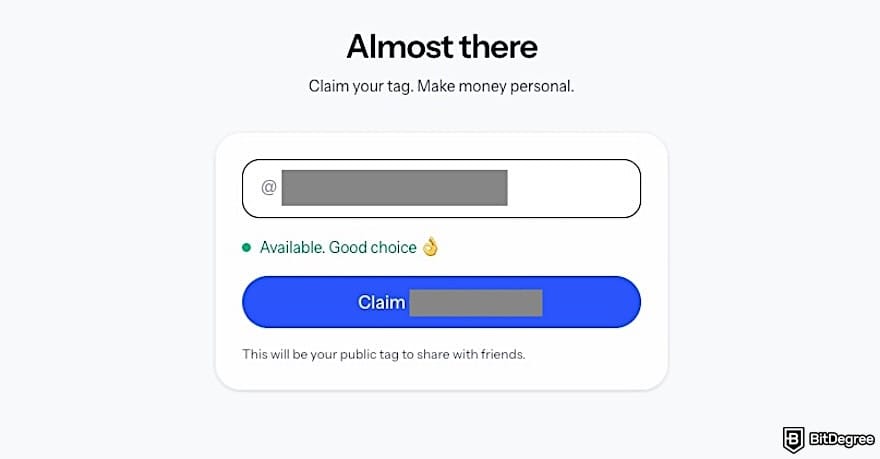
Once your @Tag is set, your Ogvio account is ready to receive crypto.
Convert Your Crypto to USDC (If Needed)
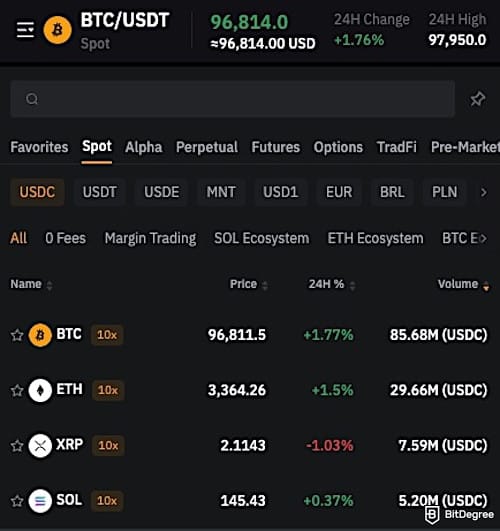
Before withdrawing to Ogvio, make sure your funds are held in USDC on the Base network. Ogvio currently only supports transfers with that asset. If your balance is already in USDC, you can skip this step. Otherwise:
![How to withdraw money from Bybit in Nigeria: the [Spot] menu on Bybit outlined.](https://assets.bitdegree.org/images/how-to-withdraw-money-from-bybit-in-nigeria-trade-bybit.jpg "How to withdraw money from Bybit in Nigeria: the [Spot] menu on Bybit outlined.")
![How to withdraw money from Bybit in Nigeria: the [Buy] section on Bybit.](https://assets.bitdegree.org/images/how-to-withdraw-money-from-bybit-in-nigeria-trading-amount-v2.jpg "How to withdraw money from Bybit in Nigeria: the [Buy] section on Bybit.")
Once the trade is completed, your balance will be in USDC, which is ready to be withdrawn to Ogvio and sent onward to Nigeria.
Enable Google Authenticator (If You Haven’t Yet)
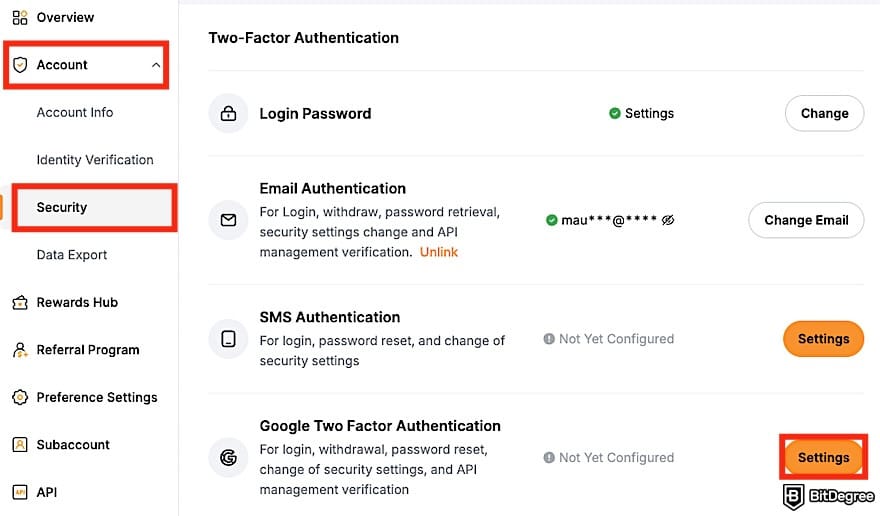
Before you can withdraw funds, two-factor authentication (2FA) must be enabled. Platforms like Bybit require this step to protect withdrawals, and the setup only takes a few minutes. To activate Google Authenticator, follow these steps:
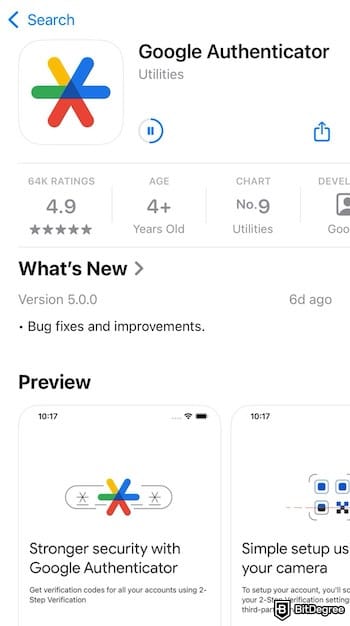
![How to withdraw money from Bybit in Nigeria: the [Scan a QR code] menu on Google Authenticator.](https://assets.bitdegree.org/images/how-to-withdraw-money-from-bybit-in-nigeria-scan-code-google-authenticator.jpeg "How to withdraw money from Bybit in Nigeria: the [Scan a QR code] menu on Google Authenticator.")
Once this is done, your account is secured and ready for withdrawals to Ogvio.
Withdraw Crypto From the Exchange to Ogvio
Although the funds move to Ogvio first before reaching your bank account, this is where the Bybit withdrawal to a bank account in Nigeria really starts. Get your receiving address from Ogvio and transfer your Bybit funds to that address:
![How to withdraw money from Bybit in Nigeria: the [Add money] button on Ogvio's dashboard.](https://assets.bitdegree.org/images/how-to-withdraw-money-from-bybit-in-nigeria-ogvio-dashboard-add-money.jpg "How to withdraw money from Bybit in Nigeria: the [Add money] button on Ogvio's dashboard.")
![How to withdraw money from Bybit in Nigeria: the [Crypto Transfer] button on Ogvio outlined.](https://assets.bitdegree.org/images/how-to-withdraw-money-from-bybit-in-nigeria-ogvio-top-up-methods-crypto-transfer.jpg "How to withdraw money from Bybit in Nigeria: the [Crypto Transfer] button on Ogvio outlined.")
![How to withdraw money from Bybit in Nigeria: the [Withdraw] button on Bybit.](https://assets.bitdegree.org/images/how-to-withdraw-money-from-bybit-in-nigeria-withdraw-button-bybit-v1.jpg "How to withdraw money from Bybit in Nigeria: the [Withdraw] button on Bybit.")
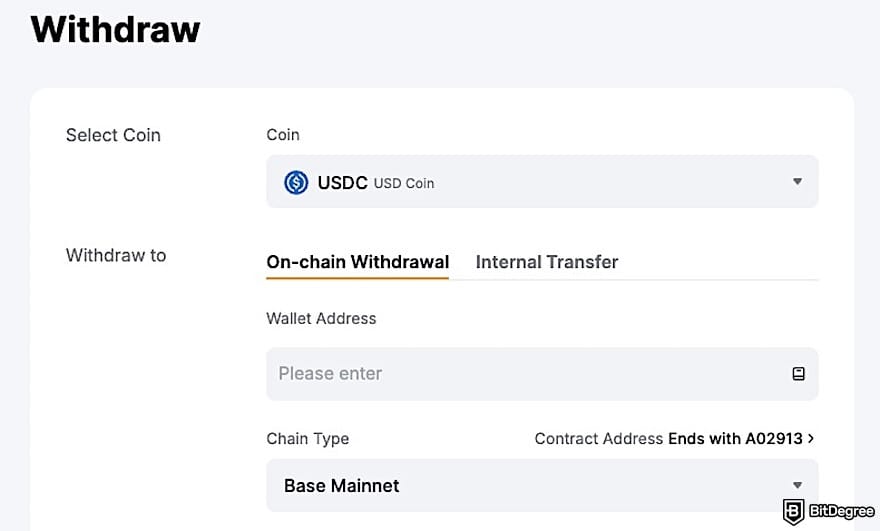
Your USDC will now be on its way to Ogvio. Transfers usually take just a few minutes, depending on network conditions.
Did you know?
Subscribe - We publish new crypto explainer videos every week!
What is Yield Farming in Crypto? (Animated Explanation)

Send the Money to Your Nigerian Bank Account Using Ogvio
This section is the core of this guide on how to withdraw money from Bybit in Nigeria. Once your funds arrive in Ogvio, it's time to transfer them to your Nigerian bank account. At the time of writing, Ogvio has listed various options, from the "old" bank like Omiye Microfinance Bank to a modern lifestyle bank like Sparkle.
![How to withdraw money from Bybit in Nigeria: the [Send Money] button on Ogvio outlined.](https://assets.bitdegree.org/images/how-to-withdraw-money-from-bybit-in-nigeria-ogvio-dashboard-send-money.jpg "How to withdraw money from Bybit in Nigeria: the [Send Money] button on Ogvio outlined.")
![How to withdraw money from Bybit in Nigeria: the [Bank transfer] menu on Ogvio outlined.](https://assets.bitdegree.org/images/how-to-withdraw-money-from-bybit-in-nigeria-ogvio-transfer-methods.jpg "How to withdraw money from Bybit in Nigeria: the [Bank transfer] menu on Ogvio outlined.")
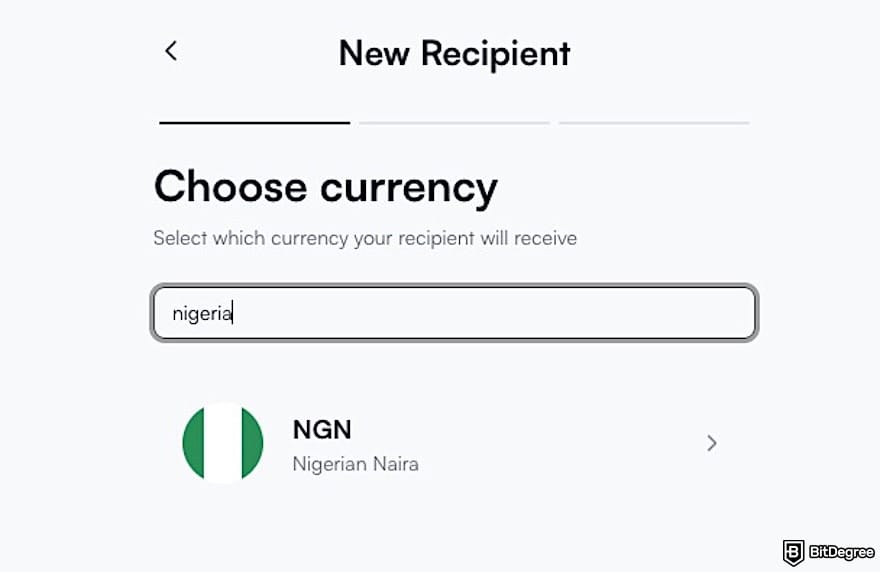
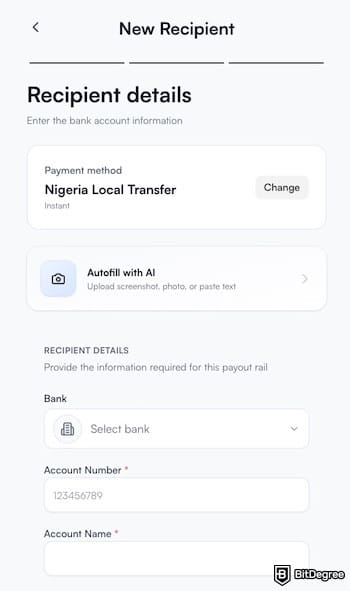
On Bybit, converting USD to NGN is challenging, but Ogvio will automatically convert your pegged USD stablecoin to naira and send it to the Nigerian bank account you provided. Depending on the bank and processing time, this typically takes anywhere from a few minutes to a couple of hours.
And just like that, your crypto has been successfully converted into spendable cash in Nigeria. There are no P2P chats, no buyer coordination, and far less friction overall. If you want to know how to convert NGN to USDT on Bybit, simply do these steps in reverse (deposit NGN, transfer USDC to Bybit, and convert it to USDT on the platform).
📚 Read More: Ogvio Review
Looking for more in-depth information on related topics? We have gathered similar articles for you to spare your time. Take a look!


How to Cash Out Crypto From Bybit to Naira Using P2P
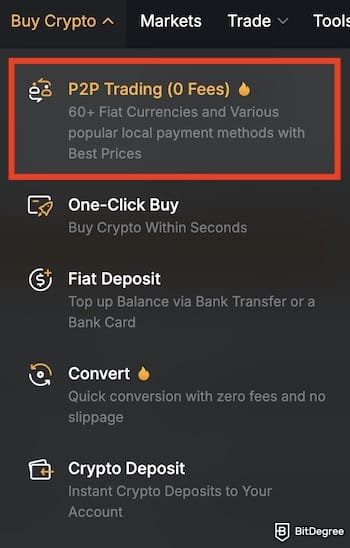
Can I withdraw from Bybit in Nigeria directly? At the time of writing, yes, you can. Using Bybit’s P2P marketplace is usually the most straightforward way to convert crypto directly into naira. You’re selling your crypto to another user and receiving NGN straight into your Nigerian bank account, all within Bybit’s system.
That said, this method isn’t completely hands-off. P2P cash-outs often involve interacting with buyers, confirming payment details, and waiting for the bank transfer to arrive before releasing your crypto.
While many trades go smoothly, timing and reliability can vary depending on the buyer, the bank, and overall market activity. So, I might say a bit of patience (and caution) is required. If you’re comfortable with that trade-off, follow these steps on how to withdraw money from Bybit in Nigeria via its P2P function.
Make sure you’ve enabled your Google Authenticator before moving on.
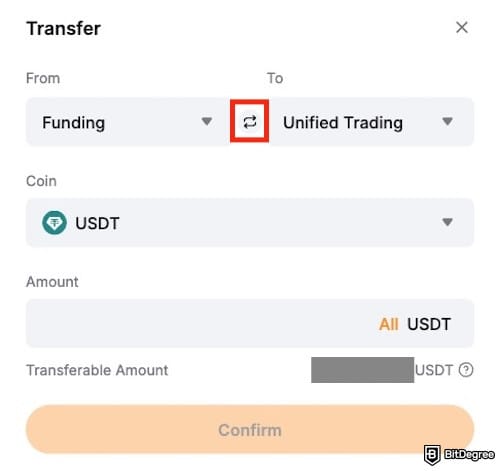
Transfer Your Crypto to the Funding Account
Bybit offers three main account types: the Funding Account, the Unified Trading Account, and the Inverse Derivatives Account. However, if your goal is to find out how to withdraw NGN from Bybit to a bank account, the Funding Account is the only one you need.
In many cases, users hold digital assets in their Unified Trading Account because those funds are actively used for trading. Before you can withdraw, those assets must be transferred to the Funding Account.
![How to withdraw money from Bybit in Nigeria: the [Transfer] button on Bybit outlined.](https://assets.bitdegree.org/images/how-to-withdraw-money-from-bybit-in-nigeria-transfer-bybit.jpg "How to withdraw money from Bybit in Nigeria: the [Transfer] button on Bybit outlined.")
Turn Your Crypto into NGN via P2P
If you already have the money on your Funding account, follow Bybit's NGN withdrawal guide to transfer the funds to your Nigerian bank account:
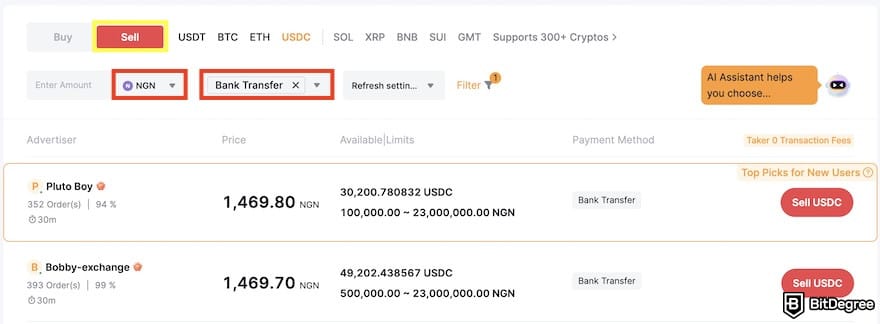
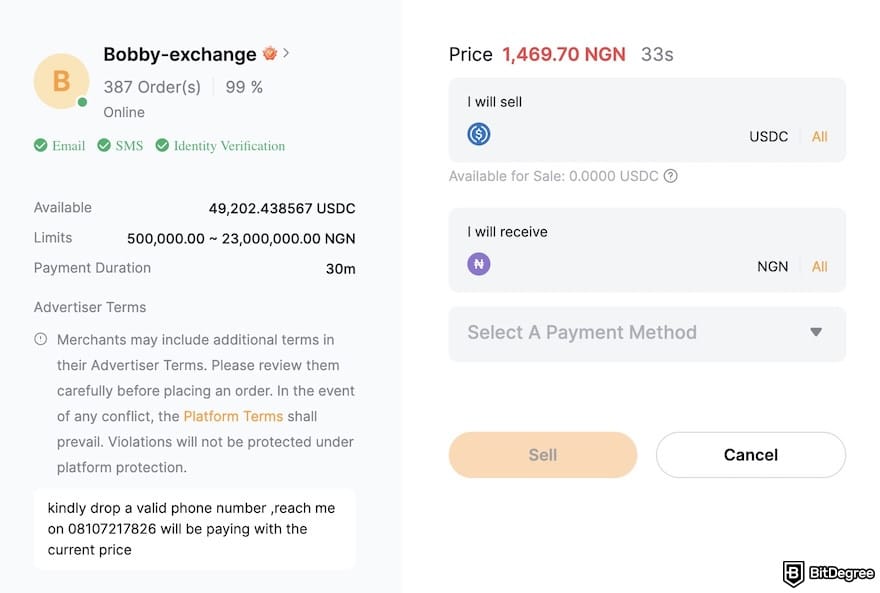
The buyer will then transfer naira directly to your Nigerian bank account using the details you provided. Don’t release your crypto immediately; confirm that the funds have fully arrived and that the sender’s name matches the buyer’s name on Bybit.
That’s it. You’ve successfully completed Bybit's NGN withdrawal using its P2P marketplace. From here, you can repeat the process, save the funds, or spend them as needed.
📚 Read More: How to Withdraw From Bybit
How Bybit P2P Works in Nigeria
At first glance, the situation in Nigeria looks inconsistent. While many citizens depend on P2P trading to cash out USDT from Bybit to naira (or another crypto to naira), Nigeria’s government has openly blamed crypto P2P trading for adding pressure to the currency.
Back in early 2024, Nigerian regulators (mainly the Central Bank of Nigeria (CBN) and the NCC) started cracking down on crypto P2P. Their argument was that unregulated P2P pricing made the naira weaker.
After that, big exchanges started facing website blocks, as well as bank and regulatory scrutiny. This was especially an issue for Binance, which had the largest naira P2P volume at the time.
Once a major exchange becomes the “main character” in a regulatory narrative, the safest move is usually to step back. That’s exactly what Binance and KuCoin did by fully suspending NGN P2P support. From a compliance point of view, removing naira pairs is often easier than trying to operate in a grey zone with risk.
Another reason this all feels inconsistent is that the enforcement isn’t the same. Nigeria has acknowledged digital assets under the Investments and Securities Act (ISA) 2025, but access restrictions and telecom blocks aren’t applied the same way across the board.
That's why some platforms limit features proactively, others remain partially accessible, and Bybit's P2P activity continues simply because it’s difficult to fully police at scale.
If you wonder why Bybit still works, it’s because the exchange plays the game a little differently. Its P2P setup is strictly user-to-user, with Bybit acting only as an escrow middleman.
What does this mean when you try to dive into how to withdraw money from Bybit in Nigeria? That means the actual bank transfer happens outside the platform – it doesn’t directly process naira payments or integrate with Nigerian banks. This method reduces Bybit’s direct exposure to NGN flows.
Besides using bank transfers between individuals (not the exchange), Bybit locks your crypto in escrow when you start a trade. This prevents either side from backing out mid-transaction and adds more protection. In practice, the setup makes the system harder to shut down, even if regulators don’t really like the idea.
Is Bybit P2P Legal in Nigeria?
With the inconsistent regulations in Nigeria, can I withdraw from Bybit in Nigeria in the future? Probably yes, but it’s not guaranteed long-term.
Nigeria hasn’t introduced a full, technical ban on crypto P2P. Instead, regulators have minimized P2P activity, especially when it directly impacts FX pricing and naira stability. Enforcement feels a bit selective, targeting platforms with huge NGN volume and direct exposure to local banking routes.

That’s why Bybit P2P NGN can still function today. Its user-to-user model keeps naira transfers off the platform itself, making it harder to regulate compared to exchanges that directly “supported” NGN markets.
That said, this setup still lives in a grey zone. If regulators tighten enforcement further through telecom blocks, stricter bank monitoring, or new compliance rules, Bybit could limit or suspend NGN P2P the same way Binance and KuCoin already have.
From what I’ve seen, exchanges tend to move fast when regulatory risk spikes. Therefore, it's important to consider this risk because there are growing signs that cryptocurrencies are increasingly being misused for criminal activities.[1]
This uncertainty is exactly why Nigerians should not rely on a single cash-out method – that’s why I showed you how to cash out crypto using Ogvio at the beginning of this article.
Money transfer services like Ogvio can help you withdraw from Bybit to Nigerian bank accounts safely because they’re playing a different regulatory game than crypto exchanges. P2P platforms connect strangers, let them negotiate prices, and depend on bank transfers between users.
The “negative” results of P2P (price manipulation, FX rate distortion, and zero visibility) are what regulators worry about. On Bybit, NGN to USDT rates (or other cryptocurrencies) are hidden, creating a “shadow FX market” for the naira.
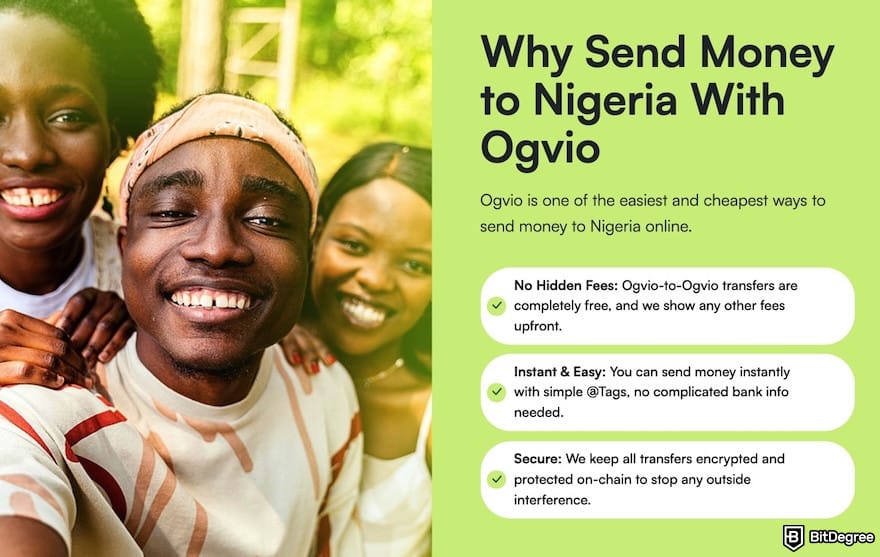
Meanwhile, money transfer services are more structured and regulated. On Bybit, converting USD to NGN is tricky with human interactions. However, Ogvio helps centralize payouts, manage bank relationships directly, and reduce scattered, peer-level transactions, which is more “regulator-friendly” than P2P.
From a user perspective, completing the steps on how to withdraw money from Bybit in Nigeria using Ogvio will feel safe. They don’t need to wait, be cautious of fake payment proof, or be afraid of release-before-credit pressure.
I know some people, particularly those who make UK-Nigerian transfers, rely on traditional methods like huwala.[2] While these systems can work through trusted networks, they’re informal, opaque, and heavily dependent on personal relationships. If something goes wrong, there’s usually no clear dispute process or platform support to fall back on.
Bybit P2P Fees and Limits
Bybit P2P trading is generally zero-fee for buyers (also known as takers) who want to cash out USDT from Bybit to naira. This means that when you buy crypto by accepting an existing P2P ad, Bybit doesn't charge any platform fees. In most cases, you can complete the transaction without paying anything to Bybit itself.
Sellers, on the other hand, may face maker fees depending on the fiat currency, region, and advertiser level. Here’s a table showing Bybit’s P2P fee structure for NGN currencies:
Trading Pair | Advertiser Level | Maker Fee | Taker Fee | |
|---|---|---|---|---|
Buy Ads | NGN with USDT / USDC / ETH / BTC | General Advertisers | 0.30% | 0% |
Buy Ads | NGN with USDT / USDC / ETH / BTC | Verified Advertisers | 0.275% | 0% |
Buy Ads | NGN with USDT / USDC / ETH / BTC | Block Advertisers | 0.25% | 0% |
Sell Ads | NGN with USDT / USDC / ETH / BTC | All Advertisers | 0% | 0% |
Table: Bybit's pricing structure
For Nigerians using Bybit P2P, this fee structure is actually quite okay, especially if your main goal is to cash out crypto to naira. On Bybit, BTC to NGN, as well as USDT, USDC, or ETH, comes with 0% platform fees, regardless of your advertiser level. This makes P2P a cost-effective option when exchange rates are good and buyers are reliable.
However, if you’re buying crypto with naira by placing your own buy ad, you may pay a small maker fee (between 0.25% and 0.3%). Most casual users avoid this by simply taking existing ads instead, which keeps the platform fee at zero.
Keep in mind that bank transfer fees and delays are separate from Bybit’s fees and can still affect your final outcome.
In terms of the order limits, it depends on the cryptocurrency. Each asset on the platform has its own minimum and maximum trade amounts. On Bybit, BTC to NGN’s minimum order amount is ₦450, and the maximum tier is ₦23 million per order. The same goes for ETH and USDC.
However, on Bybit, NGN-to-USDT rates and limits work slightly differently. Because USDT is the most liquid and most actively traded asset on P2P, it comes with a higher minimum order amount at ₦4,500. So, if you’re learning how to convert NGN to USDT on Bybit, you should expect to start with a slightly higher entry point compared to BTC, ETH, or USDC.
📚 Read More: Bybit Fees Overview
Common Problems With Bybit P2P and How to Avoid Them
Using Bybit P2P can work well, but most issues don’t come from the platform itself because they often come from how users interact with each other. Here are the most common problems Nigerians run into, and how to reduce your risk.
1
Fake proof of payment. One of the biggest P2P red flags is fake or misleading payment proof. Some buyers upload screenshots showing a “successful” transfer even though the money hasn’t actually reached your bank account.
2
Name mismatch issues. When your Bybit account name doesn’t match the name on the bank account used for payment, it can trigger disputes or bank compliance checks. The same applies to the seller you make transactions with.

3
Delayed bank transfers. Even when buyers are legit, Nigerian bank transfers aren’t always instant. Network issues, maintenance windows, or interbank delays can make a several-minute transfer take hours.
4
Frozen or restricted accounts. Being too active on P2P makes banks curious, especially when you’re getting big transfers from a bunch of different people.
Here’s a table showing how to avoid these issues:
Solutions | |
|---|---|
Fake proof of payment | Never trust screenshots alone. Always confirm that the funds are fully credited in your bank app before releasing your crypto. |
Name mismatch issues | Only trade with buyers whose verified name matches the bank account sending the funds. If the names don’t line up, it’s safer to cancel the trade and move on. Also, make sure your bank and Bybit accounts match. |
Delayed bank transfers | Check the buyer’s completion rate and average release time before accepting a trade. Higher completion rates usually mean fewer delays (and eventually smoother transactions). |
Frozen or restricted accounts | Avoid many back-to-back P2P trades in a short period. If you’re cashing out frequently, many users switch to non-P2P options like Ogvio. |
Table: Solutions for common problems with Bybit P2P
From the table, it’s pretty clear that most Bybit P2P issues can be avoided, as long as you don’t rush, ignore limits, or trade with advertisers you don’t fully understand.
How to Withdraw Assets via Bybit’s Internal Transfer
While withdrawing to NGN is the usual move, sometimes you just want to send your crypto to another Bybit user (and let them do the cash-out part). That’s exactly what Internal Transfer is for. With this feature, you can send digital assets instantly to other Bybit accounts with zero withdrawal fees.
Internal transfers are only available to Bybit users who have completed identity verification. Therefore, make sure the recipient has a verified account.
Below is a step-by-step guide on how to withdraw assets via Internal Transfer on Bybit:
![How to withdraw money from Bybit in Nigeria: the [Internal Transfer] tab on Bybit's withdrawal page.](https://assets.bitdegree.org/images/how-to-withdraw-money-from-bybit-in-nigeria-internal-transfer.jpg "How to withdraw money from Bybit in Nigeria: the [Internal Transfer] tab on Bybit's withdrawal page.")
To view your internal transfer history, go to your trading account and select [History], then select [Internal Transfer] under the [Withdrawal Method] column. If you’re the recipient, check [Deposit] and click [Deposit Method] and select [Internal Transfer].
Browse our collection of the most thorough Crypto Exchange related articles, guides & tutorials. Always be in the know & make informed decisions!



Conclusions
You may already be blocked when trying to withdraw crypto on Binance or KuCoin, but learning how to withdraw money from Bybit in Nigeria is still possible through its P2P functionality.
For now, Bybit P2P is a workable option for you to withdraw from Bybit to Nigeria bank accounts. That said, the regulatory environment is unpredictable, and there’s no guarantee P2P access will stay available, especially as other major exchanges have already pulled the plug on NGN services.
If you want a smoother way to cash out with less regulatory anxiety, consider using a crypto-supported money transfer service like Ogvio. It helps you move funds with fewer risks.
Scientific References
1. Adaramola O.: 'The Dark Arts of Crypto Laundering and the Nigerian Financial Ecosystem: Examining Regulatory Perspectives of Virtual Assets and Virtual Asset Providers in Mitigating Money Laundering Risks in Nigeria';
2. Ercanbrack J. G.: 'Hawala in the Uk-Nigeria Remittance Corridor: Institutional Dynamics and Illicit Value Flows'.
Send Money Worldwide
Check out the best ways to send money to other countries quickly, safely, and with minimal fees.
















About Article's Experts & Analysts