




.png?tr=w-150,h-30 "Muun Wallet - Best for Fast Bitcoin and Lightning Network Payments")



.png "Muun Wallet - Best for Fast Bitcoin and Lightning Network Payments")
Sending money feels different when Cuba is the destination. I realized this during my research on the best way to send money to Cuba. Many of the usual money transfer apps were unavailable or restricted, which made the search harder than expected. If you’ve ever tried sending funds there, you’ve probably faced the same frustration.
The hardest part is not sending the money, but finding a platform that can legally and reliably process transfers to Cuba. Each provider has its quirks: some rely on Cuban bank networks that move slowly, while others use global remittance partners that charge a premium. Once you map out these moving parts, sending money turns into a process you can navigate confidently.
One name that caught my attention during my exploration is Ogvio. Though it's not directly available in Cuba, if you're a Cuban citizen working, studying, or living abroad, you can use this platform to safely store, manage, and send money.
Here are some platforms that you might want to consider for your transfer:
- DUC App - Best for Multi-Currency Transfers With Home Delivery to Cuba
- Ogvio - Best for Instant, Low-Cost Remittances in Fiat and Crypto
- RevoluSEND - Best for Transfers to Cuban MLC Accounts
- Sendvalu - Best for Secure Cash Delivery and AIS Card Transfers
- Guarda - Best for Crypto Transfers With Multi-Asset Support
- Muun Wallet - Best for Fast Bitcoin and Lightning Network Payments
The mystery is, are they all available? And if not, why should you use them as a benchmark to find the best service? Let's find out!
1. DUC App - Best for Multi-Currency Transfers With Home Delivery to Cuba
Ranks #1 out of 6 Money Transfer Services
- + Home delivery support
- + WooCommerce and Odoo integrations
- + AES-256 encryption
- + Gift cards and international mobile top ups available
- - No upfront fee or speed details
- - Limited country availability
While researching how to transfer money to Cuba, I noticed that the DUC App is one of the few services that truly delivers on what they promise.
It was created by Duales Inc., a Toronto fintech that has specialized in remittances since the 90s. The name DUC comes from “Decentralized Units of Currencies”, a fitting nod to its goal of connecting traditional and digital payment systems.

In terms of functionality, users can move money through DUC in several ways. You can choose between credit/debit cards or cryptocurrencies.
Transfers can be received directly in CUP or USD, enabling money transfers to Cuba from Canada (or to any supported countries). The company even supports home delivery in select locations. There’s also a clean dashboard that tracks transaction history, beneficiaries, and payment requests for easy recordkeeping.
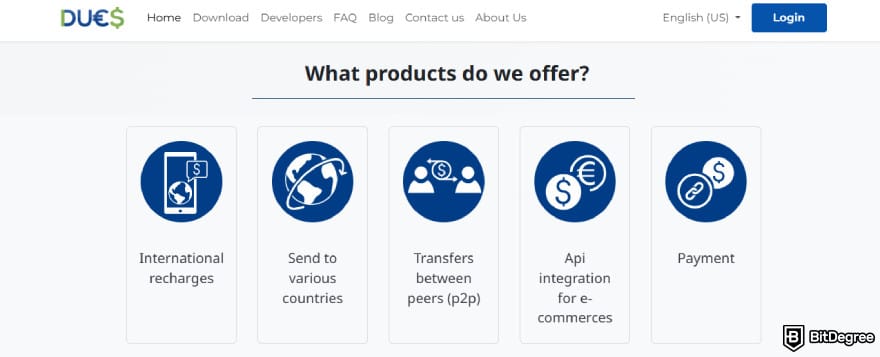
Its integrations further expand the app’s capabilities. Through plugins for WooCommerce and Odoo, businesses can connect DUC’s payment functions directly to their platforms. The API and sandbox environment are designed for developers and e-commerce managers seeking flexibility in managing customer payments or payouts across multiple currencies.
📚 Related: Best Payment Processors
Security is also taken seriously through end-to-end encryption and the TLS 1.2+ protocol. However, fee visibility could be more precise.
The company mentions low, competitive rates on the website, but doesn’t reveal them until the final payment step. The same goes for speed, described as “instant” without specific details across regions.
Here’s how the app performs overall:
Pros | Cons |
|---|---|
✓ Transfers in CUP or USD with home delivery | ✗ Transaction fees and speed are not displayed clearly |
✓ Beneficiary list and payment request features | |
✓ Full encryption and TLS 1.2+ protocol | ✗ KYC limits may restrict large transfers |
✓ Credit/debit cards, crypto, and email money transfer support |
Table: Pros and cons of DUC App
If you frequently manage money transfers to Cuba from Canada or other parts of the world, DUC could be a valuable companion. Just take time to compare its rates and timing with similar platforms before settling in.
2. Ogvio - Best for Instant, Low-Cost Remittances in Fiat and Crypto
Ranks #2 out of 6 Money Transfer Services
- + Remittance-oriented
- + Instant transfers
- + Incremental-to-no fees
- + Crypto support
- + @Tag functionality
- + Free transfers between users
- - No card (coming soon)
Ogvio isn't supported in Cuba, but that doesn't mean Cubans abroad cannot use it. If you reside in any of the 160+ countries Ogvio supports, you can use this platform as your neobank to securely manage and exchange fiat and digital currencies.
Merging crypto with international remittance is how Ogvio bridges the gap to untapped markets.[1] The platform uses USDC as a bridging currency for faster, cheaper transfers that eliminate geographical boundaries. Since USD Coin is pegged 1:1 to the US dollar, you can convert it to fiat with minimal fluctuation.
 | |
|---|---|
| |
| Per-transaction | |
| | |
| A global money transfer service with an additional volatile currency rate pegging to USD or EUR. | |
| Visit site Read review |
Table: Ogvio main features overview
Thanks to the use of crypto, you're not limited to bank operating hours. Even if an overseas family from Cuba needs urgent help at midnight or during the weekend, Ogvio keeps the transfer moving without delay.
The platform doesn't force you to have a bank account or any specific documentation. Most of its core features are available without KYC, and it uses high-grade encryption and security measures to shield you from third-party interference. Aside from crypto payment rails, card-based payment gateways and internal transfers are available from the get-go.
Ogvio-to-Ogvio transactions are completely free, and the same goes for internal crypto transfers. Best of all, you don't even have to pay network charges, since this money transfer service covers them for you.
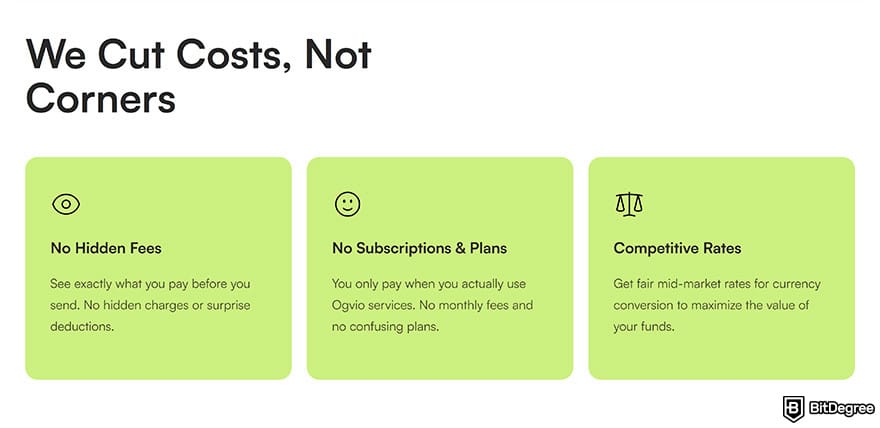
Since Cuba's currency often deals with inflationary pressures, Ogvio’s USD or EUR holdings feature could be especially useful if you live, study, or work abroad.
Another detail that caught my attention is Ogvio’s @Tag feature. It lets users send money using a simple username instead of long account numbers or complex wallet addresses. Sending money globally could soon feel as casual as sending a DM!
Here are Ogvio's pros and cons so far:
Pros | Cons |
|---|---|
✓ Free transfers between Ogvio users | ✗ Mobile app hasn't launched yet (TBA) |
✓ AES-256 encryption | |
✓ @Tag username for easy transfers | ✗ Not supported in Cuba |
✓ Crypto support | |
✓ Availability for Cubans living abroad |
Table: Pros and cons of Ogvio
Finding the best way to send money to Cuba can be hard due to regulatory restrictions. Thankfully, if you're a Cuban in another country and want to remit money anywhere else in the world, Ogvio makes it easy, cheap, and fast with its crypto integration, @Tag feature, no-KYC obligation, and more.
3. RevoluSEND - Best for Transfers to Cuban MLC Accounts
Ranks #3 out of 6 Money Transfer Services
- + Extensive global reach
- + Home delivery support
- + Supports direct transfers to Cuban MLC cards
- + Operates under Central Bank of Spain oversight
- - Maximum transfer amount of €3,000
- - International transfers may take as long as 10 business days
I found RevoluSEND while tearing down the internet to look for the best way to send money to Cuba. It immediately struck me as a service built with structure and compliance in mind.
It’s a division of RevoluPAY EP S.L., a licensed payment entity supervised by the Central Bank of Spain. To send a transfer, you’ll first need to create and validate a RevoluPAY account, which serves as your main dashboard for managing international payments.
What makes RevoluSEND interesting, though, is its flexibility with delivery methods. If you've ever wondered how to send money to Cuba, you can use mobile wallet transfers, cash pickups, or ATM withdrawals (depending on the destination country). Each transaction is priced transparently during checkout, so you can see the exact fees before confirming payment.
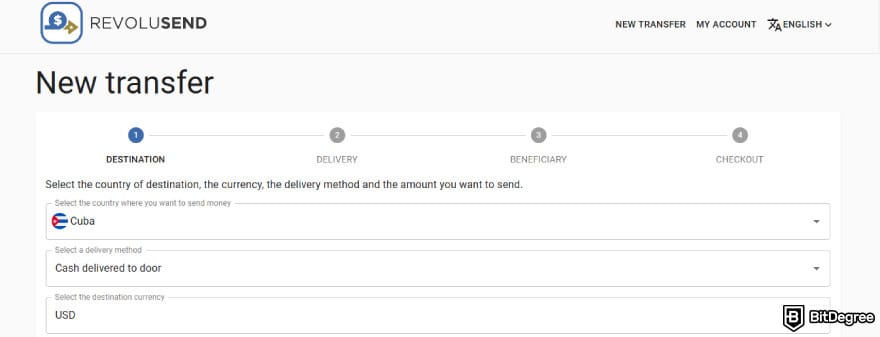
Cuba transfers are handled through three major banks: Banco Popular de Ahorro (BPA), BANDEC, and BANMET. These institutions manage MLC accounts, which are required for transfers to be processed correctly.
You’ll need the MLC account number that starts with 05, 06, or 12, not the card number that begins with 9. The easiest way to find that number is to check the account contract.
Although RevoluSEND’s structure appears efficient, Cuban banks may take up to 10 business days to credit the funds after the transfer is initiated. Mobile wallet and ATM payouts in other regions tend to be faster (sometimes processed in minutes), but MLC transfers depend heavily on local processing times.
Here’s a quick summary of how RevoluSEND performs in practice:
Pros | Cons |
|---|---|
✓ Supports home delivery, cash pickup, bank, and mobile transfers | ✗ Transfers to Cuba may take up to 10 business days |
✓ Fee calculator available | |
✓ Allows direct ATM withdrawals | ✗ Recipients can receive funds in USD only |
✓ Regulated by the Central Bank of Spain |
Table: Pros and cons of RevoluSEND
Overall, RevoluSEND fits those who prefer dependable transfers to lightning-fast ones. Before using it regularly, though, I recommend comparing its features with those of other remittance platforms to find the best way to send money to Cuba.

Did you know?
All Money Transfer Services may look similar to you, but they're NOT all the same!
4. Sendvalu - Best for Secure Cash Delivery and AIS Card Transfers
Ranks #4 out of 6 Money Transfer Services
- + Protected by 256-bit SSL encryption
- + Supports home delivery and AIS Card payouts
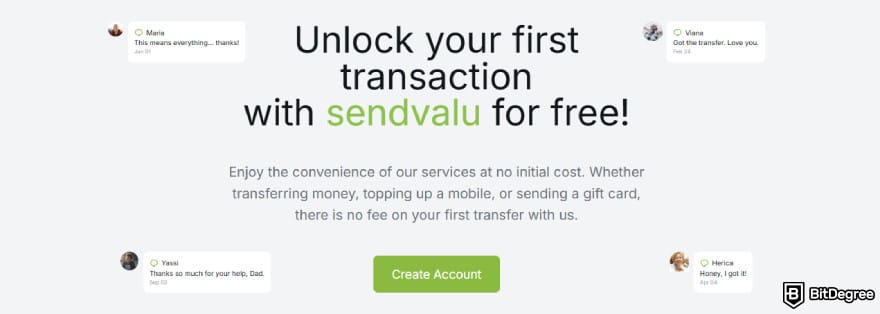
- + Free on your first transaction
- + Real-time exchange rates calculator available
- - Maximum transaction limit of €2,500
- - Charged in EUR only, possible conversion costs
I’ve come across Sendvalu quite a few times while comparing services that claim to be the best way to send money to Cuba, and I have to say it’s one of the few that quite earns the said title.
Operating since 2006, the company is regulated by the Malta Financial Services Authority and is based in Switzerland and Malta. That already tells me it takes compliance and security seriously, which is important when dealing with cross-border transfers. Every transaction is protected by SSL encryption, so it ticks the reliability box right from the start.
Now, let’s get into what makes Sendvalu practical, especially if you’re wondering how to send money to Cuba from US or anywhere else around the world. The platform mainly supports two payout methods: home delivery and debit card transfers.

The first option is especially convenient for families or friends who prefer having the money handed over safely in person. After the transfer is made, a local partner delivers the cash directly to your recipient’s door, and the timing can be arranged based on their availability.
The second option is worth discussing as well. Sendvalu supports direct transfers to an AIS Card, which is widely used in Cuba.
You can even request a new AIS Card through Sendvalu if your recipient doesn’t have one yet. Once it’s ready, they can pick it up at a local FINCIMEX branch. In most cases, the funds reach the card within a few hours on business days, which is quite efficient for an international transfer.
However, as much as I appreciate Sendvalu’s convenience, it’s also important to note its limitations. The maximum per-transaction limit is €2,500/day, and some partners may set it lower depending on your country's risk rating.
Annual sending caps may also apply, so it’s worth checking if you plan to make frequent transfers. It’s strictly for personal use, too, meaning business-related transfers and crypto sending are not permitted. However, in some regions, payouts with digital assets are available.
📚 Read More: Why Blockchain for Enterprises Matters for Your Business
When it comes to pricing, Sendvalu uses real-time exchange rates to calculate its fees. Everything is also charged in EUR, so if your card uses another currency, your bank handles the conversion. Transfers can also extend to multiple days to arrive, depending on factors like the chosen payment method.
To summarize, here’s how Sendvalu performs across key aspects:
Pros | Cons |
|---|---|
✓ Robust security with high-grade SSL encryption | ✗ Business-related transfers and sending with crypto are not allowed |
✓ Supports home delivery and AIS Card transfers | |
✓ Option to request a new AIS Card through the platform | ✗ All payments are charged in euros, which can lead to extra currency conversion costs |
✓ Regulated by the Malta Financial Services Authority (MFSA) |
Table: Pros and cons of Sendvalu
Overall, I’d say Sendvalu is not the flashiest service, but it does what it’s meant to do. If you’re still deciding the best way to send money to Cuba, Sendvalu is one option worth a try, especially if home delivery sounds like the perfect fit.
5. Guarda - Best for Crypto Transfers With Multi-Asset Support
Ranks #5 out of 6 Money Transfer Services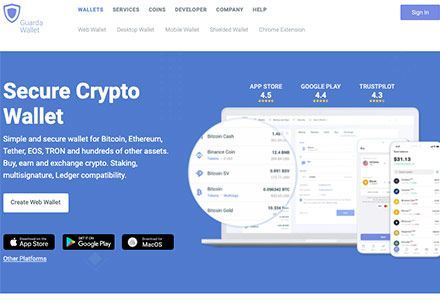
- + Good security measures
- + Easy to use
- + Live customer support
- + High number of supported cryptocurrencies
- - Still a new company
- - Relatively high fees
If you’re the type of person who prefers to transfer money to Cuba using cryptocurrencies, then Guarda Wallet deserves your attention. It started in 2017 with a simple Ethereum wallet and eventually expanded into a full ecosystem that supports more than 45 blockchains, 400,000 tokens, and several stablecoins.
Through Guarda, you can buy or sell crypto using credit or debit cards, Apple Pay, or UnionPay. The fees are typically around 2%, though the rate may go lower depending on your trading volume.
 | |
|---|---|
| N/A | |
| 0 USD | |
| Customizable transaction fees, 4.5% to 5.5% in-app crypto purchase fee with card | |
| See TOP10 Brands Read review |
Table: Guarda fees
However, what really grabbed my attention is how Guarda simplifies crypto payments. Its Deeplink feature enables merchants to receive payments instantly, eliminating the need for customers to leave their site or manually copy wallet addresses. You can even attach payment notes, IDs, or tags to keep transactions well-organized.
On top of that, Guarda includes a crypto lending feature that lets you use assets like BTC, ETH, or USDT as collateral and take out a loan with an APR of 12% to 17%. Once you deposit your collateral, the funds are usually released within a few minutes.
📚 Read More: What Are Figure Crypto-Backed Loans?
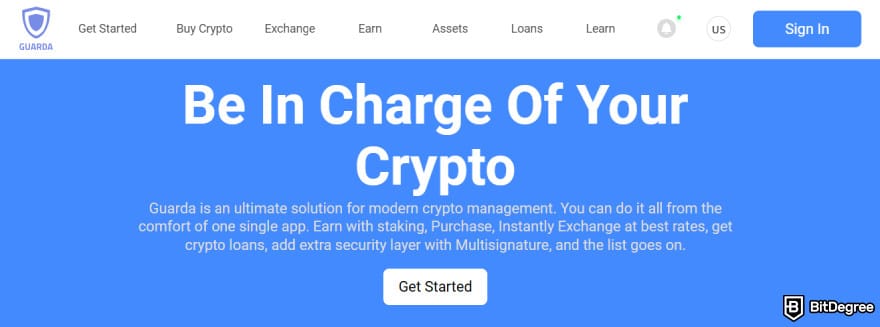
Another feature I personally appreciate is Guarda's integration with the Ledger Nano X hardware wallet. When you link your Ledger with Guarda, you can handle your funds through the app, while every transaction still requires your sign-off on the Ledger device. That arrangement provides your assets with much stronger protection, even if your computer gets compromised.
Here’s a quick recap of what works well and what might not if you plan to transfer money to Cuba using Guarda Wallet:
Pros | Cons |
|---|---|
✓ One-click payments via Deeplink | ✗ Fees may be high for small transactions |
✓ Crypto loans with flexible collateral | |
✓ Supports 45+ blockchains and 400K+ tokens | ✗ No direct fiat bank transfers |
✓ Integrates with Ledger hardware wallets |
Table: Pros and cons of Guarda
In short, I’d say Guarda is one of the worthy choices for those who want to handle remittances with digital assets instead of going through banks. It’s also a handy option for people searching for how to send money to Cuba from Vietnam or any other country with limited banking access to the island. Since Guarda works globally, it creates a smooth path for crypto-based transfers wherever you are.
6. Muun Wallet - Best for Fast Bitcoin and Lightning Network Payments
Ranks #6 out of 6 Money Transfer Services
- + Self-custodial
- + Good security
- + Transaction privacy
- + Fast transaction process
- + Accurate fee estimator
- - Limited Web3 functionality
- - Only supports Bitcoin
If you prefer to transfer money to Cuba using Bitcoin or the Lightning Network, Muun Wallet might be the app you’ll enjoy learning about. Many people looking up how can I send money to Cuba through crypto channels usually want a wallet that is simple, secure, and self-custodial, and Muun checks all those boxes.
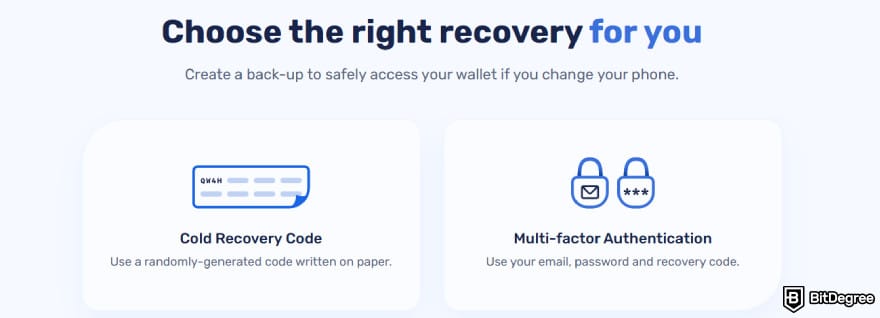
The part that drew me in is its balance between simplicity and advanced technical work behind the scenes. Muun uses a 2-of-2 multi-signature setup, meaning each outgoing transaction requires two keys to be signed.
One key stays on your phone for daily use, while the other is stored in the Emergency Kit, a PDF that holds your encrypted recovery data. The dual-key approach provides strong protection even in cases of loss or compromise.
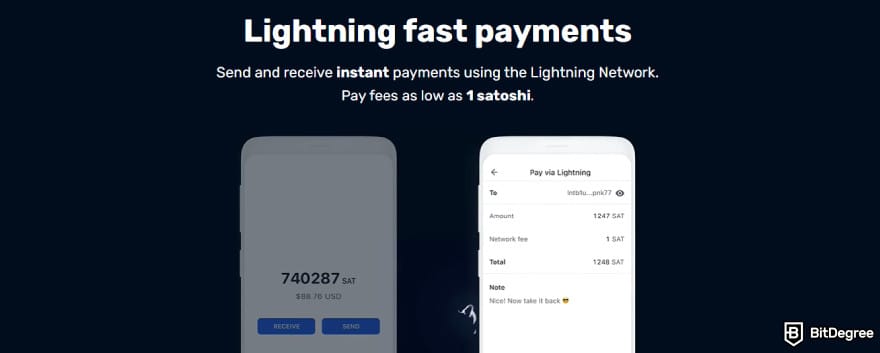
Another part I really like is how Muun handles its Lightning integration. The Lightning Network itself is a second-layer protocol built on top of Bitcoin, designed to make transactions faster, cheaper, and more scalable. It does this by opening payment channels between users, allowing multiple transfers to occur instantly without each being recorded on the main blockchain.
In Muun’s case, Lightning payments are instant and non-custodial, with no manual channel configuration required. You can also perform submarine swaps, which let you use on-chain Bitcoin to pay Lightning invoices seamlessly. So, you can top up your Lightning node, pay merchants, or send funds to friends quickly.
I find this wallet interesting because the fee system is also quite advanced. Muun uses a mempool-based estimator, meaning it looks at real-time blockchain activity to suggest the best fee rate. That helps you avoid overpaying or underpaying during busy periods.
However, a shortcoming worth noting is that Muun is built specifically to enhance Bitcoin’s usability rather than to serve as a multi-asset wallet (it doesn’t support any altcoins or stablecoins). The wallet’s exclusive use of Bitcoin and the Lightning Network may restrict users who want broader crypto support.
Now let’s pause for a moment and look at the pros and cons:
Pros | Cons |
|---|---|
✓ Advaced 2-of-2 MultiSig feature | ✗ Lacks support for other cryptocurrencies |
✓ Instant Lightning payments without manual setup | |
✓ Full self-custody with Emergency Kit | ✗ May feel technical for beginners |
✓ Mempool-based fee estimator |
Table: Pros and cons of Muun
The way I see it, Muun Wallet is both precise and approachable, though it might not be suitable for less experienced users. It’s more ideal for those who are already familiar with crypto and want to transfer money to Cuba or other countries, rather than conventional payment systems.
Understanding Cuba’s Cross-Border Transfer Constraints
A lot of people searching for how to send money to Cuba from the US or any region often end up confused by the limited results they find. Why is it so hard for most platforms to process transfers to this region? The truth is, the restrictions surrounding the country's financial system are deeply rooted in international policies and banking realities. Let me explain all about that in this chapter.
Regulatory Restrictions and Sanctions
Learning the roots of Cuba’s financial restrictions means looking at decades of political and economic history that still affect global remittance systems. The situation traces back to the Cuban Assets Control Regulations (CACR), which have served as the backbone of the US embargo since the 1960s.
These regulations were originally enacted after the Cuban Missile Crisis and are enforced by the Office of Foreign Assets Control (OFAC) under the US Treasury Department. In essence, they make it illegal for any US-linked entity, including banks, payment processors, and fintech companies, to deal with Cuban nationals or institutions that appear on the sanctions list.
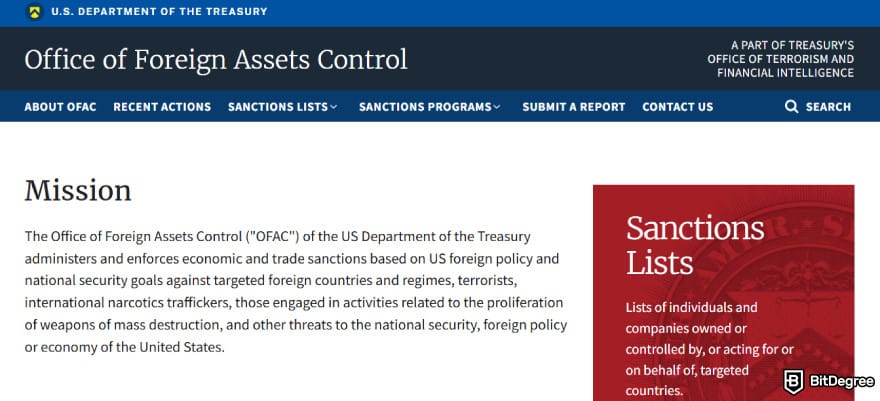
That restriction covers nearly every kind of financial interaction imaginable. Any property or funds connected to Cuba are automatically “blocked”, and no payments or transfers can take place unless explicitly licensed by OFAC.
Over time, even travel-related transactions have fallen under the CACR framework, with only specific categories of travel permitted and many of those still subject to financial restrictions set by OFAC.
During Donald Trump’s first presidential administration, non-family remittances were largely prohibited, and stricter limits were placed on family transfers involving entities on the Cuba Restricted List. General licenses for educational travel were revoked, and such types of global outflows were banned outright.

Entities such as Orbit S.A., which had served as an intermediary for remittance processing, were added to Cuba’s Restricted Entities List, cutting off major transfer routes. Western Union, one of the few companies that had maintained remittance links to Cuba, was forced to suspend services indefinitely in February 2025 after the new sanctions took effect.
The move was part of a wider policy shift that reinstated Cuba’s status as a State Sponsor of Terrorism and reactivated sections of the Helms-Burton Act, tightening trade and financial barriers even further.
Operational and Banking Challenges
Banks in Cuba operate under conditions where both local and foreign currencies are scarce, creating delays and restrictions for even routine international payments. Foreign businesses have reported frozen accounts and an inability to repatriate funds, leaving millions of dollars trapped in Cuban banks.

In an attempt to manage the crisis, authorities have launched new foreign currency accounts that function on a restricted accounting model. As of April 2025, these accounts are still in a pilot phase and can accept only fresh deposits from abroad, excluding transfers from older balances.
Some companies tied to the GAESA conglomerate, a powerful business group managed by Cuba’s Revolutionary Armed Forces, have been among the first to test the system. GAESA’s influence extends across tourism, telecommunications, and banking,[2] giving it control over many of the country’s major economic channels, which explains its early participation in these new accounts.
Currency transitions have also deepened uncertainty. The removal of the Cuban Convertible Peso (CUC) and the ongoing partial dollarization through the Freely Convertible Currency (MLC) system have changed how funds circulate.
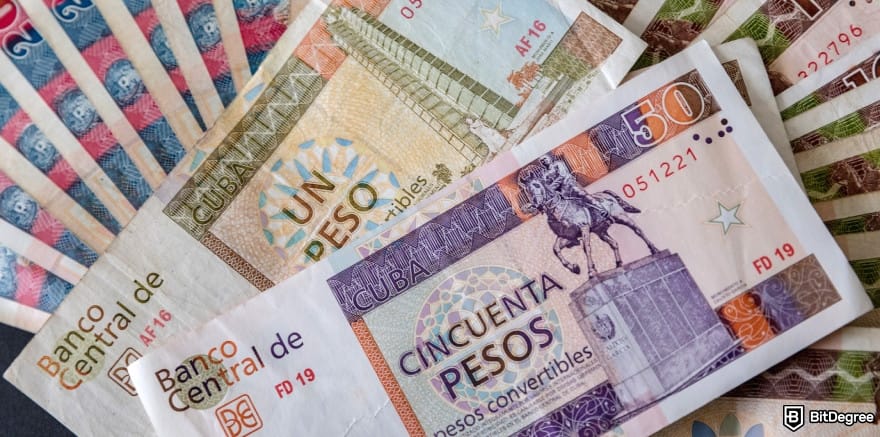
MLC cards, for instance, are primarily used in state-run foreign-currency stores, so many residents who lack access to foreign-currency income find their ability to spend remittance funds limited.
In such a system, even a simple question like “how can I send money to Cuba?” takes on layers of complexity. Transfers depend on whether the receiving institution holds clearance, which type of currency being sent, and how the funds will eventually be accessed.
Cheapest Ways to Send Money to Cuba or Elsewhere
Finding the cheapest ways to send money to Cuba can be difficult due to regulatory barriers. Whether you're sending to Cuba or anywhere else, your transfer becomes far manageable when fees stay low, and the pricing structure remains clear. Here are some of the most budget-friendly options for international remittance:
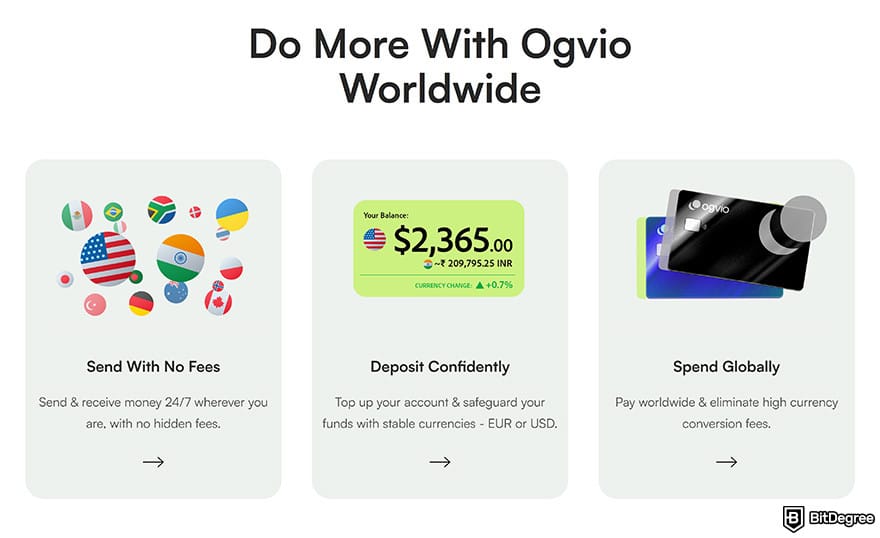
- Ogvio. Ogvio provides free user-to-user transfers to 160+ countries, removing geographical roadblocks for Cubans living abroad. For a more flexible means to move funds, you can take advantage of crypto, which is free to send within the Ogvio ecosystem. Furthermore, the transparent rate display removes surprise charges and keeps overall costs low.
- Sendvalu. Sendvalu grants new users a full fee waiver on their first transaction, reducing the initial sending cost to zero. The discount applies automatically after account creation.
- Guarda Wallet. Guarda Wallet charges low fees for optional services, such as roughly 0.5% for crypto trades and about 2% for fiat conversions. You can also select blockchains with lower network fees to further reduce expenses.
These platforms offer different routes to lower transfer costs, giving you flexible ways to manage your costs based on how you prefer to move your money.
Conclusions
With that, you’ve reached the end of this guide on the best way to send money to Cuba. As seen throughout, the landscape is far from simple. However, a few platforms have stepped in to address the gaps left by traditional institutions. From crypto-friendly wallets to purpose-built remittance apps, there is a range of options for moving funds efficiently, even under strict regulations.
For instance, DUC App and RevoluSEND are already filling some of those gaps, while Muun Wallet gives Bitcoin users more flexibility. Ogvio adds to the list as an alternative for Cubans residing overseas, offering instant transfers, upfront fees, and multi-currency support.
Ogvio helps you stay connected with the global financial system, even when your home market isn't. Try out Ogvio to start sending money cheaply and quickly.
Scientific References
1. Soufaih A.: 'Revolutionizing International Remittance Payments Using Cryptocurrency and Blockchain-Based Technology';
2. Pratt L. M. R.: ‘Cuba: Corruption and Anti-Corruption’.
Send Money Worldwide
Check out the best ways to send money to other countries quickly, safely, and with minimal fees.


































About Article's Experts & Analysts



Disclosure: To keep our site running & free of charge, we may sometimes receive a small commission if a reader decides to purchase services via some links on site, at no extra cost.