Key Takeaways
- It's possible to withdraw money from a credit card, but it’s usually quite expensive because fees and instant interest hit fast;
- Platforms like Ogvio can be your workaround to eventually get a cheaper cash withdrawal;
- Too many cash advances can impact your credit score and look risky to lenders, so use them only when necessary and pay them off ASAP.

Learning how to withdraw cash from credit cards isn’t usually on anyone’s mind until life hits you with an “I need money right now” moment. Maybe your assets are not liquid enough to be transferred, maybe you’re abroad, or maybe you just need cash ASAP, and all you’ve got is your credit card.
A lot of people rush straight to the nearest ATM, but that move can get expensive fast with high fees and interest. I personally avoid that route and prefer using a workaround like Ogvio, which tends to be cheaper, has way fewer requirements to jump through, and doesn’t mess with my credit score the way a traditional cash advance does.
I’ll still tell you how to take out money from a credit card using that classic cash advance, but I’ll also show you a better option with Ogvio that keeps more money in your pocket.

Did you know?
Subscribe - We publish new crypto explainer videos every week!
What Is a Neobank (And Should You Use It)?


Table of Contents
- 1. How to Withdraw Cash From a Credit Card
- 1.1. Using Ogvio
- 1.2. At an ATM
- 1.3. At a Cashpoint Location
- 2. Common Ways to Withdraw Cash From Credit Cards
- 2.1. Ogvio Neobank
- 2.2. Traditional Bank Cash Advance
- 2.3. A Cashpoint Location
- 3. Things to Consider Before Withdrawing Cash From Your Credit Card
- 3.1. Fees, Interest, and Limits
- 3.2. Eligibility Requirements
- 3.3. Impact on Your Credit Score
- 4. Conclusions
How to Withdraw Cash From a Credit Card
There's more than one way to tackle how to get cash from your credit card, but each method comes with its own rules. To save you from the trial-and-error headache, I've broken down the exact steps for the three best options: Ogvio, ATM cash advance, and cash pickup via a remittance app.
Latest Changelly Coupon Found:Using Ogvio
The process is generally smooth when you learn how to withdraw money from a credit card with Ogvio. When you cash out through Ogvio, you first make a regular credit card payment (not a cash advance) to buy the digital dollar (USDC on Base).
That means you can avoid the heavy fees and high APR typically associated with withdrawing cash from a credit card. Moreover, there’s no complex paperwork and no waiting period for your transaction to be approved.
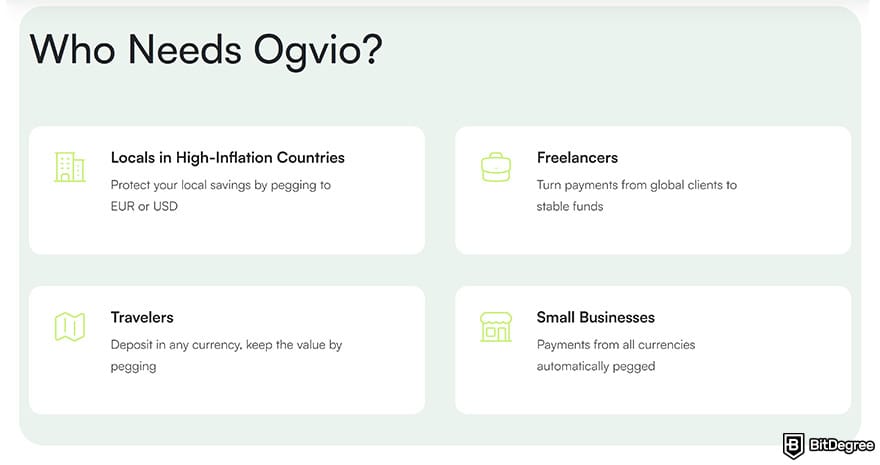
Everything happens digitally. Once the USDC lands in your Ogvio wallet, the system automatically pegs the value to USD or EUR. So when you send money to friends or family, they receive it in a way that feels familiar (predictable amount, not a fluctuating crypto value). Nonetheless, you can convert your balance to cryptocurrencies within the platform.
Now that you understand how Ogvio handles the process behind the scenes, it's time to walk through it step by step, and honestly, it will only take a few minutes.
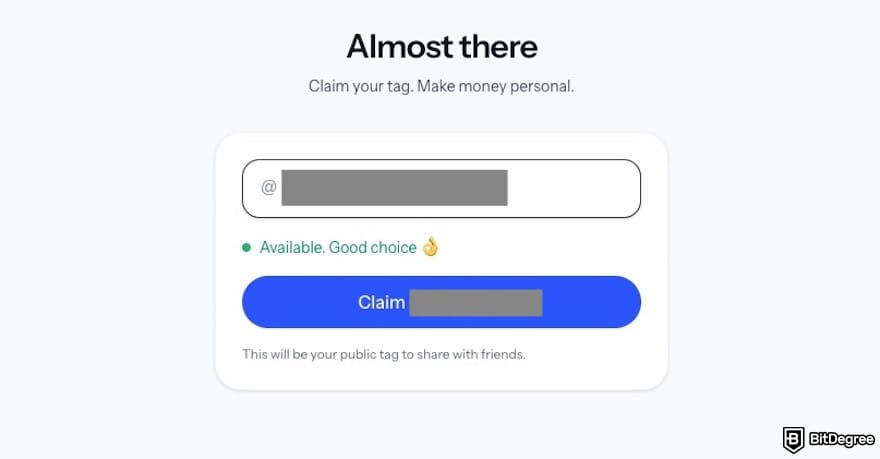
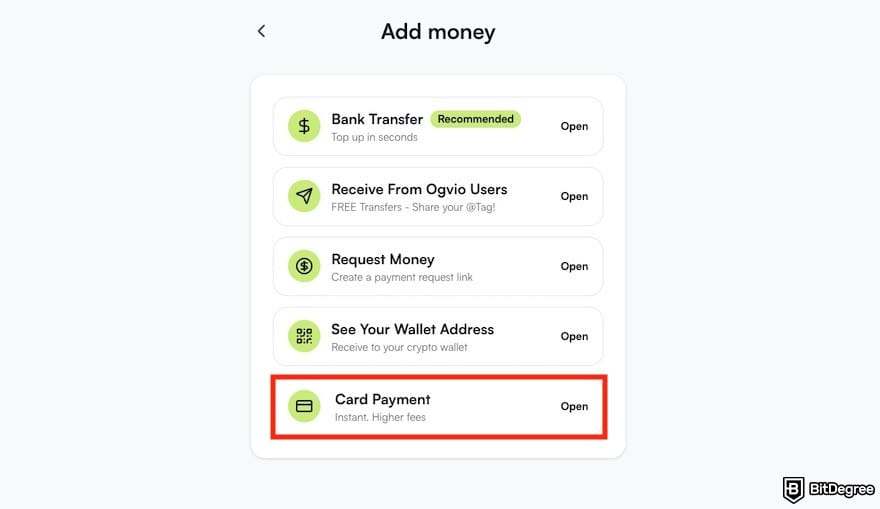
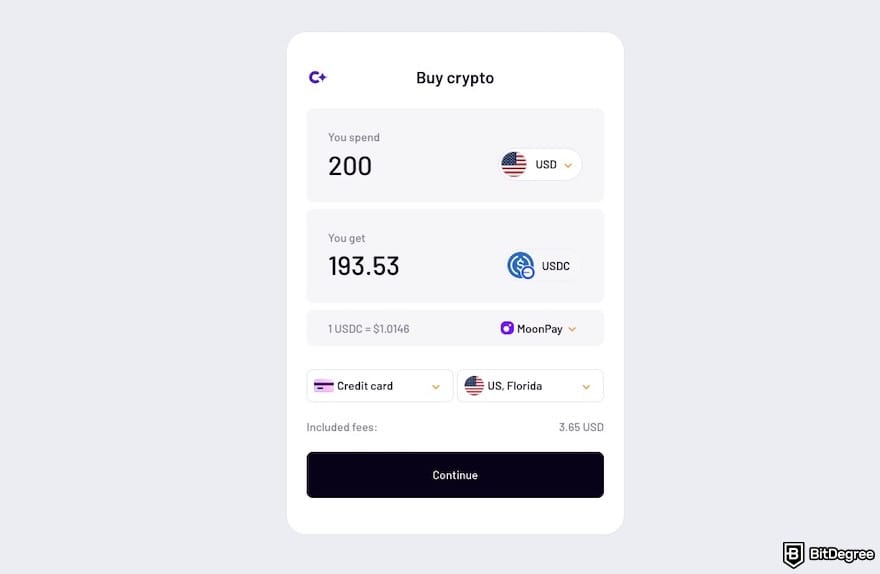
![How to withdraw cash from credit card: the [Send Money] button on the Ogvio website.](https://assets.bitdegree.org/images/how-to-withdraw-cash-from-credit-card-ogvio-dashboard-send-money.jpg "How to withdraw cash from credit card: the [Send Money] button on the Ogvio website.")
![How to withdraw cash from credit card: the [Bank transfer] option on the Ogvio website outlined.](https://assets.bitdegree.org/images/how-to-withdraw-cash-from-credit-card-ogvio-transfer-methods-copy.jpg "How to withdraw cash from credit card: the [Bank transfer] option on the Ogvio website outlined.")
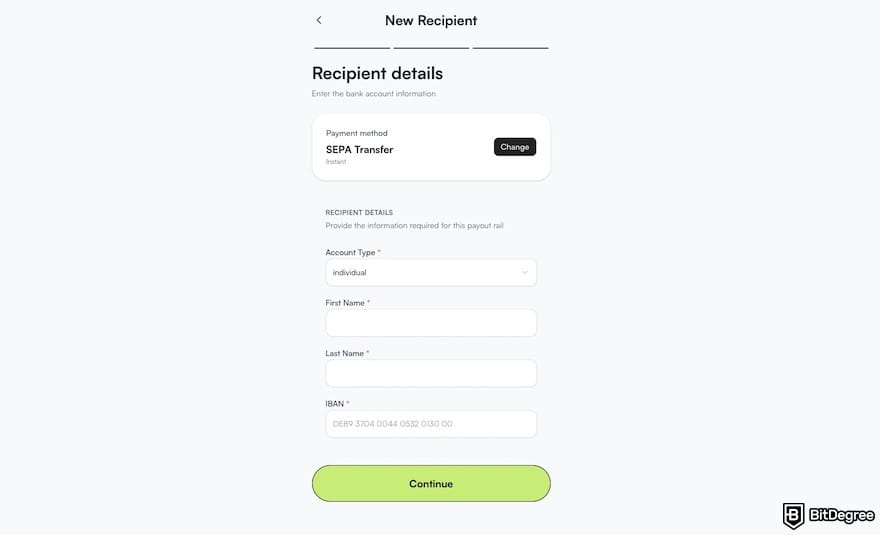
Ogvio will automatically convert your USDC into fiat and send it to your chosen bank account. After the funds land in your checking or savings account, you can withdraw them like normal, either at an ATM or inside a branch. While it all may sound somewhat complicated, it's actually very quick and low-cost.
📚 Read More: Ogvio Review
At an ATM
In case you’re trying to figure out how to withdraw money from a credit card at an ATM without stressing over the process, here’s what it generally looks like. I’ve done this myself using an HSBC credit card while I was in Bali, Indonesia, and the steps were pretty simple:
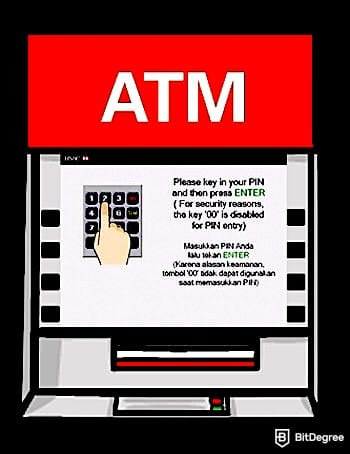
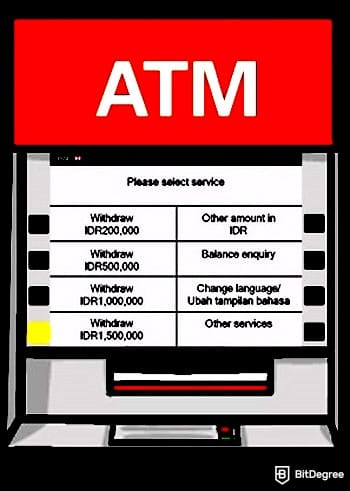
The machine will count out the cash and dispense it. Take your money and don’t forget to remove your card when everything is finished.
That’s it. The process of withdrawing cash from another bank’s credit card should generally be similar. Note that each bank has different fees, interest rates, and requirements.
At a Cashpoint Location
If you’re already a user of Xoom, MoneyGram, or Western Union, in this section, you'll se how to take out money from a credit card at their cashpoint location.
Before starting, make sure you check the available cash-pickup locations near you. Use the “Find a Location” tool in their app or website, confirm their operating hours, and bring a valid ID that matches the name on your transfer.
Once you’re sure that there is a cash pickup point nearby, follow these steps. I'll use Western Union as an example.

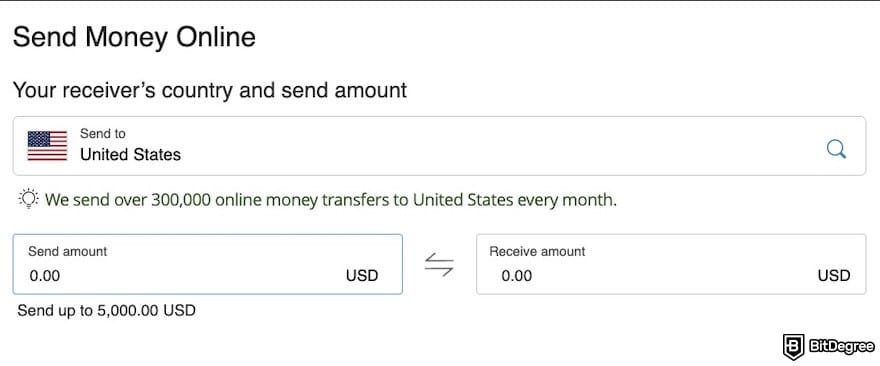
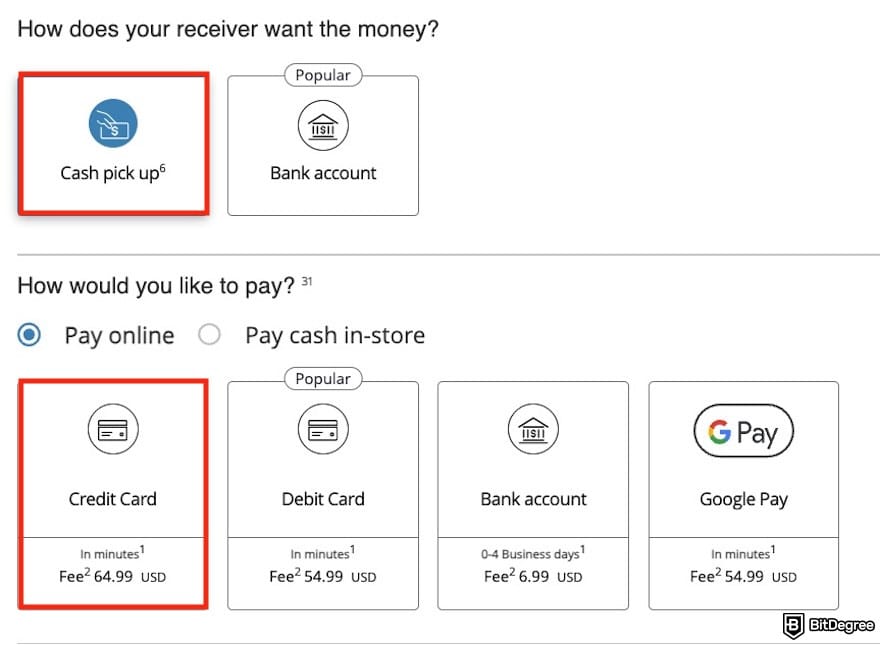
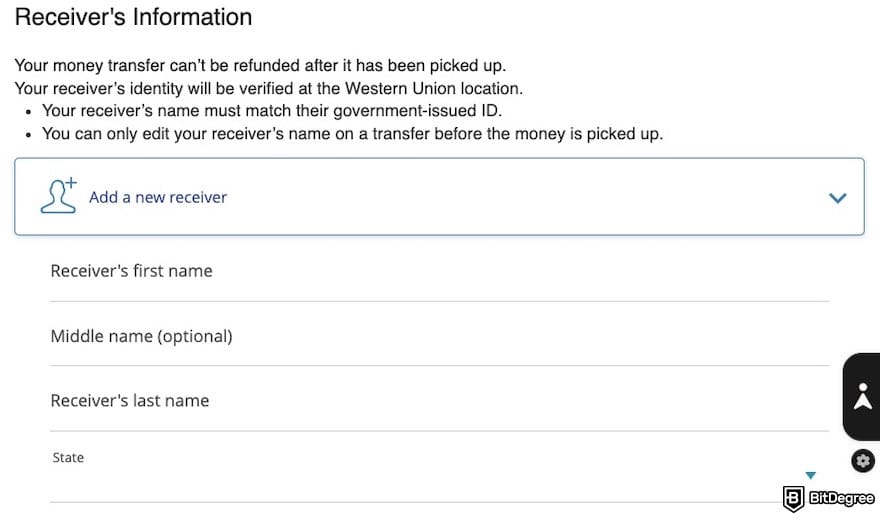
When you head to the cash-pickup location, don’t forget to bring a valid ID and your MTCN. Without these, the agent may not be able to release the money.
Looking for more in-depth information on related topics? We have gathered similar articles for you to spare your time. Take a look!



Common Ways to Withdraw Cash From Credit Cards
When you want to know how to withdraw cash from credit cards, you need to understand that you essentially take out a short-term, high-interest loan from your credit limit. I guess this is what most people do when life hits them with a “right now” problem – landlords who only take cash, sudden bills, last-minute travel hiccups, or your bank account looking dry before payday.
But cash advances are pricey – fees on top of fees, plus interest that starts ticking the second you take the money.
As you understand the risks better, I have to tell you about Ogvio neobank first. It’s the faster, cheaper hack when I don’t feel like paying those painful cash-advance fees. Don’t worry; I’ll still walk you through the common, more traditional ways to take out money from a credit card so you can compare everything yourself.
Ogvio Neobank
While traditional cash advances rely on ATMs or bank tellers, a growing number of users now explore digital options to access money in a more flexible way. Ogvio is like a modern neobank, allowing you to add money, store it, and move it globally with very low friction.
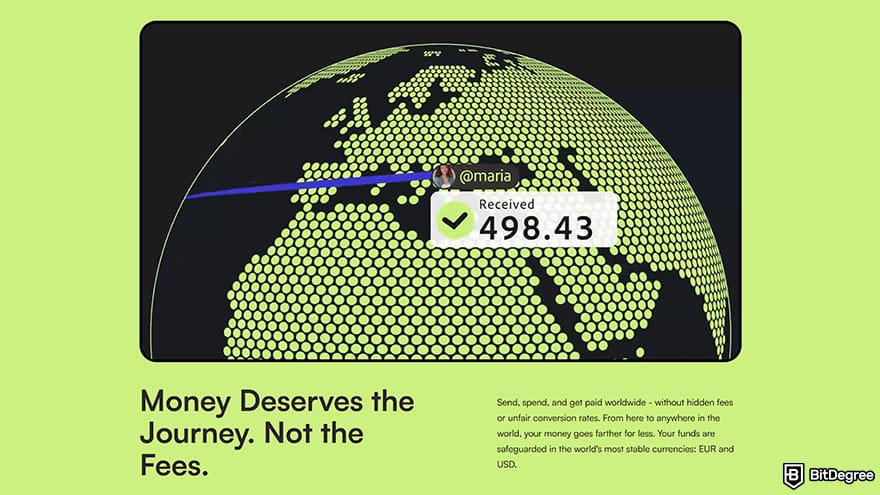
Instead of borrowing cash directly from your credit card issuer, you can use the card to top up your Ogvio balance with USDC. From there, route the funds to your bank account, so you can withdraw them without ATM surcharges and the high interest rates that typically come with cash advances.
It may not be the most straightforward option, but this can be a great solution if you want to withdraw cash from credit card without fees that can drain your wallet.
That said, Ogvio plans to release its own card in the future for global money spending and withdrawing at supported ATMs.
Did you know?
Subscribe - We publish new crypto explainer videos every week!
What is Ethereum 2.0? Upgrades Easily Explained With Animations

Traditional Bank Cash Advance
This is the “classic” way people go about how to take out money from credit cards. With this option, you can use:
- ATM cash advance;
- Bank teller cash advance;
- Bank account cash advance.
Withdrawing cash from an ATM using your credit card is the fastest and most widely available method. You simply insert your card, enter your PIN, and choose the [Cash Advance] or [Credit Card Withdrawal] option from the screen.
Funds are dispensed instantly, making it convenient if you're in a rush or traveling. Most global ATMs also support this function, and the process feels similar to using a debit card, just with different fees behind the scenes.

Meanwhile, if you prefer in-person service or need a larger amount, you can walk into your bank and request a cash advance at the teller counter. This typically requires showing your physical credit card and a valid ID.
The teller will process the transaction manually, and you’ll receive cash on the spot. For some banks, this method allows higher withdrawal limits than ATMs, making it suitable for situations where you need more cash ASAP.
Depending on your credit card issuer, you can also proceed with how to transfer money from a credit card to your bank account through online or mobile banking. This feature is often labeled as “Cash Advance to Account” or “Direct Transfer”.
In my opinion, it's more convenient to tap into your available credit without visiting an ATM or branch. Once the transfer arrives in your bank account, you can withdraw it as cash using your debit card or keep it for online payments.

The downside of all these methods is the cost. Credit card withdrawals from an ATM, bank teller, or to a checking account come with a cash advance fee (usually 3-5%), operator charges, and a higher interest rate that starts accumulating immediately with no grace period. Also, the available amount is restricted to your credit line and your bank’s cash advance limit.
It’s best to treat this method as an emergency because the advantage is purely the convenience and potentially higher transfer limits.
Here are a few examples of banks that offer cash advances:
Cash Advance Fees | Interest | |
|---|---|---|
HSBC Premier Card | $10 or 5% of the amount withdrawn, whichever ends up being higher (varies by country) | 28.74% |
American Express | $5 or 3% of the amount withdrawn, whichever ends up being higher (varies by country) | Prime Rate + 21.99% |
Citi | $10 or 5% of the amount withdrawn, whichever is higher | 25.24% |
Table: Comparison of banks that offer credit card cash advances (US-based data)
If you really need the cash for an emergency, make sure to pay it immediately. American Express gives a good example on its website: even a normal £1,000 purchase can create extra charges if you don’t clear the full balance on time. In the first month, you make the £1,000 purchase. By the second month, your statement shows the full balance, and you decide to pay only £500.
By month three, your next bill shows the remaining £500 plus £20.58 in interest, simply because you didn’t pay the full amount before the due date. You then pay off the £520.58 in full. However, in month four, you still get charged £9.74 in additional interest for the days you continued carrying a balance before clearing it. In total, spreading a £1,000 purchase over two months costs you £30.32 in interest.
That’s why using banks like American Express, HSBC, Citi, or Chase for cash withdrawals is a fast option, but usually the most expensive for your wallet.
A Cashpoint Location
Another method people use to transfer money from a credit card is by running the transaction through a money transfer operator. This service allows you to fund a transfer using your credit card and then pick up the money in cash at a physical location. So, the steps generally look like this:
1
Use your credit card inside the remittance app.
2
Select [Cash Pickup].

3
The recipient, or you, goes to the pickup point and gets physical cash.
While this feels like a clever workaround, it may still be treated as a cash advance by your credit card issuer. That means the same heavy fees, the same instantly-starting interest, and sometimes even extra charges from the transfer service itself.
Here are three international money remittances that offer cash pickup locations for withdrawing money with your credit card:
 |  |  | |
|---|---|---|---|
|
|
| |
| Per-transaction | Per-transaction | Per-transaction | |
| | | | |
| A global service trusted for decades for sending money digitally or in person, though often pricier than newer alternatives. | One of the most reliable offline-first, digital-friendly money transfer services with a global reach. | An online international money transfer service, owned by PayPal. | |
| Visit site Read review | See TOP10 Brands Read review | Visit site |
Table: Comparison of money transfer services offering a cash pickup option
Overall, using a remittance service for cash pickup is an efficient option. No bank account needed, fast settlement times, and global coverage – although some platforms offer limited supported sending countries. However, FX rates may vary and can influence the value of money you’ll get, especially since several services have a markup.
📚 Related: How to Send Money to Someone Without a Bank Account
To get a better understanding of each platform, I will provide a quick review to help you decide which option suits you best:
Western Union
Western Union is the most widely recognized remittance provider in the world, and its biggest advantage is the coverage. It’s available in over 200 countries and territories with over 600,000 agent locations worldwide, from major banks to convenience stores.
Western Union is a pioneer of money transfer services.[1] Founded in 1851 as a telegraph company, it has been in the money transfer business for over 170 years.
Understanding how to get money from credit cards is also straightforward inside the app. Once you enter the amount and choose [Cash Pickup], Western Union shows you the fees, the live exchange rates, and the pickup availability in real time. For many users, cash is available instantly, making it a reliable option when you need money fast.
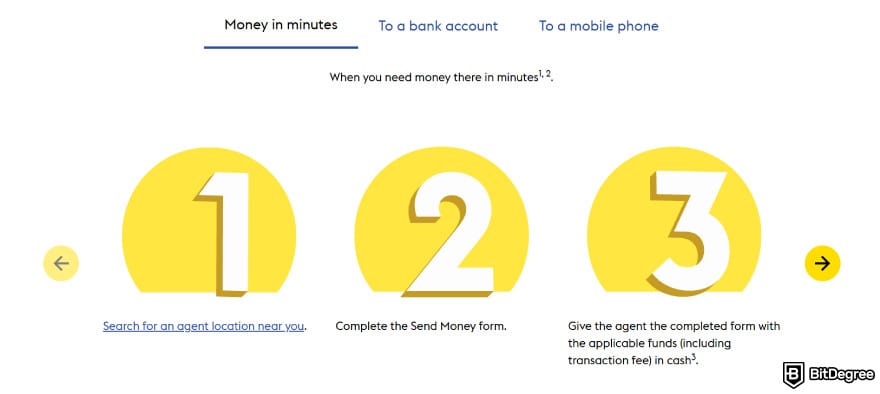
However, convenience comes with a cost. Western Union often charges higher fees for credit-card-funded transfers. Based on my experience, the interface is also not the most user-friendly compared to more modern money transfer services.
MoneyGram
MoneyGram is another OG of international remittances. Founded in 1940, this platform has a broad cash-pickup network in 200 countries and territories, often found in post offices, banks, and retail shops. Based on the website, it has more than 470,000 agent locations worldwide.
The process of how to get cash from your credit card on MoneyGram looks similar to Western Union's flow: you select the destination country, choose [Cash Pickup], and fund the transaction with your card. The platform usually provides clear fee information upfront, and delivery is typically instant or within minutes for cash transfers.

On the downside, MoneyGram’s pricing can vary a lot depending on the country, currency, and card type you use. In some cases, the fees are competitive; in others, they’re noticeably higher than alternatives.
📚 Related: Western Union VS MoneyGram
Xoom
Xoom offers a more modern, app-first experience compared to MoneyGram and Western Union. You can fund your transfer using a credit card and select [Cash Pickup] to get access to partner banks and remittance counters in many countries.
This platform is known for fast delivery times, especially within Asia and Latin America, and the PayPal integration since the company acquired Xoom in 2015. PayPal users can access Xoom without creating a new account, and this money transfer service’s security is backed by the said infrastructure.
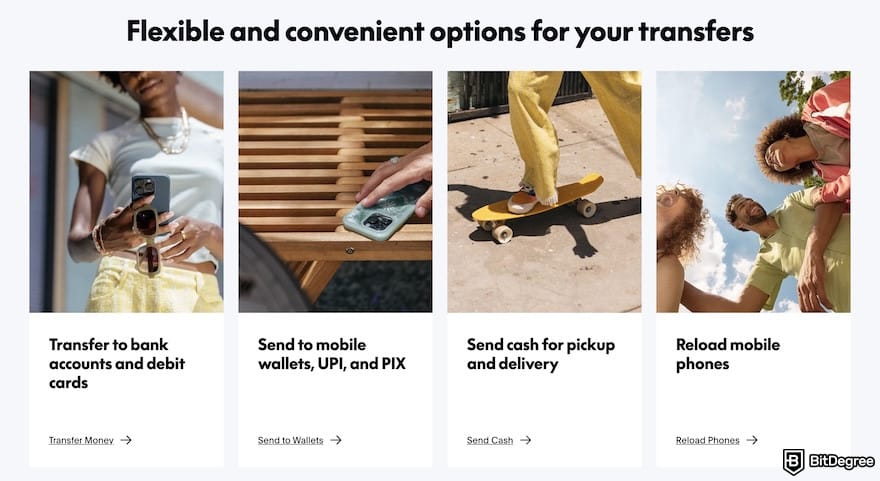
However, Xoom’s supported sending countries are limited to the US, Canada, the UK, and most countries in the European Economic Area. So, users from Asia, Africa, and other regions that are not on the list must find another option.
Things to Consider Before Withdrawing Cash From Your Credit Card
Before you pull cash from your credit card, pause for a second. Yes, cash advances seem convenient, but there are a few things worth considering.
Fees, Interest, and Limits
While navigating how to withdraw cash from a credit card, the first thing you need to understand is that it comes with layers of fees. Credit card companies treat cash advances very differently from normal purchases, and the costs stack up fast.
1
First, you need to pay a cash advance fee.
2
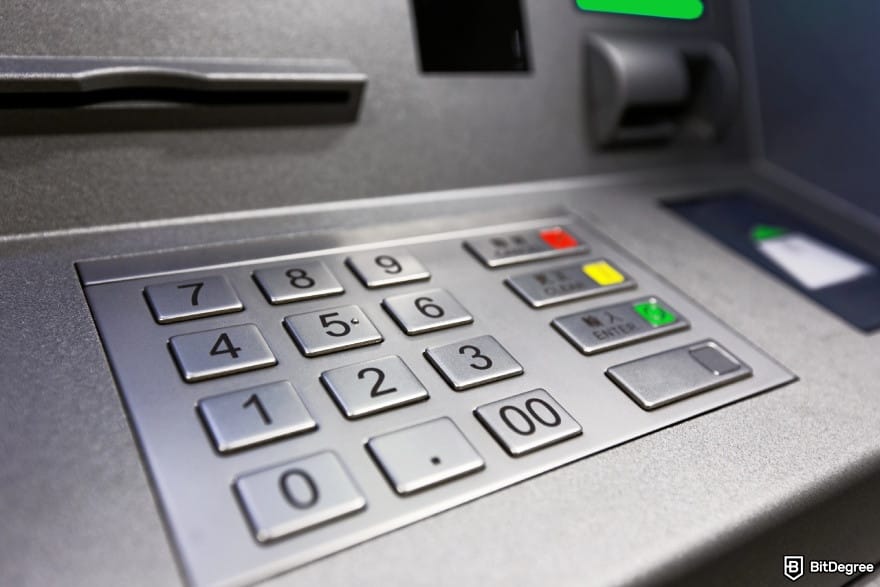
Many ATMs add their own surcharges, so you can end up paying two sets of fees just to access your own credit line.
3
If you’re withdrawing cash abroad, there’s also the foreign exchange fee, so the total cost climbs even more.
The interest situation is another aspect that people don’t expect. When you take out cash using your credit card, interest starts building immediately (there’s no grace period like there is with regular card purchases).
And worse, the interest rate applied is usually the cash advance APR, which is typically higher than your standard purchase APR.
Some Amex cards, for example, charge 3% of the withdrawal amount or £3, whichever is greater, and the APR itself fluctuates depending on the prime rate. From the moment that cash hits your hand, you’re already being charged at a premium.
Then, you have limits to worry about. Even if your borrowing capacity is high, your card won’t let you withdraw all amount as cash. Most issuers cap your cash withdrawal at around 20% of your total credit limit, and there’s also a withdrawal ceiling that restricts how much cash you can pull out within a 30-day period.
Eligibility Requirements
Not every bank enables cash advances on its credit cards, and even when they do, it’s not guaranteed for every user. Using American Express as an example, access to Cash Advance or Express Cash depends heavily on the specific card you hold.
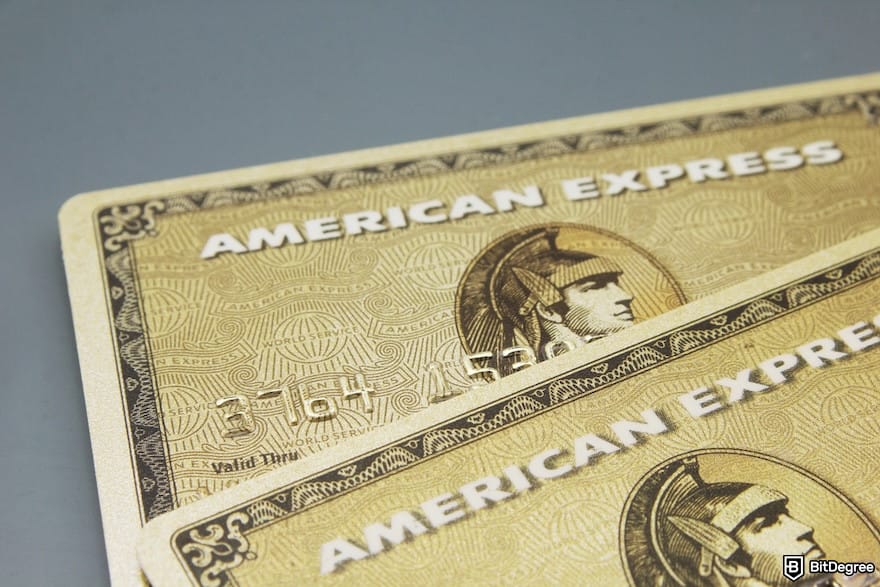
Amex reviews eligibility on a case-by-case basis, and your card may or may not be enrolled by default depending on its features and your account history. To use a program like Express Cash, for instance, you must actively apply and be approved.
In general, verification isn't automatic because banks need to assess your financial behavior first, such as repayment patterns, existing debt, and overall credit profile.
If you’re approved, Amex issues you an ATM PIN so you can withdraw cash directly. In some regions, such as parts of Europe, the bank even requires at least six months of active card membership before it lets you into the program.
For your information, this isn’t unique to Amex. Many banks globally apply similar rules, which means some cards simply don’t support cash advances, or some users are ineligible based on risk scoring. So, before you rely on a cash advance as a backup plan, always check your card’s specific terms.
Impact on Your Credit Score
Withdrawing money with a credit card can directly increase your credit utilization ratio, especially since cash advance limits are smaller. In other words, when your utilization shoots up, there'll be an effect on your credit score.
Why do you need to care about your credit score? This three-digit number quietly shapes almost everything related to your financial life.[2] A strong score helps you:
- Qualify for lower interest rates;
- Higher credit limits;

- Better loan terms;
- Access to certain housing or job opportunities.
Lenders see it as a quick snapshot of how responsibly you manage borrowed money, so keeping it healthy gives you more freedom and flexibility when you actually need credit.
If you're making frequent cash withdrawals, your credit report may show high balances more often than usual.
Some issuers also treat cash-like transactions as riskier behavior. While one withdrawal won’t damage your credit, a pattern of cash advances can signal financial stress to lenders. Over time, this may affect how issuers view your account, especially if your repayment isn’t consistent.
If you rely on cash advances too often, you’re essentially signaling to banks that you’re stretching your credit for short-term needs, which is often considered a red flag. Plus, when your utilization stays high, your score can dip just when you need it most.

Moreover, unlike normal purchases, cash advances generally don’t earn rewards, cashback, points, or miles. That means you’re paying a lot more but gaining nothing in return. Most credit cards also remove purchase protection or fraud-related perks from cash-like transactions.
Additionally, many issuers exclude cash advances from dispute protection. If anything goes wrong, such as the ATM failing to dispense the full amount, you may have limited options for resolving the issue quickly.
Browse our collection of the most thorough Crypto Exchange related articles, guides & tutorials. Always be in the know & make informed decisions!



Conclusions
Understanding how to withdraw cash from credit cards can be a lifesaver in an emergency, but only if you approach it wisely. Every platform has different fees and limits that make all the consequences different.
Cash advances start charging interest immediately (no grace period), fees stack up, and if your utilization jumps too high, your credit score may take a dive for a while. I believe knowing these details upfront can save you from an unwelcome surprise later.
It's practically impossible to withdraw cash from a credit card without fees, but you can still choose a cheaper, low-stress workaround instead of a “classic” cash advance using Ogvio (it even has its own card planned for the future).
Scientific References
1. Coutinho K., Khairwal N., Wongthongtham P.: 'Towards a Truly Decentralized Blockchain Framework for Remittance';
2. Lee J. M., Park N., Heo W.: 'Importance of Subjective Financial Knowledge and Perceived Credit Score in Payday Loan Use'.
Send Money Worldwide
Check out the best ways to send money to other countries quickly, safely, and with minimal fees.


































About Article's Experts & Analysts