Key Takeaways
- Bank-to-bank transfers remain one of the most reliable ways to send money from a bank account, with most countries offering their own domestic banking system, such as ACH in the United States;
- Other options to transfer money from a bank account include instant mobile payment systems, money transfer apps, and in-person transfers and withdrawals at the bank;
- Before starting your transfer, gather all the information you need in advance and find out the fees and limits relevant to your type of transfer.

Learning how to transfer money from a bank account is something everyone comes to grips with after getting their first credit or debit card. However, most people end up sticking to one or two options without being aware of the full range of possibilities they're missing out on.
In this deep dive, I'll explain all the methods of withdrawing money from your bank account, their use cases, limitations, and everything else you should know about before making a transfer. What's the difference between domestic and international bank transfers? How to get money from a bank account without a debit card? By the time I'm through, you'll know the answers to all of these questions and more.
We'll finish off with a comprehensive tutorial on transferring money with Ogvio, one of the best online money transfer services that offers quick worldwide transfers, competitive fees, and a user-friendly workflow.

Did you know?
Subscribe - We publish new crypto explainer videos every week!
What is Chainlink? LINK Explained Simply (ANIMATED)


Table of Contents
- 1. How to Transfer Money from Bank Account: 7 Methods Explained
- 1.1. Domestic Bank Transfer
- 1.2. International Wire Transfer
- 1.3. Instant Mobile Payments Systems
- 1.4. Money Transfer Apps
- 1.5. Direct Debit
- 1.6. ATM Withdrawals & Transfers
- 1.7. In-Person Bank Transfers
- 2. Overview & Comparison of Different Transfer Methods
- 3. What You Need Before Transferring Money: A Preparation Checklist
- 4. How to Transfer Money from Bank Account to Ogvio: A Step-by-Step Guide
- 5. Conclusions
How to Transfer Money from Bank Account: 7 Methods Explained
Transferring money from a bank account can entail a number of different things, so let's kick off by clarifying the definition. In this guide, I'll be using the terms "transfer" and "withdrawal" interchangeably to describe moving money from your bank account in any shape or form (including both online transfers and cash withdrawals).
Latest Changelly Coupon Found:However, I won't delve into customer-to-business or business-to-business payments (e.g., purchases) in this guide. The focus will be on personal money transfers.
Without further ado, let's dig into all the available options and explore each of them in turn.
Domestic Bank Transfer
When it comes to the topic of how to transfer money from a bank account, online banking is often the most readily available solution. As the name suggests, a domestic bank transfer involves sending money from one bank account to another in the same country.
In practice, however, this term usually includes transfers between different countries using the same banking system, which makes these transfers identical to domestic ones for all intents and purposes.
There are almost as many domestic banking systems out there as there are countries (Faster Payments System and CHAPS in the UK or Interac in Canada, just to name a couple), but in this guide, I'll focus on two of them: ACH in the United States and SEPA in the Eurozone.
ACH
ACH (Automated Clearing House) was first launched in the 1970s and, since then, has been adopted by most American banks and other financial institutions. It's typically used for person-to-person payments, payroll deposits, one-time debit transfers, social security benefits, tax refunds, and more.
Let me set the record straight on one common point of confusion before we move on. A lot of people mix up bank transfers with debit card transfers, since they're both technically methods of how to withdraw money from a bank account. However, bank transfers are processed through the transfer network (such as ACH), while card transfers move money using the card networks (e.g., Visa or Mastercard).

Regular ACH transfers typically take from 1 to 3 business days. They get batched throughout the day and processed in cycles during specific time windows:
- Early Morning: Between 4:30 AM and 6:00 AM;
- Midday: Around 12:00 PM;
- Evening: Around 5:00 PM.
These processing windows are one of the main factors that determine when your transfer will arrive. For example, if you submit a payment after the bank's cut-off time, it will only be processed the next day at the earliest. Weekends and bank holidays are out, too. If you're looking for an instant way how to transfer money from a bank account, a bank transfer definitely won't be the right fit.
There's still some room for flexibility, though. Some banks offer an option of a Same-Day ACH transfer, which speeds up the process by checking balances and conducting verification and risk assessment in real time - sometimes within just a few hours.

As you can probably guess, there's a trade-off involved. Same-Day ACH transfers cost $1 to $5, while standard ACH is one of the cheapest money transfer methods, with an average fee of only $0.20 - $1.50.
On top of that, domestic bank transfers have the edge in security and reliability, as well as high transfer limits. They involve bank-level fraud monitoring, strict KYC and AML compliance, and, in some cases, can even be reversed.
Each bank sets its own limits: Bank of America offers a relatively low ceiling of only $1,000 per transaction (for personal customers), while Chase has a higher limit of $25,000, with most other banks falling somewhere in between this spectrum.
Before we proceed, I should bring up another type of bank transfer that looks identical to a domestic bank transfer but works differently: internal bank transfers, AKA, moving money from two accounts within the same bank. These transfers are usually free and instant, since they operate within the bank's own internal system, and most people use them as a way how to transfer money from a bank account to a credit card, for instance.
SEPA
As I mentioned earlier, the concept of "domestic bank transfers" doesn't only apply to transfers within the same country. SEPA (Single Euro Payments Area) is a unified bank payments system that works across 41 countries: 27 member states of the EU, the members of the European Free Trade Association (Iceland, Switzerland, Liechtenstein, and Norway), as well as Monaco and the United Kingdom.
Strictly speaking, it doesn't require paying in euros - which is why countries like Denmark and Switzerland still support SEPA payments despite having their own currencies. SEPA uses the IBAN system to standardize the bank account numbers in different countries.

Unlike ACH transfers in the US, which are pretty cheap but still involve transfer fees, SEPA payments are generally free and only take 1-2 business days to arrive.
Many banks also offer SEPA Instant transfers that take under 10 seconds to arrive, regardless of bank cut-off times, weekends, or public holidays. This speed comes with a bit of a security trade-off, though: SEPA Instant transfers are completely irreversible and more susceptible to fraud.[1]
Which is why the EU issued a new regulation in 2024, introducing Verification of Payee (VoP): it checks whether the name of the person or business you’re trying to pay actually matches the IBAN you entered before the money is sent.
Regular SEPA transfers are capped at €999,000, making them virtually limitless, while SEPA Instant payments have a maximum limit of €100,000. Of course, individual banks often impose their own transfer limits, too.
International Wire Transfer
If you want to know how to transfer money from a foreign bank account (or the other way around), the first thing to learn is that most of what you've read above won't be applicable here. International bank transfers (also called international wire transfers) operate under an entirely different system.
Did you know? The term "wire transfer" dates back to the 19th century, when banks used telegraphs (and their wires and cables) to make transfers.
There are multiple types of international wire transfer systems out there, but SWIFT is the most widely used one globally. Created in 1973, it now connects over 11,500 institutions across 200+ countries and territories. SWIFT itself is a sort of messaging system that gives the participating banks a set of instructions on how to handle a payment, such as the sender and receiver bank details, the amount and currency being sent, and so on.
While some SWIFT transfers are directly bank-to-bank, most involve at least one correspondent bank (also called "intermediaries"), since not every bank in the world is directly connected to every other bank.
Thanks to these additional moving parts in the mechanism and other factors like currency conversion, SWIFT transfers are the priciest type of bank transfer. They cost between 2% and 5% of the transaction amount. On the plus side, they're not as slow as you might guess: payments made through popular routes often arrive in a day or so, although the upper estimate is up to 5 business days.
In contrast to domestic bank transfers that only need the recipient's bank account number, this type of transfer requires a SWIFT code (also called BIC): a unique 8 to 11-digit code that acts as an international identifier of the recipient's bank.
Just like for domestic transfers, SWIFT transfer limits depend on the individual bank.
Instant Mobile Payments Systems
What's the best way how to transfer money from a bank account without a debit card, long waiting times, or high fees? For a lot of people, local mobile payment systems are the winning pick. Instead of having to log in to your online banking platform and gather your recipient's bank account details, you can simply make a payment on a mobile phone app using nothing but the payee's phone number, email, user ID, or a generated QR code.
By their very nature, these instant payment systems are country or region-specific, but that doesn't necessarily mean they can only be used for domestic transfers. Many banks and money transfer apps worldwide support delivering international payments to China through AliPay or choosing Pix as a delivery method for recipients in Brazil.
Unlike banks, these instant mobile payment systems operate 24/7, meaning that you don't need to work around cut-off times, weekends, and other timing-related factors: your payment will only take a few seconds to arrive. On top of being instant, these payments are either free or very cheap.
Are there any downsides, you'll probably want to ask next? That depends. For the majority of users, the convenience far outweighs any limitations, leading to high adoption rates. In Brazil, for example, over 67% of the adult population started using Pix[2] within just 15 months of its launch.
That being said, relying on instant mobile payment systems as your main money transfer method does make you overly dependent on your phone. In addition, they often have lower transaction limits than traditional bank transfers.
Money Transfer Apps
The recent fintech boom has brought a new crop of money transfer platforms designed to bridge the gap between online banking and mobile payments systems. These apps promise a better way of sending money to other users without getting saddled with high costs, delays, or geographical restrictions.
When it comes to the issue of how to transfer money from a foreign bank account, money transfer apps are on their way to pushing out international wire transfers as the go-to option. Apps like Ogvio, Wise, and Western Union allow users to top up their accounts with multiple currencies and choose which currency to send, or opt for automatic conversion during the transfer.
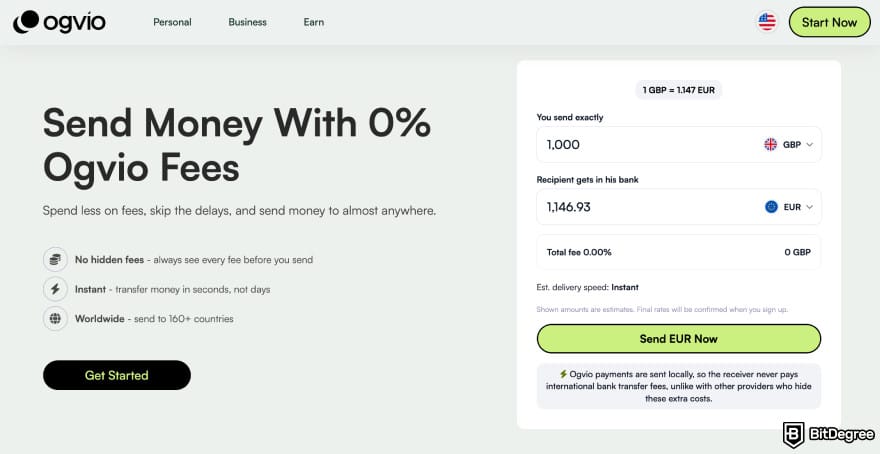
Wise, in particular, offers an easy way to save on conversion fees by "locking in" the current exchange rate for up to 48 hours. Meanwhile, Ogvio comes with very low conversion fees out of the box and competitive bank transfer fees. However, keep in mind that some of these apps charge extra for currency conversion or have some hidden fees.
Money transfer apps offer several deposit and withdrawal or delivery methods, some of them even including cryptocurrency support. Alternatively, you can deposit some money directly into your balance and use it to fund your transfers.
While these apps and platforms are usually marked as an alternative way how to transfer money from a bank account without a debit card, many of the prominent ones do offer their own prepaid debit card with features like multi-currency balance and cashback rewards.
 |  |  | |
|---|---|---|---|
|
|
| |
| Per-transaction | Per-transaction | Per-transaction | |
| | | | |
| A global money transfer service with an additional volatile currency rate pegging to USD or EUR. | A trusted digital remittance service with upfront fees and great rates, but limited options for cash delivery. | A global service trusted for decades for sending money digitally or in person, though often pricier than newer alternatives. | |
| Visit site Read review | Visit site Read review | Visit site Read review |
Table: Comparison of Ogvio, Wise, and Western Union
That's not to say these money transfer apps can replace a traditional bank account, though - especially if you're looking for direct debit, overdraft, or other functionalities that usually come with a regular bank account.
Nevertheless, money transfer apps are, hands down, one of the most convenient ways to send money internationally, especially to other users (since peer-to-peer transfers are usually 100% free and instant) or to people without a bank account of their own.
Did you know?
Subscribe - We publish new crypto explainer videos every week!
What is Ethereum Classic & ETC Coin? (Animated Explainer)

Direct Debit
Have you ever wondered how to transfer money from a bank account to a credit card to pay its balance, or set up automatic payments for subscriptions or utility bills? All of these are common use cases for Direct Debit. Simply put, it's a way for businesses to automatically collect payments from their users.
To set up Direct Debit, you'll have to fill out an online form (also called a Direct Debit mandate), where you'll give your bank details and specify the amount of money that will be withdrawn from your account, along with the payment schedule. The company then submits it to your bank for approval.

This is also the most common and convenient way to pay off your credit card balance without having to worry about being late or setting a reminder before every payment deadline.
Except for this one scenario, though, Direct Debit isn't designed for personal transfers: for example, you can't use it to set up recurring payments to a friend or family member or automatic regular withdrawals to one of your other bank accounts.
Direct Debit is usually free on the users' end; it's the businesses that have to pay fees for collecting them. However, your bank might charge you an overdraft fee if there isn't enough money in your account to cover the payment.
ATM Withdrawals & Transfers
Online transfers are all well and good - but if you need to get your hands on some cash, there's no escaping ATM withdrawals. To this day, they're still the most popular way how to withdraw money from a bank account in its physical form.
Some readers might be surprised to learn that ATMs can do more than just withdraw cash these days. Some ATMs allow users to pay their utility bills or credit card balances, or transfer money to another account in the same bank.
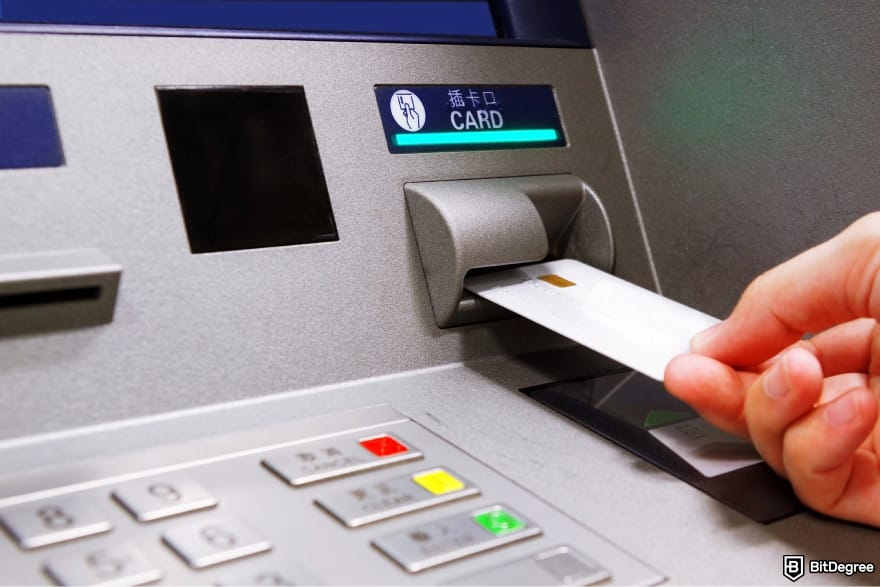
A lot of banks these days also offer cardless ATMs as an alternative how to get money from a bank account without a debit card. The process will depend on your bank, but in most cases, instead of authorizing the withdrawal with your card's PIN code, you'll use your banking app to generate a QR code and scan it on the ATM to initiate a cash withdrawal. Alternatively, some ATMs require a one-time code or an NFC tap for verification.
One of the best things about ATM cash withdrawals is that they're usually free if you're withdrawing money in your home currency from an ATM that belongs to your bank's network - at least up to a certain amount or number of withdrawals specified by your bank. If you exceed this allowance or are withdrawing money abroad in foreign currency, you'll have to pay conversion and withdrawal fees.
Withdrawing money from an ATM outside your bank's network comes with a surcharge fee.
On the flip side, you won't always conveniently have an in-network ATM nearby, and not all ATMs operate 24/7 (those inside stores don't, obviously). They also come with lower limits than online bank transfers or over-the-counter cash withdrawals. The typical range is between $300 and $1,000 per day.
In-Person Bank Transfers
What all of the above-mentioned transfer methods have in common is the convenience of being able to do it yourself. In some cases, however, there's something to be said for knowing how to transfer money from a bank account in person or in-branch. This includes:
- Over-the-counter withdrawals and transfers;
- Bank transfers over the phone;
- Writing checks.
All of these are the only available options for people without access to the internet, as well as those who need to move larger amounts of money. For instance, over-the-counter withdrawals (which involve asking a bank teller to handle the transaction on your behalf) often have a limit as high as $10,000-20,000 per transaction, which is much more generous than your average ATM withdrawal cap.
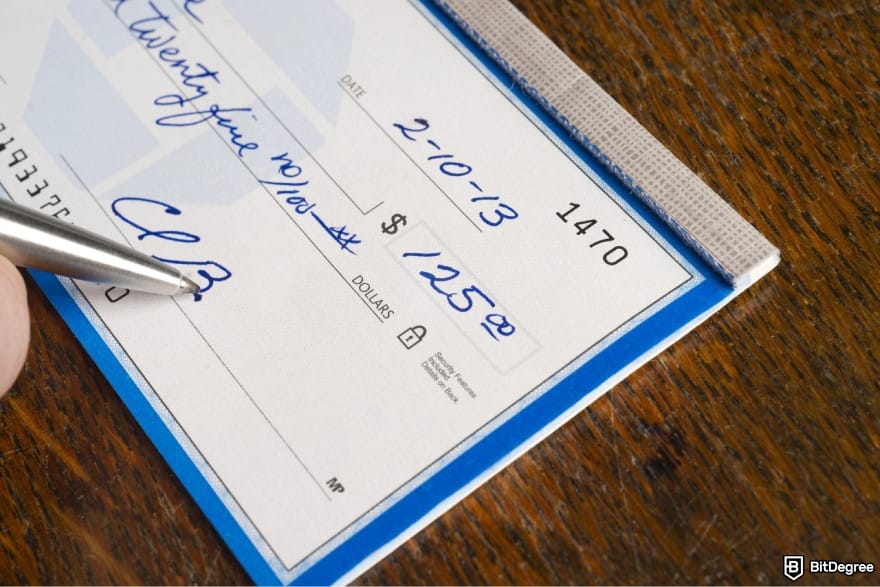
Checks have mostly fallen out of fashion in developed countries, but they still have their uses. Unlike with online bank transfers, you don't need to know the recipient's bank details, only their full name - the bank will handle the rest. Then there's the aesthetic appeal to consider: sending money online as a gift just doesn’t hit the same as handing someone a nice envelope with a check inside.
Over-the-counter transactions require telling the bank clerk your card's PIN, providing identify verification, and filling out a form. Meanwhile, a check only requires you and your recipient's full names, the amount being transferred, the date, and your signature.
Looking for more in-depth information on related topics? We have gathered similar articles for you to spare your time. Take a look!


Overview & Comparison of Different Transfer Methods
That was a lot to take in - so here's a quick summary of all the different ways to transfer money from your bank account I've covered in this guide:
Examples | Best For | Fees | Cons | |
|---|---|---|---|---|
Domestic Bank Transfer | ACH, SEPA, Interac | Secure and universal payments to accounts in the same country/region | Low (free to $0.20-$5) | Slow (1 to 3 business days) Only work for money transfers in the same country/region |
International Wire Transfer | SWIFT | Secure and universal payments to a foreign bank account | 2% to 5% | Slow (1 to 5 business days) Higher fees |
Instant Mobile Payments Systems | Pix, Alipay, Trustly | Cheap/free and instant payments to friends or family members in the same country | Generally free | Lower transfer limits Only work for money transfers in the same country/region |
Money Transfer Apps | Free and instant payments to other users International money transfers with reasonable fees | Free P2P transfers Other transfers: varies by app | Lack some features of traditional banking Might include higher conversion fees or hidden fees | |
Direct Debit | - | Paying for subscriptions or utility bills Paying off a credit card balance | Free users | Can't be used for personal transfers |
ATMs | Traditional ATMs, cardless ATMs | Cash withdrawals | Free for domestic in-network ATMs $2-$5 for international withdrawals + currency conversion fee of ~2% | Lower withdrawal limits Fees for foreign withdrawals and withdrawals from out-of-network ATMs |
In-Person Bank Transfers | Over-the counter, over-the-phone, checks | Withdrawing or transferring large amounts of money Transfers without knowing the recipient's bank details | OTC: varies by provider Check: $5–$20 (for a checkbook) | Less convenient than online transfers/withdrawals |
Table: comparison of money transfer methods
Most people find themselves in need of more than one money transfer option at some point, so even if you've never considered some of these methods before, it's worth having a basic idea of how they work, just in case.
What You Need Before Transferring Money: A Preparation Checklist
Now that you're familiar with how to transfer money from a bank account in every possible way, it's time to get some practice! But not before making sure you have everything ready for your transaction. Too many people only ask, "What do I need to withdraw money from a bank?" once they're already halfway through the process.

And you don't want to have to stop and fumble for the recipient's bank details or any other information, only to come back and realize your online banking session has expired, forcing you to start over.
With that in mind, I've prepared a quick checklist of everything you should get in order before making a transfer:
1
Check Your Balance. Find out exactly how much money you have in your bank account so you won't have your transfer declined or get charged extra for an overdraft.
2
Check Your Bank Account Status. Make sure you don't have any outstanding fees or penalties or any other issues with your bank account that could prevent you from making a transfer.
3
Find Out the Fees and Limits. If you're sending a large amount of money, make sure it's within the limits of both your and your recipient's banks (as well as the money transfer app's, if you're using one). When calculating fees, remember to factor in currency conversion if needed.

4
Get Your Timing Right. Decide when you need the transfer to arrive and choose your transfer method accordingly. Don't forget to take cut-off times, weekends, and public holidays into account.
5
Get the Recipient's Bank Details in Advance. Find out the recipient's account number/IBAN, SWIFT code, phone number, or any other details needed for your chosen transfer method.
6
Inform your Recipient. If you're sending money to someone else, keep in touch with that person and inform them when you've made the transfer so they know when to expect it.
That's about it! Now you're ready to begin your transfer.
How to Transfer Money from Bank Account to Ogvio: A Step-by-Step Guide
A newcomer to the scene of money transfer apps, Ogvio is well on its way to establishing itself as one of the best alternatives for traditional online banking. It lets users send payments to 160+ supported countries and regions, using a variety of payment and top-up methods: credit/debit cards, cryptocurrency, and, of course, a bank transfer.
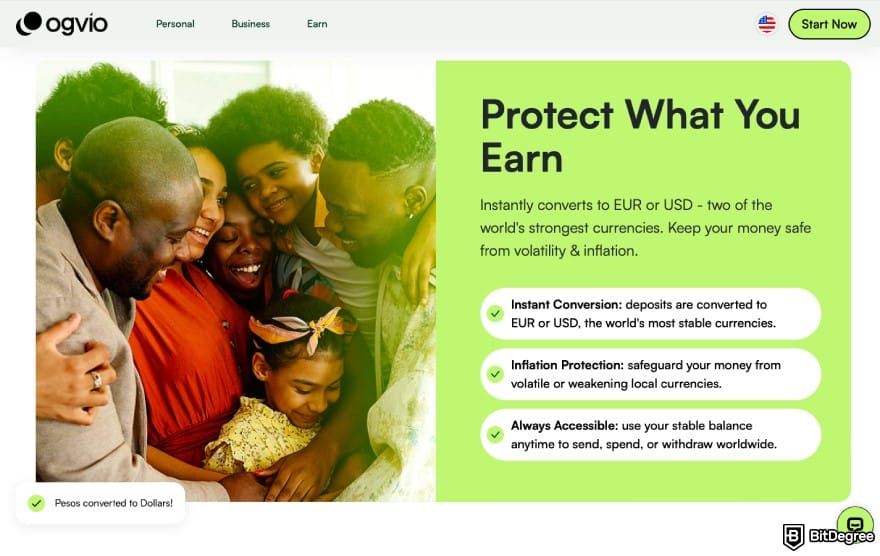 You can deposit money in some of the most popular currencies, including GBP, NGN, AED, BRL, and MXN, but once they land in your balance, Ogvio will automatically convert them into either USD or EUR. This is meant to act as a safeguard to prevent the value of your portfolio from fluctuating. Don't worry, though: you can still send the money in any of the 40+ supported currencies you want.
Ogvio supports many of the most popular bank transfer systems in supported countries: ACH and FedWire in the US, SEPA Instant in Europe, Faster Payments in the UK, Raast Instant in Pakistan, BI-FAST Instant in Indonesia, and more. Many destination countries have no explicit transfer limit, while the rest have varying caps (e.g., a maximum limit of €100,000 in the Eurozone and a whopping £1 million in the UK).
| | |
|---|---|
| |
| |
| |
| Visit site Read review |
Table: Ogvio features
Here's some more good news: Ogvio doesn't charge any platform fees for bank transfer top-ups (although you'll still have to deal with withdrawal fees from your bank).
Do note that while most Ogvio features are accessible without passing KYC, it is a mandatory prerequisite for accessing bank transfers (both for deposits and withdrawals).
You know what they say - the more, the merrier! Invite your friends to Ogvio and earn a $10 bonus for every three active referrals. What's more, you'll both receive a fee cut on your next transfer.
That's it for the theory dump - let's give it a try! If you're through with the "What do I need to withdraw money from a bank account?" checklist, follow along with this tutorial on how to transfer money from a bank account to Ogvio:
![How to transfer money from bank account: click [Get Started] on Ogvio.](https://assets.bitdegree.org/images/how-to-transfer-money-from-bank-account-ogvio-get-started.jpg "How to transfer money from bank account: click [Get Started] on Ogvio.")
![How to transfer money from bank account: click [Add Money] on Ogvio.](https://assets.bitdegree.org/images/how-to-transfer-money-from-bank-account-ogvio-add-money-v1.jpg "How to transfer money from bank account: click [Add Money] on Ogvio.")
![How to transfer money from bank account: choose [Bank Transfer] on Ogvio.](https://assets.bitdegree.org/images/how-to-transfer-money-from-bank-account-ogvio-choose-bank-transfer.jpg "How to transfer money from bank account: choose [Bank Transfer] on Ogvio.")
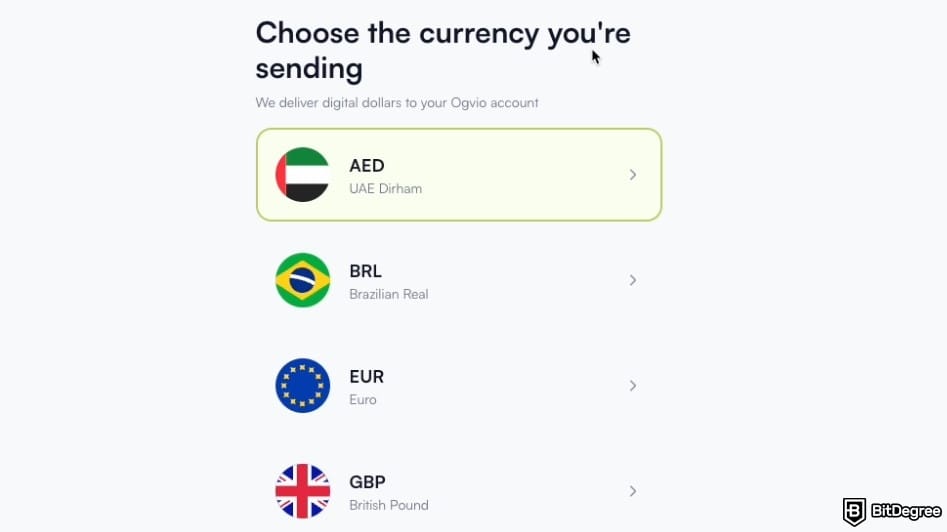
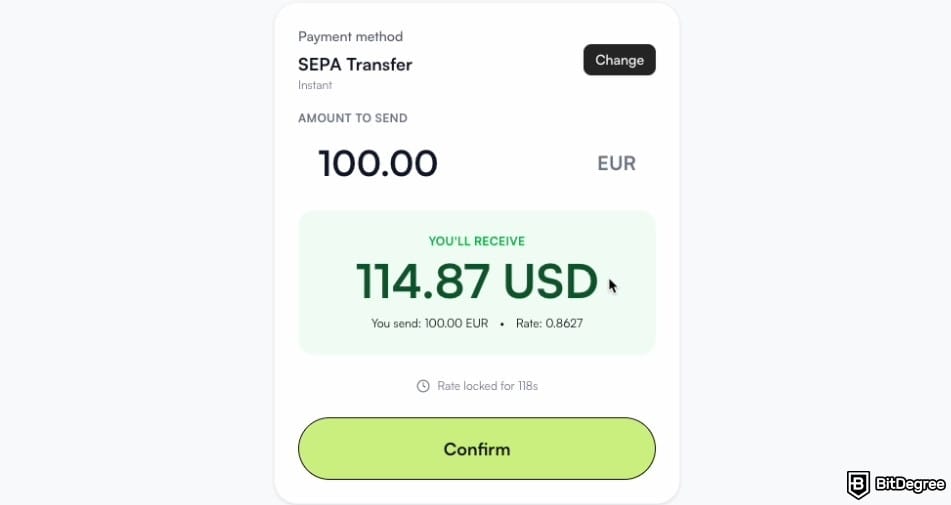
Here you go! The money should land in your account within seconds or a few minutes at most. The updated balance will appear on the dashboard.
📚 Read More: Ogvio Review
Browse our collection of the most thorough Crypto Exchange related articles, guides & tutorials. Always be in the know & make informed decisions!


Conclusions
Today, we're spoiled with more options of how to transfer money from a bank account than ever before, which is why it's so tricky to narrow it down to the right method. While traditional online transfers using your bank's platform are still irreplaceable for their compatibility and security, it's worth looking into alternative (yet increasingly popular) solutions, such as money transfer apps.
Whichever option you decide to go with in the end, remember to get all the details in order before you begin the transfer: find out the exact fees and limits you're dealing with, have your recipient's details at hand, and consider the best time to send the payment to make sure it arrives on time.
Ogvio works with 7,000+ banks and wallets worldwide. Sign up today and enjoy fast transfers with competitive fees and a wide range of payment options, including crypto support.
Scientific References
1. Górka J.: 'The rise of instant payments: a cross-country comparison';
2. Duarte A., Frost J., Gambacorta L., Wilkens P. K., Shin H. S.: 'Central Banks, the Monetary System and Public Payment Infrastructures: Lessons from Brazil's Pix'.
Send Money Worldwide
Check out the best ways to send money to other countries quickly, safely, and with minimal fees.
































About Article's Experts & Analysts