Key Takeaways
- Pakistan uses the Pakistani rupee (PKR) as its official currency;
- PKR available as coins and notes, with circulating denominations ranging from 1 to 5,000 rupees;
- The country still relies largely on cash for everyday transactions.
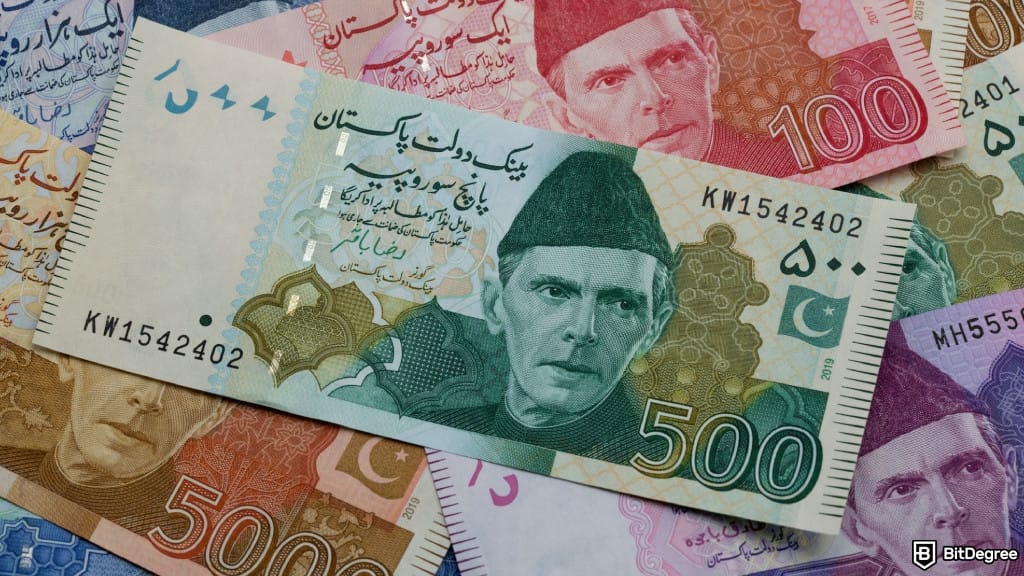
I’m guessing you looked up Pakistan currency because you’re off on a trip, you’re trying to send money, or you’re writing a last-minute assignment. If you’re in that last group, hang in there; may your deadline be kind. No matter why you’re here, let’s get closer to the local money and go through the basics one step at a time.
A bit of familiarity with the currency of Pakistan goes a long way. It helps you decide how much cash to convert, judge what things should cost, and keep your budgeting on track. You’ll also get better at spotting fair rates and avoiding platforms with sneaky fees (something you don’t have to worry about with a transparent option like Ogvio).
With all that said, let's just jump into it.

Did you know?
Subscribe - We publish new crypto explainer videos every week!
What are Stablecoins, Altcoins & Wrapped Coins Explained!


Table of Contents
- 1. Quick Overview: What Money Do They Use in Pakistan?
- 2. Pakistan Currency Code
- 3. Pakistan Currency History
- 4. Currency of Pakistan: Coins and Banknotes
- 4.1. Coins
- 4.2. Banknotes
- 5. How to Send Money To and From Pakistan
- 5.1. Sending Money to Pakistan
- 5.2. Sending Money From Pakistan
- 6. Using Money in Pakistan: Practical Tips
- 7. Conclusions
Quick Overview: What Money Do They Use in Pakistan?
Pakistan’s currency is officially known as the Pakistani rupee. It’s the standard form of money used daily for purchases, bill payments, salaries, and banking activities throughout the country.
Latest Changelly Coupon Found:The State Bank of Pakistan oversees the issuance of the currency. It was formally recognized as the country’s official fiat money in 1948, following the end of British rule. You’ll hear several names for it locally, such as rupees, rupaya, rupaye, and rupiyah.
Here’s a quick overview table you can check whenever you want quick details:
Currency Name | Pakistani rupee |
|---|---|
Currency Code | PKR |
Symbol | Rs |
Local Names | rupiyah, rupaye, rupaya |
Subunit | paisa (no longer used today) |
Banknotes in Circulation | 10, 20, 50, 100, 500, 1,000, 5,000 rupees |
Coins in Circulation | 1, 2, 5, 10 rupees |
Issuing Authority | State Bank of Pakistan (SBP) |
Introduced In | 1948 |
Rate System | managed float |
Payment Culture | mostly cash; digital payments growing |
Common Use Cases | shopping, bills, salaries, local transfers, remittances |
Table: Overview of the Pakistani rupee
At a glance, the table shows that the rupee has its own symbols, denominations, and everyday uses. If you’re a tourist, you don’t need to memorize every detail, and the same applies if you’re a foreign worker just trying to find the best way to send money home.
Still, it helps to learn a bit about the background of Pakistan's currency to add some context.
📚 Check Out: Best Way to Send Money to Pakistan
Looking for more in-depth information on related topics? We have gathered similar articles for you to spare your time. Take a look!


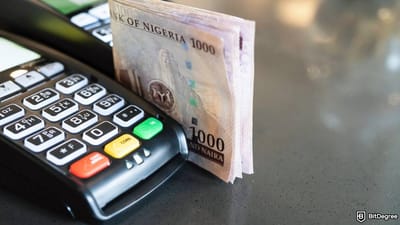
Pakistan Currency Code
A friend once asked me, “What is Pakistan money called?” I told him it’s rupees, and he looked at me like I’d just failed basic geography. He thought it belonged to India.
Well, he's not wrong. Multiple countries use “rupee” for their currency: India, Nepal, and Sri Lanka, to name a few. I’ll get into the history in a bit, but the point is: relying on the name alone can be misleading.
To prevent things from getting messy, the global financial system adopted a standardized method of giving every currency a unique three-letter code. That system is what ISO 4217 is designed for.
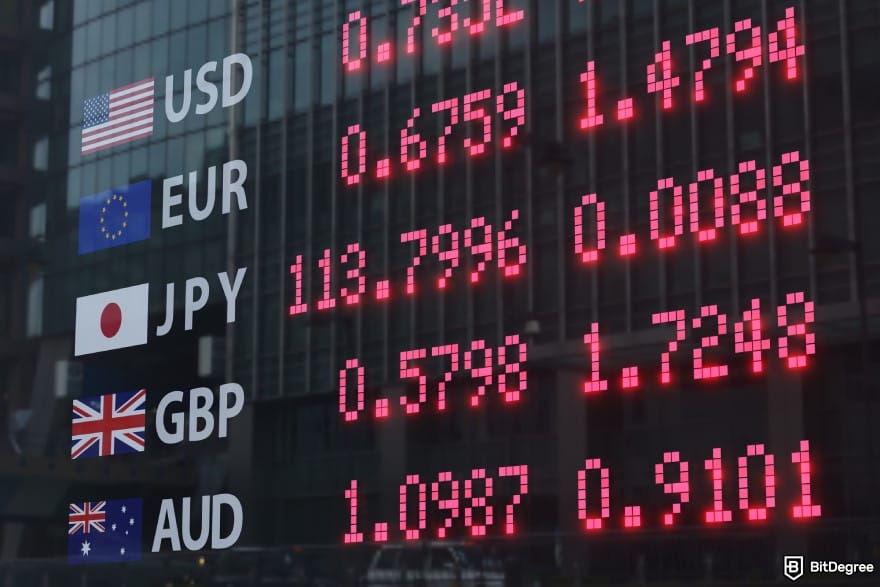
Here’s how they’re different in this version:
- PKR. Pakistani rupee
- INR. Indian rupee
- NPR. Nepalese rupee
- LKR. Sri Lankan rupee
- MUR. Mauritian rupee
These codes ensure accuracy, preventing real-world issues like wrong-country transfers or exchange errors. That’s why you’ll see them on ATM screens, banking apps, and exchange services whenever you need to manage your money.
So now, instead of just saying rupee, you can simply say PKR the next time someone asks what money do they use in Pakistan.
📚 Check Out: How to Send Money Online
Pakistan Currency History
Knowing that the word wasn’t exclusive to the country, you might start to get curious: "What is Pakistan money called back then, and why is it named that way?”
You see, the name rupee originates from “rūpya”, a Sanskrit word meaning “stamped silver” or “silver coin”. While the familiar form of the word appeared in the 16th century, silver rupee coins were already widely used across South Asia for many generations, including in the areas that eventually became Pakistan.
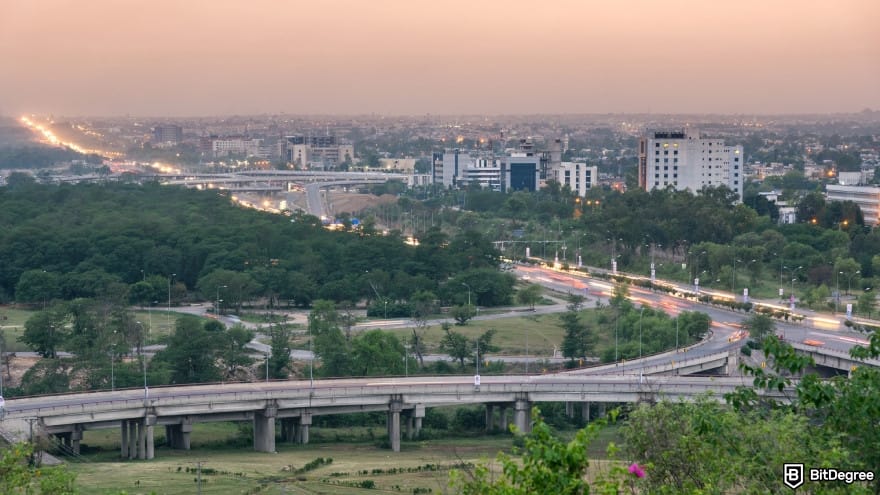
When the country became an independent state in 1947, Pakistan continued using the name rupee to prevent confusion. Even so, there was an issue: the country didn’t have its own national currency. During the early months, Indian banknotes remained in circulation, marked with “Government of Pakistan” to confirm their official use.
After the State Bank of Pakistan (SBP) was established, the government started producing its own banknotes, keeping the familiar name “rupee” due to its familiarity. Over time, more denominations were added, and stronger security features were introduced.
In the 1970s, political instability led the government to withdraw older notes from circulation. The replacements came with redesigned layouts, updated colors, better print quality, and bilingual text in Urdu and English, marking the start of the fourth-generation series.
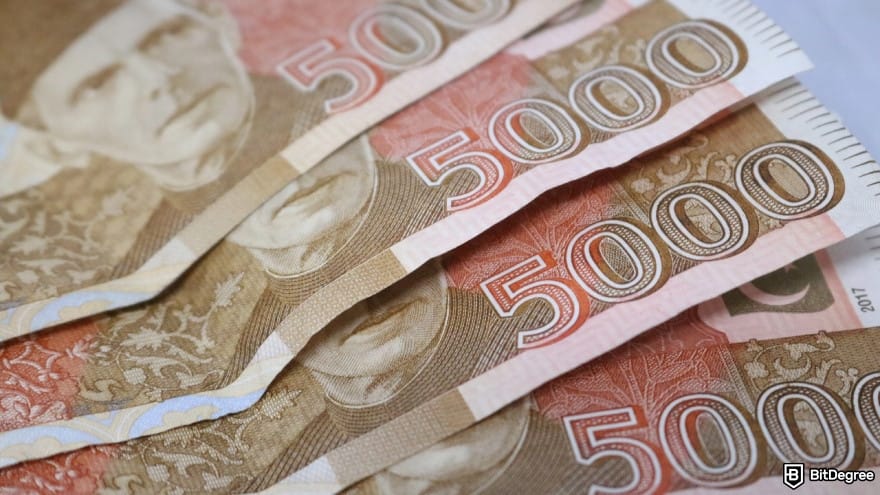
Pakistani currency entered its modern era in 2005 with the launch of the fifth-generation banknotes. They came with even stronger security elements, including microprinting, watermarks, color-shifting ink, and higher-quality paper, to curb counterfeiting and meet international standards.
The years that followed were a bit challenging. In 2008, right after the elections, the rupee experienced a major fall against the US dollar. This happened because financial deficits widened and escalating security concerns weakened investor trust.
The Pakistani currency is performing better now, and the notes hold up pretty well in terms of reliability for day-to-day use. Still, issues like political uncertainty, expanding money supplies, and growing debts continue to fuel inflationary concerns.[1]
For that reason, many prefer to set aside part of their PKR savings in EUR or USD, since these stable currencies help cushion against value depreciation.
Here’s a timeline showing key historical events that shaped Pakistani currency through the years:
- 1947–1948. Pakistan began by using Indian notes stamped with “Government of Pakistan”.
- 1949. SBP issued the first official Pakistani banknotes, including early security features like watermarks and threads.
- 1971. Older notes were demonetized, and a new series was introduced to reflect the country’s changed borders and identity.
- 1985–1987. Higher-value notes, such as the 500 and 1000 notes, were introduced to keep up with economic growth and inflation.
- 2005–2006. Pakistan launched a modern banknote series with stronger security, new designs, and the introduction of the 20 and 5000 rupee notes.
- Today. Pakistan circulates modern rupee notes from 10 to 5000 rupees, all equipped with enhanced anti-counterfeit features and standardized layouts.
Looking back at these stages, you can better understand why the rupee carries the design and characteristics it has now.
Currency of Pakistan: Coins and Banknotes
As Pakistan’s currency history shows, the country’s money has changed a lot over time, and not all past denominations or subunits are still in use. So I think it’s pretty important to know which coins and notes are still valid. It helps you avoid confusion, especially if you’re planning to visit the country.
Coins
Coins make up the smallest denominations of the Pakistan currency, featuring national symbols, historical personalities, or cultural landmarks. Even though their value is low, they remain legal tender and help with small purchases or giving change.
Color | Diameter & Weight | Front Design | Back Design | Issue Date | |
|---|---|---|---|---|---|
Rs 1 | Silver | 20 mm & 1.75 g | Muhammad Ali Jinnah | Lal Shahbaz Qalandar | 20 Nov. 2008 |
Rs 2 | Silver | 22.5 mm & 2.6 g | Crescent & star | Badshahi Mosque | 20 Nov. 2008 |
Rs 5 | Gold | 18.5 mm & 3 g | Crescent & star | Floral motif | 15 Oct. 2015 |
Rs 10 | Gold | 25.5 mm & 5.5 g | Crescent & star | Faisal Mosque | 24 Oct. 2016 |
Table: List of regular Pakistani coins
As of writing, Pakistan’s circulating coins include Rs 1, Rs 2, Rs 5, and Rs 10. Any other values you might encounter are probably old paisa coins, which once served as fractional units of the rupee. They were demonetized in 2014, but you can still find them around as collectibles.
From time to time, the SBP also issues special coins to commemorate significant events. For example, there’s a Rs 25 coin celebrating 25 years of NADRA’s service and a Rs 50 coin released for the 50th anniversary of SOS Children’s Villages Pakistan.
Also, keep in mind that being “legal tender” doesn’t necessarily mean that a coin is commonly accepted in practice. While 1 rupee is still valid for payments by law, some vendors may refuse it since its value is very low and it’s hard to reuse as change in crowded markets.
So yeah, I wouldn’t recommend buying a cup of latte with a sack of rupee coins.
Banknotes
Although coins remain in use, most Pakistanis rely on banknotes for everyday transactions like buying food, paying for transport, or covering bills. The SBP releases notes in various denominations, each featuring different colors, sizes, and designs.
Color | Dimensions | Front Design | Back Design | Issue Date | |
|---|---|---|---|---|---|
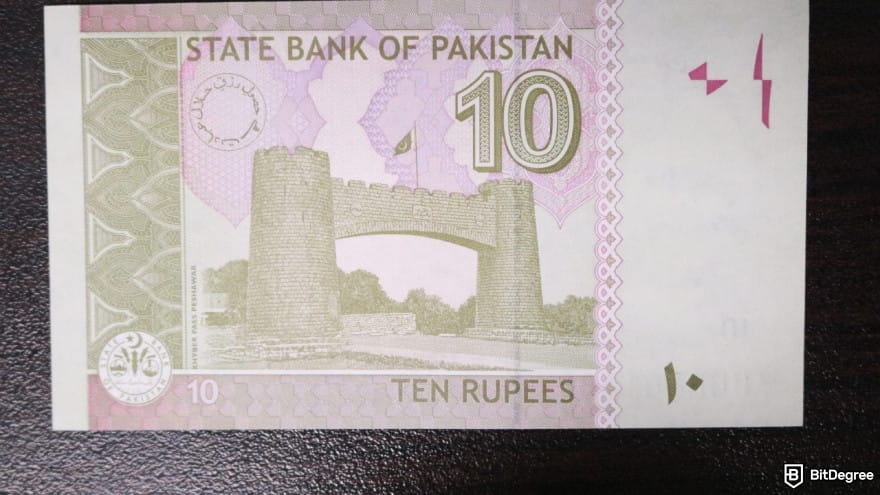
Rs 10 | Green | 115 × 65 mm | Muhammad Ali Jinnah | Bab-e-Khyber | 27 May 2006 |
Rs 20 | Orange | 123 × 65 mm | Mohenjo-daro | 22 Mar. 2008 | |
Rs 50 | Purple | 131 × 65 mm | Mount Godwin-Austen | 8 Jul. 2008 | |
Rs 100 | Red | 139 × 65 mm | Quaid-e-Azam Residency | 11 Nov. 2006 | |
Rs 500 | Deep green | 147 × 65 mm | Badshahi Mosque | 11 Nov. 2006 | |
Rs 1000 | Blue | 155 × 65 mm | Islamia College | 26 Feb. 2007 | |
Rs 5000 | Brown | 163 × 65 mm | Faisal Mosque | 27 May 2006 |
Table: List of regular Pakistani banknotes
Pakistani currency keeps a uniform front design with Muhammad Ali Jinnah’s portrait, setting it apart from other rupee-based currencies. Each note’s reverse side highlights a different landmark or cultural symbol, giving every denomination its own identity.
Modern banknotes include multiple security features designed to prevent counterfeiting.
Take Pakistan’s Rs 5000 note. It blends visible protections like watermarks, windowed security threads, and color-shifting ink with hidden elements such as microtext, latent images, and UV features. Together, these layers allow the note to be verified by sight, touch, and light, making accurate duplication extremely difficult.

For day-to-day activities, people mainly use Rs 100, Rs 500, and Rs 1,000 notes. Smaller denominations circulate, but inflation has reduced their value, so they’re mainly used for minor expenses. On the other side, Rs 5,000 notes are available through ATMs and banks, but many small shops struggle to break them.
Similar to its commemorative coins, Pakistan also releases special-edition banknotes for major national milestones. Among the most notable are the blue 75-rupee note marking the State Bank of Pakistan’s 75th anniversary and the green 75-rupee note celebrating the country’s 75 years of Independence.
From time to time, SBP runs design competitions that invite local artists and designers to propose new banknote designs.
How to Send Money To and From Pakistan
Now that we’ve covered the essentials, from what currency does Pakistan uses to how it’s handled in daily life, let’s move into something more practical and learn how to send money to the country.
Although international transfers to Pakistan are more accessible nowadays, the process can get a bit tricky. Traditional banks often have slow delivery times, while some online services add unclear fees that leave recipients with less than expected. That’s why it's important to choose a reliable money transfer platform.
For this guide, I’m using Ogvio. It’s fast, affordable, transparent, and easy to use, making it a good option even if this is your first time sending money from abroad to Pakistan.
Sending Money to Pakistan
From supporting your family to sending gift money to a friend, here’s how to do it:
Start by going to the Ogvio website on your PC or mobile browser and registering with your email address.
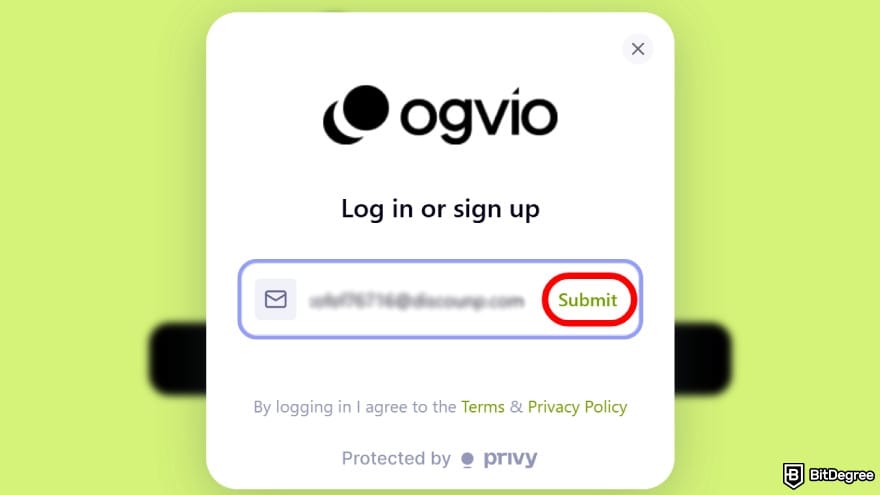
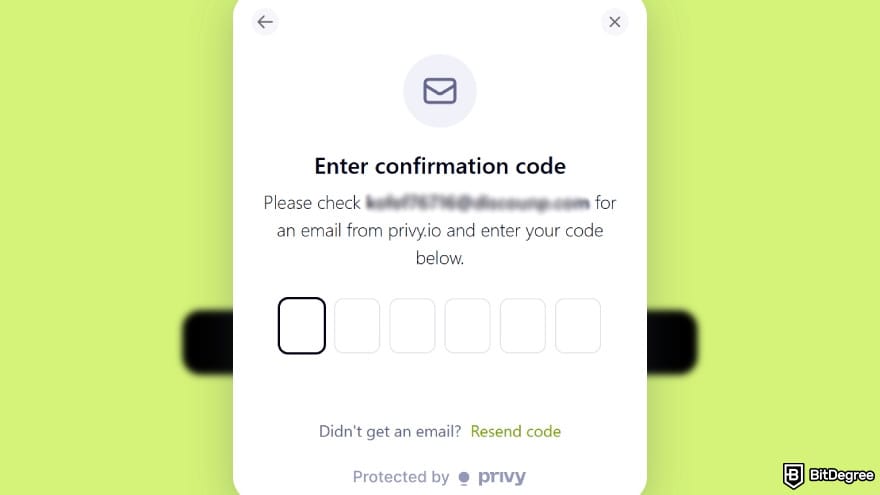
After you sign up, check your inbox for the verification code and enter it to activate your profile.
Once that’s done, you’ll be asked to agree to the terms and conditions.
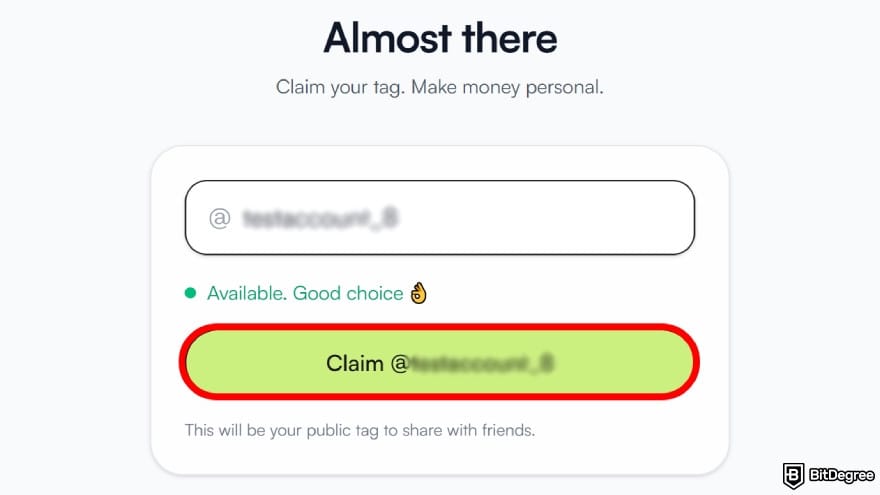
Ogvio requires you to make an @Tag, a personal identifier you’ll use for user-to-user transactions. Pick something memorable that fits the character limits and claim it.
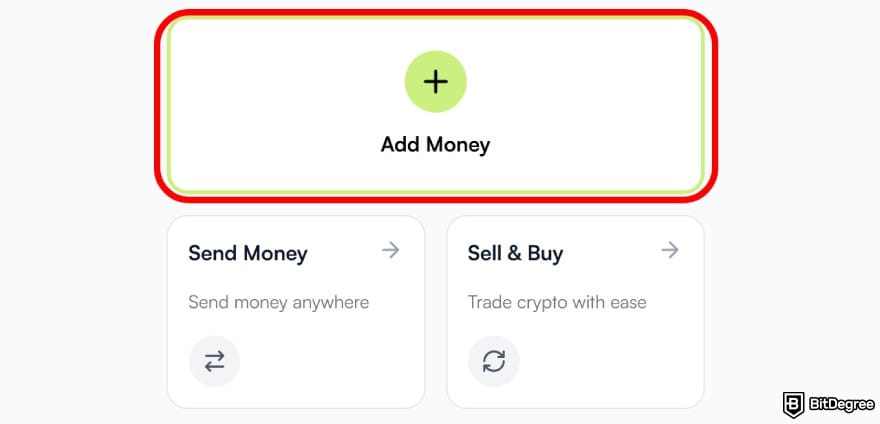
On the dashboard, click the [+ Add Money] button at the top to deposit some funds into your account.
You’ll see multiple deposit methods on the screen, including:
- Bank Transfer. The recommended option for most transfers, offering lower fees and fast delivery through locally integrated payment channels.
- Card Transfer. A convenient way to load your balance right away by paying with your debit or credit card.
- Crypto Transfer. You can fund your balance by transferring supported crypto from any external wallet or exchange, with no ID verification required.
- Receive From Ogvio User. A feature that allows instant, fee-free transfers between accounts using your @Tag. Ideal for simple internal transactions.
- Request Money. You can request funds from another user, and once they approve the request, the amount is added to your Ogvio balance instantly.
In most cases, a bank transfer is the most affordable and dependable option. But of course, you can go with whichever option fits your situation and needs.
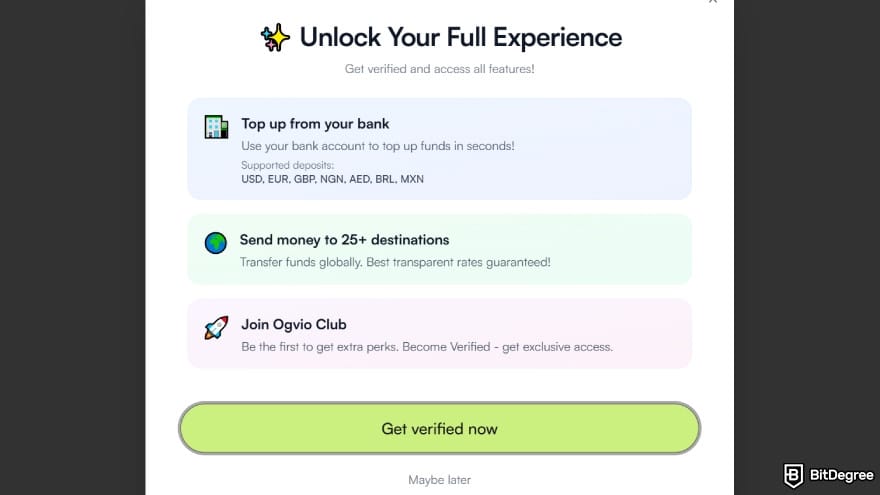
You’re free to use Ogvio without completing KYC. That said, identity verification is required to access the platform's full features, including bank transfer.
Start your KYC by clicking [Get verified now]. It typically includes the following steps:
1
Enter personal details;
2
Upload a government ID;
3
Provide proof of address;
4
Take a quick selfie for identity confirmation.
After you complete all the steps, sit tight and wait for approval. Most verifications are processed within 1–2 business days.
Choose the currency you want to deposit and input how much you’d like to add.
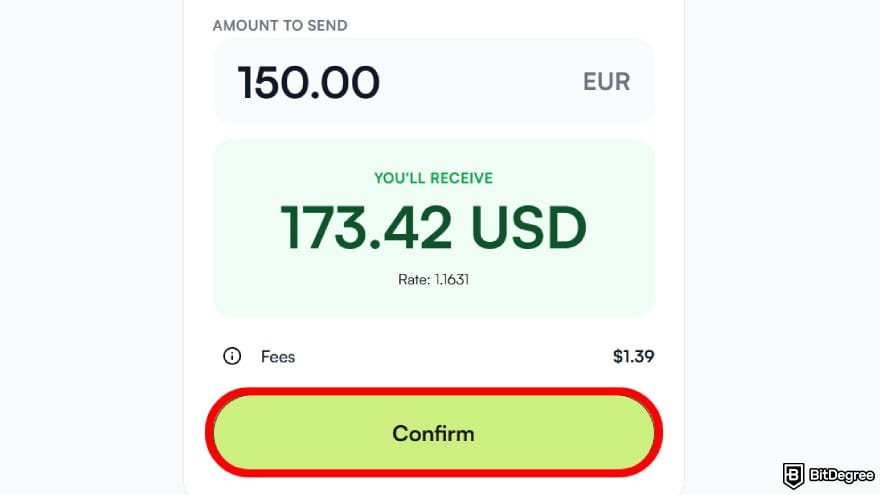
Ogvio will show you the estimated delivery time and the amount of money you’ll receive. Review the details, then click [Confirm] to continue.
Open your banking app and create a transfer using the account details Ogvio generated.
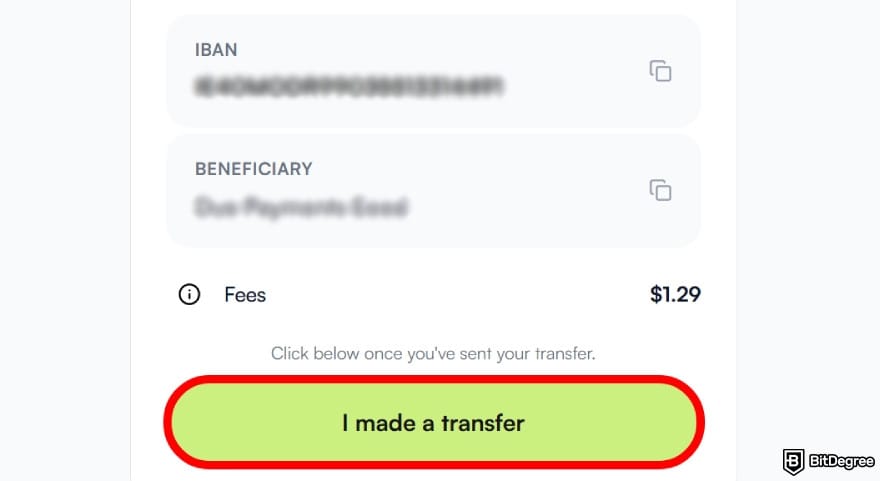
After sending it, return to Ogvio and select [I made a transfer] so the system knows to expect your funds. Note that transfer times vary depending on your bank, but they usually arrive quickly.
Once your balance is topped up, go back to the dashboard and select [Send money].
![Pakistan currency: select the [Send Money] option.](https://assets.bitdegree.org/images/pakistan-currency-send-money-ogvio.jpg "Pakistan currency: select the [Send Money] option.")
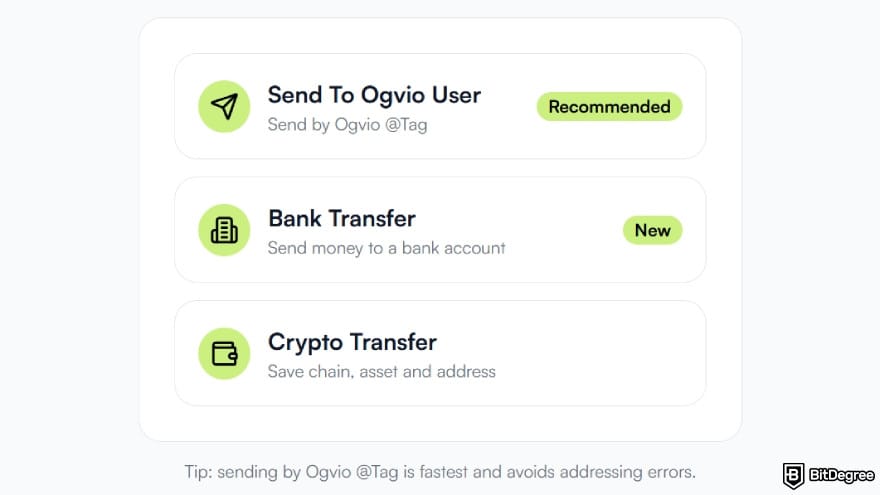
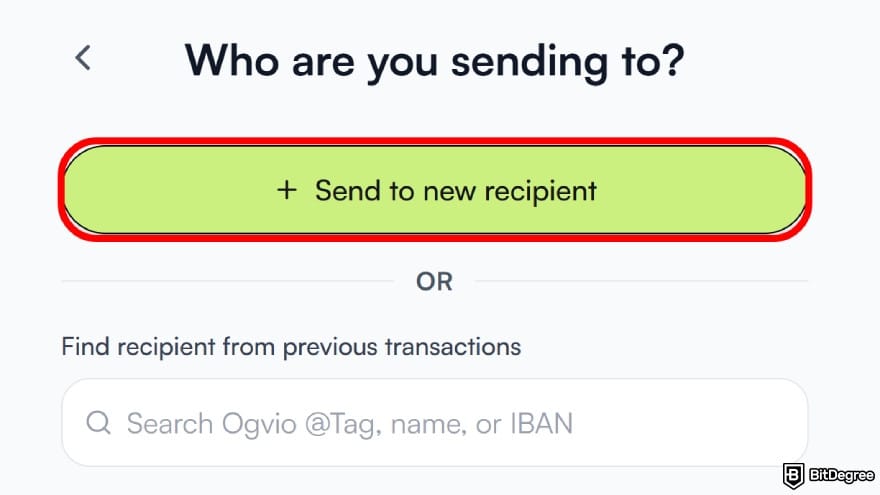
If this is your first time sending funds, select [+ Send to new recipient] at the top. You’ll then see all available delivery options:
- Send to Ogvio User;
- Bank Transfer;
- Crypto Transfer.
If you’ve made transfers in the past, you can reuse a stored recipient or search for them by @Tag, their name, or their bank info. For this example, I’m going to use [Bank Transfer] to send money to Pakistan.
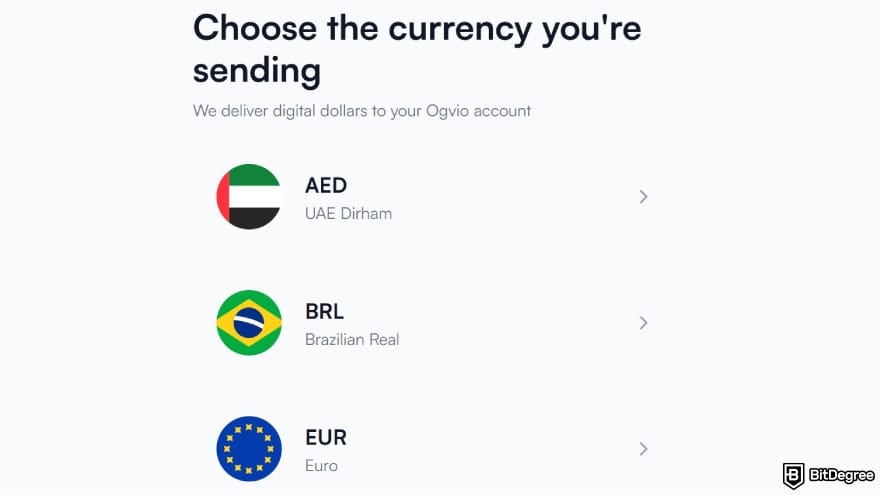
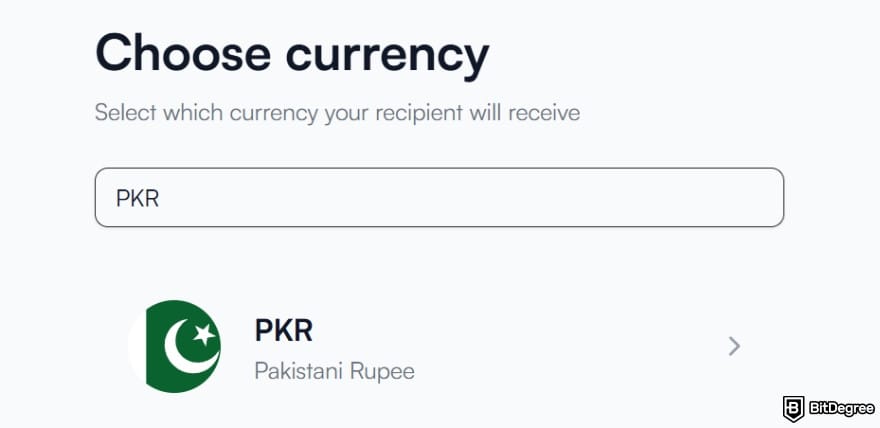
In the currency selection screen, you can type the Pakistan currency code "PKR" into the search bar or scroll down until you see [PKR – Pakistani Rupee]. Click it to continue with your transfer.
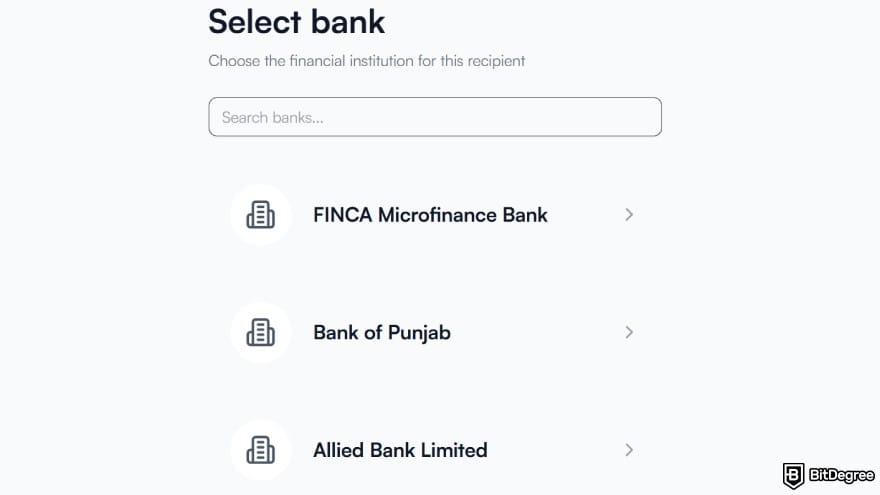
After choosing PKR, you’ll be asked to select the recipient’s bank. Scroll through the bank list or use the search function to choose the correct Pakistani bank, such as Habib Bank, National Bank of Pakistan, United Bank, MCB, Allied Bank, or Askari Bank.
Once you’ve picked the bank, fill in the recipient’s information exactly as it appears on their account. This includes:
- First and last name;
- Account number or IBAN;
- Any additional fields required for Raast payouts.
Double-check everything before moving on to avoid delays or failed transfers.
Type how much you want to send. If it all looks correct, move on by selecting [Continue].
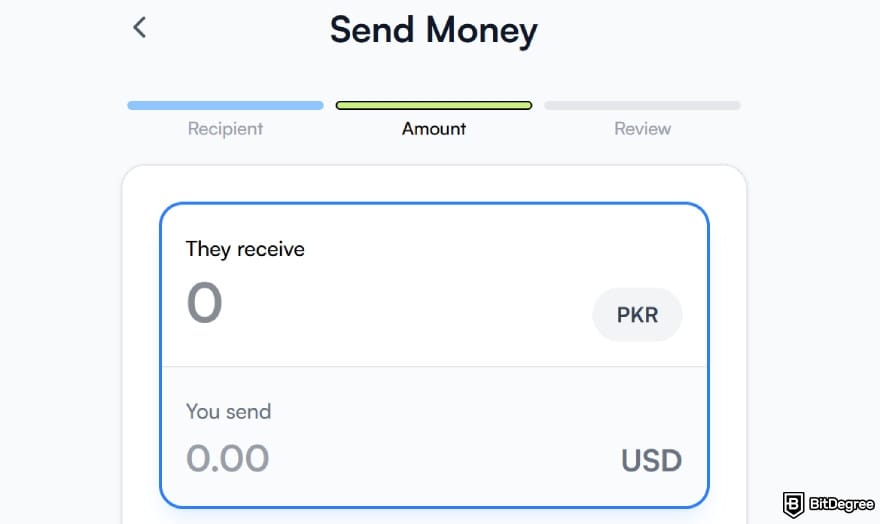
Review all the details one last time and finalize the answer.
In general, your money transfer to Pakistan will follow the same steps. That said, there may be unique rules tied to the country you’re sending from.
Sending Money From Pakistan
Ogvio also works well for transferring money out of the country. Using the @Tag-to-@Tag feature, you can move money instantly and without fees. Here’s how to do it:
From the main dashboard, select [Send money] to start a new transfer.
On the next screen, select [+ Send to new recipient] at the top. Once you’ve sent money to someone, their profile will be saved here, so you can choose them again for faster transfers next time.
Select [Send to Ogvio user] to send money directly to another Ogvio account.
![Pakistan currency: choose [Send To Ogvio User].](https://assets.bitdegree.org/images/pakistan-currency-p2p.jpg "Pakistan currency: choose [Send To Ogvio User].")
Use the search field to enter the recipient @Tag, then select the correct profile from the results.
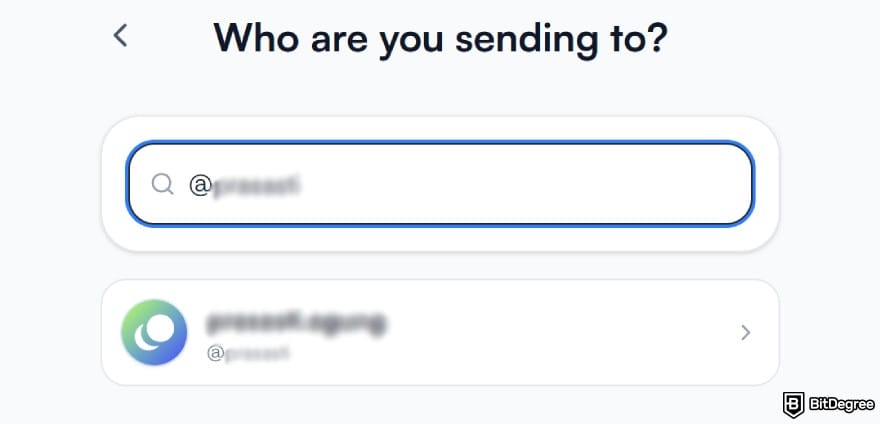
Enter the amount you want to send, review the transfer details, then finalize the transfer.
Using Ogvio’s @Tag feature makes money transfers much easier, since you don’t need to type long bank details or wallet addresses.
Using Money in Pakistan: Practical Tips
You’ve seen how simple sending funds to and from Pakistan can be with the right tools. And if this is part of planning a trip, it also helps to understand what handling cash looks like once you’re there.
One thing to remember is that Pakistan is still a largely cash-based country. While digital payments are becoming more common, the infrastructure isn’t well-established enough[2] to rely on them everywhere. For that reason, I’d recommend always carrying enough cash in your pocket.
Bring a good number of Rs 500 and Rs 1,000 with you.
Other than that, here are a few things worth knowing:
- Know where to convert your money. Airports and hotels are convenient, but their rates are usually the worst. You’ll get a much better deal at well-known spots like Charing Cross or Anarkali Bazaar in Lahore, or the financial district if you’re in Islamabad.
- Bring USD or EUR. If exchanging money before traveling isn’t possible, take USD or EUR with you. These currencies generally secure the strongest rates in Pakistan.
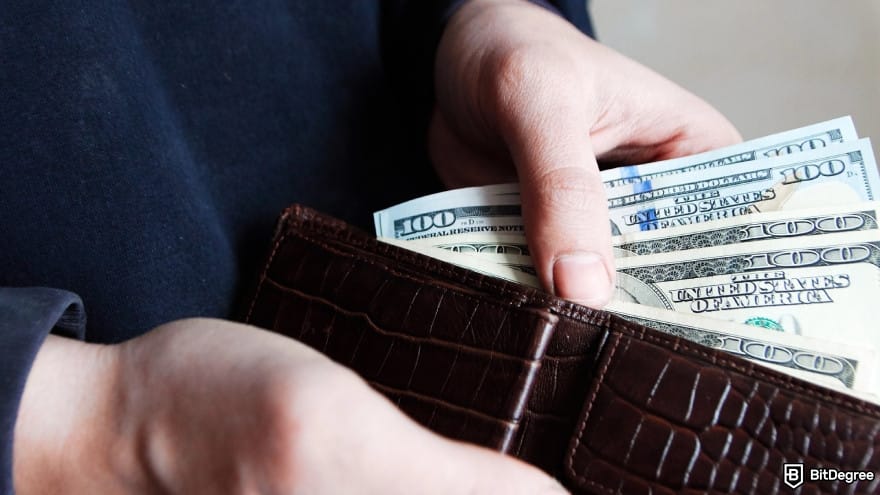
- Keep plenty of small notes. Shops often struggle to break large bills like Rs 1000 or Rs 5000, especially the smaller ones. Try to keep a mix of smaller notes to avoid delays or being turned away.
- ATMs are available in cities. Cities like Karachi, Lahore, and Islamabad have plenty of functioning ATMs. Withdraw what you need before heading out of town so you’re not stuck searching for a working machine.
- Don’t carry all your cash around. Northern areas of Pakistan are fairly safe, but I’d still advise you not to carry your entire travel budget. Take only what you need for the day.
All things considered, it’s best to show up with just enough cash for the first couple of days and manage the rest through a Pakistani bank account. And if you have a friend or relative there, transferring money to them beforehand and withdrawing it later is much less stressful than carrying your whole budget from the get-go.
📚 Check Out: Best Way to Transfer Money Between Banks
Browse our collection of the most thorough Crypto Exchange related articles, guides & tutorials. Always be in the know & make informed decisions!

Conclusions
That’s pretty much everything I can tell you about the Pakistan currency. The most common hiccup people face is mixing it up with India’s or Sri Lanka’s, since they also use the word “rupee”. But once you learn a bit about its history, code, and use case, that confusion is unlikely to happen again.
For travelers planning to visit Pakistan, I suggest carrying enough cash in your pocket for expenses since the digital payment system isn’t fully developed yet. Convert the amount you need, keep small notes with you, and use ATMs or exchangers once you reach the bigger cities.
And if you ever need to send money there, use a reliable service. Ogvio is my recommended pick if you want something fast, transparent, and straightforward when dealing with Pakistani money.
Scientific References
1. Akhtar M. M., Siddique M. I., Rehman Z. ur.: ‘Impact of Money Supply on Inflation in Pakistan: A Time Series Analysis’;
2. Zafar S., Riaz S., Mahmood W.: ‘Conducing the Cashless Revolution in Pakistan Using Enterprise Integration’
Send Money Worldwide
Check out the best ways to send money to other countries quickly, safely, and with minimal fees.
































About Article's Experts & Analysts