


Kraken vs Robinhood - In-Depth Comparison
When comparing Kraken vs Robinhood, the honest answer is that neither is objectively better because they fundamentally target different people with specific financial goals.
![Kraken vs Robinhood: the [Crypto] page on Robimhood's website.](https://assets.bitdegree.org/images/kraken-vs-robinhood-crypto-homepage.jpg "Kraken vs Robinhood: the [Crypto] page on Robimhood's website.")
Kraken has spent over a decade building a reputation that's hard to argue with in the crypto space. It has never suffered a platform-wide security breach resulting in customer fund loss, holds multiple industry awards, and has grown into a multi-asset ecosystem covering stocks, tokenized equities, global payments, and a spending card.
📚 Read More: Kraken Review
Its tiered fee structure rewards serious traders, its liquidity is among the deepest in the industry, and its infrastructure, from sub-2ms latency to a dedicated futures liquidity pool, is built with performance in mind.
Robinhood, on the other hand, is one of the defining financial platforms of the retail investing generation in the US. It has 27.4 million funded accounts and a product suite that now stretches well beyond simple stock trading into crypto, futures, options, a robo-advisor, and a Gold membership.
📚 Read More: Robinhood Review
This US-based platform may not win on crypto depth or fee transparency, but for everyday investors who want everything under one roof with a clean interface and no commissions, it's hard to beat.
Kraken | Robinhood | |
|---|---|---|
Best for | Crypto-focused traders | All-in-one retail investors |
Availability | 190+ countries and territories | US + limited Europe |
Crypto selection | 650+ assets | 40-50 (US), 65+ (EU) |
Stock trading | Commission-free (US) | Comission-free |
Spot fees | 0.25% / 0.40% (maker/taker) | Spread-based, not disclosed |
Futures fees | 0.02% / 0.05% (maker/taker) | $0.30/contract + reg fees |
Margin trading | Up to 10x | Via Robinhood Gold |
Staking | 20+ assets globally | ETH & SOL (Europe only) |
Security certifications/licenses | ISO/IEC 27001, SOC 2 | SEC & FINRA regulated |
SIPC protection | ✗ | Up to $500,000 |
Table: Comparison of Kraken vs Robinhood
The table above makes the trade-offs pretty clear. Kraken leads on crypto depth, fee transparency, global reach, and security infrastructure. Meanwhile, Robinhood leads on beginner experience, regulatory protections, and the breadth of its all-in-one financial offering. Neither platform has a clean sweep, so the right one depends on what you're optimizing for.
Kraken vs Robinhood - Market Position
As of October 2025, Kraken has served more than 15 million clients across more than 190 countries and has processed over $2 trillion in total transaction volume.
Its reputation shows up in the numbers and recognitions. In fact, Kraken was recognized by Expert Consumers as the Best Crypto Exchange of 2025. Its own internal support data also reports a 93% client satisfaction score, which is a figure the company attributes to live chat response times of under 30 seconds and 24/7 multilingual support across 13+ languages.
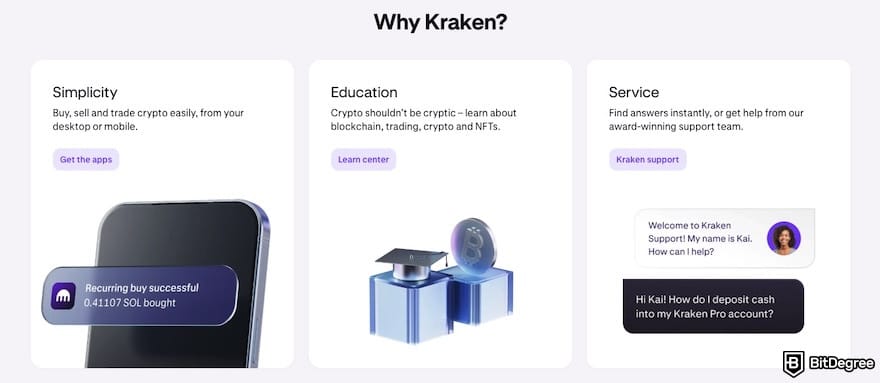
Meanwhile, Robinhood has made investing accessible to millions of retail investors, exclusively in the United States and some parts of Europe.
In fact, the number of retail investors increased in the US, and Robinhood sits right at the center of that wave, with research suggesting its users are more prone to attention-induced trading compared to those on other platforms. This behavioral change has made Robinhood play an important role in American crypto market movements.
Verdict
Both platforms have carved out strong but different positions in the market. Kraken has built years of credibility as a trusted, crypto-native exchange for traders worldwide. Robinhood, on the other hand, makes investing feel accessible to first-time investors in the US, turning everyday people into market participants at a scale that now meaningfully moves prices.
Kraken vs Robinhood - Trading Features
Neither Kraken nor Robinhood tries to compete on the number of trading products available. Instead, both platforms focus on delivering a streamlined trading experience, though they take different approaches. Kraken emphasizes security and professional-grade trading infrastructure, while Robinhood prioritizes simplicity.
Both platforms cover the core needs of most traders without offering the extensive product ecosystems found on some larger exchanges and brokerages.
Kraken Trading Features
For everyday trading, Kraken provides:
- Spot trading for buying, selling, and exchanging cryptocurrencies.
- Instant Buy, a simplified interface for purchasing crypto directly with fiat currencies.
For more experienced traders, Kraken offers:
- Margin trading with leverage of up to 10x on eligible trading pairs.
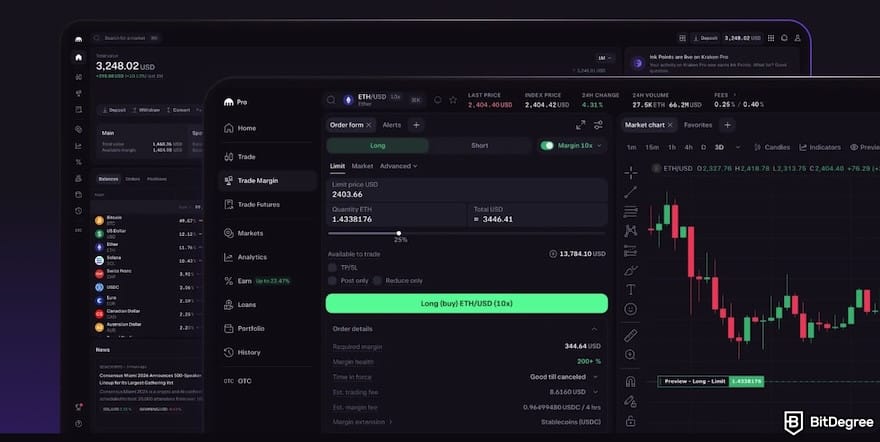
- Futures markets featuring both perpetual and fixed-maturity contracts.
- Advanced order functionality, including stop-loss, take-profit, trailing stop, and one-cancels-the-other (OCO) orders.
For active and professional users, Kraken includes:
- API connectivity for algorithmic trading, custom scripts, and trading bots.
- Advanced order management tools designed for more precise trade execution.
- Price alerts and market-monitoring features to help track opportunities and market activity.
- Kraken Prime, which provides institutional-grade services such as custody solutions, enhanced liquidity access, and execution support for large-volume traders and organizations.
Overall, Kraken's trading suite is suitable for beginners, active crypto traders, algorithmic traders, and institutional clients. It may not offer every niche trading feature available on the market, but it covers the core tools most cryptocurrency traders need.
Robinhood Trading Features
Robinhood is designed around accessibility and convenience, making it easy for users to trade cryptocurrencies, options, and futures from a single account.
For basic trading, Robinhood offers:
- Instant Buy functionality for quick crypto purchases.
For more experienced traders, Robinhood supports:
- Options trading with multi-leg strategies and options chains.
- Futures trading across asset classes such as stock indexes, commodities, and cryptocurrencies.
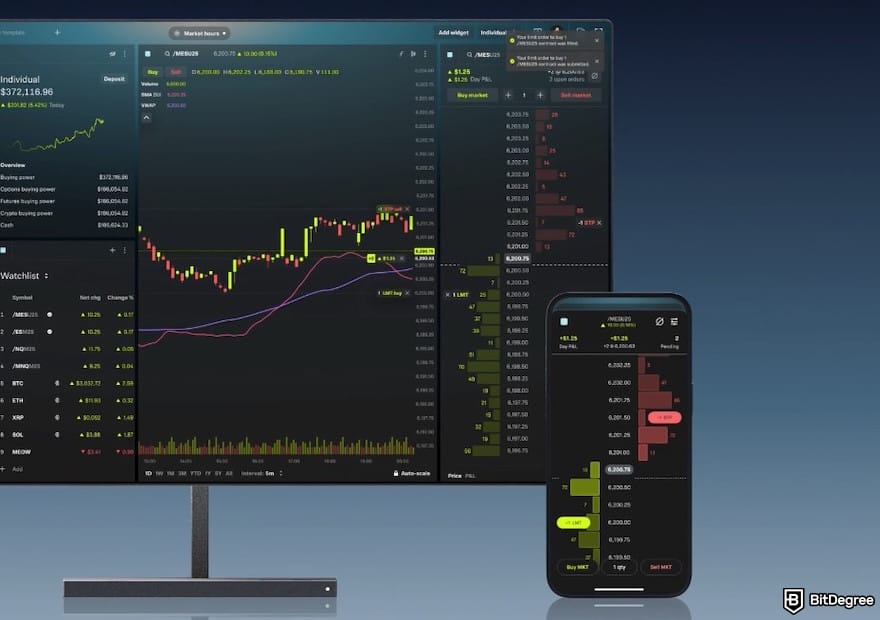
- Margin investing through Robinhood Gold.
- Robinhood Legend, a customizable desktop platform featuring advanced charting, technical indicators, ladder trading, and flexible workspace layouts.
For active traders, Robinhood provides:
- Advanced charting and technical analysis tools through Robinhood Legend.
- Custom watchlists, layouts, and market-monitoring dashboards.
- Ladder trading for faster order entry and execution.
- AI-powered tools, including Robinhood Cortex and the company's agentic trading initiatives, which are designed to help users analyze market information, identify opportunities, and make more informed investing decisions.
Robinhood's trading toolkit suits various trading levels, from beginners to active traders. The downside is that quite a few of the platform's best features sit behind the Robinhood Gold paywall, so you may need to pay the monthly subscription fee if you want access to the full experience.
Verdict
Both Kraken and Robinhood do a good job of keeping trading accessible without overwhelming users. The difference is that Kraken includes many of its advanced trading features (including Kraken Pro and advanced order types) at no extra cost, whereas several of Robinhood's more powerful features are reserved for Robinhood Gold subscribers.
Kraken vs Robinhood - Fees
When it comes to fees, Kraken and Robinhood target different types of traders. The first is a crypto-native exchange where costs scale with your experience level. On this platform, beginners tend to pay more, but serious traders can get some of the lowest fees in the industry.
Meanwhile, Robinhood keeps things simple on the surface with its “commission-free” trading, but quietly embeds costs in the spread.
Kraken | Robinhood | |
|---|---|---|
Account opening | Free | Free |
Crypto deposit | Mostly free (some exceptions depending on asset) | Not applicable (custodial wallet) |
Crypto withdrawal | Varies by blockchain/network | - |
Fiat deposit | Varies by provider & currency | Free (ACH); Wire: standard bank fees may apply |
Fiat withdrawal | Varies by method & currency | Free (ACH); Outgoing wire: $25 (standard); Free (Premier) |
Simple/instant buy | ~1.5% for crypto; ~0.9% for stablecoins; fixed fee + spread | Spread-based (displayed at checkout) |
Card payment | 3.75% + $0.25 | - |
Spot (maker/taker) | Starts at 0.25%/starts at 0.40% | - |
Futures (maker/taker) | Starts at 0.02%/starts at 0.02% | $0.30/contract |
Options trading | OTC only | Commission-free; Index options: $0.35–$0.50/contract (Gold/standard) + exchange fees |
Stock & ETFs | Commission-free | Commission-free |
Table: The fee breakdown of Kraken and Robinhood
Kraken is very much a crypto-first platform, and its fee structure reflects that. If you're using the beginner-friendly Instant Buy feature, fees can feel a bit steep (~1.5%). Still, traders who switch to Kraken Pro get access to much lower fees that drop as their trading volume increases, potentially all the way to 0% maker fees for high-volume users.
Robinhood, on the other hand, keeps things simple with commission-free trading for stocks, ETFs, and options. Crypto trading isn't technically free, though, as costs are built into the spread rather than shown as a separate fee, which can make pricing less transparent.
Most accounts have no opening or maintenance fees, but regulatory fees still apply to certain sell orders. For users interested in Robinhood's banking perks and premium benefits, access depends on maintaining a $1,000/month direct deposit and an annual Robinhood Gold subscription ($50).
$1,000 Instant Buy Fee Comparison
Since Robinhood doesn't offer a traditional spot trading interface, let’s compare both platforms' instant buy features (the one-tap "buy crypto" flow) that many buyers use. This comparison should keep things apples-to-apples in this Kraken vs Robinhood review.
Kraken instant buy | Robinhood instant buy | |
|---|---|---|
Fee structure | Fixed fee + spread | Spread only (no line-item fee) |
Stated rate (crypto) | ~1.5% total | Not disclosed upfront |
Est. fee on $1,000 | ~$15.00 | ~$10–20 |
Table: $1,000 "Instant Buy" fee comparison between Kraken and Robinhood
For a $1,000 instant buy, both platforms will cost roughly the same (around $10-$20). However, the way they charge you is different, and that actually matters. Kraken shows you the fee before you tap confirm, so there should be no surprises.
On the other hand, Robinhood quietly gives you a slightly “worse” price than the market rate, and that gap is their cut. You'd need to compare their quoted price against a live market feed to notice it. Most people never do, and that’s how Robinhood gets its “commission-free” positioning.
Thankfully, Kraken has an upgrade path via its Pro version. That same $1,000 trade drops from ~$15 down to about $2.50 in maker fees. That's a 6x reduction just for using limit orders instead of instant buy. Robinhood has zero equivalent, at the moment.
$1,000 Futures Trade Fee Comparison
Kraken futures uses percentage-based fees, while Robinhood charges a flat per-contract rate, which makes the math very different depending on what you're trading.
Kraken | Robinhood | |
|---|---|---|
Futures maker fee | 0.02% per trade | $0.30/contract flat |
Fee on $1,000 (maker) | $0.20 | $0.30+ per contract |
Futures taker fee | 0.05% per trade | $0.30/contract flat |
Fee on $1,000 (taker) | $0.50 | $0.30 per contract |
Table: $1,000 futures trade fee comparison between Kraken and Robinhood
Kraken's futures fees are budget-friendly, especially at small sizes. A $1,000 maker trade costs you just $0.20! Once you're trading at serious volume, it gets even cheaper because Kraken's maker rebate means they pay you to place limit orders (negative fees).
Meanwhile, Robinhood's flat $0.30/contract fee sounds harmless until you actually do the math. Adding on the regulatory fees and the exchange fees, that "tiny" number per contract isn't so tiny anymore, especially on index futures where multi-leg orders mean you're getting hit with that fee multiple times per trade.
That said, comparing these two on futures is kind of like comparing a skateboard to a motorcycle because they aim for different things.
Kraken only offers crypto futures (perpetuals and dated contracts), while Robinhood runs on CME-regulated futures: S&P 500, oil, and gold. So the real question should be which one actually trades what you're trying to trade.
Verdict
Kraken wins for serious crypto traders, with its transparent, volume-based fees. It comes with a clear upgrade path from instant buy all the way to near-zero maker fees if you trade using the Pro version. Robinhood is the better pick if you want a “commission-free” option, but its crypto costs are quietly baked into the spread (so 'free' isn't quite the full story).
Kraken vs Robinhood - Liquidity & Execution
Kraken's Co-CEO Arjun Sethi described the platform as having " the deepest liquidity pools in crypto ", and pointed to its more than 40% global stable-fiat volume market share among major centralized exchanges as evidence of its liquidity infrastructure.
In practice, this means Kraken has tighter spreads, less slippage on large orders, and more reliable execution, especially for traders moving big sizes.
The numbers back this up. In 2024, Kraken processed $665 billion in total trading volume across spot, margin, futures, and consumer exchange activity, with 99.9% platform uptime and sub-2ms round-trip latency. By 2025, that momentum increased, as the total platform transaction volume hit $2.0 trillion.
On the infrastructure side, Kraken maintains a dedicated liquidity pool for futures to cover slippage-related losses during volatile or low-liquidity market conditions. For spot trading, spreads go as tight as 1 pip, and over 1,591 trading pairs are currently available on the exchange.
Robinhood's financial position is solid from a corporate standpoint. The platform holds $19.27 billion in cash and equivalents. Regarding the crypto offering, Robinhood supports 40 to 50 cryptocurrencies in the US and over 65 in the EU.
As of Q3 2025, Robinhood reported $51 billion in crypto assets under custody and $232 billion in crypto notional trading volume over the trailing twelve months. One key limitation is that Robinhood doesn’t support crypto transfers to external wallets on its standard account, so they need to use Robinhood Wallet separately to do that.
Verdict
Kraken wins on liquidity and execution depth, while Robinhood's strength lies more in its corporate financial stability than in trading performance.
Kraken vs Robinhood - Security & Trust
Kraken and Robinhood offer the essentials you'd expect from a modern trading platform, including two-factor authentication (2FA) and encryption. The difference is that Kraken earns trust through its security track record, while Robinhood leans on its status as a regulated US brokerage.
Kraken | Robinhood | |
|---|---|---|
Cold storage | ✓ | ✓ |
2FA | ✓ | ✓ |
Passkeys | ✓ | ✓ |
Withdrawal whitelisting | ✓ | ✗ |
Trusted devices | ✓ | ✓ |
ISO/IEC 27001 Certified and SOC 2 Compliant | ✓ | ✗ |
SIPC Protection | ✗ | ✓ (Up to $500,000) |
Table: Comparison of Kraken and Robinhood's security features
As of 2026, Kraken has never suffered a platform-wide hack that resulted in customer funds being stolen, which is a pretty impressive record in crypto.
The exchange further strengthens its security profile through regular Proof of Reserves audits, ISO/IEC 27001 certification, and SOC 2 compliance. These certifications and audits help demonstrate that Kraken follows established security practices and maintains controls around how customer assets and data are managed.
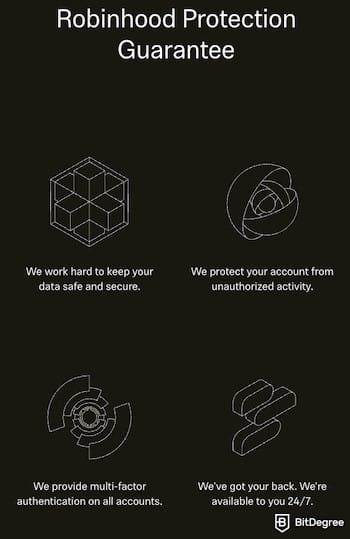
Meanwhile, Robinhood combines industry-standard protections with the safeguards expected from a regulated brokerage. Its brokerage entities are overseen by the SEC and FINRA, so eligible brokerage accounts are covered by SIPC insurance up to $500,000 (including $250,000 for cash), with additional excess coverage through Lloyd's of London.
Uninvested cash may also qualify for FDIC insurance through Robinhood's cash sweep program, with coverage reaching up to $2.5 million for individual accounts.
To be fair, Robinhood hasn't had a perfectly clean run with regulators. In 2024, the company agreed to a FINRA settlement involving nearly $30 million in fines and customer restitution over compliance and oversight issues. The good news is that these weren't security breaches or customer fund losses since the case was largely about regulatory controls and operational processes, which Robinhood has since improved.
Verdict
Both platforms take security seriously, just in different ways. Kraken is the better pick if you want crypto-focused security, transparency, and one of the cleanest track records in the industry. Robinhood, on the other hand, is a good fit if you feel more comfortable with the protections that come from a regulated brokerage.
Kraken vs Robinhood - Broader Ecosystem
Beyond trading, both Kraken and Robinhood have developed ecosystems that extend well past their original purpose. Let’s see what these platforms offer now.
Kraken’s Other Features
Kraken offers a wider ecosystem of products than it was first introduced. It now includes self-custody tools, global payment services, stock investing, tokenized equities, and staking opportunities. These additional features make Kraken appealing to users who want more than simply buying and selling crypto.
1
Kraken Wallet
Kraken Wallet is the company's self-custody wallet solution, designed for users who prefer to manage their own private keys rather than leave assets on an exchange. The wallet supports a wide range of cryptocurrencies and NFTs across major blockchain networks, including Bitcoin, Ethereum, and Solana. Because users maintain control of their private keys, Kraken Wallet follows the principle of self-custody, giving individuals full ownership of their digital assets.
2
Global Payments with Krak
Krak is Kraken's dedicated payments application that bridges traditional finance and cryptocurrency. The app allows users to send and receive both fiat currencies and digital assets, supporting hundreds of currency options across more than 160 countries.
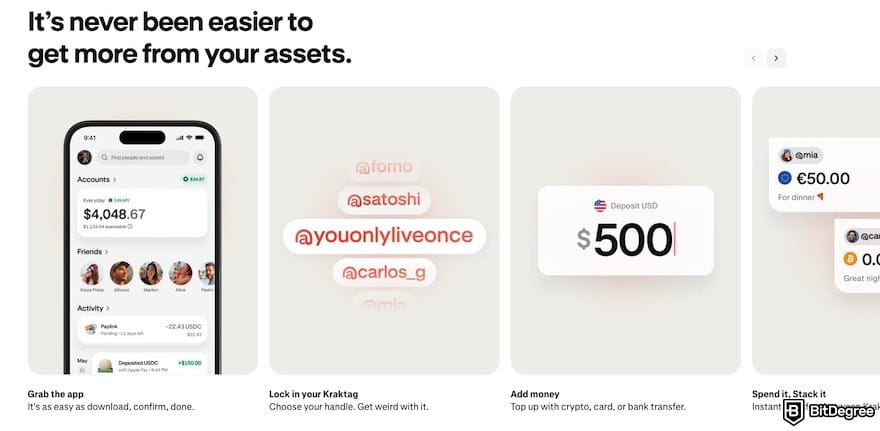
One of Krak's standout features is its use of personalized @Kraktags, which simplify peer-to-peer transfers by eliminating the need to share lengthy wallet addresses or banking details. Kraken also integrates the Krak Mastercard debit card, allowing users to spend supported balances at merchants worldwide while earning cashback rewards.
3
Stock and ETF Investing
In addition to crypto trading, Kraken offers eligible U.S. customers access to thousands of publicly traded stocks and exchange-traded funds (ETFs). Investors can trade securities listed on major American exchanges such as the NYSE, NASDAQ, and AMEX through the same platform they use for cryptocurrency investing.
This integration allows users to manage both traditional and digital assets from a single account rather than maintaining separate brokerage and crypto exchange accounts.
4
xStocks
Kraken also supports tokenized equities through its xStocks product. These blockchain-based assets are backed by real-world stocks and ETFs on a 1:1 basis, giving users exposure to traditional financial markets through crypto infrastructure.
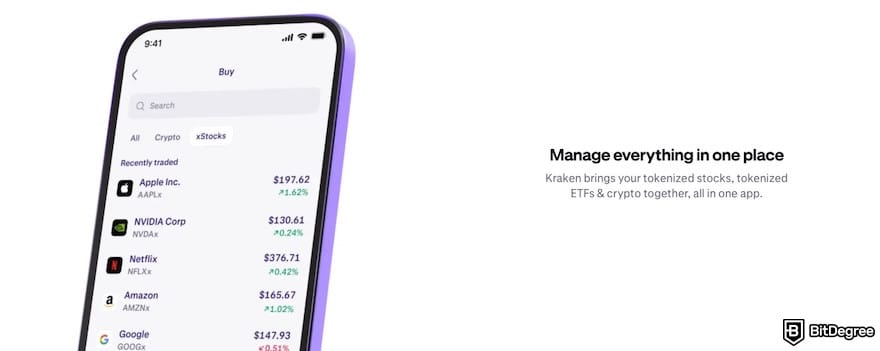
While xStocks are not currently available in the United States, the feature is accessible in several international markets and provides an alternative way to gain stock market exposure within a crypto-focused environment.
Robinhood’s Other Features
Robinhood has evolved from a simple stock-trading app into a full financial ecosystem. Beyond buying and selling assets, the platform now offers a premium membership program, a self-custody crypto wallet, and more.
1
Robinhood Gold
Robinhood Gold is Robinhood's premium membership program, available for $5 per month, that unlocks a range of additional benefits. Subscribers can access more platform features, such as higher interest rates on uninvested cash and larger instant deposit limits.
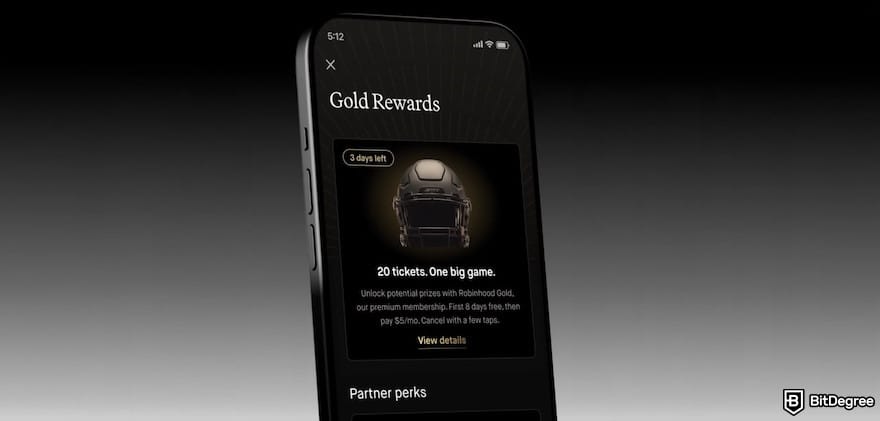
One of the most notable benefits is the 3% IRA contribution match, which can provide up to $225 annually based on the 2026 IRA contribution limit. This feature can help long-term investors grow their retirement savings more quickly. Gold members can also get exclusive promotions, crypto-related rewards, partner perks, and curated premium experiences.
2
Robinhood Gold Card
Robinhood has expanded beyond investing with its Gold Card, available to eligible Robinhood Gold members. The card offers 3% cash back across eligible spending categories, with rewards that can be redeemed into a Robinhood brokerage account. This integration allows users to automatically put cashback rewards toward investing.
3
Robinhood Wallet
Robinhood Wallet is a self-custody crypto wallet that gives users direct control over their digital assets and private keys. Unlike assets held within a standard Robinhood account, cryptocurrencies stored in Robinhood Wallet are fully controlled by the user.
The wallet supports sending, receiving, swapping, and storing cryptocurrencies across multiple blockchain networks, while also providing access to decentralized applications (dApps) and Web3 services.
4
Robinhood Invest
Robinhood Invest is the platform's brokerage service, allowing users to invest in more than just cryptocurrency. Through a single account, investors can access over 11,000 securities, including U.S.-listed stocks, ETFs, options, ADRs, and certain OTC equities.
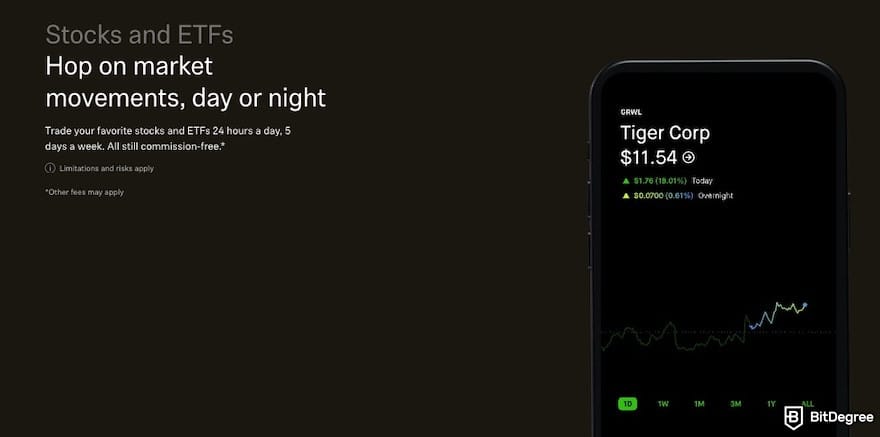
This platform also supports extended-hours and 24-hour trading for many eligible stocks and ETFs, making it one of the more accessible investing platforms for retail users.
5
Robinhood Strategies
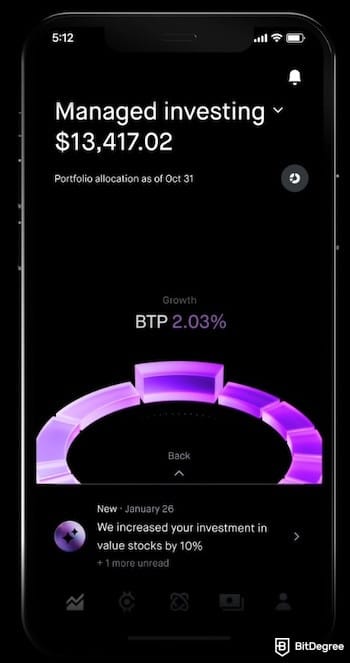
Robinhood Strategies is Robinhood's managed investing service and can best be described as a “robo-advisor” with a human element. After answering questions about your financial goals, investment timeline, and risk tolerance, the platform builds and manages a personalized portfolio on your behalf, with a mix of ETFs and individual stocks.
The service charges a 0.25% annual management fee with a low $50 minimum investment. It also includes features such as portfolio rebalancing, tax-aware portfolio management, recurring investments, market insights, and customizable stock restrictions.
Verdict
Kraken and Robinhood have both grown well beyond their original lane. Kraken's ecosystem seems to be more crypto-oriented, with features built around digital assets and the people who take them seriously. Robinhood expands into a full personal finance platform that includes stock investing and a robo-advisor.
Kraken vs Robinhood - Fiat Deposits and Withdrawals
Kraken is the more flexible option in this Kraken vs Robinhood comparison when it comes to moving money around. It supports a wide range of major fiat currencies: USD, EUR, CAD, AUD, GBP, CHF, JPY, BRL, ARS, and MXN, and does a great job of showing exactly what funding methods are available, how much they'll cost, and how long they'll take to process.
For example, US users can fund their accounts through ACH transfers via Plaid, debit cards, PayPal, and SWIFT transfers, while European users get options like SEPA and iDEAL depending on their country. Kraken also supports Apple Pay and Google Pay for eligible purchases, so you've got plenty of ways to get money onto the platform.
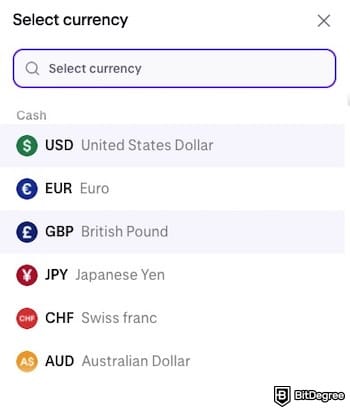
Robinhood takes the opposite approach with fewer choices. The platform is primarily built around USD, although Robinhood Europe users can also hold Euros (EUR) and British Pounds (GBP). It also focuses on standard bank transfers, debit card deposits, and Instant Bank Transfers for eligible users.
If your bank supports it and you've linked it through Plaid, Instant Bank Transfers can move funds into your account in minutes. That said, transfer limits vary by account and reset daily, so heavy users may occasionally run into funding caps.
Verdict
Kraken feels like the platform for users who want flexibility and multiple funding routes, especially if they're dealing with different currencies. Robinhood, meanwhile, keeps things simple with fewer options, suitable for users who just want to connect a bank account and start investing.
Kraken Trading Walkthrough
Buying cryptocurrency on Kraken is a simple process using the platform's Buy feature. This simplified interface allows users to purchase crypto instantly using cash balances, bank payments, debit cards, credit cards, Apple Pay, or Google Pay, depending on their location and account eligibility.
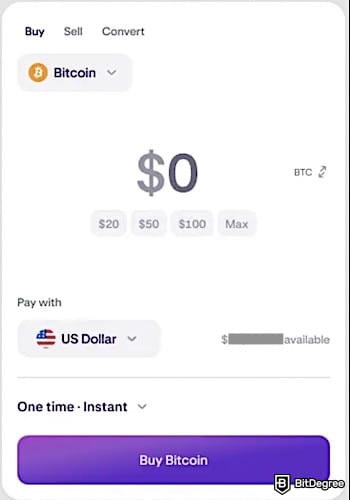
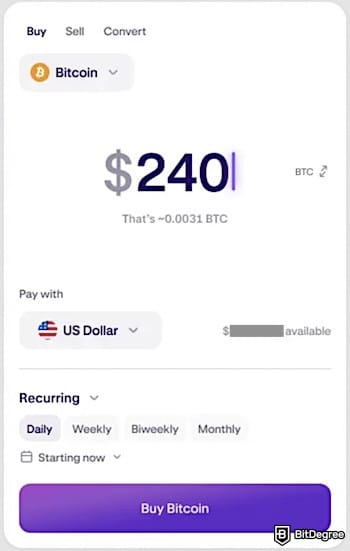
Kraken should display a summary showing the estimated cryptocurrency amount, current price, applicable fees, and total purchase cost.
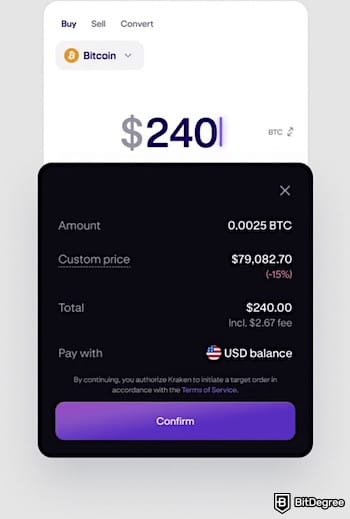
After the order is completed, Kraken will display a confirmation screen showing your purchase details. The cryptocurrency will then appear in your account portfolio, where you can monitor its value, track performance, or make additional transactions. Kraken's Instant Buy interface is ideal for beginners who want to purchase cryptocurrency quickly. However, users who want more control over their trades and access to advanced trading features can switch to Kraken Pro.
Robinhood Trading Walkthrough
Buying cryptocurrency on Robinhood can be completed in just a few minutes. The platform allows users to purchase supported cryptocurrencies with as little as $1, so even beginners can start with a small investment.
![Kraken vs Robinhood comparison: the [Crypto] tab on Robinhood's mobile app.](https://assets.bitdegree.org/images/kraken-vs-robinhood-crypto-tab-robinhood.jpg "Kraken vs Robinhood comparison: the [Crypto] tab on Robinhood's mobile app.")
![Kraken vs Robinhood: the [Buy Crypto] button on Robinhood's mobile app.](https://assets.bitdegree.org/images/kraken-vs-robinhood-buy-crypto-button.jpg "Kraken vs Robinhood: the [Buy Crypto] button on Robinhood's mobile app.")
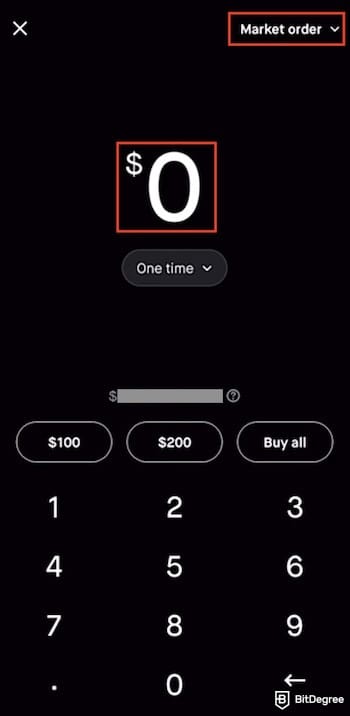
Robinhood also supports recurring crypto investments. If you want to automate your purchases, you can choose a recurring schedule such as daily, weekly, bi-weekly, or monthly.
Once the order is executed, Robinhood will display a confirmation screen showing the amount purchased, execution price, and total cost. After the purchase is completed, the cryptocurrency will appear in your portfolio. You can tap the asset at any time to view its performance, position value, average purchase price, and transaction history.
Kraken vs Robinhood for Beginners
Kraken and Robinhood have made serious efforts to be accessible to newcomers, but choosing between them comes down to what kind of beginner you are.
The standard Kraken app is simple enough for first-time buyers, with an Instant Buy feature that lets you purchase crypto in just a few taps. This platform also offers a dedicated Learn section on how to get started. With all these features, Kraken was named Best Crypto Trading Platform overall, Highly Commended Beginner Platform, and Best Advanced Platform in the 2025 Finder Crypto Trading Platform.
Robinhood was practically built for beginners. Its entire brand identity is rooted in making investing feel accessible. The company even won the award for Best Brokerage App for New Investors for 2026, and Benzinga named it the Best for Beginners among all online stock brokers in 2025.
The app offers a clean, minimal interface, “commission-free” trades, and fractional shares starting from $1. For crypto specifically, Robinhood keeps things simple with popular assets and no confusing wallet management required. The tradeoff is that crypto fees are embedded in the spread, which may make beginners confused about how much they're paying exactly.
Verdict
Kraken's beginner app is worth considering if crypto is your main focus and you want room to grow into a more powerful platform later. Still, Robinhood's simple interface and commission-free trades make it the easier first step for beginners.
Kraken vs Robinhood for Active Traders
Active traders have very different needs from casual buyers since they need fast execution, deep order types, tight fees that scale with volume, and professional-grade tools.
Kraken Pro technically checks all of these boxes with its full order book, advanced charting, and multiple order types. Besides, the base maker fees are 0.25%, the taker fees are 0.40%, and those fees continue dropping as your 30-day volume climbs. These are competitive among advanced platforms.
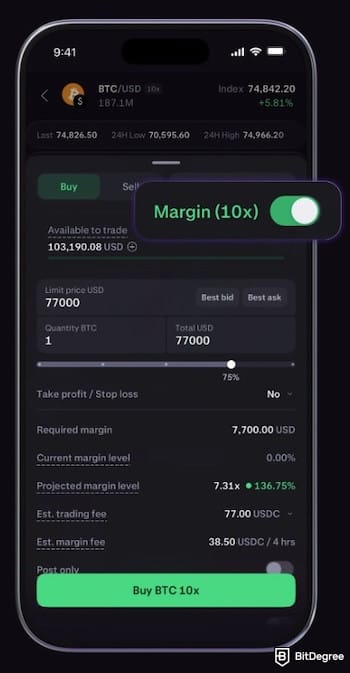
Active traders also get access to margin trading with up to 10x leverage on spot pairs, 100+ multi-collateral futures contracts, and a dedicated liquidity pool that protects futures positions from being unwound during volatile conditions.
What about Robinhood; what does the platform offer to active traders? Robinhood has made a deliberate push into the active trader space over the past two years. At HOOD Summit 2025, Robinhood announced a lineup of new trading products, including major upgrades to its desktop platform (Robinhood Legend), AI-powered tools, and new asset classes.
The main limitation for active crypto traders on Robinhood is the lack of a pro-grade order book or maker-taker fee structure. Robinhood's crypto pricing is spread-based with no volume tiers, which means heavy crypto traders don't get rewarded for their activity the way they do on Kraken.
Verdict
Robinhood Legend is a solid step forward for active traders, but for serious crypto trading, Kraken Pro is still in a different league. It has a full order book, transparent volume-based fees, and futures infrastructure that Robinhood still can't match on the crypto side.
Kraken vs Robinhood for Passive Users: Earning Opportunities
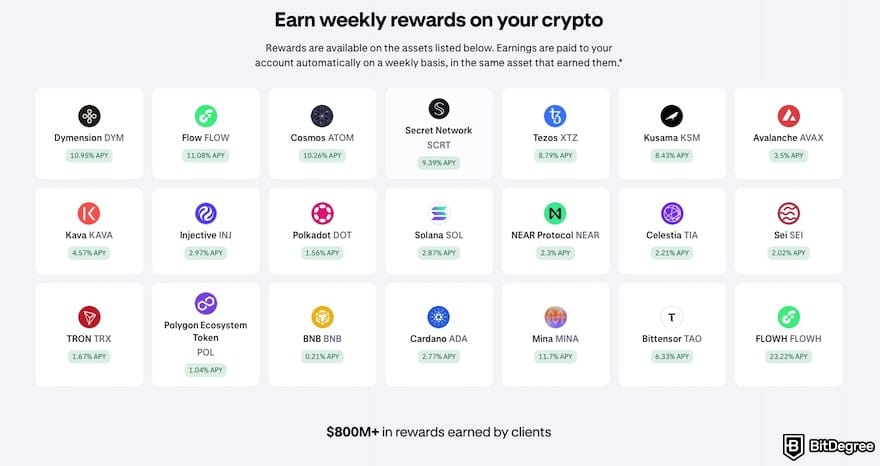
For users interested in earning passive income, Kraken and Robinhood offer staking services, but Kraken seems to be the winner here because Robinhood’s package is quite limited in terms of the region and variety.
Kraken's staking services offer more than 20 supported cryptocurrencies that may generate double-digit annual rewards, depending on the asset. It provides flexible and longer-term staking options: Auto Earn to receive rewards automatically, and Bonded Staking that may offer higher returns.
Robinhood also offers crypto staking for users in Europe and the US, allowing them to earn passive rewards on Ethereum and Solana. Users can start staking with as little as €1 worth of crypto. Rewards are paid out automatically on a scheduled basis with competitive APYs (the number isn’t specifically mentioned).
Verdict
Kraken is the clear winner for staking, with 20+ supported assets, double-digit APY potential, and flexible options available globally. It leaves Robinhood's two-asset staking offering looking pretty thin by comparison.
Final Verdict: Is Robinhood or Kraken Better?
Choosing between Kraken and Robinhood comes down to what kind of investor you are and which asset class sits at the center of your financial life.
If crypto is your primary focus, Kraken is the stronger choice. The fee structure is transparent and rewards volume, the trading infrastructure is built for serious execution, and the platform has a 14-year track record of security. The platform grows with you in a way Robinhood doesn't offer for crypto, yet.
Meanwhile, those who are based in the US and want a single app that handles various assets in one user-friendly place can choose Robinhood. Just go in knowing that "commission-free" crypto isn't entirely free, and some of the best features sit behind the Gold paywall.