




Kraken vs Bybit - In-Depth Comparison
When comparing Kraken vs Bybit, which is actually better? Well, it's not a straightforward question because both are trusted global crypto platforms that go well beyond basic buy-and-sell trading.
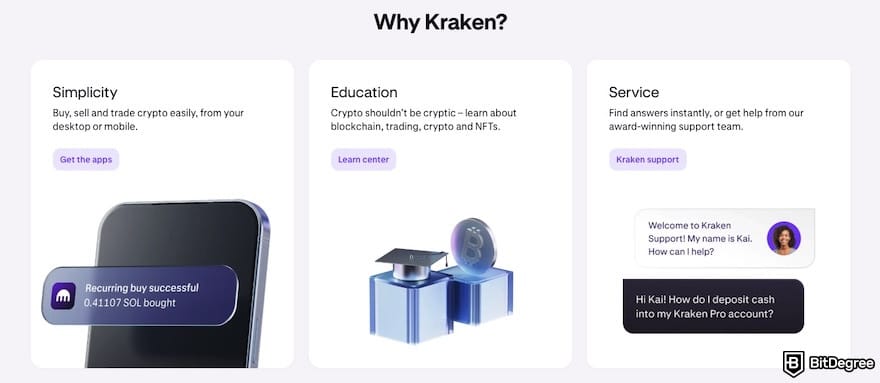
Kraken has spent over a decade building a reputation that's hard to argue with: stable and secure. It has never had a breach resulting in customer fund loss, holds multiple industry awards, and has grown into a broader financial platform that now includes stocks, tokenized equities, global payments, and a spending card.
Bybit, on the other hand, is built for people who are serious about crypto. It's the world's second-largest exchange by trading volume, with a feature suite that covers everything from perpetual futures and options to copy trading, automated bots, and a full earn ecosystem.
The scale is real, with 80 million users, deep liquidity, and a platform that keeps expanding. The 2025 hack is worth knowing about, but Bybit covered all customer losses and responded with security upgrades.
Kraken | Bybit | |
|---|---|---|
Best for | Spot traders, beginners, and security-conscious users | Active traders, derivatives, and yield-focused users |
Main strength | Beginner-friendly interface, 15+ years with no customer fund loss, and broad country support | Deepest liquidity for derivatives, complete trading toolkit, and broad earn ecosystem |
Supported cryptocurrencies | 500-600+ | 600+ coins, hundreds of perpetual contracts |
Spot trading fees | Competitive | Very competitive |
Passive earning | Staking on 21+ assets, Auto Earn, Bonded Staking, ETH restaking | Easy Earn, On-Chain Earn, Advanced Earn (Dual Asset, Liquidity Mining, and more) |
Fiat support | 10 major currencies | 25 currencies |
Beginner experience | Simple interface, clear separation of basic/pro | Feature-dense, but demo trading helps |
Overall verdict | Better for simpler interface and stronger protection, and | Better for focused trading, copy trading, automation, and practical active-user features |
Table: A quick Kraken vs Bybit comparison
If you want a clean, beginner-accessible platform with strong fiat support, a trustworthy track record, and room to grow into more advanced trading, Kraken is the more grounded choice. However, those who are ready to actively trade and want access to the deepest derivatives markets can choose Bybit.
Kraken vs Bybit - Market Position
Bybit is among the world's largest cryptocurrency exchanges by trading volume, growing from 50 million to 80 million registered users in 2025 alone. Moreover, Movements on Bybit regularly influence broader market price discovery, which says a lot about the weight it carries in the ecosystem.
For example, when a single deleveraging event triggered by Trump's announcement of 100% tariffs on Chinese imports hit in October 2025, over $19 billion in liquidations were processed across major exchanges in just two days. In this case, Bybit absorbed a big share of that activity as one of the top derivatives venues globally.
Additionally, it has built a strong following among active and derivatives-focused traders. In fact, Bybit's World Series of Trading 2025 generated $172.8 billion in total trading volume across 520,451 traders, earning a Guinness World Record for the most participants in a 24-hour online trading competition.
Meanwhile, Kraken sits in a different position, with smaller raw volume, but consistently ranked among the most respected exchanges in the industry. The platform seems to build its reputation on stability, security, and being the go-to platform for serious traders who value reliability over hype.
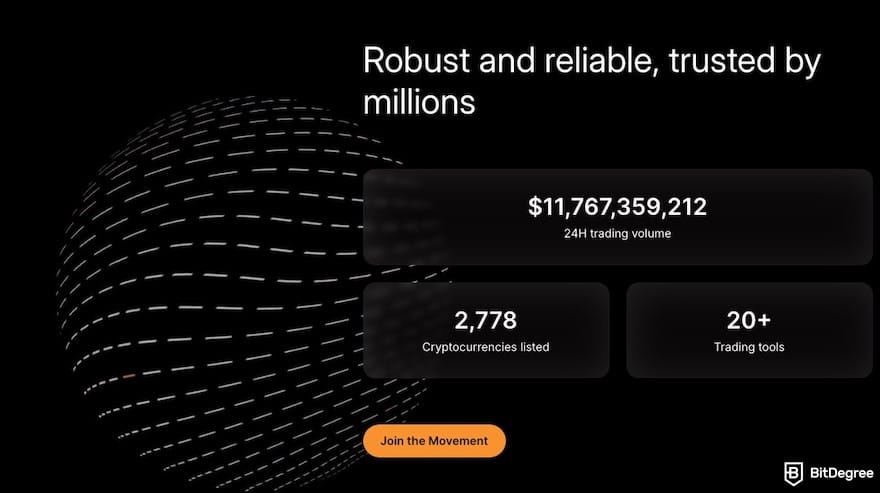
Its global footprint spans 190+ countries and territories, and its track record of over a decade without a major security breach is something very few exchanges at its scale can claim. Awards from Finder and the Customer Centricity World Series further cement its standing as one of the most trusted names in crypto.
Verdict
If size, liquidity depth, and being at the center of global crypto activity matter to you, Bybit is hard to argue against. However, if trust, consistency, and a clean track record are your priority, Kraken holds its ground firmly.
Kraken vs Bybit - Trading Features
Trading features are where the difference between Kraken and Bybit becomes most obvious. Kraken is built around clean execution, while Bybit offers feature depth and active market participation. The tools each platform offers reflect that gap clearly.
Kraken's Trading Features
Kraken leans toward straightforward trading. It's a good choice for users who prioritize security and clean execution over a wide product suite.
For basic trading, Kraken offers:
- Spot trading for direct crypto purchases and trades.
- Instant Buy for quick crypto purchases using fiat.
For advanced trading, Kraken supports:
- Margin trading with up to 10x leverage on select pairs.
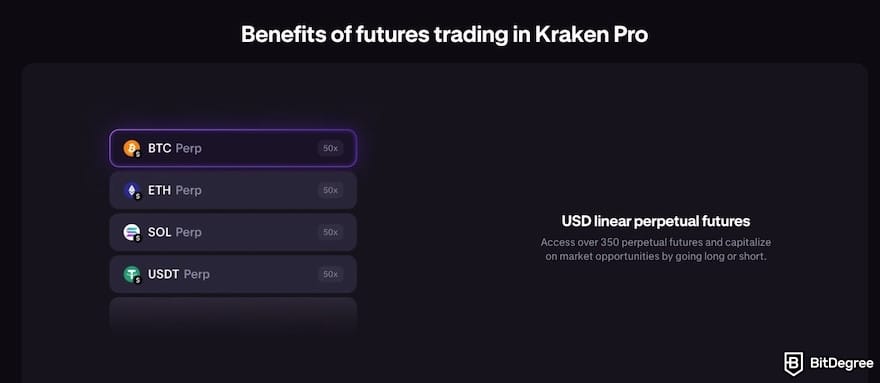
- Futures trading, including perpetual and fixed-term contracts.
- Advanced order types, including stop-loss, take-profit, trailing stop, and OCO orders.
For automation and pro-level trading, Kraken supports:
- API trading for bots, scripts, and algorithmic strategies.
- Advanced order management for more precise execution.
- Price alerts and market tools for tracking setups and market moves.
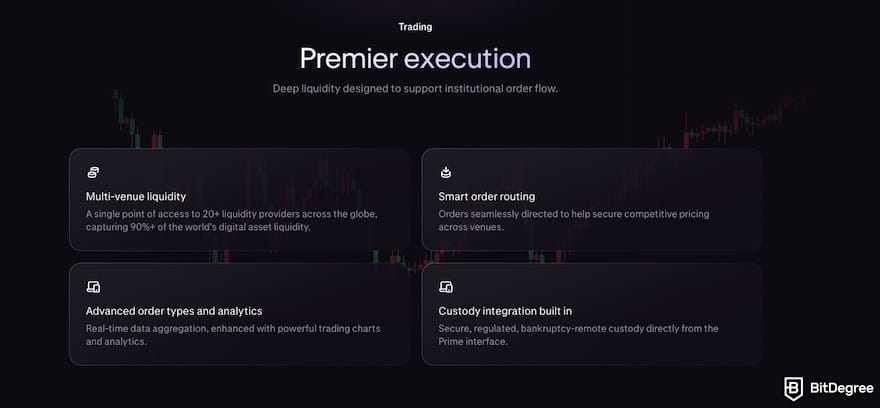
- Institutional services (Kraken Prime), including custody, deep liquidity, and large-volume execution for professional traders and firms
That's essentially Kraken's full trading toolkit. It’s strong and reliable, but intentionally lean. There's no copy trading, no bots, no P2P, and no Options market. What you get instead is a clean, well-executed experience focused on doing the core things right.
Bybit's Trading Features
Meanwhile, Bybit's trading suite is developed for active traders. The interface is clean, execution-focused, and gets more powerful the deeper you go.
For the basics, Bybit covers everything you'd expect:
- Spot trading for direct crypto trades.
- A Convert feature for quick swaps.
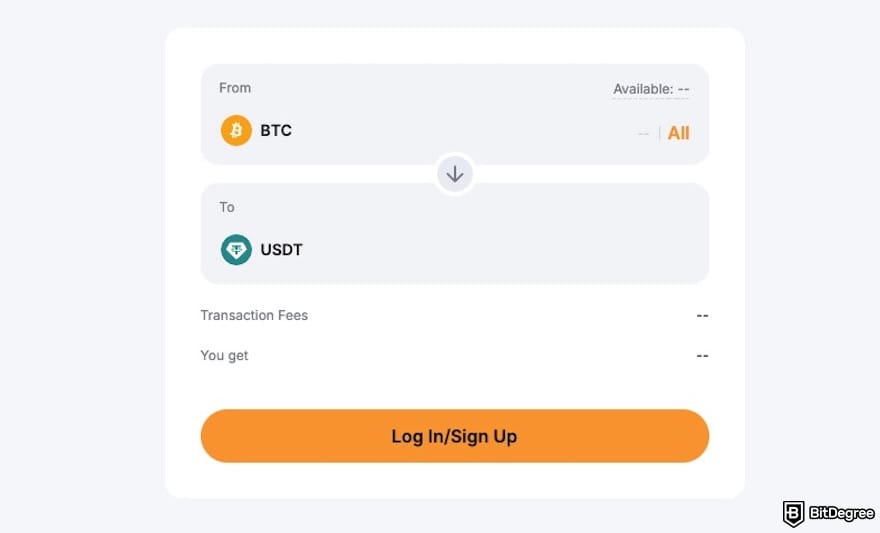
- Demo trading to practice before putting real money on the line.
- P2P trading, if you prefer buying and selling directly with other users.
Where it gets more interesting is on the advanced side:
- Spot margin trading through its Unified Trading Account.
- USDT and USDC perpetual contracts for leveraged trades without expiry dates.
- Inverse futures contracts for crypto-settled derivatives.
- An Options market (including USDC options) for more complex trading strategies.
For users who want to automate or systematize their approach, Bybit also offers:
- Copy trading, one of its standout features where you automatically copy the exact trades of experienced investors.
- A bot suite covering spot grid, futures grid, DCA, and martingale-style strategies.
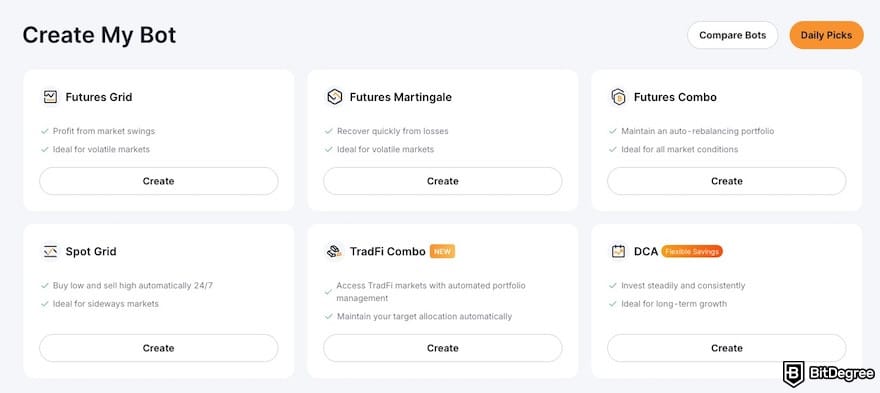
- API trading for anyone running fully custom automated setups.
Then, for traders operating across multiple markets, Bybit's MT5 integration opens access to traditional assets like forex, commodities, indices, and stocks. It also has RFQ and block trading for larger positions that need customized pricing and minimal market impact.
Verdict
Kraken is for traders who want a simple platform, but Bybit is for users who want more (more tools, more ways to trade, and more automation). If you're an active trader who wants a full toolkit and doesn't mind a steeper learning curve, Bybit has the edge. However, people who like simplicity may think Kraken is a better choice.
Kraken vs Bybit - Fees
When it comes to fees, both Kraken and Bybit are genuinely competitive. What makes Kraken's pricing special is that it manages to stay affordable while offering a more beginner-friendly experience. That combination isn't always a given in crypto; platforms that prioritize ease of use often charge a premium for it.
Bybit, meanwhile, comes in cheaper at the entry level across the board, making it especially attractive for users who want low costs from day one.
Kraken | Bybit | |
|---|---|---|
Account opening | Free | Free |
Crypto deposit fees | Mostly free (some exceptions depending on asset) | Free |
Crypto withdrawal fees | Varies by blockchain/network | Varies by blockchain/network |
Fiat deposit fees | Varies by funding provider and currency | Varies by method and currency |
Fiat withdrawal fees | Varies by method and currency | Varies by method and currency |
Simple Buy/Instant Buy fees | Fixed trading fee + spread; often around 1.5% for crypto buys, ~0.9% for stablecoins | Vary by payment method, typically ranging from 0.10% to 4% per transaction |
Card payment fee | 3.75% + $0.25 | 1.10-5%, vary by your region and the card scheme |
Spot - maker fees | Starts at 0.25% (<$10k 30-day volume), can drop to 0.00% | Starts at 0.1% (<$100K asset balance), can drop to 0.03% |
Spot - taker fees | Starts at 0.40% (<$10k 30-day volume), can drop to 0.05% | Starts at 0.1% (<$100K asset balance), can drop to 0.045% |
Futures - maker fees | Starts at 0.02% (<$5,000,000 30-day volume), can drop to -0.0060% | Starts at 0.02% (<$100K asset balance), can drop to 0% |
Futures - taker fees | Starts at 0.05% (<$5,000,000 30-day volume), can drop to 0.0125% | Starts at 0.055% (<$100K asset balance), can drop to 0.03% |
Options trading | Only available for OTC | Starts at 0.02% maker Starts at 0.03% taker |
P2P trading | - | Free, but may incur payment provider or network fees and spreads |
Table: Comparison of Bybit and Kraken fees
Bybit comes out ahead on entry-level fees, especially for Spot trading, where both maker and taker start at 0.1% right out of the gate. Kraken gets more competitive as your trading volume grows, with reduced fee tiers and even zero maker fees available for high-volume traders.
📚 Read More: Bybit Fees
Another thing worth noting is that Bybit’s VIP system is not based solely on 30-day trading volume. The platform also considers factors such as asset balance, borrowing activity, Options trading volume, and even holdings in structured products.
That makes the VIP program noticeably more flexible compared to exchanges that rely on trading volume thresholds.
For example, users with larger account balances may still qualify for better fee tiers even if they’re not high-frequency traders.
Meanwhile, one area where Kraken actually stands out is futures maker fees. At higher volume tiers, Kraken's futures maker fee can drop to -0.0060%, meaning Kraken pays you a rebate for adding liquidity to the order book. To be honest, that's a rare feature and a real advantage for high-frequency futures traders who place a lot of limit orders.
📚 Read More: Kraken Fees
$1,000 Spot Trade Fee Comparison
Using the lowest fee tier on each platform and assuming a $1,000 spot trade through their advanced trading interfaces, here’s how the trading fees compare between Kraken and Bybit:
Kraken | Bybit | |
|---|---|---|
Maker fee (limit order) | 0.25% | 0.10% |
Fee on $1,000 (limit order) | $2.50 | $1.00 |
Taker fee (market order) | 0.40% | 0.10% |
Fee on $1,000 trade (market order) | $4.00 | $1.00 |
Table: $1,000 spot trade fee comparison between Bybit and Kraken
The difference becomes much more noticeable when you look at real trading costs instead of just percentages. On a $1,000 spot trade, Bybit charges around $1.00 in fees at the base tier, while Kraken users would pay approximately $2.50 for maker orders and $4.00 for taker orders.
In practice, that means Bybit can save traders between $1.50 and $3.00 per $1,000 trade, depending on the order type used. While that may seem small at first, the gap can be huge for active traders or anyone placing multiple trades throughout the month.
For example, if your monthly spot trading volume reaches $10,000, taker fees on Kraken could total around $40, compared to roughly $10 on Bybit at the same trading volume tier. That’s about $30 in monthly savings!
$1,000 Futures Trade Fee Comparison
Assuming the standard entry-level fee tier and using regular Spot trading fees, here’s how the cost of a $1,000 futures trade compares across both exchanges:
Kraken Futures | Bybit Futures | |
|---|---|---|
Maker fee (limit order) | 0.02% | 0.02% |
Fee on $1,000 (limit order) | $0.20 | $0.20 |
Taker fee (market order) | 0.05% | 0.03% |
Fee on $1,000 trade (market order) | $0.50 | $0.30 |
Table: $1,000 futures trade fee comparison between Bybit and Kraken
The difference in futures trades isn’t much noticeable compared to market orders since both exchanges charge the same 0.02% maker fee for limit orders.
However, Bybit becomes slightly cheaper for market orders, with a 0.0300% taker fee compared to Kraken’s 0.05%. On a $1,000 Futures trade, that translates to roughly $0.30 in fees on Bybit versus around $0.50 on Kraken.
If your monthly Futures trading volume reaches $100,000, you’d pay about $30 in taker fees on Bybit, while the same volume would cost around $50 on Kraken. That’s roughly $20 saved per month simply from trading on the lower-fee platform.
Verdict
On fees, Bybit has the edge at the entry level, with the 0.1% maker and taker on Spot right out of the gate, which is hard to beat for new users. Kraken gets more competitive as your volume grows, especially for high-frequency traders who can unlock lower tiers or even zero maker fees.
Kraken vs Bybit - Liquidity & Execution
Kraken is often considered the more execution-focused exchange in its tier. It's not the biggest platform by raw volume, but it punches above its weight when it comes to spot orders, especially for active spot traders. The platform also supports over 500 assets, giving traders altcoin diversity without sacrificing execution quality.
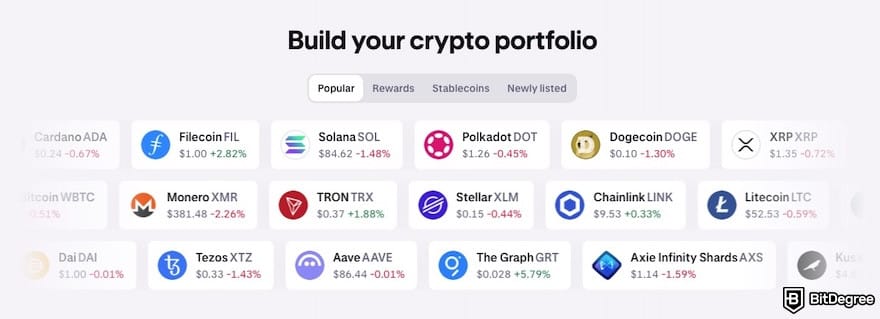
Bybit, meanwhile, approaches liquidity from a different angle. It’s built much more around high-volume crypto trading activity, especially in derivatives markets, and it consistently ranks among the largest exchanges globally for perpetual futures trading volume.
Because of that, the platform generally offers deep liquidity on major pairs, particularly for BTC, ETH, SOL, and other heavily traded assets.
The numbers back it up. Bitcoin futures open interest rose from $12 billion in 2024 to $16.3 billion in 2025, while Ethereum futures open interest climbed 29%. Even during a quiet trading period in late 2025, Bybit recorded a 24-hour spot trading volume of $9.1 billion.
For active traders, Bybit’s biggest advantage is scale. Large order books and heavy trading activity usually make it easier to enter and exit positions quickly, even during fast-moving markets in futures markets.
Verdict
Kraken tends to emphasize execution precision and trading stability, especially for spot traders and more conservative strategies. Bybit, meanwhile, is designed for speed, scale, and active market participation, making it particularly attractive for high-volume traders and derivatives users.
Kraken vs Bybit - Security & Trust
As reputable exchanges, both take security seriously. Account-level protection is a must: Google 2FA, passkeys, anti-phishing codes, trusted device management, and withdrawal controls. However, they have different track records.
Kraken | Bybit | |
|---|---|---|
Cold storage | ✓ | ✓ |
Proof of reserves | ✓ (regular audits) | ✓ (third-party verified) |
2FA | ✓ (passkey-based 2FA) | ✓ (Google 2FA + Passkeys) |
Withdrawal whitelisting | ✓ | ✓ |
Anti-phishing protection | ✓ | ✓ |
Real-time monitoring | ✓ | ✓ |
ISO/IEC 27001 certified | ✓ | ✓ |
SOC 2 Compliant | ✓ | ✗ |
Insurance fund | ✗ | ✓ (derivatives traders) |
Table: Comparison of Bybit and Kraken's security features
Kraken has built one of the strongest security reputations in the industry over its 15+ years of operation. As of May 2026, the platform has never experienced a breach that resulted in customer funds being stolen.
Even during the 2024 CertiK-related zero-day incident that exposed around $3 million from Kraken's own treasury, customer assets were never touched. Besides the account-level safety features, this platform backs its infrastructure with ISO/IEC 27001 certification and SOC 2 compliance.
📚 Read More: Is Kraken Safe?
Bybit, sadly, is a different story. In February 2025, Bybit suffered what became one of the largest crypto heists in history, losing approximately $1.5 billion in Ethereum-based assets.
Forensic investigations by Ledger and TRM Labs revealed it was a sophisticated supply chain attack targeting the multisignature wallet Bybit used for cold storage management. Hackers injected malicious JavaScript into the web interface, manipulating transactions when Bybit's own employees used the compromised interface.
📚 Read More: Is Bybit Safe?
The FBI and blockchain analysts officially attributed the attack to North Korea's Lazarus Group. Despite the scale of the loss, Bybit publicly committed to covering all customer losses from internal funds, which is worth acknowledging.
Verdict
Both platforms have solid account-level protections in place today, but between the two, Kraken has the stronger long-term security reputation: 15+ years of operation with a clean record on customer fund losses is hard to argue with. Bybit's 2025 hack is a real mark against it, and it's worth knowing upfront.
Kraken vs Bybit - Broader Ecosystem
Trading is just one part of the picture because both Bybit and Kraken have built out broader ecosystems that give users more ways to use, grow, and manage their crypto. Here's what each platform brings to the table outside of trading.
Kraken’s Other Features
Beyond its crypto exchange, Kraken has grown into a much broader financial platform. Depending on what you need, you can actively trade, earn passive rewards, spend crypto in everyday life, or even access stock investing tools.
1
Kraken Wallet
Kraken Wallet is Kraken’s self-custody crypto wallet for users who want full control over their assets and private keys.
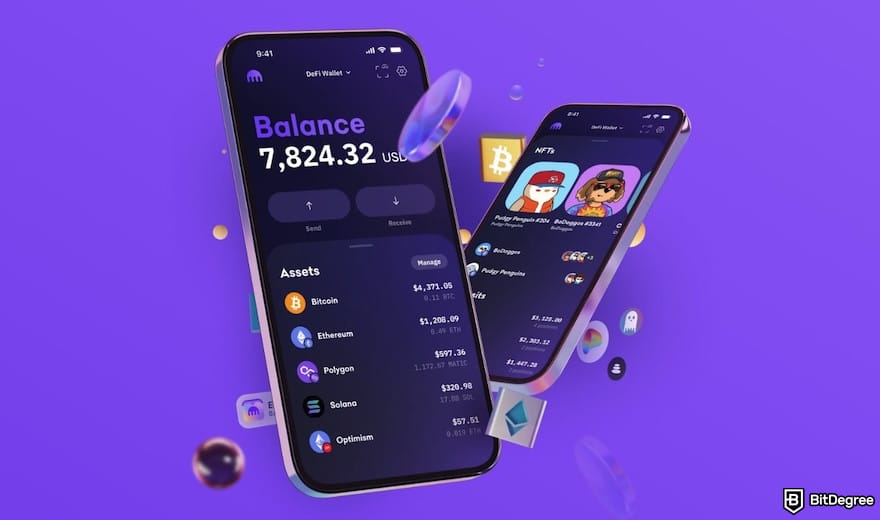
Unlike keeping funds directly on the exchange, the wallet follows a “your keys, your crypto” approach and supports storing, sending, and receiving cryptocurrencies and NFTs across multiple blockchains, including Bitcoin, Ethereum, and Solana.
2
Global payments with Krak App
Krak is Kraken’s payment-focused app that combines crypto and traditional finance in one place. It supports transfers in more than 300 fiat and crypto currencies and allows users to send money internationally using a custom “@Kraktags” for peer-to-peer payments across over 160 countries.
The app also connects with the Krak Mastercard debit card, which you can use to spend hundreds of supported currencies at many merchants worldwide while earning cashback rewards in Euros, Pounds, or Bitcoin.
📚 Read More: Krak App Review
3
Stock trading
Besides cryptocurrencies, Kraken offers access to more than 11,000 US-listed stocks and ETFs for eligible American users. These include markets such as NYSE, NASDAQ, and AMEX, with commission-free trading available through the platform. Orders can be placed at any time, though trades submitted outside market hours are queued until the next session opens.
4
xStocks trading
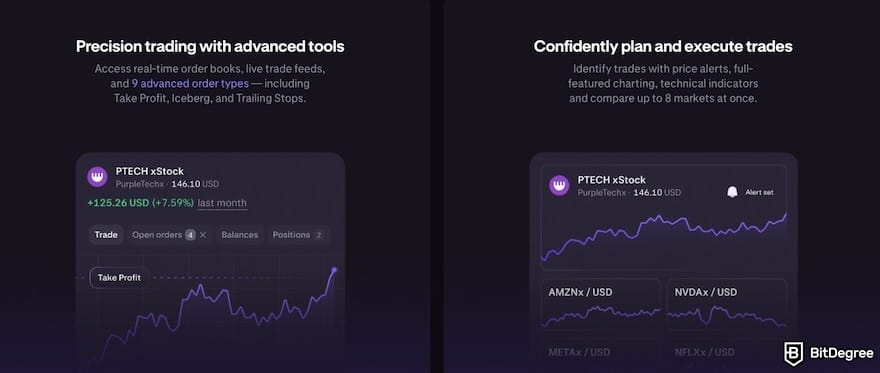
Kraken supports trading tokenized stocks and ETFs through its xStocks feature. These digital assets are backed 1:1 by real equities while trading through crypto infrastructure. At the moment, xStocks are only available in selected regions outside the United States, including several European markets.
5
Staking
Kraken supports staking for more than 20 cryptocurrencies, with some assets offering double-digit APYs depending on the region and token.
Users can enable Auto Earn for flexible rewards without lock-up periods or choose Bonded Staking to potentially receive higher yields for locking assets for a set duration. The platform also includes staking support for major assets like Ethereum and Bitcoin.
Bybit’s Other Features
Similar to Kraken, Bybit has built a large ecosystem outside of trading. Its additional products are mainly designed to support active crypto users who want to earn, spend, explore Web3 applications, and participate in token launches without leaving the platform.
1
“Earn” products
Bybit Earn includes several yield-focused products, including Easy Earn, On-Chain Earn, and Advanced Earn. Easy Earn is made for beginners looking for a simple way to generate passive income from idle assets.
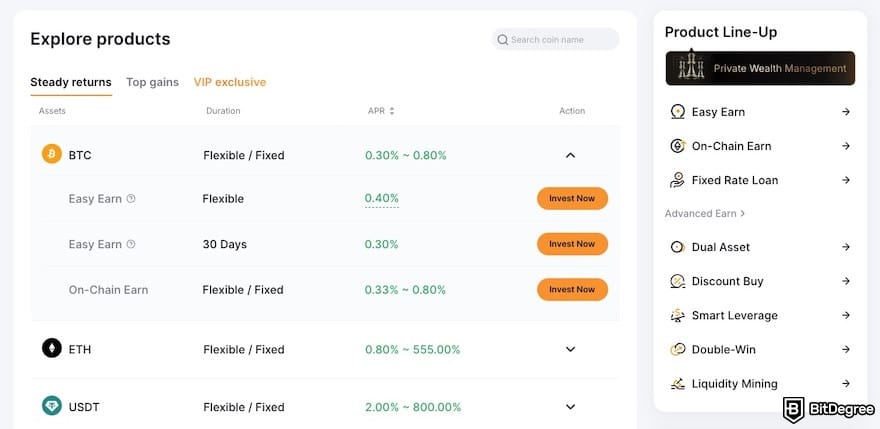
Meanwhile, On-Chain Earn handles all the backend stuff like gas fees, validator drama, and reward drops so you don't have to touch any of that. Lastly, Bybit's Advanced Earn is a group of cryptocurrency investment tools that can earn you more money (Dual Asset, Liquidity Mining, and Shark Fin), but they come with more risk.
2
Launchpad and early token access
Bybit Launchpad gives users access to selected token launches before broader market listings. Depending on the campaign, users can participate through MNT-based subscriptions or USDT allocation lotteries.
3
Payment and card services
Bybit also offers payment-focused tools, such as Bybit Card and Bybit Pay. The Bybit Card allows users to spend crypto and earn cashback in supported regions, while Bybit Pay supports crypto and fiat transfers, QR-code payments, and merchant payment solutions.
One useful integration is Auto-Earn, which lets eligible balances continue generating yield while remaining available for payments.
4
Web3 ecosystem tools
Through Bybit Wallet, Bybit gives users access to Web3 services without fully leaving the exchange ecosystem. The wallet supports self-custody functionality, browser extension connectivity, dApp access, and asset management across blockchain networks.
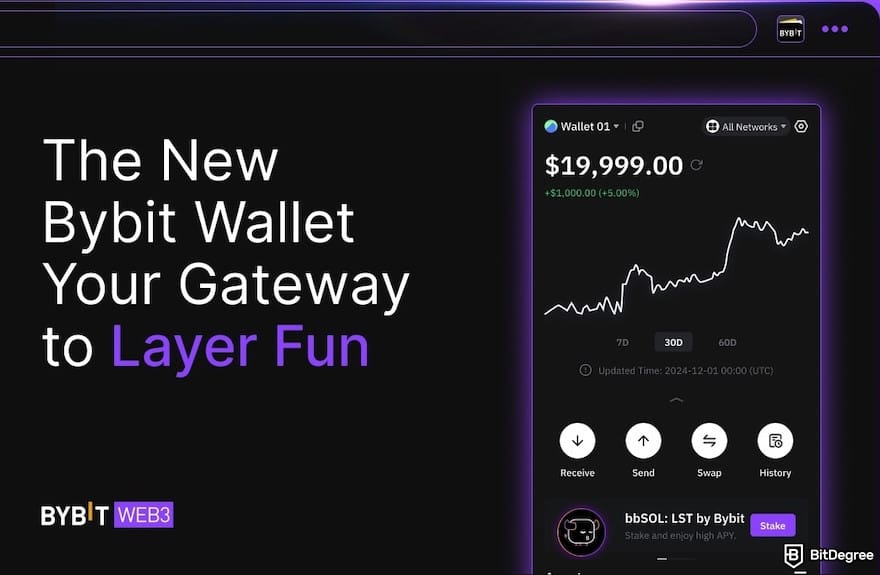
Bybit’s Web3 section also includes staking opportunities, airdrop campaigns, and access to decentralized applications.
5
Rewards and learning resources
Bybit includes several engagement-focused features such as Rewards Hub, educational content through Bybit Learn, promotional campaigns, and trading bonuses. These tools are especially helpful for newer users learning how the platform works, although most of them are still closely tied to Bybit’s broader trading ecosystem.
Verdict
Kraken is trying to be your whole bank, offering stocks, payments, and a card you can spend with. Although Bybit also has a debit card and MT5/TradFi trading for access to traditional markets, Bybit generally stays in its crypto lane (and goes deep).
Kraken vs Bybit - Fiat Deposits and Withdrawals
Bybit supports 25 fiat currencies for both deposits and withdrawals, with payment methods that vary by currency. For example, EUR users can fund via SEPA or Zen.com, while MXN users can deposit through a fixed CLABE bank transfer.
Fees and processing times differ depending on the currency and method chosen, and withdrawal limits are tied to your KYC verification level and VIP status. Available methods also depend on your country, so not every option is accessible everywhere.
Kraken covers a smaller but well-known set of 10 major fiat currencies: USD, EUR, CAD, AUD, GBP, CHF, JPY, BRL, ARS, and MXN. Where it stands out is transparency because deposit methods, fees, limits, and processing times are clearly laid out per currency.
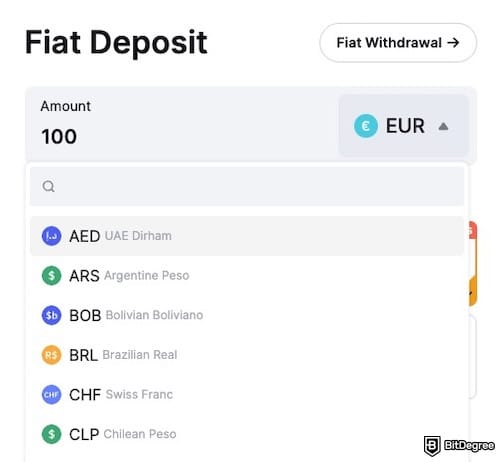
For your reference, USD users can choose from ACH via Plaid, debit cards, PayPal, and SWIFT, while EUR users get SEPA, SWIFT, debit cards, PayPal, and iDEAL for free deposits in the Netherlands. Apple Pay and Google Pay are also available through Kraken's card product.
The main downside is withdrawal holds. Methods like ACH, PayPal, debit/credit cards, and digital wallets can trigger a 72-hour lock on withdrawals, and ACH Plaid deposits may be held for up to 7 days. For anyone who needs to move funds quickly, that's a real limitation.
Verdict
Bybit covers more currencies with flexible regional methods, but what's available depends on where you are. Kraken supports fewer currencies but makes the whole system easier to understand, since the list is clearly laid out.
Kraken Trading Walkthrough
Kraken offers two ways to buy crypto, depending on how hands-on you want to be. You can keep things simple with Kraken’s standard buy-and-sell interface or switch to Kraken Pro, which gives you access to a more advanced trading dashboard for spot, futures, and margin trading.
If you just want to place a quick spot trade on Kraken Pro, here’s how:
You don’t need a separate account for Kraken Pro. Your regular Kraken login works on both the Kraken Pro website and the dedicated mobile app for iOS and Android.
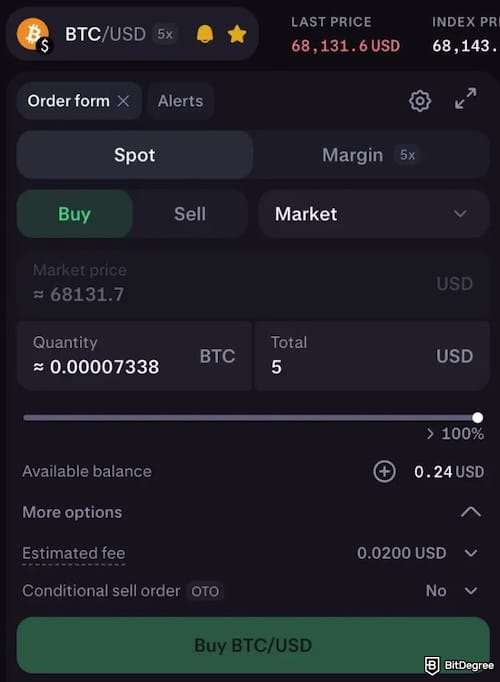
Bybit Trading Walkthrough
Similar to Kraken, Bybit offers multiple ways to trade crypto, including spot trading, margin trading, futures contracts, options, and automated trading tools. Although the platform is packed with advanced features (which can be overwhelming at first), placing a basic spot trade is still straightforward once you know where everything is.
Here’s how to make a simple market order on Bybit:
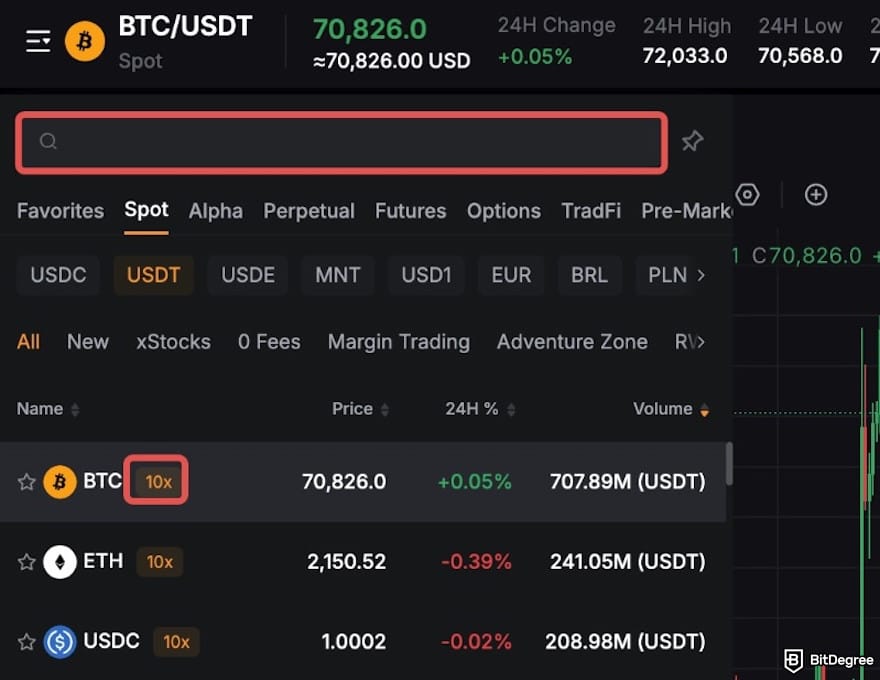
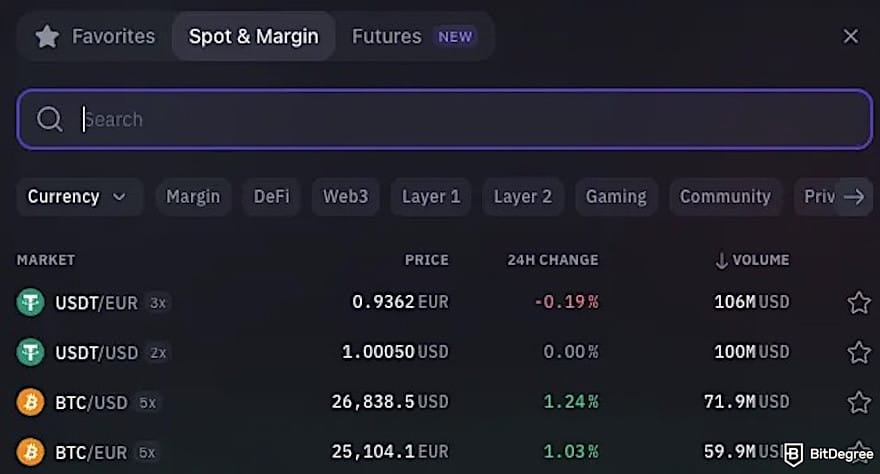
If you already know what you want to trade, use the search bar to find it quickly. For this example, you can choose something like BTC/USDT.
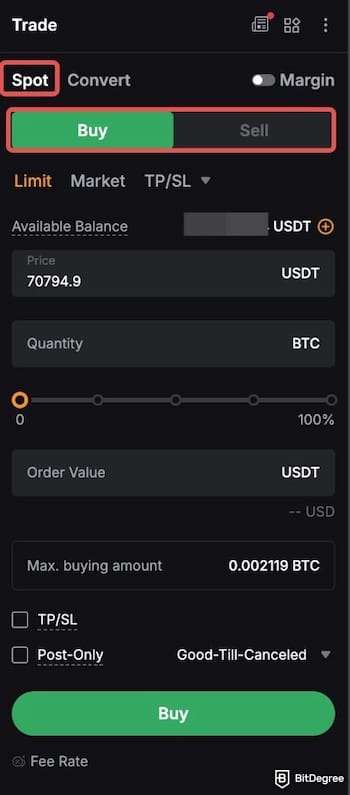
That’s it; your spot order will be executed instantly at the current market price. Once you’re confident using the dashboard, feel free to explore other order types.
Kraken vs Bybit for Beginners
Bybit is more competitive for beginners than many people assume. It offers simple entry points such as spot trading, Convert, crypto deposits, buying crypto, Earn products, and beginner guides.
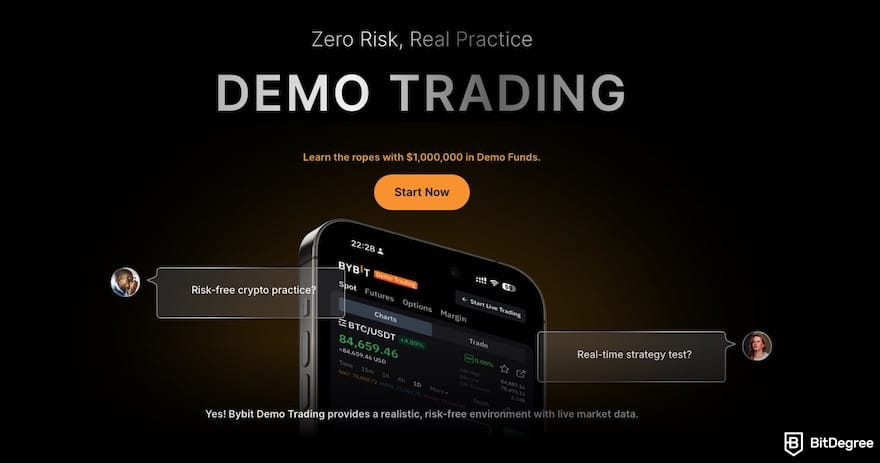
Its demo trading feature is especially useful because users can practice with simulated funds before risking real money, which makes Bybit a strong option for beginners who want to learn trading step by step rather than just buying and holding. That said, it's worth being upfront: Bybit is still a derivatives-first platform at heart, and that shows in the interface. Various features displayed on the app or website can feel overwhelming if you're just starting out.
Kraken, on the other hand, gets this balance right. Coming from personal experience building this Kraken vs Bybit comparison, this platform feels more beginner-friendly the moment you open it.
The interface is simpler, more spot-focused, and comes with more built-in guidance through its help resources, plus live chat and phone support. Beginners can use the standard Kraken app to avoid the complexity of order books entirely, while more experienced users can switch to the Pro version when they're ready.
Verdict
Kraken is the better pick for true beginners since it's simpler to navigate and clearly separates the beginner and advanced experiences. Bybit isn't off the table, though, especially if you're a beginner who wants to learn trading (not just buy and hold). Its demo account and step-by-step trading tools give it a real edge.
Kraken vs Bybit for Active Traders
Kraken offers two distinct experiences under one roof: the standard platform for everyday users, and Kraken Pro for those who want to go deeper. Kraken Pro is where active traders will spend most of their time, giving them access to advanced charting, multiple order types, customizable dashboards, margin and futures trading, and full API connectivity.
Fees are also competitive, particularly at lower trading tiers where most retail traders operate. For institutions and high-volume traders, Kraken Prime and its OTC infrastructure take things further, enabling professional-grade execution outside the standard order books.
Bybit takes a different approach to active trading, as it goes all-in on a single unified environment built around derivatives. The interface is designed with futures-heavy workflows in mind, and spot, margin, perpetuals, and options all connect through one account setup.
Beyond manual trading, Bybit also offers copy trading and native trading bots, giving traders more ways to execute without being glued to the screen. The demo trading feature is definitely helpful to stress-test a live strategy with simulated funds before committing real capital.
Verdict
It comes down to your style. Kraken Pro suits spot-focused and precision-driven traders who want a clean, low-fee setup with institutional infrastructure available when needed. Bybit suits derivatives-heavy traders who want more instruments, automation tools, and a platform that's been purpose-built for high-frequency, high-complexity trading.
Kraken vs Bybit for Passive Users: Earning Opportunities
Bybit's Earn ecosystem covers a wide range of products depending on how hands-on you want to be:
- Easy Earn. It’s the most accessible entry point, supporting flexible terms for maximum liquidity and fixed terms for higher returns. You can stake on popular assets like BTC, ETH, and USDT.
- On-Chain Earn. This takes things a step further by letting users stake proof-of-stake tokens like BTC, ETH, and SOL directly. APRs shift dynamically based on real network conditions (e.g., total assets staked, inflation rate, and transaction volume), and Bybit displays expected rates transparently so users can make informed decisions before committing.
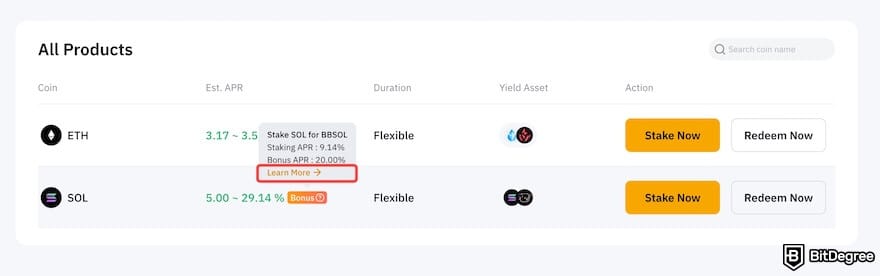
- Advanced Earn. For users willing to take on more complexity in exchange for higher potential yields, Bybit’s Advanced Earn offers structured products, including Dual Asset, Discount Buy, Smart Leverage, Double-Win, and Liquidity Mining. Each one works differently.
Kraken's passive earning setup is solid, too, though it leans more toward staking than structured products. It supports staking on 21+ assets and offers several distinct ways to earn:
- Auto Earn for flexible rewards on idle assets;
- Bonded Staking for higher returns in exchange for locking funds;
- ETH Restaking via the EigenLayer protocol for double-staking ETH;
- BTC staking in supported regions.
Advertised APRs go up to 21% on select assets, though actual yields vary depending on the token, market conditions, and where you're located.
Verdict
Bybit edges ahead for passive users who want variety. Its Earn ecosystem is broader and covers more strategies, from simple savings to structured products. Kraken is the stronger pick if staking specifically is your priority, with more supported assets and unique options like ETH restaking.
Final Verdict: Is Bybit or Kraken Better?
Choosing between Kraken and Bybit comes down to what kind of crypto user you are, because both platforms are excellent, but just built for different things.
If you want a cleaner, more straightforward experience with a trustworthy track record, Kraken can be your go-to choice. It's simpler to navigate, transparent about fees and deposits, and has spent over a decade earning a strong security reputation.
However, traders who want to go deeper into crypto, whether that means derivatives, higher liquidity, or a broader earn ecosystem, will find Bybit hard to beat. It's the second-largest exchange in the world for a reason, and the feature depth it offers at competitive fees makes it one of the most complete platforms available for serious crypto users.