


Kraken vs Uphold - In-Depth Comparison
Picking between Kraken and Uphold is one of those comparisons where the two platforms are more different than they are alike. It's true that they both let you buy and sell crypto. But after that, the similarities start getting thinner pretty fast.
Kraken is a dedicated crypto exchange. It has been around since 2011, which makes it something of a veteran in a space where most things change every six months. Over the years, it has built a reputation for security, reliability, and a trading environment that caters to both newcomers and seasoned traders alike.
Uphold is a different kind of beast. It describes itself as a multi-asset trading platform, and that description is accurate. You’re not limited to crypto trading. You can also trade equities, precious metals, forex pairs, and other commodities. It sits somewhere between a traditional brokerage and a crypto exchange, which can be useful for some people and a bit confusing for others.
Since its launch, Uphold has handled over $40 billion worth of transactions.
Once you look at it that way, the question isn’t which one is “better” for me. It’s about which one is better suited to what you want to do with your money.
If your world is mostly crypto trading, derivatives, staking, and a clean order-book experience, Kraken is going to feel a lot more at home. If you want a single place to dabble in crypto, metals, stocks, and forex without opening a dozen different accounts, Uphold is worth a serious look.
Kraken | Uphold | |
|---|---|---|
Best for | Traders who want a dedicated crypto exchange | Multi-asset investors who want crypto, stocks, commodities, and forex |
Main strength | Security, trading tools, and a long track record | Wide asset selection and easy trading experience |
Spot trading fees | Competitive on Pro, higher on the standard interface | Spread-based pricing, often higher for frequent trading |
Earn products | Supports more assets with generally higher returns | Offered on a limited selection of assets with lower yields |
Beginner experience | Easy to start, with a clear path to more advanced tools | Very accessible, with a simple multi-asset dashboard |
Advanced trading | Strong, with full order types, margin, futures, and API access | Limited, with no advanced order types or derivatives |
Overall verdict | Better for focused crypto trading and deeper portfolio management | Better for simple multi-asset access in one account |
Table: a quick Kraken vs Uphold comparison
To put it simply, what you prioritize determines which one wins for you. If trading depth, derivatives, and a serious crypto infrastructure matter, Kraken covers that ground well. If you want one account to hold crypto, metals, equities, and forex without the learning curve, Uphold makes that easy.
Kraken vs Uphold - Market Position
Kraken is among the oldest exchanges in the crypto space. That kind of track record carries weight in an industry where platforms have collapsed and security breaches have happened more than once. It has continued to stand firm, stay solvent, and maintain trust across multiple market cycles.
The platform is particularly well-regarded in the US and Europe, where regulatory scrutiny on crypto exchanges has been the most intense. Kraken has navigated that environment with relatively few serious controversies, which contributes to its reputation as a reliable place to hold and trade crypto assets.
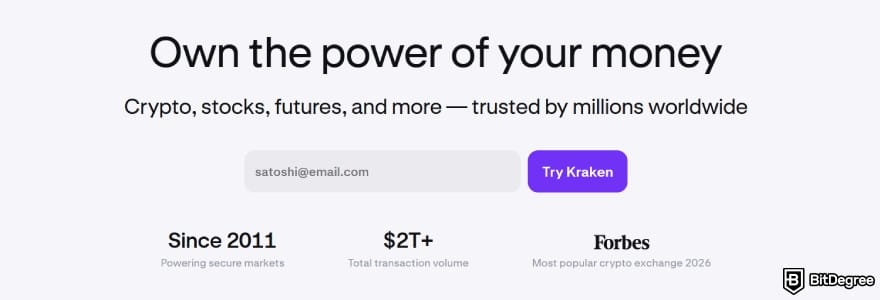
Kraken operates across more than 190 countries and has built a user base in the millions over its history. Its trading volume is consistently among the top tier for centralized exchanges, particularly for major pairs like BTC/USD, ETH/USD, and XRP/USD. On the liquidity side, it competes well for the assets it supports, though its total number of listed tokens is more modest compared to some of the larger platforms.
Uphold has a different story and a different market angle. Launched in 2014 under the name Bitreserve, it rebranded and expanded its scope significantly over the years, eventually positioning itself as a platform where users can trade across asset classes rather than focusing purely on crypto.
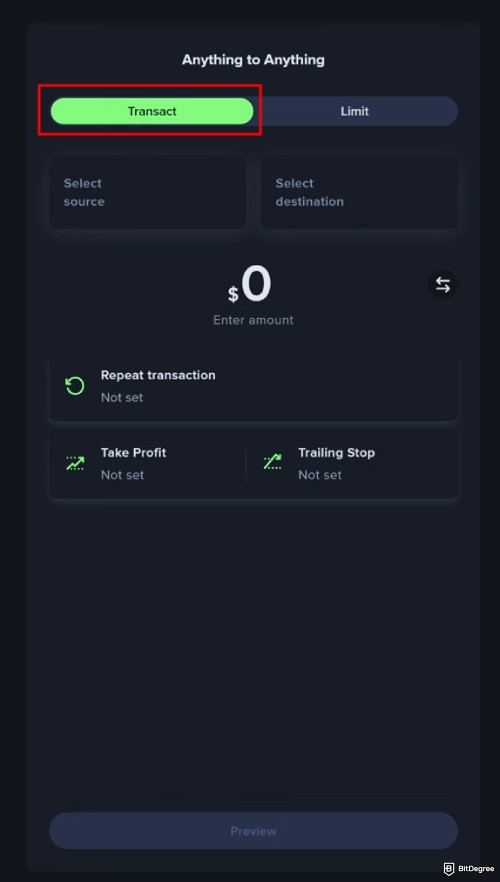
The Anything to Anything trading model lets you move from gold to Bitcoin to US stocks without needing a separate currency conversion step. It makes trading across multiple assets more straightforward and easier to handle, even if you’re just starting out.
Uphold has reported around 10 million registered users across more than 150 countries. Its user base tends toward people who want investment exposure across multiple asset types rather than active crypto traders looking for tight spreads and deep order books.
Verdict
Kraken stays focused on being a crypto exchange, with solid depth and years of experience behind it. Uphold goes wider, giving access to different asset types for users who prefer a more diversified setup.
Kraken vs Uphold - Trading Features
You can see the split between the two platforms here. Each one is built with a different user profile in mind.
Kraken Trading Features
Kraken operates with two main interfaces: the standard Kraken interface and Kraken Pro. This split matters because the experience you get depends heavily on which one you are using.
On the standard Kraken interface, you can:
- Buy and sell crypto instantly using simple market-style orders;
- Use the "Quick Buy" feature for fast purchases without chart views;
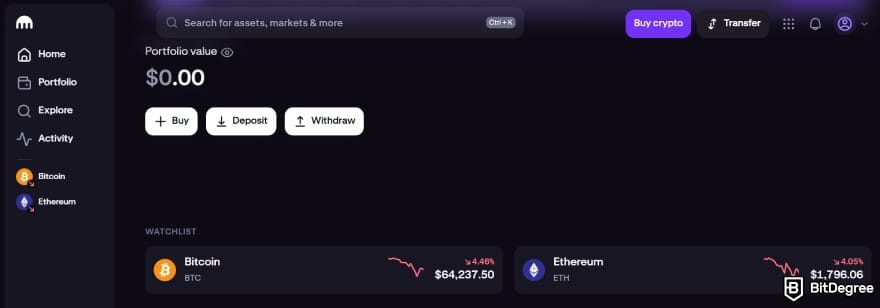
- Access staking directly from the portfolio view;
- Set up recurring buys for automated dollar-cost averaging.
On Kraken Pro, the interface upgrades significantly. You get:
- Full spot trading with market, limit, stop-loss, take-profit, and trailing stop orders;
- A professional chart interface with customizable indicators;
- Margin trading with up to 10x leverage on supported pairs;
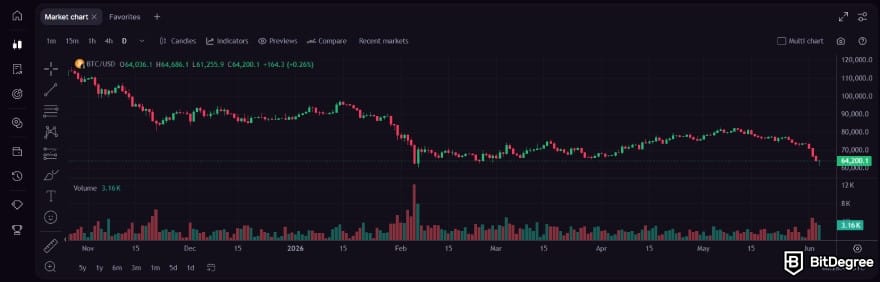
- Access to Kraken Futures for leveraged derivatives positions;
- Advanced conditional orders and post-only options;
- Full API access for algorithmic and automated trading strategies.
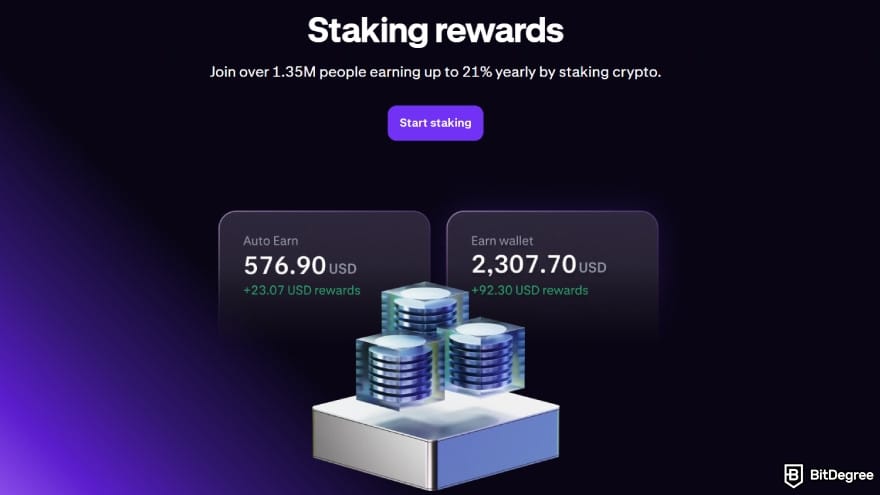
Kraken also gives you access to an OTC desk for larger trades where you need tailored pricing and lower market impact. If you’re looking to earn on your holdings, you can use its staking program, which supports a wide range of assets with both on-chain and off-chain options depending on the token.
The key thing about Kraken is the built-in upgrade path. You can start simple and grow into a more sophisticated setup without ever switching platforms.
On top of its trading platform, Kraken also runs Krak, a crypto-native finance app that lets you spend and send money across the globe.
Uphold Trading Features
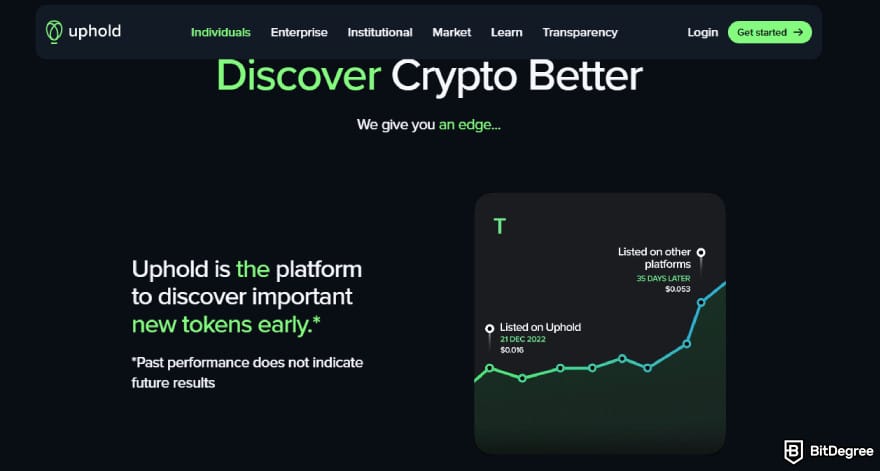
Uphold's trading model works a bit differently from most crypto exchanges. Rather than a traditional order book with bids and asks, Uphold uses a quoted-price model. When you want to trade, you request a quote, and if you accept it within a short window, the trade executes at that price. Simple as that.
This means there are no limit orders or stop losses in the traditional sense, and there is no order book to analyze. What you get instead is a straightforward execution experience.
Uphold's trading features include:
- Spot trading across crypto, equities, precious metals, forex, and other commodities;
- Anything to Anything trading, allowing direct conversions between any two supported assets;
- Auto-invest and recurring purchase tools for hands-off accumulation;
- Uphold Card for spending crypto and other asset balances;
- A mobile-first experience designed for accessibility over analysis depth.
You won’t find futures trading, margin trading, advanced order types, or a pro-level charting interface on Uphold, though. If those tools are part of how you trade, this platform isn’t really made for that.
Verdict
Kraken is the more preferable option for anyone who wants trading depth and features. On the other hand, Uphold fits better if you just want simple multi-asset investing without dealing with complex trading tools.
Kraken vs Uphold - Fees
Fees are one of the main areas where these two platforms differ in practice. The comparison isn’t simple since they rely on different pricing structures.
Kraken Fee Structure
Kraken’s fees depend on the interface you choose. The standard version applies a 1% fee on instant and recurring trades and 1.5% on custom orders. Kraken Pro, on the other hand, uses a volume-based maker-taker model.
Maker | Taker | |
|---|---|---|
Spot fee | 0.25% | 0.40% |
Futures fee | 0.02% | 0.05% |
Stablecoin, pegged token, & FX pair fees | 0.20% | 0.20% |
xStocks | -0.02% | 0.10% |
Table: Kraken Pro fees
The numbers above reflect Kraken's base maker-taker fees, which get progressively lower as your 30-day trading volume grows. The more you trade within that rolling period, the lower the rate you can unlock.
Uphold Fee Structure
Uphold doesn’t apply a visible trading commission or use the typical maker-taker structure seen on most crypto platforms. Instead, fees depend on several factors, including:
- Location
- Payment method
- Assets
- Trade size
- External costs
- Processing fees
- Network charges
For the US, UK, and Europe, fees usually look like:
Rate | |
|---|---|
Major cryptocurrencies (BTC, ETH) | < 0.25% |
Stablecoins | 0.30% |
Altcoins | 1.80% – 1.95% |
Forex | 2.85% – 3.80% |
Precious metals | 2.35% – 3.40% |
Table: Uphold fees
When you’re trading between two assets, the higher fee applies. For example, converting an altcoin to a stablecoin is charged at the altcoin rate. Also note that during times of high volatility or reduced liquidity, fees can vary as spreads widen to match market conditions. Uphold locks the price for 18 seconds, with inventory risk factored into the pricing.
📚 Read More: Uphold Fees Explained
If you’re a casual investor buying once a month, the gap between Uphold and Kraken standard is fairly small. If you’re trading multiple times a day, Kraken Pro starts to get noticeably cheaper over time. As always, consider the full picture: deposit fees, withdrawal costs, and whether you're trading frequently enough for the difference to compound.
📚 Read More: Kraken Fees Explained
$1,000 Bitcoin Trade Fee Comparison
Let's say you place a $1,000 BTC/USD order on both platforms.
On Kraken, using the standard instant-buy interface with a 1% spread, the fee would be around:
$1,000 x 1% = $10.00
If you switch to Kraken Pro and place a taker order at the starter tier (0.40%), the fee drops to:
$1,000 x 0.40% = $4.00
On Uphold, with around 0.25% charge on major tokens, the fee comes out to:
$1,000 x 0.25% = $2.50
For a one-time or occasional buyer, the differences are relatively small. That said, the numbers do tell an interesting story: Uphold's flat spread is quite competitive for straightforward BTC purchases, while Kraken's edge shows up more clearly when you factor in its Pro tier and higher-volume discounts.
Verdict
For active traders, Kraken's structure gets more competitive as volume grows. Uphold works well enough for casual purchases, though the spread on any given trade depends on a few moving parts, so the actual cost isn't always as fixed as it might appear.
Kraken vs Uphold - Liquidity and Execution
Liquidity is more important than many beginners realize. It's not just about whether someone is there to take the other side of your trade. It also affects how close the final execution price is to the number you saw when you hit confirm.
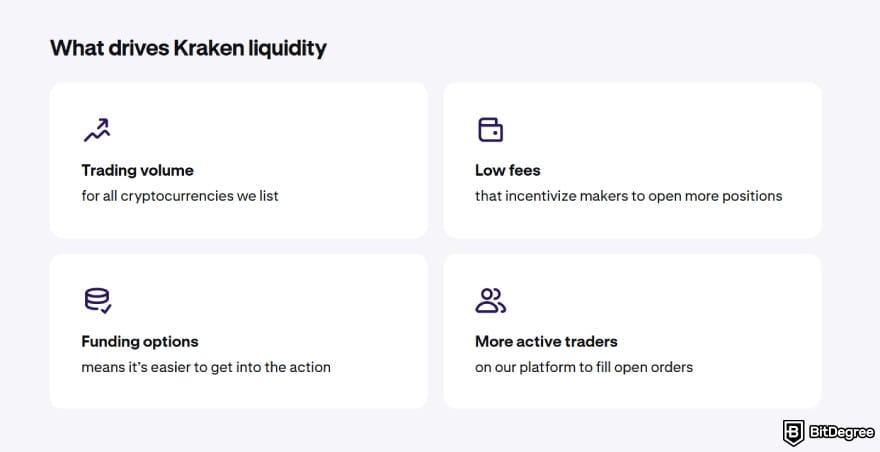
Kraken uses a traditional order book for its Pro interface, meaning trades are matched against real orders placed by other users and market makers. For major pairs like BTC/USD and ETH/USD, Kraken's order books are quite deep. For smaller altcoins, liquidity naturally thins out and spreads widen accordingly.
Uphold's quoted-price model works differently. Uphold, or its liquidity partners, usually acts as the counterparty on most trades. The quote you see is the price it is willing to offer at that moment for that specific trade size. It works fine for standard amounts, but larger trades may come with wider spreads.
For equities, metals, and forex, Uphold relies on partner liquidity providers for execution and then presents the pricing as one quote. That makes the experience straightforward, but it also means you don't get the same price transparency or competitive order book dynamics.
Verdict
Kraken's order-book model offers better price transparency and tighter spreads on major pairs, particularly for Kraken Pro users. Uphold's quoted-price model is simpler and easier to use, but less competitive for frequent or larger trades where execution price matters more.
Kraken vs Uphold - Security & Trust
Both platforms clearly take security seriously. That said, their track records and overall approaches aren't the same.
Kraken | Uphold | |
|---|---|---|
2FA | ✓ | ✓ |
Cold storage | ✓ | ✓ |
Proof of Reserve | ✓ | ✓ |
Withdrawal whitelisting | ✓ | ✓ |
Anti-phishing protection | ✓ | ✓ |
Real-time monitoring | ✓ | ✓ |
ISO/IEC 27001 certified | ✓ | ✓ |
Withdrawal whitelisting | ✓ | ✗ |
FDIC insured | ✗ | ✓ |
Table: Comparison of Kraken and Uphold's security features
Kraken has one of the strongest security records in the industry. The platform has never suffered a major hack, which is no small thing in the crypto space. It also keeps most user funds in air-gapped cold storage and supports 2FA.
Kraken holds regulatory licenses in the United States, the United Kingdom, the European Union, and other markets, which makes it one of the more formally regulated global exchanges. It also publishes periodic Proof of Reserves attestations, so users can check whether assets are actually held on the platform.
📚 Read More: Is Kraken Safe?
Uphold stores most user crypto in cold storage and is registered as a money services business in multiple countries. It also supports 2FA through SMS or a third-party authenticator, giving users another layer of account protection.
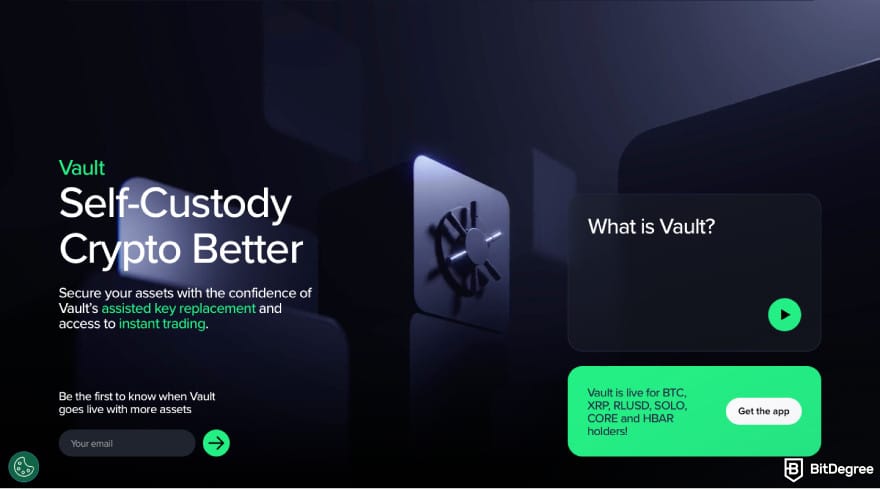
Another transparency feature worth noting is Uphold's real-time reserve report. Instead of relying only on snapshot-based Proof of Reserves, it lets you check live what the platform holds compared to what it owes. Simple idea, useful accountability.
📚 Read More: Is Uphold Safe?
The regulatory framework for non-crypto assets on Uphold is different, as equities and forex products are typically governed by separate rules in most jurisdictions. If you hold those assets, it's worth understanding the terms that apply where you live.
Verdict
Kraken looks stronger in terms of security reputation, backed by more than a decade without a major breach. Uphold, however, brings its own useful edge through real-time reserve transparency. All in all, both platforms have strong security features and clean records when it comes to major incidents.
Kraken vs Uphold - Broader Ecosystem
Beyond the trading interface itself, both platforms have built out additional features, though in quite different directions that reflect their respective priorities.
Kraken's Other Features
Kraken has evolved into more than a traditional crypto exchange. Alongside trading, it offers ways to earn passive rewards, spend crypto in daily life, and even access stock investing tools through a single platform.
1
Staking
Staking is one of Kraken's more popular features. You can stake assets like ETH, POL, SUI, ADA, and dozens of other cryptocurrencies. The platform handles validator operations and pays out rewards periodically.
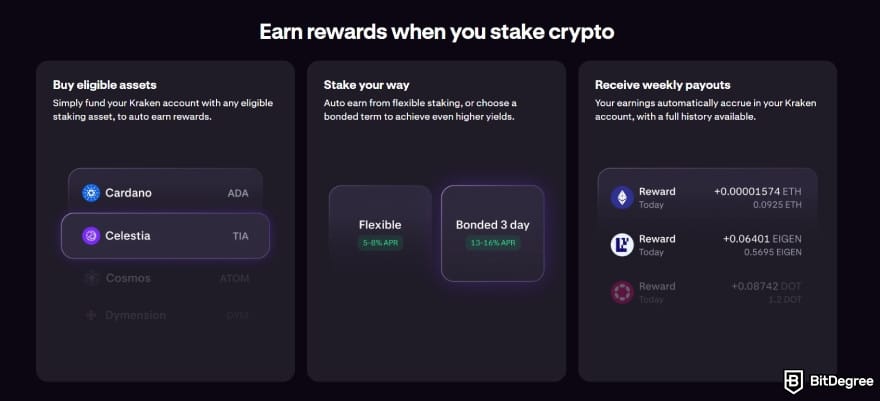
Kraken distinguishes between on-chain staking, where assets participate in the actual protocol mechanism, and off-chain staking, which functions more like a savings product with fixed interest payments.
2
Krak App
Krak is Kraken's payment-focused app, built to bring crypto and traditional finance together in one place. It supports transfers across more than 300 fiat and crypto currencies, with custom @Kraktags for peer-to-peer payments in over 160 countries.

You can also connect the app to the Krak Mastercard debit card and spend hundreds of supported currencies at many merchants worldwide, with cashback rewards available in euros, pounds, or Bitcoin.
📚 Read More: Krak App Review
3
Stock trading
Besides crypto trading, Kraken lets eligible American users access more than 11,000 US-listed stocks and ETFs across markets like NYSE, NASDAQ, and AMEX. Trading is commission-free through the platform, and orders can be placed anytime.
If you submit one outside market hours, it will queue until the market opens again.
4
OTC Desk
For users placing larger trades, Kraken's OTC desk offers personalized execution outside the standard order book. This is mainly relevant for institutional-sized trades where market impact and custom pricing matter.
You can access deep liquidity for spot and derivatives trades over $50,000. You can use all listed asset pairs on the exchange or execute 150+ pairs in seconds through the OTC portal.
5
API Access
Kraken API is well-documented and popular among algorithmic traders and developers building custom strategies or integrations. Once integrated, it gives you direct access to the platform's order books, along with tight spreads and low trading fees.
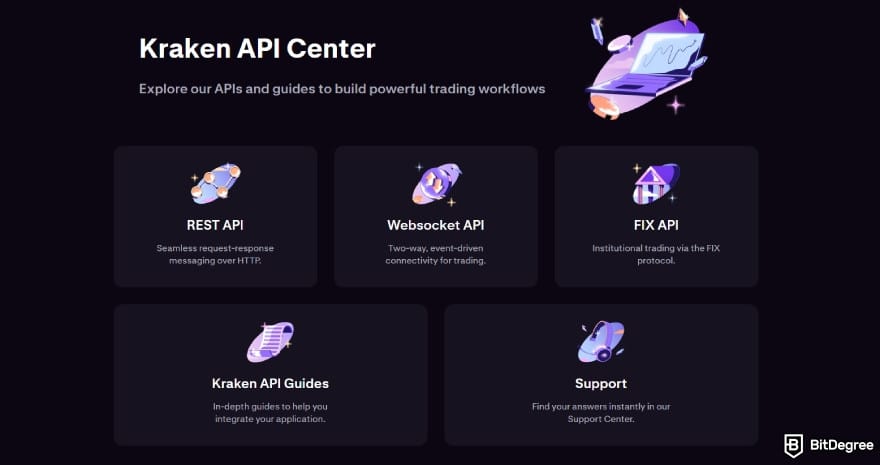
You also get reliable, low-latency endpoints for 24/7/365 crypto trading and market data. On top of that, there is no extra cost beyond the standard fees, and getting started is straightforward.
Uphold's Other Features
Uphold has also grown beyond basic crypto trading. Its extra products aren't focused on advanced crypto tools, but on making your portfolio easier to manage across different asset types.
1
Uphold Card
The Uphold Card allows you to use your account balances for purchases anywhere the supported card network is accepted. Depending on your region, you can spend from crypto or fiat balances, which adds a layer of everyday utility beyond simply holding assets.
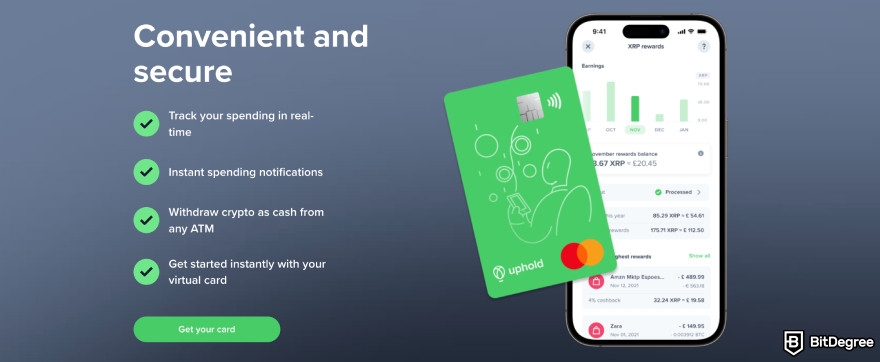
That said, card availability and rewards aren't the same everywhere. It's worth checking the details for your region first. Still, it does a good job of bridging the gap between investing and everyday spending.
2
Auto-Invest
Uphold’s Auto-Invest feature is built for people who prefer recurring purchases instead of trying to time every market move. You can set a schedule, choose your asset, and let the platform handle the buying automatically.
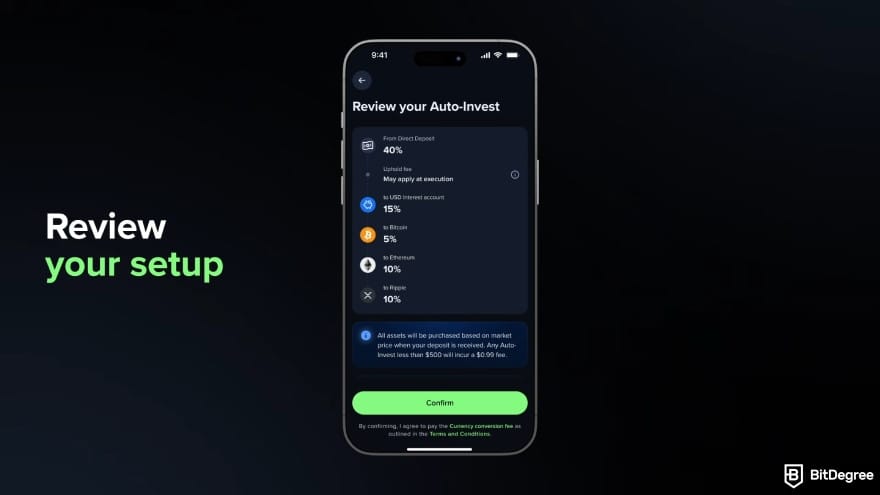
This works well for dollar-cost averaging, especially if you want to accumulate crypto, metals, or other supported assets over time without constantly checking charts. It's simple, low-effort, and aimed at long-term investors.
3
Staking and yield products
Uphold also offers staking and yield features on selected crypto assets. The range is more limited compared to Kraken’s staking lineup, and availability depends heavily on where you live.
That said, it still gives eligible users a way to earn on supported holdings without moving assets elsewhere. Just keep in mind that staking isn't risk-free, and the exact rewards, assets, and terms can change based on location.
4
Uphold for Business
Uphold for Business is designed for companies that want crypto-related financial tools without building everything from scratch. It covers use cases like accepting crypto payments, paying vendors or employees in crypto, and managing treasury balances across multiple asset types.
5
Unified portfolio dashboard
One of Uphold's most useful everyday features is its unified portfolio dashboard. Rather than splitting crypto, fiat, metals, forex, and equities into separate sections, the platform gives you one clean account summary for everything you hold.
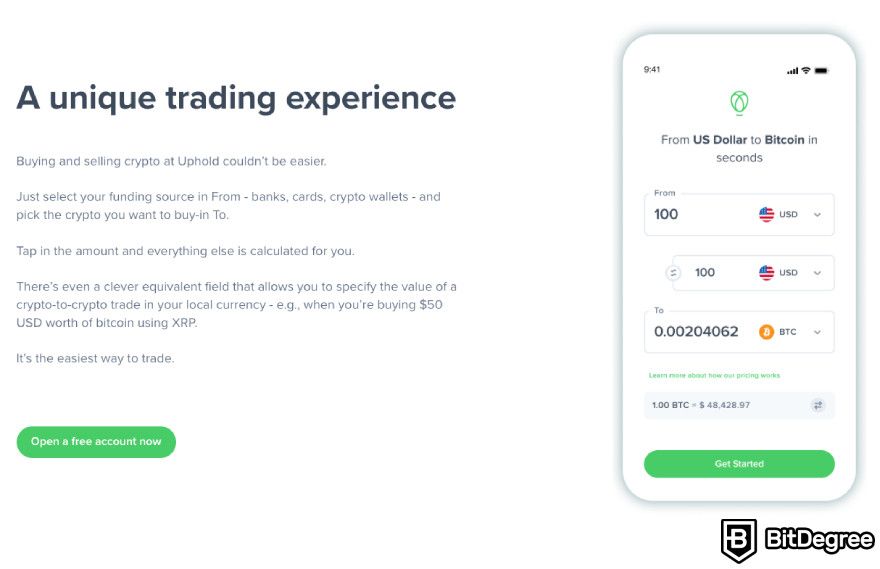
That is especially useful if you hold a mixed portfolio. Bitcoin here, USD there, some gold, maybe a few stocks. Uphold won't give you a full professional trading terminal, but for everyday account tracking, it keeps things simple.
Verdict
Kraken is pushing beyond crypto exchange territory, offering stocks, payments, a card for spending, and access to high-liquidity services. Uphold's ecosystem feels broader across asset classes, with genuine multi-asset tools, a spending card, and business-facing products.
Kraken vs Uphold - Fiat Deposits and Withdrawals
Moving money in and out of a platform matters more than most comparisons admit. A slick trading interface doesn't mean much if deposits and withdrawals are costly, slow, or not supported where you live.
Kraken offers a strong selection of funding options. If you're in the United States, you can deposit through bank wire or ACH transfers. European users get access to SEPA transfers, which usually come with low fees and reasonable processing times.
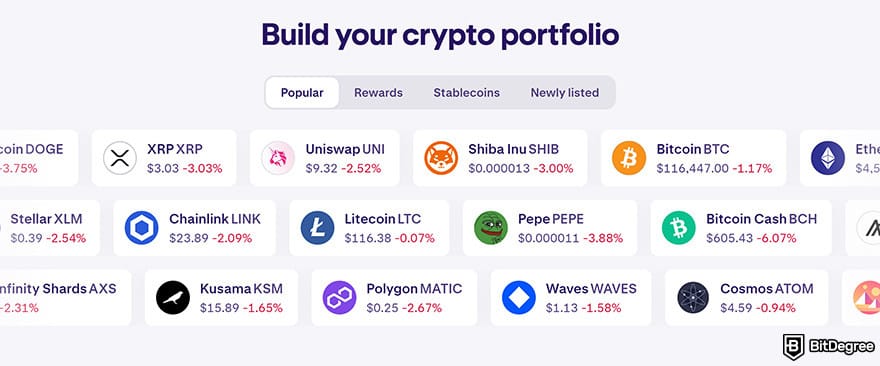
The platform supports 10 major fiat currencies, including USD, EUR, CAD, AUD, GBP, CHF, JPY, BRL, ARS, and MXN. Depending on your region, you may also be able to buy crypto with a card through third-party providers, although bank transfers are the cheaper option most of the time.
For withdrawals, Kraken relies on bank wire and SEPA transfers. However, the exact methods available to you and the processing times involved will depend on your country and account verification level.
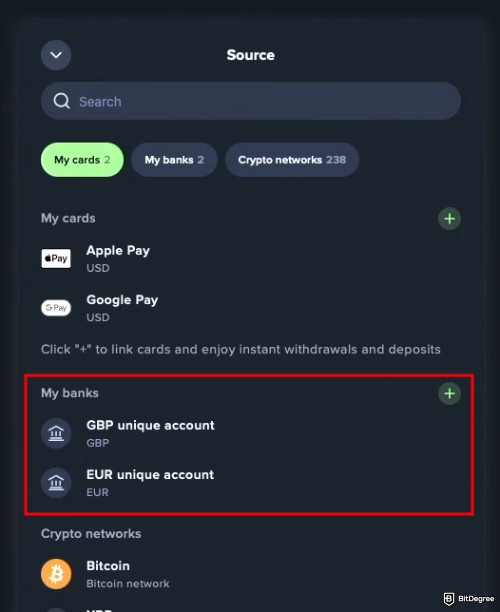
Uphold's fiat options include bank transfers, card purchases, and local payment methods, depending on where you are. You can also hold USD, EUR, or GBP as account balances and trade from them directly, which makes moving between fiat and other assets smoother.

One thing to remember with both exchanges is that fiat fees can be less transparent than trading fees. Card purchases may include provider markups, bank transfers may come with minimum amounts or delays, and third-party payment routes may add their own spread.
The cheapest option isn't always the one that looks easiest, so check your deposit method before committing.
Verdict
Kraken has robust institutional-grade fiat infrastructure with wire and SEPA support, making it well-suited for users who move larger amounts into and out of crypto. Uphold's integrated multi-asset model makes moving between fiat and other assets feel more fluid for everyday investors.
Kraken Trading Walkthrough
With Kraken, you can buy crypto in two different ways. Use the standard buy-and-sell interface if you want something simple, or move to Kraken Pro if you need a more advanced dashboard for spot, futures, and margin trading.
For a basic spot trade on Kraken Pro, follow these steps:
There's no need to create a separate Kraken Pro account. You can use your existing Kraken login on both the Kraken Pro web platform and its iOS and Android apps.
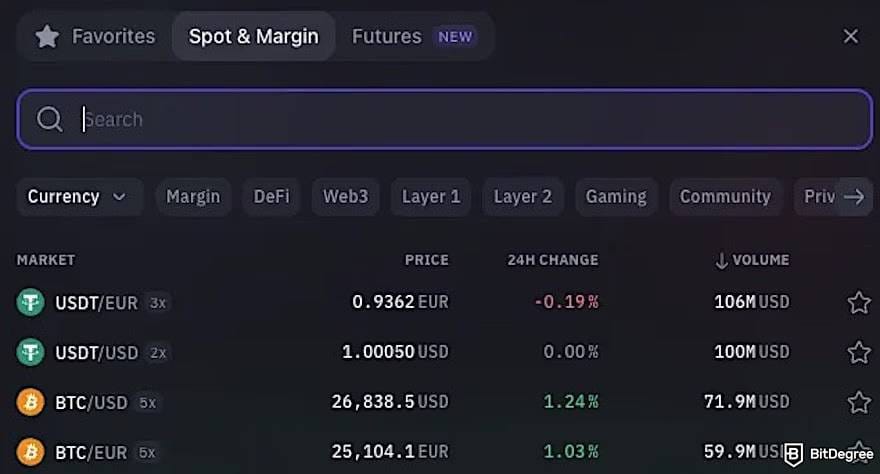
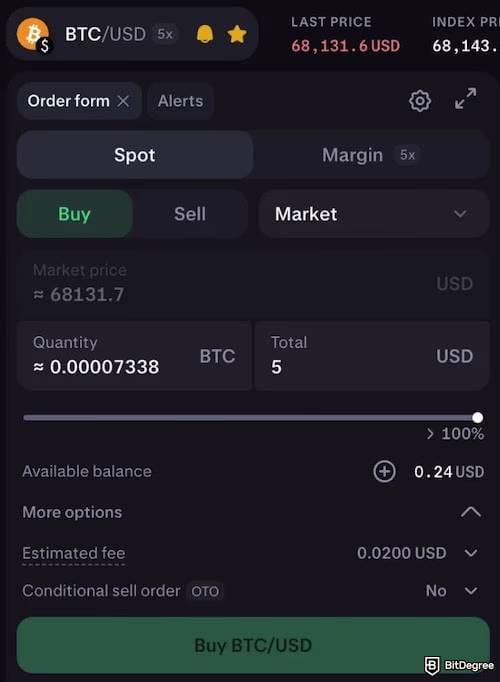
Kraken Pro can look intimidating at first if you're new to traditional exchanges, but the layout follows familiar trading conventions. Once you understand how the order panel, chart, and order book fit together, the platform becomes much easier to navigate.
Uphold Trading Walkthrough
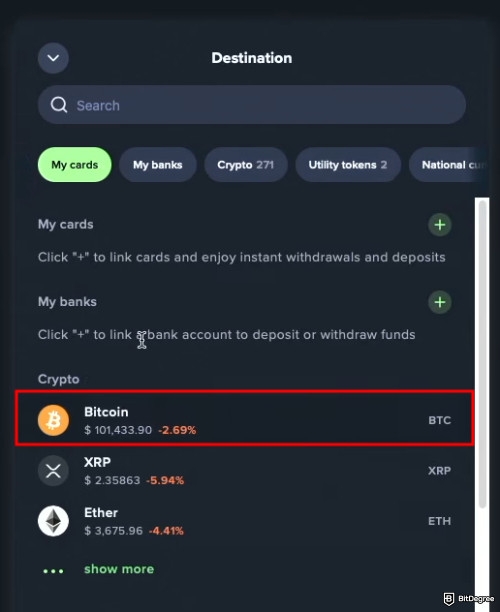
Uphold may be easier to like if you just want a simple crypto buying process. You can buy Bitcoin without opening a chart, reading an order book, or pretending to understand what happens on the trading screens. Here's how it works:
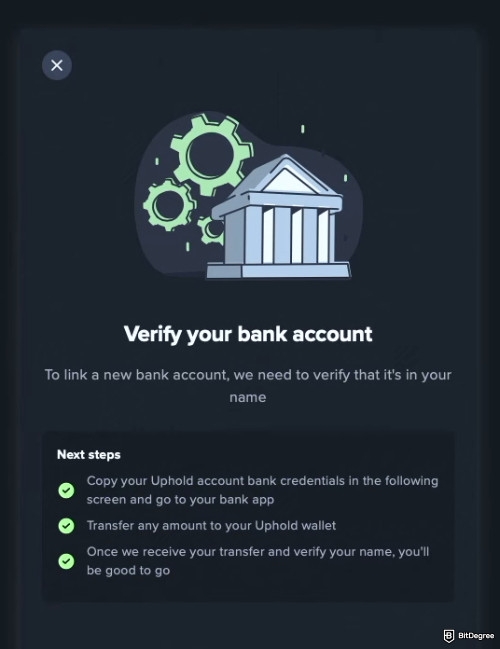
After you send the payment, Uphold will process it on its side. Your funds are usually credited to your Bitcoin balance within 2-3 business days, though timing depends on your bank.
📚 Read More: Uphold Fees Made Simple
Kraken vs Uphold for Beginners
Kraken offers a smooth onboarding experience through its standard interface. The Quick Buy feature is refreshingly straightforward, and the platform's educational resources are quite comprehensive for beginners who want to understand what they are buying instead of just clicking buttons and hoping for the best.
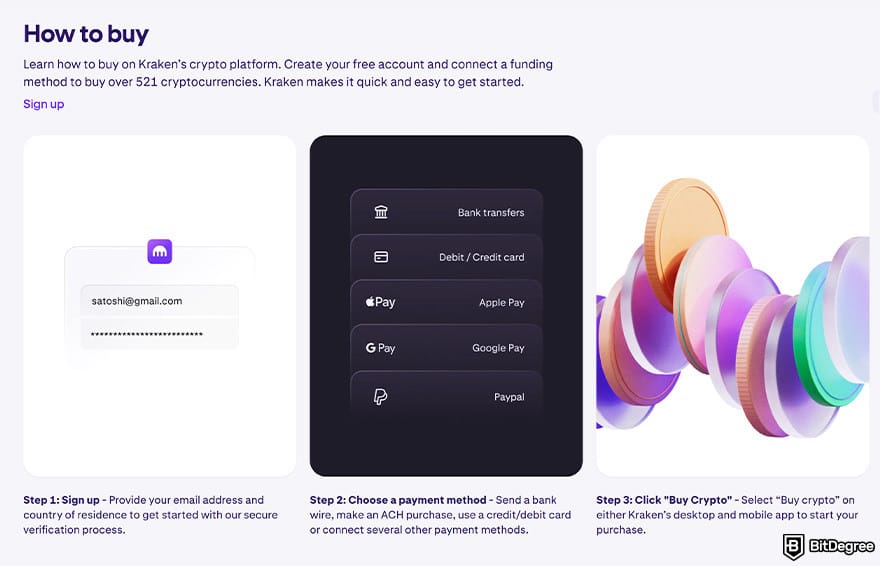
What makes Kraken more interesting for beginners is its long-term path. You can start with the basic buying flow, then gradually explore limit orders, margin trading, or futures when you're ready. Since those tools are already on the same platform, you don't need to pack up and move elsewhere once your needs grow.
Uphold also does a great job of keeping things beginner-friendly. Its unified dashboard is clean, the trade flow is easy to follow, and the multi-asset support gives newcomers a simple way to diversify beyond crypto. For someone who is still getting used to investing overall, Uphold's setup cuts down a lot of the friction.
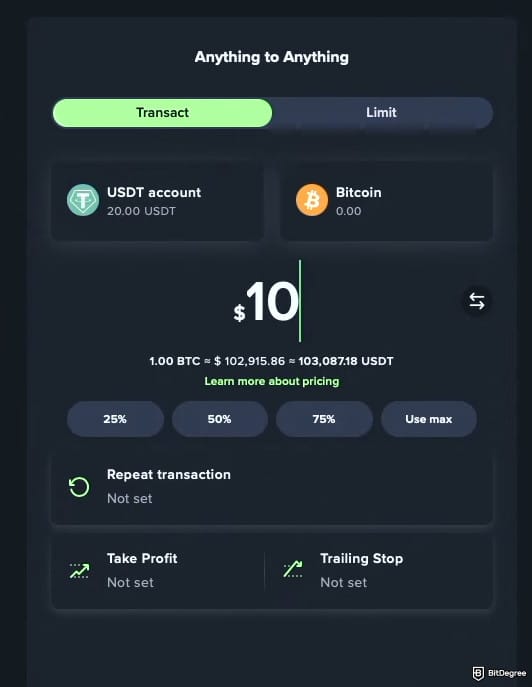
Its auto-invest feature is especially useful for beginners who want to invest consistently without overthinking market timing. The spending card adds another practical layer, giving the portfolio an everyday use case that can make Uphold a pretty inviting first stop.
Verdict
Kraken is a better starting point for beginners who know they want to focus on crypto and want to grow into more sophisticated trading. Uphold is a good fit for casuals who want broad multi-asset exposure from the start and prefer a clean, accessible interface.
Kraken vs Uphold for Active Traders
Kraken Pro gives active traders the kind of toolkit they’d actually expect: limit orders, stop-loss and take-profit orders, trailing stops, conditional orders, leveraged margin trading, futures contracts, API access, and a professional-grade charting interface.
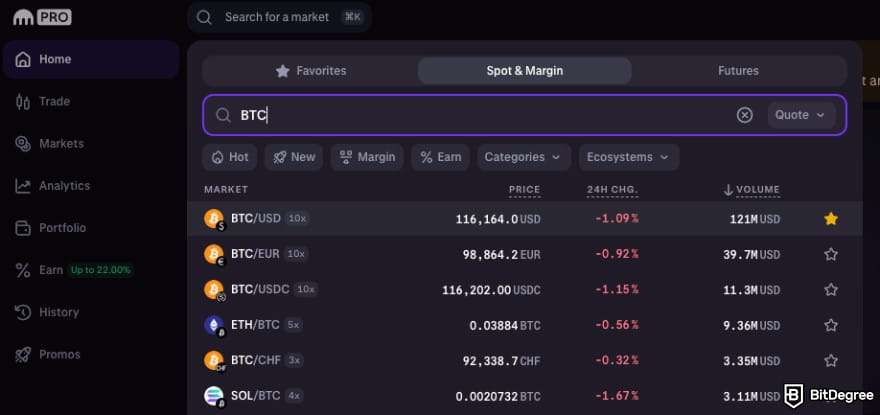
The fees are also competitive, especially for the lower trading tiers where most retail traders usually operate. Higher trading volume unlocks progressively lower rates, and the order book adds real price transparency by showing market depth rather than hiding everything behind a simplified buy screen.
Uphold doesn’t offer the same trading toolkit. There’s no order book, no limit orders, no margin access, and no futures. So, if you trade often and want precise control over your entry and exit prices, Uphold isn’t really designed for that kind of setup.
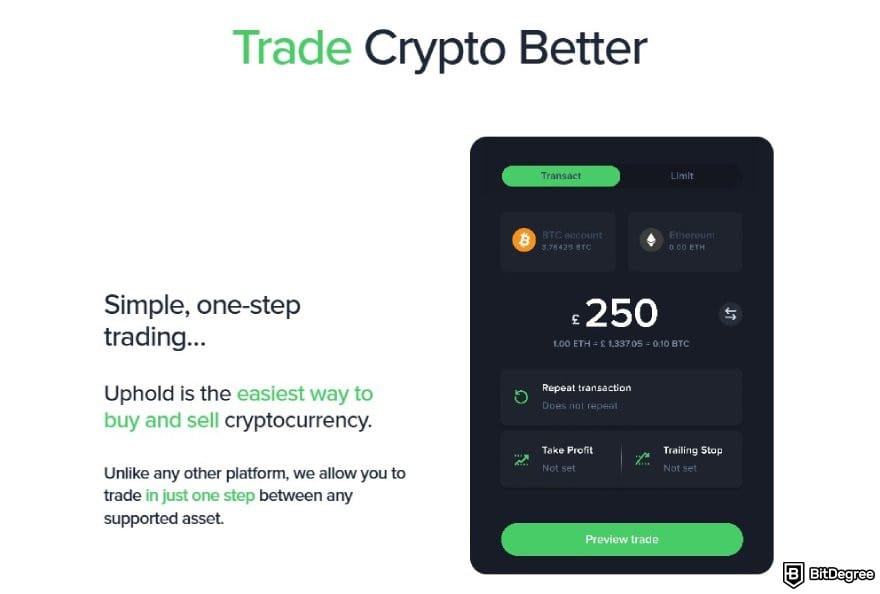
Still, it depends on what you mean by "active". If you’re actively managing a broader portfolio across crypto, equities, metals, and forex, Uphold’s "Anything to Anything" can reduce a lot of the friction you’d normally get from using separate platforms.
Verdict
Kraken is the clear fit for active crypto traders who need a full toolkit of order types, derivatives, competitive volume-based fees, and reliable execution. Uphold serves a different kind of active user: one who is managing exposure across multiple asset classes.
Kraken vs Uphold for Passive Investors
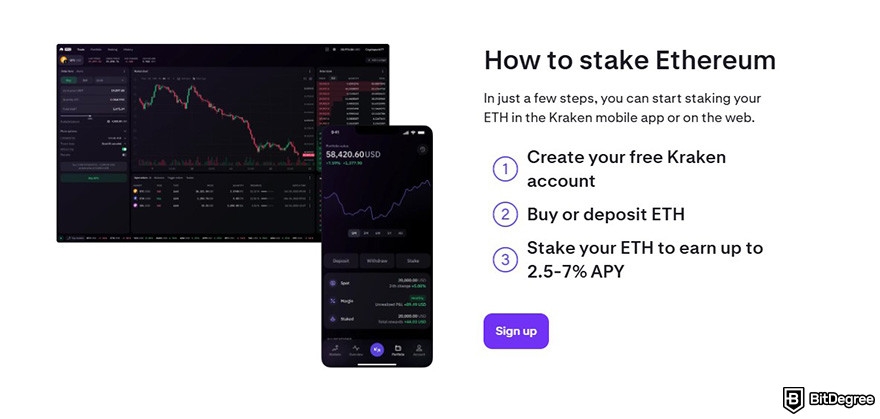
Kraken works pretty well for this profile. You can set up recurring buys through the standard interface, stake eligible assets to earn returns in the background, and check back in periodically without the platform constantly demanding your attention. Its staking program is also a good match for passive holders.
Uphold, though, may be the more natural fit for this type of investor because of its auto-invest feature. You can choose your assets, set a schedule, and let the platform handle the buying process for you. Its multi-asset setup also makes it easier to build a passive strategy across crypto, metals, and equities without opening separate accounts everywhere.
Uphold’s real-time reserve transparency adds another layer of reassurance. For passive investors who mostly want to know their assets are actually backed and available, it gives useful visibility without forcing them into complicated proof-of-reserves rabbit holes.
Verdict
Both platforms have something to offer passive investors. Kraken leans more toward crypto-focused holding, with staking and a straightforward buy-and-hold setup. Uphold is better for users who want automatic investing across multiple asset types.
Final Verdict: Is Kraken or Uphold Better?
Kraken and Uphold are two different platforms serving two different types of users. They’re not exactly fighting over the same crowd, which is why this comparison works better as a "which one fits my investing style" question than a simple winner-takes-all ranking.
Kraken is the more preferable pick if crypto is your main priority. It has a mature trading infrastructure, a strong security reputation, and a clear path from simple buying to more advanced Pro-level trading without forcing you to move elsewhere.
Uphold is the more practical choice if you want multi-asset exposure without the hassle of managing separate accounts across different platforms. The ability to hold and trade crypto, equities, metals, and forex in one place, with a unified dashboard and a spending card, is a useful value proposition.