



Robinhood vs Binance US - In-Depth Comparison
When comparing Robinhood vs Binance US, the answer is that these two platforms barely overlap in what they're actually trying to do. That’s why choosing between them is more about your goals than a head-to-head matchup.
Robinhood is one of the defining retail investing platforms of its generation. With tens of millions of funded accounts and a product suite that now spans stocks, ETFs, and crypto, it's built for users who want everything under one roof.
Its crypto offering honestly isn't the deepest or the most transparent on fees, but for someone whose portfolio is split between assets, the convenience of a single account is hard to argue with.
📚 Read More: Robinhood Review
Binance US is a different entity entirely. It exists because US regulations prevent American users from accessing the global Binance platform, so what you get is a stripped-down, crypto-only exchange that's been squeezed into compliance.
That's not necessarily a bad thing, since the platform can focus on doing one thing well: spot crypto trading at some of the lowest fees available to US users. The 0% maker fee structure, transparent pricing, and market maker program for high-volume traders make it a compelling option if crypto is your primary market.
📚 Read More: Binance US Review
Robinhood | Binance US | |
|---|---|---|
Best for | All-in-one retail investors | Crypto-focused spot traders |
Availability | US + limited Europe | US only (excl. some states) |
Crypto selection | 40-50 (US), 65+ (EU) | 144 assets |
Stock trading | ✓ | ✗ |
Options trading | ✓ | ✗ |
Futures trading | ✓ | ✗ |
Spot maker fee | Spread-based, not disclosed | 0% |
Spot taker fee | Spread-based (~0.6%) | 0.02% |
Advanced trading | Robinhood Legend (desktop | Spot trading interface (web + app) |
Margin trading | Via Robinhood Gold | ✗ |
Staking | ETH, SOL, ADA | 27+ assets |
Credit card | Gold Card (3% cashback) | ✗ |
Table: Comparison of Robinhood and Binance US
If you're a US-based trader who wants a single platform for stocks, crypto, options, and futures with a user-friendly interface, Robinhood is the stronger all-around choice. However, if you're purely a crypto trader who wants the lowest possible spot fees, transparent pricing, and a wider asset selection, Binance US makes a compelling case.
Verdict
Robinhood is the better all-in-one platform for retail investors, but if crypto spot trading is all you need, Binance US wins on fees, transparency, and asset selection.
Robinhood vs Binance US - Market Position
Robinhood operates exclusively in the United States and select parts of Europe, and its impact on domestic markets is hard to ignore. It's widely credited with helping bring a new wave of retail investors into the market, and research backs that up.
In fact, Robinhood users tend to trade more reactively to news and trending assets compared to users on other platforms, which gives the app an outsized influence on short-term price movements in both stocks and crypto.
Binance US is a different story. It's the US-regulated version of the world's largest crypto exchange, but the two are essentially separate businesses. After a rough patch in 2023 that saw it suspend dollar deposits and withdrawals amid regulatory pressure, Binance US has been quietly rebuilding.
Operating under a compliance-focused reset led by CEO Stephen Gregory, the exchange has been actively restructuring to reclaim lost market share. The recent fee cut to 0% maker and 0.02% taker is part of that effort, which is a clear play to win back cost-conscious traders who may have drifted to Coinbase or Kraken in the meantime.
📚 Read More: Best US Exchange
Verdict
Robinhood dominates US retail investing, while Binance US has quietly rebuilt itself into one of the most cost-competitive regulated crypto exchanges in the country.
Robinhood vs Binance US - Trading Features
This is probably where Robinhood and Binance US differ the most, so let's break down what each platform actually gives you to work with.
Robinhood’s Trading Features
Robinhood is built around accessibility first, but the platform has grown into something a lot more capable than its beginner-friendly reputation suggests. It now offers a full trading toolkit that scales.
For basic trading, Robinhood offers:
- A straightforward order flow on mobile, with a dropdown letting you choose between a market order in USD, a market order in BTC, a limit order, a stop order, or a recurring investment.
For more experienced traders, Robinhood supports:
- Options trading with multi-leg strategies and options chains.
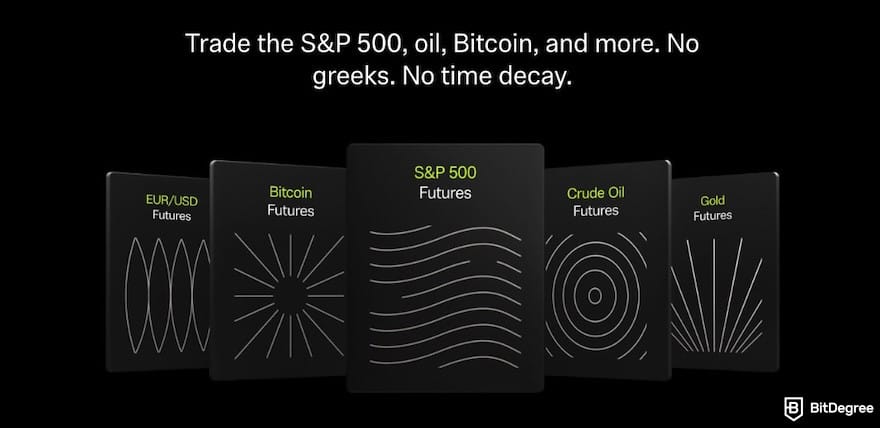
- Futures trading across asset classes such as stock indexes, commodities, and cryptocurrencies.
- Margin investing through Robinhood Gold.
- Robinhood Legend, a customizable desktop platform featuring advanced charting, technical indicators, ladder trading, and flexible workspace layouts.
- AI-powered tools, including Robinhood Cortex and the company's agentic trading initiatives, which are designed to help users analyze market information, identify opportunities, and make more informed investing decisions.
The main caveat is that many of its best features sit behind the Robinhood Gold subscription. $5 per month may not be a dealbreaker, but it's worth factoring in if you're comparing total costs against platforms that offer advanced tools for free.
Binance US's Trading Toolkit
Due to strict United States financial regulations, Binance US keeps its trading offering focused and straightforward compared to a full-service broker like Robinhood. The platform covers three main areas:
- Instant Buy. It’s a one-tap purchase flow for quick crypto buys, with the option to automate purchases on a recurring schedule: daily, weekly, semi-monthly, or monthly.
- Converter. This lets you swap between cryptocurrencies and stablecoins with 0% transaction fees, available in 2,750+ convert pairs.
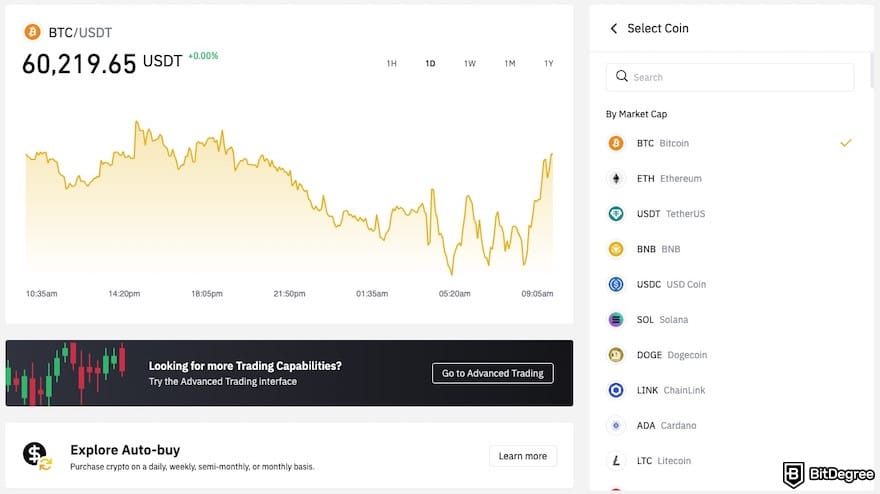
Spot Trading. The advanced trading interface with a live order book, market and limit orders, and the maker/taker fee structure covered above.
- OTC Trading. It aims to accommodate users with larger orders.
That's the full scope; there are no options, futures, or margin. For traders who only need crypto spot exposure, that's plenty. But if you're looking to trade derivatives or diversify into stocks and ETFs from the same account, Binance US doesn't have that.
Verdict
Robinhood wins on trading features overall, but if pure crypto spot trading is all you need, Binance US's clean order book experience with 0% maker fees is hard to argue with; Robinhood goes further with options, futures, margin, and diverse assets.
Robinhood vs Binance US - Fees
Fee structures are one of the biggest differences between these two platforms. Robinhood keeps things simple with commission-free trading and small regulatory pass-through fees, while Binance US uses a tiered model where your fees shrink as your 30-day trading volume grows, which rewards active traders.
Robinhood | Binance | |
|---|---|---|
Crypto deposits | Free | Free |
USD deposits/withdrawals | Varies by method | Varies by method |
Crypto trades | Free (spread applies) | Volume-based tiers; spread applies to the Buy Crypto feature |
Advanced trading (spot) | N/A | Volume-based tiers; no spread on open order book |
Crypto withdrawals | Free | Fees may apply (network-dependent) |
Stock/ETF trades | Free | N/A |
SEC regulatory fee | $20.60 per $1M (sell orders only) | N/A |
FINRA TAF | $0.000195/share (equity sells); $0.00329/contract (options sells) | N/A |
Options contracts | $0.35 (Gold) / $0.50 (non-Gold) | N/A |
ADR fee | $0.01-$0.03/share | N/A |
BNB fee discount | N/A | 5% discount on spot trading fees |
Staking service fee | A 25% commission fee | A 9.95 - 39.95% service fee |
Table: Comparison of the fee structure in Binance US and Robinhood
A few things worth noting. On Robinhood, the regulatory fees (SEC and FINRA TAF) are standard across all US brokerages. Thankfully, Robinhood waives the SEC fee entirely for most traders making small equity sell orders under $500.
These fees don't have a Binance US equivalent simply because it doesn't offer stocks or ETFs.
On Binance US, the spread-free advanced trading (spot) option is worth using if you want tighter pricing, especially frequent traders can enjoy BNB fee discounts. The standard Buy Crypto feature, on the other hand, includes a spread that can add to your costs.
$1,000 Spot Trade Fee Comparison
Robinhood and Binance US take different approaches to crypto spot trading fees, and the gap between them is bigger than you might expect. Note that the Robinhood spread estimate comes from the market order flow on mobile. It's a simple screen with no live charts or order book, so the spread is the only cost variable in play.
Robinhood | Binance US | |
|---|---|---|
Fee model | Spread-based (no line-item fee) | Maker/taker fee (percentage) |
Maker fee | None (spread applies) | 0% |
Taker fee | Not disclosed upfront | 0.02% |
Est. fee on $1,000 (taker) | ~$10–20 hidden in spread | ~$0.20 visible fee |
Table: A $1,000 spot trade fee comparison between Robinhood and Binance US
On a $1,000 market order, Binance US charges roughly $0.20 in taker fees, but Robinhood doesn't charge a visible fee at all; the spread built into your quoted price is where they make their cut. That gap between the quoted price and the actual market rate typically works out to somewhere between $10 and $20 on a $1,000 order, depending on conditions.
For reference, a $5 BTC purchase on Robinhood in 2025 carried a $0.03 spread (roughly 0.6%), which, if applied to a $1,000 order, could mean around $6 in hidden costs. This means that Robinhood's "commission-free" positioning costs you more in practice than Binance US's explicit 0.02% taker fee.
For limit orders on Binance US, the math gets even more lopsided: maker fees are 0%, so you're essentially trading for free if you're patient enough to let a limit order fill.
Robinhood vs Binance US - Liquidity & Execution
Liquidity tells you how easily you can get in and out of a trade at a fair price, and this is one area where the gap between these two platforms is quite significant.
Robinhood's financial position is strong on paper. The platform holds $19.27 billion in cash and equivalents, and as of Q3 2025, reported $51 billion in crypto assets under custody and $232 billion in crypto notional trading volume over the trailing twelve months. In terms of asset coverage, Robinhood supports 40-50 cryptocurrencies in the US and over 65 in the EU.
Robinhood accounts don't support crypto transfers to external wallets, so you'd need to use Robinhood Wallet separately for that.
Meanwhile, Binance US operates at a smaller scale in terms of volume. It currently lists 144 cryptocurrencies across 205 trading pairs, with BTC/USD being the most popular pair. Its 24-hour spot trading volume sits at roughly $2.9 million, with 7-day figures around $79 million and 30-day volume around $383 million.
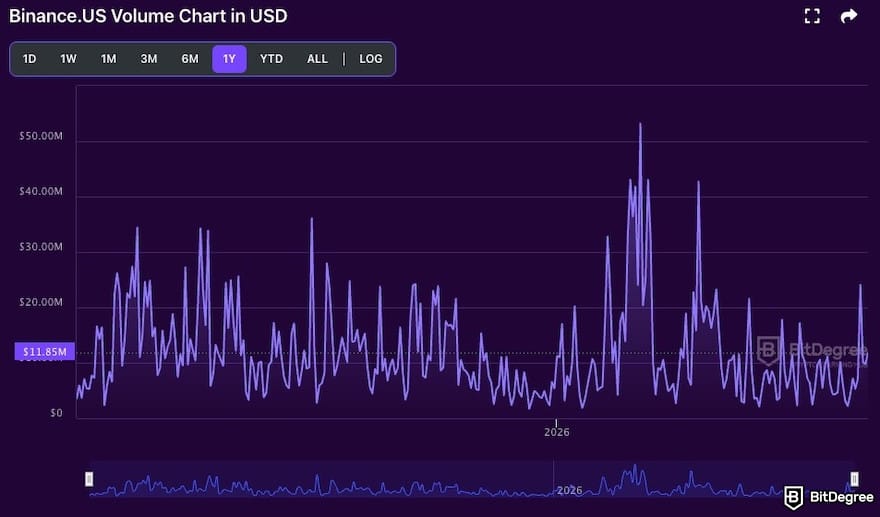
For major pairs like BTC and ETH, liquidity is generally enough for retail-sized orders. However, spreads can widen, and depth may be thinner for smaller or less popular pairs.
Verdict
Robinhood wins on sheer trading volume and custody scale because it serves a massive retail brokerage user base across stocks, ETFs, and crypto. For pure crypto liquidity on a dedicated exchange, Binance US covers more assets and pairs, but its trading volumes are modest compared to top global exchanges.
Robinhood vs Binance US - Security & Trust
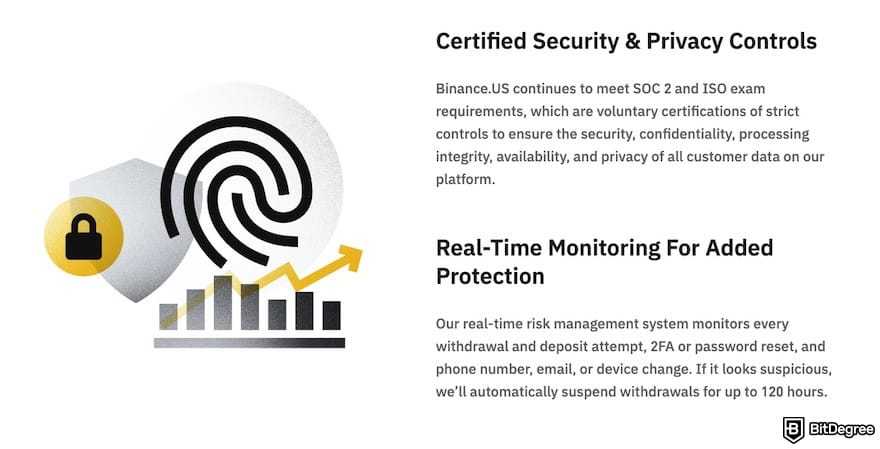
Both platforms cover the basics you'd expect from a regulated exchange, but their security profiles are built on different foundations. Robinhood leans on its status as a regulated US brokerage, while Binance US leans on its certifications and full-reserve model.
Robinhood | Binance US | |
|---|---|---|
Cold storage | ✓ | ✓ |
2FA | ✓ | ✓ |
Withdrawal whitelisting | ✗ | ✓ |
Anti-phishing code | ✗ | ✓ |
Real-time monitoring and data encryption | ✓ | ✓ |
SOC 2 compliant | ✗ | ✓ |
ISO/IEC 27001 certified | ✗ | ✓ |
PCI DSS certified | ✗ | ✓ |
FinCEN registered | ✗ | ✓ |
FINRA & SEC regulated | ✓ | N/A; doesn't offer stocks |
SIPC protection | ✓ (Up to $500,000) | ✗ |
1:1 reserve backing | ✗ | ✓ |
Table: Comparison of security features in Robinhood and Binance US
Robinhood's security story is largely built around its regulatory standing. As a FINRA- and SEC-regulated brokerage, eligible accounts come with SIPC insurance covering up to $500,000 (including $250,000 for cash), plus additional excess coverage through Lloyd's of London.
That said, Robinhood's track record with regulators isn't spotless. In 2024, the company agreed to a FINRA settlement involving nearly $30 million in fines and customer restitution over compliance and oversight issues. These weren't security breaches or fund losses, but it's worth knowing about if trust matters to your platform decision.
Binance US also had a rough patch with regulators since the SEC sued the platform in 2023. The institution forced it to pause dollar deposits and withdrawals for nearly two years. The case was eventually dropped in 2025, and USD rails are back up, but it's hard to forget when you're deciding where to park your crypto.
Verdict
Robinhood is the safer bet if you want the comfort of regulated brokerage protections. Binance US edges ahead on pure crypto security credentials, but its regulatory history adds uncertainty that Robinhood simply doesn't have.
Robinhood vs Binance US - Broader Ecosystem
Beyond trading, this is where Robinhood and Binance US really go their separate ways. Robinhood has built out a whole financial ecosystem around its core product, while Binance US keeps it strictly crypto.
Robinhood’s Other Features
Robinhood has grown beyond its roots as a commission-free stock trading app. Today it operates as a broader financial ecosystem.
1
Robinhood Gold
Robinhood Gold is the platform's premium membership, priced at $5/month. Subscribers unlock higher interest rates on uninvested cash, larger instant deposit limits, and exclusive promotions and partner perks.
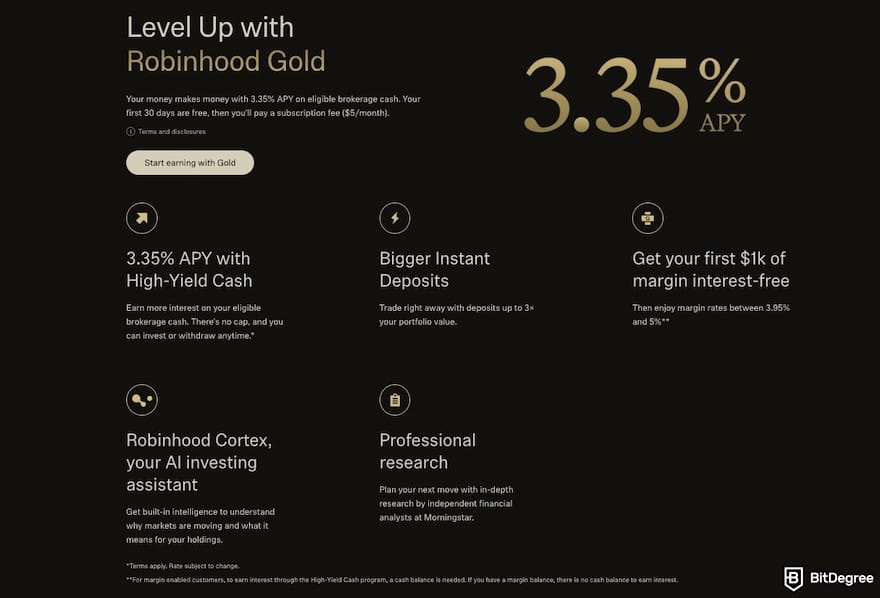
The standout feature for long-term investors is a 3% IRA contribution match, worth up to $225 per year based on the 2026 contribution limit, which can increase retirement savings over time.
2
Robinhood Gold Card
It’s available to eligible Gold members; the Gold Card extends Robinhood's reach into everyday spending. It offers 3% cash back across eligible categories, with rewards deposited directly into your brokerage account, helping funnel spending rewards straight into investments.
📚 Read More: Best Crypto Debit Cards
3
Robinhood Wallet
Robinhood Wallet is a self-custody crypto wallet, meaning you hold your own private keys rather than leaving assets in Robinhood's custody. It supports sending, receiving, swapping, and storing crypto across multiple blockchain networks and provides access to dApps and broader Web3 services.
4
Robinhood Invest
Robinhood's core brokerage service gives users access to over 11,000 securities, including US-listed stocks, ETFs, options, ADRs, and select OTC equities. The platform also supports extended-hours and 24-hour trading on many eligible assets, making it one of the more flexible options for investors.
5
Robinhood Strategies
Robinhood Strategies is the platform's managed investing service, essentially a robo-advisor with some human oversight. You answer questions about your goals, timeline, and risk tolerance, and the platform builds and rebalances a personalized portfolio of ETFs and individual stocks on your behalf.
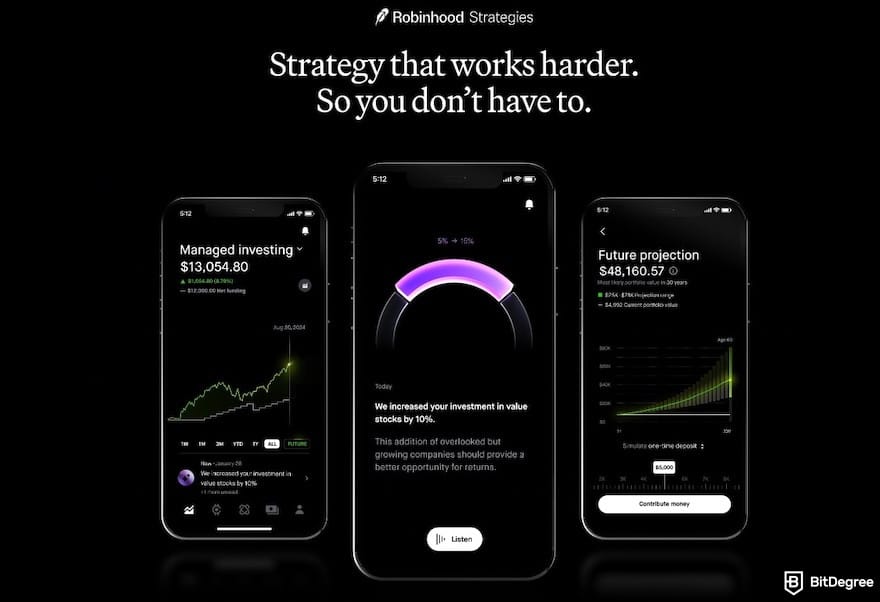
It charges a 0.25% annual management fee, requires just $50 to get started, and includes tax-aware management, recurring investments, market insights, and customizable stock restrictions.
Binance US’s Other Features
It's worth being upfront about what Binance US can't do. US regulatory constraints mean the platform has had to strip out a lot of what makes the global Binance exchange attractive. It has no crypto derivatives, margin trading, launchpad, or any of the broader payment or financial services you'd find on platforms like Kraken.
What you're left with is a platform that's laser-focused on buying and selling crypto on the spot market, at 0% maker fees.
If that's all you need, it's genuinely hard to beat on cost. If you need anything beyond that, you'll be looking elsewhere.
Verdict
Robinhood wins this category outright. If you're looking for a platform that goes beyond crypto and covers your broader financial life, Robinhood is in a different league. Binance US doesn't try to compete here, and that's fine, but it's worth knowing going in.
Robinhood vs Binance US - Fiat Deposits and Withdrawals
Both Robinhood and Binance US keep it simple on the fiat deposit and withdrawal side. The platform is primarily built around USD, though Robinhood Europe users can also hold Euros and British Pounds. Funding options cover standard bank transfers, debit card deposits, and Instant Bank Transfers for eligible users.
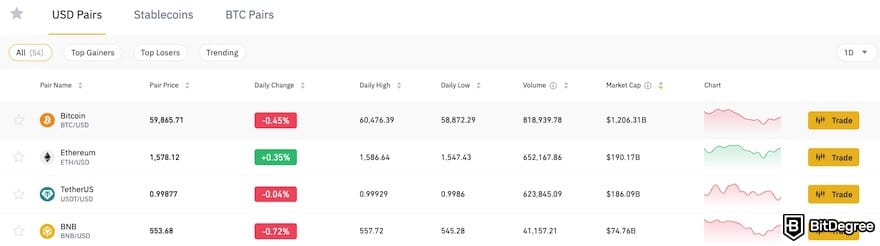
If your bank is supported and linked through Plaid, Instant Bank Transfers can get funds into your account within minutes. Still, transfer limits vary by account and reset daily, so heavy users may occasionally run into funding caps.
Binance US also supports USD services only. The system is fully restored after the platform's 2023 regulatory pause, meaning you can now deposit and withdraw USD by linking a bank account with zero fees. From there, you can buy and sell crypto via ACH bank transfer, instantly convert between USD and crypto, and trade across 50+ USD pairs with more on the way
Verdict
Both platforms are USD-only for US users and cover the essentials.
Robinhood Trading Walkthrough
Buying crypto on Robinhood is quick and beginner-friendly, as you can get started with as little as $1, and the whole process takes just a few minutes. There’s no complex order form with live charts, so you only need to pick your order type upfront and fill in the amount.
For a full trading interface with advanced charting tools, that's what Robinhood Legend (the desktop platform) is for. However, the app flow is all you need for simple purchases. Here’s how:
![Robinhood vs Binance US: the [Crypto] tab outlined on Robinhood's mobile app.](https://assets.bitdegree.org/images/robinhood-vs-binance-us-crypto-tab-robinhood.jpg "Robinhood vs Binance US: the [Crypto] tab outlined on Robinhood's mobile app.")
![Robinhood vs Binance US: the [Buy crypto] button on Robinhood's mobile app.](https://assets.bitdegree.org/images/robinhood-vs-binance-us-buy-crypto-button.jpg "Robinhood vs Binance US: the [Buy crypto] button on Robinhood's mobile app.")
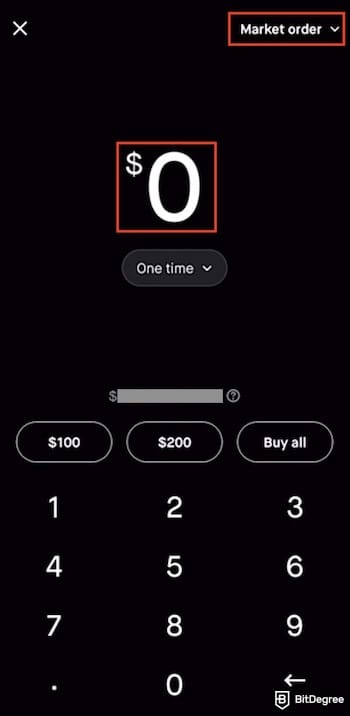
You can also set a limit order to buy only at your target price or lower, or a stop order to trigger a buy if the price hits a set level.
Once the order executes, you'll get a confirmation screen showing the amount purchased, execution price, and total. The asset will appear in your portfolio, where you can tap it anytime to view performance, position value, average buy price, and transaction history.
Binance US Trading Walkthrough
Buying crypto on Binance US is available through both the mobile app and the web browser. Here's how to do it on the web:
![Robinhood vs Binance US: the [Spot Trading] menu on Binance US outlined.](https://assets.bitdegree.org/images/robinhood-vs-binance-us-spot-trading-highlighted.jpg "Robinhood vs Binance US: the [Spot Trading] menu on Binance US outlined.")
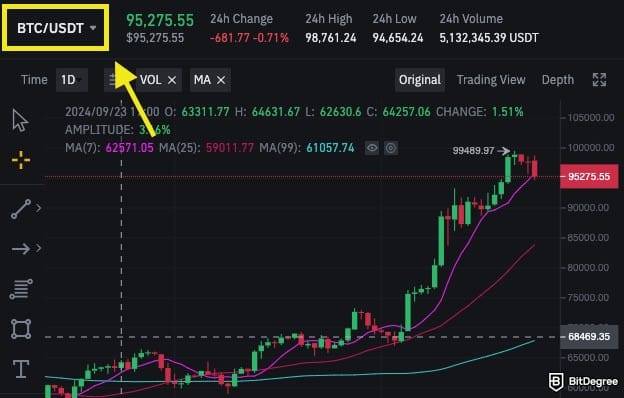
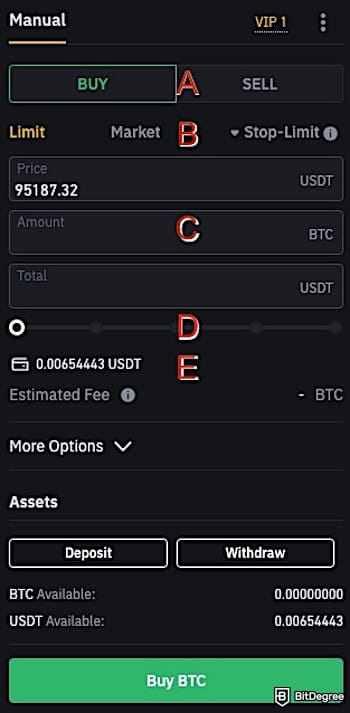
Alternatively, use the percentage slider to allocate a portion of your available balance.
A confirmation notification should immediately appear in the lower-right corner once the trade goes through. You can track your order in the [Open Orders] section at the bottom-left of the screen, where you can also view details, cancel individual orders, or clear all open orders at once.
Robinhood vs Binance US for Beginners
Both platforms are beginner-friendly, but just in different ways. Robinhood was practically built for beginners. Its entire brand identity is rooted in making investing feel accessible, and the awards back that up with the award of Best Brokerage App for New Investors in 2026, and Benzinga named it Best for Beginners among all online brokers in 2025.
The app is clean, minimal, and lets you start with as little as $1 through fractional shares. For crypto specifically, Robinhood strips out the complexity with no wallet management or order book to decipher.
The one catch is that the "commission-free" framing can be misleading for newcomers, since the actual cost is baked into the spread.
Binance US takes a different route to beginner-friendliness. It doesn't have much in the way of bells and whistles, which actually works in its favor. This way, you have less to figure out or get wrong. Also, because the fee structure is now a flat 0% maker and 0.02% taker on spot trades, users know exactly what they're paying from the very first trade.
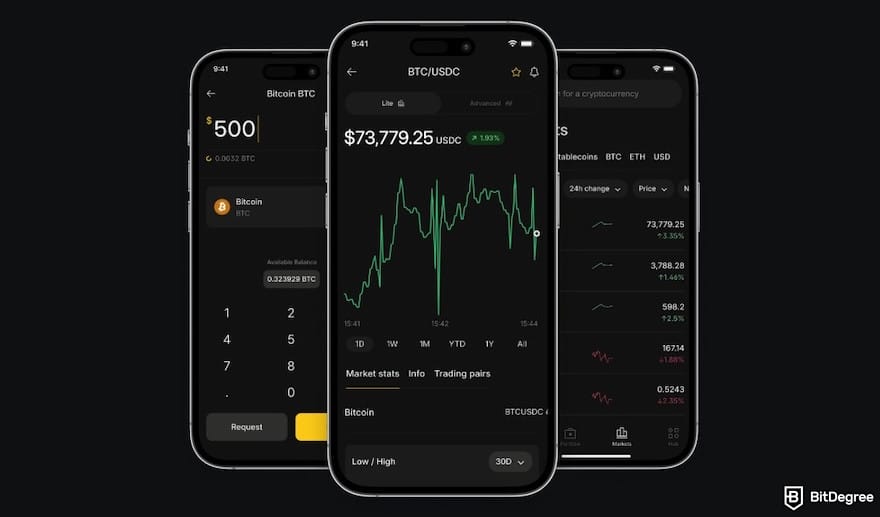
It's no surprise the platform frequently earns "Best for Low Fees" mentions in crypto exchange rankings, making it a strong starting point for anyone who wants to keep costs front and center.
Verdict
Robinhood wins on overall beginner experience thanks to its polished interface and broader educational ecosystem. However, if fee transparency is what matters most to you as a new trader, Binance US is the cleaner choice.
Robinhood vs Binance US for Active Traders
Active traders have pretty different needs from casual buyers, and these two platforms serve that audience in very different ways.
Robinhood has made a loud push into the active trader space over the past two years. At HOOD Summit 2025, the company announced Robinhood Legend, its desktop trading platform, along with AI-powered tools under the Robinhood Cortex umbrella and new asset classes.
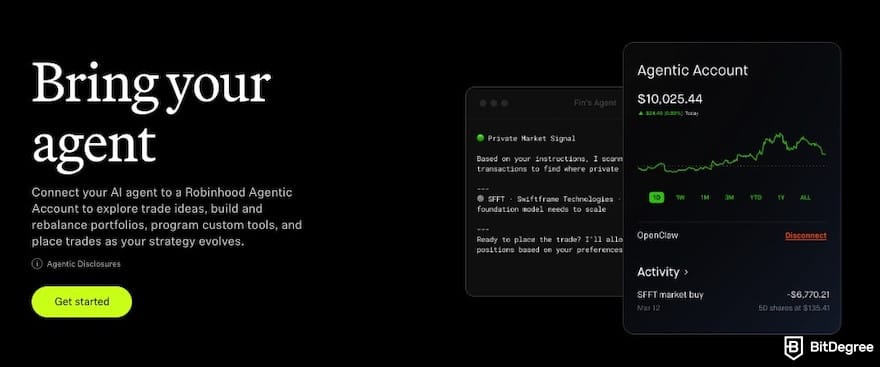
For stock and options traders, it's genuinely competitive now. The weak spot is crypto: Robinhood's pricing is still spread-based with no volume tiers, meaning heavy crypto traders get no cost advantage for their activity. There's no pro-grade order book or maker-taker structure.
Meanwhile, Binance US is more narrowly focused on serious spot traders. The platform runs a Market Maker Program that rewards top traders who contribute liquidity with trading fee rebates and 0% maker fees. Here's how the rewards break down:
Benefit | |
|---|---|
All qualifying participants | 0% maker fees on select trading pairs |
Top 75% of participants | 0% maker fees on ALL trading pairs |
Ranked #2–#5 | 0.002% daily trading fee rebate |
Ranked #1 | Up to 0.005% daily trading fee rebate |
Table: the benefit structure of Binance US's Market Maker Program.
To qualify, Binance US encourages traders with over $10 million in monthly trading volume to apply. For everyone else, the standard 0% maker/0.02% taker structure already makes spot trading cost-efficient without any program enrollment.
Verdict
For active crypto spot traders, Binance US has the edge with lower fees, a transparent fee structure, and a formal market maker program for high-volume participants. Robinhood wins for active traders who want a broader multi-asset setup with stocks, options, and futures all in one place.
Robinhood vs Binance US for Passive Users: Earning Opportunities
Binance US has the clear edge here in terms of breadth. The platform supports staking for 27+ cryptocurrencies, with reward rates reaching up to 17.40%. The lineup includes major assets, like:
- ETH (2.50%),
- SOL (3.60%),
- ADA (1.90%),
- ATOM (11.70%),
- more niche options like LPT (13.90%), AUDIO (12.40%), and ONT (17.40%).
All staking is true on-chain staking, and rewards come entirely from blockchain validation by the underlying protocol. Also, assets are stored in offline cold wallets while being staked through third-party providers. Rewards for most assets are distributed weekly and automatically restaked, though you can opt out if you want immediate access to rewards.
Binance US also recently launched Boost, a newer earn feature that lets users put their crypto to work through time-limited reward events.
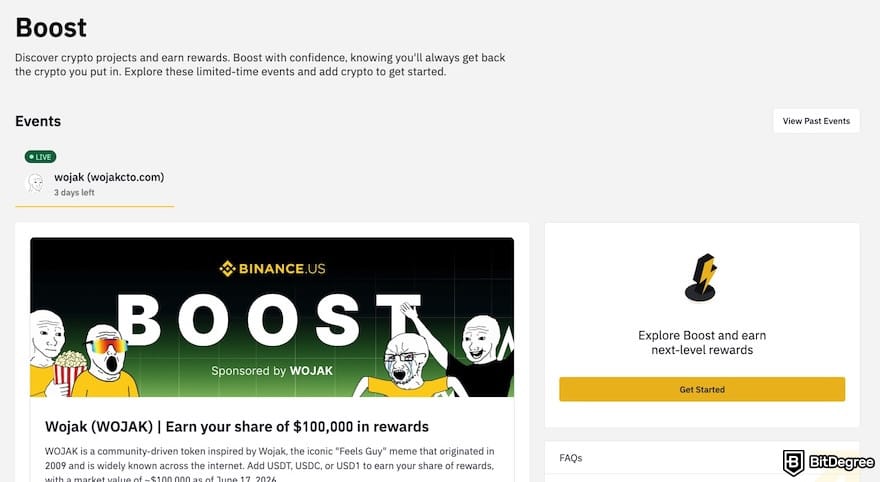
Robinhood's staking offering is far more limited by comparison. It covers Ethereum, Solana, and Cardano with a minimum of just €1. Rewards are paid out automatically on a scheduled basis, but APY rates aren't disclosed upfront.
However, users in California, Maryland, New Jersey, and Wisconsin are currently excluded from staking on Robinhood. You may also be unable to stake if you're a US person who certified with a Form W-9 but are subject to a B-Notice, or a non-US person who certified with a Form W-8BEN.
Verdict
Binance US wins this one easily. US-based users get access to a wide range of staking assets with competitive rates, while Robinhood's staking is more limited, with a disclosed rate.
Final Verdict: Is Binance US or Robinhood Better?
The answer depends on what you're actually trying to do with your money. If crypto spot trading is your main focus and you want the lowest fees with full price transparency, Binance US is the stronger pick.
The 0% maker fee structure is hard to beat for US-based crypto traders, and knowing exactly what you're paying before you confirm a trade is something Robinhood still can't offer on its crypto side.
However, if you want a single platform that covers your entire financial life (stocks, ETFs, options, futures, crypto, a robo-advisor, and even a cashback credit card), Robinhood is in a different league.
It's not the cheapest way to buy crypto, but for most retail investors who aren't purely crypto-focused, the convenience of one account that does everything is worth the tradeoff.
Pick Binance US if you're a crypto-first trader who wants transparent, low-cost spot trading. Choose Robinhood if you want an all-in-one investing platform.