Key Takeaways
- BTCC fees follow a standard VIP-based tier system, but four active zero-fee campaigns waive costs on specific deposits, spot coins, futures pairs, and TradFi assets;
- Zero-fee promotions eliminate the trading fee itself, but spread and slippage remain separate costs tied to market liquidity rather than BTCC's fee schedule;
- Favoring limit orders, using zero-fee coins when they fit your strategy, and tracking VIP progress are practical ways to reduce overall trading costs on BTCC.
"Zero fees" is one of those phrases that makes a lot of traders raise an eyebrow, which is a fair skepticism. So when I started digging into BTCC fees for this piece, I went in expecting the usual catch: a teaser rate, a fine-print condition, something that quietly reverts after week one.
What I found instead was more layered than a single promo. BTCC zero-fee trading actually spans spot trading, futures, and even TradFi assets, each with its own mechanics and conditions worth understanding before you assume "free" means the same thing everywhere on the platform.
So is it really free, or are there any hidden terms? In this article, I will break down every layer, what's genuinely at 0%, what conditions apply, and how the numbers stack up against Binance and Bybit, so you can decide for yourself before you trade a single dollar.

Did you know?
Subscribe - We publish new crypto explainer videos every week!
What is Fantom? | Animated FTM Explainer


Table of Contents
- 1. BTCC Fees: Quick Overview
- 2. BTCC Zero-Fee Campaigns Explained
- 2.1. Futures Zero-Fee on Meme Coins
- 2.2. TradFi Zero-Fee
- 3. First-Trade Loss Coverage
- 4. Is the Zero-Fee Trading Really Free?
- 5. Deposit & Withdrawal Fees by Method
- 6. BTCC Futures Fee Tiers
- 7. BTCC Futures Funding Rates
- 8. BTCC Fees vs Other Exchanges
- 9. How to Claim BTCC's Zero Fee Offer
- 10. Tips to Optimize Your BTCC Fee Spending
- 11. Conclusions
BTCC Fees: Quick Overview
Before getting into the zero-fee campaigns covered later in this article, it helps to know what BTCC's standard fee structure actually looks like without any promotions applied. Fees scale with your VIP level, which is based on your account's trading volume or asset value. The more active you are, the lower your rate gets. Here's the full breakdown:
Latest Changelly Coupon Found:Futures Fee (Taker/Maker) | Spot Fee (Taker/Maker) | Withdrawal Fee Discount | |
|---|---|---|---|
VIP 0 | 0.048% / 0.03% | 0.3% / 0.2% | 0.00% |
VIP 1 | 0.045% / 0.025% | 0.3% / 0.2% | 10.00% |
VIP 2 | 0.04% / 0.022% | 0.3% / 0.2% | 10.00% |
VIP 3 | 0.035% / 0.02% | 0.3% / 0.2% | 20.00% |
VIP 4 | 0.03% / 0.018% | 0.3% / 0.2% | 30.00% |
VIP 5 | 0.025% / 0.015% | 0.3% / 0.2% | 40.00% |
VIP 6 | 0.02% / 0.012% | 0.3% / 0.2% | 50.00% |
VIP 7 | 0.015% / 0.01% | 0.3% / 0.2% | 60.00% |
Table: BTCC VIP fee tiers
At the base level (VIP 0), futures fees start at 0.048% for takers and 0.03% for makers, while spot trading sits at 0.3%/0.2%. That's the starting point most new users see. But as the table shows, rates drop meaningfully as your VIP level climbs, well before factoring in any of the zero-fee promotions we'll walk through next.
Looking for more in-depth information on related topics? We have gathered similar articles for you to spare your time. Take a look!

BTCC Zero-Fee Campaigns Explained
This is where "BTCC zero fee trading" actually earns its name. Rather than one blanket promotion, BTCC is currently running four separate zero-fee campaigns covering different parts of the platform, including futures and TradFi assets. Each has its own mechanics, so here's how they break down.
Futures Zero-Fee on Meme Coins
On the futures side, BTCC has rolled out a zero-fee promotion targeting meme coins specifically. The first phase covers several meme-coin pairs, all with fees waived on USDT-M Perpetual Futures. You can find the current list of eligible pairs by heading to the futures markets page and selecting the [0 Fee] filter.
At the time of writing, the campaign is in Phase 3, which includes HYPEUSDT, BEATUSDT, and LABUSDT. BTCC is planning to roll out Phase 4 in mid August 2026 with a new set of coin pairs.
It's a narrower promotion than the spot rebate in terms of asset coverage, but for traders active in meme-coin futures specifically, it removes a cost that would otherwise apply to every position opened and closed.
📚 Read More: How to Trade Crypto Futures on BTCC
TradFi Zero-Fee
The broadest of the four campaigns extends zero fees to opening and closing positions across BTCC's TradFi offering. That includes precious and industrial metals (Gold, Silver, Platinum, Palladium, Aluminum), energy commodities (Brent Crude Oil, WTI Crude Oil, Natural Gas), global indices (S&P 500, Nasdaq 100, Dow Jones, FTSE 100, DAX, Nikkei 225), and forex pairs alongside US stocks like Apple, Tesla, NVIDIA, Microsoft, and Amazon.
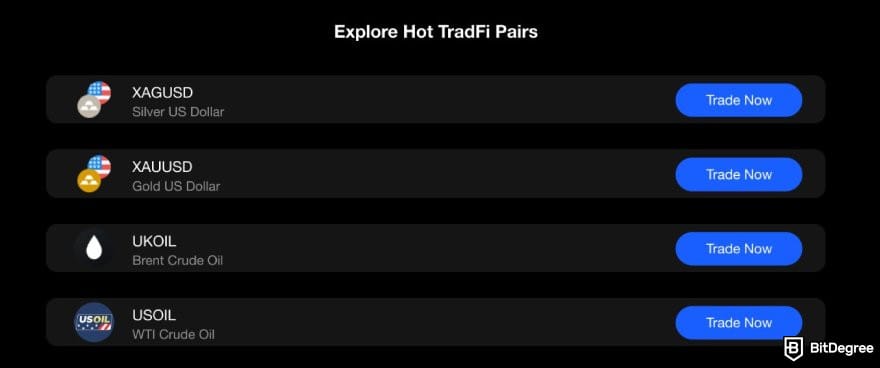
If your interest extends beyond crypto markets, this is arguably the most substantial of the four campaigns simply in terms of how many assets it covers.
📚 Read More: How to Trade Commodities on BTCC
First-Trade Loss Coverage
Separate from the zero-fee campaigns above, BTCC also runs a program that takes some of the risk out of your very first futures trade. If your first closed futures position results in a loss, BTCC covers it at a 100% offset ratio, up to 50 USDT. There's no minimum trade size to qualify, which is worth noting since a lot of "risk-free trade" offers quietly exclude smaller test trades through a hidden threshold, and this one doesn't.
Here's how it works: You register for the campaign before placing any trades. Positions opened before registering don't count. Once registered, coverage applies to the first futures position you close during the campaign. If that trade turns a profit, there's no reward triggered, but the profit is still fully yours to withdraw.
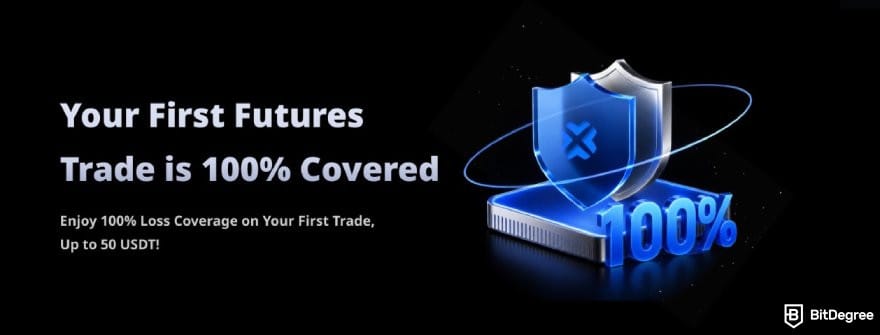
If it's a loss, BTCC reimburses it as trading funds usable to offset fees or further losses: a loss between 1–49 USDT is covered in full, while a loss of 50 USDT or more is reimbursed up to the 50 USDT cap.
For anyone weighing whether BTCC's fee structure is worth trying out in practice, this program effectively removes the downside on that first trade. I think this is a reasonable way to test the platform's futures product without the full risk if the position doesn't go your way.
Is the Zero-Fee Trading Really Free?
So, do these promotions make your trades 100% free? Mostly, but "0% fee" and "0% cost" aren't quite the same thing. What these campaigns actually waive is the trading fee itself, and that part is genuinely gone on the pairs and products each campaign covers.
But two other costs live outside BTCC's fee schedule entirely: spread (the gap between bid and ask price) and slippage (the difference between the price you expect and the price you actually get). Both are shaped by market liquidity, not by any fee promotion. It's not a reason to skip these campaigns, but it's a reason not to assume the fee percentage tells the whole story.
Deposit & Withdrawal Fees by Method
Beyond the zero-fee campaigns already covered, it's worth knowing what BTCC's baseline deposit and withdrawal costs look like across the board. Starting with the good news: crypto deposits are free. You can move BTC, ETH, or any other supported asset onto the platform.
📚 Read More: How to Deposit Money into BTCC Exchange
BTCC doesn't charge any fees on the deposit side, regardless of which coin you're sending or how large the transfer is.
Fiat deposits work a little differently depending on your region. For example, traders in the US can use Visa/Mastercard while Canadian users can use Interac e-Transfer. The cost will vary depending on the method.
At the time of writing, BTCC is running a cashback campaign offering 100% crypto deposit cashback, up to 5,000 USDT in rewards. The mechanics work on a tiered scale. After registering for the campaign, you have 3 days to make cumulative crypto deposits with USDT, BTC, ETH, XRP, SOL, or USDC. The more you deposit, the higher the reward tier.
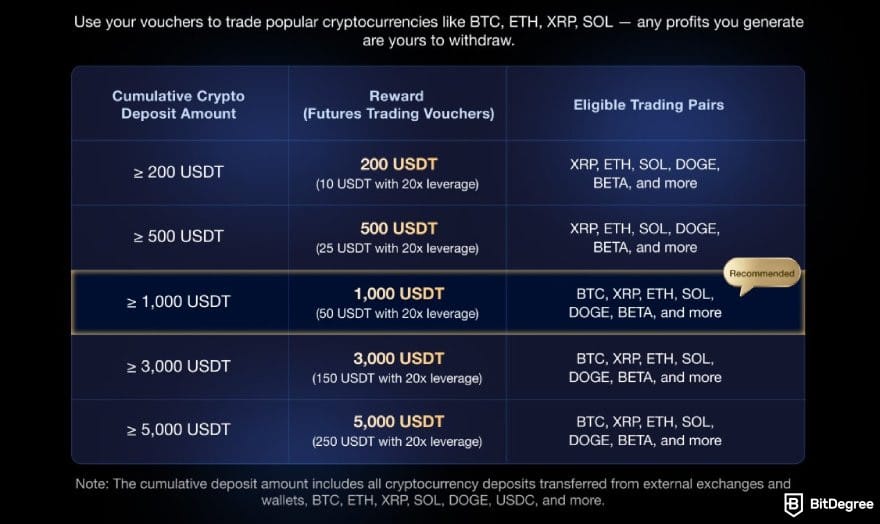
Depositing 1,000 USDT, for example, earns 1,000 USDT back, while the top tier requires 5,000 USDT in deposits for the full 5,000 USDT reward. Rewards are paid out as Futures Trading Vouchers rather than cash, usable on major pairs like BTC, ETH, XRP, and SOL. Any profit generated while trading with those vouchers is fully withdrawable.
Keep in mind that this campaign is exclusively open to eligible users in the United States.
Withdrawals are where things get more variable. Unlike crypto deposits, withdrawal fees aren't a flat rate across the board. They differ by coin, since each network has its own transaction costs that BTCC's fee structure reflects. Here's how the withdrawal fees break down for a few commonly traded assets:
Network | Withdrawal Fee | |
|---|---|---|
USDT | BEP20/ERC20 | 2 USDT |
USDC | ERC20/Base | 5 USDC |
ETH | Ethereum | 0.0006 ETH |
BTC | Bitcoin | 0.0001 BTC |
SOL | Solana | 0.0111 SOL |
Table: Withdrawal fees by coin
As a general rule, it's worth checking the specific coin's withdrawal fee before moving funds off the platform, especially if you're working with a smaller balance where a flat network fee makes up a larger percentage of what you're actually withdrawing.
BTCC Futures Fee Tiers
Beyond the zero-fee meme-coin promotion covered earlier, BTCC's standard futures fees follow the same VIP-based tier structure as the rest of the platform. This means your rate on perpetual futures scales down as your trading volume or account value increases. Here's the breakdown specifically for futures maker/taker fees:
Futures Taker/Maker Fees | |
|---|---|
VIP 0 | 0.048% / 0.03% |
VIP 1 | 0.045% / 0.025% |
VIP 2 | 0.04% / 0.022% |
VIP 3 | 0.035% / 0.02% |
VIP 4 | 0.03% / 0.018% |
VIP 5 | 0.025% / 0.015% |
VIP 6 | 0.02% / 0.012% |
VIP 7 | 0.015% / 0.01% |
Table: Futures trading fees on BTCC.
Before those numbers mean much, it helps to understand the taker/maker split. A taker fee kicks in when your order fills immediately, like on a market order, or a limit order that happens to match right away.
A maker fee applies when your order sits on the book, adding liquidity instead of instantly matching. Makers get the better rate at every VIP level, which is standard across most exchanges. In other words, you're rewarded for adding depth to the market rather than pulling from it.
One more thing worth knowing is that futures fees are calculated on your position's full notional value, not just your margin, so leverage changes how much you're actually paying relative to your account size.
Say you're a VIP 0 trader opening a $1,000 position:
- Open as a taker (market order): $1,000 × 0.048% = $0.48
- Close as a taker: another $0.48
- Round-trip total: $0.96
Now, if you used limit orders both times instead and got maker rates: $1,000 × 0.03% × 2 = $0.60 for the whole trade. Not a huge gap on one $1,000 trade, sure. But start trading regularly or sizing up your positions, and that difference adds up fast. It's a good reminder that your VIP level isn't the only lever here. You also need to pay attention to how you place your orders.
Thankfully, BTCC is running 0-fee futures trades on some selected hot pairs. So, you don't have to worry about these costs if you plan on trading these coins. At the time of writing, these include pairs like HYPEUSDT, BEATUSDT, and BEATUSDT.
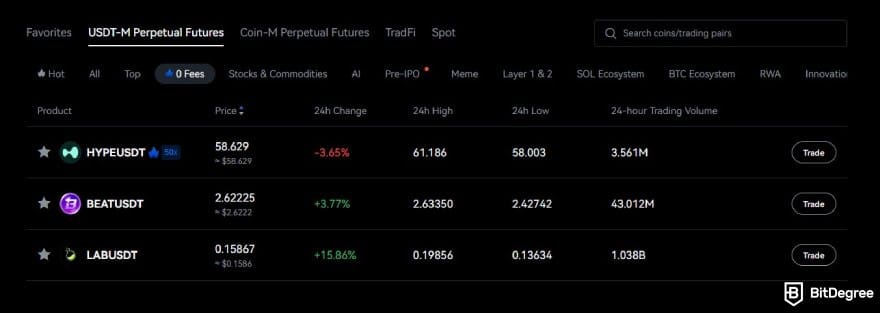
Keep in mind that the list isn't set in stone. BTCC rotates which coins qualify for the "0 Fee" filter over time, so rather than assuming a specific coin still qualifies, it's worth checking the filter under USDT-M Perpetual Futures directly for what's currently eligible.
BTCC Futures Funding Rates
Trading fees aren't the only cost that comes with holding a futures position. One doesn't even show up on the fee tables at all. It's called the funding rate, and it applies regardless of your VIP level or whether the pair you're trading happens to be covered by a zero-fee promotion.
BTCC's perpetual futures contracts don't expire, so there's no natural settlement date forcing the contract price back in line with the underlying asset's spot price. Instead, exchanges use a funding rate, a periodic payment exchanged directly between long and short position holders, to keep the two prices tethered together.
Per BTCC's own documentation, the exchange doesn't collect this fee itself. Instead, it's paid peer-to-peer between traders on opposite sides of the market.
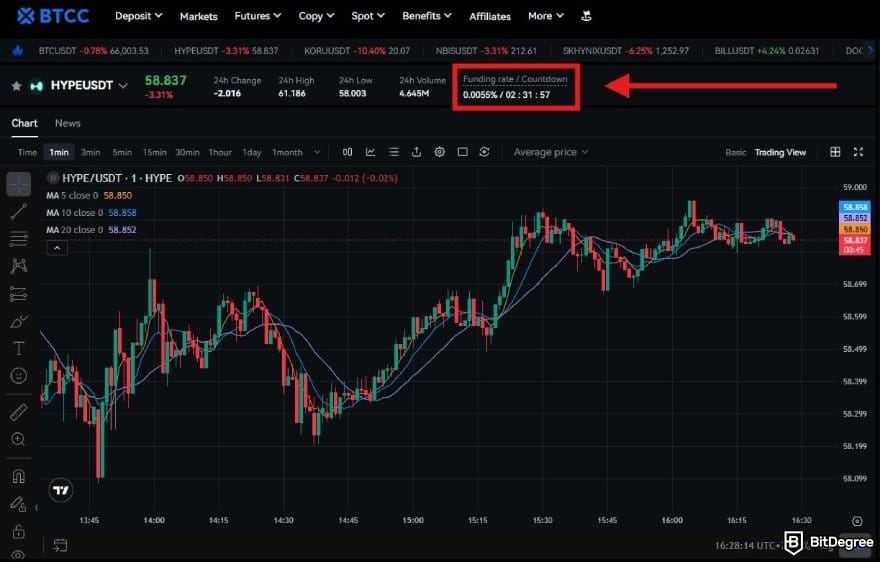
On BTCC specifically, funding is applied three times a day, every 8 hours, at fixed UTC checkpoints. As long as you're holding an open position at one of those moments, the fee (or payment) is applied automatically. You don't need to do anything to trigger it, and it happens whether you're actively watching your position or not.
The formula for your funding fee is:
Funding rate x position value
So, if you're holding a $500 position and the current funding rate is 0.0056%, the funding fee would be $0.028.
Whether you pay or receive depends on which side of the trade you're on. If perpetual futures prices are trading above the spot price, longs pay shorts. If they're trading below, shorts pay longs.
It's a small percentage of your position's full notional value, but it matters more than it sounds. This is because a leveraged position means funding is calculated on the larger number, not the smaller amount you actually put up.
Even on a pair covered by BTCC's zero-fee futures promotion, the funding rate still applies. It's a completely separate mechanism from trading fees. A trader holding a zero-fee futures position overnight could still see funding charges deducted from their account balance.
It may be small on any single 8-hour window, but capable of adding up on positions held for days or weeks, especially with leverage involved.
So, if you're planning to hold a futures position for more than a few hours, it's worth checking the current funding rate for that pair before opening the trade, not just the trading fee. A 0% trading fee tells you nothing about what funding will cost you over the life of the position.
BTCC Fees vs Other Exchanges
Numbers matter more than promises here, so let's put BTCC's standard rates next to Binance and Bybit, comparing base-tier users across the board. In this comparison, I will focus on the standard starting rate every new user sees.
 |  |  | |
|---|---|---|---|
| - | - | - | |
| Up to 0.0001 BTC | 0.000015 BTC | 0.00005 BTC | |
| Up to 0.3% | Up to 0.1% | Up to 0.1% | |
| Supported ✅ | Not Supported ❌ | Not Supported ❌ | |
| Visit site Read review | See TOP10 Brands Read review | See TOP10 Brands Read review |
Table: Fee comparison between BTCC, Binance, and Bybit.
On spot trading, BTCC's standard rates are noticeably higher than both competitors. Binance and Bybit each charge a flat 0.1% regardless of maker or taker status, while BTCC's base rate runs 0.2%/0.3%. This can be a gap if spot trading is your primary activity.
Bybit | Binance | BTCC |
|---|---|---|
0.0200% maker/ 0.0550% taker | 0.0200% maker/ 0.0500% taker | 0.03% maker/ 0.048% taker |
Table: Futures trading fees comparison between Bybit, Binance, and BTCC.
On the other hand, Futures tells a more mixed story. BTCC's maker fee (0.03%) runs a bit higher than both Binance and Bybit's 0.02% maker rate. So, if you're primarily placing limit orders that add liquidity, the two larger exchanges have an edge at base tier.
On the taker side, though, BTCC's 0.048% actually undercuts both Binance's 0.05% and Bybit's 0.055% standard taker rates, before either applies a token-holding discount. If you lean on market orders rather than limit orders, that's a point in BTCC's favor worth noting rather than assuming bigger exchanges automatically mean lower costs across the board.
How to Claim BTCC's Zero Fee Offer
Now that I've walked you through the numbers and details, it is time to find out how to actually benefit from BTCC's zero-fee trading campaign. Here's how to get each of the campaigns covered above activated on your account, step by step.
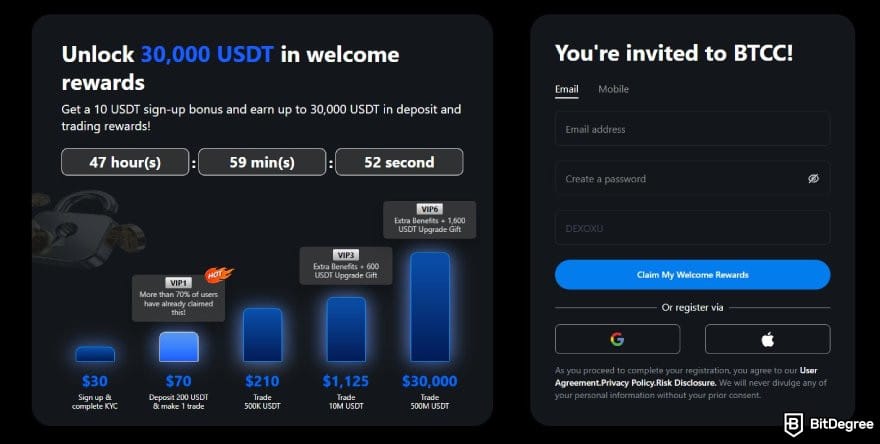
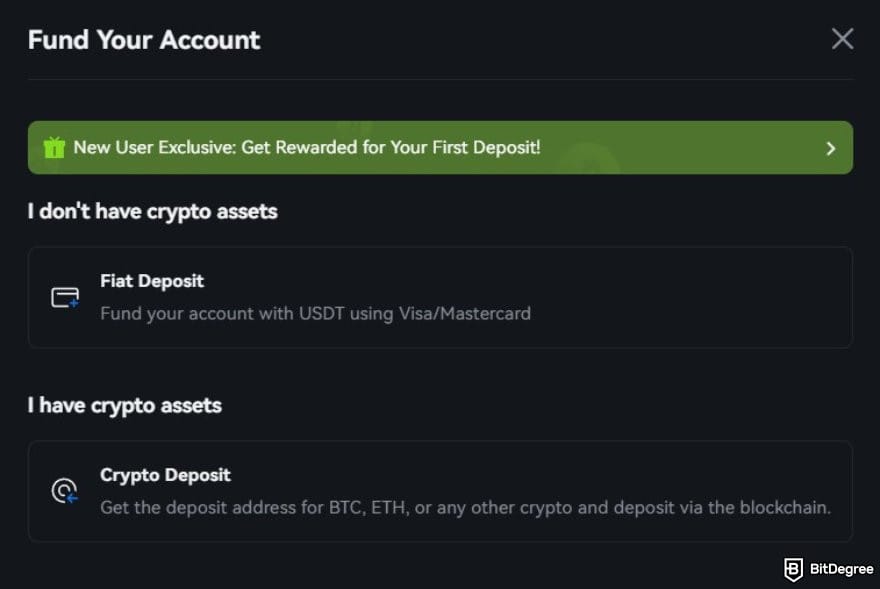
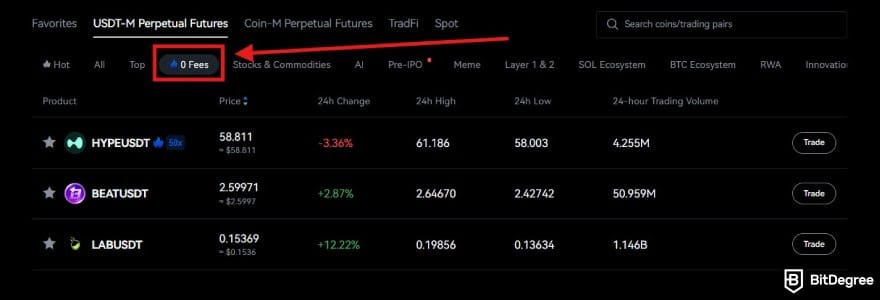
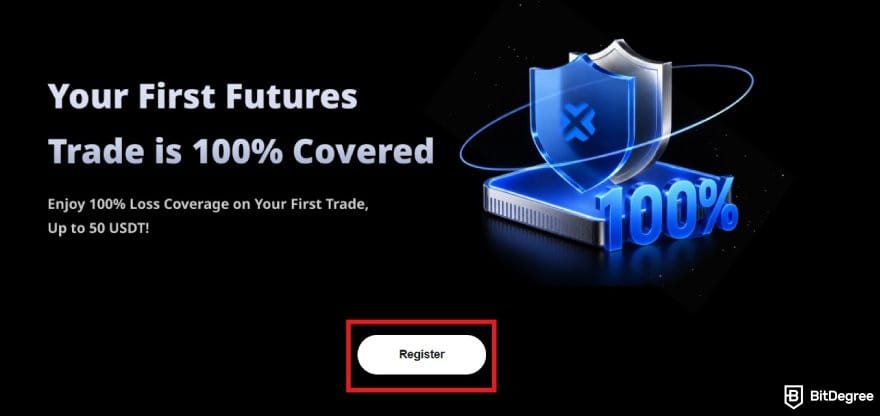
As you can see, there's no complicated registration process needed. Most of BTCC's zero-fee trading promotions activate automatically on your account. I recommend checking your transaction details regularly to ensure that the promotion works properly.
Tips to Optimize Your BTCC Fee Spending
Knowing the fee structure is one thing, but actually trading in a way that takes advantage of it is another. Here are a few practical ways to keep more of what you trade:
1
Favor limit orders over market orders where you can
Maker fees are consistently lower than taker fees at every VIP level, and the gap reflects a well-documented pattern in market structure. Maker-taker fee structures tend to reduce volatility and market impact,[1] which is part of why exchanges consistently reward orders that add liquidity over ones that remove it.
If timing isn't urgent, placing a limit order instead of a market order is often the simplest way to shave costs without changing anything else about your strategy.
2
Stick to the zero-fee coins when the trade makes sense
In most cases, reducing trading costs on a market tends to improve its liquidity.[2]This means the coins BTCC has chosen to waive fees on are likely to trade a little smoother as a result. The same logic applies to the meme-coin futures list.
If you're already trading in that space, checking the [0 Fee] filter before opening a position costs nothing and can save a meaningful amount over time.
3
Use the first-trade loss coverage deliberately
Since it applies to your first closed futures position after registering, it's worth using that first trade to test a strategy or asset you're genuinely curious about, rather than a routine trade. You get the same coverage either way, so it may as well count for something.
4
Watch your VIP progress if you trade often
If you're consistently trading meaningful volume, it's worth tracking how close you are to the next VIP threshold. Crossing into VIP 1 or VIP 2 lowers both your futures and withdrawal fees, and the jump might be closer than it looks if you're already an active trader.
Browse our collection of the most thorough Crypto Exchange related articles, guides & tutorials. Always be in the know & make informed decisions!

Conclusions
So, back to the question this article opened with: is BTCC's zero-fee trading really free? The honest answer is, mostly, and where it counts, but not entirely.
BTCC fees on standard spot and futures trading are competitive but not the lowest in the market, and the zero-fee campaigns covering meme-coin futures and TradFi assets genuinely eliminate the trading fee itself in the areas they cover. What they don't erase is spread and slippage, which live outside any fee schedule and depend on a pair's liquidity rather than its promo status.
Understanding that distinction, and pairing it with the fee-optimization habits I covered above, like favoring limit orders and tracking your VIP progress, puts you in a solid position to trade on BTCC without assuming "0%" always means "free", and without leaving savings on the table where it genuinely does.
The content published on this website is not aimed to give any kind of financial, investment, trading, or any other form of advice. BitDegree.org does not endorse or suggest you to buy, sell or hold any kind of cryptocurrency. Before making financial investment decisions, do consult your financial advisor.
Scientific References
1. Yagi, I., Hoshino, M., Mizuta, T.: 'Analysis of the impact of maker-taker fees on the stock market using agent-based simulation';
2. Lin, Y., Swan, P., L., Harris, F. H. deB.: 'Does maker-taker limit order subsidy improve market outcomes? Quasi-natural experimental evidence'.
About Article's Experts & Analysts