Key Takeaways
- Bitget Canada is closing all Canadian accounts by August 31, 2026, with a phased timeline that starts restricting withdrawals earlier;
- Comparing BTCC vs Bitget shows BTCC covers most of the same ground, while adding Canadian-friendly funding through Interac e-Transfer;
- Migrating funds off Bitget before the deadline protects your assets and gives you time to get comfortable with a new platform before old positions are force-closed.
I opened my inbox last week to find the same message a lot of Canadian crypto traders are seeing right now: Bitget Canada access is winding down, and the clock is already running. If you've gotten that email too, you're probably sitting with the same questions I had: "Is this real? How much time do I actually have, and where does my money go now?"
Here's what I can tell you after digging into this: the deadline is real, the timeline is tighter than it looks at first glance, and "just wait and see" isn't really an option this time. In my experience, exchange exits rarely go smoothly for the traders who leave it to the last minute.
So before you do anything else with that account, here's exactly what's happening, what you need to do before the deadline hits, and where you can go next without losing the tools you've gotten used to.

Did you know?
Subscribe - We publish new crypto explainer videos every week!
Is Cryptocurrency a Good Investment? (5 PROS & CONS!)


Table of Contents
- 1. What's Happening with Bitget in Canada
- 2. Withdrawal Timeline & What You Need to Do
- 3. Where Canadian Users Can Move Funds
- 4. BTCC's Feature Case
- 4.1. Security and Track Record
- 4.2. The Zero-Fee Campaign
- 4.3. Interac e-Transfer
- 4.4. Futures and Copy Trading
- 4.5. First-Trade Loss Coverage
- 5. BTCC vs Bitget: Side-by-Side
- 6. How to Migrate From Bitget to BTCC: Step-by-Step
- 7. Points to Consider When Switching Exchanges
- 8. Conclusions
What's Happening with Bitget in Canada
Based on the email sent to many users, here's what's actually going on. Bitget has told Canadian account holders that, based on the KYC information tied to their accounts, they've been identified as Canadian residents, and that access to the platform will end on August 31, 2026. The notice lays out a specific, staged timeline that gives users a real (if tight) window to act.
Latest Changelly Coupon Found:Here are the key dates, straight from the notice:
- August 15, 2026, 00:00 CST - Accounts move into position-closing and withdrawal-only mode. No new positions and deposits are permitted. You can only close what's already open and withdraw funds.
- August 30, 2026, 23:59 CST - Final deadline to withdraw all assets from your account.
- August 31, 2026, 00:00 CST - Your account will be closed.
Bitget is framing this as a KYC-driven decision rather than a blanket ban. The email includes an option for users to update their KYC information if they believe they've been incorrectly flagged as Canadian residents. But for anyone who is genuinely based in Canada, that option isn't really on the table, and the practical reality is the same: the account is winding down on a fixed schedule.
It is worth mentioning that funds aren't at risk in the meantime. Bitget states that balances remain safe in the account until withdrawn, and users can move funds out either as fiat to a linked bank account or as crypto to a self-custody wallet or another exchange.
So why is this happening now? From what I've found, it lines up with a broader shift in how Canada regulates crypto exchanges in 2026. The CSA and CIRO have tightened requirements around how platforms handle Canadian client assets, and Bitget appears to be one of several exchanges choosing to scale back rather than build out the compliance infrastructure needed to stay.
That context matters less than the deadline itself, though. What matters right now is making sure you're not the trader who's still logging in on August 30, wondering where the time went.
Looking for more in-depth information on related topics? We have gathered similar articles for you to spare your time. Take a look!



Withdrawal Timeline & What You Need to Do
Knowing the dates is one thing, but knowing what actually to do with them is another. Here's how I'd work through this if it were my account.
1
Right now, before anything else
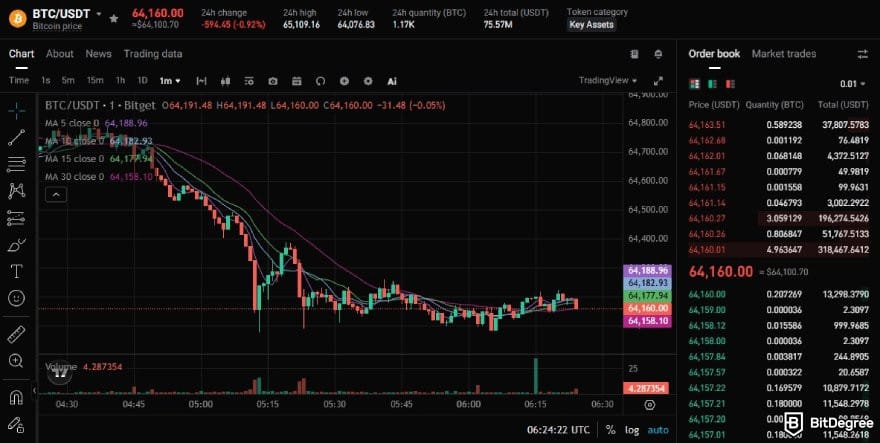
Log in and take stock. Check every open position, every pending order, and every asset sitting in your wallet: spot, futures, earn products, all of it. In my experience, this is the step people skip when a deadline feels far off, and it's the one that causes the most stress later when there's a position or a small forgotten balance still open with days left on the clock.
2
Before August 15
This is your full-access window. If you're planning to close positions gradually rather than all at once, say, to avoid selling into a bad price, this is the stretch to do it in. Once the account moves into withdrawal-only mode, you lose the flexibility to open new positions or add funds, so any strategy that depends on that flexibility needs to happen now.
3
Between August 15 and August 30
You're in position-closing and withdrawal-only mode. Use this window to actually move your funds out. Don't just close positions and let the balance sit. Fiat can go to a linked Canadian bank account, and crypto can go to a self-custody wallet or another exchange like BTCC. If you're withdrawing crypto, double-check network fees and confirmation times before you submit, especially for less liquid assets, since congestion or a wrong network selection can eat time you don't have much of.
4
By August 30, 23:59 CST
Everything needs to be out. I would treat it as the date you want to already be done by, not the target date. Withdrawal queues, KYC holds, or a busy network can all eat into a deadline that looks generous until you're the one waiting on a confirmation.
One thing I want to highlight is that if you hold niche or thinly traded altcoins that might not be supported on whichever platform you move to next, it's worth converting them to a major asset like BTC, ETH, or a stablecoin before you withdraw. It's a lot easier to move mainstream assets around than to find a home for something obscure at the last minute.
Where Canadian Users Can Move Funds
Once your funds are out, the next question is obvious: where do they go? I won't pretend there's one universal answer here, as it depends on what you actually trade, how much you value low fees versus deep liquidity, and how much friction you're willing to tolerate around CAD funding. But a few names have been showing up consistently as Canadian traders work through this transition, and BTCC is one I've had on my radar.
For traders who leaned on Bitget for futures, copy trading, and a wide asset selection, BTCC covers a lot of the same ground. In my testing, the feature set felt familiar enough that switching over didn't mean relearning how to trade. It's built around similar mechanics: perpetual futures, copy trading, and a markets list broad enough to cover the pairs most active traders actually use.
The funding method can be a strong case for many Canadian users, which is usually the most annoying part of any exchange switch. BTCC supports Interac e-Transfer, so moving CAD in and out doesn't mean routing through a third-party on-ramp or eating conversion fees on top of everything else.
It also integrates with TradingView, which matters if your trading process leans on charting tools you already know rather than whatever's built into the exchange itself.
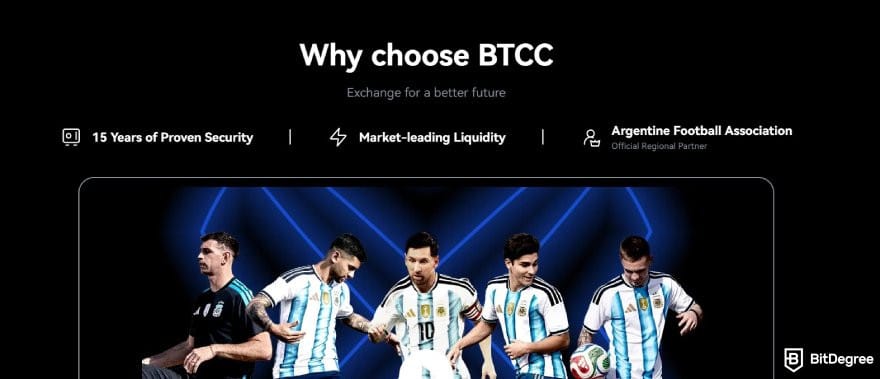
BTCC has also been around since 2011, which puts it among the longer-running names in the space. That track record was reinforced in 2025, when Pan Finance named BTCC the Most Secure Digital Asset Exchange, alongside a zero-fee trading campaign currently running that's worth a look if cost is a factor in your decision (more on that below).
📚 Read More: BTCC Review
None of this means BTCC is the only option worth considering, though. But if you're looking for something that covers similar ground to what you're leaving behind, it's one of the stronger candidates currently on Canadian traders' radar.
BTCC's Feature Case
If Bitget was your entry point into futures and copy trading, the feature-by-feature switch matters more than anything else here. So, let me walk through what actually carries over if you decide to use BTCC.
Security and Track Record
BTCC has been operating since 2011, which makes it one of the longer-running names in an industry where most platforms are a fraction of that age. That kind of longevity means it's weathered more than one full market cycle, which isn't nothing when you're deciding where to park funds you just pulled off a platform that gave you an exit deadline.
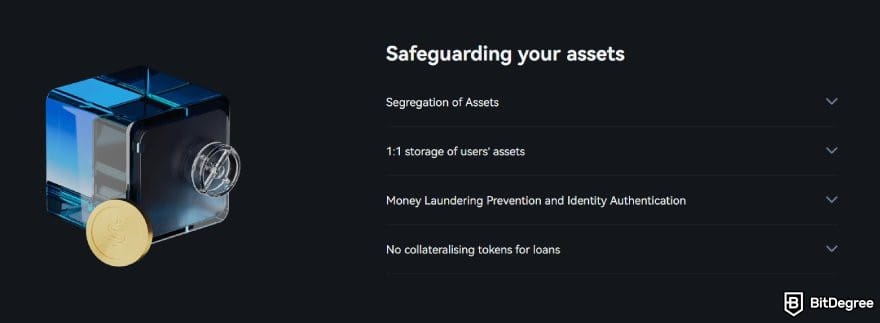
As I mentioned before, BTCC also got some outside validation in 2025, when Pan Finance named BTCC the Most Secure Digital Asset Exchange. So, if you're looking for a reputable exchange, I think BTCC is a safe bet.
The Zero-Fee Campaign
BTCC is currently running a zero-fee trading campaign around two specific products, which is worth understanding clearly before you decide how much weight to put on it when comparing exchanges.
Here's what's actually covered:
- All TradFi pairs trade at 0% fees. This is useful if part of your trading activity extends beyond crypto into tokenized stocks, gold, or other TradFi markets.
- Select coins within USDT-M Perpetual Futures carry 0% fees. You can see the current list by heading to [Markets] > [USDT-M Perpetual Futures], then filtering by the [0 Fees] tab. It's not every futures pair on the platform, but it does cover a rotating set of actively traded coins.
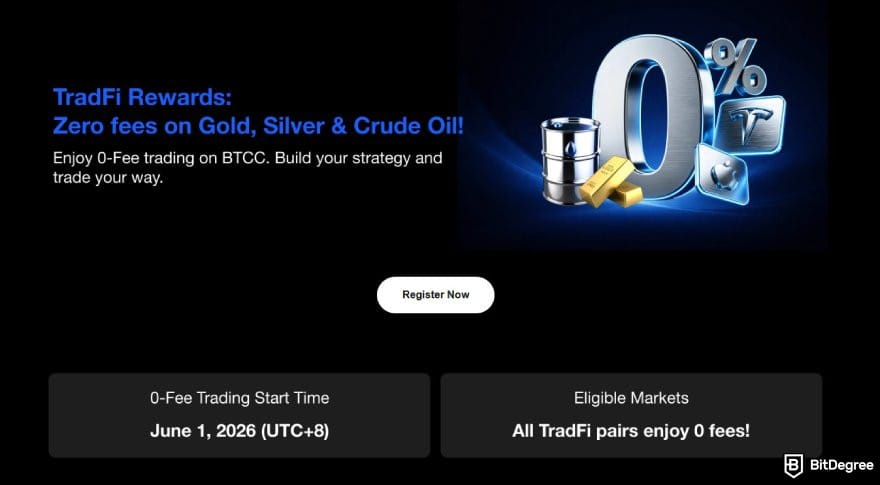
For context, most exchanges charge somewhere around 0.02–0.1% per trade on futures and spot pairs. That sounds small until you're trading frequently or running larger position sizes, where fees compound into a real cost over weeks and months.
If you're the kind of trader who tracks cost-per-trade closely, and if you're coming off Bitget's fee structure, you probably are. This is one of the more concrete reasons to put BTCC on your shortlist rather than just a nice-to-have.
Interac e-Transfer
This is the one that solves the most immediate headache for Canadian traders specifically. Rather than funding your account through a third-party on-ramp or eating a currency conversion fee, BTCC lets Canadian users deposit through Interac e-Transfer, the same transfer method most Canadians already use for everyday banking, so there's no new payment method to learn.
Futures and Copy Trading
For traders who leaned on Bitget's futures and copy-trading tools specifically, this is where I'd spend the most time getting comfortable before fully committing. BTCC's futures offering runs on a tiered fee structure, so your rate scales with your trading volume rather than staying fixed regardless of how active you are.
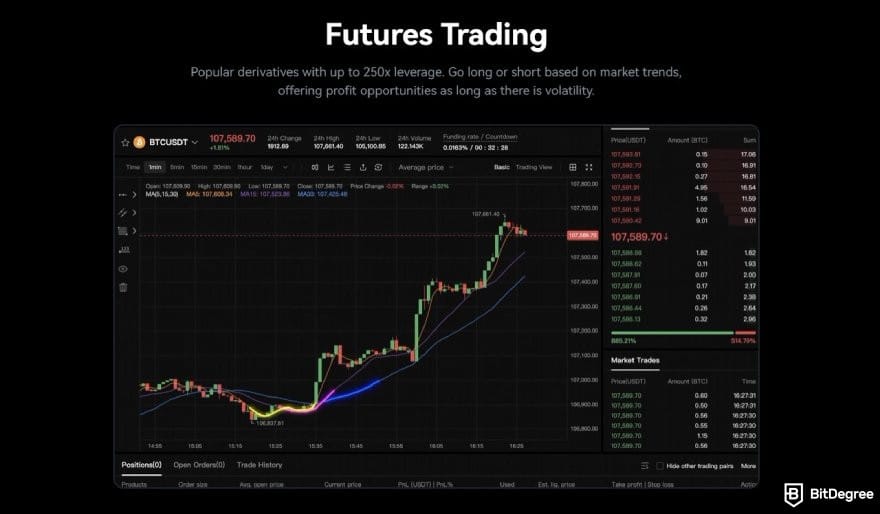
On the copy-trading side, BTCC lets you follow and mirror experienced traders' positions in real time rather than building a strategy from scratch, which is useful if that was part of your routine on Bitget and you don't want to lose it in the switch. Between the two, someone moving over should be able to replicate most of what a futures- and copy-trading-focused Bitget account was actually being used for, rather than treating the switch as a downgrade in functionality.
Did you know?
Subscribe - We publish new crypto explainer videos every week!
ICO vs IDO vs IEO: Which One's the Best? (Easily Explained)


- Accepts fiat currencies
- Simple to use
- Supports only trusted cryptocurrencies
- A leading cryptocurrency exchange platform
- Best for all type investors
- Accepts fiat currencies

- Industry-leading security
- Accepts fiat currencies
- Advanced trading tools
- Industry-leading security
- Strong regulatory reputation
- Advanced trading tools

- Wide range of tradable assets
- Robust copy trading feature
- Flawless security record
First-Trade Loss Coverage
BTCC also runs a program that takes some of the risk out of your very first futures trade: if it results in a loss, BTCC covers up to 50 USDT of that loss at a 100% offset ratio. There's no minimum trade size to qualify, which in my experience is the detail that usually trips these promotions up.
First, you need to register for the campaign before placing any trades, and orders made before registering don't count. Once you're registered, coverage applies to the first futures position you close during the campaign.
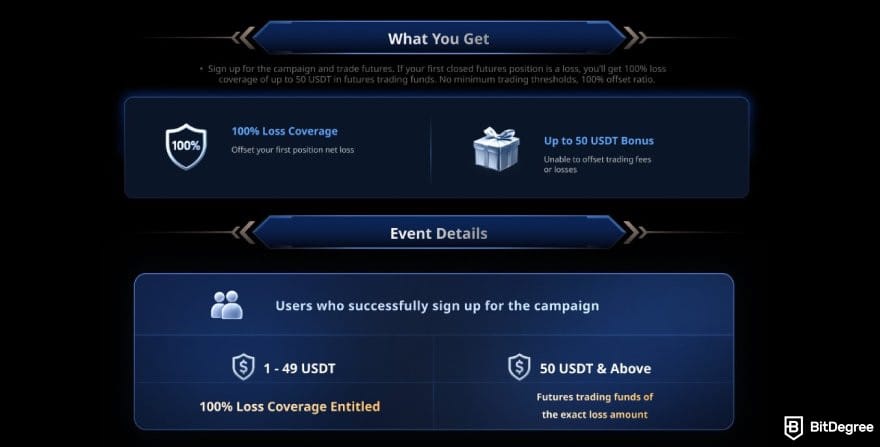
If that trade is profitable, there's no reward, but your profit is still fully yours to withdraw. If it's a loss, BTCC reimburses it as trading funds, which can be used to offset fees or further losses: a loss between 1–49 USDT is covered in full, while a loss of 50 USDT or more is reimbursed up to the 50 USDT cap.
BTCC vs Bitget: Side-by-Side
Reading through feature descriptions is one thing, but sometimes you just want the numbers next to each other. Here's how BTCC and Bitget stack up on the details that matter most if you're deciding where to move your account.
| | |  | |
|---|---|---|---|
| 100M | 12M | 120M | |
| BTC ETH DOGE + 250 more | BTC ETH XRP + 300 more | BTC ETH SOL + 750 more | |
| USD/EUR + more | - | USD/EUR + more | |
| Supported ✅ | Supported ✅ | Not Supported ❌ | |
| Visit site Read review | Visit site Read review | See TOP10 Brands Read review |
Table: BTCC vs Bitget main statistics comparison
Bitget's scale is hard to ignore with 120 million active users and support for over 750 cryptocurrencies beyond the major names, plus direct USD/EUR fiat trading pairs.
BTCC runs leaner at 12 million active users and 300+ supported cryptocurrencies covering BTC, ETH, XRP, and other established assets as well as many niche coins. While it may not offer the same numbers as Bitget, I still think BTCC covers all the essentials, especially if you're focused on trading more popular cryptocurrencies.
| | | | |
|---|---|---|---|
| $25K | - | - | |
| Up to 3% | Up to 0.0001 BTC | Up to 0.00004 BTC | |
| Up to 0.60% | Up to 0.3% | Up to 0.1% | |
| Supported ✅ | Supported ✅ | Not Supported ❌ | |
| Visit site Read review | Visit site Read review | See TOP10 Brands Read review |
Table: BTCC vs Bitget pricing comparison
In terms of fees, Bitget's standard rates run slightly lower across the board. Trading fees up to 0.1% versus BTCC's up to 0.3%, and withdrawal fees up to 0.00004 BTC versus up to 0.0001 BTC. Keep in mind that withdrawal fees on both platforms vary depending on your selected currency and network.
These are BTCC's standard rates, and they don't reflect the zero-fee campaign. For TradFi pairs and select futures coins under that promotion, the effective cost drops to 0% regardless of the standard rate shown here.
| | | | |
|---|---|---|---|
| Supported ✅ | Supported ✅ | Not Supported ❌ | |
| Visit site Read review | Visit site Read review | See TOP10 Brands Read review |
Table: BTCC vs Bitget payment methods comparison
On payment methods, BTCC actually edges out Bitget here. Both support common fiat on-ramps like MasterCard and card payments generally. But on top of that, BTCC also lets Canadian users deposit fiat using Interac e-Transfer, which is arguably the most relevant funding for users in the country.
📚 Read More: How to Make a Deposit on BTCC
All in all, the numbers show that BTCC holds up well as a Bitget alternative, particularly for Canadian traders who value straightforward CAD funding and don't need the long tail of niche altcoins Bitget offers.
How to Migrate From Bitget to BTCC: Step-by-Step
Now that you know the reasons why BTCC Canada is a good Bitget alternative, it is time to learn how to migrate your assets to the new exchange. Here is an easy-to-follow guide on how to send your funds from Bitget to BTCC on desktop.
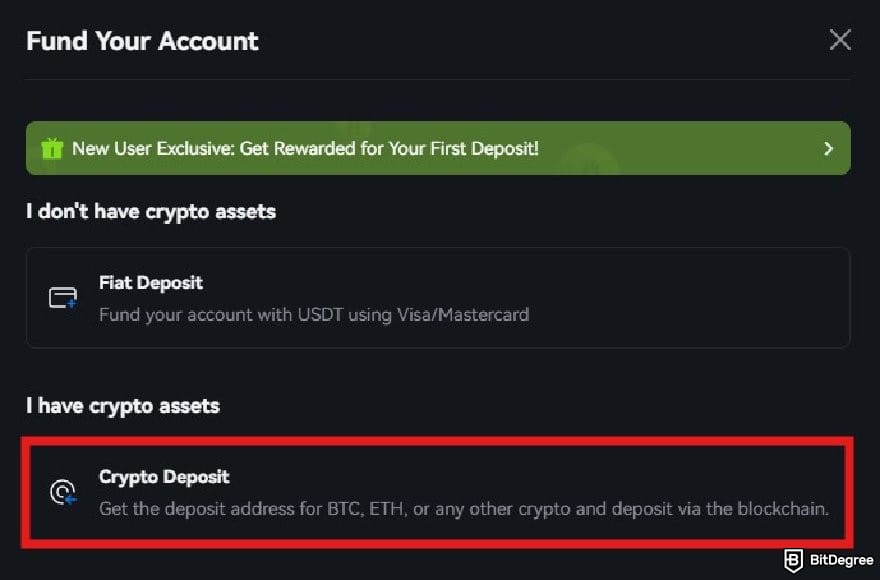
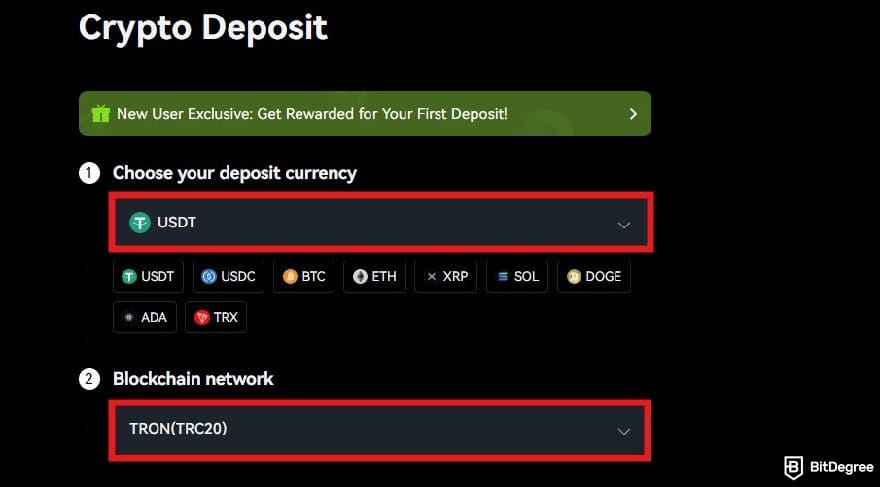
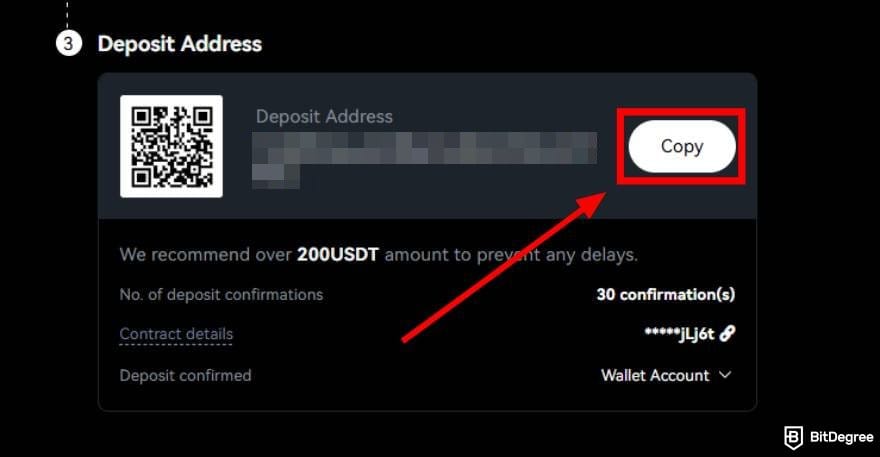
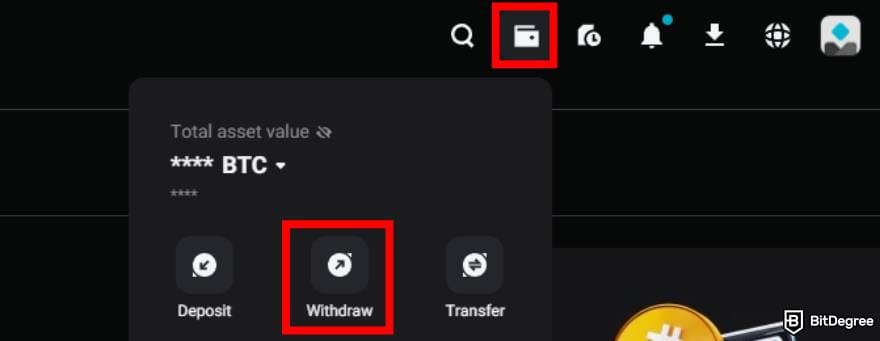
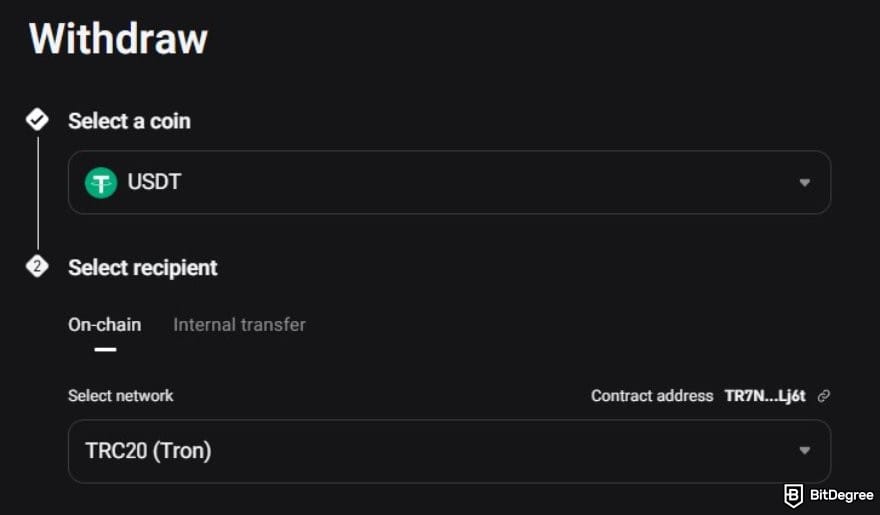
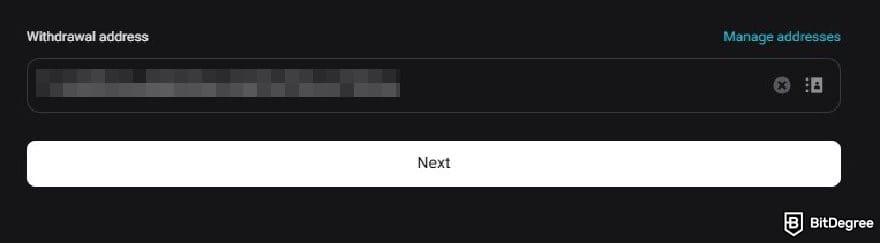
If you haven't, make sure to enable 2FA before proceeding.
You may need to wait before the funds arrive in your BTCC account. In most cases, it will be almost instant, but the speed may vary depending on the network conditions. Consider transferring a small amount first to make sure that the transfer goes smoothly.
Points to Consider When Switching Exchanges
Matching Bitget's feature set is only half the job when you're picking where to go next. Before you settle on a platform, it's worth thinking through a few bigger-picture factors too, the kind of stuff that matters no matter which exchange you're eyeing. Here are four I'd personally check before moving real money.
1
Custody and Counterparty Risk
Any time you park funds on an exchange, you're trusting that platform to stay solvent and secure. Exchanges are under growing pressure to actually prove solvency through things like Proof of Reserves,[1] rather than just claiming it. That means size and brand name alone don't guarantee your funds are safe.
So look at how transparent a platform is about how it holds client assets. A long track record through past market cycles is a decent signal, but it's not a guarantee on its own. I'd treat this as something to keep a half-eye on over time, not a box to tick once at sign-up.
2
Regulatory Compliance and Jurisdictional Status
Bitget's own Canadian exit is a pretty blunt reminder that an exchange's regulatory standing can change, and when it does, users are the ones who have to scramble. There's always been inconsistent internal controls at multi-service exchanges as a recurring weak spot industry-wide. This is part of why regulators in different countries keep tightening the rules around how these platforms operate.
My point is, don't check your exchange's regulatory status once and forget about it. It's worth a quick look every so often to see if anything's shifted in your country, so you're not caught off guard by a "your account will be closing" email of your own down the line.
3
Fee Structures and Market Quality
Zero-fee campaigns are easy to like on the surface, but fees affect more than just what comes out of your pocket. In many cases, dropping trading fees to zero boosted activity, but it also pushed market makers to widen spreads and thin out the order book. In other words, "free" trades can still cost you through worse execution.

That's not a reason to skip a good zero-fee promo, though. It just means it's worth glancing at spreads and order-book depth for the pairs you actually trade, especially if you're moving anything beyond a small position. A few seconds of checking can save you more than the fee ever would.
4
Liquidity and Execution Quality
Liquidity isn't the same everywhere, and it's not even consistent across every pair on the same exchange. Liquidity is shaped mostly by an exchange's own trading history, overall market conditions, and volatility.[2] Which means it moves around over time rather than sitting still, and you can't judge it by reputation alone.
Before you commit any real size, pull up the order book for the specific pairs you're planning to trade rather than assuming it'll feel the same as wherever you're coming from. Even a well-regarded exchange can surprise you with thinner liquidity than you expected on a particular pair.
None of this is meant to make switching sound scarier than it needs to be. Especially with Bitget's Canadian exit, sticking around isn't really an option anyway. Going in with a sense of what to actually check, instead of just matching features one-for-one, makes for a smoother move and a better call on where your funds end up next.
Browse our collection of the most thorough Crypto Exchange related articles, guides & tutorials. Always be in the know & make informed decisions!



Conclusions
If there's one thing to take away from everything happening with Bitget Canada right now, it's that the deadline is real and waiting until the last week is a risk. The good news is that switching platforms doesn't have to mean starting over.
Once you've worked through the migration steps above and moved your funds off Bitget to BTCC, you're not losing much in the way of functionality, including futures, copy trading, TradingView charting, and CAD funding through Interac, which are all still on the table.
Whichever platform you land on, the priority right now is simple: get your funds out safely, and get set up somewhere before that August 30 deadline stops being a date on a calendar and starts being a problem.
If you're looking for a solid landing spot for traders who want a platform covering similar ground, a decade-plus track record, and a recognized security award, BTCC can be a great Bitget alternative.
The content published on this website is not aimed to give any kind of financial, investment, trading, or any other form of advice. BitDegree.org does not endorse or suggest you to buy, sell or hold any kind of cryptocurrency. Before making financial investment decisions, do consult your financial advisor.
Scientific References
1. Zetzsche, D., Nikolakopoulou, A.: 'Crypto Custody: An Empirical Assessment';
2. Brauneis, A., Mestel, R., Riordan, R., Theissen, E.: 'Bitcoin unchained: Determinants of cryptocurrency exchange liquidity'.
About Article's Experts & Analysts