



Binance vs Kraken – In-Depth Comparison
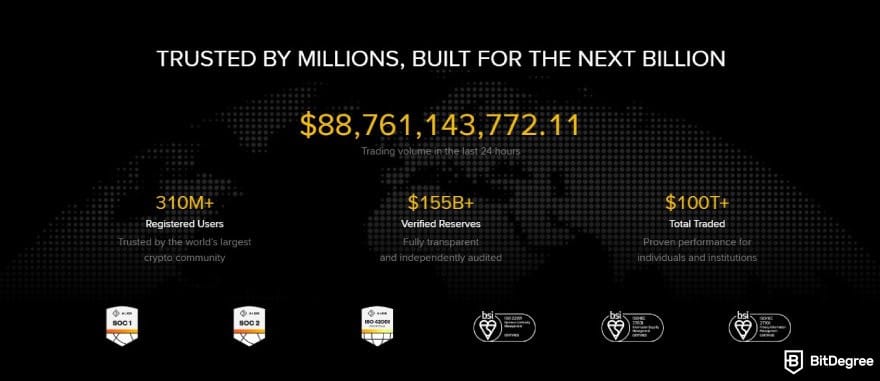
Kraken and Binance are two of the most recognized names in crypto, but they have spent the last few years evolving in very different directions. Binance has doubled down on becoming the world's default trading infrastructure, a platform so large and liquid that it functions as the backbone of global crypto markets.
Kraken, meanwhile, has been quietly transforming from a security-focused exchange into a full multi-asset trading platform, with regulated futures, tokenized equities, and a payments app now sitting alongside its core crypto offering.
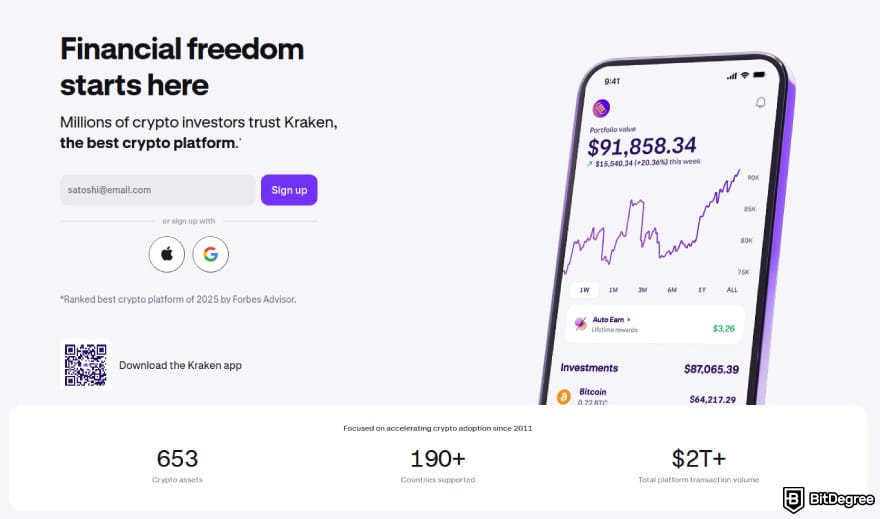
Both platforms serve beginners and advanced traders. Both support a wide range of assets and fiat currencies.
The differences show up in the details, where each exchange is licensed, how fees are structured, what tools are available in your region, and where each platform is headed over the next few years.
If you trade from the US or Europe, care about regulatory clarity, or want exposure to assets beyond crypto, those details matter more than they used to. The table below breaks down exactly where Binance and Kraken each pull ahead, so you can make the call based on how you actually trade.
Binance | Kraken | |
|---|---|---|
Best for | Users who want broad market access and a large crypto ecosystem | Security-focused users, US & EU traders, reliable fiat access |
Main strength | Scale, liquidity, and product variety | Regulatory track record, security, and transparent operations |
Spot trading fees | Very competitive across all user levels | Competitive, but higher for beginners |
Futures fees | Slightly cheaper for standard taker orders | Available via Kraken Pro, competitive for active traders |
Beginner experience | Good for beginners who want a broad, all-in-one platform, but it may be overwhelming for some | Clean interface, but the fee structure can be confusing at first |
Advanced trading | Very strong across futures, options, bots, and API trading | Strong, especially for regulated futures, margin, and API trading |
Overall verdict | Better for users who want scale, variety, and ecosystem depth | Better for users who prioritize trust, compliance, and fiat reliability |
Table: a quick Binance vs Kraken comparison
Both exchanges are legitimate, well-resourced, and worth considering. The sections below break down exactly where each one pulls ahead.
Binance vs Kraken – Market Position
These two exchanges are not really chasing the same crown. Binance controls roughly 39% of the global centralized exchange market share as of early 2026, with daily open interest nearly double that of its closest competitors. At that scale, it is less of an exchange and more of a piece of market infrastructure, the platform that much of the industry runs through by default.
Meanwhile, Kraken is playing a different game entirely. Platform transaction volume hit $576.8 billion in Q3 2025, up 26% quarter over quarter, with revenue surging 50% to a record $648 million in the same period. These show that the platform isn’t standing still.
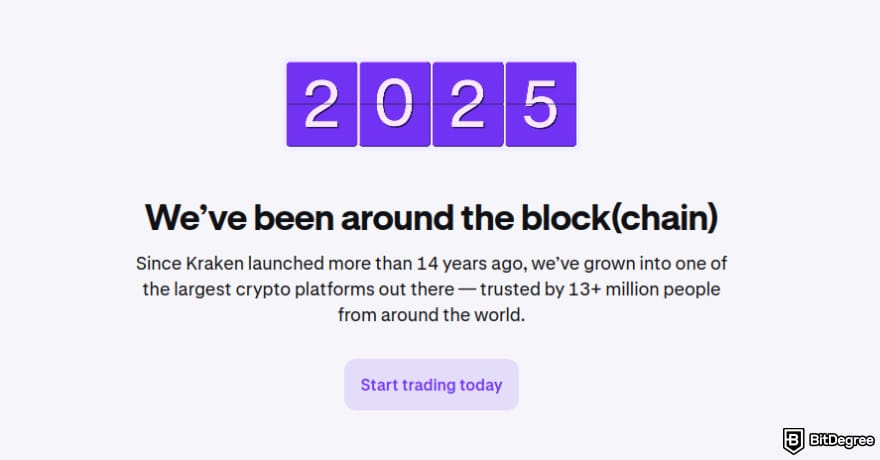
Not to mention that the $1.5 billion acquisition of NinjaTrader, a leading US retail futures platform, brought nearly 2 million professional traders into Kraken's ecosystem and handed it something most crypto exchanges lack entirely: a CFTC-regulated derivatives infrastructure sitting inside a crypto exchange.
By early 2026, Kraken had expanded further with tokenized US stocks and ETFs through xStocks, a payments app supporting transfers across more than 160 countries, and additional acquisitions, including Bitnomial, a CFTC-regulated derivatives exchange and clearinghouse. The direction is clear: Kraken is building toward a full multi-asset trading platform.
Binance's trajectory has been different. Regulatory and compliance efforts intensified in early 2025 as Binance expanded licensing efforts across multiple jurisdictions, following its landmark DOJ settlement in late 2023. The platform has made genuine progress on that front, but its regulatory standing, particularly for US-based users, remains more complicated than Kraken's.
On an average day, Binance accounts for nearly half of global Bitcoin and Ethereum trading activity, which means that, regardless of regulatory headwinds, its liquidity dominance is essentially untouched.
📚 Check Out: Best Cryptocurrency Exchange
What separates them in 2026 is trajectory as much as size. Binance is defending and consolidating a dominant position. Kraken is actively expanding its addressable market into regulated derivatives, tokenized equities, and traditional finance, while simultaneously preparing for a public listing with Goldman Sachs and Morgan Stanley advising.
Verdict
Binance leads in size, liquidity, and global reach, while Kraken competes by offering wider investment opportunities via tokenized US stocks and ETFs through xStocks, as well as better regulatory compliance in regions like the US and EU.
Binance vs Kraken – Trading Features
Both platforms go well beyond basic spot trading. The difference is where each one is strongest and who each setup is actually built for.
Kraken Trading Features
Kraken has spent the past two years aggressively expanding its trading suite. The platform now covers far more ground than it did even in 2024, with regulated US derivatives infrastructure and tokenized equities sitting alongside its core crypto offering.
For basic trading, Kraken offers:
- Spot trading across 500+ assets on Kraken and Kraken Pro, with a simple interface for beginners and a full advanced view for experienced traders.
- Instant Buy for quick fiat-to-crypto purchases at a fixed 1% fee, without needing to use the order book.
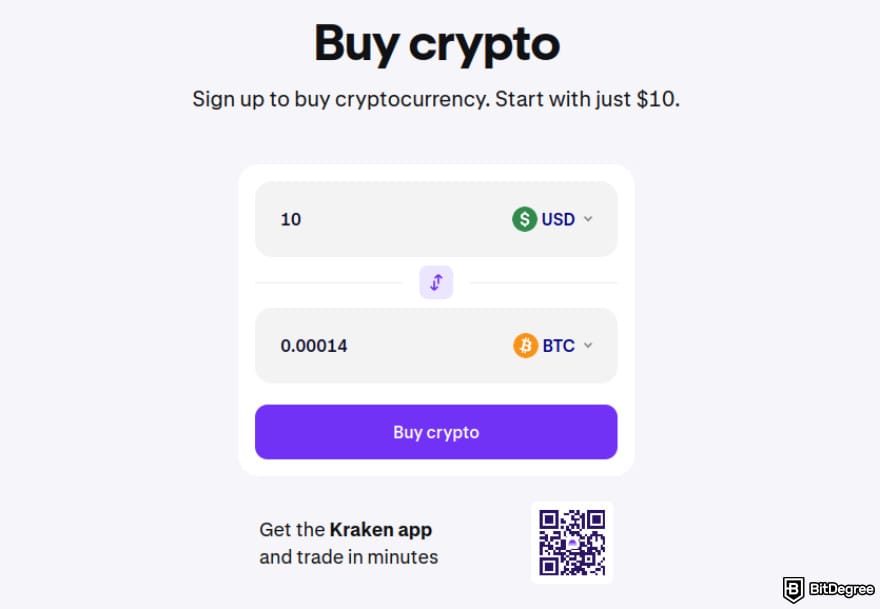
- Convert for swapping between any supported assets in a few taps.
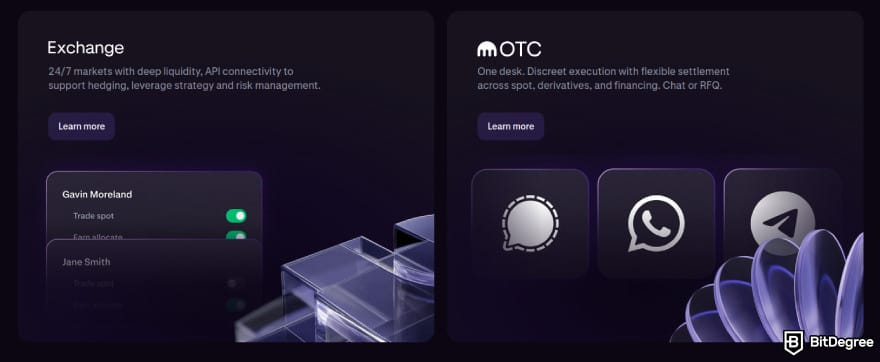
- OTC trading via the Kraken Trade Desk for larger block trades that require personalized pricing and minimal market impact.
For advanced trading, Kraken supports:
- Spot margin trading across 150+ margin-enabled markets, with up to 10x leverage on selected assets and up to 5x across most eligible pairs.
- Perpetual futures on 350+ crypto assets with up to 50x leverage, available to eligible users outside the US via Kraken Pro.
- Regulated US futures covering more than 70 contracts across Bitcoin, Ether, gold, S&P 500, Nasdaq, FX, and more, available through a CFTC-registered account via Kraken Derivatives US.
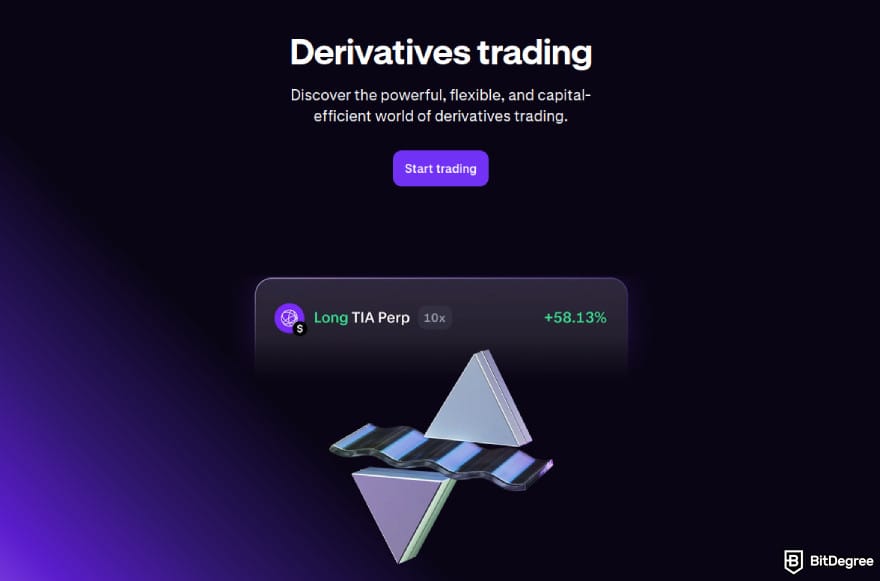
- xStocks, a tokenized US equities available 24/7 with up to 3x leverage on select assets for eligible non-US users.
- Options trading on major pairs, including BTC and ETH.
- Isolated and cross-margin modes for managing risk across futures positions.
For automated and strategy-based trading, Kraken includes:
- API trading with REST and WebSocket support, widely regarded for stability and documentation quality.
- Advanced order types, including stop-loss, take-profit, trailing stop, and iceberg orders via Kraken Pro.
- NinjaTrader platform integration for professional futures traders who want institutional-grade charting, execution engines, and automated strategy tools.
For institutional and high-volume traders, Kraken also offers:
- Kraken Institutional, a dedicated OTC desk, sub-accounts, custom reporting, and account management for funds and professional traders.
- CF Benchmarks is a regulated crypto index and reference rate service used by institutional products globally.
- Kraken Custody is another regulated custody infrastructure for institutions holding digital assets at scale.
Kraken's trading suite is not the widest on the market, but it is one of the most carefully built. With regulated infrastructure, multi-asset coverage, and a clear focus on users who need compliance-grade tools alongside their crypto trading.
Binance Trading Features
Binance's trading suite is one of the broadest available on any centralized exchange. It covers everything from basic spot trades to high-leverage derivatives, native automation tools, and a growing ecosystem of passive income products, all from a single account.
For basic trading, Binance offers:
- Spot trading across 1,500+ trading pairs, covering major cryptocurrencies, stablecoins, and fiat pairs, with both a simple beginner mode and a full advanced charting interface.
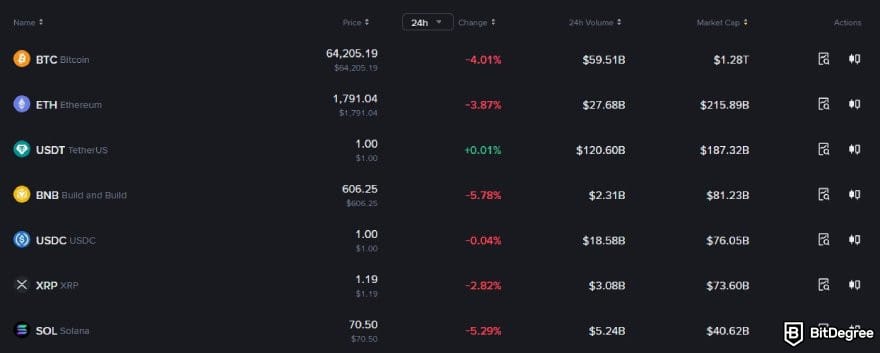
- Convert & Block Trade for instant swaps or large trades that need customized pricing without order book exposure.
- P2P trading for direct fiat-to-crypto trades across a wide range of local currencies and payment methods.
For advanced trading, Binance supports:
- Spot margin trading across 700+ margin pairs with three modes: cross margin (up to 5x), cross margin pro (up to 20x), and isolated margin (up to 10x).
- USDT and USDC-margined perpetual futures for leveraged positions without expiry dates.
- Coin-margined futures for crypto-settled derivatives exposure.
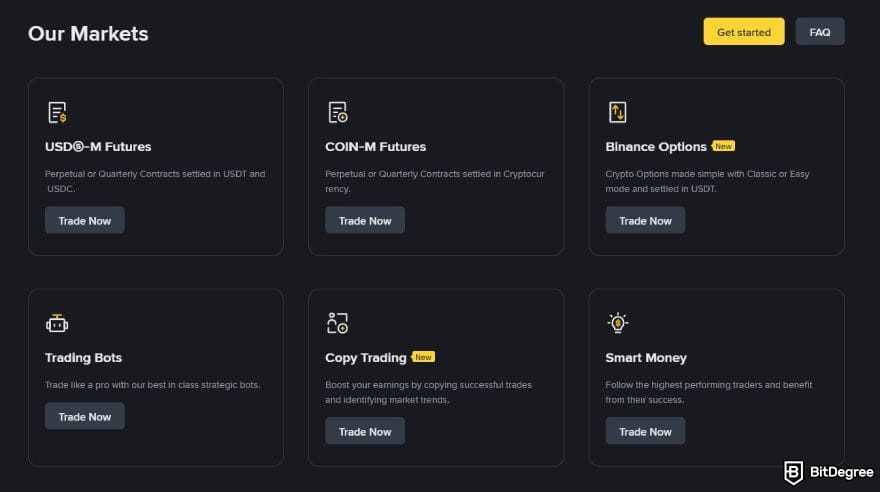
- Delivery futures with quarterly contracts settled on a fixed date, for traders who want traditional futures-style exposure.
- Options trading on major pairs, including European-style USDT options.
- Portfolio Margin Pro, which allows combining balances across Margin, USDT-M Futures, and COIN-M Futures wallets, using 360+ cryptocurrencies as a single cross-product collateral.
For automated and strategy-based trading, Binance includes:
- Copy trading automatically mirrors the positions of top-performing traders.
- Native trading bots, including Spot Grid, Futures Grid, DCA, Rebalancing, Arbitrage, TWAP, and VP bots, are all free to use and integrated directly into the web and mobile app.
- API trading with extensive REST and WebSocket support is one of the most widely used trading APIs in the industry.
- Binance Alpha, a platform for early-stage crypto projects, gives active traders early access to emerging assets before broader listings.
For institutional and high-volume traders, Binance also offers:
- VIP and Elite Trader programs with tiered fee reductions for qualifying monthly volumes.
- Binance Institutional. A dedicated OTC desk, sub-account management, and custom liquidity solutions.
- Binance Broker. A white-label infrastructure program for businesses building on top of Binance's trading engine.
Few exchanges can match the sheer breadth of what Binance puts under one roof, and for most traders, that depth means rarely needing to go elsewhere.
Verdict
Binance has a deeper native automation suite, higher leverage ceilings, and more derivative product variety out of the box. Kraken counters with regulated US derivatives access, tokenized equities, and a more compliance-friendly environment. Advantages that matter significantly depending on where you live and how you trade.
Binance vs Kraken – Fees
Fees are where these two platforms diverge most noticeably, and where the gap between casual and active trading becomes most relevant. Binance is cheaper at the entry level. Kraken is more complex to navigate, but it can be highly competitive for users willing to trade on Kraken Pro and consistently use limit orders.
Kraken (standard app) | Kraken Pro (base tier) | Binance (base tier) | Binance (with BNB discount) | |
|---|---|---|---|---|
Spot trading fee | 1% flat + spread | 0.25% maker | 0.10% maker | 0.075% maker |
1% flat + spread | 0.40% taker | 0.10% taker | 0.075% taker | |
Futures fees | ✗ | 0.02% maker | 0.02% maker | 0.018% maker |
✗ | 0.05% taker | 0.05% taker | 0.045% taker | |
Crypto deposit fee | Free | Free | Free | Free |
BTC withdrawal fee | 0.00005 BTC | 0.00005 BTC | 0.000015 BTC | 0.000015 BTC |
Table: Binance vs Kraken fee structures
The key distinction here is interface. Kraken's standard app charges a fixed 1% fee plus a spread on every buy, sell, or convert transaction. This is the fee most new users will encounter first. Kraken Pro is where the exchange becomes genuinely competitive, with base spot fees starting at 0.25% maker and 0.40% taker, falling to 0.00% maker and 0.05% taker at the highest volume tier.
Binance is more straightforward. Standard spot fees start at 0.10% for both makers and takers, with an immediate 25% discount available to any user who pays fees in BNB, no VIP status required, bringing effective fees down to 0.075%. That makes Binance cheaper than Kraken Pro for most standard users without needing to do anything special.
📚 Read More: Binance Fees 2026
Both platforms offer tiered VIP programs for high-volume traders, but they work differently. Binance requires users to meet both a 30-day trading volume threshold and a minimum BNB balance to qualify for each VIP level. Kraken, on the other hand, is more flexible. You can qualify based on trading volume alone.
$1,000 Spot Trade Fee Comparison
Let's say you want to buy $1,000 worth of BTC/USDT on each platform. You're a new user, no VIP status, no discount tokens. Here is what each scenario looks like:
On Kraken (standard app): You open the app, hit Buy, and execute a market order for $1,000 in BTC. Kraken charges a flat 1% fee on top of a built-in spread, conservatively estimated at around 0.5%.
- Trading fee: 1% × $1,000 = $10.00
- Spread cost (est.): 0.5% × $1,000 = $5.00
- Total cost: ~$15.00
On Kraken Pro (base taker): You switch to Kraken Pro and place a market order, which triggers the taker fee of 0.40%.
- Trading fee: 0.40% × $1,000 = $4.00
- Total cost: ~$4.00
On Kraken Pro (base maker): You place a limit order below the current market price and wait for it to fill. This qualifies for the maker fee of 0.25%.
- Trading fee: 0.25% × $1,000 = $2.50
- Total cost: ~$2.50
On Binance (base taker, no discount): You place a market order for $1,000 BTC/USDT. Standard taker fee applies at 0.10%.
- Trading fee: 0.10% × $1,000 = $1.00
- Total cost: ~$1.00
On Binance (with BNB discount): You hold BNB in your account and enable fee payment in BNB. This gives you a 25% discount on the 0.10% taker fee, bringing it down to 0.075%.
- Trading fee: 0.075% × $1,000 = $0.75
- Total cost: ~$0.75
Take a look at this table for a bird's-eye view of the spot trading fee on Binance and Kraken:
Fee Paid on a $1,000 Spot Trade | |
|---|---|
Kraken (standard app) | ~$15.00 |
Kraken Pro | ~$2.50 maker/$4.00 taker |
Binance (no discount) | ~$1.00 maker/$1.00 taker |
Binance (BNB discount) | ~$0.75 maker/$0.75 taker |
Table: $1,000 spot trading fees on Binance vs Kraken
Overall, Binance offers a more affordable fee structure for spot trading. At first, a $3 difference might not seem like much, but it adds up quickly. If you’re trading regularly, even with modest amounts, Binance’s lower base fees can make a meaningful difference over time.
$1,000 Futures Trade Fee Comparison
Now let's say you want to open a $1,000 long position on BTC perpetual futures and close it shortly after, a full round trip. You're a new user at the base tier on both platforms.
On Kraken Pro (taker, both sides): You open a $1,000 BTC perp position with a market order, then close it the same way. Taker fee of 0.05% applies on both legs.
- Entry fee: 0.05% × $1,000 = $0.50
- Exit fee: 0.05% × $1,000 = $0.50
- Round-trip total: $1.00
On Kraken Pro (maker, both sides): You use limit orders on both entry and exit, qualifying for the 0.02% maker fee each time.
- Entry fee: 0.02% × $1,000 = $0.20
- Exit fee: 0.02% × $1,000 = $0.20
- Round-trip total: $0.40
On Binance (taker, no discount): You open and close a $1,000 BTC/USDT perpetual position using market orders. Base taker fee of 0.05% applies on both sides.
- Entry fee: 0.05% × $1,000 = $0.50
- Exit fee: 0.05% × $1,000 = $0.50
- Round-trip total: $1.00
On Binance (taker + BNB discount): Same trade, but BNB fee payment enabled. Taker fee drops to 0.045%.
- Entry fee: 0.045% × $1,000 = $0.45
- Exit fee: 0.045% × $1,000 = $0.45
- Round-trip total: $0.90
On Binance (maker + BNB discount): You use limit orders on both legs with the BNB discount active. Maker fee drops to 0.018%.
- Entry fee: 0.018% × $1,000 = $0.18
- Exit fee: 0.018% × $1,000 = $0.18
- Round-trip total: $0.36
For a better perspective, here is a fee comparison table for the $1,000 trade scenario on both platforms:
Entry Fee | Exit Fee | Approx. Round Trip Fee | |
|---|---|---|---|
Kraken Pro | $0.20 maker/$0.50 taker | $0.20 maker/$0.50 taker | ~$0.40 maker/$1.00 taker |
Binance (no discount) | $0.20 maker/$0.50 taker | $0.20 maker/$0.50 taker | ~$0.40 maker/$1.00 taker |
Binance (BNB discount) | $0.18 maker/$0.45 taker | $0.18 maker/$0.45 taker | ~$0.36 maker/$0.90 taker |
Table: Binance vs Kraken $1,000 futures trading fees
At base taker rates, both exchanges cost exactly the same, $1.00 for a full round trip on a $1,000 position. Binance pulls slightly ahead once the BNB discount is applied, and further still if you combine limit orders with BNB payment.
📚 Check Out: A Guide to Kraken Futures
One important note: these figures cover trading fees only. Futures positions held overnight will also accumulate funding rate charges on both platforms. These vary with market conditions and can meaningfully add to the total cost of longer-held positions.
Verdict
Binance is the cheaper option for most users, particularly at the entry level, where the BNB discount makes it one of the most cost-effective major exchanges in the market. Kraken can close that gap significantly on Kraken Pro, especially for active traders who use limit orders, but it requires more deliberate setup. For futures trading, both platforms are effectively equal at the base tier.
Bybit vs Binance – Liquidity & Execution
Liquidity is one of the most practical differences between these two platforms, and one of the most misunderstood. On paper, both exchanges are described as "highly liquid". In practice, that label means very different things depending on what you're trading, in what size, and from where.
Spot Liquidity
The volume gap between Binance and Kraken on major global spot pairs is substantial. Binance posts approximately $15-25 billion in daily spot trading volume and maintains order book depth exceeding $50 million for BTC/USDT during normal market conditions.
Kraken's 24-hour spot volume sits around $650 million on a typical day, a meaningful number in absolute terms, but roughly 20-30 times smaller than Binance on any given day.
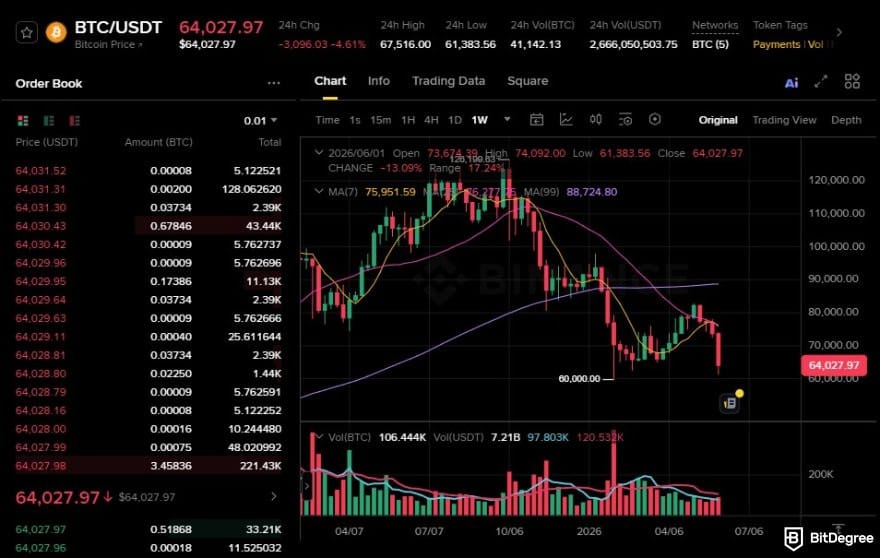
For most retail traders placing orders under $10,000, that gap is functionally invisible. Both platforms will fill standard BTC or ETH orders with minimal slippage. The difference becomes real at larger order sizes.
Institutional-scale buys or high-volume altcoin trades will execute with significantly tighter spreads and less market impact on Binance, where the order books are simply deeper across more pairs.
Fiat Pair Liquidity
The global volume comparison tells only part of the story. Kraken is particularly strong in European markets and is known for deep liquidity in EUR and GBP pairs. For traders depositing and withdrawing in euros, or building strategies around EUR-denominated pairs, Kraken is often the better execution environment, not Binance.
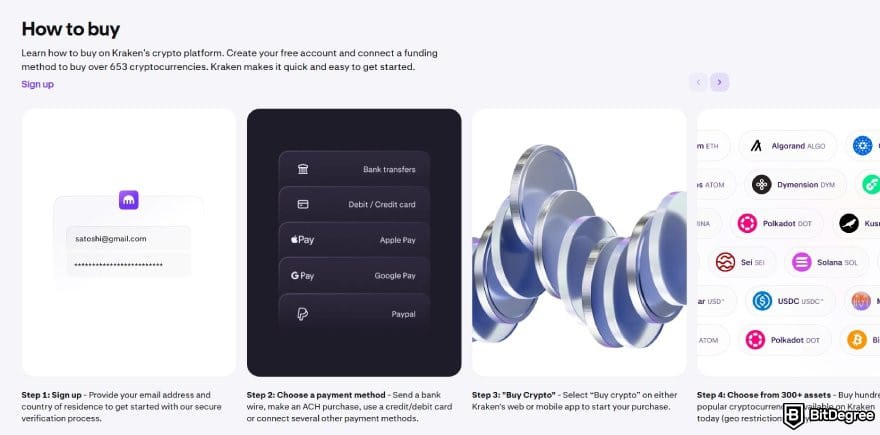
The exchange stands out specifically for its robust euro volume and liquidity across seven supported fiat currencies, including USD, CAD, EUR, GBP, JPY, CHF, and AUD.
This is a genuinely important nuance for European users. If your trading workflow involves frequent fiat conversions, SEPA deposits, or EUR-settled positions, Kraken's liquidity profile in those markets is competitive with, and in some cases, better than Binance's.
Execution Stability
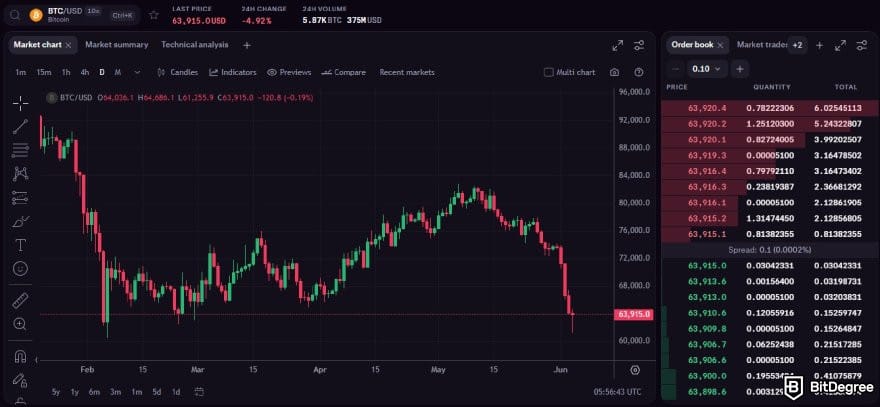
Raw depth is not the only execution metric that matters. During peak market activity, Kraken spreads may widen slightly compared to Binance. In return, Kraken is often praised for stable performance and predictable execution during periods of heavy load.
Traders who have used both platforms during high-volatility events, major price moves, liquidation cascades, and macroeconomic announcements consistently note that Kraken holds up reliably under load. Kraken consistently ranks among the top exchanges for liquidity on major trading pairs, which helps minimize slippage during periods of heavy activity.
Binance's execution speed and infrastructure are formidable at its scale. Still, the platform has experienced connectivity and performance issues during extreme market events, which is a consequence of serving hundreds of millions of users simultaneously.
Altcoin and Derivatives Liquidity
Outside of major pairs, the advantage tilts decisively back toward Binance. Its derivatives markets in particular carry depth that Kraken simply cannot match at this stage.
📚 Read More: Best Altcoin Exchange
More than 70% of crypto trading volume globally now comes from derivatives, with perpetual futures driving price discovery ahead of spot markets, and Binance remains one of the two or three dominant venues for that activity. Traders who rely on tight spreads for altcoin futures or options will find Binance a more consistent environment.
Binance | Kraken | |
|---|---|---|
Daily spot volume | ~$15-25B | ~$650M |
BTC/USDT order book depth | $50M+ | Competitive for retail sizes |
EUR/GBP fiat pair liquidity | Good | Industry-leading |
Altcoin liquidity | Very deep across 1,500+ pairs | Sufficient for major assets |
Derivatives liquidity | Among the deepest globally | Competitive on key contracts |
Execution under load | Strong, occasional peak-period issues | Stable and predictable |
Table: Binance vs Kraken liquidity comparison
Verdict
Binance is the stronger platform for raw depth, derivatives liquidity, and large-order execution on global crypto pairs. Kraken holds a genuine advantage for the EUR and GBP fiat pair liquidity, and its execution stability during volatile market conditions is one of its most underrated practical strengths, particularly relevant for European traders and anyone who prioritizes predictable fills over maximum depth.
Binance vs Kraken – Security & Trust
Both exchanges cover the security basics well. The differences show up in operational history, reserve transparency, and how each platform is structured to protect users when things go wrong.
Binance | Kraken | |
|---|---|---|
Two-factor authentication | ✓ | ✓ |
Passkeys | ✓ | ✓ |
Anti-phishing code | ✓ | ✓ |
Withdrawal address whitelist | ✓ | ✓ |
Proof of reserves | ✓ | ✓ |
Global settings lock | ✗ | ✓ |
FIDO2 hardware key support | ✓ | ✓ |
User protection fund | ✓ | ✗ |
ISO/IEC 27001 certification | ✓ | ✓ |
SOC 2 Type 1 examination | ✓ | ✓ |
Federal Reserve master account | ✗ | ✓ |
Table: Binance vs Kraken security features
Kraken has never lost customer funds to a security breach in over a decade of operation, the strongest possible track record in this industry. Its quarterly Proof of Reserves audits are verified by a registered CPA firm, with each user receiving a personalized Merkle proof to independently confirm their assets are backed 1:1.
Binance has a more complicated history. A 2019 breach resulted in the theft of 7,000 BTC, and a 2022 cross-chain bridge exploit added further losses. Both incidents were covered, and users were compensated.
📚 Read More: Is Binance Safe in 2026?
The platform has since invested heavily in compliance infrastructure, and the SAFU fund, holding 15,000 BTC as of February 2026, provides a concrete financial backstop for platform-level security incidents.

That is a meaningful safeguard, though it is worth noting that SAFU is a discretionary emergency fund, not a government deposit guarantee, and does not cover user-side losses from phishing or trading mistakes.
The core difference is philosophical. Kraken's security model is built around never needing a recovery fund. Meanwhile, Binance is built around having one ready if needed.
Verdict
Kraken leads on operational track record, audit transparency, and regulatory depth. Binance counters with SAFU, a proven financial backstop that has already been deployed in real incidents. For users who prioritize a clean history, Kraken wins. For users who want an explicit financial safety net, SAFU is a real differentiator.
Binance vs Kraken – Broader Ecosystem
Outside of trading, Binance and Kraken are building toward very different visions of what a crypto platform should be. Binance is expanding its crypto super-app. On the other hand, Kraken is pushing toward a regulated multi-asset financial platform. Neither approach is wrong; they just serve different users.
Binance's Other Features
Binance's non-trading ecosystem is one of the broadest in the industry. Everything is connected under a single account, and the product depth goes well beyond what most competitors offer.
1
Earn Products
Binance Earn covers Simple Earn with flexible and locked products, Dual Investment structured products, Auto-Invest for recurring purchases, and Index-Linked Plans that automatically track the top 10 cryptocurrencies by market cap.
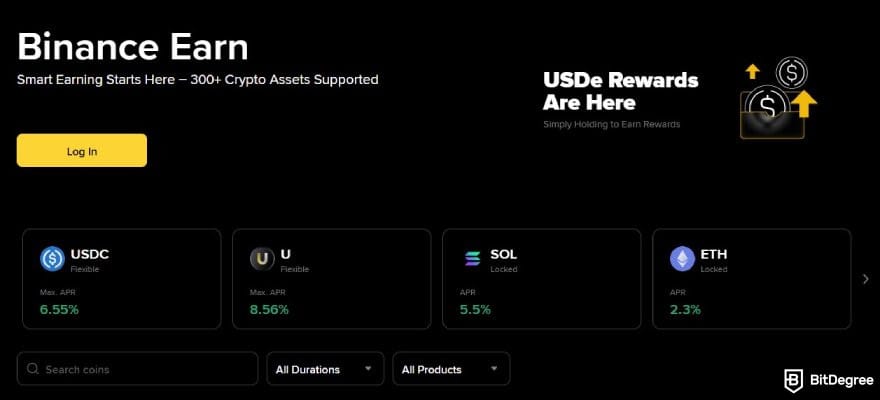
Yield-generating options span stablecoins and major assets, with availability varying by region. For users who want their idle assets working without having to leave the platform, Binance Earn is one of the more complete offerings available on any centralized exchange.
2
Launch and Reward Products
Launchpool lets users stake BNB or other tokens to farm newly launched project tokens before they hit the broader market, while Megadrop combines BNB Locked Products with Web3 Wallet quests for exclusive airdrops on new projects.
HODLer Airdrops automatically distribute tokens to BNB holders in Simple Earn without any manual action required. For users who want early access to new tokens, Binance's launch ecosystem is one of the most active in the industry.
3
Payments and Spending
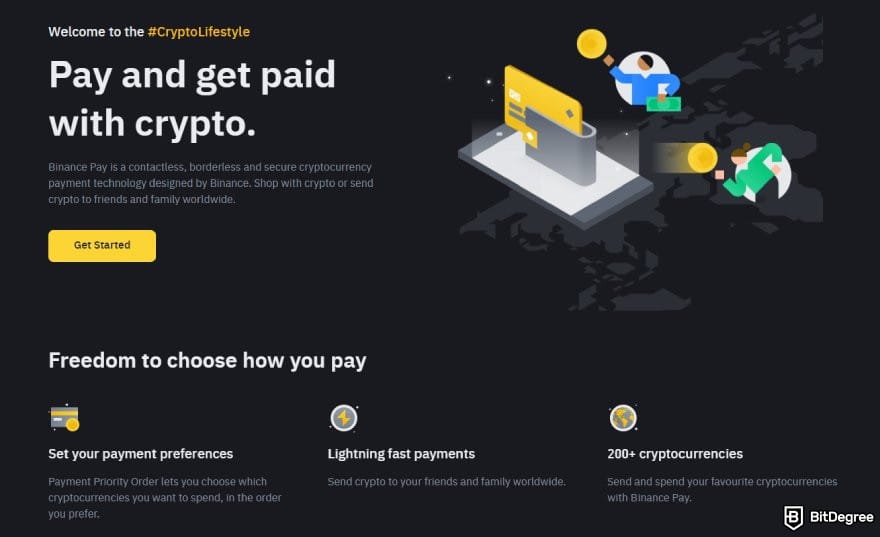
Binance Pay enables crypto-to-crypto payments directly between Binance users, supporting 300+ payment channels globally, making it genuinely useful for remittances and peer payments in countries with limited banking access. The Binance Card allows users to spend crypto at standard merchants, with automatic conversion at the point of sale.
4
Web3 Features
Binance's Web3 Wallet is an embedded self-custody wallet built into the Binance mobile app, using MPC technology instead of a traditional seed phrase and supporting more than 130 chains, including Ethereum, BNB Chain, Polygon, Arbitrum, and Solana.
From within the wallet, users can access DeFi platforms, NFT marketplaces, and dApps without leaving the Binance app. It is not a fully independent self-custody solution, but for users who want frictionless access to Web3 from within a familiar interface, it is one of the better integrated options available.
📚 Read More: Best Web3 Wallet
5
Education, Research, and Community
Binance Academy, Binance Research, Binance Square, and a simplified Lite interface round out the platform's non-trading offering. These do not affect fees or execution, but they make Binance a more complete environment for users who want market research, educational content, and ecosystem news without switching tools.

Binance's main strength is integration. A user can buy crypto, earn yield, farm new tokens, use a Web3 wallet, send payments, and read market research all from a single account. The tradeoff is complexity; the platform can feel overwhelming, and not every product is available in every country.
Kraken's Other Features
Kraken's non-trading ecosystem is narrower than Binance's in terms of sheer product count, but it is moving toward a fully regulated, multi-asset financial platform with banking infrastructure underneath it.
1
Earn and Staking
Kraken supports staking for 20+ proof-of-stake assets with flexible and bonded options. Flexible staking allows users to unstake at any time with no lockup period, while bonded staking locks assets for higher reward rates.
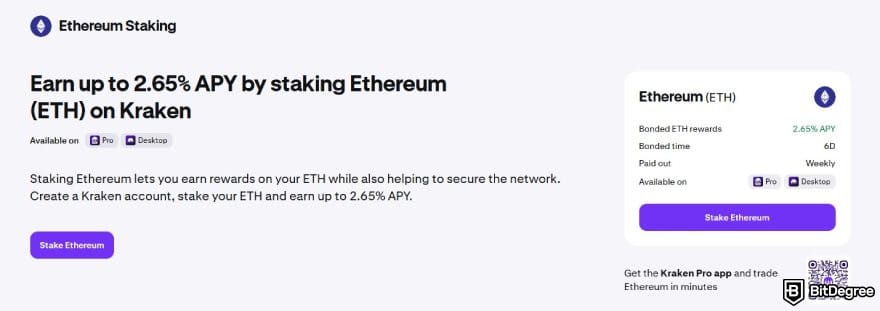
An Auto Earn program automatically allocates idle assets to earn rewards without manual staking. Sample 2026 rates before Kraken's commission include approximately 1.1–2.65% APR for ETH, depending on staking type, and around 4.08% APY for USDC and USDT, with select assets offering yields up to 21%.
2
Multi-Asset Access
US clients in 48 states can trade 11,000+ US stocks and ETFs commission-free alongside crypto in the same account. For non-US users, xStocks provides 24/7 access to tokenized US equities with up to 3x leverage on select assets.
On the banking side, Kraken Financial received a Federal Reserve master account in March 2026, allowing it to settle fiat payments directly on Fedwire rather than relying on partner banks, a structural advantage that currently no other crypto exchange holds.
3
Payments and Spending
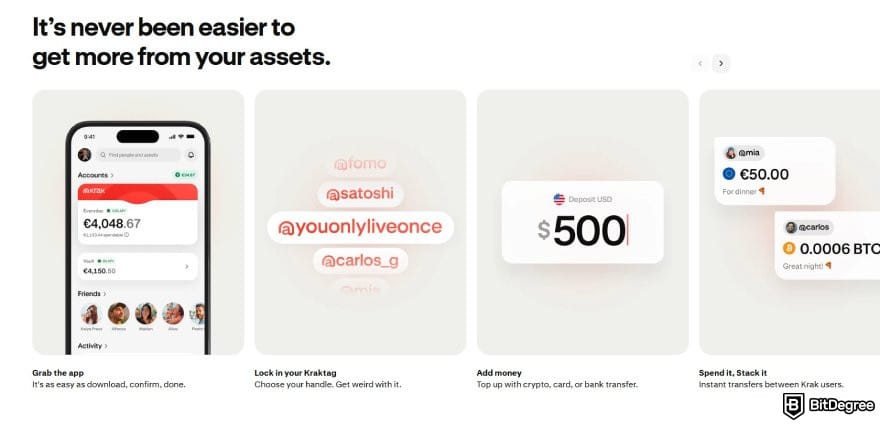
Kraken offers the Krak Card and Kraken Pay, a global money app for crypto and cash payments that supports sending, spending, and earning across more than 160 countries. The payments offering is newer and less established than Binance Pay, but backed by a meaningfully stronger banking infrastructure following the Federal Reserve account integration.
4
Education and Research
Kraken Learn covers crypto fundamentals, trading concepts, and market education for newer users. It is more focused and less expansive than Binance Academy, but well-suited for users who want straightforward educational content without ecosystem noise around it.
Kraken's ecosystem is building a regulated financial platform where crypto, equities, staking, and banking infrastructure coexist under one account, with the compliance foundation to operate in markets where most exchanges cannot.
Verdict
Binance is the stronger choice for users who want the broadest crypto-native ecosystem with deeper earn products, more launch opportunities, better Web3 tooling, and a more complete set of spending and payment features. Kraken counters with regulated access to US equities and tokenized stocks, a Federal Reserve-connected bank, and a multi-asset platform architecture. For users whose financial world extends beyond crypto, Kraken's ecosystem is more relevant than its product count suggests.
Binance vs Kraken – Fiat Deposits and Withdrawals
Fiat access is one of the most practically important differences between these two platforms, and one of the easiest to overlook until you actually need to move money in or out. Both exchanges support multiple fiat currencies and deposit methods, but their coverage, fee structures, and regional availability diverge in ways that matter depending on where you live.
Binance | Kraken | |
|---|---|---|
Supported fiat currencies | 35+ currencies depending on region | USD, EUR, GBP, CAD, AUD, CHF, JPY |
Bank transfer (SEPA) | Free in most cases | Free deposit, €1 withdrawal |
Bank transfer (ACH) | Region-dependent | Free (US, 48 states) |
Bank transfer (SWIFT) | $25 intermediary fees may apply | Free deposit, $13 withdrawal |
Debit/credit card | 2%-4% | $0.25 + 3.75% |
P2P trading | 700+ payment methods, zero platform fees | ✗ |
PayPal (USD) | ✗ | ✓ |
Processing time (bank transfer) | Same day to a few business days | Minutes (SEPA Instant) to 1-5 days |
Table: Binance vs Kraken fiat deposit and withdrawal information
For European users, SEPA transfers are free to deposit on both platforms, while SEPA withdrawals on Kraken cost €1 and are typically processed within minutes via SEPA Instant.
That is one of the fastest and cheapest fiat withdrawal experiences available on any major exchange. USD wire withdrawals on Kraken cost $5 for domestic transfers and $15–$30 for international wires.
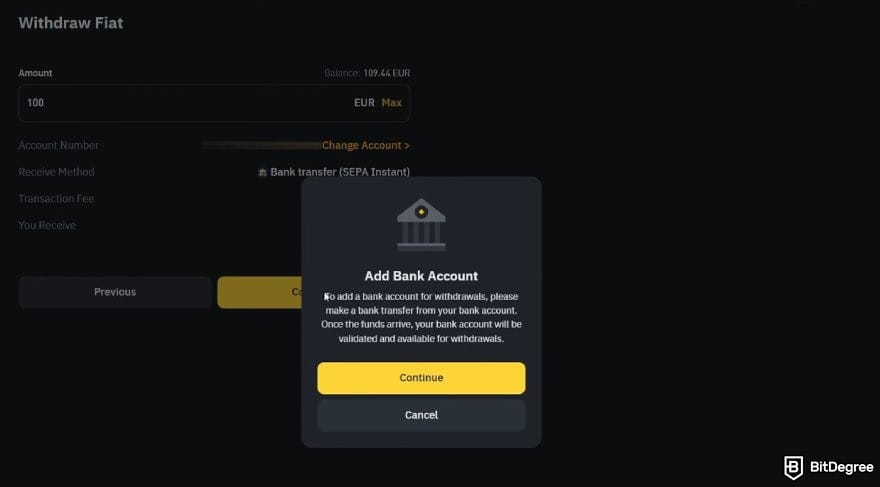
Binance's fiat coverage is broader in terms of supported currencies and payment methods globally, but it comes with an important caveat for US users. US residents must use Binance.US, a separate, more limited platform, rather than the main Binance exchange, with fewer fiat rails, lower liquidity, and a reduced product offering.
📚 Read More: How to Withdraw Money From Binance Wallet
For everyone outside the US, Binance P2P supports 700+ settlement methods and eight coins, including USDT and BTC, with zero platform fees, making it a genuinely useful fallback in regions where direct fiat on-ramps are limited.
One thing worth noting across both platforms: fiat fees are not always visible upfront. Card purchases carry a spread on top of the stated fee, SWIFT transfers may include intermediary bank charges, and P2P rates depend entirely on the seller. Always check the actual cost for your specific currency and method before assuming either platform is cheaper.
Verdict
Kraken is the stronger option for US and European users who want clean, low-cost bank transfer access, particularly for EUR via SEPA, where deposits are free, and withdrawals are fast and cheap. Binance covers more currencies and regions globally, and its P2P network is a meaningful advantage in markets where direct banking integration is limited, but US users face a significantly more restricted experience.
Binance Trading Walkthrough
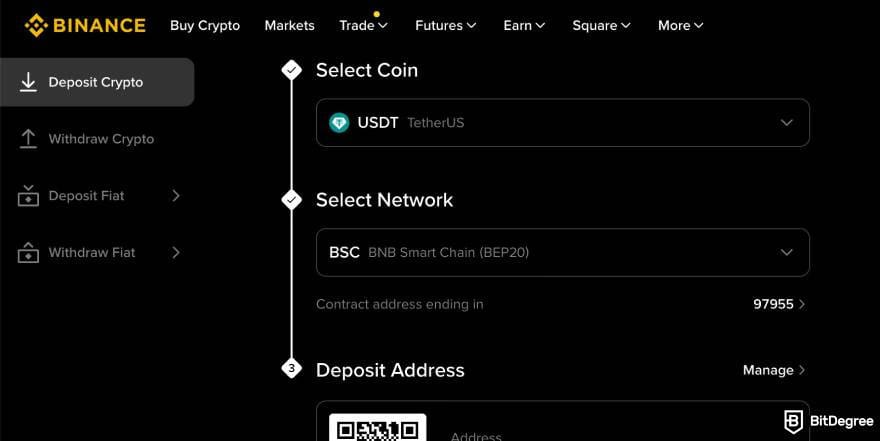
One of the most common trading features on Binance is the spot market. Let's have a quick walkthrough of buying BTC using USDT on the Binance spot market.
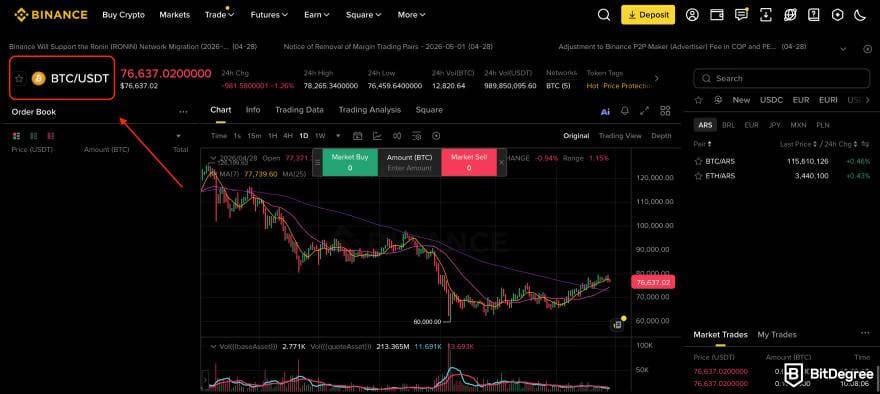
This is where Binance starts to look more advanced. You will see a price chart, order book, recent trades, and order panel.
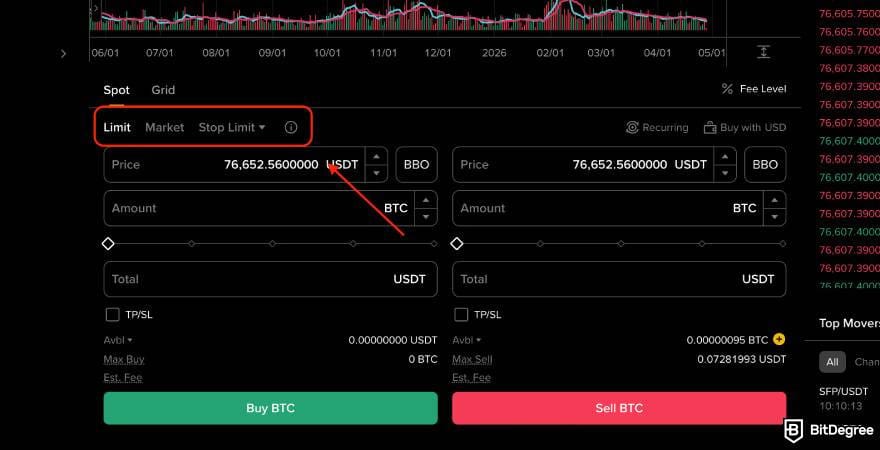
A market order buys instantly at the best available price. This is faster, but it usually counts as a taker order. A limit order lets you choose the price you are willing to pay. If the order does not fill immediately and sits on the order book, it may count as a maker order.
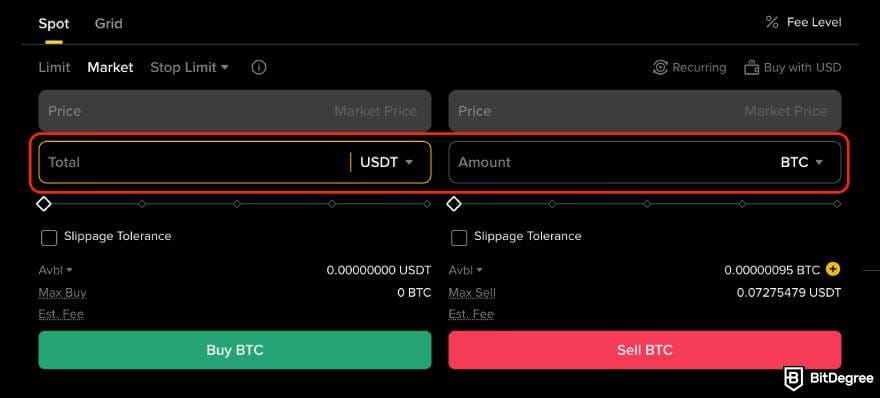
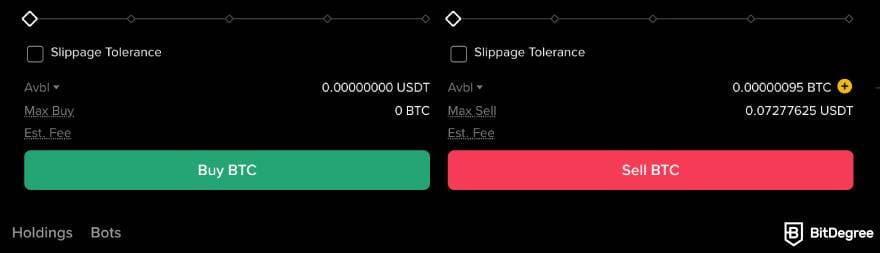
Before confirming, check:
- Trading pair;
- Order type;
- Estimated price;
- Amount;
- Fees;
- Whether you are using BNB for fee discounts;
- Whether the order will execute instantly.
After confirmation, the order should appear in your order history, and the purchased BTC should appear in your spot wallet.
Kraken Trading Walkthrough
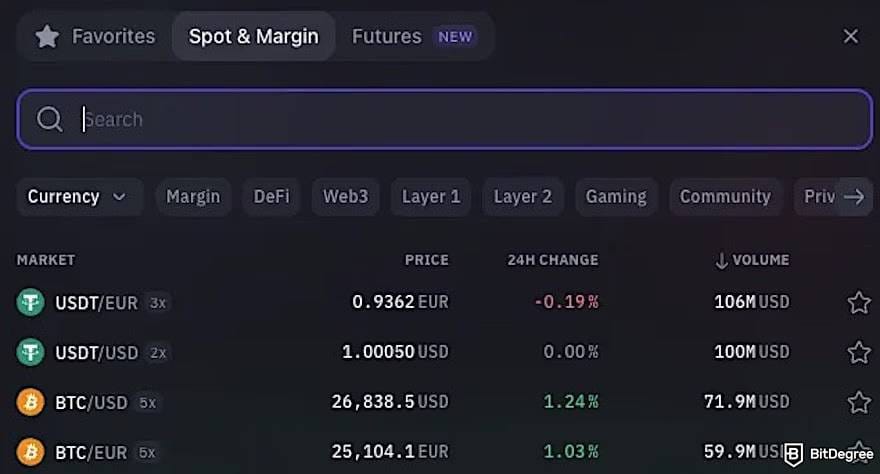
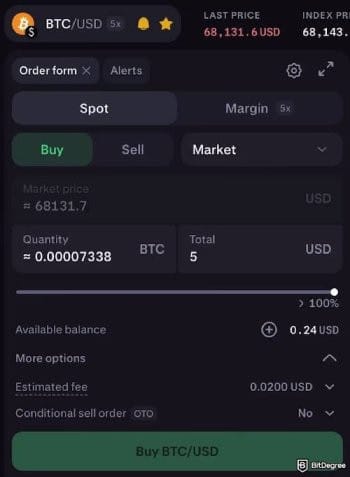
Kraken offers two ways to buy crypto, depending on how hands-on you want to be. You can keep things simple with Kraken’s standard buy-and-sell interface or switch to Kraken Pro, which gives you access to a more advanced trading dashboard for spot, futures, and margin trading.
If you just want to place a quick spot trade on Kraken Pro, here’s how:
You don’t need a separate account for Kraken Pro. Your regular Kraken login works on both the Kraken Pro website and the dedicated mobile app for iOS and Android.
Binance vs Kraken for Beginners
For beginners, both platforms are valid starting points, but with very different first experiences.
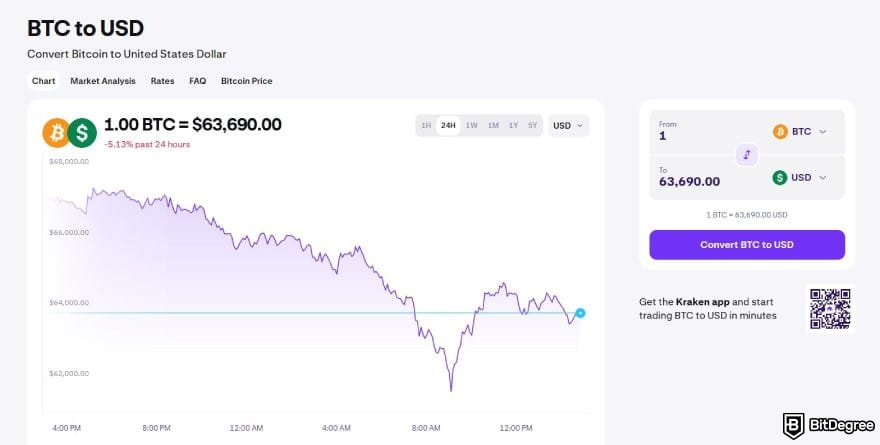
Kraken's standard app is one of the cleaner entry points in the industry. The interface is uncluttered, the buy/sell flow is straightforward, and Instant Buy lets new users purchase crypto in a few taps without touching an order book. The catch is fees. The standard app charges a flat 1% plus a spread on every transaction.
Most beginners won't know to switch to Kraken Pro, and that gap adds up quickly. There's also no demo mode, so new users learn entirely with real funds from day one.
Binance gives beginners a broader environment. The interface keeps basic buying and selling accessible, and Binance Academy is one of the most comprehensive free crypto education resources available.
The demo trading environment also lets new users practice futures with a simulated 3,000 USDT balance before risking real money. The tradeoff is complexity. Hundreds of products and multiple wallet types can feel genuinely overwhelming for first-timers.
Verdict
Kraken is the better starting point for beginners who want a clean, simple experience and aren't planning to trade actively. Binance can be a solid option for beginners who want to learn trading from the ground up with lower fees, demo practice, and deeper educational resources.
Binance vs Kraken for Active Traders
For active traders, this comparison is not particularly close. Binance leads on the metrics that matter most to high-frequency and strategy-driven traders: liquidity depth, derivative variety, automation tools, and leverage. Kraken competes effectively in specific areas, but the gap is real and worth acknowledging upfront.
An active trader might prefer Kraken if they:
- Trade primarily in EUR or GBP-denominated pairs where Kraken's liquidity is industry-leading.
- Need regulated futures access, particularly US-based traders who require CFTC-compliant derivatives infrastructure.
- Prioritize execution stability during volatile market conditions over raw order book depth.
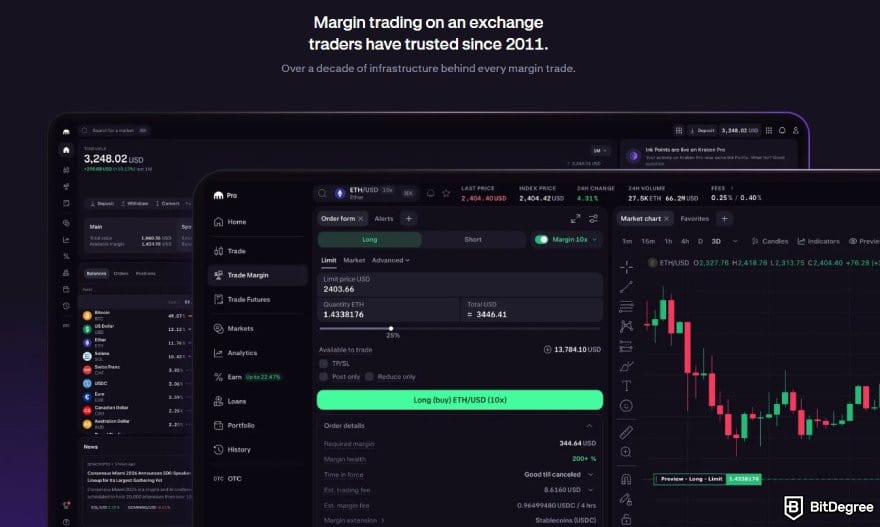
- Use professional charting and strategy tools via NinjaTrader integration.
- Want exposure to tokenized equities and crypto from a single trading account.
- Trade institutional-scale positions and need a compliance-grade environment.
On the other hand, you might prefer Binance if you:
- Trade large spot or derivatives positions where order book depth directly affects fill quality.
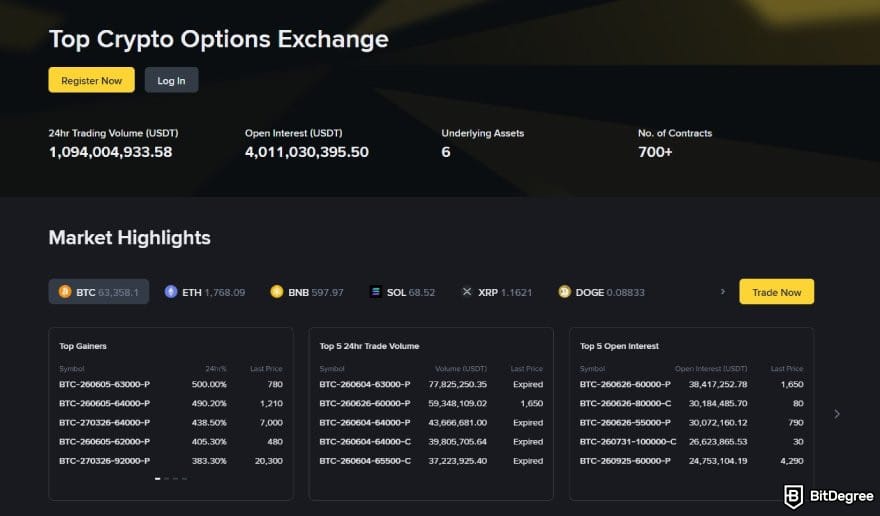
- Use or plan to use automated trading like grid bots, DCA bots, TWAP, copy trading, or custom API strategies.
- Want access to the broadest derivatives suite, including perpetuals, coin-margined futures, delivery contracts, and options under one account.
- Use BNB to reduce fees across a high trading volume.
- Trade a wide range of altcoins where Binance's 1,500+ pairs give it a clear selection advantage.
- Want portfolio margin efficiency across spot, futures, and options positions simultaneously.
Where Kraken does close the gap meaningfully is in execution quality. Its NinjaTrader integration gives professional futures traders an institutional-grade charting and execution environment that Binance's native interface cannot match.
For a specific type of active trader who wants a platform that is regulated, derivatives-focused, and operating in compliant markets, that combination of infrastructure and licensing is a genuine differentiator.
For everyone else, Binance is the stronger active trading environment.
Verdict
Binance is the better platform for most active traders. It has deeper liquidity, broader derivatives, more automation tools, and higher leverage across more markets. Kraken can be a stronger choice for active traders who specifically need regulated derivatives infrastructure, EUR/GBP liquidity depth, or professional-grade execution tools via NinjaTrader.
Binance vs Kraken for Passive Users
Some people may only trade occasionally. Buying crypto, holding it, earning yield on idle balances, or using their exchange account as a financial hub rather than an active trading terminal. For this type of user, ecosystem depth and product variety matter far more than execution speed or access to derivatives.
Binance is the stronger platform here by a clear margin. Binance Earn covers flexible and locked Simple Earn products, Auto-Invest for recurring purchases, Dual Investment for structured yield, and on-chain staking. These features give passive users multiple ways to put idle assets to work without touching the trading interface.
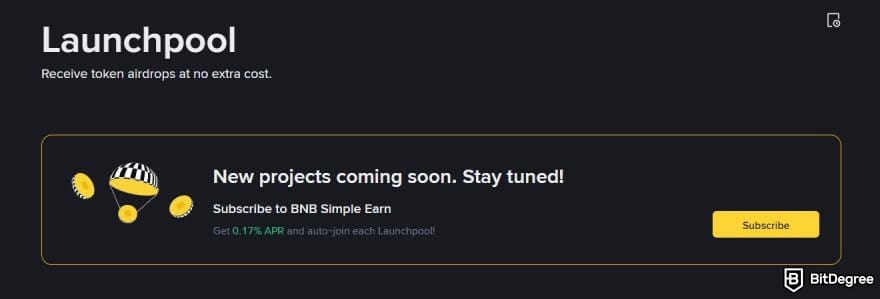
Launchpool and HODLer Airdrops add passive token distribution for users who simply hold BNB or participate in Simple Earn. Binance Pay and the Binance Card extend the platform's utility further for users who want to spend crypto in everyday life. For someone who logs in once a week rather than once an hour, Binance's ecosystem covers more ground than almost any other exchange.
Kraken's passive offering is leaner but has one angle that Binance cannot match. Staking across 20+ assets with flexible and bonded options handles the yield side cleanly, and Auto Earn removes the need to allocate idle balances manually.
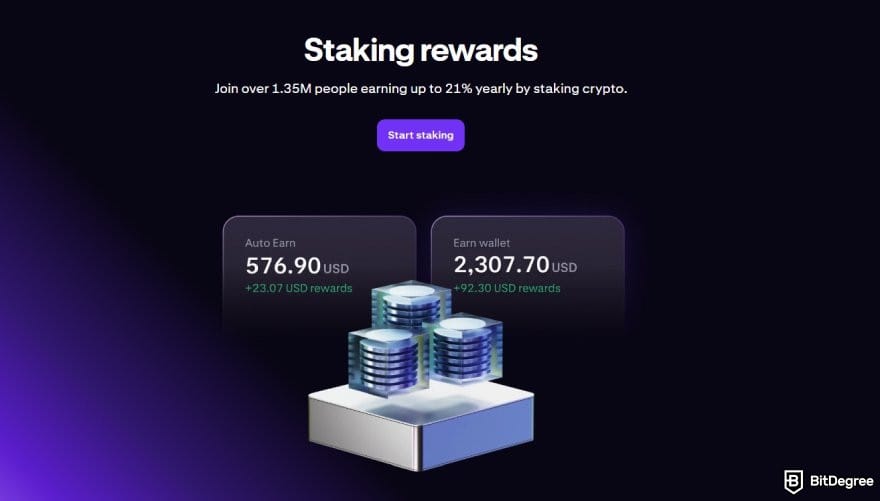
The standout feature for passive users specifically is multi-asset holding. Eligible users can hold tokenized US stocks and ETFs alongside crypto through xStocks, while US-based users can access 11,000+ commission-free equities in the same account. For a passive user who wants exposure to both crypto and traditional markets without managing separate accounts, that is a genuinely unique offering.
Verdict
Binance is the better choice for most passive users with more earn products, token launch access, and spending tools, making it a more complete holding and earning environment. Kraken wins for passive users who want to hold crypto and traditional assets like stocks and ETFs under one regulated account without actively managing either.
Final Verdict: Is Binance or Kraken Better?
Binance and Kraken are both excellent exchanges, but they are excellent in different ways. By 2026, those differences will have become sharper than ever.
Binance remains the default choice for most traders. Its liquidity depth, derivatives suite, automation tools, Earn products, and global reach give it an edge across the majority of use cases. If you trade actively, use bots, want access to the widest range of assets, or simply want one account that covers everything from spot trading to yield earning to crypto payments, Binance delivers more under one roof than any other exchange in the market.
📚 Read More: Binance Review
Kraken is the stronger choice for a specific but growing type of user. If you trade from a regulated market, care deeply about security and compliance, need reliable fiat access in USD, EUR, or GBP, or want exposure to both crypto and traditional assets like stocks and ETFs without maintaining separate accounts, Kraken's infrastructure is built for exactly that.
📚 Read More: Kraken Review
Its clean track record, Federal Reserve-connected banking, regulated derivatives access, and multi-asset platform make it uniquely positioned among crypto exchanges, and its trajectory suggests it will only become more relevant as crypto continues to integrate with traditional finance.