




Binance vs OKX – In-Depth Comparison
Binance and OKX are two names that almost always come up when people start comparing the biggest crypto exchanges. And no, that’s not just because everyone keeps copying the same list. Both platforms are built for traders who want more than a simple buy button and offer a feature lineup that can look similar at first glance.
But “similar” isn't the same as “identical”. And for some people, the differences between them can matter a lot more than they first appear.
Binance is one of the largest crypto exchanges in the world. It has a massive user base, deep order books, and a product lineup that’s broader than nearly anything else in the market. Whether you’re buying Bitcoin for the first time or building leveraged futures strategies, chances are Binance has something for you.
OKX comes to the market from a slightly different angle. It leans heavily into advanced trading tools, with a strong emphasis on derivatives, trading bots, and institutional-grade execution features. It doesn’t have the same global availability as Binance, but in much of the world, it’s become one of the more respected brands.
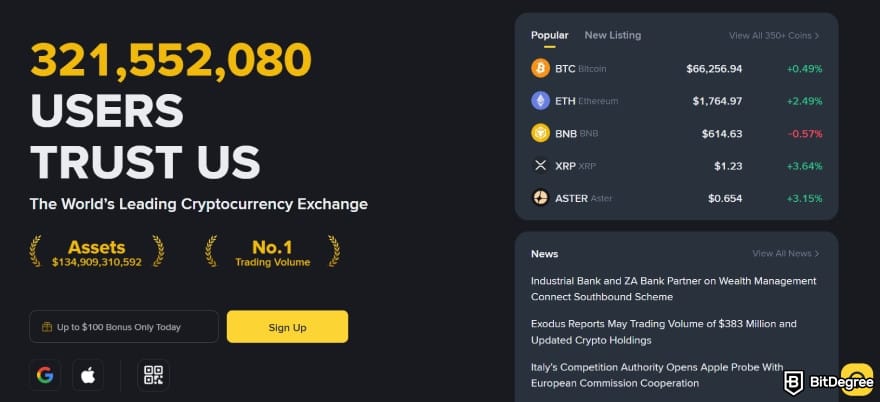
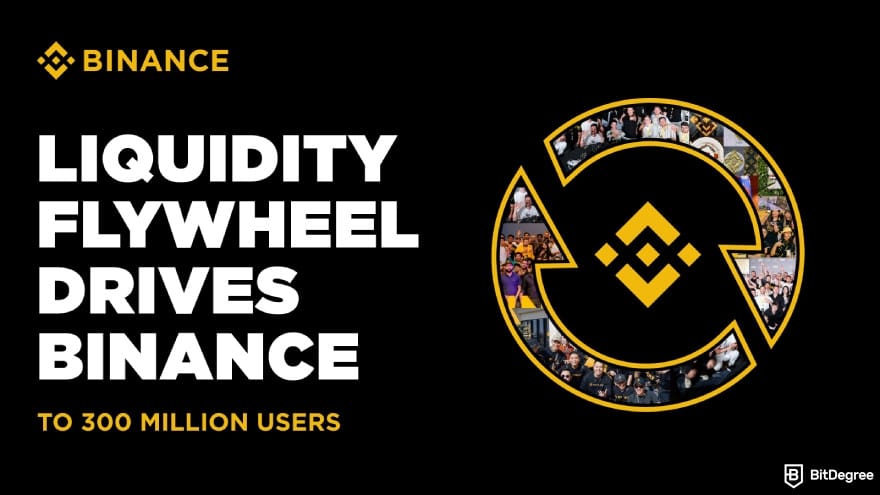
Looking at size, Binance serves more than 321 million registered users globally, with over $134 billion in customer assets and around $66 billion in daily trading volume. OKX claims 71 million users worldwide, $40 billion in assets on the platform, and a reported peak daily trading volume exceeding $108 billion.
But let’s be real here, comparing anyone to Binance on size alone is already an unfair game. So, this shouldn’t just be framed as a “big exchange versus smaller exchange” debate. The more useful question is which platform works better for you and your trading style.
So before we get into the weeds, here's a quick overview:
Best for | Users who want a full-scale crypto ecosystem with deep liquidity | Users who want advanced tools, bots, derivatives, and Web3 access |
|---|---|---|
Main strength | Liquidity, ecosystem, product breadth, and scale | Trading depth, bots, derivatives, and institutional services |
Trading fees | Very competitive | Very competitive |
Beginner experience | Better learning materials and simpler ways to get started, but the product menu can be a lot to take in | Helpful demo trading and clean tools, but the advanced menu can overwhelm first-timers |
Advanced trading | Very strong for liquidity, derivatives, APIs, bots, and institutional services | Very strong for bots, copy trading, RFQ, derivatives, APIs, and wallet-connected Web3 |
Overall verdict | Better for scale, ecosystem, and all-in-one crypto access | Better for focused trading, automation, and derivatives |
Table: Binance vs OKX quick comparison
Here’s the short version: Binance is the platform if you want maximum reach and a product for almost every crypto-related scenario. OKX is the better option if active trading, derivatives, and automation are central to how you use your crypto.
Neither platform is objectively superior. The better choice is simply the one that fits the way you manage and trade your assets.
Binance vs OKX – Market Position
As mentioned earlier, Binance operates on a scale that's in a league of its own. With over 321 million users and more than $134 billion in disclosed user assets, it benefits from network effects that are hard to match.
A larger active user base means tighter bid-ask spreads, better order book depth, faster execution during volatile periods, and broader fiat coverage across regions. When you're trading here, liquidity is rarely the issue.
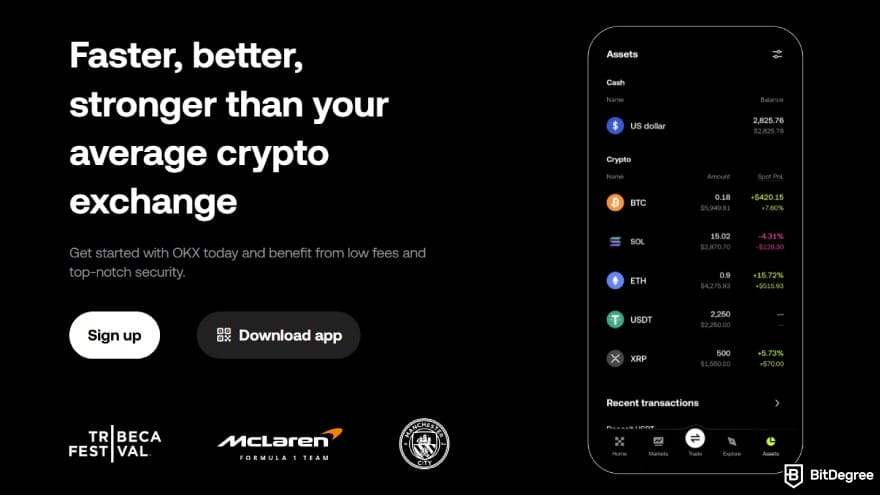
OKX may sit in a different category from Binance, but it’s hardly small. With 71 million users worldwide, $40 billion in platform assets, and peak daily trading volume exceeding $108 billion, it surely belongs among the world’s top exchanges.
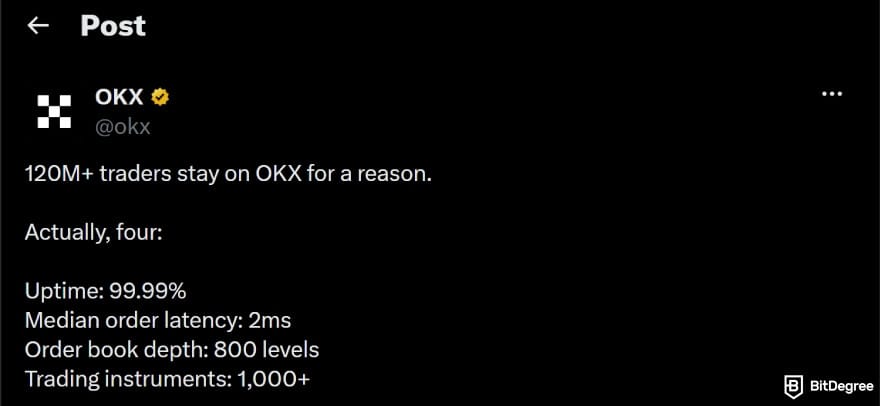
It also reports a 99.99% uptime record and claims $40 trillion in total traded volume since inception. Together, those numbers point to a platform built for heavy, always-on trading activity.
One thing worth noting is that OKX isn’t available in several major markets, including the US and Canada. Users in those regions are blocked at the IP level, so accessing the platform isn’t an option. Outside those markets, though, OKX is available to a broad global audience and operates as a full-featured exchange.
Verdict
Binance wins on overall scale, user numbers, liquidity, and fiat accessibility across more markets. OKX isn't far behind on the trading side, though, with powerful infrastructure and impressive derivatives volume.
Binance vs OKX – Trading Features
On paper, both exchanges have a long menu of trading products. The distinction is less about “who has more buttons” and more about depth and workflow: OKX is shaped more around the trading experience itself, while Binance wraps trading inside a broader all-in-one platform.
OKX Trading Features
OKX offers one of the most complete trading toolkits in the centralized exchange space. With strong derivatives infrastructure, a wide bot ecosystem, and AI-powered tools, it has an advantage for active, automation-focused traders.
For basic trading, OKX offers:
- Spot trading across hundreds of pairs with major and mid-cap assets.
- Convert for instant swaps with zero trading fees and no price slippage.
- P2P trading via both Express (best-price auto-match) and standard P2P modes, supporting 100+ payment methods.
- Demo trading for testing strategies with virtual funds and live market prices.
For advanced trading, OKX supports:
- Futures trading with leverage of up to 125x on major trading pairs.
- Options trading for structured strategies with defined risk exposure.
- Margin trading with up to 10x leverage across supported pairs.
- DEX module for trading on-chain tokens from your exchange balance across multiple blockchains.
For automated and strategy-based trading, OKX includes:
- Trading bot options include Spot Grid, Futures Grid, DCA, and more, all configurable from the trading interface.
- Copy trading for mirroring the trades of top performers.
- Agent Trade Kit for connecting AI assistants to your account, enabling natural language trade execution.
- API access for custom algorithmic strategies with low-latency connectivity.
For institutional and large-scale traders, OKX also offers:
- Liquid Marketplace for RFQ and privately negotiated block trades.
- Nitro Spreads, which provides a dedicated spread order book for atomic spread execution.
- OKX Rubik, a digital asset infrastructure platform that helps regulated financial institutions add crypto trading to their existing services.
OKX’s automation toolkit is broad. If you’re the kind of trader who runs multiple strategies at once, tests setups using backtested bots, or wants to bring AI tools into live markets, the platform has you in mind.
Binance Trading Features
Binance covers the same core trading ground but surrounds it with a broader ecosystem. That wider product mix is what sets it apart, especially for users who want a crypto hub with research, education, community features, and ecosystem tools all in one place.
For basic trading, Binance offers:
- Spot trading across 600+ cryptocurrencies and 2,000+ trading pairs.
- Convert for fast swaps without the full trading interface.
- P2P trading with 800+ payment methods for direct fiat-to-crypto transactions.
- Demo trading with virtual funds and real market scenarios.
For advanced trading, Binance supports:
- Margin trading with cross and isolated margin options.
- Futures trading for leveraged perpetual and expiry contracts.
- Options trading for more complex risk strategies.
For automated and strategy-based trading, Binance includes:
- Trading bots (Grid, DCA, and others) for running strategies automatically.
- Copy trading for following more experienced traders.
- AI Trading Agent to help turn natural language prompts into strategy execution.
- API trading for high-volume algorithmic strategies.
For institutions, Binance extends well beyond standard exchange features with OTC and execution services, portfolio margin, institutional staking, financing solutions, fiat channels, triparty banking services, and a custody solution.
Note
Both platforms target serious traders. OKX stands out for bot variety, AI integration, and institutional execution tools. Binance, meanwhile, is stronger on market breadth, liquidity, and multi-asset access coverage.
Binance vs OKX – Fees
Neither exchange is particularly expensive to trade on. At the base fee level, the difference is fairly minor, but small gaps have a habit of adding up if you're executing lots of trades or leaning heavily on market orders.
Spot fees | 0.10% maker / 0.10% taker | 0.08% maker / 0.10% taker |
|---|---|---|
Spot fees with native discount | - | 0.075% taker (BNB discount) |
Futures fees | 0.02% maker / 0.05% taker | 0.02% maker / 0.05% taker |
Futures fees with native discount | - | 0.018% / 0.045% (BNB discount) |
Options fees | 0.03% maker / 0.03% taker | 0.024% maker / 0.024% taker |
Table: Binance vs OKX fee comparison
There are a few things to unpack here. OKX’s standard spot maker fee is 0.08%, which is already slightly lower than Binance’s 0.10%. That matters if you mostly use limit orders that sit in the order book. For takers, both platforms start at 0.10%.
📚 Read More: Binance Fees Explained
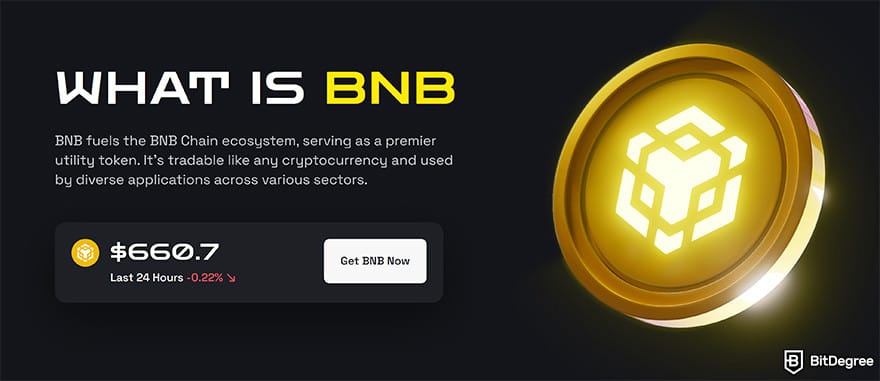
Binance has a native token discount through BNB, which can reduce taker fees to 0.075%. That puts it below OKX’s standard 0.10% taker fee. So for spot takers, the better rate depends on whether the BNB discount is active. For makers, OKX starts cheaper without asking you to use a native token.
Both also have VIP fee structures for frequent and high-volume traders. Move far enough up the tiers, and the fee reduction becomes much more noticeable than the standard-rate differences everyone likes to argue about.
The futures comparison is about as close as it gets. Both Binance and OKX charge 0.02% maker and 0.05% taker at the standard level. BNB discount lowers USDT-M futures fees to 0.018% / 0.045%, bringing them close to OKX’s VIP 1 pricing of 0.016% / 0.045%. For most users, the practical difference is marginal.
On options, Binance has a slight edge at 0.024% on both sides, versus OKX's 0.03% maker and taker.
$1,000 Spot Trade Example
Say you place a $1,000 BTC/USDT market order on each platform using the standard taker fee.
Let's start with Binance. At its standard 0.1% spot taker fee, the trading cost would be:
$1,000 x 0.1% = $1
With the BNB discount enabled, the fee would drop to around:
$1,000 x 0.075% = $0.75
With OKX’s standard 0.1% spot taker rate, you’d pay approximately:
1,000 × 0.10% = $1
For spot trading, the comparison is essentially a draw at the standard fee level. Binance gains a small advantage on taker fees through its BNB discount, but that's only relevant if you're using the token for fee payments.
$1,000 Futures Trade Example
Let's open and close a $1,000 BTCUSDT perpetual position with market orders on both exchanges.
On Binance, using the regular 0.05% taker fee example:
$1,000 x 0.05% = $0.5
On OKX, using the 0.05% taker fee:
$1,000 x 0.05% = $0.5
At standard rates, futures trading costs are effectively the same. The real separation comes from VIP tiers and native-token discounts. For high-frequency traders making hundreds of round-trip trades per month, even 0.005% can quietly turn into a meaningful difference.
Entry Fee | Exit Fee | Approx. Round-Trip Fee | |
|---|---|---|---|
Binance futures market entry + exit | $0.50 | $0.50 | $1.00 |
OKX futures market entry + exit | $0.50 | $0.50 | $1.00 |
Table: Bybit vs Binance market entry + exit comparison
Trading fees are only one piece of the actual cost, though. You also need to factor in:
- Bid-ask spread;
- Slippage;
- Funding rates;
- Liquidation risk;
- Order execution quality;
- Deposit and withdrawal fees;
- Whether you are using market or limit orders.
Lower fees look great on paper, but they don't always lead to lower costs in practice if spreads or execution quality are worse. The cheapest platform for you ultimately depends on how you trade, what you trade, and how often you trade.
Verdict
The fee comparison is close. OKX has a small advantage on standard spot maker fees, while Binance can pull ahead on taker fees through its BNB discount. Futures pricing is effectively the same at standard rates, leaving neither platform with a clear cost advantage for most traders.
Binance vs OKX – Liquidity & Execution
Liquidity often gets overlooked, but it's one of the biggest factors affecting your trading costs. It doesn't matter if an exchange advertises low fees when you're quietly losing 0.3% to slippage because there aren't enough orders in the book.
Binance has an edge here. More users and more market share mean tighter spreads, deeper books, and better execution on major pairs like BTC/USDT and ETH/USDT. For large spot orders, that depth is hard to beat. And when volatility hits, thinner exchanges can get ugly fast, while Binance is usually better equipped to handle the chaos.
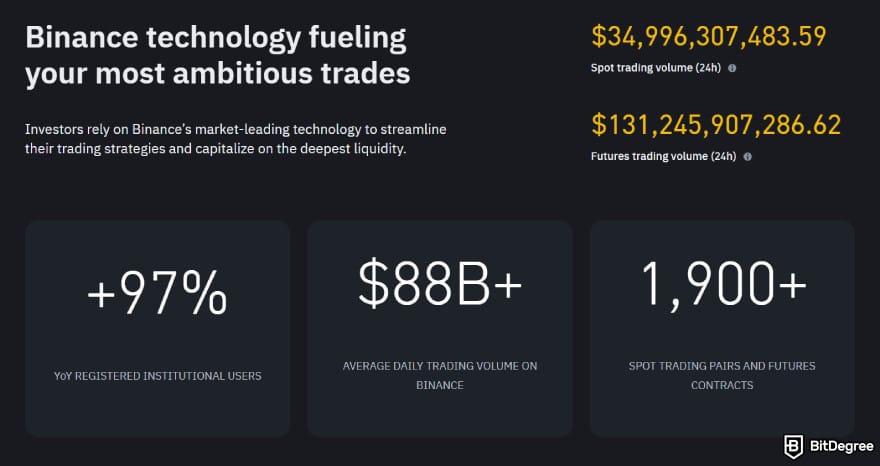
OKX shouldn't be mistaken for a low-liquidity exchange. Its reported peak daily volume exceeding $108 billion, fueled primarily by derivatives trading, indicates meaningful depth in its perpetual markets. On major pairs, it delivers execution quality that can compete with Binance.
If you’re trading liquid pairs at retail size, say below $50,000, both platforms should perform well enough. The differences start to matter more when order sizes get larger, markets become volatile, or you move into less-traded pairs with shallower books.
Note
Binance has the broader liquidity advantage on spot markets. OKX holds its ground well on major derivatives pairs. For typical retail trading on liquid assets, the practical difference is smaller than the headline user counts might suggest.
Binance vs OKX – Security & Trust
Security is a strong point for both platforms. Each has a well-developed security architecture spanning exchange infrastructure and account protection. The more meaningful comparison comes down to the design of those protections and each platform's historical track record.
Two-factor authentication | ✓ | ✓ |
|---|---|---|
Anti-phishing code | ✓ | ✓ |
Withdrawal address whitelist | ✓ | ✓ |
Passkeys | ✓ | ✓ |
Cold storage | ✓ | ✓ |
24/7 support | ✓ | ✓ |
Proof of Reserves | ✓ | ✓ |
User protection fund | SAFU | OKX Protect |
Table: Binance vs OKX security feature comparison
OKX’s technical security architecture is detailed and fairly well-documented. Its hot wallet private keys are stored in volatile memory, not persistent storage, and protected through a semi-offline multi-signature system that processes transactions without standard TCP/IP exposure.
Beyond hot wallet controls, OKX also uses air-gapped cold wallets with hardened security, multi-person authorization, and geographically distributed key storage. Transactions go through multiple layers of risk checks before approval, adding another layer of protection for user funds.
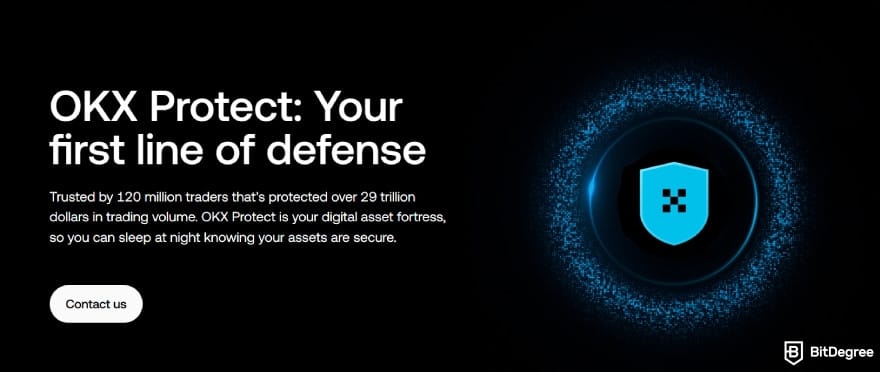
OKX also publishes Proof of Reserves confirming 1:1 asset backing and offers OKX Protect as its user protection mechanism. With 71 million users and a 99.99% uptime record, its operational track record is hard to dismiss.
Binance's SAFU (Secure Asset Fund for Users) is arguably the industry's best-known user protection fund. The company says it has helped more than 7.4 million users through the program.
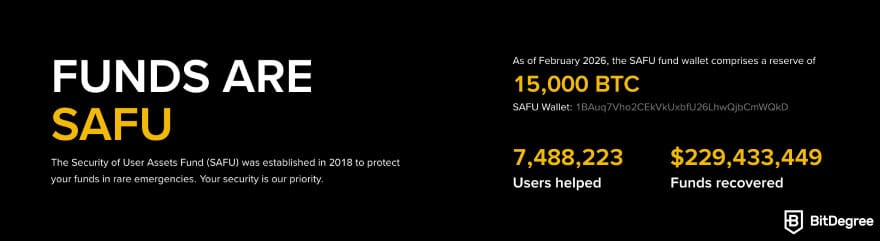
Beyond that, Binance maintains 1:1 asset backing verified through Proof of Reserves and backs it with an extensive in-house security team. The regulatory changes introduced after its 2023–2024 settlement have also increased compliance oversight, adding another layer of accountability from an institutional perspective.
Neither exchange has seen a major recent security breach. OKX stands out for its technical wallet architecture, including cold/hot wallet separation and multi-person authorization. Binance’s advantage comes from SAFU, scale, and a broader protection structure that gives users another layer of reassurance.
Verdict
Security is a strong point for both platforms. Binance’s SAFU gives it broader user protection coverage, while OKX’s detailed architecture documentation makes a solid technical case. Users on either exchange are getting a level of security infrastructure that most smaller platforms can’t match.
Binance vs OKX – Broader Ecosystem
Trading is only one part of the story for both platforms. If you’re using crypto to earn yield, access new projects, make payments, or explore Web3, the ecosystem comparison matters just as much as the fee breakdown. Both exchanges offer a broad range of non-trading features worth exploring.
Binance's Other Features
1
Earn products
Binance Earn covers 300+ cryptocurrencies across a broad product lineup. As of writing, that includes Simple Earn (flexible and locked) along with Advanced Earn products such as Dual Investment, Smart Arbitrage, and other yield-focused options.
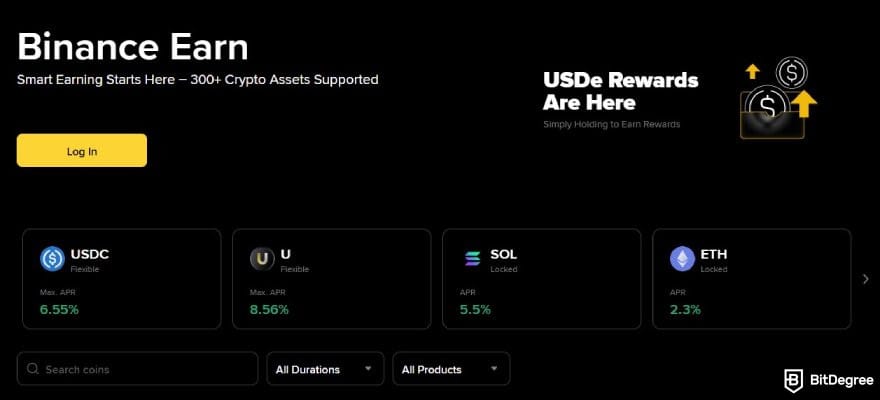
On top of that, Binance provides a full loan suite, including flexible loans, VIP loans, and fixed-rate loan products. For passive users managing a diverse portfolio, the sheer range of supported assets and product structures is pretty hard to beat.
2
Launch and reward products
Binance Launchpool lets users earn new project tokens by staking BNB or selected assets at no extra cost. Megadrop takes a more interactive approach by combining BNB locking with Web3 quests for early token access. HODLer Airdrops are more passive, automatically rewarding BNB holders through historical balance snapshots.
3
Payments and spending
Binance Pay allows users to make peer-to-peer and merchant payments globally with 100+ cryptocurrencies, using QR codes, payment links, or UID-based transfers. It works as a secure, contactless, and borderless way to send crypto instantly to friends and family worldwide.

Binance Card brings crypto into regular retail spending, and gift cards make it easier to send crypto value to others.
4
Web3 features
Binance Wallet brings self-custody Web3 access into the Binance app through an MPC wallet setup. Users can connect to DeFi protocols, dApps, and cross-chain swaps across multiple networks. Binance Alpha then adds another layer by giving users early access to selected Web3 tokens through the same familiar ecosystem.
5
Education, research, and community
Binance Academy is a free, multilingual resource covering everything from basics to advanced DeFi strategy, one of the most comprehensive crypto education libraries available. Binance Research provides institutional-grade market reports and project analysis.

Binance Square is the platform’s social content hub, complete with a Write-to-Earn program. Users can share market thoughts, post charts, write articles, and engage with other posts through likes, comments, and shares, making it feel closer to a crypto-focused social feed.
On top of everything mentioned above, Binance also supports a Mining Pool and an NFT marketplace, further expanding its already massive ecosystem. Users in eligible regions may also access 7,000+ US-listed stocks and ETFs directly from their Binance account
OKX's Other Features
OKX also brings a sizable non-trading ecosystem to the table, with several features that mirror Binance’s broader setup. Its notable extras include:
1
Earn products
OKX Earn covers Simple Earn, On-Chain Earn, Flash Earn, Stable Rewards, Dual Investment, and BTC Yield+.
The Loan product allows flexible borrowing against crypto collateral at floating interest rates with a wide selection of borrowable assets. While the range isn't as broad as Binance's 300+ asset coverage, it addresses the most common earning use cases well.
2
Launch and reward products
OKX's token launch platform is built around two participation models. Mining follows a "more staking, more tokens" approach, while On Sale distributes allocations through a pledge-and-draw mechanism.
3
Institutional services
OKX Rubik is designed for regulated institutions that want to enter crypto without building everything from scratch.
Banks, licensed brokers, and wealth managers can use it to provide digital asset services through existing infrastructure. It's one of the more distinctive institutional offerings in the CEX space.
4
Web3 features
OKX Wallet connects to 130+ native chains and is available as both a mobile app and a Chrome browser extension.
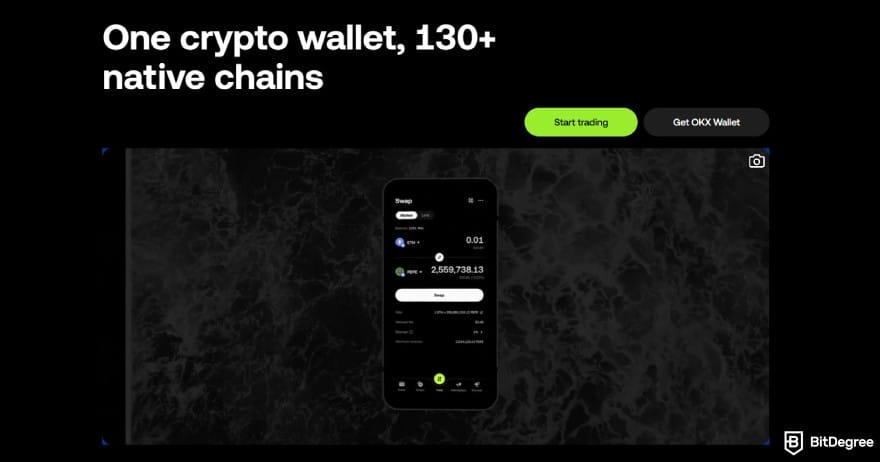
The DEX module within the trading interface enables on-chain trading using your exchange balance directly, without bridging or external wallets. The integration is tight enough to keep DeFi activity close to where you're already trading.
5
Education, research, and community
While it isn’t as extensive as Binance Academy, OKX still offers a fairly comprehensive selection of beginner guides and tutorial articles for users who need help finding their way around. It also has a crypto news section for those who want to keep up with the latest trends in the industry.
OKX also adds Orbit, an in-app social network that connects trading activity with community interaction. It lets users chat, share verified trading metrics, host livestreams, and execute trades in real time from the same platform.
Verdict
Binance wins on ecosystem breadth. OKX runs a tighter setup, but it’s hardly thin, especially with its on-chain tools and institutional infrastructure going well beyond what most exchanges can offer.
Binance vs OKX – Fiat Deposits and Withdrawals
People love comparing trading fees, but fiat access can make or break the experience. An exchange can have great trading costs and still be inconvenient if getting money in or out is difficult in your country.
Fortunately, Binance generally offers broader fiat access. Regional availability still matters, but users may be able to deposit and withdraw through bank transfers, credit/debit cards, P2P trading, and third-party payment providers, with support for many local currencies.
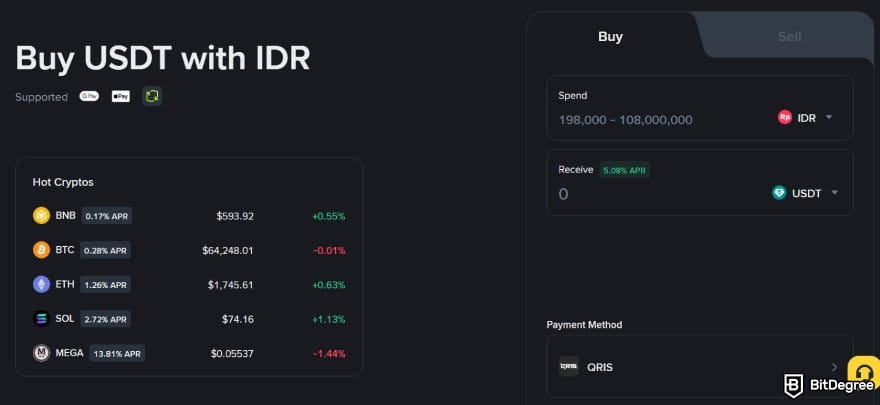
OKX has decent fiat access, but it’s more focused than broad. Depending on the region, users can use bank transfers, third-party card purchases, and P2P trading with zero trading fees and 100+ supported payment methods.
P2P Express then does the useful job of finding the best USDT buy price automatically. If your region doesn’t have smooth direct exchange-to-bank rails, this feature can be the workaround that saves the day.
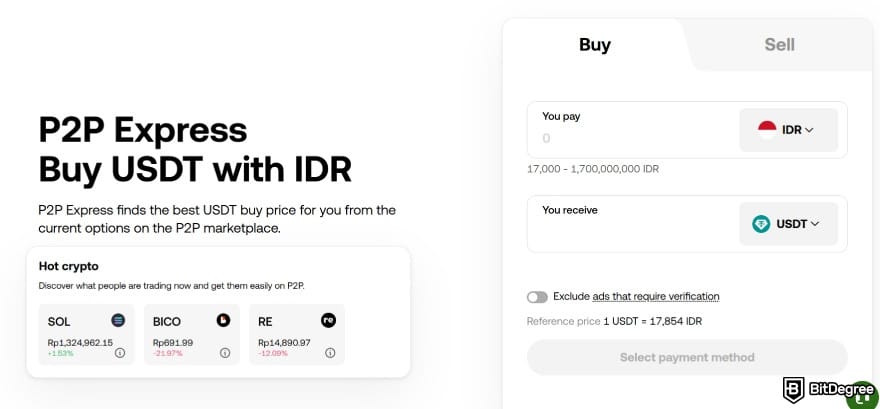
One thing to keep in mind: fiat fees aren't always easy to compare directly. Card purchases usually include provider processing fees on top of exchange markups. P2P rates depend on current seller offers. Bank transfer terms vary by currency and region. So a headline like “free deposit” often tells only part of the story.
Verdict
Binance tends to provide wider fiat coverage across more regions and currencies. OKX’s P2P market is a strong alternative in places where direct rails are limited. As always, though, the methods and currencies available to you will largely depend on your location.
OKX Trading Walkthrough
If there’s one feature on OKX that’s worth learning, it’s the Spot Grid bot. It’s one of the platform’s biggest strengths and a favorite among traders who prefer automation. Here's how to set it up:
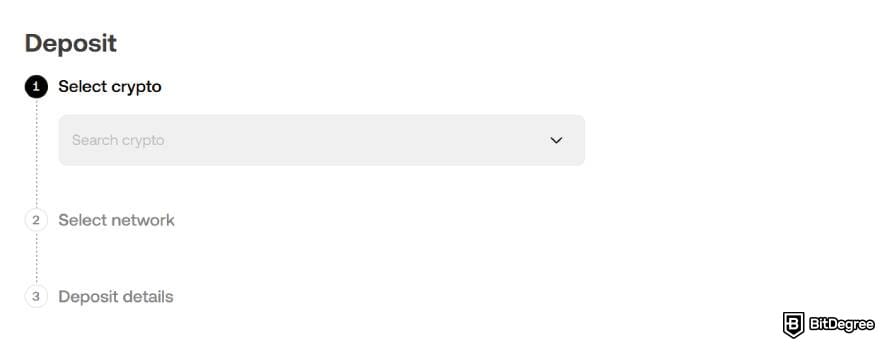
![Binance vs OKX: navigate to [Trading Bots].](https://assets.bitdegree.org/images/binance-vs-okx-bots.jpg "Binance vs OKX: navigate to [Trading Bots].")
![Binance vs OKX: choose [Spot grid].](https://assets.bitdegree.org/images/binance-vs-okx-scroll.jpg "Binance vs OKX: choose [Spot grid].")
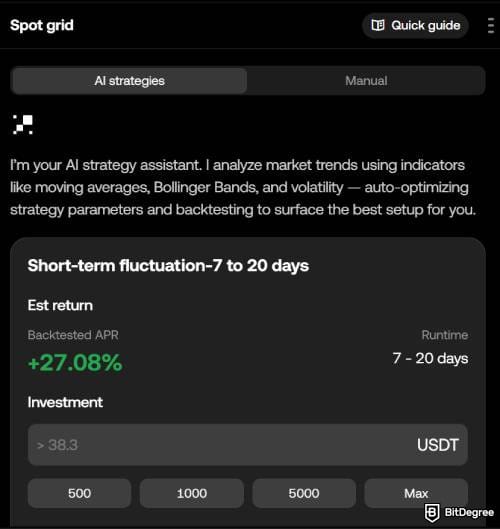
![Binance vs OKX: set the amount and click [Create] to activate the bot.](https://assets.bitdegree.org/images/binance-vs-okx-amount.jpg "Binance vs OKX: set the amount and click [Create] to activate the bot.")
With the bot running, buy and sell orders are placed automatically whenever the market moves within your selected price range. The Grid Profits panel lets you monitor performance at a glance, while the current Bitcoin price helps you determine whether the bot is still operating within its intended range.
You can manually stop the bot at any time.
Binance Trading Walkthrough
Spot trading is one of the easier Binance products to understand. It gives users a clear starting point, whether they’re new to the platform or want to get comfortable with the basic trading flow first.
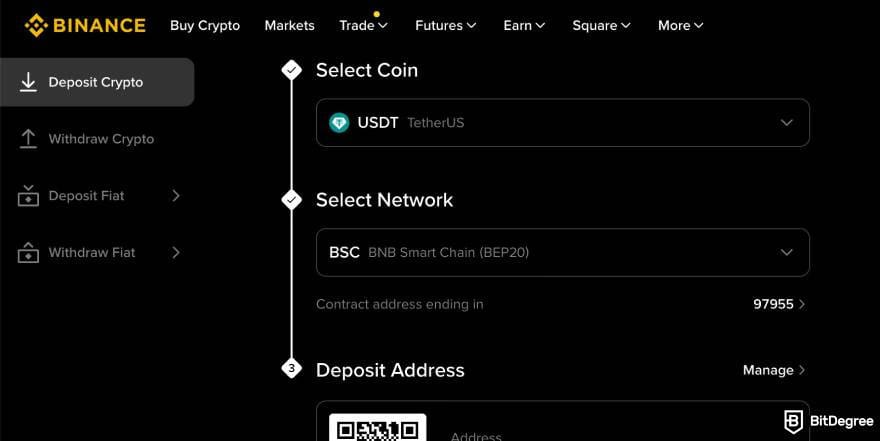
![Binance vs OKX: select [Spot].](https://assets.bitdegree.org/images/binance-vs-kucoin-spot.jpg "Binance vs OKX: select [Spot].")
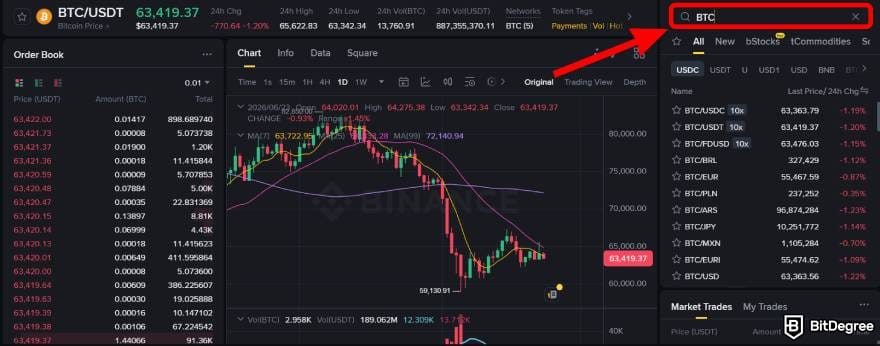
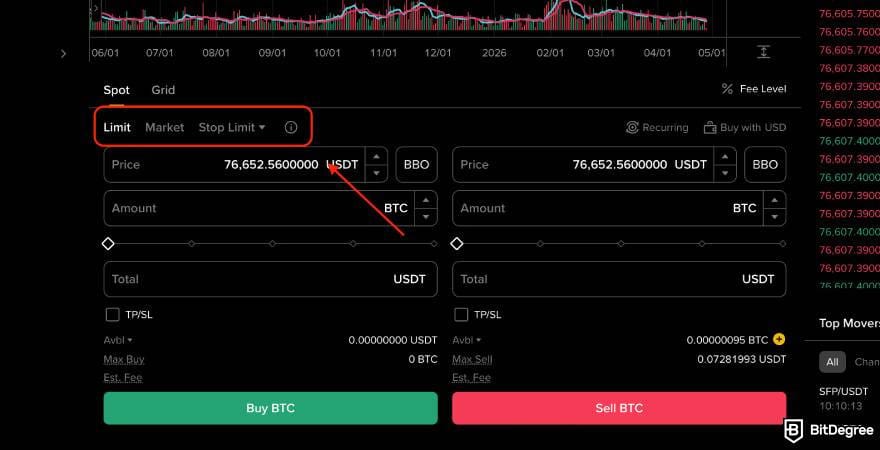
Of course, you can use a Market order if you want your trade to execute as quickly as possible.
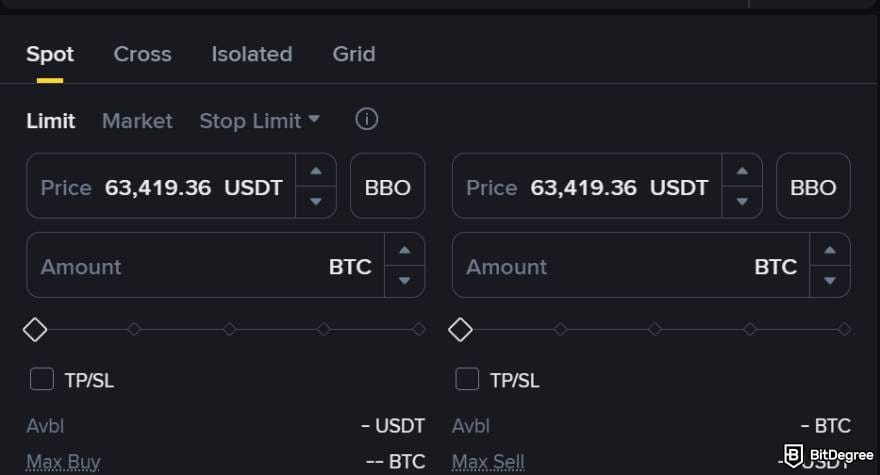
- Trading pair;
- Order type;
- Estimated price;
- Amount;
- Fees;
- Whether you are using BNB for fee discounts;
- Whether the order will execute instantly.
Once confirmed, a market order fills right away. A limit order, meanwhile, remains open until the market reaches your selected price. You can verify the trade by checking your order history and spot wallet.
Binance vs OKX for Beginners
Binance is often the default recommendation for newcomers, and honestly, that makes sense. Binance Academy is one of the best free crypto education resources available out there, with lessons ranging from basic blockchain concepts to more advanced DeFi topics in multiple languages.
It also keeps the early user journey fairly approachable. Convert and basic spot buying don’t require order book knowledge, and the platform generally points users toward more advanced products gradually. Its brand recognition helps too, since Binance is usually the name people around you have actually heard of.
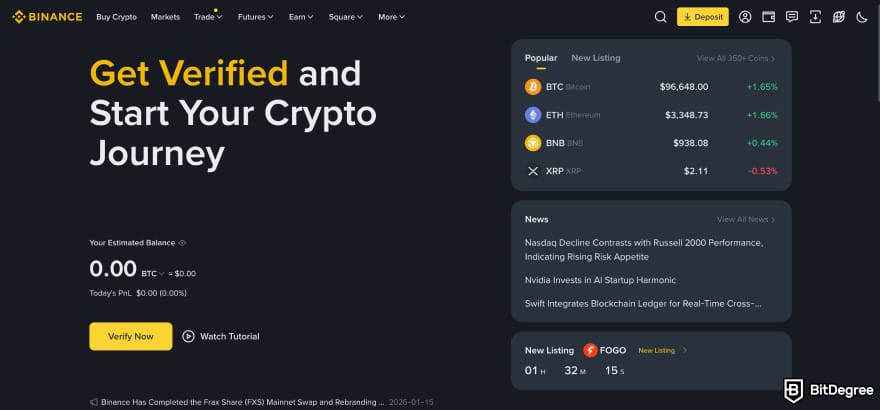
For new users, the biggest challenge probably comes from the sheer number of products competing for attention. That can be overwhelming when all you want to do is buy your first Bitcoin. Start with the basic trading view and leave the advanced interface alone until you’re comfortable.
OKX doesn’t really hide its trading-first identity, and that can feel dense if you’re just getting started with crypto. There’s a lot packed into the interface, and the visible bot and derivatives options can make the platform look more complicated than you need early on.
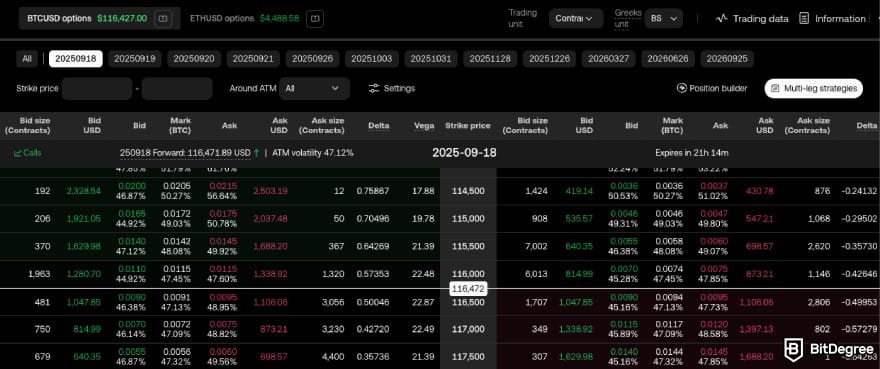
Still, OKX’s demo trading feature is a strong beginner tool. It lets you practice with virtual assets in a full account environment, covering futures, options, and bots without putting real money at risk. For users who want to learn how trading actually works, that’s a real advantage.
Verdict
For most new users, Binance is the easier starting point because of its stronger education resources and more intuitive entry path. OKX makes more sense if you already have some trading knowledge or want to practice active trading using demo mode.
Binance vs OKX for Active Traders
Things get more competitive when it comes to active trading. Both platforms cover virtually everything an active trader could need, so your preferred trading style and interface become the biggest deciding factors.
An active trader might prefer OKX if they:
- Run perpetual futures strategies and want a dedicated derivatives-first trading environment.
- Use trading bots regularly and want access to OKX's expansive bot ecosystem.
- Want access to institutional-quality execution tools without being an institution.
- Want to experiment with AI-driven trading through Agent Trade Kit and natural language strategy execution.
An active trader might prefer Binance if they:
- Need the deepest possible liquidity on major spot pairs for large or fast-moving orders.
- Use BNB fee discounts to progressively reduce trading costs as volume scales.
- Want access to a broader range of trading pairs across more asset classes.
- Prefer a single account that covers both trading and non-trading products.
In practice, many active traders end up sticking with whichever platform their trading style grew up on. If your first leveraged trade was on OKX, the interface probably feels intuitive. If you built your workflow around Binance’s order book depth, switching can feel like moving into a smaller apartment.
Verdict
OKX has the advantage for derivatives-focused traders who lean heavily on automation. Binance comes out stronger on liquidity, market breadth, and multi-asset access.
Binance vs OKX for Passive Users
Passive users, the ones who buy, hold, stake, and occasionally rebalance their portfolio, have good options on both platforms. That said, there’s still some difference in the details, and that can slightly change the overall experience.
Binance’s strength in this area is pretty obvious. It supports 300+ cryptocurrencies across a wide earning ecosystem, which means you can put many major holdings to work instead of letting them sit idle. Whether it’s BTC in flexible savings, ETH staked on-chain, or structured products like Dual Investment, there’s likely a product for it.
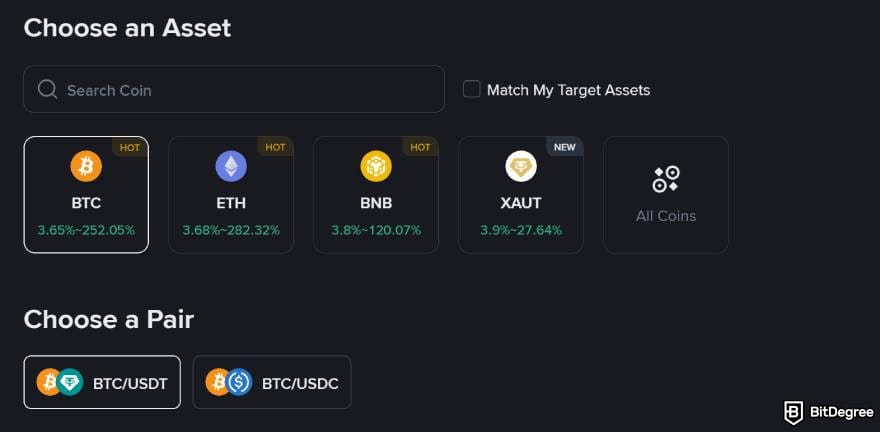
OKX’s Earn suite covers the basics of passive earning pretty well. The On-Chain Earn product is the more interesting part because the platform handles gas fees, node operations, and reward distribution automatically, taking a lot of the technical friction out of the process.
It’s true that the asset coverage’s not as wide as Binance’s, but it should be sufficient for portfolios concentrated in major assets.
Verdict
Binance has the advantage for passive users with diversified holdings across many tokens. OKX’s a solid choice for major assets and stablecoins, with on-chain staking that’s nicely simplified for non-technical users.
Final Verdict: Is Binance or OKX Better?
Binance and OKX are both good exchanges with enough depth to serve many different types of users. This isn’t a case where one’s obviously superior and the other’s just the backup option. Which platform works better for you depends entirely on what you want your crypto setup to look like.
OKX is the stronger pick if trading is your primary focus. Its derivatives infrastructure, bot ecosystem, institutional tools, and AI integration make it one of the best-equipped exchanges for active, strategy-driven traders.
📚 Read More: Full OKX Review
Binance is the stronger pick if you care about breadth. It brings deeper liquidity across more markets, 300+ Earn assets, a comprehensive education ecosystem, and broader fiat coverage. It’s built to grow with you from your first crypto purchase to a more advanced trading strategy.
📚 Read More: Full Binance Review
The short version: OKX wins if you care most about tool depth and trading precision. Binance wins if scale, ecosystem, and multi-asset access matter more. Neither’s objectively superior; it really comes down to whether you want a sharpened instrument or the whole toolbox.
Choose OKX if you’re mainly on an exchange for active trading. Choose Binance if you want maximum market access alongside a broad set of non-trading features.