South Korea’s Stablecoin Law Stuck Over Issuer Control Debate

Last Updated: December 15, 2025
✓ Fact Checked
Key Takeaways
- South Korea’s financial regulator missed the deadline to submit its draft law on stablecoin regulation;
- Lawmakers disagree with the central bank’s plan requiring banks to control over half of stablecoin issuers;
- The Bank of Korea suggests forming a joint policy group to oversee and approve stablecoins.
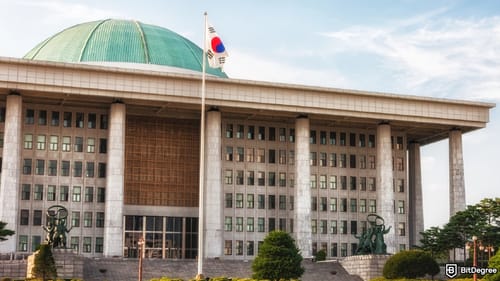
South Korea’s plan to introduce rules for stablecoins has been delayed once again, according to a report from Newsis.
The country’s financial authority, the Financial Services Commission (FSC), did not present its draft legislation by the date required by the ruling Democratic Party of Korea.
The FSC explained that more time was needed to work with other government bodies before finalizing its position.

Did you know?
Want to get smarter & wealthier with crypto?
Subscribe - We publish new crypto explainer videos every week!
What is Fantom? | Animated FTM Explainer


Reports from Yonhap Infomax said that the Democratic Party’s Digital Asset Task Force (TF) disagrees with the Bank of Korea’s (BOK) proposal. The central bank wants stablecoin issuers to be formed as a consortium in which banks hold at least 51% of the shares.
According to the task force, that approach could limit growth in the digital asset industry. One lawmaker in the group stated:
The Bank of Korea is advocating for a bank-centered consortium, but what the special committee values most is innovation.
However, the central bank believes that if the bank consortium model is not adopted, another decision-making structure should be created. The BOK suggested forming a policy consultative group that includes the Ministry of Strategy and Finance, the FSC, and the central bank.
Task force members said they share a similar view about setting up a joint policy group but want clearer details on how approvals and coordination would work.
One representative mentioned that timelines for approving new issuers would be discussed, and the central bank had agreed to cooperate.
Recently, China’s central bank reaffirmed that all digital currencies, including stablecoins, are banned as legal tender. Why? Read the full story.
Loading...
The Most Liked Crypto News Findings
Looking for more latest crypto news on related topic? We have gathered similar news articles for you to spare your time. Take a look!

Latest Crypto News & Videos







Trending Crypto News

You're Invited: ChangeNOW's Retrofuture Soiree Lands at TOKEN2049 Sing...

ChangeNOW and CoinRabbit Release Joint Research on Financial Privacy i...

Polygon's $250M Bet on Stablecoin Payments: Is Blockchain Coming for T...

Bybit Card Launches 10% Cashback Boost for New Cardholders