Paul McCartney’s Silent Song Challenges AI Use in Music Industry

Last Updated: November 17, 2025
✓ Fact Checked
Key Takeaways
- Paul McCartney released a nearly silent song to protest AI companies using artists’ work without permission or payment;
- The track appears on Is This What We Want?, a vinyl album highlighting how unchecked AI use could silence creativity;
- Musicians like Kate Bush, Hans Zimmer, and Sam Fender back the campaign for fair treatment and copyright protection.
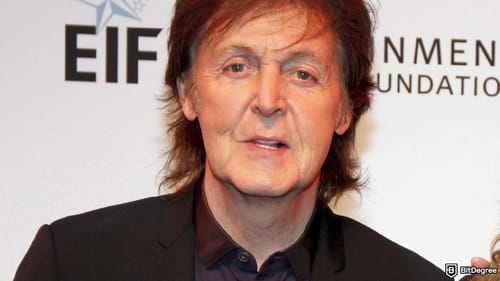
Paul McCartney has added his voice to a protest in the music industry by releasing a track made almost entirely of studio noise and silence.
According to a report by The Guardian, the piece is part of a campaign calling for protection against the use of artists’ work by artificial intelligence (AI) companies without consent or payment.
The former Beatle has contributed to a vinyl record titled Is This What We Want?, which features several tracks of near-silence. The album will be released in November.

Did you know?
Want to get smarter & wealthier with crypto?
Subscribe - We publish new crypto explainer videos every week!
What is Fantom? | Animated FTM Explainer


The track list carries a message directed at policymakers: "The British government must not legalise music theft to benefit AI companies".
McCartney’s track, titled (bonus track), begins with about a minute of faint tape hiss, followed by a short section of unclear sounds such as footsteps or a door opening. The noise fades again into quiet rustles, then fades to silence.
The record was organized by composer Ed Newton-Rex, who campaigns for fair copyright laws. He said he is worried that the UK government is listening more to large American technology companies than to British musicians.
Several musicians, including Kate Bush, Hans Zimmer, Sam Fender, and the Pet Shop Boys, are also supporting the campaign. They want the government to make sure artists are paid and credited when their music is used to develop generative AI systems.
Recently, David Sacks, an advisor to the Trump administration, warned that the biggest threat posed by AI is a system that monitors citizens and shapes what they are allowed to see and hear. Why? Read the full story.
Loading...
The Most Liked Crypto News Findings
Looking for more latest crypto news on related topic? We have gathered similar news articles for you to spare your time. Take a look!



Latest Crypto News & Videos







Trending Crypto News

ChangeNOW Announces NOW AI After Resolving Website Integration Vulnera...

You're Invited: ChangeNOW's Retrofuture Soiree Lands at TOKEN2049 Sing...

ChangeNOW and CoinRabbit Release Joint Research on Financial Privacy i...

Polygon's $250M Bet on Stablecoin Payments: Is Blockchain Coming for T...