Belarus Opens Doors to ‘Cryptobanks’ Under New Presidential Decree

Last Updated: January 16, 2026
✓ Fact Checked
Key Takeaways
- Belarus has officially approved a framework allowing “cryptobanks” to operate under direct state supervision;
- The new decree connects crypto operations with traditional finance instead of separating them;
- Only registered firms in the Hi-Tech Park and listed by the central bank can provide crypto-related banking services.
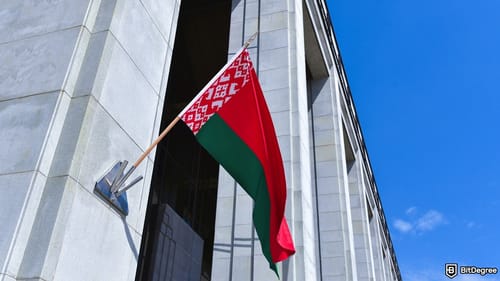
Belarus has set up clear rules for financial firms that handle both regular money and digital assets.
The country officially allows “cryptobanks” to operate under government supervision as part of its regulated banking network.
President Alexander Lukashenko approved the new system through Decree No. 19, which explains what these banks can do and how they must operate.

Did you know?
Want to get smarter & wealthier with crypto?
Subscribe - We publish new crypto explainer videos every week!
What is an NFT? (Explained with Animations)

Instead of separating crypto activity from regular finance, the new rules connect it directly to existing oversight systems.
These new institutions will function as joint-stock companies that can provide token-related services with standard banking features such as payments and other financial activities.
To operate, a cryptobank must become a resident of Belarus’s Hi-Tech Park, a state-run innovation zone that hosts technology companies. They also need to be added to a special list managed by the country’s central bank.
Only firms that meet these conditions and agree to full transparency will be allowed to participate.
According to the decree, cryptobanks must follow the same rules as other non-bank financial institutions. They are also required to follow the decisions of the Hi-Tech Park’s supervisory board.
Officials say this dual supervision will let cryptobanks combine traditional financial tools with the benefits of digital tokens.
Recently, Moldova announced plans to roll out its first national crypto regulations by the end of 2026. What does the proposal cover? Read the full story.
Loading...
The Most Liked Crypto News Findings
Looking for more latest crypto news on related topic? We have gathered similar news articles for you to spare your time. Take a look!



Latest Crypto News & Videos







Trending Crypto News

You're Invited: ChangeNOW's Retrofuture Soiree Lands at TOKEN2049 Sing...

ChangeNOW and CoinRabbit Release Joint Research on Financial Privacy i...

Polygon's $250M Bet on Stablecoin Payments: Is Blockchain Coming for T...

Bybit Card Launches 10% Cashback Boost for New Cardholders