AI Steps In as Biotech Struggles to Fill Critical Talent Gaps

Last Updated: February 06, 2026
✓ Fact Checked
Key Takeaways
- Biotech firms struggle to treat rare diseases because talent shortages slow progress despite advanced tools;
- Insilico promotes AI as a way for small teams to handle more work and target diseases with little research;
- Insilico’s data-driven platform tests drug ideas, explores new uses for old medicines, and supports ALS research.
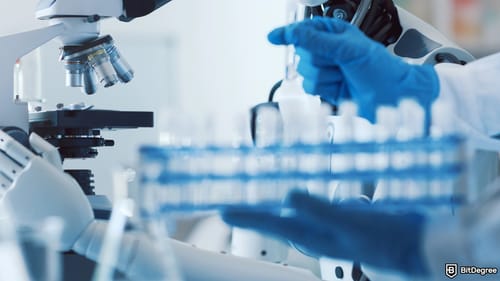
Leaders at Insilico Medicine and GenEditBio said the biotech industry has advanced tools to edit genes and design new medicines, yet many rare conditions still lack treatment.
They explained that progress has slowed because companies cannot hire enough specialists to handle the workload.
They viewed artificial intelligence (AI) as a way to expand what small teams can achieve and to address diseases that have received little attention.

Did you know?
Want to get smarter & wealthier with crypto?
Subscribe - We publish new crypto explainer videos every week!
What is Staking Crypto? (Rewards & Risks Explained SIMPLY)


This point came up at Web Summit Qatar, where Insilico’s president, Alex Aliper, outlined the company’s plan to build what he called “pharmaceutical superintelligence".
He also highlighted “MMAI Gym", a new effort that trains large language models such as ChatGPT and Gemini so they can perform tasks usually handled by domain-specific systems. His long-term aim is to create a single model that handles many steps in drug development with high accuracy.
Insilico uses a platform that collects biological, chemical, and clinical data. The system proposes disease targets and possible drug molecules based on patterns in that data.
The company said this setup replaces many manual tasks that once needed large research teams.
One project focused on ALS, a rare neurological condition. Insilico used its models to study whether existing medicines might help treat it.
Recently, Columbia University astrophysicist David Kipping explained that AI completes much of the work they once did themselves. What did he say? Read the full story.
Loading...
The Most Liked Crypto News Findings
Looking for more latest crypto news on related topic? We have gathered similar news articles for you to spare your time. Take a look!



Latest Crypto News & Videos







Trending Crypto News

You're Invited: ChangeNOW's Retrofuture Soiree Lands at TOKEN2049 Sing...

ChangeNOW and CoinRabbit Release Joint Research on Financial Privacy i...

Polygon's $250M Bet on Stablecoin Payments: Is Blockchain Coming for T...

Bybit Card Launches 10% Cashback Boost for New Cardholders