





Bybit vs Phemex – In-Depth Comparison
Choosing between Bybit and Phemex isn't as simple as asking which exchange is "better." Both started as derivatives-first platforms, both have expanded into full-service crypto exchanges, and both offer low trading fees built for active traders. However, they are not equal platforms.
Bybit is the larger exchange by a significant margin, with over 85 million registered users and a platform that has grown well beyond its derivatives roots.
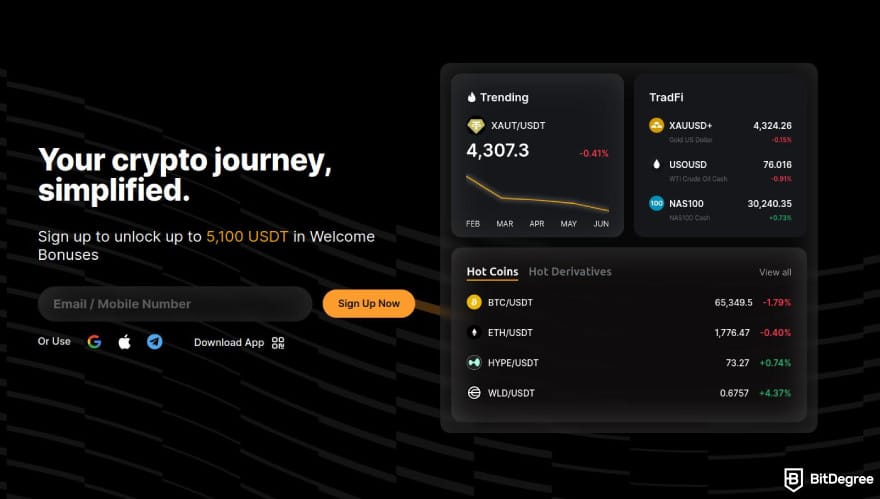
Phemex, meanwhile, serves over 10 million users and has carved out a focused identity around fast execution, low futures fees, and a clean derivatives experience.
So when comparing Bybit vs Phemex, the real question is: Is Phemex a strong enough alternative for the way you trade, or does Bybit simply do everything Phemex does, and more?
Bybit | Phemex | |
|---|---|---|
Best for | Active traders wanting deep liquidity and a full ecosystem | Futures-focused traders who prioritize low maker fees |
Main strengths | Scale, liquidity, and ecosystem breadth | Low derivatives maker fees and fast execution |
Futures fees | 0.02% maker/0.055% taker | 0.01% maker/0.06% taker |
Copy trading | Strong, multiple modes | Available, growing |
Registered users | 85M+ | 10M+ |
Overall verdict | Stronger all-around platform for most traders | Better for high-volume limit-order futures traders |
Table: Bybit vs Phemex quick comparison
Bybit is the stronger choice for most traders. Phemex holds a real edge in a specific context, high-volume futures trading with limit orders, but outside of that, Bybit covers more ground with greater depth.
Bybit vs Phemex – Market Position
Bybit is the bigger platform by a wide margin in this comparison. As the world's second-largest cryptocurrency exchange by trading volume, with over 85 million registered users and a daily trading volume exceeding $44 billion at the time of writing, Bybit operates at a scale that brings practical advantages most traders feel directly. A larger exchange typically means deeper order books, tighter spreads, faster order matching, and more stable execution during periods of high volatility.
Bybit also benefits from a growing regulatory footprint. It has made significant progress in European licensing, including in Vienna, and operates in over 160 countries.
Phemex is a much smaller platform, but it is not negligible. It serves over 10 million users across 150+ countries and has been growing steadily since its 2019 launch.
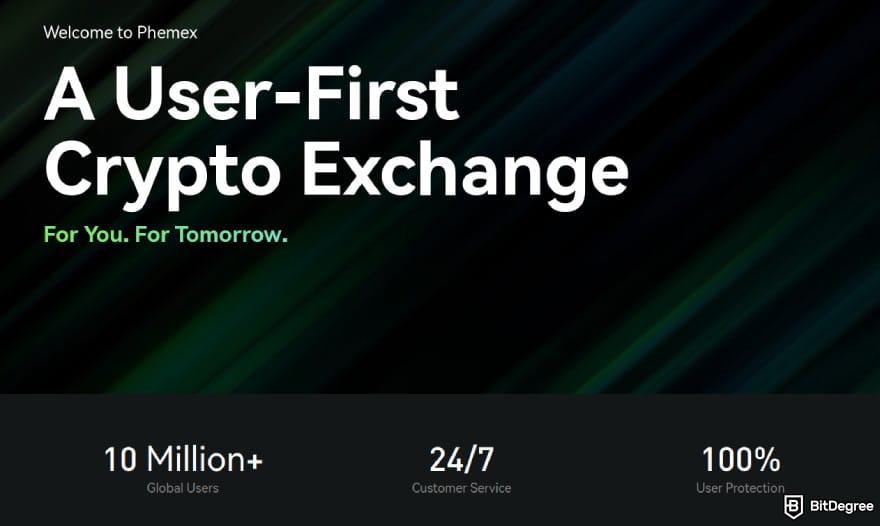
What makes its market position interesting is that Phemex was founded by former Morgan Stanley executives with an explicit derivatives focus. That heritage still shows in the execution speed. Its matching engine processes up to 300,000 transactions per second with sub-millisecond order response times, upgraded further in 2026 to 40,000 TPS on the futures engine specifically.
However, the liquidity gap between the two is real. Phemex's daily spot volume was approximately $839 million, derivatives volume was roughly $1.6 billion, and open interest was $2.5 billion as of June 2026.
Order book depth on Phemex is adequate for positions under $100,000 notional on major pairs, but below the top 30 assets by market cap, open interest thins, and spreads widen. For most retail traders, this will not matter. For larger or more active traders, it can.
Verdict
Bybit leads on scale, liquidity, and global reach. Phemex competes by being fast, cost-efficient on futures, and focused, but the gap in market depth is real and matters for larger position sizes.
Bybit vs Phemex – Trading Features
Both exchanges have expanded well beyond their derivatives origins and now offer a comparable range of trading product categories. The differences are in depth and maturity, not in what's listed on the menu.
Bybit Trading Features
For basic trading, Bybit offers:
- Spot trading across 300+ pairs, including direct crypto-to-crypto and fiat-supported routes.
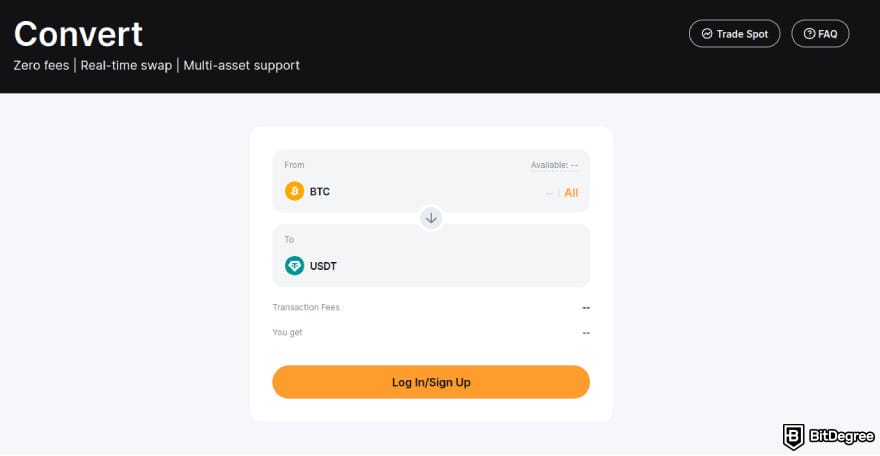
- Convert for quick swaps without the full trading interface.
- P2P trading for direct user-to-user transactions across 30+ fiat currencies.
- Demo trading for risk-free practice with virtual funds.
For advanced trading, Bybit supports:
- USDT and USDC perpetual contracts with up to 100x leverage.
- Inverse futures for crypto-settled derivatives.
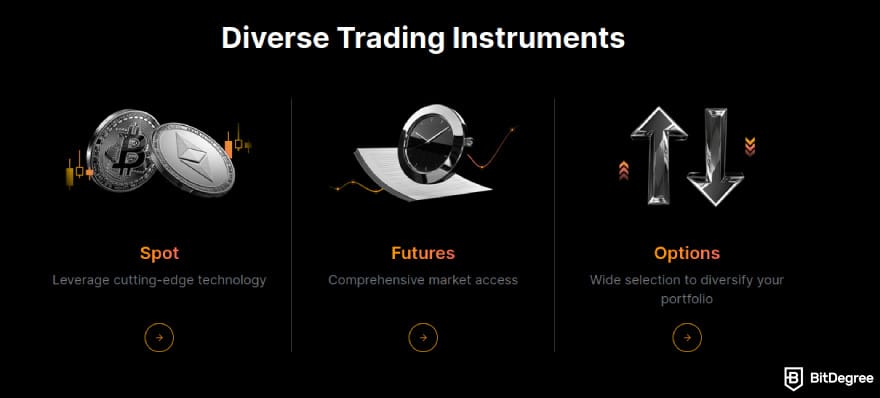
- Options trading, including USDC options.
- Spot margin trading through the Unified Trading Account.
For automated and strategy-based trading, Bybit includes:
- Copy trading across multiple modes: Classic mirroring, strategy allocation, and MT5-style TradFi copying in supported regions.
- Trading bots, including Spot Grid, Futures Grid, DCA, Futures Martingale, Futures Combo, and Auto-Invest, with Aurora AI generating optimized configuration sets.
- API trading for algorithmic strategies.
For broader market access, Bybit also offers:
- TradFi integration via MT5, giving access to tokenized equities, forex, commodities, and indices in select regions.
- OTC and block trading for large orders requiring customized pricing and minimal market impact.
- Institutional tools include TWAP, Iceberg orders, and a Unified Trading Account that consolidates margin across products.
Phemex Trading Features
For basic trading, Phemex offers:
- Spot trading across 600+ pairs.
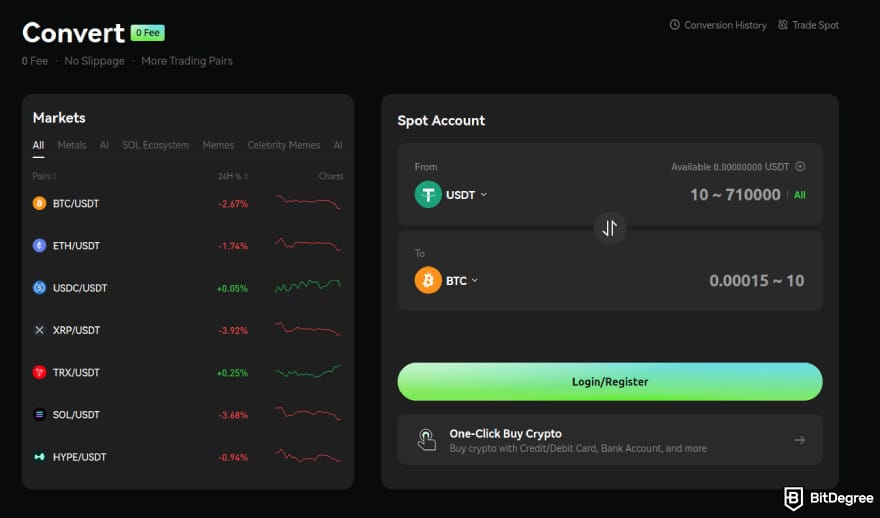
- Convert for quick crypto swaps.
- P2P trading for direct buyer-to-seller transactions.
- Mock/simulated trading via a dedicated testnet, one of the most fully featured practice environments on any centralized exchange.
For advanced trading, Phemex supports:
- USDT-M and COIN-M perpetual contracts with up to 100x leverage on major pairs.
- Spot margin trading with up to 5x leverage.
- On-chain derivatives for trading high-potential coins with leverage directly on-chain.
For automated and strategy-based trading, Phemex includes:
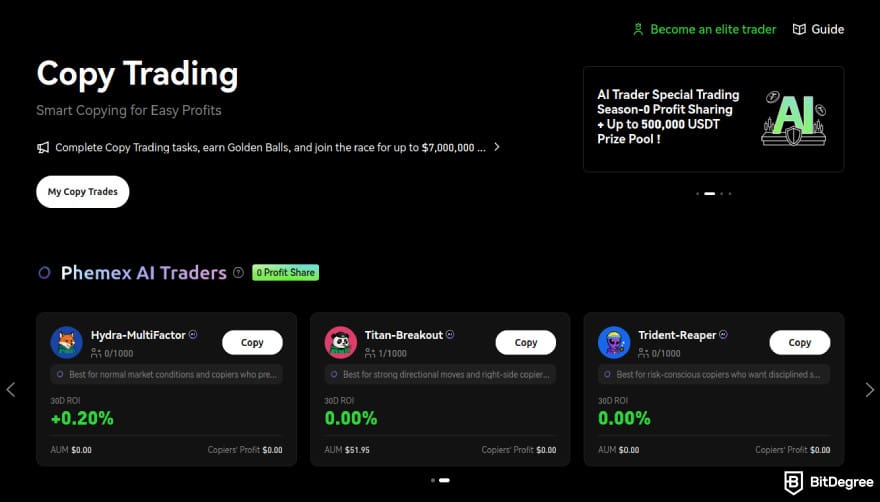
- Copy trading with a growing pool of 17,000+ lead traders.
- Trading bots, including Spot Grid, Contract Grid, and Martingale strategies.
- API trading for algorithmic execution.
For broader market access, Phemex also offers:
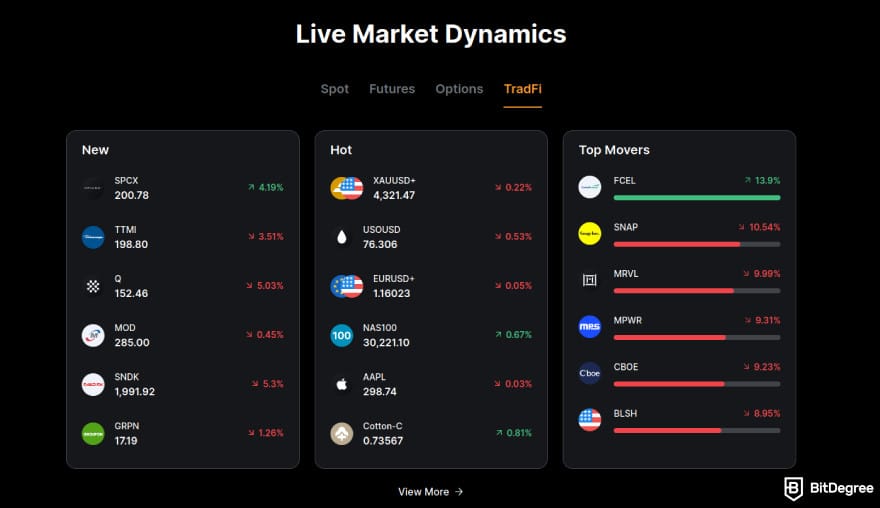
- TradFi futures launched in February 2026, providing 24/7 access to tokenized stocks (including Tesla, Apple, Nvidia, Meta, Intel), gold, silver, and indices, with commodities and forex in subsequent phases.
- On-chain trading for meme coins and early-stage assets directly on-chain via the Phemex interface.
Verdict
Both exchanges cover the same major product categories. Bybit has a more mature and deeply featured trading suite, particularly for derivatives, options, institutional tools, and automation. Phemex holds a specific edge with its testnet environment and on-chain trading layer, and its TradFi launch is competitive, though still new.
Bybit vs Phemex – Fees
Both Bybit and Phemex are known for competitive fees. At the non-VIP baseline, spot trading costs the same on both platforms. The more meaningful difference appears in futures.
Bybit | Phemex | |
|---|---|---|
Spot fees (VIP 0) | 0.1% maker/0.1% taker | 0.1% maker/0.1% taker |
Native token discount | MNT: 25% off spot, 10% off futures | PT: 20% off spot, 10% off futures |
Futures fees (VIP 0) | 0.02% maker/0.055% taker | 0.01% maker/0.06% taker |
VIP structure | Volume or asset balance-based | Volume or asset balance-based |
Table: Bybit vs Phemex fees comparison
For spot trading, both exchanges start at 0.1% and reduce fees as 30-day trading volume grows. Both platforms also offer a native token fee discount: Bybit's MNT token gives 25% off spot and 10% off futures fees, while Phemex's own token (PT) offers a slightly lower 20% off spot and 10% off futures. Neither discount requires holding large amounts; both are designed to be accessible at small balances.
📚 Read More: Bybit Fees Explained
The most notable difference is in futures. Phemex's 0.01% maker fee is half of Bybit's 0.02%. For traders who execute primarily through limit orders, which qualify as maker orders, this is a real and compounding advantage. On a $1 million monthly futures volume, the difference between 0.01% and 0.02% amounts to $100 per month, or $1,200 per year, before VIP adjustments.

On the taker side, Phemex charges 0.06% versus Bybit's 0.055%, a minor difference that slightly favors Bybit for market order users.
$1,000 Futures Trade Fee Comparison
Let's say you open a $1,000 BTCUSDT perpetual position using a market order (taker):
On Bybit, at the standard 0.055% taker fee:
$1,000 × 0.055% = $0.55
On Phemex, at the standard 0.06% taker fee:
$1,000 × 0.06% = $0.60
Now with a limit order (maker), the same $1,000 position:
On Bybit at 0.02%: $1,000 × 0.02% = $0.20
On Phemex at 0.01%: $1,000 × 0.01% = $0.10
For a round-trip trade, entry and exit, using limit orders:
Entry | Exit | Round-trip | |
|---|---|---|---|
Bybit futures (maker both ways) | $0.20 | $0.20 | $0.40 |
Phemex futures (maker both ways) | $0.10 | $0.10 | $0.20 |
Table: Bybit vs Phemex round-trip fees
The difference looks small on a single trade. Across hundreds of limit-order futures trades per month, it becomes significant.
Verdict
Spot fees are equal at baseline on both exchanges, and both offer a comparable native-token discount mechanism. Phemex has the edge on futures maker fees. Its 0.01% rate is one of the lowest available on any major exchange. Bybit has a slight edge on futures taker fees and offers a slightly larger spot discount via MNT. For limit-order futures traders, Phemex remains the more cost-efficient choice.
Bybit vs Phemex – Liquidity & Execution
Liquidity is where the gap between Bybit and Phemex is most visible in practice, though it's worth being precise about where each platform's strength actually lies.
Bybit's liquidity is concentrated primarily in derivatives, particularly perpetual futures on major assets like Bitcoin and Ethereum, where deep participation supports efficient execution for active traders. Its spot markets are comparatively less prominent. Independent liquidity benchmarks consistently place exchanges like Binance and Bitget ahead of Bybit on raw spot order book depth.
High futures trading volume sustains tighter spreads and more reliable execution for leveraged positions, especially on BTC and ETH contracts, though depth can fluctuate during periods of high volatility.
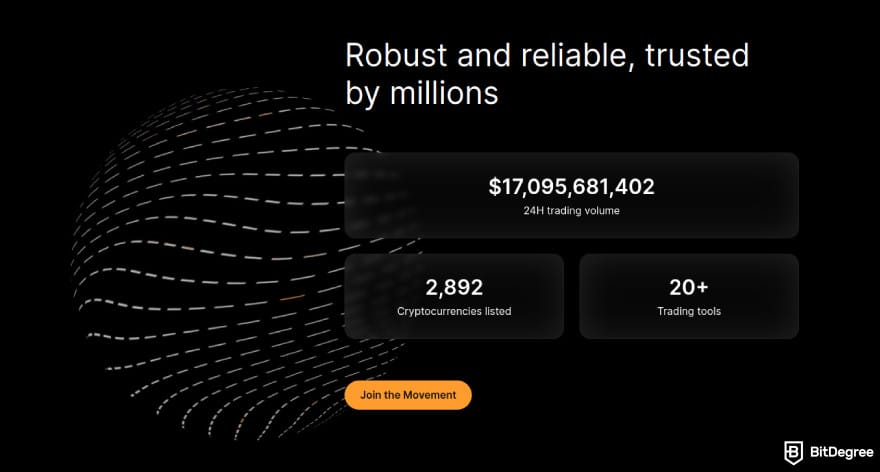
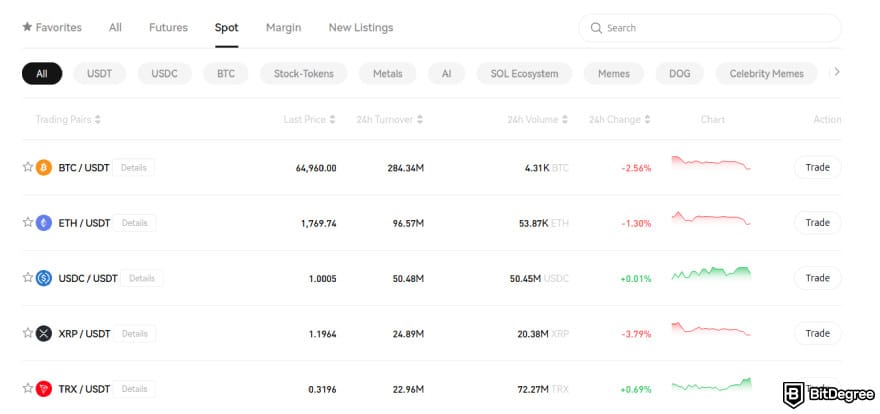
Phemex's execution engine is fast, with sub-millisecond order response, and the throughput has recently been upgraded to 40,000 TPS on futures specifically. As of June 2026, Phemex's daily spot volume runs at roughly $839 million, with derivatives volume around $1.6 billion and open interest near $2.5 billion.
That's a substantial gap compared to Bybit's scale as one of the world's top exchanges by volume. In practice, this means Phemex's order books are generally adequate for retail-sized trades on its most active pairs (BTC, ETH, major altcoins), but traders working with larger position sizes or less common pairs should expect noticeably less depth than on Bybit.
It's also worth noting that, on limit-order strategies specifically, execution quality matters differently than it does for market orders. A trader who enters and exits primarily via limit orders is less exposed to thin order books than someone relying on market orders, since limit orders rest on the book rather than consuming existing liquidity.
Verdict
Bybit holds a clear liquidity advantage over Phemex, particularly in derivatives, where its scale and trading volume support deeper books and more stable execution. Phemex's engine is fast, and its execution is solid for retail-sized trades on major pairs, but it does not match Bybit's depth — a gap that becomes more relevant for larger positions or less liquid markets.
Bybit vs Phemex – Security & Trust
2025 was an extraordinary year for exchange security incidents, and both Bybit and Phemex were directly affected. This is a significant point in any Bybit vs Phemex comparison. Not because it disqualifies either platform, but because how each exchange handled its incident says something real about operational maturity.
Bybit | Phemex | |
|---|---|---|
Two-factor authentication | ✓ | ✓ |
Anti-phishing code | ✓ | ✓ |
Withdrawal address whitelist | ✓ | ✓ |
Proof of Reserves | ✓ | ✓ |
Cold wallet storage | Majority of assets in multi-signature cold storage | Unique cold wallet per user post-2025 upgrade |
Custody model | Multi-signature + Trusted Execution Environment + Threshold Signature Scheme | Fireblocks MPC (institutional custody, post-January 2025) |
Table: Bybit and Phemex security features
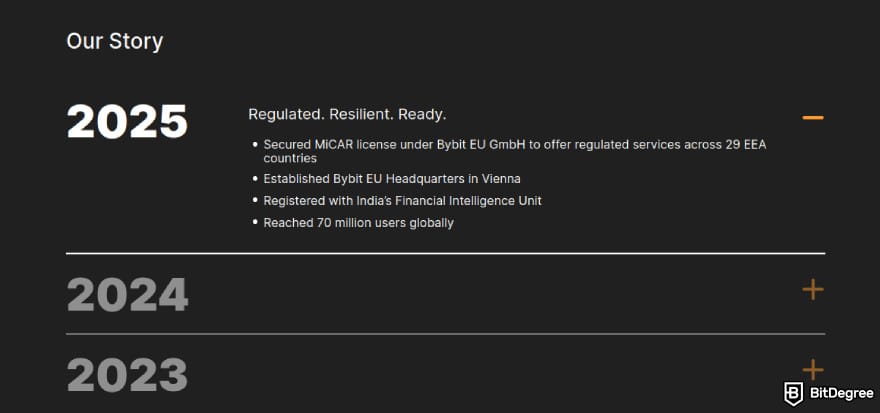
Bybit's February 2025 incident was the largest crypto hack in history. Approximately $1.4 billion in ETH and staked ETH were stolen from a multisig cold wallet during what appeared to be a routine transfer to a warm wallet. Attackers compromised the signing interface itself, tricking the required signers into approving a malicious transaction without realizing it.
Bybit's response was fast: CEO Ben Zhou addressed the incident publicly within hours, withdrawals continued processing throughout, and Hacken's verified Proof of Reserves confirmed reserves remained above 100% of liabilities just days after the breach. Bybit has published Hacken-audited PoR reports monthly since June 2024, with the most recent showing reserve ratios of 110% for USDT and 153% for USDC.
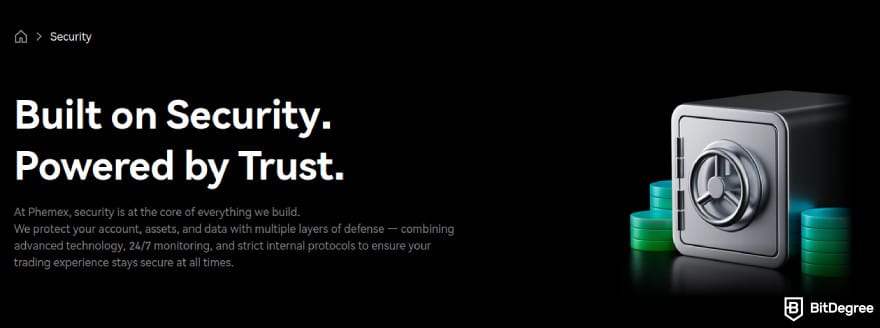
Phemex's January 2025 incident was smaller in dollar terms but structurally notable: hackers drained roughly $85 million from hot wallets across 16 separate blockchains, while cold wallet holdings were unaffected. Phemex suspended deposits and withdrawals, published its own Proof of Reserves, covered all user losses, and restored full functionality within three days.
In the aftermath, Phemex rebuilt its custody architecture around Fireblocks, an institutional custody platform used by more than 2,400 organizations, including banks and ETF custodians, and has secured over $10 trillion in digital asset transactions. Its current setup uses Fireblocks' multi-party computation model, which splits private keys across separate secure environments so no single compromised component can reconstruct a full key, combined with a unique cold wallet address per user.
One distinction worth noting: Bybit's reserve reporting carries third-party verification from Hacken, an independent security firm, whereas Phemex's current Proof of Reserves figures, including a recent claim of 131% overcollateralization, are self-published by Phemex rather than externally audited in the same way.
Both formats use Merkle tree verification, which allows users to independently confirm their own holdings are included, but the level of third-party oversight differs between the two.
Neither platform identifies the attacker behind its 2025 incident with full certainty through an official law enforcement statement. Bybit's attack has been attributed to the Lazarus Group by independent blockchain investigators, including Arkham Intelligence and researcher ZachXBT.
Phemex's attacker was never officially identified. Its CEO described the attack only as "sophisticated", though some researchers have suggested North Korea-linked involvement based on similarities to other heists from the same period.
Verdict
Both exchanges were tested by serious security incidents in 2025, and both fully resolved them without lasting customer losses. Bybit's incident was larger in scale, but its Hacken-verified reserve reporting and rapid public response set a high bar for crisis transparency. Phemex's post-incident shift to Fireblocks custody brought its architecture in line with institutional standards, though its reserve reporting currently lacks the same independent verification Bybit has built over multiple years. Account-level security features are otherwise comparable on both platforms.
Bybit vs Phemex – Broader Ecosystem
Outside of trading, both exchanges have built product stacks that go beyond simple execution venues, but the depth of those stacks differs.
Bybit's ecosystem is extensive. Its Earn section includes flexible and fixed savings products, Launchpool (staking supported coins to earn new token distributions), and Launchpad (token sales via a subscription track using MNT or a lottery track using USDT). Launchpad has hosted 110 projects and raised over $1.8 billion as of March 2026, a meaningful track record for a feature many users may overlook.
The platform also runs a Web3 wallet, a built-in seed-phrase self-custody wallet with access to on-chain features and Bybit Pay for in-app crypto payments, and offers a Bybit Card for spending crypto on everyday purchases, available in supported regions.

Its copy trading infrastructure supports multiple modes and connects to the MT5-style TradFi integration for users who want to mirror strategies in traditional markets. The Aurora AI bot system adds machine learning-based configuration suggestions across six bot types, making it one of the more sophisticated automation tools available on a centralized exchange.
Phemex's ecosystem has grown meaningfully, though it is narrower. Its Earn products include Fixed and Flexible Savings on stablecoins and major assets, a BTC Vault that pays yield in BTC rather than USDT, On-chain Earn (staking with up to 4.25% APY on supported assets, with select promotional campaigns on individual tokens occasionally running much higher for limited periods), Launchpool, and the Phemex Lending Protocol, where lenders supply assets to a pool and earn hourly rewards denominated in Phemex Token (PT).
The platform also launched Phemex TradFi in February 2026, 24/7 futures on tokenized stocks, gold, silver, and indices, which reportedly hit $10 billion in monthly volume within its first month, driven partly by gold demand amid geopolitical volatility. Phemex also offers CandyDrop, a task-based airdrop system, and a Learn & Earn program, both of which contribute to a more education-oriented engagement layer than Bybit's.
Notably, Phemex does not offer an equivalent to Bybit Card. Its Web3 layer is also less developed. The platform offers on-chain trading for meme coins and early-stage assets, but lacks the multi-chain DeFi wallet connectivity of Bybit's Web3 wallet.
Verdict
Bybit has a broader and more mature ecosystem, including the Bybit Card, a more developed Web3 wallet, a larger and longer-running Launchpad program, and a wider automation suite. Phemex's ecosystem is growing and its TradFi launch has shown real early traction, with some genuinely distinctive products like the BTC-denominated Vault. Overall product breadth still favors Bybit, but Phemex is not as thin here as it might first appear.
Bybit vs Phemex – Fiat Deposits & Withdrawals
Neither Bybit nor Phemex is a fiat-first exchange, but both offer fiat onramps and offramps, just with very different levels of transparency about what they actually cost.
Bybit | Phemex | |
|---|---|---|
Transfer methods | SEPA, FPS, PIX, Zen.com, local bank transfer | SWIFT/Wire, SEPA, FPS (via Legend Trading) |
Supported fiat | EUR, GBP, BRL, ARS, MXN + others by region | USD, EUR, CHF, AUD, GBP, JPY |
Deposit fees | Varies by method | $0 flat; buying with fiat balance: 2%–0.08% by tier |
Withdrawal fees | Varies by method | 2%+$30 down to 0.08% by tier (SEPA/FPS: €2/£2 instead of $30) |
Processing time | Varies by method | SWIFT/SEPA: 1–2 business days. FPS: 10 min–1 business day |
Table: Bybit vs Phemex fiat deposit and withdrawal comparison
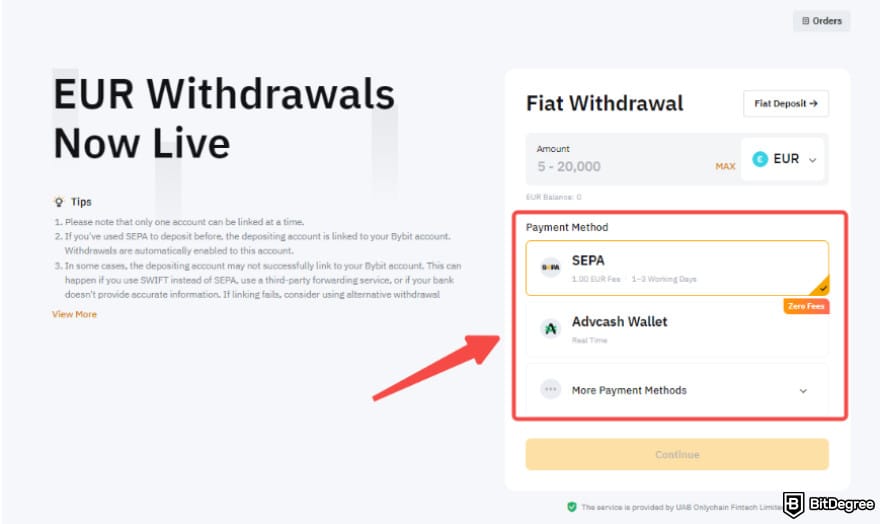
Bybit supports fiat through regional payment rails: SEPA for EUR, FPS for GBP, PIX as an electronic wallet option for BRL, Zen.com, and local bank transfer options in select markets (Argentina, Mexico, and others). Notably, Bybit's own Help Center does not publish a fixed fee schedule or processing time for fiat withdrawals; it directs users to check the live withdrawal page for their specific currency and payment method, since rates vary accordingly.
Independent testing has found SEPA withdrawals carrying a 2.60 EUR fee with funds arriving in under a minute, but these figures aren't guaranteed across all currencies or methods. Withdrawal accounts are also tied to whichever method was used for a prior deposit in most cases, and adding a new withdrawal account can take 3–5 business days for review.
Phemex's fiat process runs through Legend Trading, a licensed Money Services Business, supporting SWIFT/Wire, SEPA, and FPS transfers in USD, EUR, CHF, AUD, GBP, and JPY. Unlike Bybit, Phemex publishes its full fee schedule directly: deposits are free, though buying crypto with a fiat balance afterward carries its own tiered fee starting at 2% for amounts between $50–$499 and dropping to 0.08% for amounts of $500,000 or more.
Withdrawals are not free. They follow a similar tiered structure, charging 2% plus a flat $30 for SWIFT/Wire withdrawals between $50–$499, scaling down to 0.08% at the highest tier, with SEPA and FPS using a flat €2 or £2 fee instead of $30 at the lower tiers. Processing time is 1–2 business days for SWIFT and SEPA, and as fast as 10 minutes for FPS.
Verdict
Phemex is the more transparent of the two on fiat costs. Its full fee schedule is published openly, and while withdrawals aren't free, the structure is easy to understand upfront. Bybit's fiat rails are fast and reasonably priced where tested, but it doesn't publish a fixed fee or processing-time schedule, so users need to check the live withdrawal page for their specific currency before assuming a cost. For someone who wants to know exactly what a fiat withdrawal will cost before starting one, Phemex currently makes that easier.
Bybit Trading Walkthrough
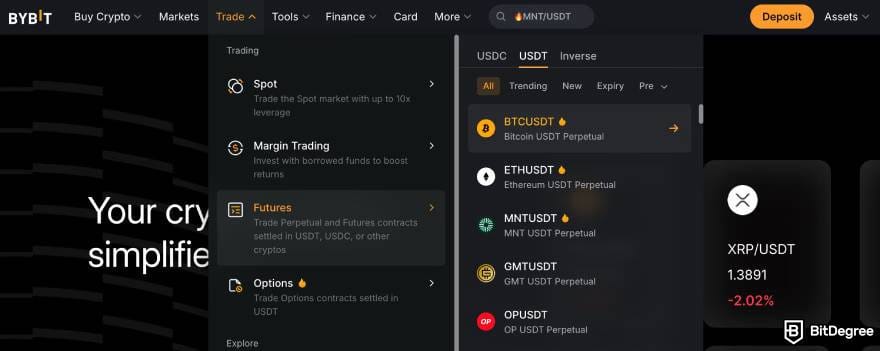
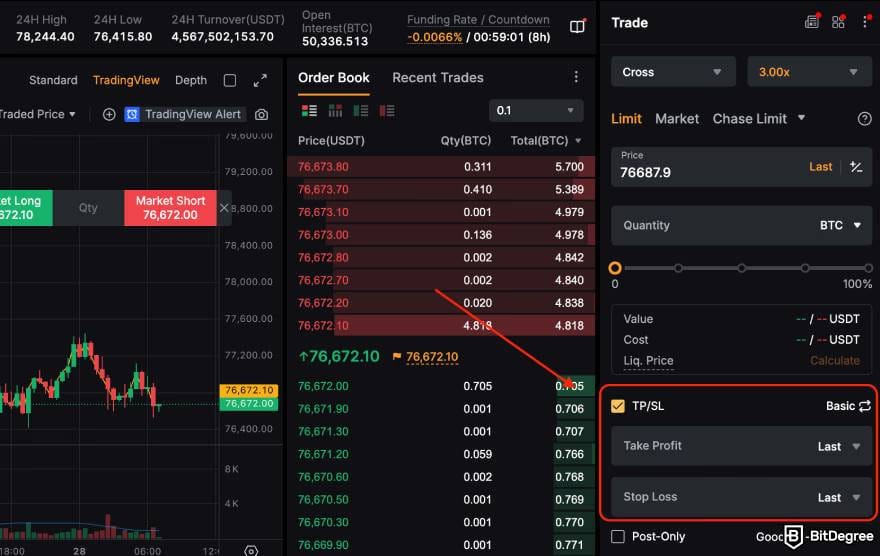
One of Bybit’s most popular trading features is perpetual futures, so let’s look at how opening a BTCUSDT perpetual contract works.
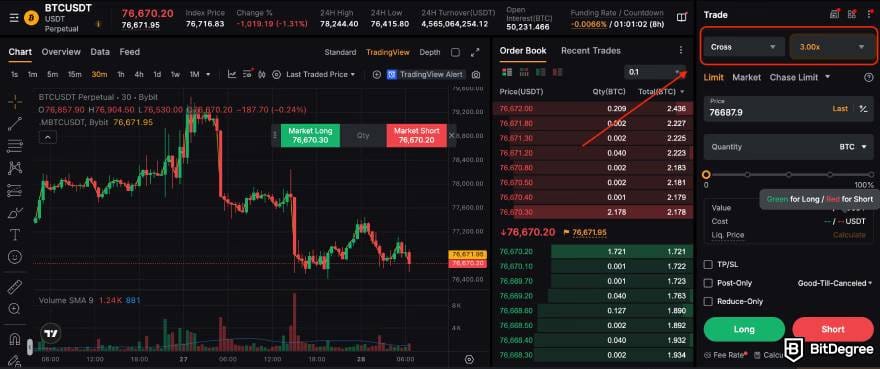
Beginners often misunderstand leverage and assume it simply “boosts profit”. In reality, it also reduces the margin of error.
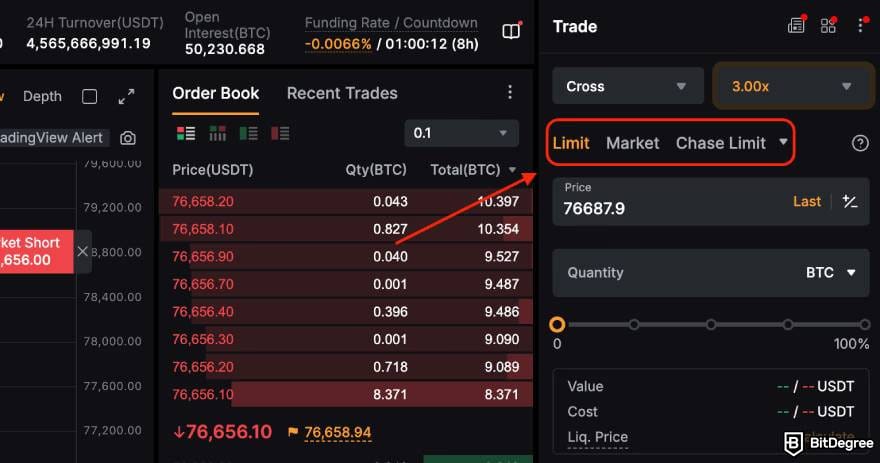
Other order types are available as well, but market and limit orders are the simplest ones to understand first.
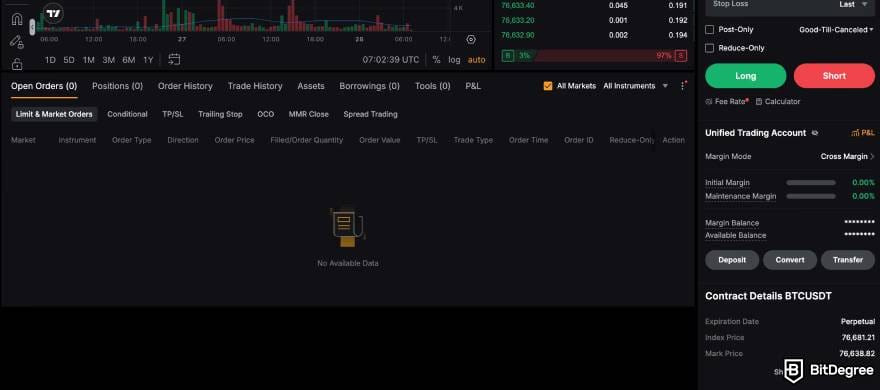
After confirming the trade, you should monitor:
- Entry price;
- Mark price;
- Liquidation price;
- Unrealized P&L;
- Funding fee;
- Margin ratio;
- Stop-loss and take-profit status.
This is where futures trading differs heavily from spot trading. With spot, the value of the asset can fall, but the user still owns the asset unless they sell. With leveraged perpetuals, the position can be liquidated if the market moves too far against them.
If you close with a market order, remember that this usually means paying taker fees again. This is why the round-trip cost matters. You pay when entering and exiting the position, and funding rates may also apply while the position is open.
Phemex Trading Walkthrough
Phemex makes it easy to access all of its trading features. In this example, let’s take a look at how to use the spot trading feature on the platform:

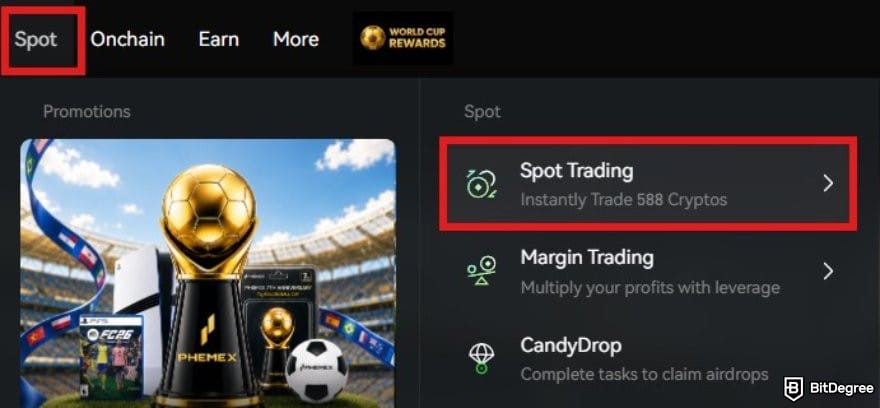
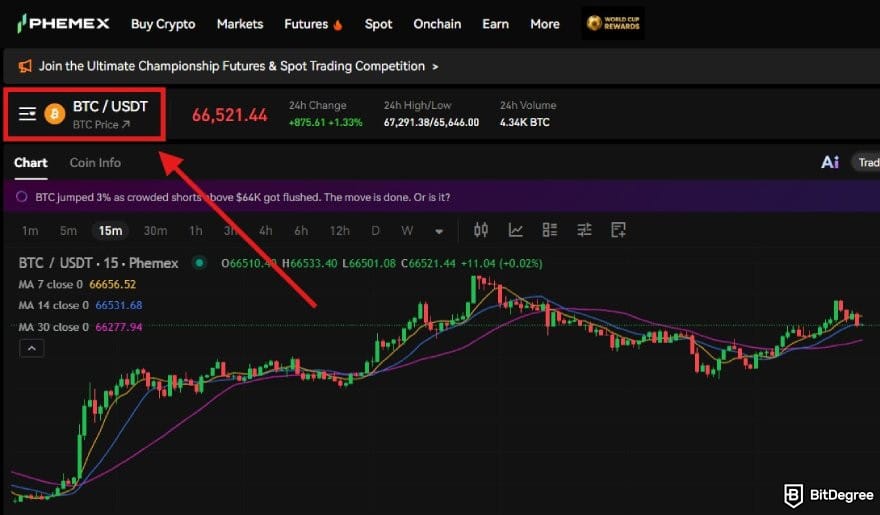
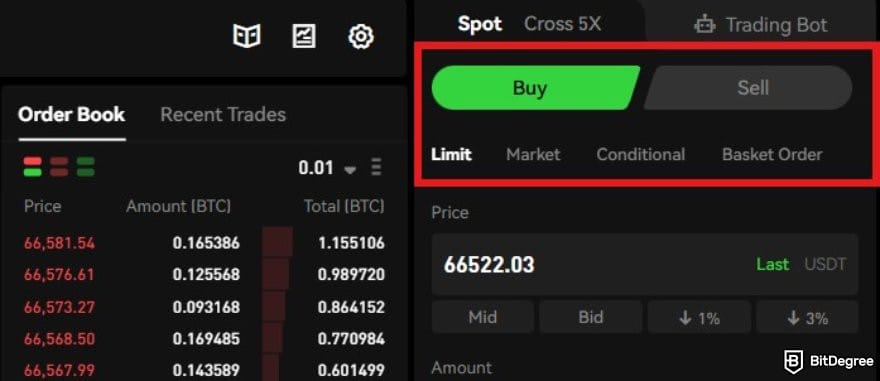
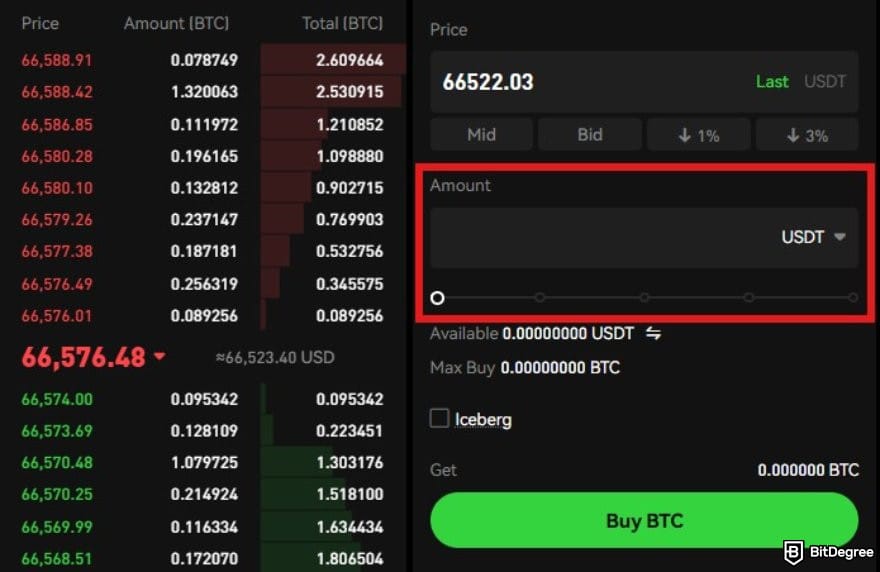
Keep in mind that Phemex organizes spot and derivatives in separate account spaces. Unlike Bybit's UTA, assets do not flow automatically across products. Transfers between accounts are manual but straightforward via the [Assets] menu.
Bybit vs Phemex For Beginners
Neither Bybit nor Phemex markets itself primarily as a beginner exchange, and that's worth being honest about upfront. Both platforms are derivatives-focused at their core, with interfaces that reflect that.
That said, both have made meaningful efforts to accommodate newer users. Bybit offers demo trading with virtual funds, a comprehensive Learn section, a Convert feature for quick swaps without navigating the full trading interface, and simple P2P buying options for users who want to purchase crypto with fiat before engaging with markets. Its mobile app is widely regarded as polished and accessible.
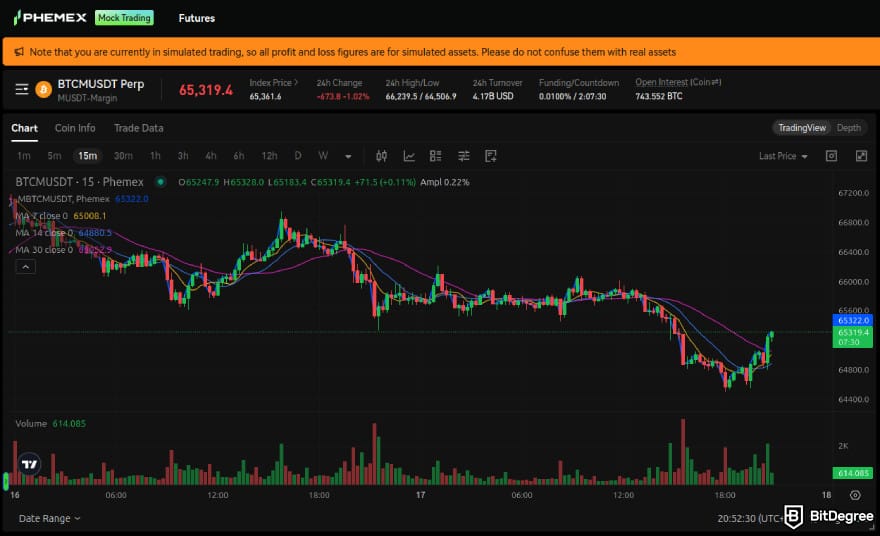
Phemex arguably does more for total beginners in one specific way: its full testnet mirrors the live platform exactly, including futures, allowing a new trader to practice complex order types, leverage mechanics, and position management without any financial risk.
Its Learn & Earn program also rewards users for completing educational content, thereby building foundational knowledge and platform familiarity.
For both exchanges, the main learning curve is derivatives. If a new user intends to stick to simple spot buying and holding, either platform works, but there are simpler, more regulated alternatives that may be more appropriate as a first exchange.
Verdict
Phemex's testnet gives it a slight edge for beginners who want to learn derivatives safely. Bybit's broader content library and cleaner mobile experience make it more approachable for general new users. Neither is the first choice for a complete crypto beginner, but both are usable with patience.
Bybit vs Phemex For Active Traders
This is where both exchanges are most at home and where the comparison becomes most direct.
Active traders on Bybit benefit from deep liquidity on major perpetuals, a wide range of order types, including conditional orders and TWAP, the Unified Trading Account for cross-margin efficiency, Aurora AI for bot configuration, and strong copy trading infrastructure across multiple modes.
The platform's institutional tools, like block trading, OTC desk, and Iceberg orders, show that active high-volume traders do not outgrow it. Bybit's options market adds another dimension for traders running more complex strategies.
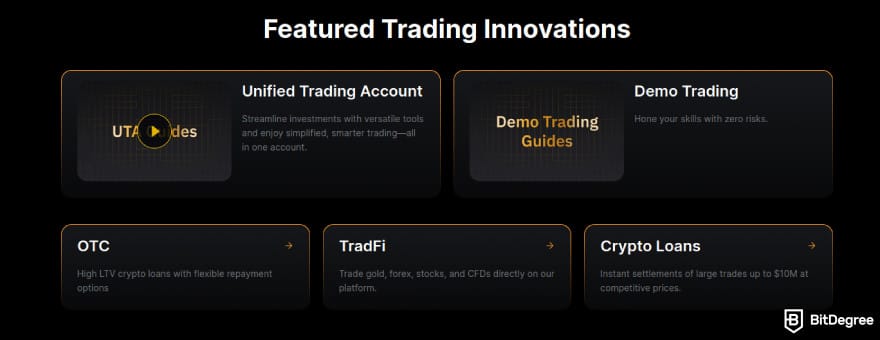
Active traders on Phemex benefit from the lowest futures maker fee available on any major exchange at 0.01%, a fast and low-latency execution engine, a clean derivatives interface without the clutter of Bybit's broader ecosystem, and a solid bot suite including grid and Martingale strategies.
For a trader whose primary activity is opening and closing futures positions with limit orders, Phemex's fee structure makes a compounding difference over time. Its copy trading pool of 17,000+ lead traders is also growing meaningfully.
The honest trade-off is that Bybit gives active traders more tools and more liquidity. Phemex gives active futures traders a lower cost structure and a focused, less-cluttered environment.
Verdict
Bybit is the stronger platform for most active traders, particularly those running multi-product strategies or needing deep liquidity on mid-cap assets. Phemex is the better choice for active traders whose strategy revolves around high-volume limit-order futures trading, where its 0.01% maker fee provides a real and measurable cost advantage.
Bybit vs Phemex For Passive Users
Those looking to earn yield on holdings rather than actively trade will find more to work with on Bybit than on Phemex, though both have built out Earn product suites.
Bybit's Earn section includes flexible and fixed savings products, Launchpool for staking assets to earn new token distributions, Launchpad for participating in token sales, and crypto loans using spot holdings as collateral.
Its copy trading infrastructure also serves passive-leaning users well. Followers can mirror master traders automatically without managing positions manually. The Bybit Card extends utility into daily spending in supported regions.
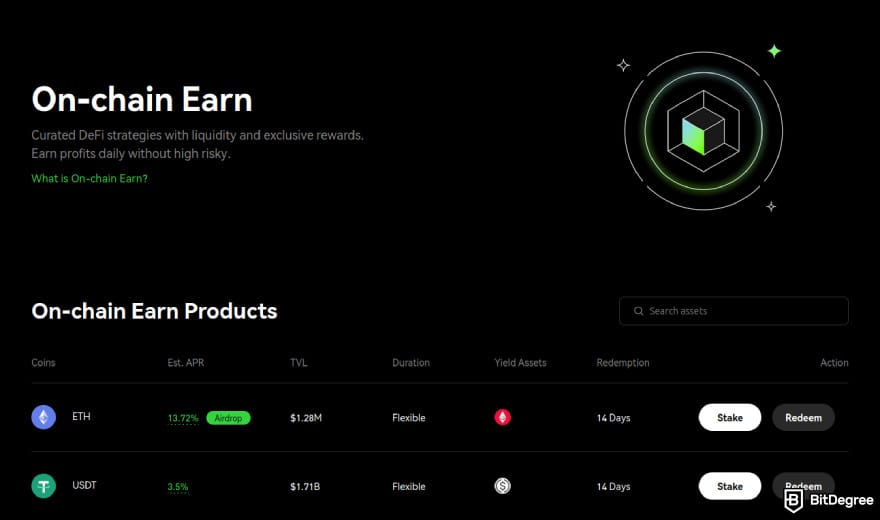
Phemex's passive options include flexible Savings, On-chain Earn (staking with up to 15% APY on select assets like ATOM), Launchpool, and its Lending Protocol for instant crypto-backed borrowing.
Copy trading is available here too, with a growing lead trader pool. For users interested in TradFi exposure without active trading, Phemex's TradFi futures also allow passive positioning on gold, indices, and tokenized stocks.
Neither platform offers anything comparable to Binance's depth of Earn products or Kraken's staking infrastructure. Both are primarily built for traders, and the passive features reflect that. They're useful, but secondary to the trading core.
Verdict
Bybit has a broader and more mature passive income ecosystem, including a stronger Launchpad, more developed savings products, and the Bybit Card. Phemex's Earn suite is competitive for basic yield needs, with its On-chain Earn APYs standing out on select assets. For a primarily passive user, neither platform is the obvious first choice over more yield-focused alternatives.
Bybit vs Phemex – Final Verdict
Bybit and Phemex are more similar than most comparison articles suggest. Both are derivatives-first platforms that have grown into full-service exchanges. Both had serious security incidents in 2025 and handled them responsibly. Both now offer spot trading, futures, copy trading, bots, Earn products, and TradFi access. Both charge competitive fees at the non-VIP baseline.
But they are not the same platform, and the differences are meaningful depending on how you trade.
Choose Bybit if: you want the stronger, all-around platform. Bybit's liquidity depth, ecosystem breadth, institutional tooling, Unified Trading Account, Aurora AI bots, and established Earn and Web3 products make it a more complete exchange for most use cases.
📚 Read More: Bybit Review
Choose Phemex if: you are an active futures trader who executes primarily through limit orders and trades at sufficient volume for the fee difference to matter. Its 0.01% futures maker fee is genuinely the lowest available on any major exchange, and for the right trader, that advantage compounds significantly over time.
📚 Read More: Phemex Review
Most traders will get more out of Bybit simply because it does more, and does it well. But if your trading already revolves around high-volume futures and limit orders, Phemex is the better tool for that specific job.