The FBI warns about Bitcoin ATMs

Last Updated: September 22, 2026
✓ Fact Checked
Plus: Volume's down, but tension's up |
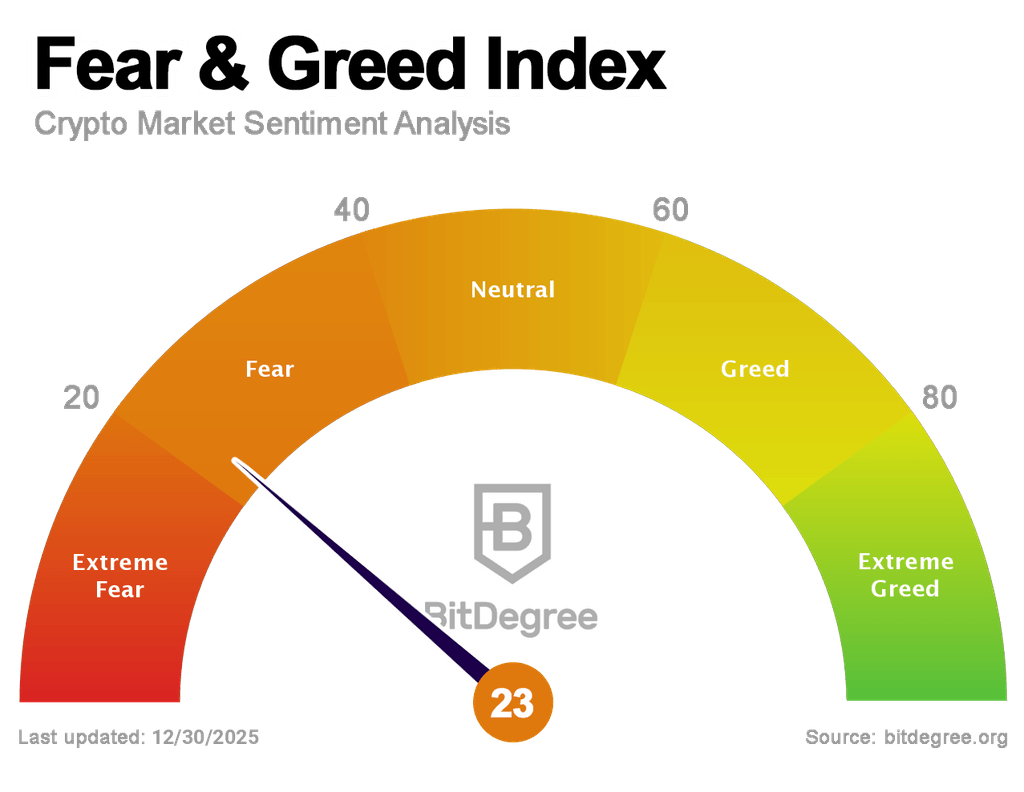
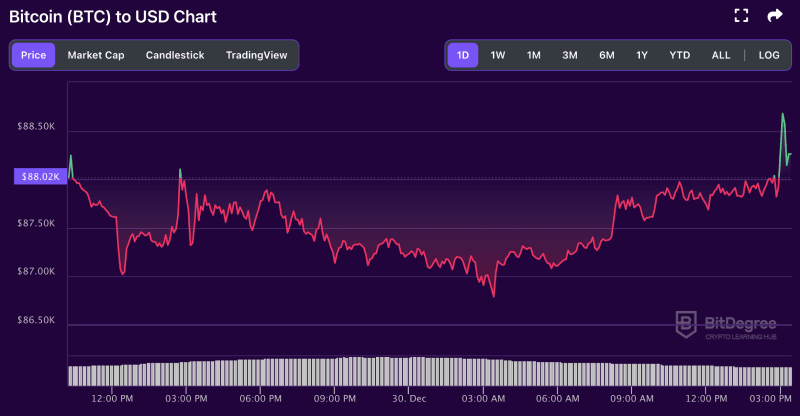
Crypto today was like opening your fridge, staring for 30 seconds, and closing it again. Nothing wrong happened - the appetite just wasn't there. Bitcoin spent the day in the $87K - $89K range: close enough to feel interesting, not close enough to force a decision. And that's kind of the whole vibe. Volume's thin, liquidity's thinner, & trading activity's well below recent averages, which matters because that makes price moves stop meaning what they usually mean.
As for the rest of the crypto market... other major tokens are also behaving cautiously. Seasonality is clearly a factor here. Holiday conditions typically bring thinner order books and noisier price action, and that's exactly what we're seeing now: muted headlines, mild price swings, and a whole lotta waiting. Looking ahead, the market is looking into a few macro and catalyst events that could kick activity back into gear in January: 👉 Publication of Fed meeting minutes on January 8, which could change risk asset positioning; 👉 US labor data and housing statistics that feed into the overall confidence in risk assets; 👉 Institutional positioning narratives, like accumulation by crypto-focused firms and ETFs. To sum up, the market isn't panicking. It isn't pumping. It's just looking at the calendar and thinking, "Let's try to pick this back up after the holidays."
| ||||||||||||||||||||||||||||||||||||||||||||||||||||||||||||||||||||||||||||||||||||||||||||||||










Loading...
The Most Liked Crypto News Findings
Looking for more latest crypto news on related topic? We have gathered similar news articles for you to spare your time. Take a look!




Trending Crypto News
Ledger Atom Explained: What Ledger's $849 'Signer' Actually Does

ChangeNOW Announces NOW AI After Resolving Website Integration Vulnera...

You're Invited: ChangeNOW's Retrofuture Soiree Lands at TOKEN2049 Sing...

ChangeNOW and CoinRabbit Release Joint Research on Financial Privacy i...