Poland’s President Karol Nawrocki Blocks Crypto Law, Citing Freedom Threats

Last Updated: December 02, 2025
✓ Fact Checked
Key Takeaways
- President Nawrocki vetoed Poland’s Crypto-Asset Market Act, citing risks to freedom, property rights, and economic stability;
- The veto opposed wide powers for the KNF, including website blocking and high fees that could harm startups and favor big firms;
- Officials warned of investor risks, but critics said EU MiCA rules in 2026 will bring protections without harsh national measures.
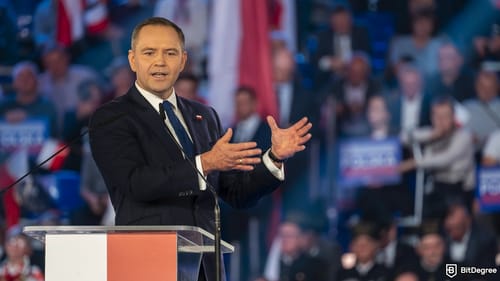
On December 1, Poland's President Karol Nawrocki declined to approve the Crypto‑Asset Market Act and instead exercised a veto.
According to a statement from the president's office, the decision was made due to concerns that the legislation would limit freedom, threaten citizens' property rights, and harm the country's stability.
Key measures included granting the Financial Supervision Authority (KNF) the power to oversee crypto firms, enforce penalties, and impose criminal liability for violations.

Did you know?
Want to get smarter & wealthier with crypto?
Subscribe - We publish new crypto explainer videos every week!
What is a Liquidity Pool in Crypto? (Animated)


One major issue highlighted by Nawrocki's office was the authority to block websites run by crypto companies with minimal oversight.
The veto noted that high supervisory fees included in the bill could stifle startup growth and favor larger foreign corporations and banks.
Finance Minister Andrzej Domański warned that the bill was needed to improve investor protection. He also accused the president of creating chaos, as the decision would have big consequences for investors.
Deputy Prime Minister Radosław Sikorski offered this as justification. He stated that the president would be blamed if a market collapse harmed Polish investors.
Crypto advocates, including Krzysztof Piech, pointed out that the upcoming EU‑wide MiCA standards, set to take effect on July 1, 2026, will offer protections without the need for such restrictive national rules.
Meanwhile, the US Securities and Exchange Commission (SEC) Commissioner Hester Peirce reaffirmed that holding cryptocurrency privately is a basic individual right and aligns with foundational US freedom principles. How? Read the full story.
Loading...
The Most Liked Crypto News Findings
Looking for more latest crypto news on related topic? We have gathered similar news articles for you to spare your time. Take a look!
Latest Crypto News & Videos







Trending Crypto News

You're Invited: ChangeNOW's Retrofuture Soiree Lands at TOKEN2049 Sing...

ChangeNOW and CoinRabbit Release Joint Research on Financial Privacy i...

Polygon's $250M Bet on Stablecoin Payments: Is Blockchain Coming for T...

Bybit Card Launches 10% Cashback Boost for New Cardholders