Institutions are sneaking back in...

Last Updated: September 22, 2026
✓ Fact Checked
| Plus: New rules could make exchanges liable for user losses Today's newsletter is brought to you by |
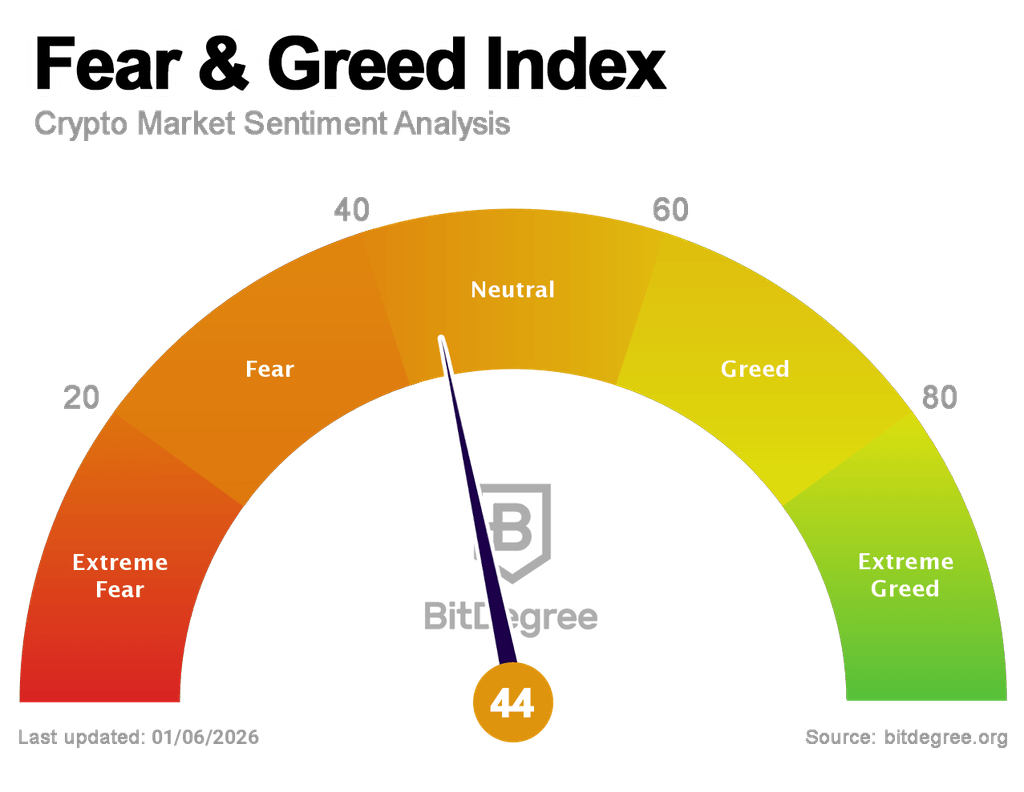
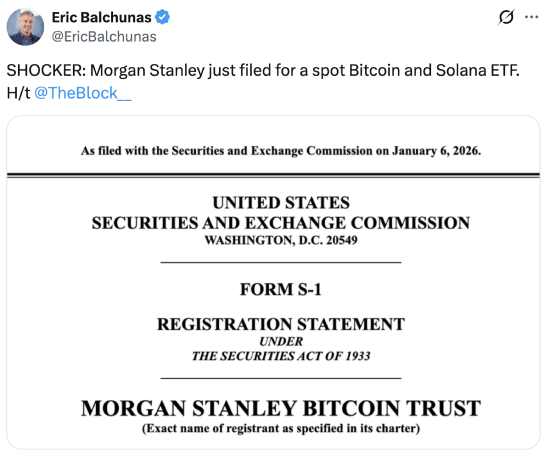
Traders woke up today, checked their phones, and said: "Oh… we're doing this again?" 😏 The market's up. And it's because of something not so sexy (but very powerful): new money getting easier access - and actually showing up. The spark was a very TradFi headline: Morgan Stanley filed with the SEC for spot Bitcoin and Solana ETFs. On its own? Meh. One filing doesn't moon a market. But crypto doesn't trade single events - it trades patterns. And this filing fits into a growing one: institutions are rebuilding on-ramps, and ETFs are becoming the default door.
Bitcoin felt that immediately: it crossed above $94K for the first time since November. ETF flows confirmed it. Spot Bitcoin ETFs flipped back to meaningful inflows - $697.2M net in a single day after the year-end hangover. And why this matters is simple: this wasn't excitement-driven.It was structure-driven. ETF-led moves don't explode; they compound. Dips get bought slower, but they get bought. Volatility tightens before it expands. And the marginal buyer isn't emotional - they're scheduled. What to watch next is beautifully boring. Can BTC hold $93K - $94K without freaking out? Do more TradFi names file? If yes, this market doesn't need a catalyst. Which brings us back to the vibe. This doesn't feel euphoric. It feels... settled. Those are usually the days you look back on and say, "Oh. That was the tell."
| ||||||||||||||||||||||||||||||||||||||||||||||||||||||||||||||||||||||||||||||||||||||||||||||||||||||

















Loading...
The Most Liked Crypto News Findings
Looking for more latest crypto news on related topic? We have gathered similar news articles for you to spare your time. Take a look!








Trending Crypto News

Ledger Atom Explained: What Ledger's $849 'Signer' Actually Does

ChangeNOW Announces NOW AI After Resolving Website Integration Vulnera...

You're Invited: ChangeNOW's Retrofuture Soiree Lands at TOKEN2049 Sing...

ChangeNOW and CoinRabbit Release Joint Research on Financial Privacy i...