Argentina's Central Bank May Let Banks Offer Crypto Again

Last Updated: December 08, 2025
✓ Fact Checked
Key Takeaways
- Argentina’s central bank is reviewing whether to let traditional banks trade cryptocurrencies, which marks a possible policy shift;
- The 2022 ban on crypto trading for banks may be replaced with new rules, with approval potentially coming by April 2026;
- Local crypto firms see the move as a step toward a more open financial system and the adoption of digital assets.
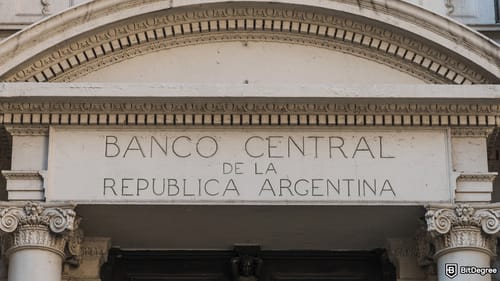
Argentina’s central bank is considering a policy change that could let local banks handle cryptocurrency trades, according to a report from La Nacion.
If approved, this would mark a shift from the country’s previous restrictions on digital assets.
In May 2022, the Banco Central de la República Argentina (BCRA) stopped banks from offering cryptocurrency trading.

Did you know?
Want to get smarter & wealthier with crypto?
Subscribe - We publish new crypto explainer videos every week!
What is Olympus DAO? (OHM Crypto Animated Explainer)


The ban came after two major banks announced plans to include crypto services. At that time, the BCRA said such actions posed risks for customers and could threaten the wider financial system.
The new report said the central bank is currently exploring updated rules that might allow financial institutions to trade digital currencies directly.
Sources close to the bank told La Nacion that draft regulations are being developed, though no specific timeline has been shared. Some local exchange representatives noted that the new framework could be approved as soon as April 2026.
Talk of this possible change has been circulating among crypto companies, bankers, and regulators for some time. Industry insiders see it as a step toward greater openness in Argentina’s financial system.
A spokesperson from Lemon, a local crypto exchange, told La Nacion that "a more open financial ecosystem will be a key driver for the mass adoption of digital assets in Argentina".
South Korea announced plans to enforce a rule requiring cryptocurrency exchanges to meet the same "no‑fault" standards as banks. What does the rule include? Read the full story.
Loading...
The Most Liked Crypto News Findings
Looking for more latest crypto news on related topic? We have gathered similar news articles for you to spare your time. Take a look!


Latest Crypto News & Videos







Trending Crypto News

You're Invited: ChangeNOW's Retrofuture Soiree Lands at TOKEN2049 Sing...

ChangeNOW and CoinRabbit Release Joint Research on Financial Privacy i...

Polygon's $250M Bet on Stablecoin Payments: Is Blockchain Coming for T...

Bybit Card Launches 10% Cashback Boost for New Cardholders