



Coinbase vs Bybit — In-Depth Comparison
Choosing between Coinbase and Bybit isn't as simple as asking which exchange is better. They are built around fundamentally different priorities, and the right answer depends heavily on who you are as a user and where in the world you're based.
Coinbase is one of the most regulated and compliance-first major exchanges in the world. Founded in San Francisco in 2012, it has grown to serve over 120 million users globally. It is publicly traded on the Nasdaq, the first crypto company ever added to the S&P 500 (May 2025), and operates as the most licensed exchange in the United States. That regulatory identity determines which features are available, which markets it serves, and how user assets are handled.

On the other hand, Bybit is a derivatives-first trading platform that has grown into a broader ecosystem. Established in 2018 and headquartered in Dubai, it has over 85 million registered users at the time of writing and consistently ranks as one of the top crypto exchanges by trading volume. Its identity is built around active traders who want low fees, a deep derivatives suite, and a focused trading workflow.
The most important structural difference between these two platforms is geographic: Bybit is not available in the United States. For US-based users, this comparison largely answers itself: Coinbase is the only option of the two. For everyone else, the choice is a genuine one between a compliance-anchored platform and a trading-focused one.
Coinbase | Bybit | |
|---|---|---|
Best for | Beginners, US users, compliance-conscious traders | Active traders, derivatives users, global non-US markets |
Main strength | Regulatory standing, fiat integration, brand trust | Low fees, derivatives depth, copy trading, trading tools |
Spot trading fees | From 0.60% maker/0.40% taker | From 0.10% maker/0.10% taker |
Futures fees | 0.00% maker/0.03% taker | From 0.02% maker/0.055% taker |
Beginner experience | Industry-leading simplicity | Steeper learning curve, but demo trading helps |
Advanced trading | Solid, but relies on third-party bots | Very strong (derivatives, copy trading, bots, UTA) |
Copy trading | ✗ | ✓ |
Overall verdict | Better for trust, regulatory safety, and fiat accessibility | Better for active trading, lower costs, and derivatives |
Table: Coinbase vs Bybit quick comparison
Coinbase is stronger if you want a regulated, accessible platform with strong fiat integration and institutional-grade trust. Bybit stands out if you want a focused trading environment with lower base fees, a full derivatives suite, and tools like copy trading and built-in bots.
Coinbase vs Bybit — Market Position
As said earlier, the two platforms occupy very different places in the global crypto market, and understanding that context shapes everything that follows in this comparison.
Coinbase's clearest advantage is its regulatory standing. It holds over 46 licenses to operate in the US alone and is licensed to legally operate in the other countries that make up its list. It is publicly traded on the Nasdaq, which subjects it to SEC filings and external financial audits, a level of institutional oversight that no other major crypto exchange currently matches.
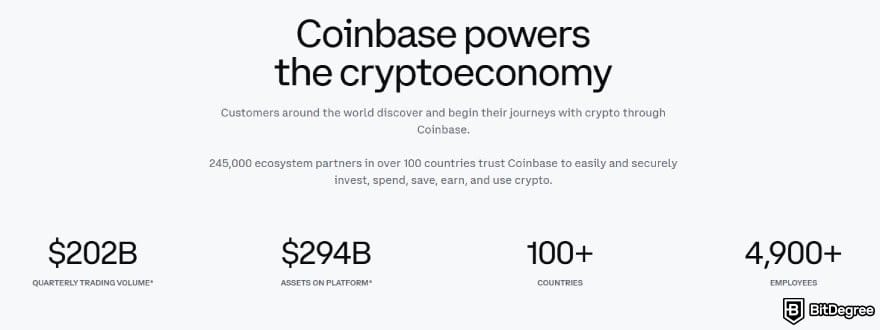
In Europe, Coinbase obtained a MiCA license in 2025, enabling it to offer regulated services throughout all 27 EU member states. This compliance-first approach is the core reason why Coinbase remains the default choice for institutional clients and risk-averse retail users, especially in the United States.
Bybit's market position is built on something different: trading competitiveness. It consistently ranks among the top exchanges globally by derivatives volume, and as of March 30, 2026, it reported a daily volume of approximately $1.81 billion and a trade count of over 6.5 million.
Coinbase, on the same date, had a daily volume of about $1.71 billion and a trade count of nearly 3.19 million. That means Bybit is processing roughly twice as many individual transactions daily despite having fewer registered users. A reflection of its derivatives-heavy, high-frequency trading user base.
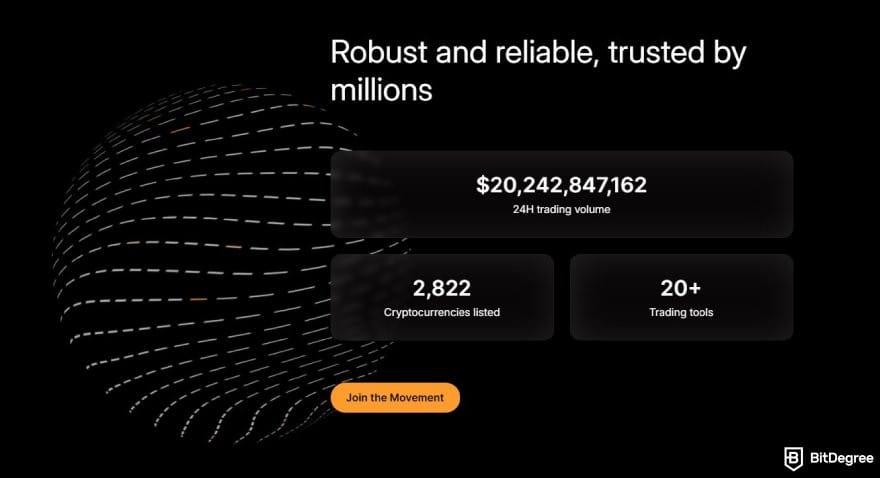
On geographic reach, the two platforms diverge significantly. Coinbase operates in 177 countries, with services varying by region. However, Bybit is not available in the United States, Canada, Singapore, and several other jurisdictions due to regulatory constraints. Bybit supports more than 160 countries worldwide.
In practice, this means Coinbase is the stronger choice for users in highly regulated markets, while Bybit covers most of the rest of the world with fewer feature restrictions.
Verdict
Coinbase leads on regulatory credibility, institutional trust, and accessibility in tightly regulated markets like the US. Bybit leads on trading volume density, derivatives activity, and competitiveness for active global traders outside those regions.
Coinbase vs Bybit — Trading Features
Both exchanges cover the core requirements: spot trading, derivatives, and basic account tools. But they approach trading from very different angles.
Coinbase Trading Features
Coinbase's primary interface is designed for simplicity. The standard Coinbase app is built for users who want to buy, sell, and hold crypto without navigating a complex trading terminal.
For basic trading, Coinbase offers:
- Simple Buy/Sell for quick crypto purchases directly from a fiat balance.
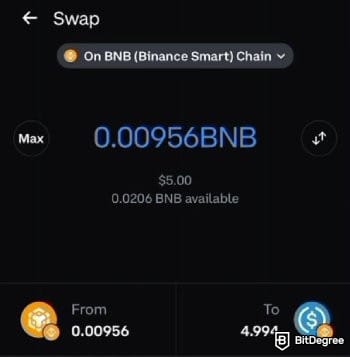
- Convert for swapping one crypto for another without entering the trading interface.
- Coinbase Advanced (integrated into the main platform) for users who want a full order-book interface with candlestick charts powered by TradingView.
At the time of writing, P2P is not a native Coinbase trading feature.
For advanced trading through Coinbase Advanced, users get:
- Spot trading across over 550 trading pairs.
- Perpetual futures (non-US users in eligible regions), with up to 10x leverage on most contracts. Coinbase Advanced currently offers promotional fees of 0.00% maker and 0.03% taker for perpetual futures.
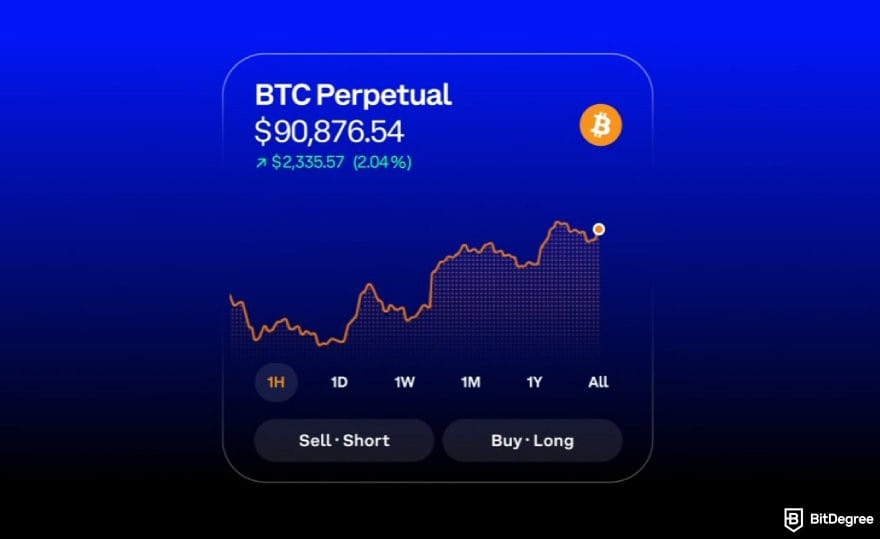
- Index futures products, including a Coinbase 50 Index perpetual and Mag7 + Crypto Equity Index Futures, with the latter covering both equities and crypto, available in eligible jurisdictions.
For automated trading, Coinbase's approach is API-first. Coinbase Advanced integrates with third-party tools, including Bitsgap, 3Commas, Altrady, Cryptohopper, and Coinrule, for automated bot trading via API. However, Coinbase does not offer native copy trading since there are no native bots built into the platform itself
Bybit Trading Features
Bybit's trading suite is built around active execution. It offers a wider range of native trading tools without relying on third-party integrations.
For basic trading, Bybit offers:
- Spot trading for direct crypto-to-crypto trades.
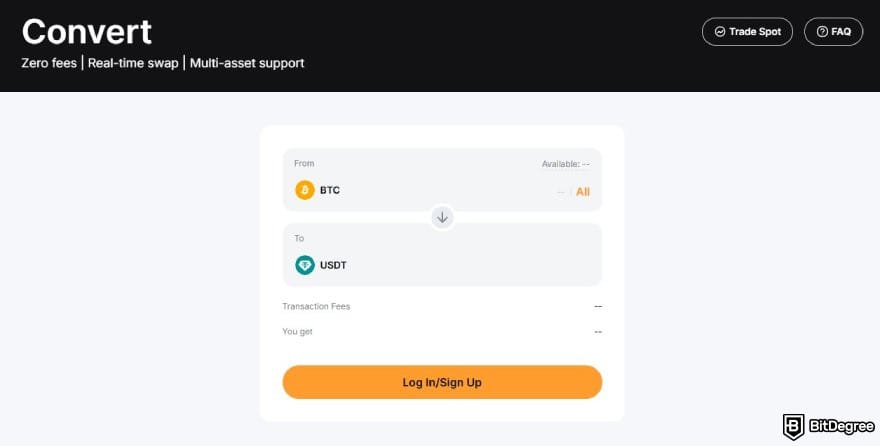
- Convert for quick swaps.
- Demo trading for practicing strategies with simulated funds before using real money.
- P2P trading for buying and selling crypto directly with other users.
For advanced trading, Bybit supports:
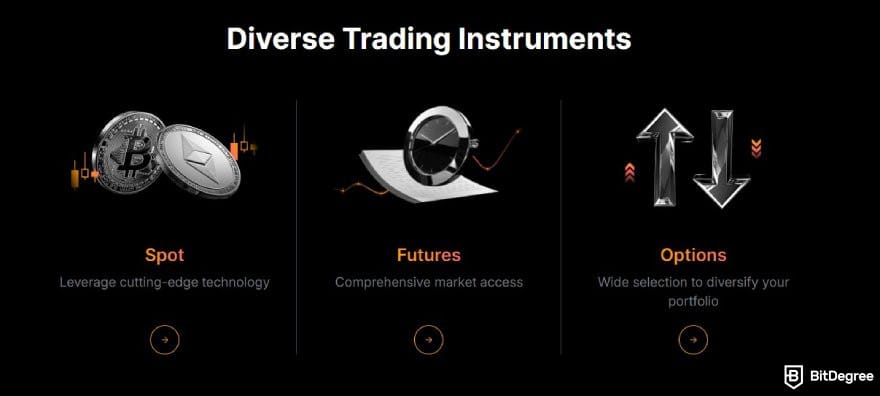
- Spot margin trading through the Unified Trading Account, USDT and USDC perpetual contracts, inverse futures, and options trading, including USDC options.
- Up to 100x leverage on select perpetual contracts.

- Unified Trading Account (UTA), which lets users manage spot, margin, derivatives, and options positions from a single account with shared margin.
For automated and strategy-based trading, Bybit includes:
- Native copy trading, where users can follow and automatically mirror the trades of experienced traders.
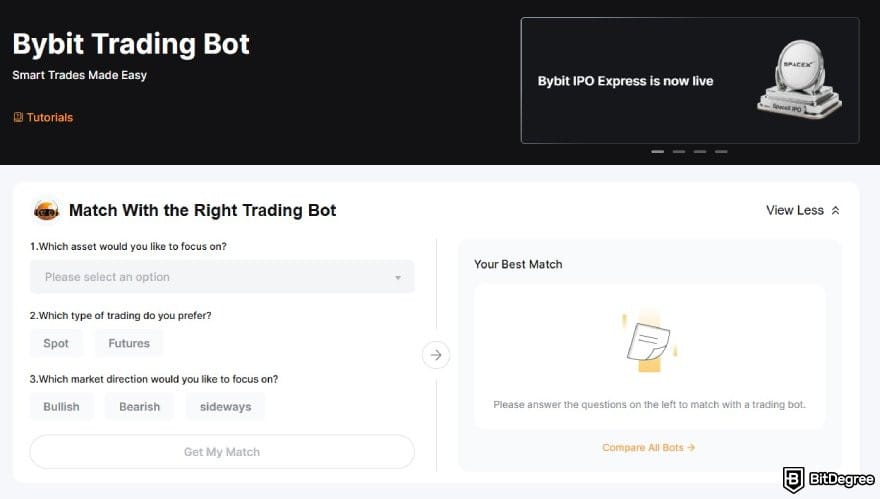
- Built-in trading bots, including spot grid, futures grid, DCA, and martingale-style bots. All accessible without third-party integrations.
- API trading for algorithmic strategies.
- MT5/TradFi integration to access selected traditional markets, such as forex, commodities, indices, and stocks, in eligible regions.
Verdict
Bybit has a broader native trading suite, particularly for active traders who want derivatives, copy trading, bots, and demo trading without third-party integrations. Coinbase is more limited by comparison but stronger in its compliance framework, and its perpetual futures offering continues to expand for non-US users. For users who just want to buy and hold, Coinbase's simpler interface wins on accessibility.
Coinbase vs Bybit — Fees
This is one of the most significant practical differences between the two platforms, and it has a real impact depending on how you trade.
Coinbase has a tiered fee structure that varies considerably depending on which product you use.
The standard Coinbase retail app bundles convenience pricing into each trade, including both a visible fee and a spread built into the quoted price. Simple buy, sell, and convert orders usually include a spread alongside any separately listed fee. This means casual users on the basic app often pay more than they realize.
For users on Coinbase Advanced, fees are more competitive. Take a look at this table:
Tier (30-day volume) | Maker | Taker |
|---|---|---|
Under $10K | 0.40% | 0.60% |
$10K–$50K | 0.25% | 0.40% |
$50K–$100K | 0.20% | 0.25% |
$100K–$1M | 0.12% | 0.18% |
$400M+ | 0.00% | 0.05% |
Table: Coinbase Advanced spot trading fees
Coinbase One offers a subscription alternative: Basic costs $4.99 monthly or $49.99 annually, Preferred costs $29.99 or $299.99, and Premium costs $299.99 or $2,999.99. Basic waives trading fees up to $500 monthly, Preferred up to $10,000, while Premium advertises unlimited zero-fee trading, though spreads may still apply.
📚 Read More: Coinbase Fees
On the other hand, Bybit's fee structure is more straightforward and lower by default. Take a look at this simplified structure:
Spot Trading | Perpetuals & Futures | USDC Options | |
|---|---|---|---|
Maker fee (VIP 0) | 0.10% | 0.02% | 0.02% |
Taker fee (VIP 0) | 0.10% | 0.055% | 0.03% |
Table: Bybit base fees for VIP 0 users
As you can see in the table, Bybit spot fees start at 0.10% for both makers and takers, and perpetual and futures trades begin at 0.055% for takers and 0.02% for makers. Users can reduce these further by paying fees in MNT or by reaching higher VIP levels through 30-day trading volume.
📚 Read More: Bybit Fees Explained
$1,000 Spot Trade Fee Comparison
Let's say you place a $1,000 BTC/USDT spot market order as a new user on each platform.
On Coinbase Advanced (base tier, taker order):
$1,000 × 0.60% = $6.00
On the standard Coinbase app, the effective cost is higher due to the embedded spread, which can add a further 0.5–1.5% depending on market conditions.
On Bybit (VIP 0, taker order):
$1,000 × 0.10% = $1.00
The difference between the two is substantial for lower-volume users. For high-volume traders on Coinbase Advanced who have reached the $100K+ monthly tier, the gap narrows, but Bybit's base entry rate remains lower.
$1,000 Futures Trade Fee Comparison
Now suppose you open a $1,000 BTCUSDT perpetual position using a market order.
On Coinbase Advanced perpetuals (promotional rate):
$1,000 × 0.03% = $0.30 (taker)
On Bybit (VIP 0 taker):
$1,000 × 0.055% = $0.55
At the current promotional rate for Coinbase perpetuals, Coinbase is actually cheaper per trade on futures. However, this is a promotional rate, and the standard Coinbase Advanced taker fee at the base tier is 0.60% for spot trades, which makes the overall cost picture depend heavily on which product you are using and whether the promotional rate applies.
For overall cost, you should also factor in:
- Bid-ask spreads
- Slippage
- Deposit and withdrawal fees
- Funding rates on open perpetual positions
- Whether you are using limit (maker) or market (taker) orders
Verdict
For spot trading, Bybit is significantly cheaper at the base level, especially for users below $50K monthly volume. For futures, Coinbase's current promotional perpetuals rate is competitive, but it is limited to non-US users in eligible regions. Users on the standard Coinbase retail app face the highest all-in costs due to spreads. Active traders globally will typically find Bybit more cost-effective overall.
Coinbase vs Bybit — Liquidity & Execution
Liquidity determines the real price you get when your order executes, and it matters more than many users realize when comparing fee tables.
Coinbase benefits from its large registered user base and its institutional clients via Coinbase Prime, which directs significant trading volume through its infrastructure. For major spot pairs like BTC/USD and ETH/USD, Coinbase's order books are deep, and execution is reliable, particularly for US dollar pairs where it has a strong home market advantage.
Bybit's liquidity is strongest in its derivatives markets, particularly USDT-perpetual pairs. As of March 2026, Bybit had a daily volume of approximately $1.81 billion with over 6.5 million trades, a high trade count that suggests active and relatively tight markets for major pairs. For spot trading, Bybit has grown considerably, but its liquidity advantage is most visible in derivatives, not in spot markets for fiat-denominated pairs.
For large spot trades in USD pairs, Coinbase's institutional liquidity and tighter spreads give it an edge. For derivatives, especially perpetuals, in USDT, Bybit's market depth and active trader base make it competitive. Users placing small to mid-size market orders on either platform will generally not notice a meaningful difference in execution quality on major pairs.
Verdict
Coinbase has stronger liquidity for fiat-denominated spot pairs, particularly USD. Bybit is more competitive for derivatives and USDT-based markets. For most retail traders, both platforms provide adequate liquidity on major assets.
Coinbase vs Bybit — Security & Trust
Security is one of the clearest differentiators between these two exchanges, and it goes beyond feature lists. Both platforms offer standard account-level protections, including:
Coinbase | Bybit | |
|---|---|---|
Two-factor authentication | ✓ | ✓ |
Hardware key support (YubiKey) | ✓ | ✓ |
Anti-phishing code | ✓ | ✓ |
Withdrawal address whitelist | ✓ | ✓ |
Proof of Reserves | ✓ | ✓ |
Cold storage (majority of funds) | ✓ | ✓ |
User protection fund | Crime insurance (hot wallet) + FDIC for USD | Insurance Fund (derivatives) |
Table: Coinbase vs Bybit security feature comparison
Coinbase has one of the strongest institutional security profiles in the industry. It stores the majority of customer assets offline in cold storage and uses AES-256 encryption. As a publicly traded company, it undergoes routine quarterly audits from major accounting firms.
The platform carries crime insurance for a portion of digital assets held in its storage systems, covering certain theft losses, including some cybersecurity breaches. For US users, USD balances held in custodial accounts at partner banks are FDIC-insured up to $250,000. This does not cover crypto holdings directly, but the USD protection is meaningful for US-based users.
Coinbase also uses secure multi-party computation (MPC) for digital-asset key management, where cryptographic key material is split into shares so the full key is never in one place at any given time.

In May 2025, Coinbase disclosed a data breach in which less than 1% of users were affected. The platform's core infrastructure remained secure, but personal data of a limited number of users was exposed through a social engineering attack on overseas support staff. Coinbase is committed to reimbursing affected users.
📚 Read More: Is Coinbase Safe?
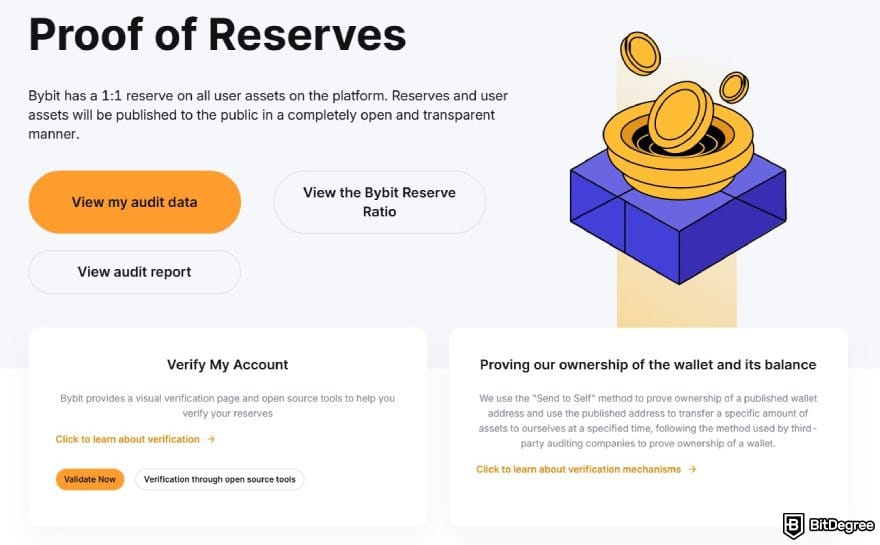
At the same time, Bybit also maintains strong account-level security, offering 2FA, passkeys, anti-phishing codes, fund passwords, trusted device management, and withdrawal address controls. It publishes Proof of Reserves and maintains an Insurance Fund designed to cover losses when liquidated leveraged positions close worse than the bankruptcy price.
However, Bybit's security record includes a major incident that cannot be overlooked. On February 21, 2025, Bybit experienced a security breach resulting in the loss of approximately $1.5 billion worth of Ethereum, the largest digital heist in the history of cryptocurrency.
The Lazarus Group, a North Korean state-sponsored hacking collective, was responsible, having infiltrated a developer's computer associated with the Gnosis Safe wallet infrastructure.
Bybit's response was notably swift. The company replenished its reserves to a 1:1 ratio within 72 hours of the incident, securing 447,000 Ethereum tokens through emergency funding from firms including Galaxy Digital, FalconX, and Wintermute.
No user funds were lost as a result. The platform has since rebuilt its security architecture, introduced independent audits, reinforced monitoring systems, and implemented stronger transparency measures.
📚 Read More: Is Bybit Safe?
The breach was traced to a vulnerability in a third-party wallet provider rather than in Bybit's own infrastructure, an important distinction, though one that does not fully eliminate the relevance of the event when assessing platform risk.
Verdict
Coinbase has the stronger overall security profile: public company accountability, institutional-grade cold storage, MPC key management, crime insurance, and USD FDIC protection. Bybit has solid account-level security and responded effectively to the 2025 hack, but the event itself is a material data point. For users who prioritize security and regulatory accountability above all else, Coinbase has the edge. For active traders comfortable with a platform that has demonstrated crisis-response capability, Bybit remains a viable option.
Coinbase vs Bybit — Broader Ecosystem
Outside of trading, both platforms have built out non-trading features. That said, their ecosystems differ considerably in scope and direction.
Coinbase's Other Features
Coinbase has a broad product ecosystem that extends well beyond trading:
1
Earn products
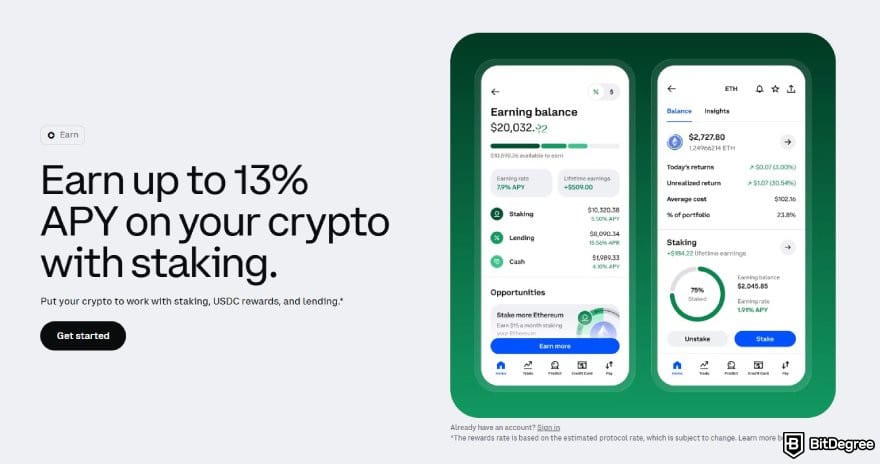
Coinbase offers staking for eligible assets such as ETH and SOL, as well as USDC rewards for holding on the platform. The range of yield products is more limited compared to Bybit Earn, but the regulatory compliance around its staking offering gives it credibility in jurisdictions where staking is tightly monitored.
2
Coinbase One subscription
Coinbase One provides a subscription-based model that waives trading fees up to set monthly limits depending on plan tier, and Preferred and Premium members can receive 25% back on Advanced spot fees in USDC, capped at $100 monthly.
3
Payments and cards
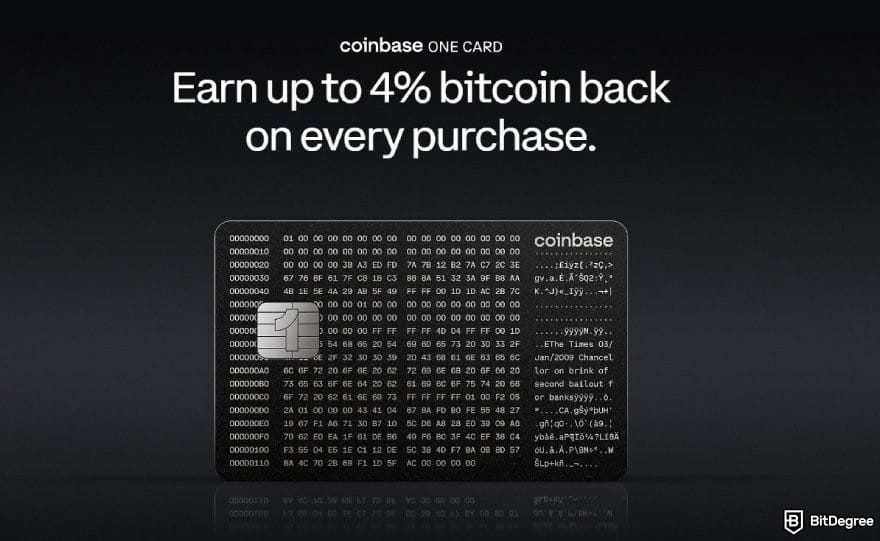
Coinbase Card is a Visa debit card that lets verified users spend crypto, available in the US, select EU countries, and the UK. Users can choose optional crypto rewards that do not expire.
4
Base App
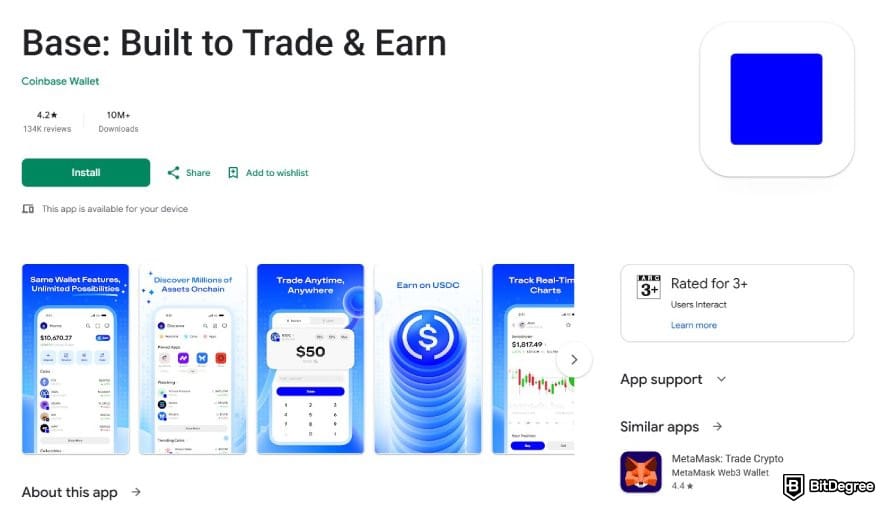
The Base app is an all-in-one platform that includes a self-custody wallet. The wallet supports Bitcoin, Ethereum, Solana, Dogecoin, and all Ethereum-compatible networks, allowing users to store thousands of cryptocurrencies and NFTs as well as access DeFi applications.
5
Education and research
Coinbase Learn provides educational content for new users. Coinbase also publishes market research and data, and its TradingView integration on Coinbase Advanced gives experienced users access to professional charting tools.
Bybit's Other Features
Bybit's ecosystem is more tightly focused on trading-adjacent tools. Some of its notable features are:
1
Bybit Earn
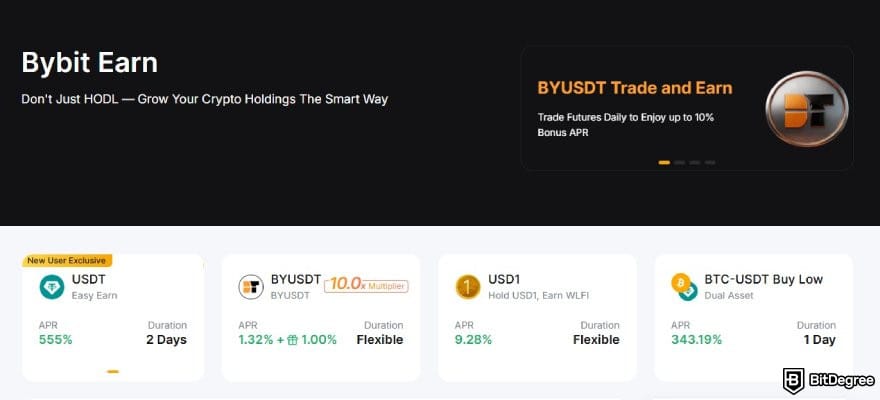
Bybit Earn includes Easy Earn, On-Chain Earn, and Advanced Earn. Easy Earn is positioned as a beginner-friendly way to earn from idle crypto assets, while On-Chain Earn simplifies staking by handling gas fees, node operations, and reward distribution.
2
Launchpad
Bybit Launchpad gives users early access to selected token projects. Users can participate in MNT for token sale subscriptions or use USDT for allocation lotteries, depending on the campaign structure.
3
Bybit Card and Pay
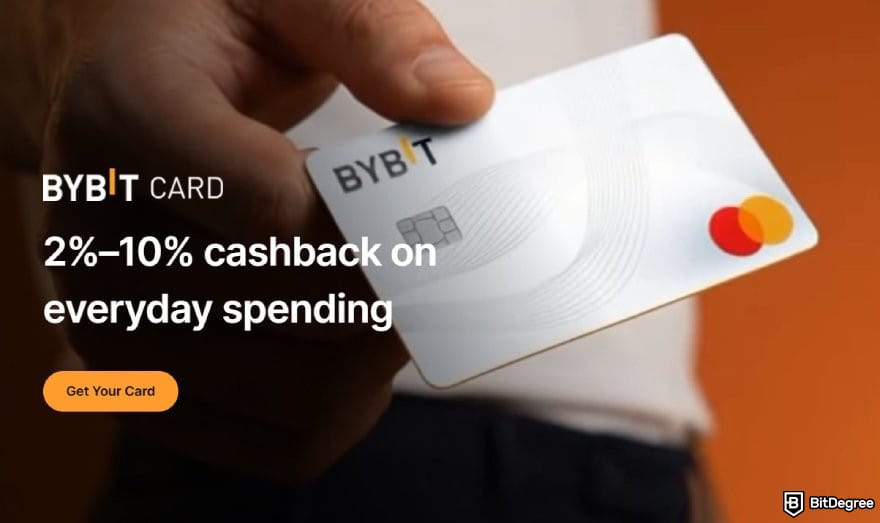
The Bybit Card is a Mastercard accepted by over 90 million merchants worldwide and offers cashback rewards in eligible regions. Bybit Pay supports crypto and fiat payments and QR-based merchant payments.

4
Web3 and wallet
Bybit Wallet allows users to manage on-chain assets, interact with DeFi and dApps, and access Bybit's Web3 section, which includes staking opportunities and airdrop campaigns.
5
Rewards and education
Bybit has a Rewards Hub, Bybit Learn, and regular campaigns and bonuses. These are primarily focused on engagement within the Bybit trading ecosystem rather than on standalone education.
Verdict
Coinbase is broader in terms of institutional products, regulatory clarity, and education resources, and its Wallet and card integration make it a more complete platform for users outside active trading. Bybit's ecosystem is more trading-centric but competitive in Earn products, card features, and Launchpad access. The better fit depends on whether you want a broad regulated crypto platform (Coinbase) or a tightly integrated active-trading ecosystem (Bybit).
Coinbase vs Bybit — Fiat Deposits and Withdrawals
The ability to move money in and out of an exchange easily often determines a platform's practical day-to-day usefulness, and it is here that Coinbase and Bybit diverge most noticeably.
Coinbase has a strong fiat infrastructure, particularly in markets where it holds regulatory licenses. Coinbase supports over 60 fiat currencies and offers a range of payment methods, including bank transfers, debit and credit cards, PayPal, and SEPA transfers for European users.
For US users specifically, options include ACH bank transfers (free), wire transfers, and debit card purchases. For UK and EU users, Faster Payments and SEPA are available.
The breadth of Coinbase's fiat options is difficult to match, precisely because its licensing footprint means it can legally offer direct bank integration in far more jurisdictions than most exchanges. For users in the US in particular, Coinbase's ACH integration makes deposits and withdrawals seamless.
Bybit also offers fiat on-ramps, but they are more dependent on region and third-party providers. Users in supported regions can buy crypto with cards, use bank transfers where available, access P2P trading, and use third-party payment processors. Bybit Card and Bybit Pay add practical spending utility in supported regions, but they do not replicate the direct banking integration that Coinbase offers in regulated markets.
Bybit is not available in the United States at all, which means this comparison on fiat access is most relevant for users outside the US.
For non-US users, the difference in fiat support depends heavily on the specific country. In some European countries, both platforms offer similar card and bank transfer options. In markets without strong Coinbase licensing, Bybit's P2P and third-party provider options may actually be the more practical route.
📚 Read More: How to Withdraw Money From Bybit
As with both platforms, fiat fees are not always transparently presented in the same way as trading fees. Card purchases typically carry a provider fee, P2P rates depend on sellers, and bank withdrawal processing times and minimums vary by region.
Verdict
Coinbase has a more developed and more directly integrated fiat infrastructure, particularly for US and EU users. Bybit is competitive in many regions but relies more on third-party providers and P2P channels. Users in the US will find Coinbase to be the clear winner here by default, since Bybit is unavailable in that market.
Coinbase Trading Walkthrough
One of Coinbase's most common entry points for new users is a simple spot purchase. Here is how buying BTC with USDT or USD on Coinbase Advanced works.
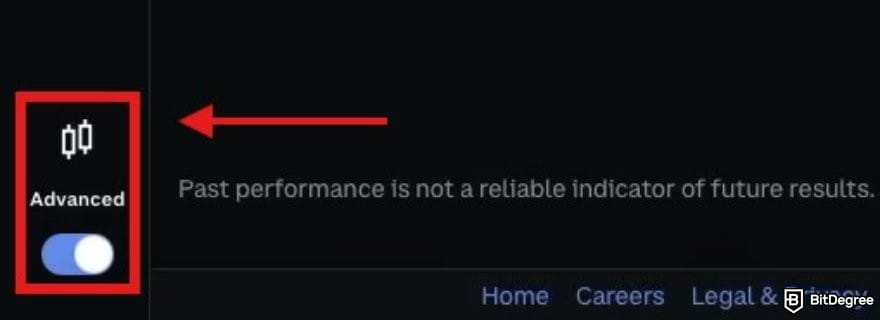
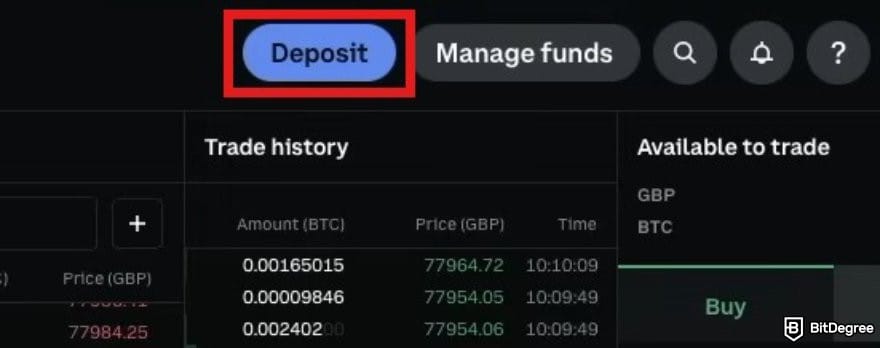
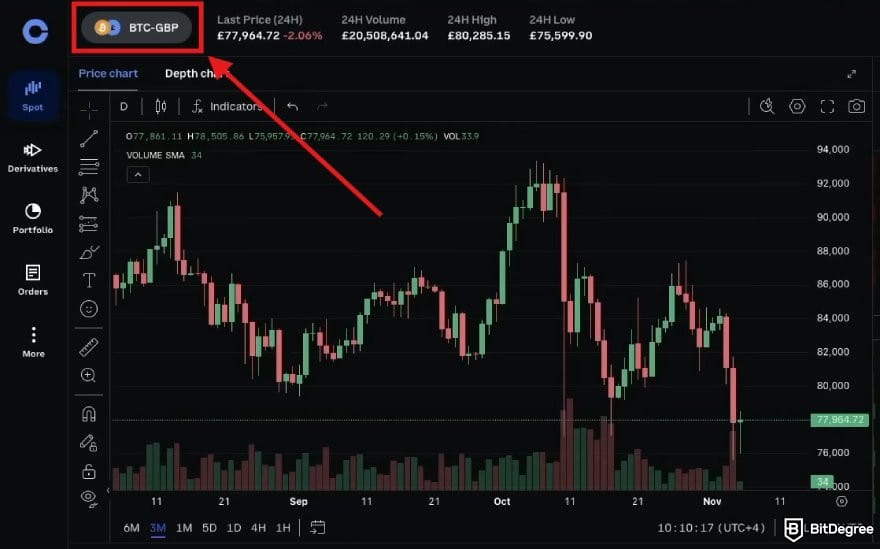
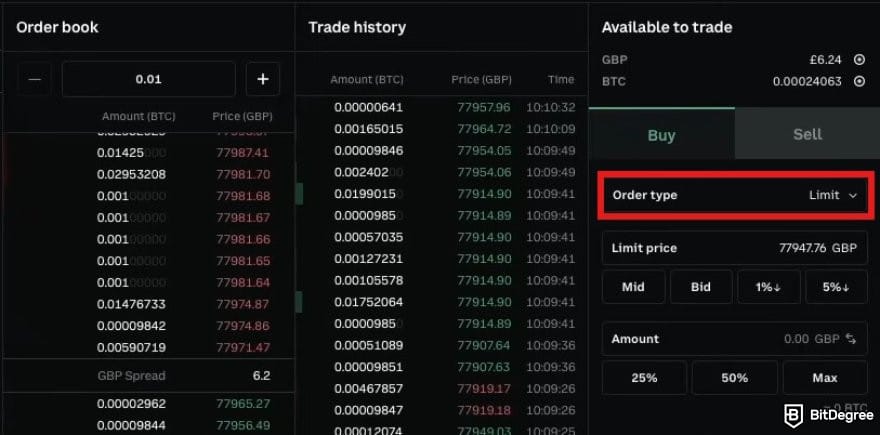
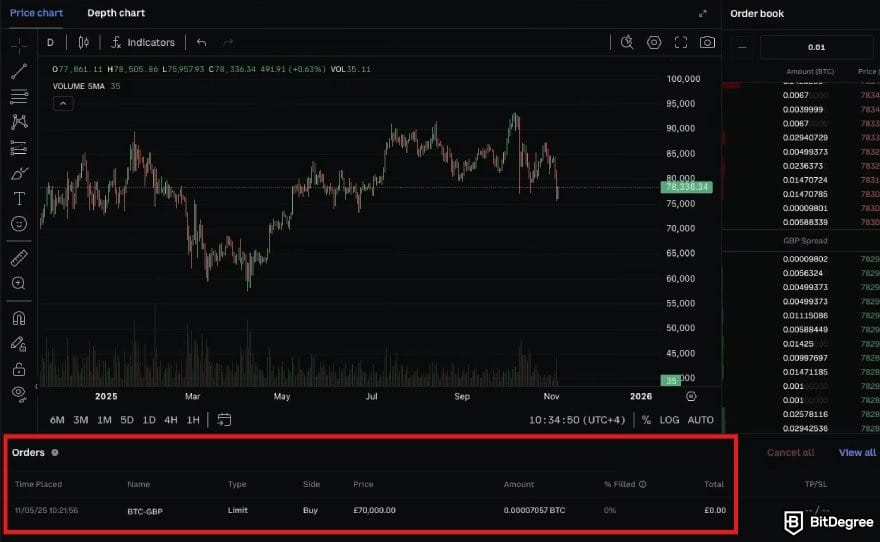
The main difference between the standard Coinbase app and Coinbase Advanced is visibility. The basic app hides the spread and gives you a simpler quote. Coinbase Advanced gives you the full order book and transparent fee display, which is more useful for understanding your actual trading costs.
Bybit Trading Walkthrough
One of Bybit’s most popular trading features is perpetual futures, so let’s look at how opening a BTCUSDT perpetual contract works.
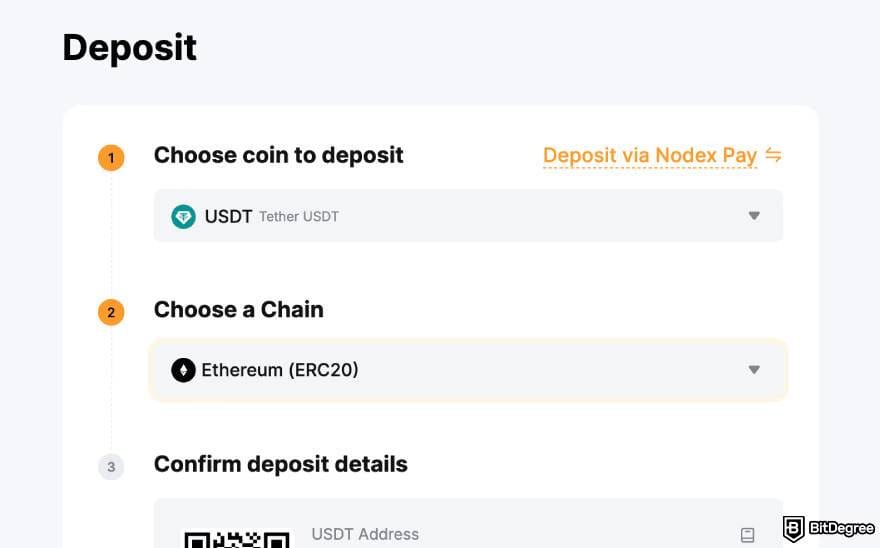
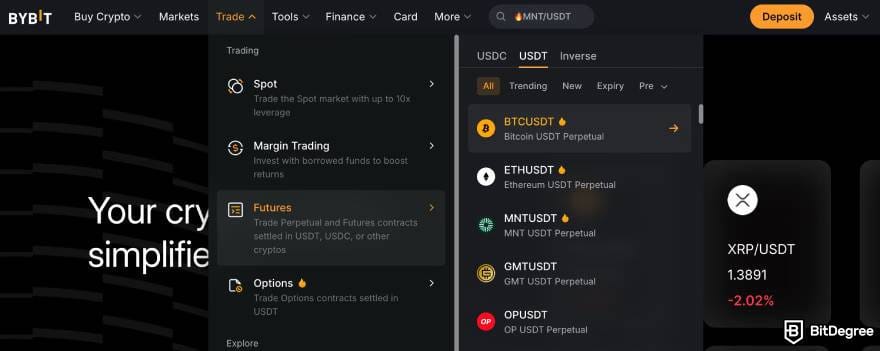
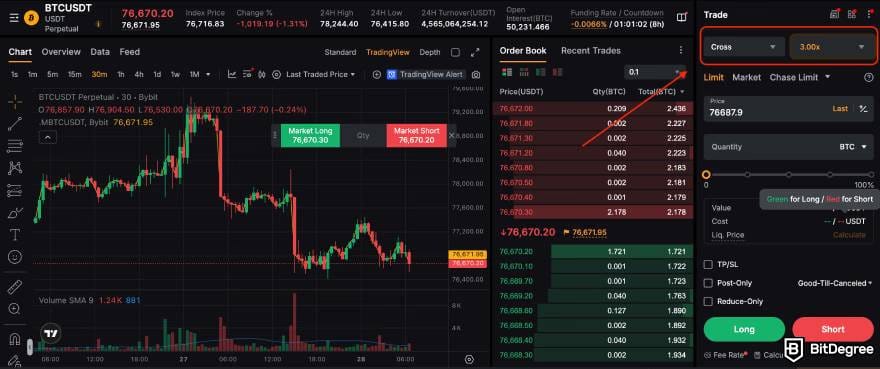
Beginners often misunderstand leverage and assume it simply “boosts profit”. In reality, it also reduces the margin of error.
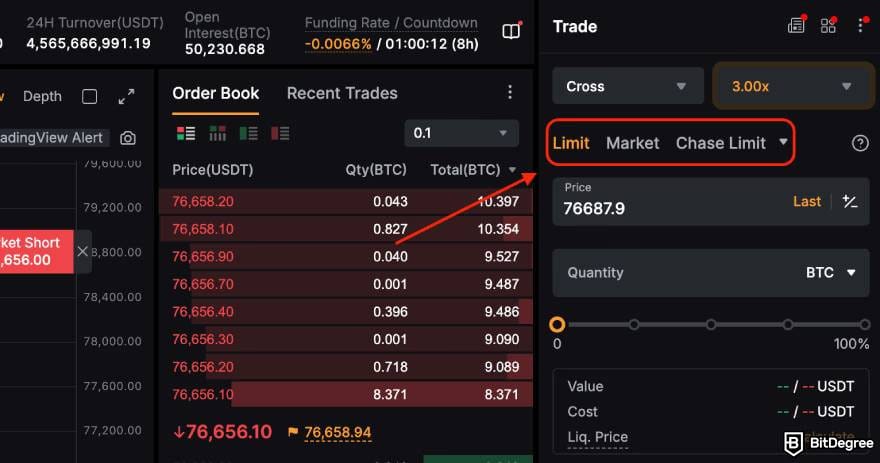
Other order types are available as well, but market and limit orders are the simplest ones to understand first.
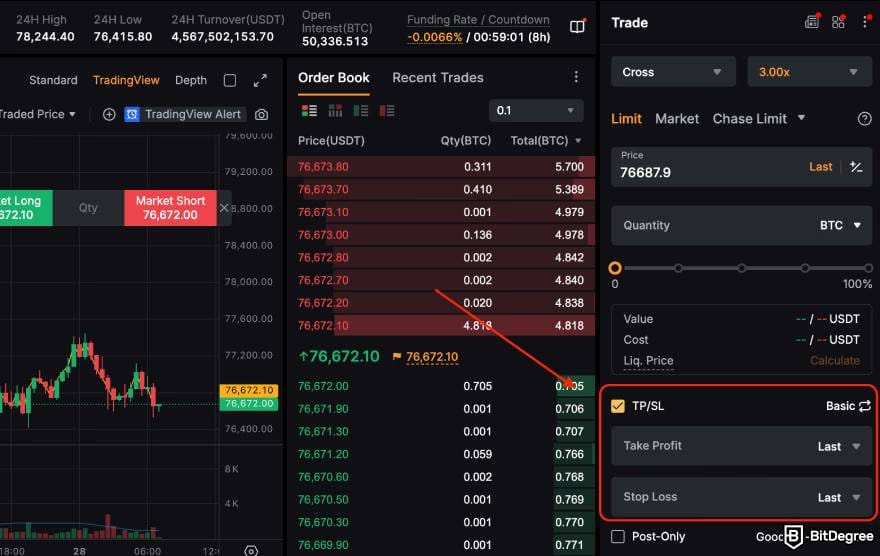
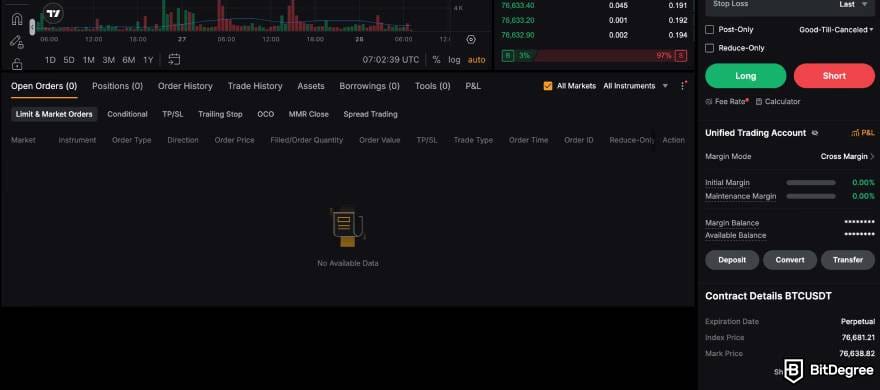
After confirming the trade, you should monitor:
- Entry price;
- Mark price;
- Liquidation price;
- Unrealized P&L;
- Funding fee;
- Margin ratio;
- Stop-loss and take-profit status.
This is where futures trading differs heavily from spot trading. With spot, the value of the asset can fall, but the user still owns the asset unless they sell. With leveraged perpetuals, the position can be liquidated if the market moves too far against them.
If you close with a market order, remember that this usually means paying taker fees again. This is why the round-trip cost matters. You pay when entering and exiting the position, and funding rates may also apply while the position is open.
Coinbase vs Bybit for Beginners
For beginners, Coinbase is the more accessible starting point, but the answer is more nuanced than it first appears.
Coinbase's onboarding experience is one of the most beginner-friendly examples in the industry. The standard app has a clean, minimal interface that guides users through buying their first crypto without requiring them to understand order books, fee tiers, or trading mechanics.
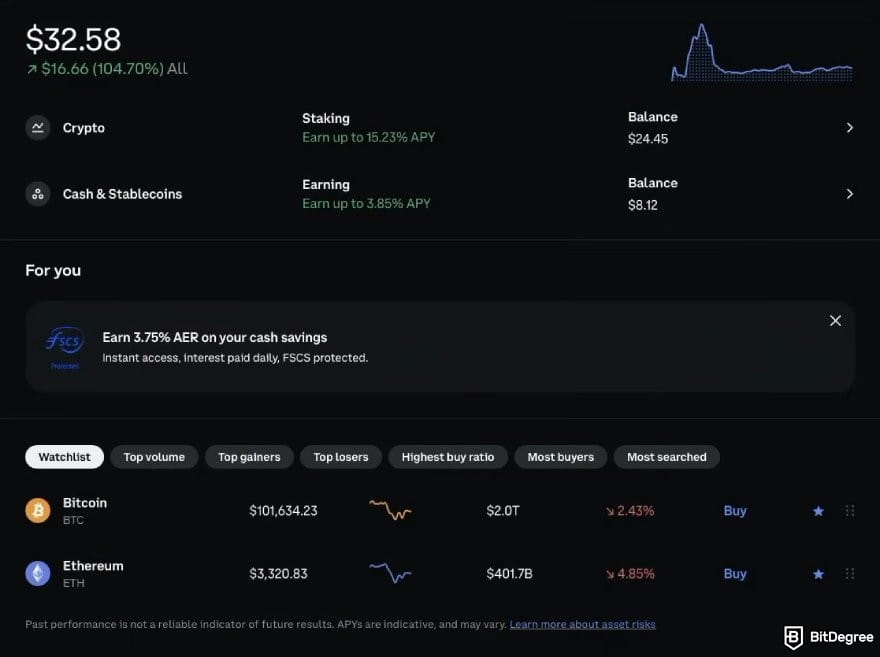
Its easy buy and sell feature lets users simply click buy, choose a preferred crypto and payment method, and complete the process in a few steps.
This simplicity has made Coinbase the primary entry point for millions of first-time crypto buyers in the US and Europe.
The trade-off is cost. Simple buy, sell, and convert orders on the standard Coinbase app usually include a spread in the quoted price alongside any separately listed fee, meaning beginners who do not know about Coinbase Advanced often pay more than they need to.
Bybit is more demanding for beginners, primarily because its identity is built around trading. The platform offers more menus, more product types, and more terminology that can be unfamiliar to someone who has never traded before. That said, Bybit has invested in reducing this gap.

Its demo trading feature is particularly valuable for beginners. It lets users practice with simulated funds before risking real money, something Coinbase does not offer. Bybit Learn also provides educational content, though it is more focused on trading concepts than on general crypto literacy.
For a beginner who simply wants to buy Bitcoin or Ethereum and hold it, Coinbase is the clearer recommendation. For a beginner who specifically wants to learn trading, including futures or copy trading, Bybit's demo environment gives them a safer learning path.
Verdict
Coinbase is the better starting point for most beginners due to its simpler interface, established trust, and lower barrier to entry. Bybit is the better choice for beginners who are specifically interested in learning trading, particularly derivatives, and who are willing to invest time in understanding the platform.
Coinbase vs Bybit for Active Traders
For active traders, the comparison shifts decisively in Bybit's favor on most trading-specific criteria, but Coinbase still has meaningful advantages depending on the trader's location and strategy.
An active trader might prefer Bybit if they:
- Trade perpetual futures or derivatives regularly and want one of the most complete native toolsets available.
- Use or want to use copy trading without relying on a third-party service.
- Want built-in trading bots (grid, DCA, futures grid) without needing external API integrations.
- Want demo trading to test strategies before deploying capital.
- Want a Unified Trading Account that lets them manage spot, margin, derivatives, and options from one account with shared collateral.
- Trade primarily in USDT-denominated markets and want consistently low base fees.
An active trader might prefer Coinbase if they:
- Are based in the US and need a fully licensed exchange.
- Trade large USD-denominated spot positions and value tight spreads in a regulated venue.

- Are an institutional client who wants access to Coinbase Prime's custodial and execution infrastructure.
- Want a trading environment with the highest regulatory accountability.
- Use TradingView for charting and want native integration without third-party account setup.
User sentiment reflects this split: Bybit is praised for its user-friendly trading interface, extensive features, and responsive customer support, while Coinbase is valued for its regulatory status and accessibility, particularly for US users.
Verdict
For pure trading capability, Bybit wins on tools, fees, and flexibility. For regulatory safety and US market access, Coinbase is the only realistic option. Active traders outside the US who prioritize trading features and cost efficiency will generally find Bybit the stronger platform.
Coinbase vs Bybit for Passive Users
Passive users, those who buy crypto, hold it, occasionally earn yield, or use crypto for spending, are probably the most natural fit for Coinbase.
Coinbase is designed partly with this user in mind. Its standard app makes it easy to buy and hold crypto without engaging with trading mechanics. Coinbase Earn, staking products, and USDC yield give passive users ways to put idle assets to work. The Coinbase Card makes it practical to spend crypto in daily life. And the overall regulatory framework gives passive users confidence that their assets are held in a licensed, auditable environment.
Bybit's passive user offering is more competitive than its trading-first reputation suggests. Bybit Earn includes Easy Earn for beginners, On-Chain Earn for staking, and Advanced Earn for more active yield strategies. The Bybit Card provides spending functionality with cashback. The Rewards Hub gives users incentives for platform activity. For passive users outside the US who are already comfortable with Bybit's interface, these products cover the basics well.
The key difference is trust perception and simplicity. A passive user who wants to deposit once a month, earn some yield, and occasionally rebalance will likely find Coinbase's interface less overwhelming and its compliance profile more reassuring.
Verdict
Coinbase is the stronger platform for passive users, primarily due to its simpler interface, stronger regulatory standing, and more integrated fiat tools. Bybit is a capable alternative for passive users outside the US, particularly those already in the Bybit ecosystem who want Earn products and card functionality alongside occasional trading.
Final Verdict: Is Coinbase or Bybit Better?
There is no universal answer, because these two platforms are built for different users.
Coinbase is the stronger choice if regulatory safety, fiat accessibility, and simplicity are your priorities. It is the most compliant major exchange in the world, the default platform for US users, and the easiest onboarding experience available at scale. Its fees on the standard app are high, but Coinbase Advanced brings them down to a competitive range for volume traders.
Its broader ecosystem, like the Wallet, Card, staking, and institutional products, makes it a more complete all-in-one platform for users who value breadth and trust over raw trading performance.
📚 Read More: Coinbase Review
Bybit is the stronger choice if active trading, low fees, and a full derivatives suite are what you need. Its base spot fees are significantly lower than Coinbase's for typical retail users, its native copy trading and bot tools are some of the best in the market, and its Unified Trading Account makes position management cleaner for experienced traders.
The February 2025 hack is a material consideration for risk-conscious users, but Bybit's rapid response and fund recovery demonstrated organizational resilience, and the platform has since hardened its security posture.
📚 Read More: Bybit Review
The short version: Coinbase wins on trust, compliance, and accessibility; Bybit wins on trading tools, fees, and derivatives depth. Neither is universally better. The right platform depends on where you are in the world, how you trade, and what you value most.
Choose Coinbase if you are based in the US, prioritize regulatory safety, or are new to crypto and want the simplest possible start. Choose Bybit if you are an active trader outside the US looking for low fees, a complete derivatives suite, and native copy trading.