Key Takeaways
- Binance availability can vary depending on your internet provider, app access, and a few other aspects;
- You can withdraw in PHP using Binance P2P, but rates, limits, and speed vary from one buyer to another;
- Ogvio helps you get a more structured and consistent way to convert crypto to PHP.
Following a tutorial on how to withdraw money from Binance in the Philippines isn't as simple as it used to be. If you're using Binance, you've probably noticed that things feel a bit different lately.
With regulatory restrictions, app removals, and inconsistent access depending on your internet provider, withdrawing your funds now requires a bit more planning. There's no direct cash-out flow in the very first place, and now you may often need to rely on workarounds.
Getting yourself familiar with withdrawal methods ahead of time is key, and I'm here to help you in the process. I’ll walk you through the most practical ways to withdraw money from Binance in the Philippines, including P2P trading and alternative methods like Ogvio. I’ll also break down the key differences, limits, fees, and best practices so you can choose the method that fits your situation.

Did you know?
Subscribe - We publish new crypto explainer videos every week!
What is Shiba Inu Coin? (Explained with Animations)

Table of Contents
- 1. How to Withdraw Money From Binance in the Philippines With Ogvio
- 2. Binance Cash-Out in the Philippines Using P2P
- 3. Withdrawal Limits on Binance and Ogvio
- 4. Best Ways to Withdraw Money From Binance in the Philippines
- 5. Best Practices for Moving Funds Off Binance in the Philippines
- 6. How to Use Binance in the Philippines
- 7. Why is Binance Restricted?
- 8. Conclusions
How to Withdraw Money From Binance in the Philippines With Ogvio
Learning how to withdraw money from Binance in the Philippines with Ogvio may take an extra step since you need to create a new account. However, this trade-off is worth it because there are no P2P negotiations, buyer chats, or extra high fees. You just move your funds from Binance to Ogvio and cash out to PHP.
Latest Changelly Coupon Found:Another reason Ogvio works well in the Philippines is its flexibility. Once the money lands on the platform, you can use it to send the funds to family or your own bank account, move funds between wallets, or earn up to 3.5% APY in your wallet balance.
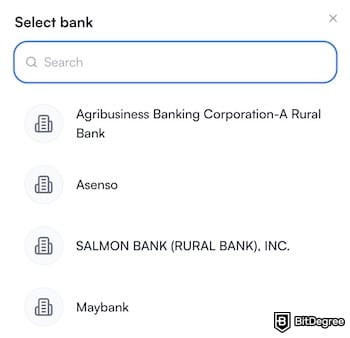
Ogvio supports sending money to various Philippine banks, from the long-established options like Salmon Bank to digital banks like Maya and Tonik.
At the time of writing, Ogvio only supports USDC. Therefore, you’ll need to convert your coin to USDC on Binance before sending funds, when necessary. Just go to [Trade], click [Convert], select USDC, and enter the amount.
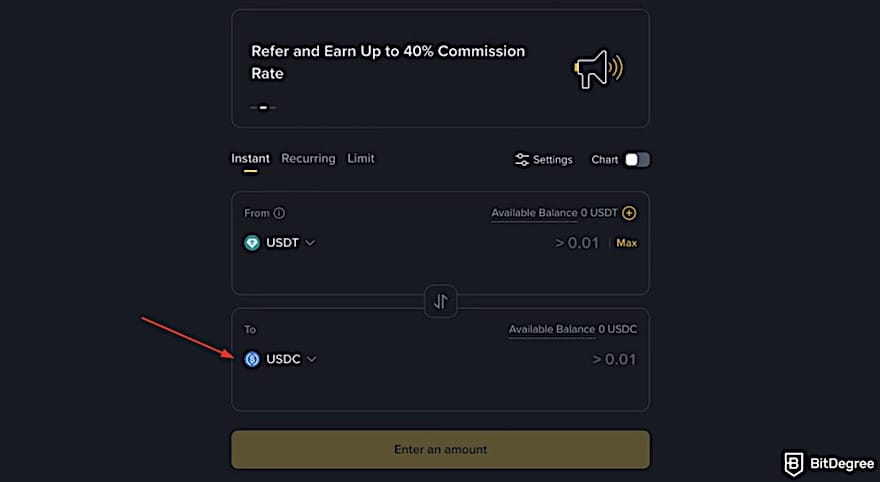
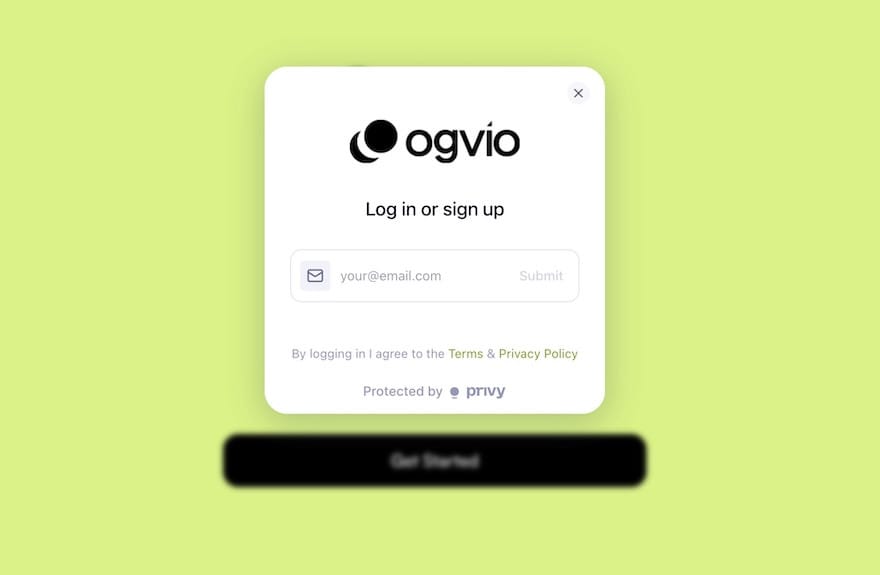
Once that’s done, here’s how to move your funds from Binance to Ogvio:
![How to withdraw money from Binance Philippines: the [Get Started] button on Ogvio's homepage outlined.](https://assets.bitdegree.org/images/how-to-withdraw-money-from-binance-philippines-ogvio-homepage-get-started.jpg "How to withdraw money from Binance Philippines: the [Get Started] button on Ogvio's homepage outlined.")
![How to withdraw money from Binance Philippines: the [Add Money] button on Ogvio dashboard outlined.](https://assets.bitdegree.org/images/how-to-withdraw-money-from-binance-philippines-ogvio-dashboar-add-money.jpg "How to withdraw money from Binance Philippines: the [Add Money] button on Ogvio dashboard outlined.")
![How to withdraw money from Binance Philippines: the [Crypto Transfer] button outlined on Ogvio.](https://assets.bitdegree.org/images/how-to-withdraw-money-from-binance-philippines-ogvio-add-money-options-crypto-transfer.jpg "How to withdraw money from Binance Philippines: the [Crypto Transfer] button outlined on Ogvio.")
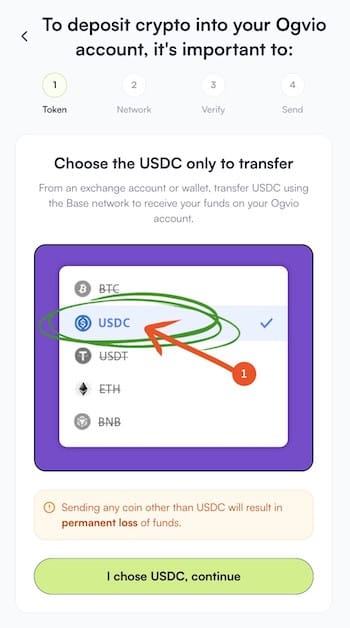
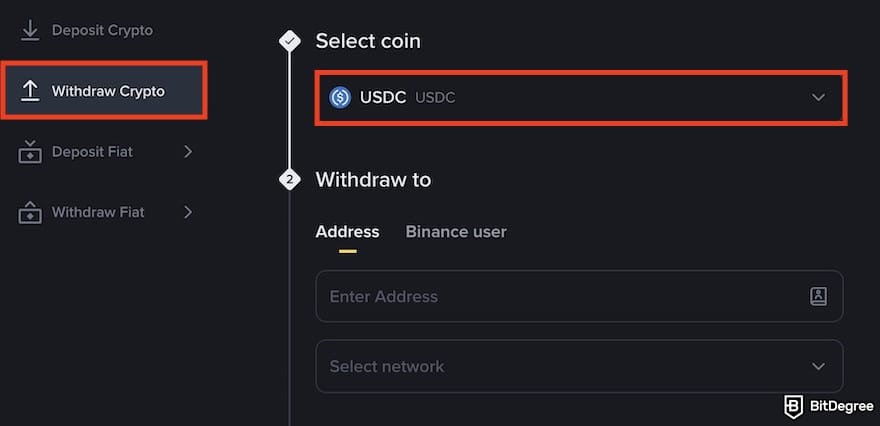
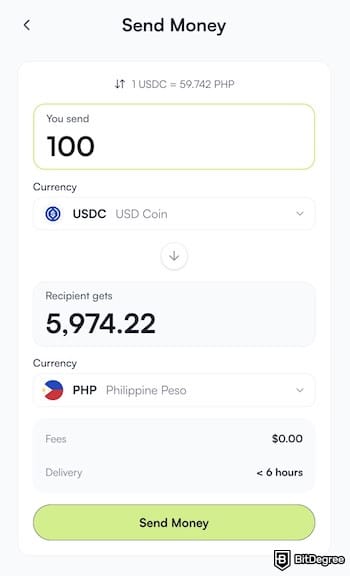
After this, your funds are now in Ogvio. From there, you can convert and withdraw to PHP without using P2P buyers. In case you want to send the money to a Philippine bank, follow these steps:
![How to withdraw money from Binance Philippines: the [Send Money] button on Ogvio.](https://assets.bitdegree.org/images/how-to-withdraw-money-from-binance-philippines-ogvio-dashboard-send-money.jpg "How to withdraw money from Binance Philippines: the [Send Money] button on Ogvio.")
![How to withdraw money from Binance Philippines: the [Bank Transfer] menu on Ogvio outlined.](https://assets.bitdegree.org/images/how-to-withdraw-money-from-binance-philippines-ogvio-bank-transfer-option.jpg "How to withdraw money from Binance Philippines: the [Bank Transfer] menu on Ogvio outlined.")
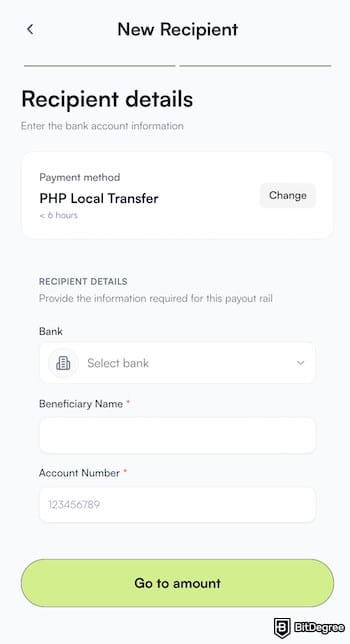
Ogvio automatically converts your USDC into PHP and transfers it to the selected Philippine bank account. Depending on the bank and processing time, this usually takes anywhere from a few minutes to a couple of hours. To have a more balanced view before creating an Ogvio account, here's a list of its pros and cons based on my experience:
Pros | Cons |
|---|---|
✓ No P2P hassle. You don’t need to deal with buyers, chats, or disputes. Everything happens within one platform. | ✗ Extra setup required. You’ll need to create and set up a separate Ogvio account before withdrawing. |
✓ Direct bank withdrawals. Ogvio lets you convert crypto and send it straight to a bank account, without relying on third-party traders. | ✗ Limited asset support. You may need to convert your crypto (e.g., to BTC) before transferring, since it only supports USDC at the moment. |
✓ Low to no fees with fair exchange rates. Transfers and conversions are designed to have minimal (and no hidden) fees, which can make it cheaper than P2P spreads. | |
✓ Global availability. Works in 160+ countries, including the Philippines, with support for many banks and currencies. |
Table: The pros and cons of using Ogvio to withdraw money from Binance
Ogvio is great if you want a clean, no-P2P cash-out experience. I wouldn’t mind the extra step or added responsibility to convert my asset, since I get a smoother process without buyer chats, disputes, or unexpected fees.
📚 Read More: Ogvio Review
Looking for more in-depth information on related topics? We have gathered similar articles for you to spare your time. Take a look!

Binance Cash-Out in the Philippines Using P2P
If you want to use Binance to withdraw crypto to a Philippine bank directly, you’ll quickly realize there’s no straightforward “cash-out” button for PHP. So, it's impossible to complete the process on how to convert USDT to PHP on Binance directly.
Most users in the Philippines rely on peer-to-peer (P2P) trading to convert their crypto into pesos and receive it through local bank transfers or e-wallets. It may sound a bit different at first, but once you get the hang of it, the process should be pretty smooth.
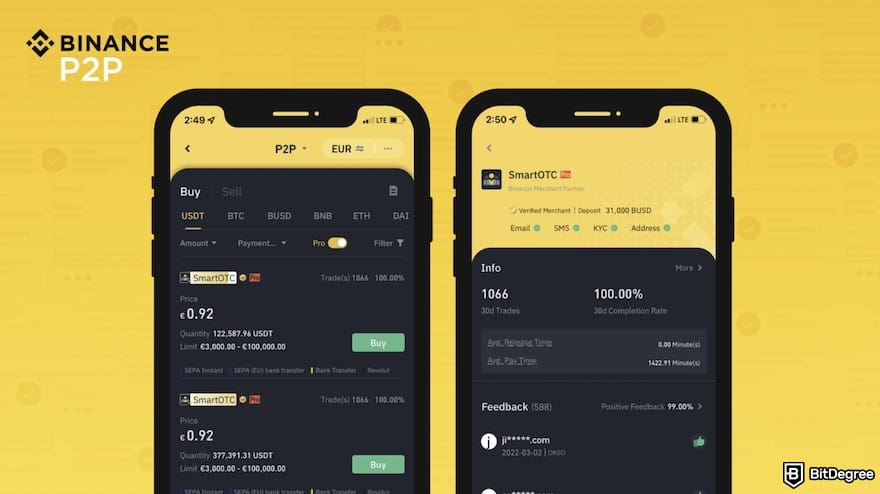
In case you haven't heard of Binance P2P, it works like a marketplace where you sell your crypto directly to another user. Instead of Binance sending PHP to your bank, a buyer transfers the money to you, while Binance holds your crypto securely in escrow during the transaction.
Choose a coin when withdrawing (e.g., USDT), and then you can complete the Binance cash-out USDT to Gcash or your bank account. Once you confirm the payment, Binance releases your USDT or other coin to them.
Without a centralized authority, P2P crypto transactions can reduce fees,[1] making them popular for cross-border payments. Now let’s get into the actual process, where you sell your crypto and receive PHP in your bank account or e-wallet.
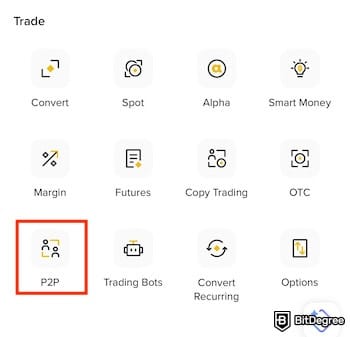
![How to withdraw money from Binance Philippines: the [Sell] banner on Binance P2P.](https://assets.bitdegree.org/images/how-to-withdraw-money-from-binance-philippines-binance-find-offers.jpeg "How to withdraw money from Binance Philippines: the [Sell] banner on Binance P2P.")
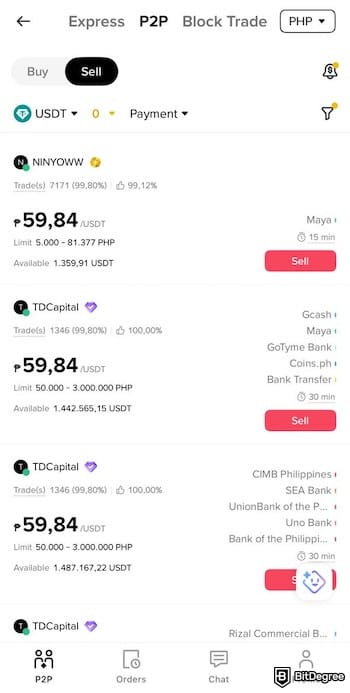
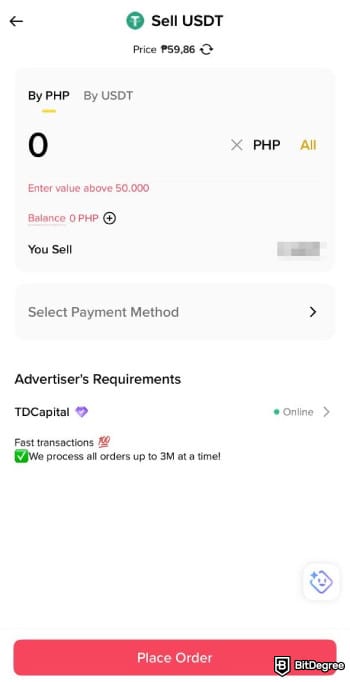
Binance may require you to complete SMS verification. Add your phone number, and the exchange will send you a unique code via SMS that you must enter in the required field.
Pros | Cons |
|---|---|
✓ Local payment options. Buyers often support bank transfers and popular e-wallets like GCash and Maya, so receiving PHP feels familiar. | ✗ Relies on the buyer. Since you’re dealing with real people, delays can happen if they’re slow to pay. |
✓ You choose your buyer. Ratings and completion rates help you avoid sketchy trades. | ✗ Price differences. Rates vary between buyers, so always double-check before confirming. |
✓ Escrow protection. Binance holds your crypto until you confirm payment, adding a safety layer. | ✗ Learning curve. If you’re new, it may take a bit to understand escrow and dispute handling. |
✓ No extra accounts. You can use your existing Binance account, so there's no need to sign up elsewhere. | ✗ Bank sensitivity. Receiving frequent transfers from different people sometimes triggers bank checks. |
Table: The pros and cons of Binance P2P
Overall, Binance P2P can be a good option for cashing out crypto in the Philippines, as long as you’re comfortable with peer-to-peer transactions and take a few precautions along the way.
📚 Read More: How to Withdraw Money From Binance
Withdrawal Limits on Binance and Ogvio
Can I still withdraw from Binance Philippines if I only have ₱400? Well, the minimum amount you can cash out depends on the method you use. If you’re withdrawing through Binance P2P, there’s no fixed minimum set by Binance itself because the amount you can withdraw relies on the buyer’s ad and the bank or e-wallet limits (when applicable).
Each buyer sets their own minimum and maximum trade range, so you’ll need to meet their requirements before starting a transaction.
In practice, some buyers accept smaller trades (around ₱500), while others may require much higher minimums and allow transactions up to ₱3,000,000. If the trade is more than ₱3.000.000, you need to switch to Block Zone to see more ads. Block Zone (or Block Trade) is a special section on Binance for large-volume P2P trades.
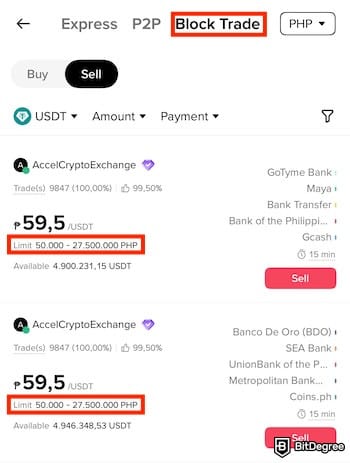
When withdrawing using Ogvio, the minimum and maximum amounts depend on Binance’s crypto and Ogvio withdrawal limits. For example, when sending USDC via the Base network, the minimum withdrawal is 10 USDC (around ₱600), with a network fee of 0.50 USDC. Binance also sets a 24-hour withdrawal limit (e.g., up to 8,002,400.7 USDC, depending on your account level).
On the Ogvio side, converting and transferring funds to a Philippine bank is free. However, there is a minimum requirement of at least 1 USDC (around ₱49.51) to proceed with the cash-out. Here's a side-by-side comparison for those learning how to cash out in Binance Philippines using its P2P function and Ogvio:
Binance P2P | Ogvio | |
|---|---|---|
Minimum Withdrawal | No fixed minimum set by Binance. Depends on buyer ads (typically around ₱500). | Minimum 10 USDC (~₱600) to send. Ogvio cash-out minimum is 1 USDC (~₱49.51). |
Maximum Withdrawal | Up to ~₱3,000,000 per trade. Larger amounts require the Block Trade Zone. | Up to 8,002,400.7 USDC to withdraw from Binance, but there's no maximum limit on Ogvio |
Fees | No direct P2P fee, but rates vary by buyer (spread-based) | ~0.50 USDC network fee from Binance; Ogvio bank withdrawal is free |
Table: Binance P2P VS Ogvio's withdrawal limits comparison
I might say that the Binance PHP withdrawal using P2P is more flexible for smaller amounts, but it depends heavily on buyers. Meanwhile, Ogvio is more structured and predictable, but requires a slightly higher starting amount because of Binance’s withdrawal minimum.
📚 Read More: Binance Fees Breakdown
Best Ways to Withdraw Money From Binance in the Philippines
After reading tutorials on how to withdraw money from Binance Philippines and trying the methods myself, I realize that there’s no single “one-size-fits-all” approach. The best option depends on how much you’re withdrawing, how fast you want the money, and how much hassle you’re willing to deal with.
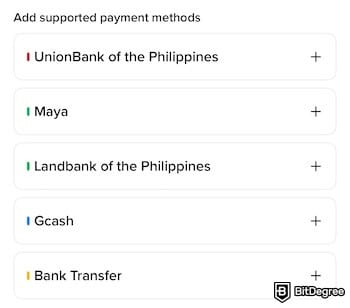
Binance P2P, for example, is widely used and flexible, as it lets Filipinos choose to send the money via bank transfer or e-wallets like GCash and Maya. They can also cash out as little as ₱500. In general, P2P is best if you:
- Are comfortable choosing and verifying buyers;
- Want to keep the cash-out process within one platform;
- Prefer more flexibility in terms of minimum trade amount and payment methods;
- Don’t mind waiting a bit for buyer confirmation before completing the transaction.
The main trade-off is that everything depends on the buyer’s terms. In P2P, prices are not fixed,[2] so the rate you see now can change a few minutes later depending on demand, available ads, and how active the market is. Besides, there’s also some uncertainty around how long current access to Binance will stay stable in the Philippines, given ongoing regulatory actions and restrictions on unlicensed exchanges.
Meanwhile, Ogvio enables users to move crypto from Binance and convert it into PHP without negotiations. If you’re exploring how to cash out in Binance Philippines without relying on buyer ads, this approach can feel more predictable. Ogvio is best if you:
- Want to avoid P2P negotiations;
- Prefer a more structured cash-out process and a predictable experience;
- Don’t mind creating a new account if it means a smoother long-term setup.
Yes, using Ogvio requires you to create an account, and you may need to convert your crypto to USDC first (if needed) before transferring it. But the trade-off is that it gives you more peace of mind by not relying completely on Binance, especially given the current uncertainty around regulations in the Philippines.
📚 Read More: Best Way to Send Money to the Philippines
Best Practices for Moving Funds Off Binance in the Philippines
Because of the regulatory restrictions, users need to be a bit more intentional when understanding how to use Binance in the Philippines. Here are some best practices, so your withdrawals stay smooth.
Double-Check Buyer Ratings on P2P
If you want to use P2P on Binance to cash out USDT to GCash or other channels, don’t rush the process. Always check the completion rate (preferably 80% and above), number of completed trades, and available payment methods.
The statistics give you a quick idea of how reliable a buyer is. A high completion rate means they usually follow through with transactions without canceling, while a large number of completed trades shows they have experience and a track record on the platform. These indicators help you avoid unreliable buyers and reduce the risk of delays or issues during the transaction.
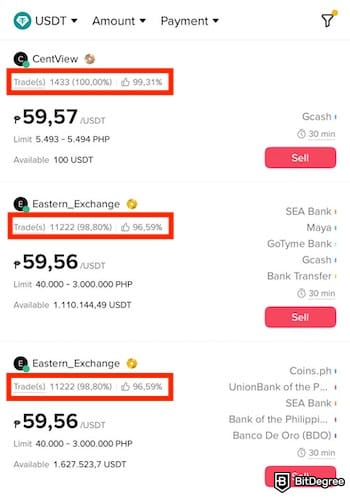
Even though Binance P2P in the Philippines is generally safe when used correctly, your transaction still depends on another person completing their part of the deal. This means delays can happen if the buyer is slow to respond, sends payment late, or cancels the order. That’s why choosing a reliable buyer with a strong track record is important.
Be Aware of Platform Access Changes
Because of changing regulations in the Philippines, access to Binance isn't always consistent. Some users question, "Is Binance banned in the Philippines?", because the website is blocked on their internet providers, while others can still open it with no issues. So, it isn't fully "gone", but it’s also not fully reliable either.
This kind of inconsistency matters because you don’t want to get locked out or stuck in the middle of a transaction, right? Losing access when sending your crypto or waiting for a payment would be a complete nightmare.
That’s why it’s smart not to rely 100% on one platform.
A lot of users now keep a backup plan by having an alternative cash-out method ready besides Binance P2P. For instance, you can use Binance P2P for small to medium amounts and mix it with Ogvio for large amounts.
When using P2P, it also helps to stick with payment methods that are commonly supported and widely used in the Philippines. In general, here are some of the key providers you’ll often see in Binance P2P listings:
- GCash;
- Maya;
- UnionBank of the Philippines;
- Bank of the Philippine Islands (BPI);
- GoTyme Bank;
- CIMB Philippines;
- SeaBank;
- RCBC (Rizal Commercial Banking Corporation).
Using familiar and widely accepted payment methods can make your transactions smoother and faster, since more buyers support them and transfers are usually processed without issues.
How to Use Binance in the Philippines
Is Binance banned in the Philippines? Well, the situation with Binance in the Philippines can be confusing. From a regulatory point of view, Binance isn't allowed to operate in the country. The Securities and Exchange Commission (SEC) has stated that Binance isn't registered and doesn't have the required license to offer crypto exchange services locally.
Regulators have taken steps to restrict access, like blocking Binance’s website through local internet providers and removing the app from Google Play and the Apple App Store. Recently, access has become more limited. As of early 2026, services like Binance Futures are not legally available or directly accessible in the Philippines.
However, the restriction doesn’t mean the company itself is completely "gone" because it's more about not being allowed to offer services to users in the Philippines. Technically, Binance as a company can still exist or even operate behind the scenes (I’ve even seen Reddit posts mentioning hiring activity tied to Binance Philippines).
In reality, though, it’s a bit of a gray area. I’ve seen people on community platforms say things like, “It was blocked before, but now it works again on SKY internet”, while others mention that the app still works, but the website domain is blocked. Some users can still log in and use certain features, while others run into restrictions depending on their ISP or how they access the platform.
Can I still withdraw from Binance Philippines directly? Direct PHP withdrawals from Binance are not available in the Philippines, but the P2P marketplace is still actively used for on- and off-ramping PHP. So if you’re following this guide, P2P can still be an option.
Why is Binance Restricted?
According to the SEC, Binance, and all now-blocked crypto platforms like Bitget, Bybit, and Kraken, operated without approval under the Philippines’ Crypto Asset Service Provider (CASP) rules. Under these rules, crypto exchanges are required to “set up shop properly” by registering locally, meeting certain capital requirements, having a physical office in the country, and submitting regular reports.
The SEC also called out how these platforms still actively market to Filipinos through ads, influencers, and social media. From the regulator's side, it sounds like, "You can't promote here and ignore the rules".
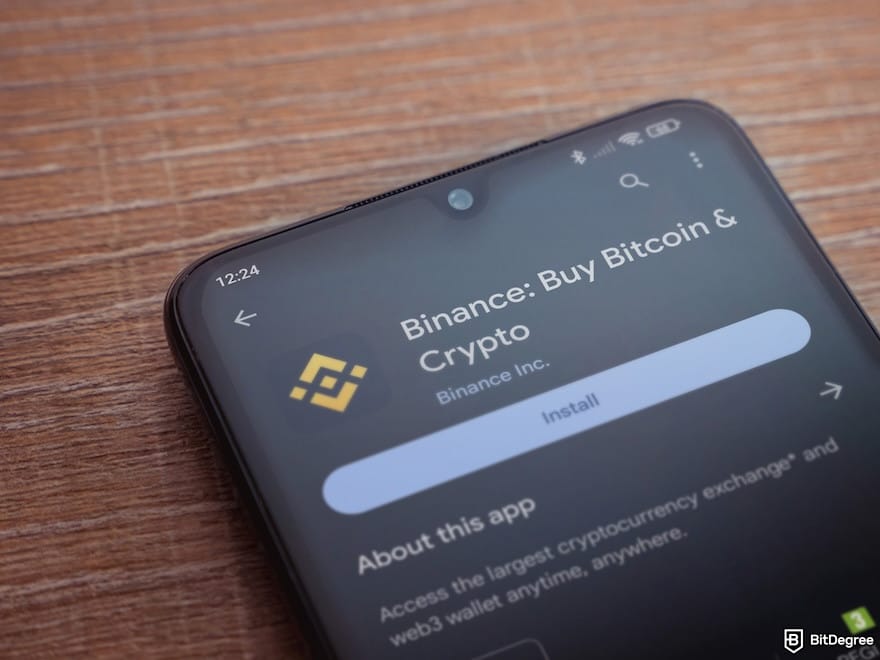
Moreover, the institution has been pretty clear about the risks. They warn that using unlicensed exchanges can attract problems, like losing funds if a platform shuts down, getting exposed to scams, or having zero support if something goes wrong.
Users in the Philippines are now encouraged to use platforms officially registered as Virtual Asset Service Providers (VASPs). Regulated options include Coins.ph, PDAX, and crypto-services offered by UnionBank or Maya.
Browse our collection of the most thorough Crypto Exchange related articles, guides & tutorials. Always be in the know & make informed decisions!


Conclusions
Regulatory restrictions and inconsistent access may make you wonder how to withdraw money from Binance Philippines as safely as possible. Based on my research and experience, the process now requires a bit more planning than before, but don't worry; it's still manageable.
You can choose Binance P2P Philippines for its flexibility or go with a more structured method like Ogvio. Whichever method you eventually choose, always double-check transaction details and keep a backup withdrawal method ready in case access changes.
Set up your Ogvio account in advance so you’re ready whenever you need to withdraw.
The content published on this website is not aimed to give any kind of financial, investment, trading, or any other form of advice. BitDegree.org does not endorse or suggest you to buy, sell or hold any kind of cryptocurrency. Before making financial investment decisions, do consult your financial advisor.
Scientific References
1. Wang T., Hua H., Wei Z., Cao J.: 'Challenges of Blockchain in New Generation Energy Systems and Future Outlooks'.
2. Gherghina Ș.-C., Constantinescu C.-A.: 'Towards Examining the Volatility of Top Market-Cap Cryptocurrencies Throughout the COVID-19 Outbreak and the Russia–Ukraine War: Empirical Evidence from GARCH-Type Models'
About Article's Experts & Analysts