Key Takeaways
- ETH gas fees are high because the network has limited block space and many people are competing to get their transactions through;
- Fees tend to drop during off-peak hours, like late at night, early morning, or weekends;
- Understanding Layer-2 networks is one of the most effective ways when learning how to avoid ETH gas fees for NFTs or other types of transactions.

If you’ve ever used Ethereum, there may be times when you rage-quit a payment page after seeing the gas fee. So, learning how to avoid ETH gas fees is basically "a survival skill" to save your budget at this point. I don’t think anyone wants to spend $30 in fees just to send $10 worth of crypto, right?
Luckily, gas fees are no longer some random monster out to drain your wallet. They follow certain rules. With the right hacks, like using the Base network on Coinbase Wallet, you can minimize how much you spend on every transaction.
I’ll break down strategies to keep your ETH flowing without stressing over fees. Of course, getting rid of it completely is challenging, but there are ways to cut the cost.

Did you know?
Subscribe - We publish new crypto explainer videos every week!
Crypto Fees Explained: How Not to Overpay? (Animated)

Table of Contents
- 1. Understanding Ethereum Gas Fees
- 2. How to Avoid ETH Gas Fees
- 2.1. Perform a Transaction at the Right Time
- 2.2. Batch Transactions
- 2.3. Use Layer-2 Solutions
- 2.4. Pick Platforms That Cover Gas Fees
- 2.5. Bridge to Cheaper Chains
- 3. How to Avoid Gas Fees on Crypto Wallets
- 4. How to Avoid ETH Gas Fees on DEXs
- 5. How to Avoid Gas Fees for NFTs
- 6. Why Ethereum Gas Fees Are High
- 7. Future Updates and How They May Affect ETH Gas Fees
- 8. Conclusions
Understanding Ethereum Gas Fees
Before we learn how to avoid ETH gas fees on certain platforms or for specific purposes, let’s start with the basics of Ethereum gas fees. Because once you know the rules, it’s way easier to "play it smart".
Latest Changelly Coupon Found:On the Ethereum network, every action, such as sending ETH, swapping tokens, or minting an NFT, requires computational power. To compensate miners and validators for processing these actions, Ethereum uses a unit called "gas".
Think of gas as fuel for the Ethereum blockchain. Similar to how you pay for gasoline to drive a car, you pay for gas to perform transactions.
Different actions cost different amounts of gas. So, how are the gas fees calculated? Ethereum doesn’t just charge gas in whole ETH. Instead, the network uses Gwei, a small denomination of ETH (1 ETH = 1,000,000,000 Gwei).
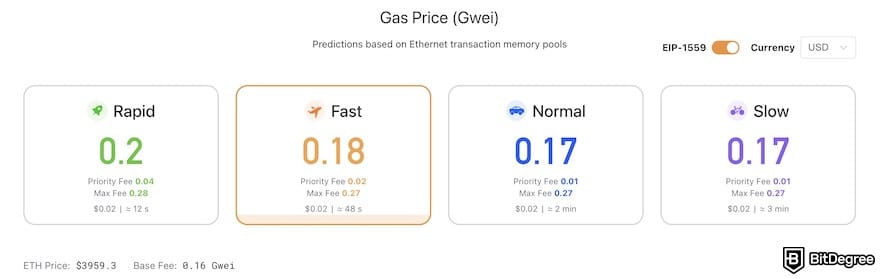
Here’s the general structure:
1
Base fee. This is a minimum fee per unit of gas that everyone must pay. It’s automatically adjusted depending on network congestion.
2
Priority fee (tip). Users can add a tip to incentivize validators to prioritize their transactions. The higher your tip, the faster your transaction is likely to be confirmed.
3
Gas limit. This is the maximum amount of gas a user is willing to spend, which is a vital feature of the EIP-1559 upgrade.[1] If the transaction requires more gas than your set limit, it fails (but you still pay for the gas consumed).
For example, you want to perform a token swap. Let's say that action consumes around 100,000 gas units. If the base fee at the time is 30 Gwei and you decide to add a 2 Gwei tip to encourage validators to prioritize your transaction, you’ll end up paying a total of 32 Gwei per gas unit.
Multiplying this cost across the 100,000 gas units, the final fee becomes 3,200,000 Gwei, which equals 0.0032 ETH at the time of the transaction.
Looking for more in-depth information on related topics? We have gathered similar articles for you to spare your time. Take a look!

How to Avoid ETH Gas Fees
Don’t let Ethereum’s high fees stop you from completing your transactions. There are plenty of ways to cut costs, from timing your trades to batching transactions. Later in this article, I'll give you tips on how to avoid Ethereum gas fees on different platforms.
Since they're built into how Ethereum works, it’s technically challenging to completely avoid ETH gas fees. Still, you can minimize the amount with the right strategies.
Perform a Transaction at the Right Time
ETH gas fees rise and fall depending on how busy the network is. When demand is high, fees can increase quickly. Meanwhile, gas fees tend to drop when the network is quieter.
So, when does the network get quiter? There are usually fewer active users late at night or early in the morning (based on UTC time). At this time, you typically can enjoy less congestion, more available block space, and therefore lower costs.
Timing your transactions during these "calmer" periods can make a difference in how much you pay.
To take advantage of these patterns, it helps to track gas prices in real time. Tools like Etherscan or GasNow show the current average, low, and high gas fees, along with recommendations for what to pay depending on how fast you want your transaction confirmed.
Let’s take a closer look at this Etherscan’s heatmap. Each row represents a day, and each column represents an hour (in UTC). The darker the color, the higher the average gas fees during that time. Scan this chart, and you can see patterns of when Ethereum is busiest and when it’s less congested.
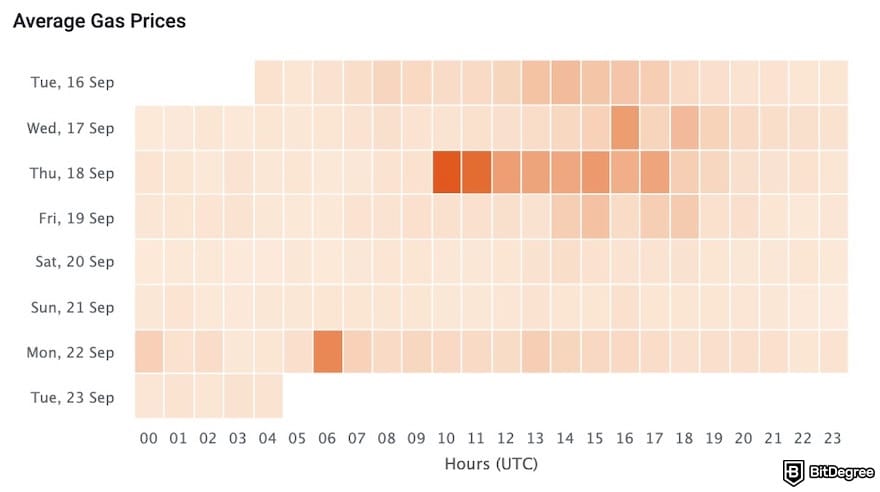
Notice how Thursday, Sept 18th shows a deep orange block around 09:00-12:00 UTC, with an average gas price of about 0.41 gwei. Later that same day, during the evening hours (around 23:00 UTC), the gas price dropped to just 0.94 gwei – that’s almost a 10x difference in cost depending on the time of day you make transactions.
You may also notice that late nights across most working days (around 21:00-23:00) and weekends are lighter in color, showing that gas prices were consistently lower during those hours.
The key takeaway from this heatmap is that if you want to learn how to avoid ETH gas fees, timing is everything. Instead of rushing to transact during peak congestion, you can wait until quieter periods when fewer users are online. This timing means less "traffic", so you can avoid overpaying the fees.
Batch Transactions
When you want to know how to avoid Ethereum gas fees, note that batching transactions is like killing two birds with one stone.
Normally, when you interact with Ethereum, every action is treated as a separate transaction. For example, if you want to swap tokens on a DEX, you first need to approve the token for spending (transaction one), and then you execute the actual swap (transaction two). That’s two separate gas fees.
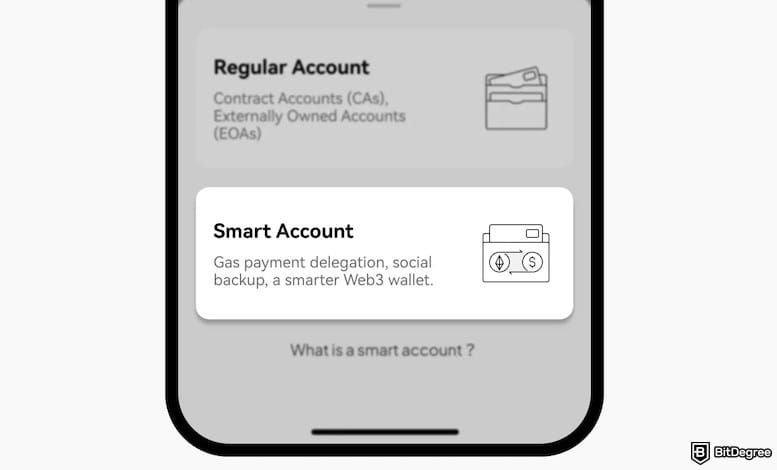
Using batching, you can combine these two steps into a single transaction. Instead of paying for gas twice, you only pay once for the bundled action. This strategy helps make a big difference for someone who often uses Ethereum, because those small savings can add up over time.
So, where can you batch transactions? Thankfully, some wallets and DeFi platforms now support this method. OKX Wallet is one of the examples.
With its AA Smart Account, you can combine multiple operations into a single on-chain transaction. Its "one-click" feature combines token authorization and swap into one step, which eventually can reduce the number of gas fees you have to pay.
Use Layer-2 Solutions
Layer-2 networks, including Arbitrum, Base, and Optimism, are built on top of Ethereum’s main network (called Layer-1). The idea is to take some of the work off the mainnet, so Ethereum can process fewer transactions. This flow helps reduce congestion, as well as make the transactions cheaper and often faster.
Think of Ethereum like a busy highway. L2 networks are like express lanes that take cars off the main road.
There are different types of L2 rollup technologies: Optimistic and Zero-Knowledge (ZK). The first (like Arbitrum and Optimism) assume transactions are valid unless proven otherwise, while the second (like zkSync and StarkNet) use cryptographic proofs to verify large batches of transactions.
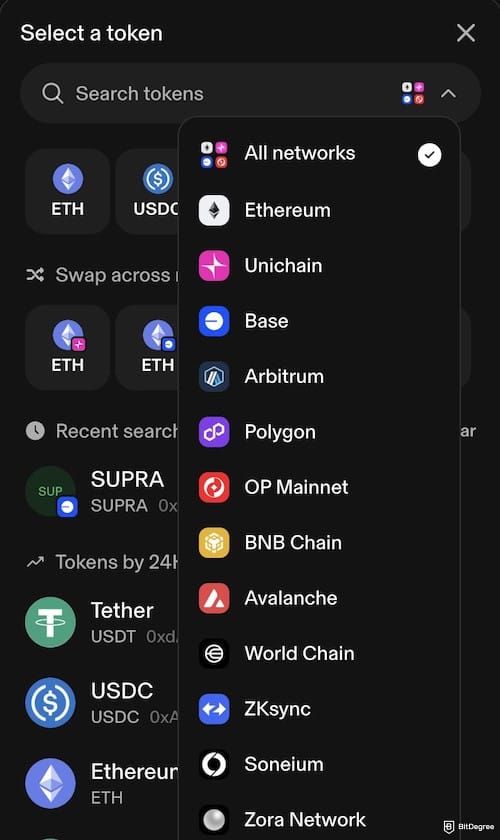 Here are some techniques L2s use to benefit traders:
- Batching and compression. Many transactions are grouped together off-chain, and then a summary of them is sent to Layer-1. Since many are grouped, the cost per transaction becomes lower.
- Off-chain execution. Some computation, storage, or interaction happens on L2 instead of directly on Ethereum. Only essential data is submitted to Ethereum to ensure security.
However, understand that not all Layer-2s support the same apps, so picking the right one depends on your needs. Some networks may not be available in certain decentralized exchanges, NFT marketplaces, or DeFi protocols.
Pick Platforms That Cover Gas Fees
Another simple strategy is to let centralized exchanges (CEXs) handle the heavy lifting. When you trade ETH for USDT on Binance or Coinbase, for example, you don’t actually pay Ethereum gas fees.
 That’s because these trades happen off-chain, inside the exchange’s internal system. Some of them also implement batching for users' transactions. So, you only pay a small trading fee instead of gas.
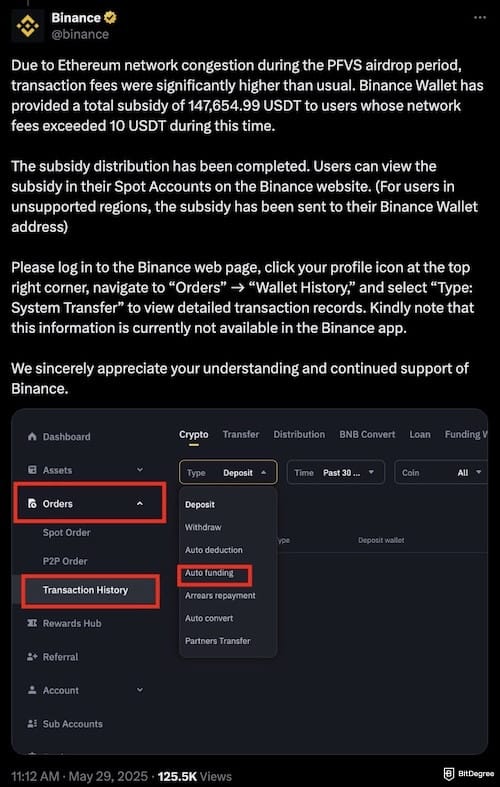
Some platforms even go further by covering withdrawal costs or offering free transfers within their ecosystem. For example, Binance has occasionally subsidized withdrawals to users affected by high network congestion and fees.
Did you know?
Subscribe - We publish new crypto explainer videos every week!
What is Algorand? ALGO Coin Explained With Animations


- Accepts fiat currencies
- Simple to use
- Supports only trusted cryptocurrencies
- A leading cryptocurrency exchange platform
- Best for all type investors
- Accepts fiat currencies

- Industry-leading security
- Accepts fiat currencies
- Advanced trading tools
- Industry-leading security
- Strong regulatory reputation
- Advanced trading tools

- Wide range of tradable assets
- Robust copy trading feature
- Flawless security record
Bridge to Cheaper Chains
If you’re chasing the lowest costs, bridging to cheaper chains can be another option. Using this method means you move assets to blockchains like Polygon, Avalanche, or Solana to enjoy low transaction fees.
Swapping tokens or minting NFTs on these chains often costs less than a dollar, sometimes even less than a cent. This strategy is especially attractive for smaller traders or users who can’t justify Ethereum’s high gas fees.
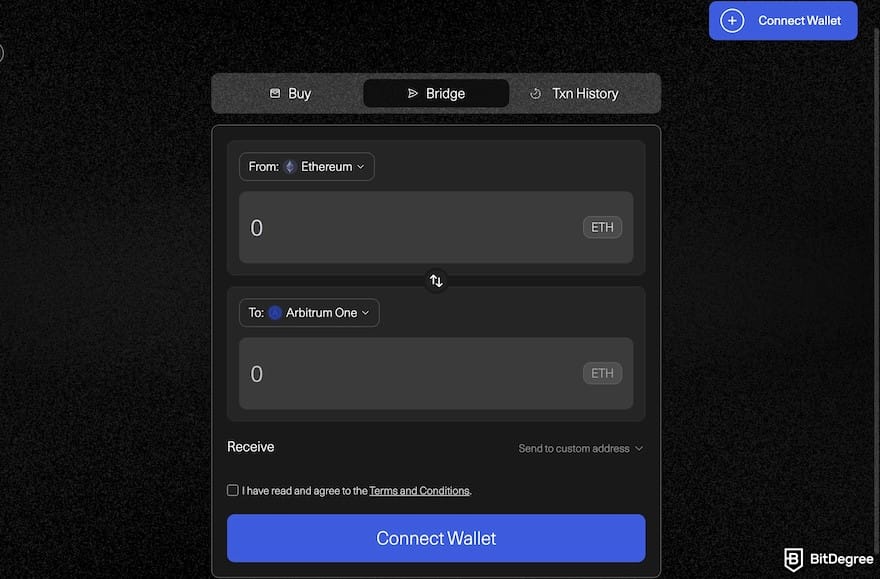
The process usually involves using a bridge, which lets you transfer ETH into the alternative chain’s ecosystem. Once your funds are there, you can interact with DeFi apps, NFT platforms, or games just as you would on Ethereum – but without the heavy gas burden.
Here’s one thing to keep in mind: these chains run separately from Ethereum’s main network.
This means they don’t directly cover Ethereum’s security guarantees, and liquidity can sometimes be thinner. In other words, you’re stepping into a different ecosystem. Some people may despise this tip because it feels like "leaving Ethereum" altogether.
Still, if your main priority is cost efficiency, these cheaper chains offer a practical solution to Ethereum’s high gas fees. It’s a trade-off: you give up some of Ethereum’s network effects, but you save big on fees. So, think about it.
How to Avoid Gas Fees on Crypto Wallets
When trying to avoid high gas fees, your choice of wallet and how you use it matters a lot. I’ve mentioned OKX Wallet, which enables batch transactions to help you reduce fees, and there are other options that let you tweak settings or estimate fees ahead of time.
People who want to know how to avoid gas fees on Coinbase Wallet specifcally can check the Base wallet (formerly known as Coinbase Wallet).
It has a new "Smart Wallet" design that allows transactions on cheaper networks like Base, Arbitrum, and Polygon. This means you can interact with DeFi or NFTs using the L2 networks easily, while paying just a fraction of the cost compared to the Ethereum mainnet.
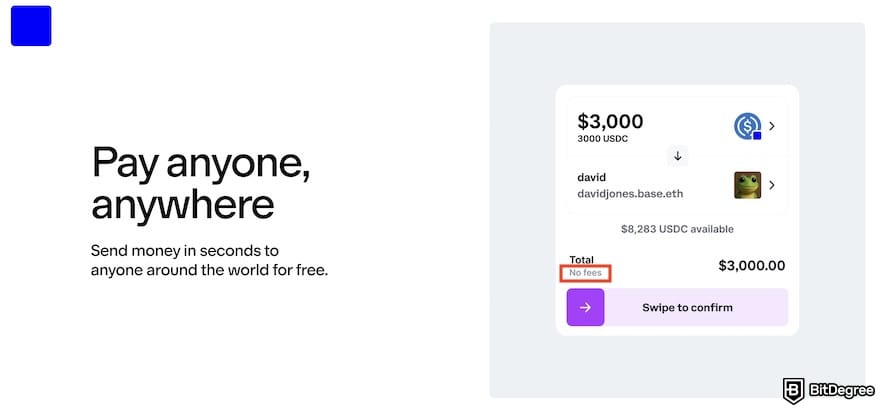
Another advantage of Base Smart Wallet is that developers can integrate "Paymaster" features, where their dApp covers some or all of the transaction costs on behalf of the user. While it’s still technically using gas behind the scenes, the wallet makes the cost invisible to the user.
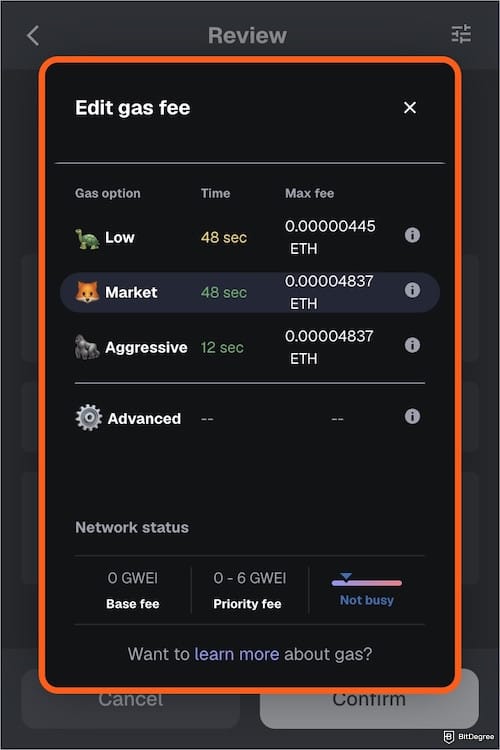
If you wonder how to avoid gas fees on MetaMask, you can adjust the settings to control how much you’re willing to pay for each transaction. Simply click the pencil button in the transaction page and adjust the amount of the gas fees using these options:
1
Low. It means you pay less for gas, but most likely wait longer for your transaction to complete.
2
Market. This refers to a fee that reflects real-time market rates.
3
Aggressive. It enables your transactions to be completed as soon as possible, but may come with a higher fee.
4
Advanced. If you want more control, hit "Advanced" to manually adjust your gas parameters. With this feature, you can set the gas limit, max priority fee, and max fee to balance speed versus cost.
In short, those whose goal is to know how to avoid gas fees on MetaMask stick to "Low" or choose "Advanced" to save your budget.
Even if wallets don’t reduce gas fees directly, some of them help you see how much you’ll pay in advance so that you can plan better. Iron Wallet, for instance, has a "Gas Fees Calculator" that shows approximate fees for different networks and transactions. That way, you can predict costs earlier.
How to Avoid ETH Gas Fees on DEXs
There are many strategies you can learn on how to avoid ETH gas fees on Uniswap, PancakeSwap, and more. First, you can use Layer-2s for your swaps. Popular examples include Arbitrum, Optimism, Base, and zkSync, which host their own DEXs such as GMX, Velodrome, and SyncSwap.
Since these trades are executed off-chain and only finalized on Ethereum, the gas fees are usually a fraction of what you would pay on the mainnet.
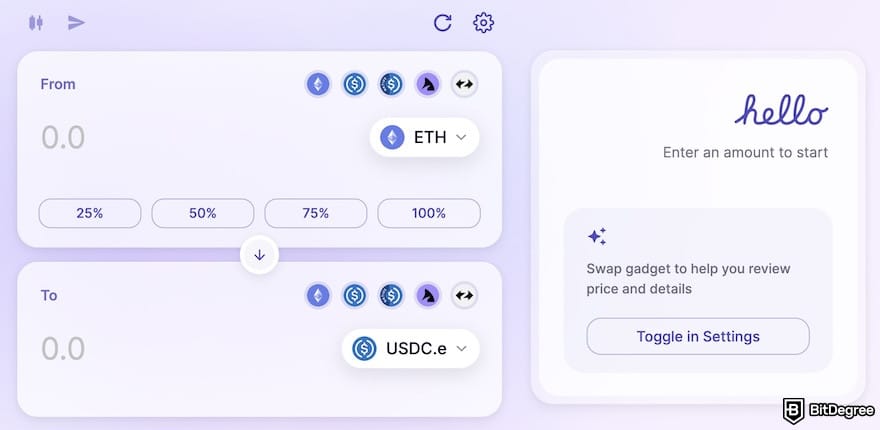
Also, I recommend you check different platforms to compare fees because not all DEXs charge the same gas or use the same paths.
To speed up your process, use aggregators like 1inch and Matcha. They can search multiple DEXes to find the best price and gas cost combined. Moreover, these platforms often optimize which path or liquidity pool to use to minimize total cost.
Also, when swapping tokens on a decentralized exchange, the route your trade takes can have a big impact on price and fees. If the token pair you want to trade has low liquidity, a DEX usually sends your order through multiple "hops" (for example, Token A → ETH → USDT → Token C), which increases gas costs and slippage.
In such cases, aggregators can help you find a platform with the most efficient route.
They scan multiple liquidity pools across different DEXs and automatically choose the most effective path for your trade. Sometimes they even split your transaction across several DEXs at once to get you the best possible price. The result is typically fewer transaction steps, reduced gas fees, and less slippage compared to relying on a single platform’s routing.
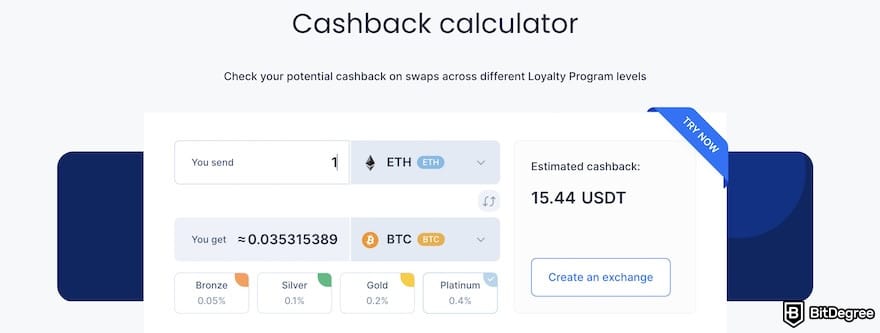
Some exchanges even offer fee rebates or gas token discounts that can reduce your overall trading costs in addition to saving on gas. A good example is SimpleSwap’s Loyalty Program, which gives users USDT cashback on every completed swap.
Right after signing up, you’re placed in the "Bronze" level". As you continue to trade, you can move up through higher loyalty levels, with cashback rates up to 0.4% USDT for every exchange.
Since this cashback is credited directly in USDT and is yours to keep forever, it offsets some of the fees you would normally pay. This approach may not directly lower Ethereum gas fees, but it still helps reduce your net transaction cost when swapping tokens.
How to Avoid Gas Fees for NFTs
When you mint, transfer, or trade an NFT on Ethereum, the transaction needs execution by smart contracts. That costs gas, which depends on the contract's complexity, congestion, and how optimized the code is.
Using L2 networks is one of the most effective ways on how to avoid gas fees for NFTs. I know I’ve mentioned this a couple of times at this point, but it’s worth repeating because the savings can be huge.

If you prefer to stick with marketplaces, another option is lazy minting, sometimes called gasless minting. Using this method, an NFT isn’t minted onto the blockchain until someone buys it. That means the creator avoids upfront costs and only the buyer pays gas when completing the purchase.
Here are the platforms that support lazy minting:
- OpenSea (through its OpenSea Studio)
- Rarible
- Mintable
- Zora
That said, buyers may have a slightly different scenario. If you’re purchasing from a creator who used lazy minting, you may end up paying the gas at the moment of purchase. Therefore, planning your purchase at off-peak hours is important. Alternatively, choose NFT marketplaces that support L2 networks.
Other than that, buyers should compare platforms and be mindful of settings, like gas limits and priority fees. Setting them too low can result in failed transactions.
Why Ethereum Gas Fees Are High
High gas fees are not random; they follow certain rules. One of the main reasons gas fees increase is network congestion. When too many people want to send transactions at the same time, there’s limited space in each Ethereum block.
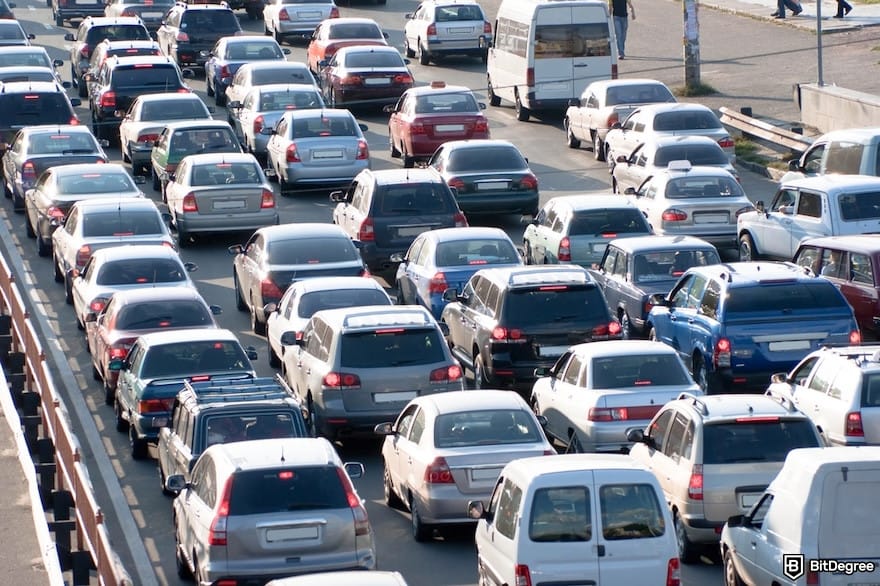
It’s similar to traffic on a busy road: when everyone drives at once, the road gets jammed, and it takes longer to move forward.
On Ethereum, this "traffic jam" forces users to compete with each other by paying higher fees, so their transactions get processed faster. It's similar to real traffic when you pay a toll road fee to skip congestion.
Limited block space[2] can also be another reason why ETH gas fees are high. Each block on Ethereum has limited capacity, like a bus with only a few seats. Once the seats are full, new passengers (transactions) have to wait – unless they pay more to "buy the VIP seat".
Validators naturally prioritize transactions that pay higher fees, which pushes everyone else to compete by bidding up their gas price. Those who are not in a rush can set lower fees, but they may have to wait longer for confirmation.
This constant "bidding war" is what makes gas fees rise so quickly, especially during popular events like NFT drops or token launches. Historically, Ethereum has experienced two periods of extremely high gas fees:
1
Summer 2020. DeFi apps like Uniswap, Aave, and Compound became very popular. Many people were using them, so the average transaction cost went above $50.
2
NFT boom in 2021. NFTs became viral, and it made fees even higher. For famous launches like Bored Ape Yacht Club or the Otherside land sale, some users paid hundreds or even thousands of dollars in gas fees just to mint one NFT.
These examples show that Ethereum gas fees aren’t random at all because they’re the result of supply and demand on a network with limited space. When too many people try to use Ethereum at the same time, fees increase because everyone is competing to get their transactions processed first.
Future Updates and How They May Affect ETH Gas Fees
With everything you know by now about how to avoid gas fees for NFTs or other transactions, keep in mind that Ethereum is not dead. The network consistently has upgrades that make it faster, cheaper, and easier to use.
For example, Ethereum added an upgrade called EIP-1559 in 2021, which introduced a new system where you pay a base fee plus a small tip. Yes, the current system you enjoy didn’t always exist.

Before EIP-1559, gas fees worked like an auction, as users had to "bid" against each other, and whoever paid the highest fee got their transaction confirmed first. This often made fees unpredictable and frustrating.
With EIP-1559, part of the fee is destroyed (or "burned"). It helps reduce the overall ETH supply, which makes fees more predictable, although they can still rise a lot when the network gets busy.
In March 2024, Ethereum introduced the Dencun upgrade, which brought a major improvement: blob transactions. Instead of storing all transaction data on-chain (which can be expensive), blobs allow temporary storage of large amounts of data off the main chain.
According to MEXC Blog, Ethereum’s gas fees dropped by up to 95% after Dencun, making transactions much cheaper.
Recently, the network introduced another proposal, often referred to as Pectra, which includes EIP-7691. This update increases blob capacity (from 3 to 6 blobs per block on average, and up to 9 blobs maximum). Fitting more data in each block can help rollups (like Arbitrum, Optimism, or Base) process more transactions at once.

How can that happen? It’s because rollups depend on Ethereum for data storage. The more blobs Ethereum can handle, the more efficient rollups become. For users, this upgrade can mean less congestion, faster transaction speeds, and potentially lower gas fees across L2 networks.
Of course, this may make validators and node operators process larger blocks, which require more bandwidth and storage. Still, for everyday users, the tradeoff is generally positive: cheaper and smoother transactions.
Browse our collection of the most thorough Crypto Exchange related articles, guides & tutorials. Always be in the know & make informed decisions!
Conclusions
The keys to how to avoid ETH gas fees are timing, L2 networks, and where you trade. It’s all about finding the right tools and platforms to help you cut costs, which can be wallets with gas optimizers, DEX aggregators, or exchanges that cover some fees for you.
Also, don’t forget that Ethereum itself is leveling up with upgrades like Dencun and Pectra to help you cut fees even more. Hopefully, the future looks less painful for your wallet, so you can actually enjoy your ETH moves without stressing over the budget.
Check out Coinbase Wallet with its new Base integration or OKX Wallet with its AA Smart Account that lets you batch transactions. Both give you practical tools to cut down on gas spending.
The content published on this website is not aimed to give any kind of financial, investment, trading, or any other form of advice. BitDegree.org does not endorse or suggest you to buy, sell or hold any kind of cryptocurrency. Before making financial investment decisions, do consult your financial advisor.
Scientific References
1. Koutmos D.: 'Network Activity and Ethereum Gas Prices';
2. Butler C., Crane M.: 'Blockchain Transaction Fee Forecasting: A Comparison of Machine Learning Methods'.
About Article's Experts & Analysts