Ever been so sure about how something’s going to play out, whether it’s a game, an election, or next month’s jobs report, that you wished you could put money on it? With Kalshi, you can, and it’s not the kind of gray-area betting platform you might be picturing.
In this Kalshi review, I’ll look at one of the largest federally regulated prediction markets, where contracts cover real-world events across sports, elections, award shows, and much more. The platform also offers perpetual futures contracts, letting you take a position on the price of assets such as Bitcoin, Ethereum, gold, and silver.
But before you put your confidence to work, there are a few things worth checking first. Is Kalshi safe? How expensive are the fees? Let’s find out!
Verdict at a Glance
Kalshi offers a well-rounded way to trade real-world outcomes, combining federal regulation with broad market coverage and flexible payments. The platform is also easy to navigate without stripping away useful depth. Just note that liquidity, spreads, and resolution rules can vary by market.
Pros
- Wide-ranging market selection
- Federally regulated exchange
- Versatile trading toolset
- Broad payment support
- Clean & user-friendly interface
Cons
- Uneven liquidity & variable spreads
Table of Contents
- 1. Kalshi Review: Quick Overview
- 2. What Is Kalshi?
- 3. Who Is Kalshi For?
- 4. Bonuses & Promotions
- 5. Advantages
- 6. Limitations
- 7. Market Categories
- 7.1. Prediction Markets
- 7.2. Perpetual Futures Markets
- 8. Fees & Limits
- 9. Mobile Support
- 10. Supported & Restricted Countries
- 11. Customer Support
- 12. Is Kalshi Safe?
- 13. User Experience
- 14. How to Use Kalshi
- 14.1. Creating an Account
- 14.2. Depositing on Kalshi
- 14.3. Making a Perpetual Futures Trade
- 14.4. Withdrawing Funds
- 15. Kalshi Alternatives
- 15.1. Kalshi VS Polymarket
- 15.2. Kalshi VS Robinhood
- 16. Conclusions: Is Kalshi Right for You?
Kalshi Review: Quick Overview
Before we dive any further into my Kalshi review, I think it’s worth pausing for a quick overview. You can scan the key details below and get a pretty good idea of what the platform offers, without having to dig through the entire article:
Type | Prediction market & regulated derivatives exchange |
|---|---|
Is Kalshi Safe? | Yes |
Best for | Traders, forecasters, & sports fans |
Established in | 2018 |
Headquarters | New York, United States |
Availability | Available in 100+ countries |
License | CFTC-designated contract market |
KYC Verification | Yes |
Security | 2FA, regulated clearing, segregated perps funds, bug bounty program |
Features | Event contracts, leveraged crypto perpetuals, API access |
Supported Coins | BTC, ETH, USDC, + 14 more |
Funding methods | Bank transfer, cards, e-wallets, & crypto |
Trading Fees | Event contracts: $0.07 - $1.75 (most markets) Perpetual futures: 0.12% taker / 0.05% maker |
Fiat Support | USD |
Customer Support | Support chat, email, help center |
Privacy & Anonymity | No anonymous trading (full KYC required to sign up) |
Table: Kalshi quick overview
One of the first questions I often get about the platform: is Kalshi legit? Fortunately, this one doesn’t require much detective work. Yes, it's legit.
The Commodity Futures Trading Commission (CFTC) is an independent US government agency responsible for regulating the country’s derivatives markets, including futures, swaps, and options.
Kalshi holds a CFTC designation as a contract market (DCM), issued on 3 November 2020 under CFTC Release No. 8302-20. And this is a pretty important distinction because we’re talking about a federal regulatory designation, not the numbered gaming licenses you often see on offshore iGaming platforms.
📚 Check Out: Best Crypto Casino
What Is Kalshi?
Kalshi is a US-regulated exchange and prediction market where you can trade contracts based on real-world events. Think of it like a stock exchange, except you’re not buying a tiny slice of a company. You’re buying a position on whether something can actually happen.
Will the Fed cut rates next month? Will the president mention Bitcoin? Will the latest Marvel movie receive at least 80% Rotten Tomatoes score? You pick a side, back it with money, and get paid if you call it right.
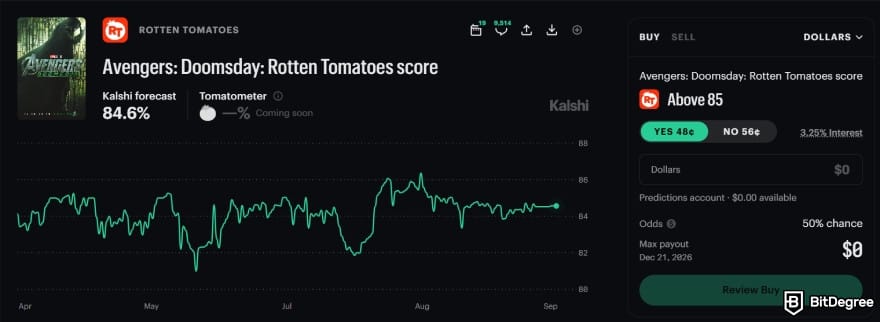
Most Kalshi markets ask you to take one side of a simple YES or NO question. Contracts commonly trade between $0.01 and $0.99, and that price can be read as the market’s estimated probability. So a YES contract at $0.40 is essentially the market saying, “roughly a 40% chance".
Result | Settlement Value | Your Gross Result |
|---|---|---|
The event happens | $1.00 | $0.60 profit |
The event doesn't happen | $0.00 | $0.40 loss |
Table: Kalshi contract example
Kalshi doesn’t set fixed odds or sit on the other side of your trade like a conventional sportsbook. Your orders are matched with other members through an order book, while supply and demand move contract prices up and down. You can also sell before the market closes or hold the position until the outcome is settled.
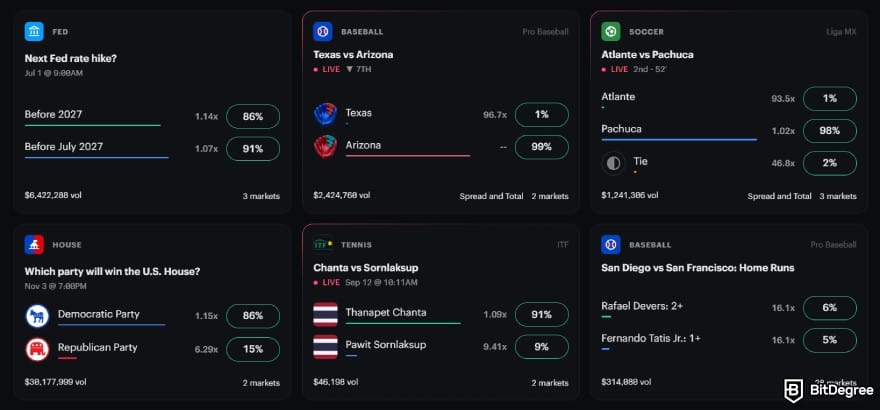
The range of markets is impressively broad too. Kalshi covers sports, elections, culture, commodities, economic data, weather, technology, and even markets tracking whether someone says a specific word. If you’ve got unusually deep knowledge in one of those areas, you may find a market where that expertise can come in handy.
Eligible users can also access regulated perpetual futures, which adds a different trading experience. Instead of betting on a binary outcome and waiting for resolution, you take ongoing exposure to price movements.
📚 Check Out: Best Crypto Futures Trading Platforms

Did you know?
All Crypto Exchanges may look similar to you but they're NOT all the same!
Who Is Kalshi For?
I think Kalshi is best suited to people who follow the news and often find themselves thinking, “I know where this is going”. Here, you can back that opinion with a YES or NO position and potentially profit if the outcome goes your way.
Its perpetual futures could also make the platform relevant to more traditional traders. The leverage may look modest beside the triple-digit offers available elsewhere, but the CFTC-regulated setup provides something those platforms often can’t: greater regulatory assurance.
Kalshi claims to be the first company in US history to offer regulated perpetual futures to American traders.
Overall, Kalshi may suit:
- News & data enthusiasts. If you closely follow elections, economic reports, weather forecasts, technology, or entertainment, Kalshi gives you a way to trade on the events you already analyze.
- Forecasters. Kalshi is a natural fit if you enjoy estimating probabilities and spotting situations where you believe the wider market is too optimistic or pessimistic.
- Sports fans. You can trade contracts covering individual games, tournaments, player performances, and season outcomes.

- Portfolio hedgers. Markets covering inflation, interest rates, commodities, and economic indicators may help you express a financial view or hedge against certain real-world risks.
- Developers & algo traders. You can use the API to analyze historical data, backtest an idea, and deploy it through Python once it’s ready for live trading.
If guaranteed returns or hands-off income are what you’re after, Kalshi is unlikely to tick those boxes. Your results depend on the positions you choose, and getting the outcome wrong can mean losing your entire stake.
Bonuses & Promotions
Kalshi gives new traders access to a welcome bonus, alongside other rewards and promotions that may become available after registration. These extras can make your first steps on the platform a little more rewarding.

The promotions are a welcome bit of “extra spice”, giving your time on Kalshi a little more flavor. Still, the platform’s real appeal lies in its huge selection of tradable real-world events and the reassurance of accessing them through a regulated exchange.
📚 Check Out: Kalshi Promo Code
Advantages
Kalshi has become rather difficult to scroll past on social media, and there are several good reasons for that. Here are five standout qualities that impressed me the most:
- Extensive market selection
- CFTC-regulated exchange
- Beginner-to-pro trading tools
- Flexible deposit & withdrawal options
- Easy-to-use platform experience
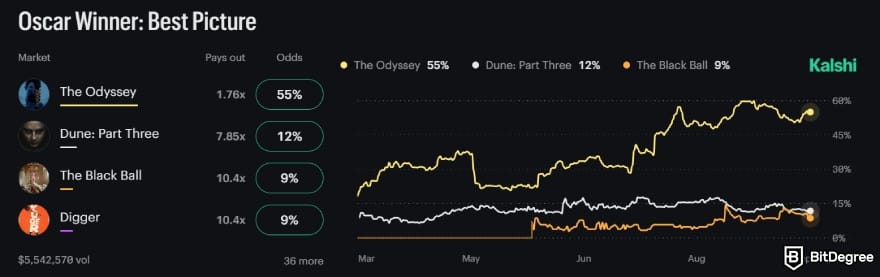
The first thing that stood out to me was just how many markets you can trade. Kalshi stretches well beyond sports, covering elections, economics, finance, weather, crypto, technology, and entertainment. One minute you’re tracking the Federal Reserve, and the next you’re calling who’ll win Best Picture at the Oscars.
Reassuringly, that variety also comes with a solid level of regulatory oversight. KalshiEX LLC operates as a designated contract market regulated by the CFTC. Federal supervision won’t rescue your bad prediction, unfortunately, but it helps deter market manipulation, insider trading, and other questionable activity.[1]
Another thing I liked is that Kalshi lets you choose your own level of involvement. Casual traders can make predictions on lighter topics, like who’ll inherit the James Bond tuxedo. More experienced users, on the other hand, can explore perpetual futures on markets such as gold and silver.

Getting money onto and off the platform is similarly flexible. Depending on your location, you can use debit cards, bank transfers, Apple Pay, Google Pay, PayPal, Venmo, Cash App, cryptocurrency, or wire transfers. With that many routes available, you’re less likely to get stuck with an option that doesn’t work for you.
Despite everything going on under the hood, Kalshi’s interface keeps things pleasantly uncomplicated. Markets are easy to browse, the important numbers don’t play hide-and-seek, and trades can be placed smoothly on both desktop and mobile.
Limitations
As much as I enjoyed using the platform, no balanced Kalshi review would be complete without addressing the areas where it's a bit lacking:
- Market-dependent liquidity & spreads
The trading experience on Kalshi can vary considerably from one market to another. Popular sports matchups and major economic reports usually draw enough interest to create deeper order books, tighter spreads, and smoother trade execution.
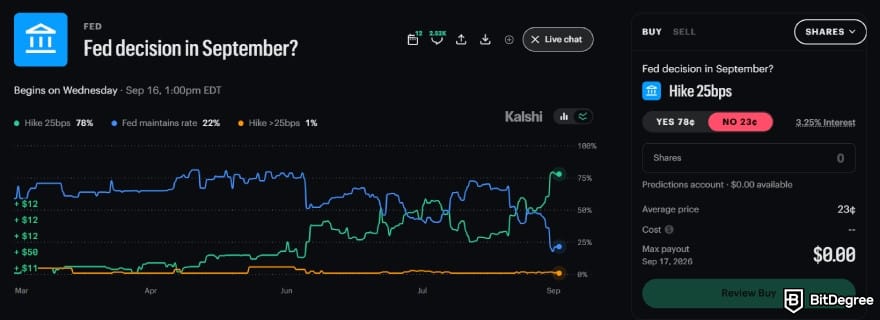
Niche markets, however, may not enjoy the same level of attention. When fewer traders participate, the spread between buying and selling prices can widen, leaving you with fewer opportunities to enter or exit without compromising on price.
Market Categories
At the time of writing this Kalshi review, I found that the platform brings two distinct products under one roof: prediction markets and perpetual futures.
Prediction Markets
If Kalshi has a "signature dish", it’s the prediction markets. Each one turns a real-world event into a measurable question with a clear deadline, covering everything from match results and inflation figures to which actor will leave awards night with a smile.
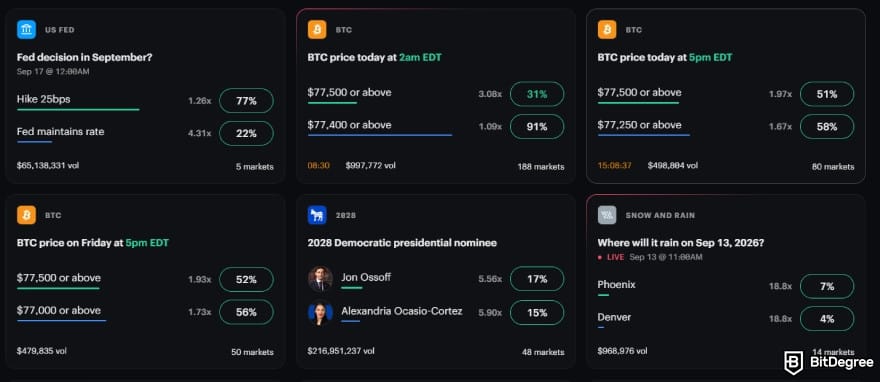
You don’t need a finance degree to understand the basic setup. You trade YES or NO contracts according to whether you think the event will happen. With such a wide range of categories, Kalshi gives casual forecasters and serious market watchers plenty to disagree about.
Sports | Game winners, totals, player performances, tournaments, season outcomes |
|---|---|
Politics | Elections, congressional control, government decisions, legal outcomes |
Economics | Interest rates, inflation, GDP, unemployment, recessions, mortgage rates |
Finances & Commodities | Stock index levels, oil prices, gold prices, silver prices |
Crypto | Bitcoin, Ethereum, & other cryptocurrency price targets |
Weather & Climate | Temperatures, rainfall, snowfall, hurricanes, tornado counts |
Culture & Entertainment | The Oscars, Grammys, Emmys, Billboard rankings, films, television |
Technology | Earnings, product launches, artificial intelligence, business milestones |
Mentions | What notable people may say or mention |
Table: Kalshi prediction market categories
Some of the markets naturally wear more than one category hat.
For example, a Bitcoin contract can overlap crypto and financials, while a politician’s public remarks may fit equally well under politics and mentions. The lineup also shifts with breaking news, upcoming games, and cultural events, providing new and timely subjects to explore.
You can also suggest an entirely new prediction market for Kalshi to consider adding to the platform.
Just remember that a wide selection doesn’t make careful research any less important. Every contract comes with its own deadline, qualifying criteria, and official resolution source. Make sure to check each market’s fine print carefully, since seemingly similar questions may settle under very different rules.
Perpetual Futures Markets
While prediction markets are built around “Will this happen?”, perpetual futures are concerned with “Will the price rise or fall?” They track an underlying asset rather than resolving a binary outcome. Naturally, they demand a bit more trading knowledge and carry greater complexity than regular event contracts.
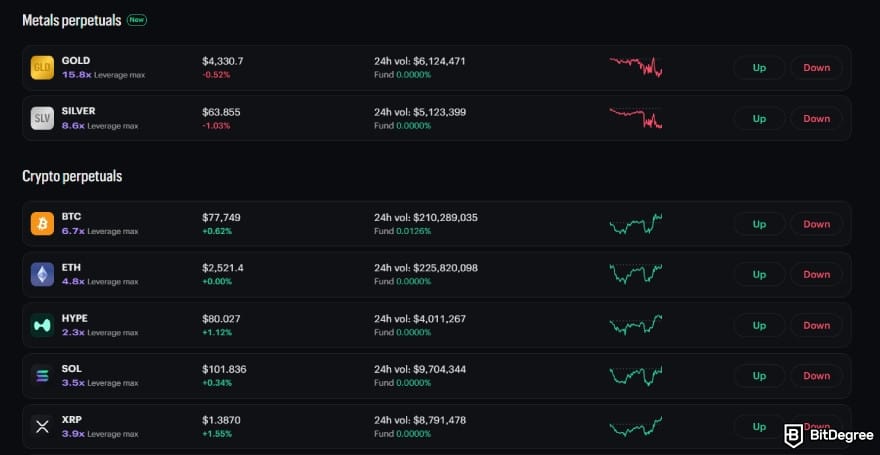
You can go long if you expect the asset to rise and short if you think it will fall. Any profit or loss follows the underlying market, although you're not owning the cryptocurrency or metal involved.
Perpetual futures have no fixed expiration date, so your position can remain open as long as you maintain sufficient margin.[2]
Kalshi’s perpetual futures lineup includes:
- Major cryptocurrencies: BTC, ETH, SOL, XRP, BCH, LTC, and BNB
- Other crypto assets: HYPE, ZEC, NEAR, VVV, ADA, SUI, DOGE, WLD, LINK, SHIB, and AAVE
- Precious metals: Gold and silver
The perpetual futures lineup could grow, but the mechanics should remain familiar across the available markets. You can trade around the clock using market orders, limit orders, take-profit orders, and stop-loss controls. Kalshi also lets you use up to 6x leverage, with the precise limit based on your chosen asset and position size.
📚 Check Out: Best Crypto Leverage Trading Platform
Fees & Limits
Kalshi is fairly transparent about its pricing, but you won’t find a single fee applied across the entire platform. Prediction-market fees depend on the contract price, perpetual futures use volume-based maker and taker tiers, and deposit or withdrawal costs vary by transfer method.
Here’s how the Kalshi fee structure at a glance:
Type | Fees | Limit & Condition |
|---|---|---|
Prediction Market | $0.07–$1.75 taker; $0.04–$0.88 maker (most markets) | Min. 1 contract |
Perpetual Futures | 0.026%–0.12% taker; 0.006%–0.05% maker | - |
ACH Bank Transfer | Free | $10 min. deposit (US accounts only) |
Debit Card | Deposits: up to 2%; withdrawals: free | $10 min. deposit; personalized withdrawal limits |
Wire Transfer | Free (bank fees may apply) | $1,000 min. deposit; $500,000 min. withdrawal |
Crypto | Free (third-party & network fees may apply) | - |
PayPal & Venmo | Deposit fees may range from 0%–2%; withdrawals are free | $10 min. deposit (US accounts only) |
Cash App | Deposit fees may range from 0%–2% | Deposits only (US accounts only) |
Table: Kalshi fees overview
Kalshi displays your personal deposit and withdrawal limits on the transfers page. These can change according to the transfer method, verification status, account history, and third-party processor. Always make sure to check it before confirming your transactions.
Prediction Market Fees
Kalshi calculates standard event-contract taker fees using this formula:
Fee = M × 0.07 × C × P × (1 - P)
Here, P is the contract price in dollars, C is the number of contracts, and M is the market’s fee multiplier. The standard taker multiplier is 1 (unless the platform states otherwise), while the final result is rounded according to the fee schedule.
The formula means your fee depends on both the number of contracts and their price.
For example, purchasing 100 standard contracts at $0.50 costs $50 and carries a $1.75 taker fee. The same number of contracts at either $0.10 or $0.90 carries a lower fee of $0.63.
Maker orders work differently. If your order remains on the book and another trader later accepts it, the applicable formula is:
Fee = M × 0.0175 × C × P × (1 - P)
The default maker multiplier is 0, which means many standard resting orders don’t carry a maker fee. Selected markets use higher maker multipliers, however, so placing a limit order doesn’t automatically guarantee fee-free trading.
Some event series have non-standard maker or taker multipliers. These may include major sporting events, economic releases, award ceremonies, long-term markets, and combos.
Thankfully, Kalshi doesn’t expect you to calculate every market fee manually. You can see the applicable charge by clicking the information icon beside “You’re buying” before confirming the trade.
Perpetual Futures Fees
Perpetual futures use a more familiar maker and taker model. Your rate falls as your combined prediction-market and trading volume increases over a rolling 30-day period:
Tier | 30-D Trading Volume | Taker Fee | Maker Fee |
|---|---|---|---|
0 | $0 | 0.120% | 0.050% |
1 | $100,000+ | 0.100% | 0.040% |
2 | $300,000+ | 0.080% | 0.032% |
3 | $1 million+ | 0.060% | 0.024% |
4 | $3 million+ | 0.050% | 0.020% |
5 | $10 million+ | 0.040% | 0.016% |
6 | $30 million+ | 0.035% | 0.014% |
7 | $100 million+ | 0.032% | 0.012% |
8 | $300 million+ | 0.030% | 0.010% |
9 | $1 billion+ | 0.028% | 0.008% |
10 | $3 billion+ | 0.026% | 0.006% |
Table: Kalshi perpetual futures maker & taker fees
Funding payments are another cost that can sneak into the equation. They aren’t a Kalshi fee; instead, long and short traders exchange payments every 8 hours to help anchor the perpetual price to the spot market. Depending on the rate and direction of your position, you could end up paying funding or receiving it.
Mobile Support
The mobile experience gets the same serious treatment as the desktop platform. Native apps are available through the Apple App Store and Google Play, including an iOS version tailored to iPhone users. There’s also a mobile browser option for anyone who doesn't want another app on their phone.
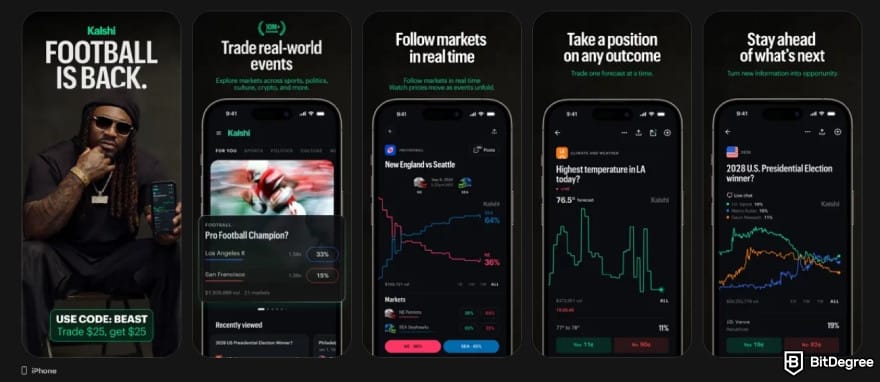
Most of the platform’s essential features travel with you. Through the Kalshi mobile app, you can:
- Browse and search prediction markets across different categories;
- View live contract prices, market rules, charts, and order-book activity;
- Place quick and limit orders or sell an existing position;
- Monitor open trades, balances, payouts, and trading history;
- Deposit or withdraw funds using the methods available to your account;
- Receive app notifications when one of your markets settles;
- Contact customer support through the in-app messenger.
The trade-off is having less room to work with. The app handles market tracking, position management, and simple orders well, but serious order-book analysis and multi-market comparisons remain easier on a larger desktop screen.
Even so, Kalshi’s mobile app is smooth and complete. If you want to predict whether interest rates will move while waiting for your train to do the same, there's hardly a better option.
📚 Check Out: Best Crypto Mobile Casino Site
Supported & Restricted Countries
Although Kalshi is based in the US, its prediction markets aren’t exclusively for American traders. The platform has expanded well beyond its home borders, allowing eligible users from more than 140 countries to register and trade.
Of course, “internationally available” never means “available absolutely everywhere”. Kalshi restricts access in more than 50 named jurisdictions:
Europe | Belarus, Bulgaria, Guernsey, Hungary, Kosovo, Moldova, Monaco, Russian Federation, Serbia, Slovakia, Ukraine |
|---|---|
Middle East | Bahrain, Islamic Republic of Iran, Iraq, Lebanon, Oman, Syrian Arab Republic, United Arab Emirates, Yemen |
North & West Africa | Algeria, Burkina Faso, Côte d’Ivoire, Egypt, Libya, Mali, Niger, Sudan |
Central Africa | Angola, Cameroon, Central African Republic, Democratic Republic of the Congo |
East & Southern Africa | Botswana, British Indian Ocean Territory, Ethiopia, Kenya, Malawi, Mozambique, Namibia, Somalia, South Sudan, Zimbabwe |
Asia-Pacific | Afghanistan, India, Lao People’s Democratic Republic, Mongolia, Myanmar, North Korea, People’s Republic of China, Taiwan, Thailand |
Americas | Bahamas, Bolivia, Cuba, Guyana, Haiti, Honduras, Nicaragua, Venezuela |
Table: Kalshi restricted jurisdictions by region
Keep in mind that Kalshi’s geographic restrictions may evolve alongside local laws and regulatory decisions. Seeing your country on the restricted list today doesn’t necessarily mean the door will remain closed forever.
Customer Support
Kalshi mainly provides support through its in-app and web chat, with an AI assistant acting as the front desk by answering common questions, collecting case details, and escalating trickier problems to a human agent.
Support Chat | Resolving general questions & account issues |
|---|---|
Requesting help when support chat is unavailable | |
Help Center | Finding guidance on trading, payments, verification, security, & fees |
Discord | Discussing market ideas, platform topics, and API development |
Table: Kalshi support channels
Kalshi doesn’t provide support by phone or text, but its existing channels should cover most everyday problems without leaving you stranded. Just provide your name, email address, and enough detail to save the support team from playing detective, while allowing more time for complicated cases.
Is Kalshi Safe?
The short answer is yes, Kalshi appears reasonably safe to use.
Kalshi’s event contracts are cleared through Kalshi Klear, a CFTC-registered derivatives clearing organization. According to its regulatory filing, these contracts remain fully collateralized at all times, helping to reduce counterparty and settlement risk.
Regulatory Oversight | CFTC designation for KalshiEX & DCO registration for Kalshi Klear |
|---|---|
Contract Backing | Full collateralization of event contracts |
Account Protection | Default 2FA with SMS or an authenticator app |
Data Protection | Encryption, data masking, database separation, and access controls |
Trading Controls | Personal funding caps & voluntary opt-outs |
Table: Kalshi safety & security measures
Your account also receives two-factor authentication by default. SMS verification is the standard method, but you can switch to an authenticator app for stronger protection.
Kalshi also provides responsible risk-management tools, including personal funding caps and voluntary account opt-outs.
Behind the scenes, Kalshi says it uses encryption, data masking, segregated customer databases, employee multi-factor authentication, and least-privilege access controls. Vendors and affiliated institutions are also reviewed for their security practices and must pass a rigorous assessment. In short, no one gets a free pass before working with the platform.
User Experience
Most of my Kalshi testing happened on desktop, and as someone fairly new to prediction markets, I found the experience welcoming.
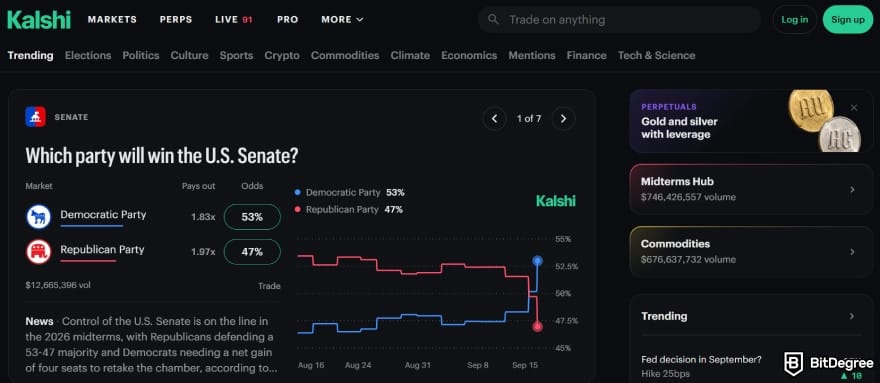
Kalshi turned out to be a decent place to learn the ropes. From registration and deposits to trading and withdrawals, each step flowed naturally, with very little wandering around in search of whichever button I should click next.
I got my first clear sign that Kalshi takes compliance seriously when I had to pull out my ID during registration. That can be a bit of a hassle, especially if you prefer the more anonymous side of online trading. Still, the process was manageable because the platform clearly explained what information it needed at each step.
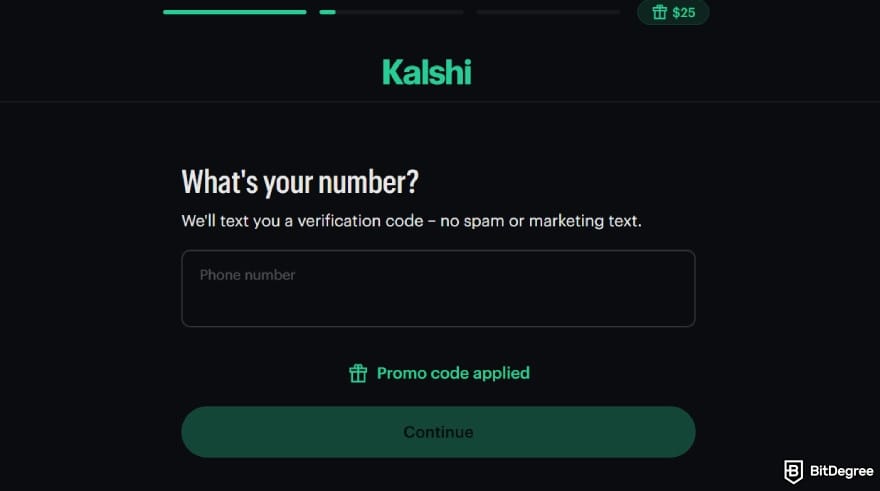
Once inside, I found the desktop interface clean and easy to explore. Markets are organized by topic, while the search and category filters helped me move between sports, politics, economics, crypto, and entertainment without losing my way.
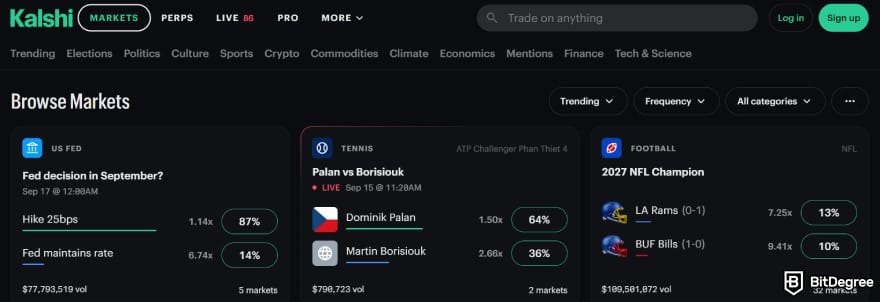
Funding my balance was also straightforward thanks to the range of available transfer methods. From there, I could open a market, review its chart and settlement conditions, and choose between YES and NO without any unnecessary detours.
Overall, Kalshi proved far more approachable than I expected. It isn’t flawless, and several features still have room to grow, but it offers a solid entry point into event contracts and even perpetual futures without immediately drowning you in trading jargon.
📚 Check Out: Best Crypto Futures Trading Platforms
How to Use Kalshi
I’d consider a practical walkthrough a must-have in any proper Kalshi review. The platform has put effort into making its app and website easy to use, but it can still be a little confusing when you’re new. So, I’ve put together a guide covering everything from signing up and depositing funds to making your first trade and withdrawing your money.
Creating an Account
Signing up for Kalshi shouldn’t give you much trouble. The process works on both mobile and desktop, although a reliable internet connection certainly helps.
You must be 18 or older to create an account.
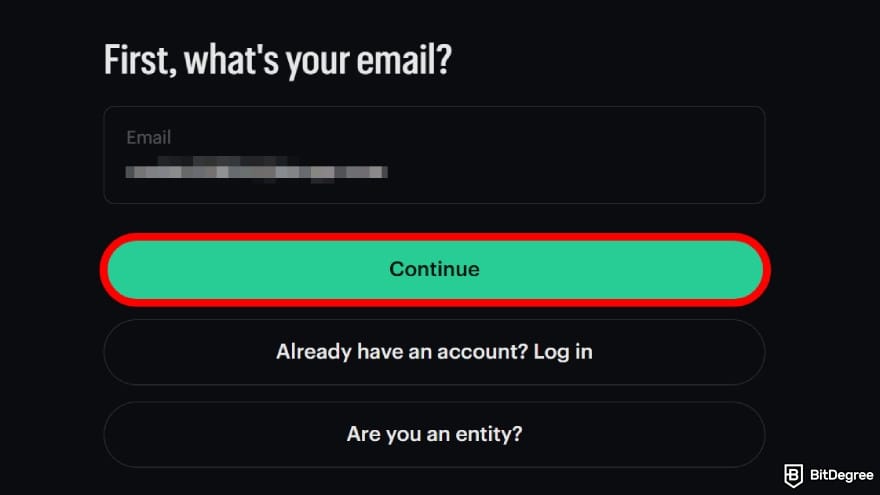
Make sure to keep a valid government-issued document nearby, since Kalshi may ask you to upload a national ID card, driver’s license, or passport for verification. Here are the steps:
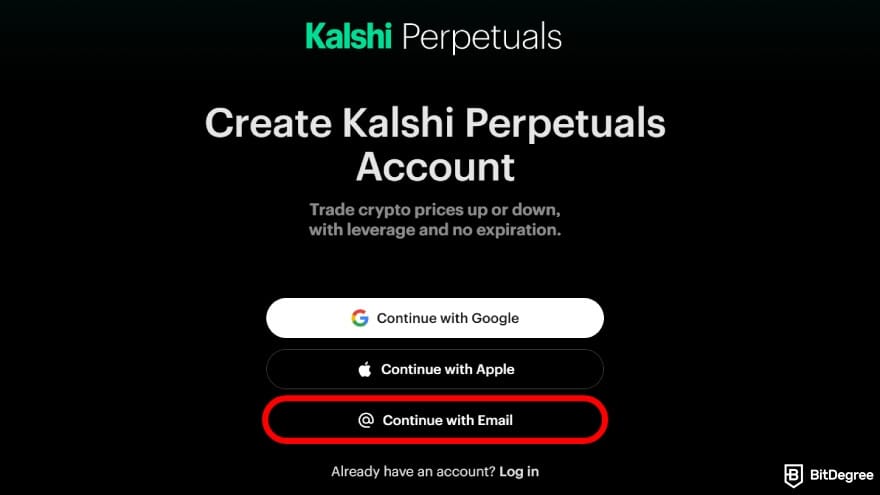
For this example, I’m using [Continue with Email], but you can also register with Google or Apple if that’s more convenient.
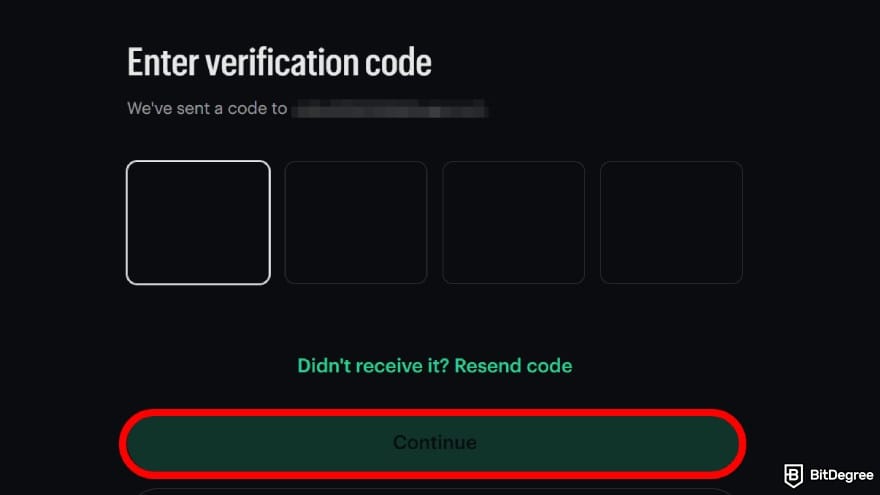
The [Continue] button will turn green once the correct code is entered, letting you move to the next step.
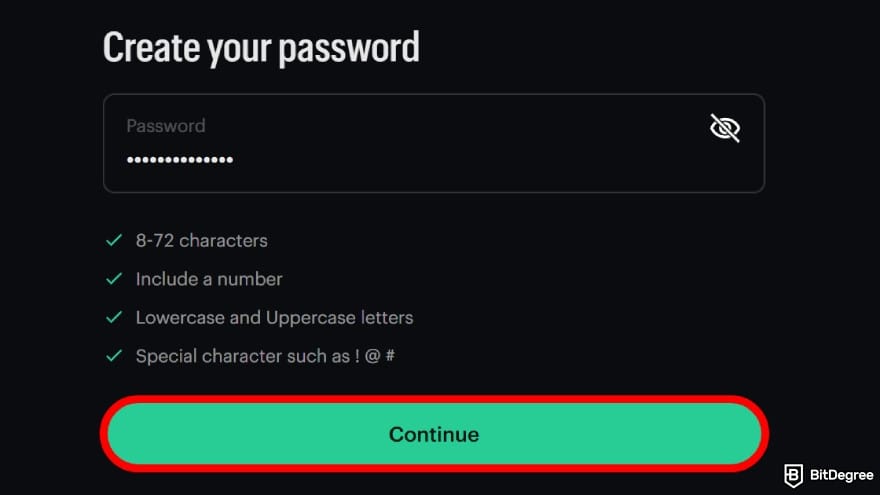
When all the requirements are marked as complete, click [Continue] to move on.
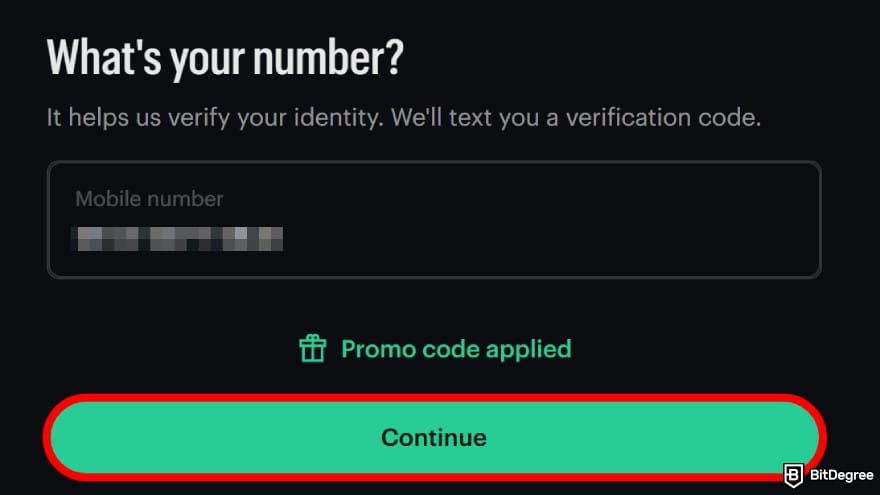
You should also see the promo code applied automatically if you registered through the link that I gave you earlier.
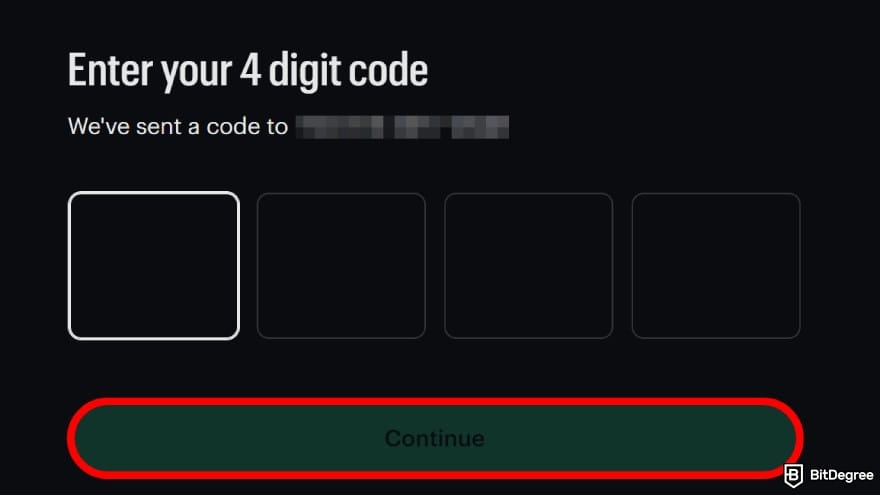
Once the correct code is entered, click [Continue] to proceed.
If the code doesn’t arrive, wait a few minutes before trying again and check that your device has a strong signal.
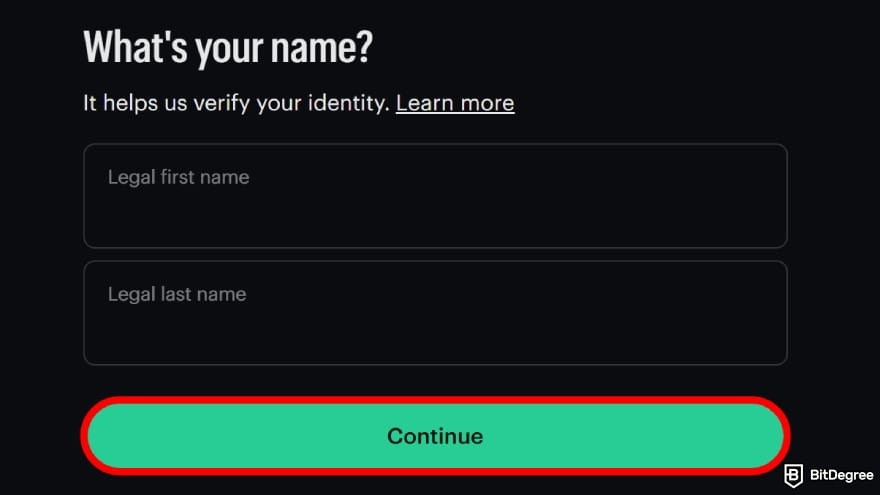
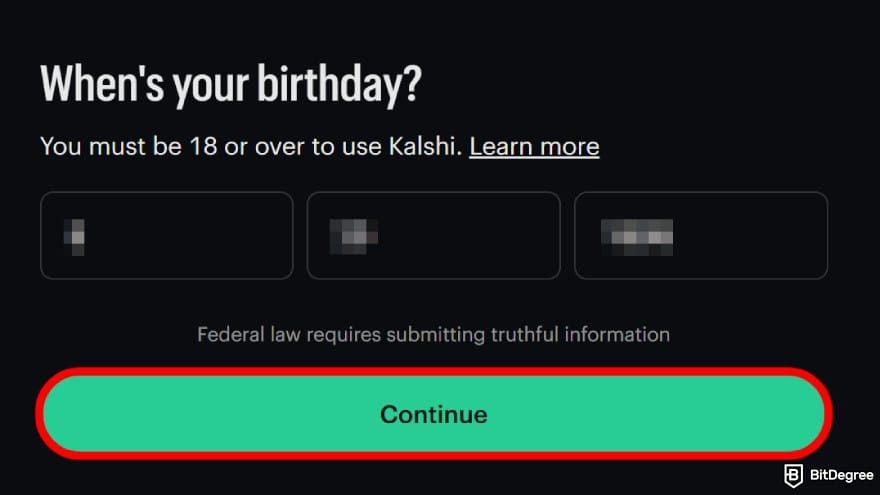
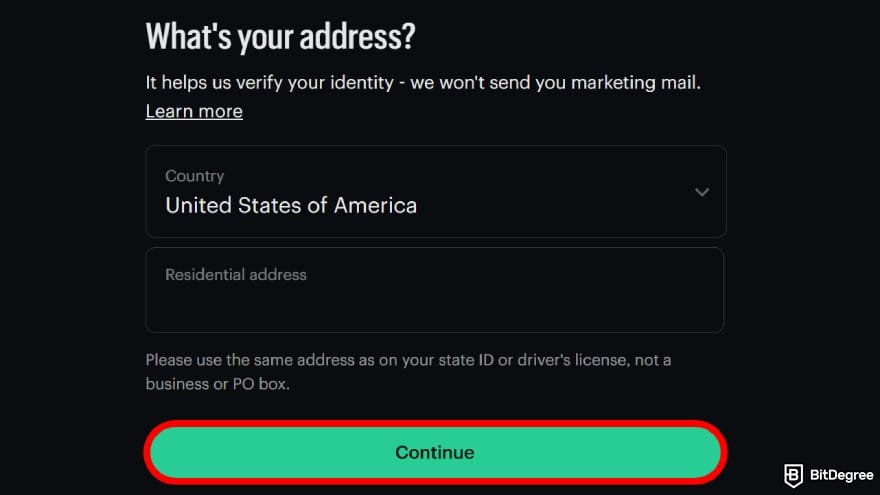
Make sure the address is accurate, since Kalshi will verify it after you click [Continue].
You may also need to upload an ID document, depending on your location and verification status.
If your signup is under review, there’s no need to worry. The review process is usually completed within 48 hours, giving the team enough time to verify your information, check its accuracy, and make sure everything meets the required compliance standards.
Depositing on Kalshi
With your Kalshi account approved, it’s time to put some money in it before attempting to predict the future. The platform offers a healthy selection of deposit methods:
- Debit card, including Apple Pay and Google Pay
- Bank transfer (ACH)
- PayPal
- Venmo
- Cash App (deposits only)
- Crypto
- Wire transfer
Naturally, you can use whichever available option you find most convenient. For this walkthrough, though, I’ll show you how to deposit crypto using the Kalshi mobile app.
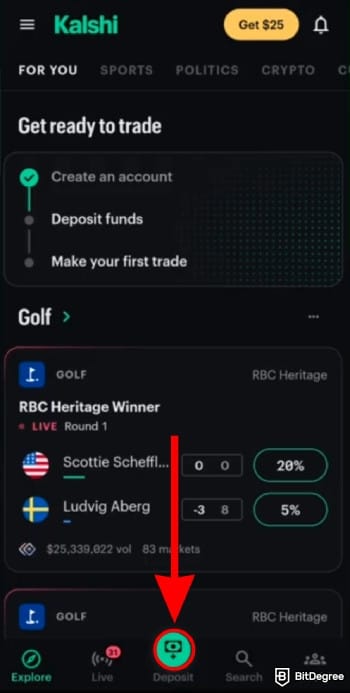
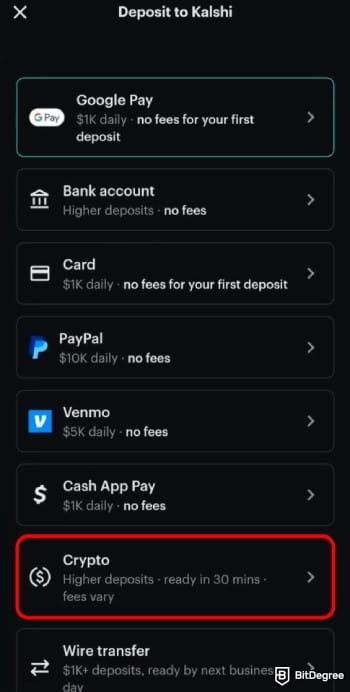
Confirm that both the asset and the network are supported before making a transaction.
And there you go. You may need to wait up to 30 minutes for the transfer to appear in your cash balance. As I've mentioned earlier in my Kalshi review, the transaction may also come with provider fees and network fees.
Making a Perpetual Futures Trade
Once your deposit reaches your cash balance, you’ll need to transfer the amount you want to trade into a separate perpetuals margin account. Before getting started, you must also complete KYC and receive perpetuals access.
Once approved, you must also complete the mandatory educational tutorial before placing your first trade.
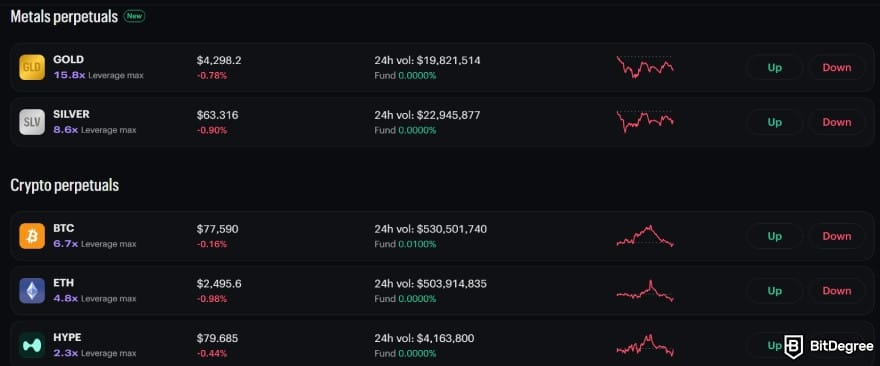

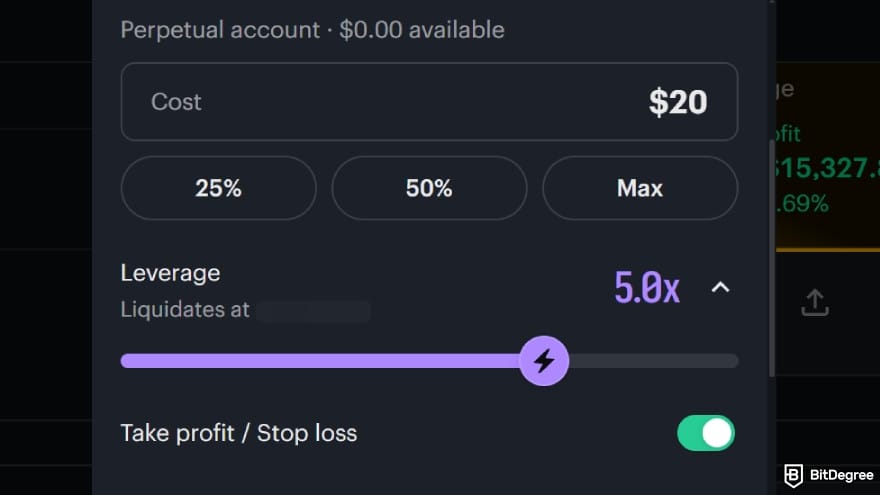
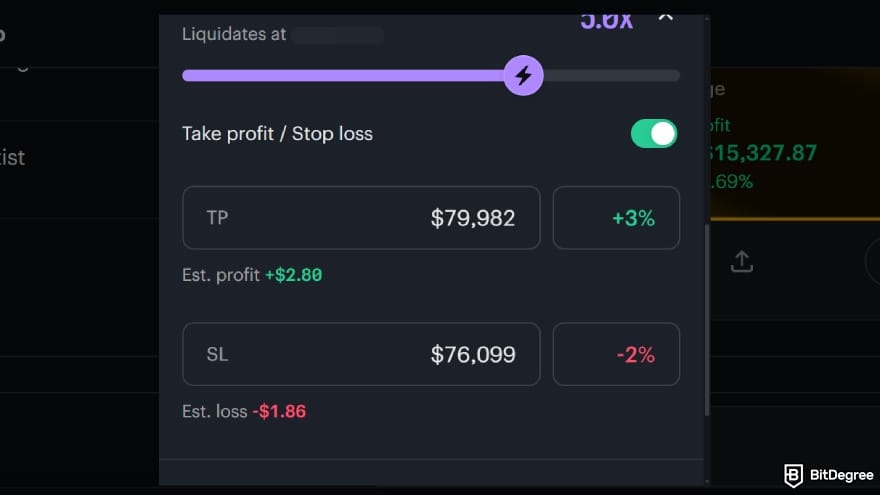
To close a position manually, go to your [Portfolio] tab, select the open trade, and tap [Close]. You can exit the entire position or close only part of it.
Withdrawing Funds
You can withdraw from Kalshi using several methods, although this guide will stick with crypto for consistency with the deposit walkthrough. If you prefer another available option, the process shouldn’t differ too dramatically.
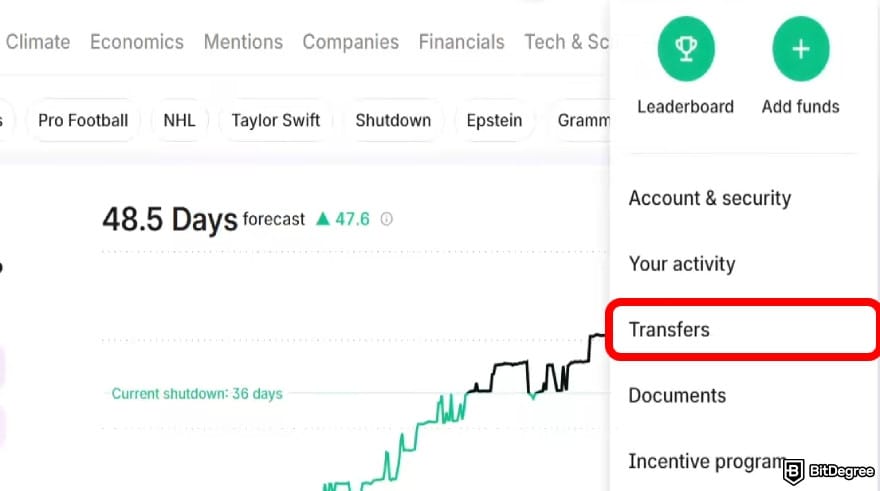
And that's it! You can monitor the transaction through the [Transfers] tab while it’s being processed.
Kalshi Alternatives
Of course, I can’t call this a complete Kalshi review without seeing how it stacks up against some familiar alternatives. In this case, I’ve got two platforms in mind: Polymarket and Robinhood.
Kalshi VS Polymarket
Kalshi and Polymarket share a similar idea: you trade market-driven contracts tied to event outcomes. Their platform structures differ, though. Polymarket has a CFTC-regulated US platform and a separate blockchain-based international platform, while Kalshi keeps its prediction markets and other trading products under one centralized setup.
Model | Regulation | Main Products | Best For | |
|---|---|---|---|---|
Kalshi | Centralized financial exchange & app | CFTC-designated contract market | Event contracts & crypto perpetual futures | Familiar payments & a unified trading experience |
Polymarket | Separate US and international platforms | CFTC-regulated US platform | Event contracts & international crypto perpetuals | Blockchain-based trading & international market access |
Table: Kalshi VS Polymarket at a Glance
Kalshi may be the more familiar choice if you prefer traditional payment methods and keeping everything in one account. If you’re already comfortable with crypto and prefer onchain trading, Polymarket’s international platform could be more appealing.
Overall, Kalshi is the more straightforward option if you prefer trading through a federally regulated US platform. That said, if you prioritize greater freedom, broader market variety, and deeper liquidity, I’d give Polymarket the win in the Kalshi VS Polymarket comparison.
Kalshi VS Robinhood
Kalshi and Robinhood both offer event contracts, although that’s largely where the direct comparison ends. Kalshi focuses on prediction markets and perpetual futures, while Robinhood places event contracts alongside stocks, ETFs, options, crypto, futures, and other investments.
Model | Regulation | Main Products | Best For | |
|---|---|---|---|---|
Kalshi | Centralized financial exchange & app | CFTC-designated contract market | Event contracts & crypto perpetual futures | Familiar payments & a unified trading experience |
Robinhood | Brokerage app connected to partner exchanges | Registered FCM accessing regulated exchanges | Stocks, ETFs, options, crypto, futures, & event contracts | Multi-asset investing |
Table: Kalshi VS Robinhood at a Glance
If your investments already live on Robinhood, adding event contracts to the same account is certainly convenient. The platform offers a much broader range of financial products, although its prediction markets aren’t its main focus.
Kalshi gives you a purpose-built environment for researching events, comparing contract prices, and trading with prediction-specific tools. For dedicated event traders, it’s probably the better option. For investors who want everything under one account, Robinhood is likely the more convenient choice.
Conclusions: Is Kalshi Right for You?
Wrapping up my Kalshi review, the platform makes a good entry point for anyone exploring prediction markets for the first time. It also works well if you already know the space but want something a little more approachable. Federal regulation can’t save you from a bad prediction, but it does provide some reassurance while you explore its expanding selection of markets.
Its perpetual market is another solid addition. It may not match the depth of dedicated derivatives platforms, but Kalshi covers a useful selection of popular assets across crypto and metals. The interface is straightforward enough for newcomers while still offering a familiar environment for more experienced traders.
If you want to explore prediction markets and perpetual trading from a single neat platform, make sure to give Kalshi a look.
The content published on this website is not aimed to give any kind of financial, investment, trading, or any other form of advice. BitDegree.org does not endorse or suggest you to buy, sell or hold any kind of cryptocurrency. Before making financial investment decisions, do consult your financial advisor.
Scientific References
1. Aitken M., Cumming D., Feng Z.: ‘Exchange Trading Rules, Surveillance and Suspected Insider Trading’;
2. Chen E., Ma M., Nie Z.: ‘Perpetual Future Contracts in Centralized and Decentralized Exchanges Mechanism and Traders’ Behavior’.
About Article's Experts & Analysts


- + Wide-ranging market selection
- + Federally regulated exchange
- + Versatile trading toolset
- + Broad payment support
- + Clean & user-friendly interface
- - Uneven liquidity & variable spreads
An federally regulated platform offering diverse selection of prediction markets and perpetual futures.
Disclosure: To keep our site running & free of charge, we may sometimes receive a small commission if a reader decides to purchase services via some links on site, at no extra cost.