
Imagine a world where the collective wisdom of thousands is more accurate than any single expert on TV. That’s the core of prediction markets, and right now, Polymarket is the undisputed heavyweight champion of the arena.
In this Polymarket review, I will dive into why this platform has become the go-to source for real-time odds on global events.
But is it actually a viable way to trade your insights, or just a glorified digital crystal ball? Also, is it comparable to crypto casinos like Stake, iWild, and 7Bit? If you’ve ever felt like you knew exactly how a major event would play out before it happened, you’ll want to see how this platform stacks up.
Verdict at a Glance
Polymarket is the heavyweight champion of prediction markets for a reason. Its unmatched variety and high liquidity mean you’re getting fair odds on almost anything, all backed by transparent, non-custodial security that keeps you in control. However, regional geoblocks are a major hurdle. Some niche markets can sometimes feel a bit thin, and the decentralized dispute process has a learning curve. Overall, if you’re a crypto-savvy trader who values data over hype, it’s certainly worth checking out.
Pros
- Unmatched market variety
- High liquidity and fair odds
- Non-custodial security
- Transparent on-chain data
Cons
- Regional restrictions
- Liquidity gaps in niche markets
- Complex dispute process
Table of Contents
- 1. Polymarket Review: Quick Overview
- 2. Who is Polymarket For?
- 3. Bonuses and Promotions
- 4. Advantages
- 5. Limitations
- 6. Mobile Support
- 7. Payment Methods
- 8. Supported and Restricted Countries
- 9. Customer Support
- 10. Is Polymarket Safe?
- 11. User Experience
- 12. How to Use Polymarket
- 12.1. How to Create an Account
- 12.2. How to Deposit
- 12.3. How to Trade
- 12.4. How to Withdraw
- 13. Polymarket Alternatives
- 13.1. Polymarket VS Kalshi
- 13.2. Polymarket VS Manifold Market
- 13.3. Polymarket VS PredictIt
- 14. Conclusions
Polymarket Review: Quick Overview
Before I take you further into this Polymarket review, it would be best to understand the basic information about the website. Here is a quick overview of Polymarket to help you get started:
Established in | 2020 |
|---|---|
Operator | Adventure One QSS Inc. and QCX LLC, d/b/a Polymarket US |
License and regulator | CFTC license |
Supported currencies | 110 fiat (USD, EUR, CAD, etc.) and 21 cryptocurrencies (BTC, ETH, SOL, etc.) |
Minimum deposit | Varies by currency and method, starting at $3 |
Minimum withdrawal | Should cover at least the network gas fee |
Withdrawal fees | ✗ |
Withdrawal limits | None (breaking up withdrawals larger than $50,000 is recommended) |
Typical processing time | Mostly instant |
Payment methods | Crypto transfers, Visa, Mastercard, PayPal |
Customer support | Social media, Discord, email, help center |
Table: Polymarket quick overview
With this information in mind, let’s dive deeper into this Polymarket review and see if it is what you’re expecting.
Who is Polymarket For?
Because Polymarket covers almost everything from the next Oscar winner to the future of AI and global elections, it’s honestly a playground for anyone with a pulse on current events. You don’t need to be a Wall Street whiz to get started.
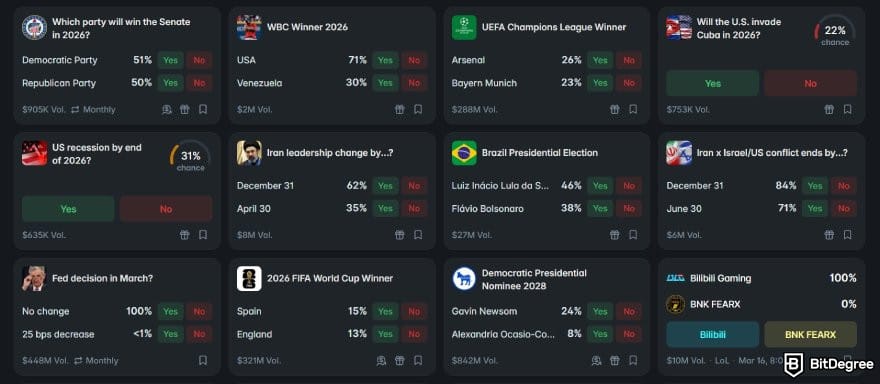
If you’ve got an opinion on where the world is headed and some data to back it up, there’s a place for you here. That said, a few specific groups tend to really thrive in this environment:
- News Junkies & Geopolitical Buffs. If you’re the person who constantly refreshes X and can spot a narrative shift before it hits the mainstream, you can turn that info-addiction into actual trades.
- Stat Nerds. Beyond just betting on who wins a game, some folks use Polymarket to trade on season-long outcomes, player awards, and draft picks using deep-dive analytics.
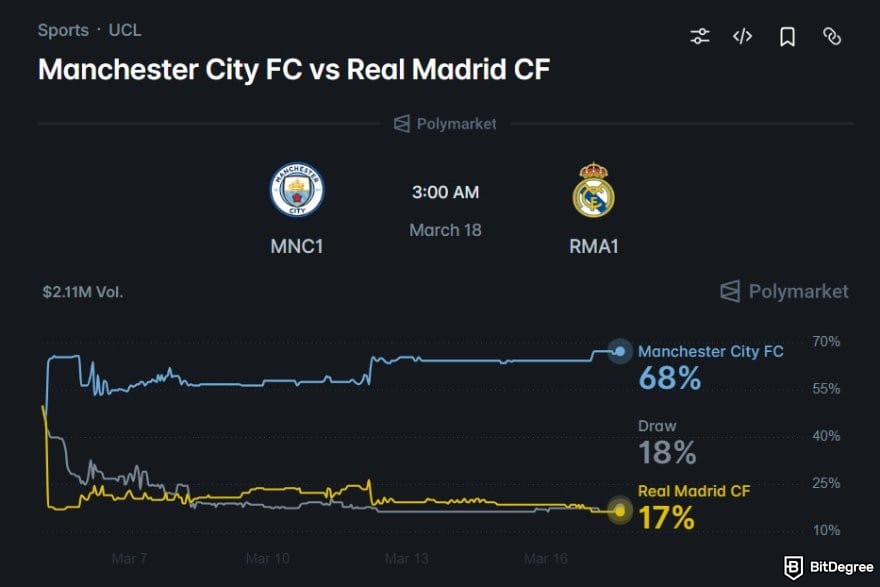
- Crypto Enthusiasts. Since the platform is built on the Polygon network and uses USDC, it’s a natural home for people who already have a digital wallet and want to diversify beyond just holding coins.
- Hedgers. Some smart users use the platform like insurance. For example, if a certain policy change might hurt your business, you can bet on it happening to offset your potential real-world losses.
It’s all about putting your money where your mouth is, but before you jump in, you might want to know if the platform offers interesting bonuses and promotions.

Did you know?
All Crypto Exchanges may look similar to you but they're NOT all the same!
Bonuses and Promotions
If you’re coming from the world of online gambling, you might need to adjust your expectations a bit. Mainly because it is not a casino, which means they don't really do the whole "welcome bonus" song and dance.
You aren't going to find the flashy "100% deposit match" or "50 free spins" that are standard at crypto casinos like 7Bit or iWild.
However, that doesn't mean there aren't ways to get a little extra back. Instead of traditional bonuses, the platform rewards activity and liquidity. For the more serious traders, there are Liquidity Rewards, essentially getting paid daily in USDC just for placing competitive limit orders that keep the markets moving.
There is also the Maker Rebates program on specific crypto and sports markets, where you can earn a percentage of fees back. Plus, the crypto community is always buzzing about a potential future airdrop for active users.
📚 Check Out: The Best Free Crypto Airdrops
So while you won't get a sign-up gift, crypto betting on Polymarket rewards you for actually participating in the ecosystem rather than just showing up at the door.
Advantages
So, why is everyone and their mother suddenly sharing Polymarket screenshots on social media? Here are the four primary advantages you’ll find in this Polymarket review:
- Unmatched Market Variety. From niche political subplots to the exact temperature in Central Park, the range of topics is staggering.
- High Liquidity and Fair Odds. Because it’s a massive global market, you’re usually getting a much truer price than a bookie would give you.
- Non-Custodial Security. You keep control of your funds in your own wallet rather than trusting a central company to hold your balance.
- Transparent On-Chain Data. Every single trade and outcome is recorded on the blockchain, so there’s no "house" manipulation behind the scenes.
The sheer variety is usually the first thing that hooks people. While some platforms limit you to basic sports or major elections, here you can find a market for almost any what-if scenario currently trending in the news.
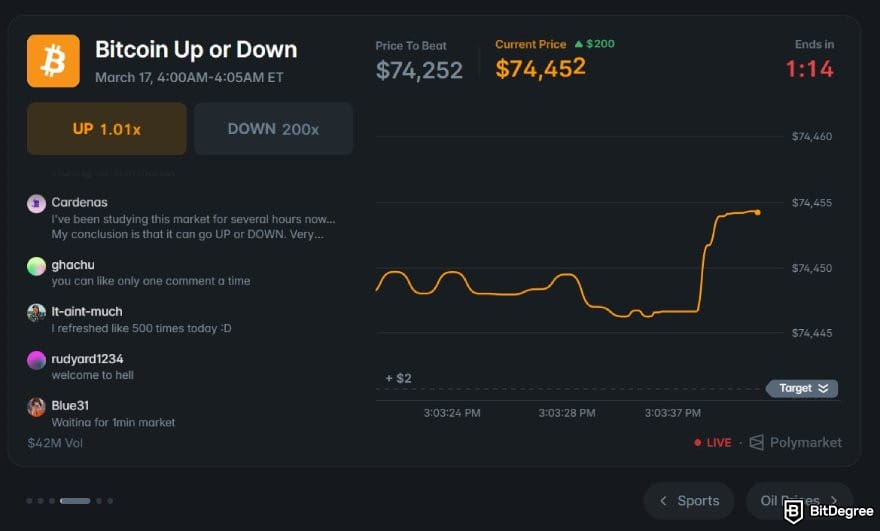
Once you find your market, you’ll notice the pricing feels a lot more honest. Because Polymarket operates as an order book where users trade against each other, the odds aren't set by a greedy middleman looking to shave off a massive margin.
Instead, you get a real-time reflection of what the world actually thinks is going to happen, which often leads to much better value for your USDC.
Managing those funds is also a lot less stressful than the old-school way of doing things. The platform is non-custodial, meaning that you aren’t at the mercy of a withdrawal department's mood swings when it’s time to cash out your winnings. It also makes Polymarket a great platform for synthesizing crowdsourced information in real time.[1]

Finally, that level of trust is backed up by the tech itself. Because everything is powered by smart contracts on the Polygon network, the resolution of markets is transparent and verifiable.
You don't have to worry about a platform suddenly changing the rules or losing your trade history, as the blockchain acts as an immutable ledger for every move made.
Limitations
While the platform offers a lot of freedom, it isn’t without its hurdles. To give you the full picture in this Polymarket review, we have to talk about the areas where the experience can feel a bit clunky or restrictive.
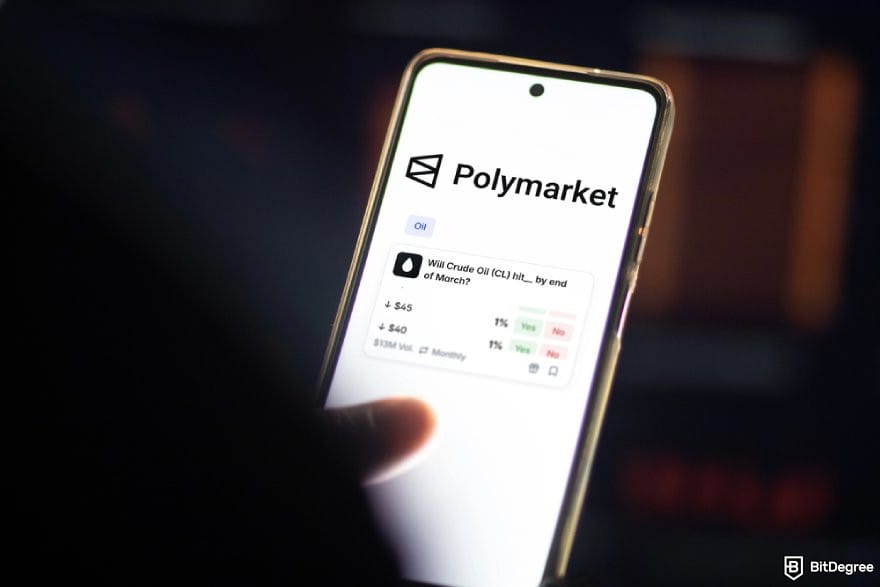
No platform is perfect, and there are three specific limitations that users tend to bump into most often. Here are the main drawbacks to keep in mind:
- Regional Restrictions. Even in 2026, the platform’s legal status is a patchwork, meaning many users are blocked based on their IP address.
- Liquidity Gaps in Niche Markets. While big events are smooth, smaller markets can suffer from wide spreads that make it hard to get a fair price.
- A High-Stakes Dispute Process. If a market resolves in a way that seems wrong, challenging it requires a significant financial bond that shuts out the average user.
The regional issue is probably the biggest headache for most. Because Polymarket has to navigate a minefield of global gambling and trade regulations, they’ve implemented strict geoblocking in major regions like the US, UK, and parts of Europe.
US residents can access Polymarket using the US-exclusive app.
While some people try to dance around this with a VPN, the platform has gotten much better at detecting them, and getting caught could mean losing access to your account entirely.

If you do get in, you have to be careful about where you put your money. On massive markets like the World Cup or a presidential election, there’s enough cash flowing that you can buy and sell instantly.
However, if you’re trading on something niche, like a specific celebrity's social media stats, the liquidity can be thin. This means you might buy in at one price but find that the only way to sell is at a much lower price, effectively eating into your potential profits before the event even ends.
Finally, there’s the matter of how winners are decided. Polymarket uses a decentralized oracle system, which is great for transparency but tough for individual recourse.

If a market settles and you think the official result was misinterpreted, you can’t just send a quick email to a support desk to fix it. To formally dispute a resolution, you actually have to post a typically expensive bond, which is a huge barrier if you only have $20 on the line.
Knowing these risks is half the battle, but understanding the technical side of how you actually place a trade is where the real work begins.
Mobile Support
News doesn't wait for you to get home. Being able to adjust your position in seconds from your phone is the difference between catching a trend and being left with worthless shares.
Polymarket acknowledges this and offers a dedicated app for iOS and Android devices to help users access the markets easily, no matter where they are.
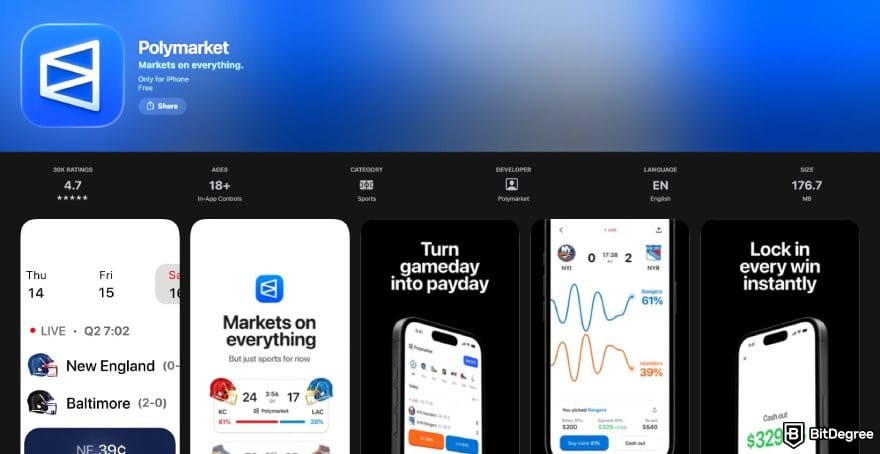
Additionally, Polymarket lets you connect mobile wallets like MetaMask and Phantom Wallet, which clearly shows that it has shifted toward a mobile-first experience.
📚 Check Out: Best Mobile Crypto Wallets
Great mobile support means you can also get features like always-on notifications. Unlike a web browser, a mobile app can ping you the second a market resolves or if the price of your "Yes" shares starts to tank, allowing for instant risk management.
Last but not least, for the average person, connecting a crypto wallet on a desktop can feel intimidating. Mobile apps simplify this with biometric logins and streamlined two-tap trading that feels more like using Robinhood than a complex blockchain protocol.
Payment Methods
At the time of writing this Polymarket review, the platform supports multiple payment methods. For deposits, you can use:
- Crypto transfers;
- Mastercard/Visa;
- Connect to crypto exchanges;
- PayPal.
Crypto methods are perfect for those who want instant settlements and no deposit limits. But sometimes, it is easier to deposit fiat using credit cards or PayPal. Keep in mind that there is a limit of $20,000 and $10,000, respectively. Depending on your region, Polymarket may also support additional payment methods such as digital wallets.
Polymarket also supports a wide range of currencies. For fiat, you can deposit USD, EUR, CAD, BRL, SGD, and 105 more. If you prefer cryptocurrencies, you can choose between 21 assets, including USDC, BTC, and ETH.
The US Polymarket app offers different payment methods, focusing more on fiat. Currently, it supports direct bank transfers (ACH), wire transfers, and debit cards for deposits and withdrawals.
Unfortunately, the same options don’t apply to the withdrawal process. Currently, you can’t withdraw money directly to your bank account from Polymarket, at least in the global version. Your only option is to withdraw via crypto transfers.
There is no Polymarket fee for deposits and withdrawals. But you may need to pay for gas fees or third-party fees when applicable.
All in all, I think Polymarket has successfully lowered the barrier of entry to the prediction market by offering fiat payment options, at least for deposits. Just make sure you’re comfortable with managing a crypto wallet and know how to turn crypto into cash.
Supported and Restricted Countries
While Polymarket aims for global reach, the legal reality of prediction markets is a bit of a jigsaw puzzle. Depending on where you’re currently sitting, your experience with the platform might vary between full access and being completely locked out of the action.
Because it operates as a decentralized exchange for event contracts, Polymarket has to navigate some pretty stiff financial and gambling regulations.

As a result, the platform currently geoblocks a significant number of regions. If you are trying to access the site from any of the 37 restricted countries and regions, you’ll likely find yourself hitting a digital wall. The restricted countries and regions include:
- 33 Sovereign Nations. This includes major hubs like the UK, France, Germany, and the US (global version), along with heavily sanctioned regions like North Korea and Iran.
- 4 Sub-national Regions. Even if a country isn't fully banned, specific areas are blocked, including Ontario in Canada and the regions of Crimea, Donetsk, and Luhansk in Ukraine.
Throughout late 2025 and early 2026, regulators in Portugal, Hungary, and the Netherlands have also issued orders to block or fine the platform, leading to tighter enforcement in those areas.
If you’re in one of these spots, you might be greeted by a "view only" mode. This is exactly what it sounds like: you can browse the markets, look at the charts, and see what the wisdom of the crowd is predicting, but you won't be able to actually place a trade or connect your wallet.
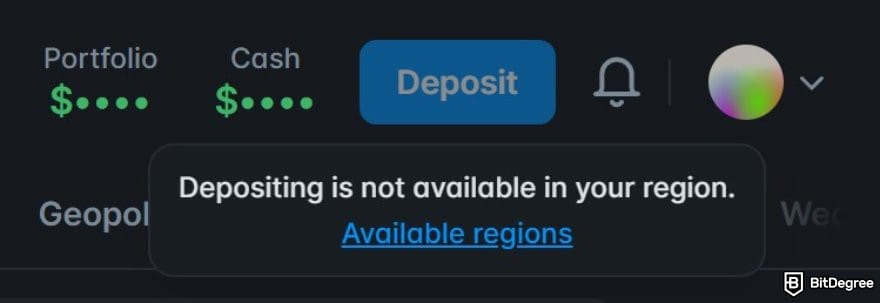
Now, the elephant in the room is the United States. For years, US users were completely barred from the platform after a 2022 settlement with regulators. However, things have changed recently. As of late 2025, there are now essentially two Polymarkets. There is the global version (which is still blocked for Americans) and a newly launched, fully regulated US version.
This US app is overseen by the CFTC and requires a full know your customer (KYC) process, meaning you'll need to provide ID and a Social Security number. It’s a bit more Wall Street and a bit less wild west, but it finally gives American traders a legal way to participate.
📚 Read More: What is KYC in Crypto?
Of course, many people try to bypass these blocks using a VPN. While a VPN can make it look like you're browsing from a supported country, it’s a risky move.
Polymarket has ramped up its detection tools, and if they catch you spoofing your location, it can, and likely will, freeze your account.
Since the platform is decentralized, getting your funds back from a banned account can be a nightmare, so it's usually better to play by the rules of your local jurisdiction.
Customer Support
As I write this Polymarket review, the platform offers multiple customer support channels. If you have ever faced a problem with using Polymarket, you can reach out to its support team via Discord, email, or social media accounts.
There is also a dedicated help center page if you prefer to look for the solution yourself. Based on the Polymarket reviews I found online, the customer support is pretty much what you’d expect from a decentralized, crypto-first platform: it’s not exactly a five-star concierge service.

While there is a help center and a basic email contact, the most active support happens in dedicated Discord channels where moderators and other users chime in. For crypto-natives, this is standard, but for casual users, it can feel disorganized.
Many reports also suggest that tickets opened via the website or Discord can take anywhere from a few days to over a week to get a human reply. If you’re dealing with a stuck transaction or a time-sensitive market question, this lag can be incredibly frustrating.
One of the most polarizing aspects is how support handles market disputes. Because resolutions are handled by the UMA oracle system, the support team often takes a hands-off approach.
If a market settles in a way you think is wrong, the support staff will likely tell you they literally don't have the power to change it, which many users interpret as being dismissive or unhelpful.
You can even find many Polymarket reviews on Trustpilot warning people not to use Polymarket because they think the results are rigged. But obviously, take these reviews with a grain of salt.
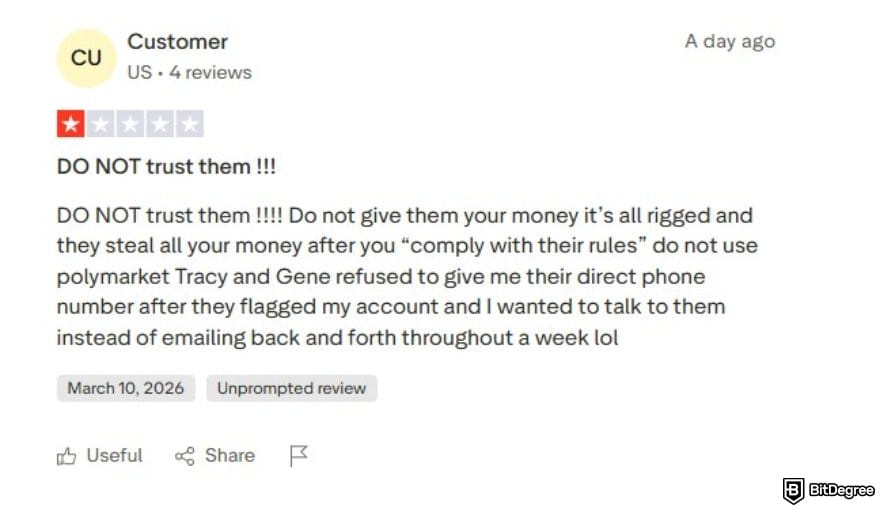
Essentially, if you are a native crypto user who is used to finding solutions through Discord channels and community-run FAQs, you’ll feel right at home.
However, if you’re used to a live chat button and an immediate refund policy, then get ready for a bit of a culture shock. I think Polymarket is a platform built for those who don't mind doing a little legwork themselves when things get complicated.
Is Polymarket Safe?
Safety is number one when you put real money into an online platform. So, is Polymarket safe? Based on my research and experience, the answer is a bit of a “yes” and “no”. It’s because Polymarket isn't built like a traditional bank or betting site.
The biggest safety feature is that it’s non-custodial. This is a fancy way of saying Polymarket doesn’t actually hold your money.
When you connect your wallet or use the proxy wallet created at sign-up, you are the only one with the private keys. Even if the Polymarket website went offline tomorrow, your funds are still sitting on the Polygon blockchain,[2] and you could technically use other tools to get them back.
Polymarket also includes other layers of protection, including:
- Audited Smart Contracts. All trades and payouts are handled by code (smart contracts) that have been publicly audited.
- Decentralized Oracles (UMA). Instead of one person at Polymarket deciding the winner, it uses a system of bonds called the UMA Optimistic Oracle and community disputes.
- Polygon Network Security. Since it runs on Polygon, you get the security of a major Ethereum-scaling network.
However, safe doesn't mean risk-free. The main security nuance to watch out for is Private Key Management. Because you are in control, if you lose your seed phrase or someone gets access to your wallet, Polymarket cannot reset your password to get your money back.
📚 Check Out: Crypto Wallet Security
Also, while rare, there is always a smart contract risk, the tiny chance that a bug in the code could be exploited.
User Experience
When it comes to the day-to-day experience, Polymarket clearly understands that nobody wants to fight with a clunky interface when there’s a fast-moving market to catch. I think the best way to describe Polymarket's design philosophy is "refreshingly no-nonsense".
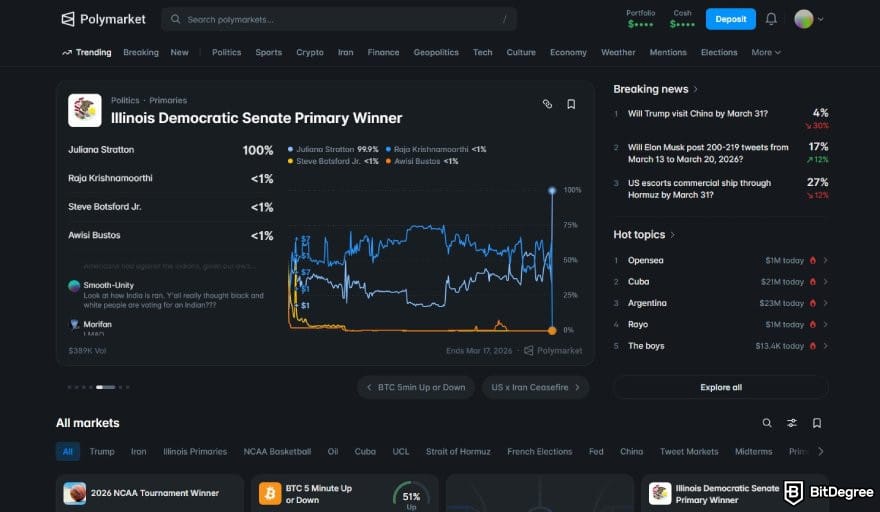
The user interface is built for speed and clarity. You won’t find yourself wading through annoying pop-up banners, flashing special offer animations, or unnecessary design flares that slow down your browser.
It’s a clean, streamlined layout that puts the data front and center. One of the best parts of the experience is how they’ve organized the sheer volume of topics.
Instead of scrolling through an endless list of random questions, you can jump straight to the specific niche you care about, be it Politics, Sports, Crypto, or Pop Culture, thanks to a well-structured categories bar that groups similar markets.
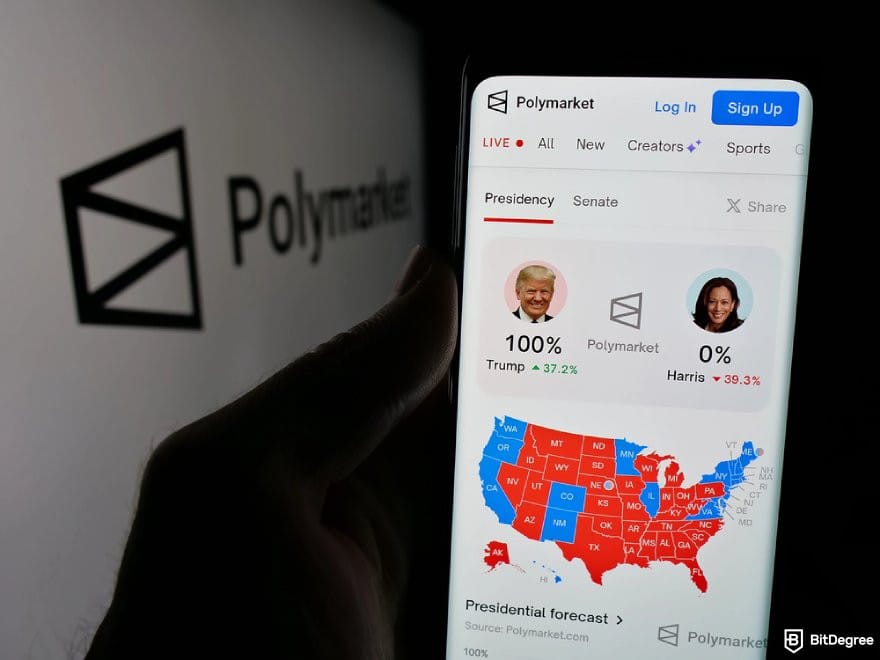
On mobile, this efficiency is even more noticeable. The app (and the mobile-optimized site) is built for thumb-friendly navigation, allowing you to check odds, view charts, and execute a trade in just a few taps.
But it is important to note that while prediction markets cover everyday topics that anyone can understand, it is not as simple as you might expect, especially if you’re a complete beginner.
Even if you have a strong opinion on a topic, like who will win an Oscar, the trading side of the platform introduces a few hurdles that can be confusing if you've never used an exchange before.
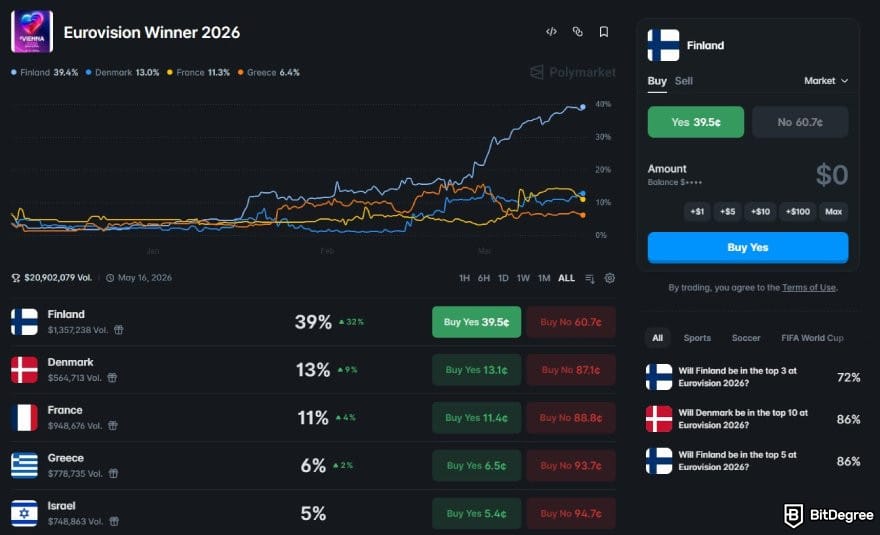
I will cover the step-by-step guide in the next section, but simply put, you may need to spend some time learning how the platform works.
Polymarket trading fees are also very easy to understand, at least if you're familiar with blockchain transactions. Most markets on the platform are fee-free. This means you don't have to pay to trade shares. However, markets for crypto, NCAAB, and Series A have fees associated with them.
Even then, only market takers pay fees. Makers don't pay any trading costs, and may even earn rebates. The fees are relatively small, around 0-1.5%. The fees are redistributed to market makers, which helps improve liquidity.
That said, based on its user-friendliness, is Polymarket a reliable prediction market platform? Absolutely. If you value a platform that gets out of your way and lets you focus on the data, it’s arguably the most reliable option on the market.
How to Use Polymarket
Another aspect I want to cover in this Polymarket review is how to actually use the platform. While Polymarket deliberately makes the website and mobile app very straightforward, it can still be confusing if you're new to the prediction market or binary options. So, here is how to use Polymarket, starting from making a new account to withdrawing funds from the platform.
How to Create an Account
Creating a new account on Polymarket is very easy. You don't even have to put in your email to have an account if you don't want to. That said, here is how to make a Polymarket account on desktop:
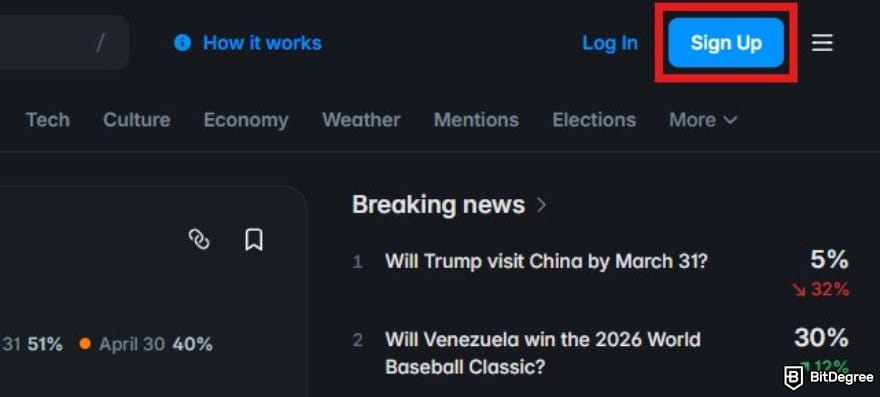
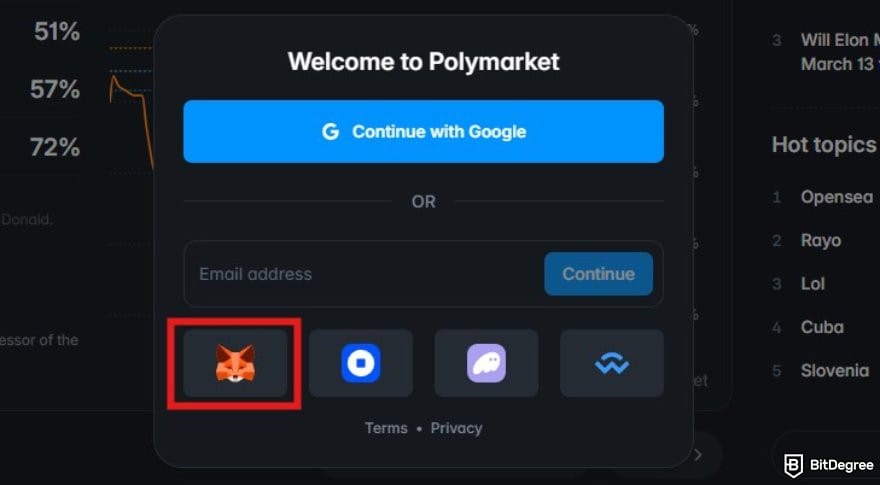
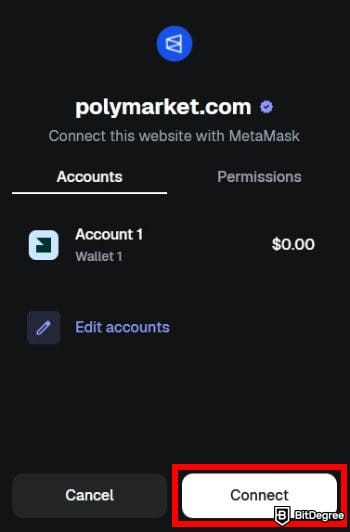
That's it! Now you have a new Polymarket account, and you can start browsing what the website has to offer. One thing worth noting is that even though you access the website from a restricted country, Polymarket won't stop you from making an account. However, you won't be able to trade on the platform.
Additionally, you may need to manually enable the trading feature in your account if you create an account by connecting a mobile wallet. Simply open any market and follow the prompt to enable trading.
How to Deposit
Now that you have an account ready, you can make your first deposit into Polymarket. Follow this step-by-step guide to do it:
The deposit menu won't be available if you're accessing your account from a restricted country/region.
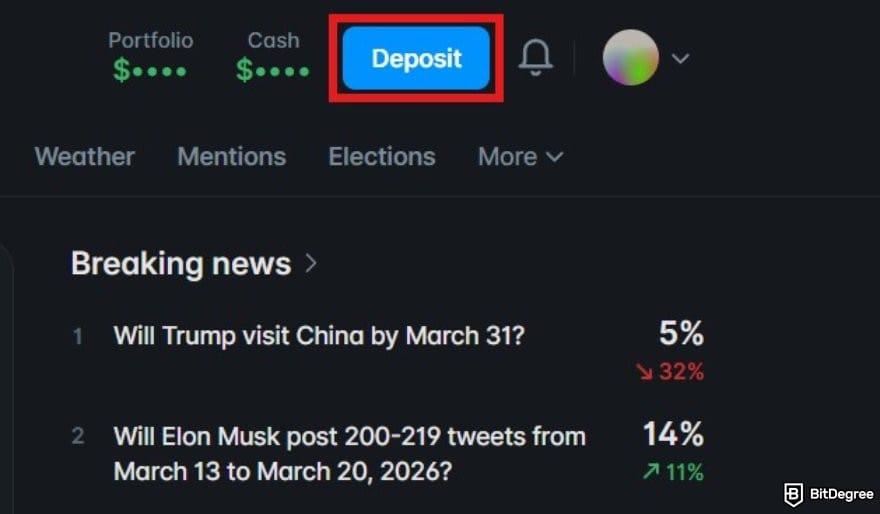
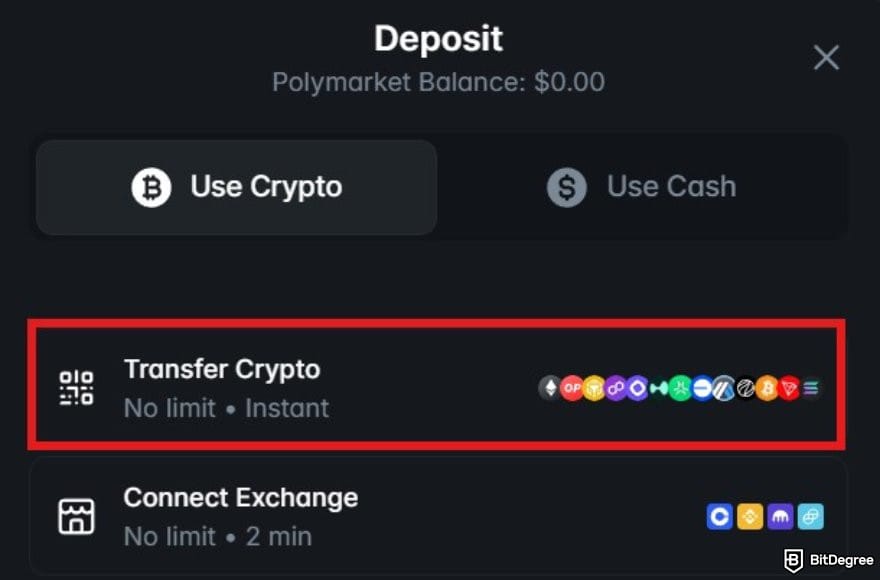
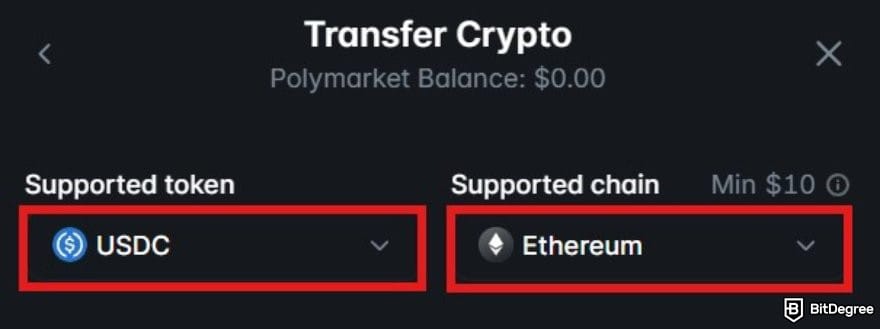
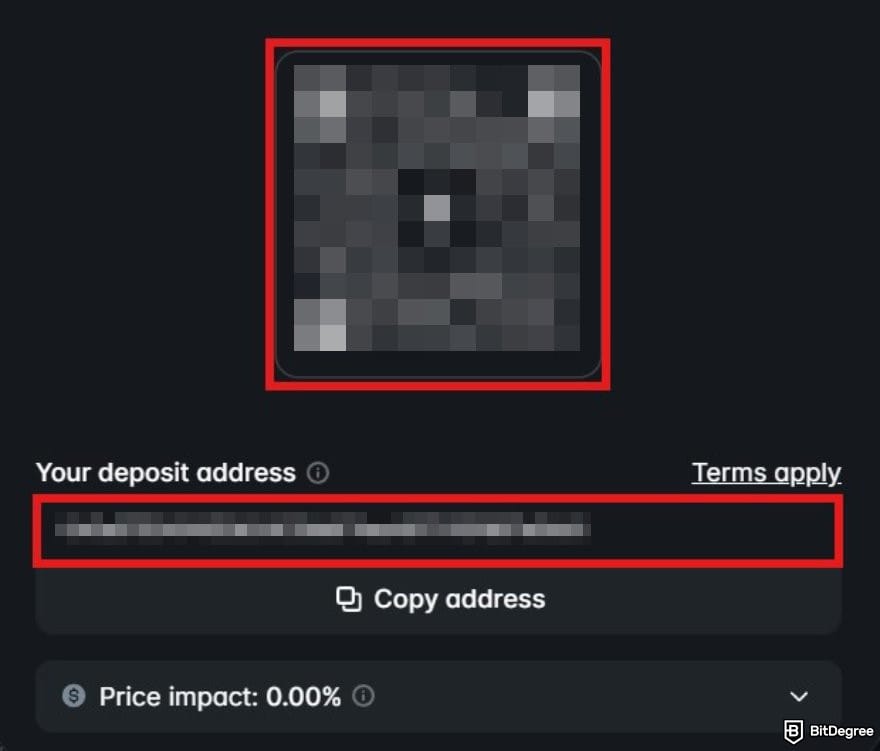
You can also check other details, such as the price impact, slippage, and the processing time for your transfer via the dropdown menu at the bottom of the deposit window. Keep in mind that while Polymarket doesn't charge any fees for deposits, you may need to pay for the gas fees or any third-party costs.
How to Trade
With the funds ready, it is time to look for a market and make your first prediction. Here is a simple step-by-step guide on how to start trading on Polymarket:
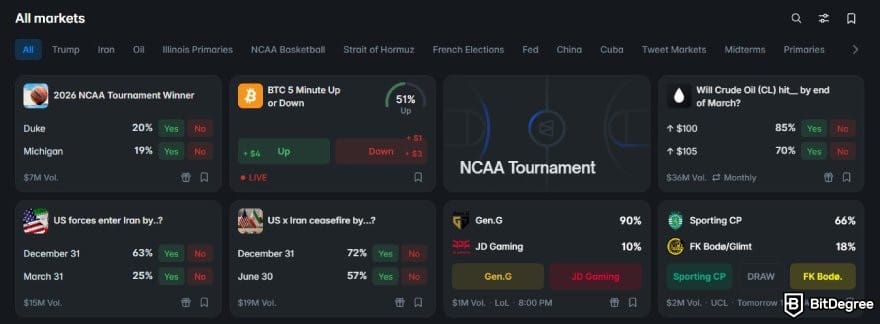
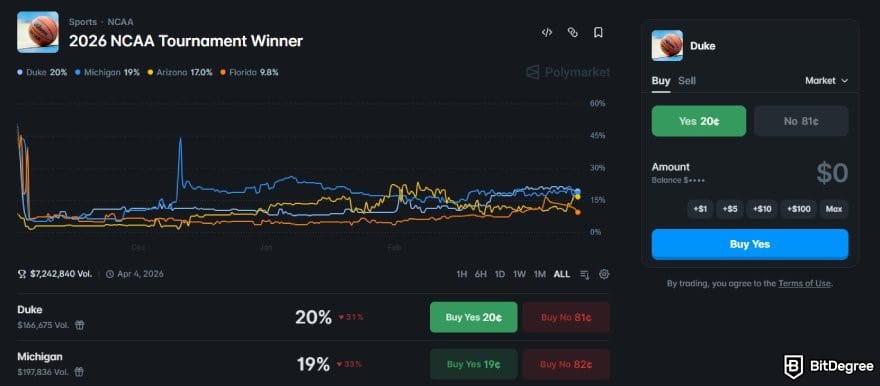
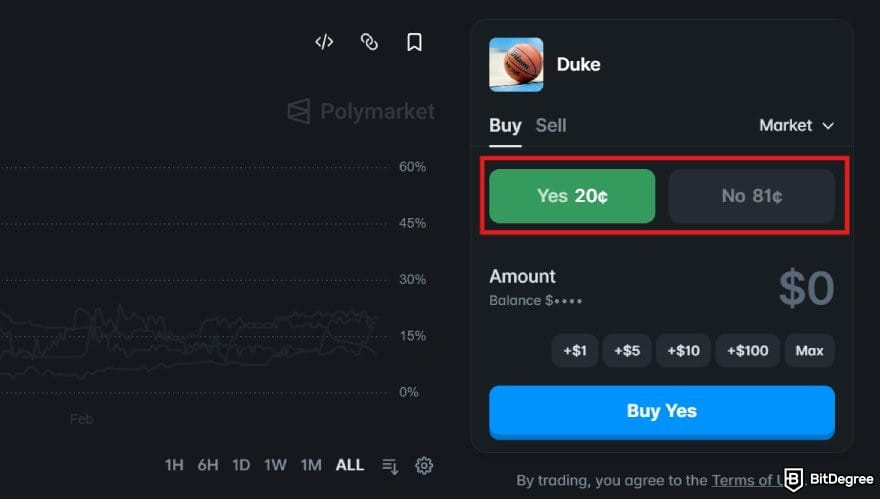
Even though questions like "will it rain tomorrow?" are simple, the market mechanics can feel like a brick wall for newcomers. Therefore, I highly recommend understanding how prediction markets work before you start trading.
How to Withdraw
Once you have enough cash in your balance, you can start withdrawing funds from Polymarket. Here is how you can do it:
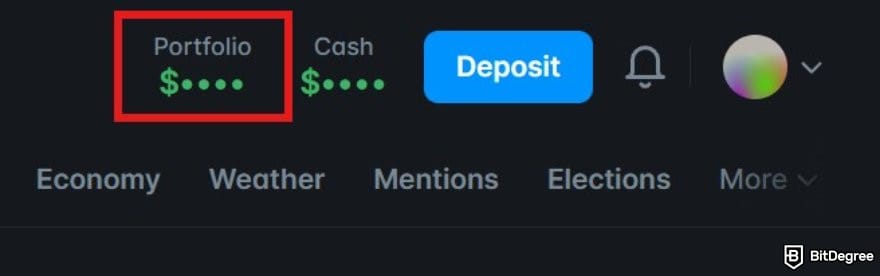
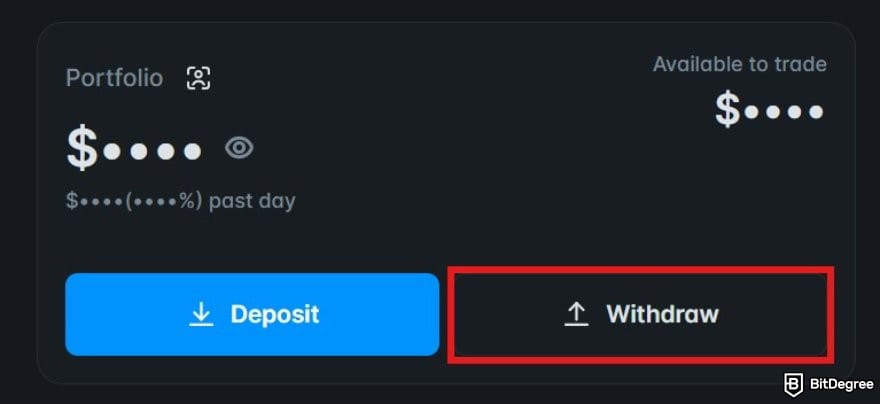
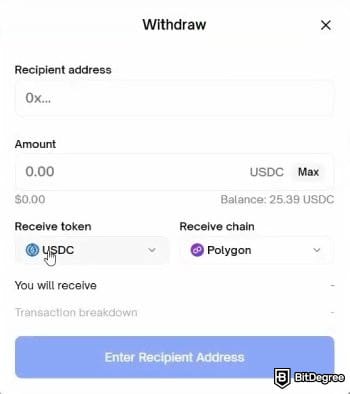
After the withdrawal is processed, your funds will be sent to the specified address. Since Polymarket is using the blockchain, most of your withdrawals will be done instantly. Just make sure you put in the correct wallet address before you finalize the transaction, since crypto transfers are irreversible.
Polymarket Alternatives
After I've covered the nitty-gritty of the platform in this Polymarket review, you might come to a decision that it isn't the right website for you. So, what are the alternatives? Are there any websites that offer a similar experience with slightly different features? Glad you asked. Here are 3 Polymarket alternatives that I would recommend.
Polymarket VS Kalshi
Established in | 2021 (official launch) |
|---|---|
Market categories | Politics, sports, crypto, and more |
Payment methods | Debit card, bank transfer (ACH), PayPal, crypto transfer, and more |
Availability | The US, Germany, Japan, and more |
Customer support | Live chat, email, Discord, social media, and help center |
Table: Kalshi quick overview
Kalshi is arguably Polymarket's biggest competitor and another popular name in the prediction market space. What makes it different is that Kalshi took a compliance-first approach from the start, especially in the US. It spent two years working with the CFTC before launching in 2021 as the first prediction market approved as a Designated Contract Market from inception.
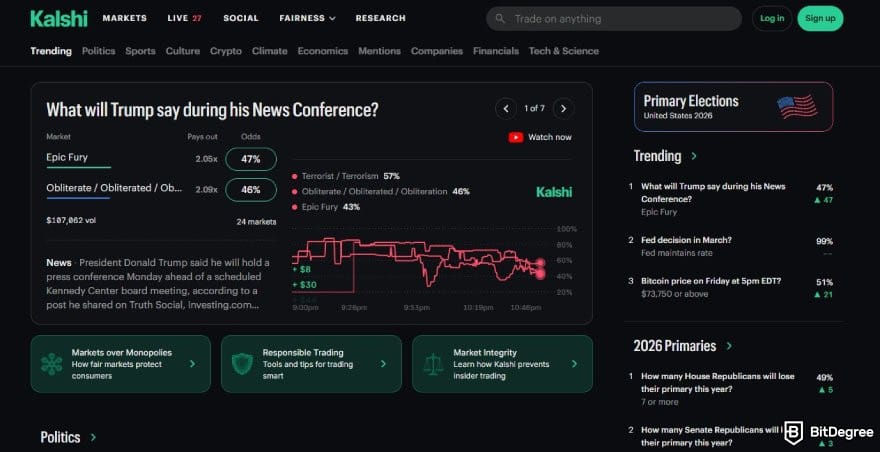
The platform also resolves under direct CFTC oversight, with every market reviewed before listing.
Additionally, Kalshi is more fiat-friendly compared to Polymarket. It runs on traditional financial rails, with USD deposits and a brokerage-style interface. In terms of market selection, Kalshi makes it slightly narrower with fewer macro categories. However, it still covers much of the event variety available on Polymarket.
Polymarket VS Manifold Market
Established in | 2021 |
|---|---|
Market categories | Politics, technology, sports, and more |
Payment methods | None (in-platform play-money only) |
Availability | Worldwide (except for its sweepstakes markets) |
Customer support | Discord, on-site feedback, email, and social media |
Table: Manifold Market quick overview
If you're still uncomfortable with crypto betting on Polymarket, then I suggest you try out Manifold Market. It allows free participation using play-money called Mana. Every user starts off with free 1,000 Mana, and they can start playing without betting real money. However, Mana can't be converted into cash, so think of Manifold Market as a prediction game platform.
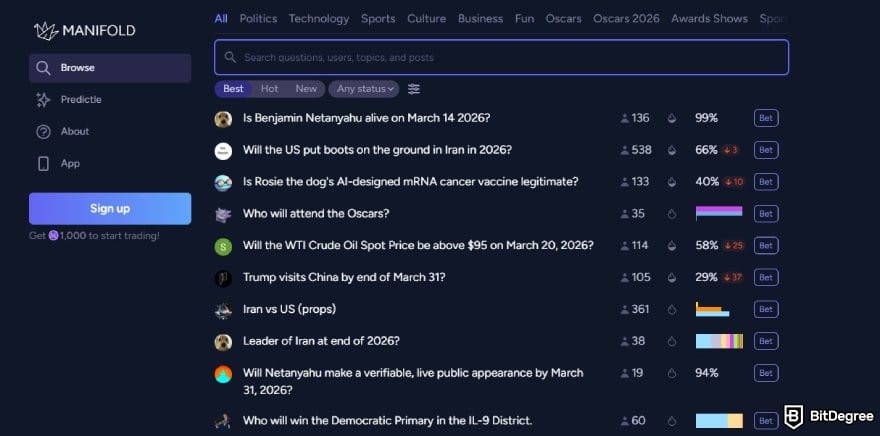
While this will be a major turn-off for those who want to earn money via platforms like Polymarket, I think it's great for practicing prediction market thinking. You can familiarize yourself with forecasting real events and reading signals from news and users' discussions without exposing yourself to a real financial risk.
As I write this Polymarket review, Manifold Market has a very active community where users actively discuss the event probability under each market. Interestingly enough, anyone can create their own markets on virtually any topic. So, if you want to engage in the forecasting community and learn the ropes, Manifold Market can be a great option.
Polymarket VS PredictIt
Established in | 2014 |
|---|---|
Market categories | Politics (elections, president, congress, and more) |
Payment methods | Credit/debit cards and bank transfers |
Availability | United States exclusive |
Customer support | Contact form and help center |
Table: PredictIt quick overview
For those who want to shut off the noises from other options like sports or pop culture and focus more on politics, PredictIt can be your go-to. Politics is arguably one of the biggest markets in the prediction space, with many large platforms like Polymarket listing it as their top category. Therefore, it just makes sense that someone will end up making a platform that caters to that niche.
PredictIt offers some categories, including presidential candidates, and some local-specific events. While the majority of its market revolves around the US politics scene, PredictIt also includes some world events on its site. However, at the time of writing, the option is pretty limited.

Aside from the available topics, PredictIt is also different from Polymarket in terms of being a centralized, web-based platform. You fund your account with a credit card or bank transfer, and you trust the organization to hold your money and resolve the markets.
Conclusions
In this Polymarket review, I’ve shown you what makes it one of the biggest prediction market platforms in the world. It’s a powerful tool for anyone who wants to trade their insights on real-world events, offering deep liquidity and a clean interface that lets the data do the talking.
The pros are hard to ignore. You get plenty of market options, deep liquidity, and virtually fee-free trading on a secure, non-custodial blockchain foundation that ensures you always stay in control of your funds.
However, the experience isn't without its speed bumps. While the platform has expanded significantly, users in dozens of countries, including the UK and much of Europe, still face strict geoblocks. It is also not very beginner-friendly, requiring users to be familiar with crypto-based transactions and problem-solving to navigate the platform.
If you prefer to take your chance on exciting crypto-based games like slots and poker instead, consider checking out websites like Stake, iWild, and 7Bit Casino.
So, if you’re comfortable with a bit of technical self-reliance and want a platform that trades as fast as the news breaks, Polymarket is a top-tier choice. Just be sure to play by the rules of your local jurisdiction to keep your account safe.
The content published on this website is not aimed to give any kind of financial, investment, trading, or any other form of advice. BitDegree.org does not endorse or suggest you to buy, sell or hold any kind of cryptocurrency. Before making financial investment decisions, do consult your financial advisor.
Scientific References
1. Urquhart, A.: 'Do Decentralized Markets Beat Centralized Forecasters? Evidence from the 2024 Presidential Elections';
2. Jiang, E., Qin, B., Wang, Q., Wang, Z., Wu, Q., Weng, J., Li, X., Wang, C., Ding, Y., Zhang, Y.: 'Decentralized Finance (DeFi): A Survey'.
About Article's Experts & Analysts


- + Unmatched market variety
- + High liquidity and fair odds
- + Non-custodial security
- + Transparent on-chain data
- - Regional restrictions
- - Liquidity gaps in niche markets
- - Complex dispute process
A streamlined, high-liquidity powerhouse for traders who value data and decentralization.
Disclosure: To keep our site running & free of charge, we may sometimes receive a small commission if a reader decides to purchase services via some links on site, at no extra cost.