Autorité des Marchés Financiers Targets Ban on Crypto ‘Passporting’ in France

Last Updated: September 16, 2025
✓ Fact Checked
Key Takeaways
- France's AMF may block crypto firms licensed in other EU countries if those licenses are seen as too lenient under the MiCA framework;
- The AMF is concerned that "passporting" could lead to uneven enforcement of crypto rules across the EU;
- France, along with Italy and Austria, supports shifting oversight of major crypto firms to ESMA for more consistent supervision.
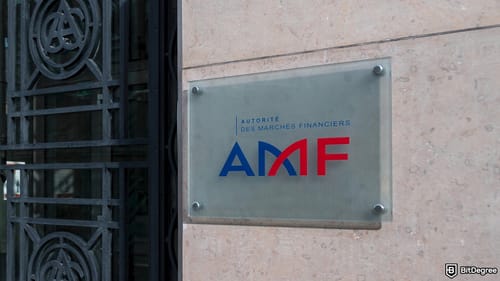
The Autorité des Marchés Financiers (AMF), France's financial regulator, has raised the possibility of rejecting crypto firms that attempt to enter the French market using licenses granted in other European Union countries.
According to a report by Reuters on September 15, the issue focuses on the Markets in Crypto-Assets Regulation (MiCA), a law designed to establish a consistent regulatory framework across the EU.
Under MiCA, crypto companies licensed in one EU country can offer their services throughout the entire union. While this approach is intended to simplify cross-border activity, the AMF is concerned that it may also lead to uneven enforcement.

Did you know?
Want to get smarter & wealthier with crypto?
Subscribe - We publish new crypto explainer videos every week!
Where to Trade Crypto: 3 Best Approaches Explained (Animated)


Marie-Anne Barbat-Layani, who heads the AMF, stated that the agency is not ruling out the option of denying access to companies using the so-called "passporting" system if their original licensing country follows looser standards.
She noted that although this would be a crucial step, it is being considered seriously. According to her, some crypto businesses are actively looking for the easiest path to licensing, which could weaken the protections intended by MiCA.
France’s concerns are not isolated. It has joined Italy and Austria in calling for the European Securities and Markets Authority (ESMA) to directly oversee the largest crypto firms.
These three countries argue that centralizing supervision would help maintain more uniform rules and mitigate the risks associated with regulatory differences between member states.
Recently, Vietnam launched a five-year trial program to test the use of cryptocurrencies within the country. How? Read the full story.
Loading...
The Most Liked Crypto News Findings
Looking for more latest crypto news on related topic? We have gathered similar news articles for you to spare your time. Take a look!



Latest Crypto News & Videos







Trending Crypto News

You're Invited: ChangeNOW's Retrofuture Soiree Lands at TOKEN2049 Sing...

ChangeNOW and CoinRabbit Release Joint Research on Financial Privacy i...

Polygon's $250M Bet on Stablecoin Payments: Is Blockchain Coming for T...

Bybit Card Launches 10% Cashback Boost for New Cardholders